Understanding the Audience
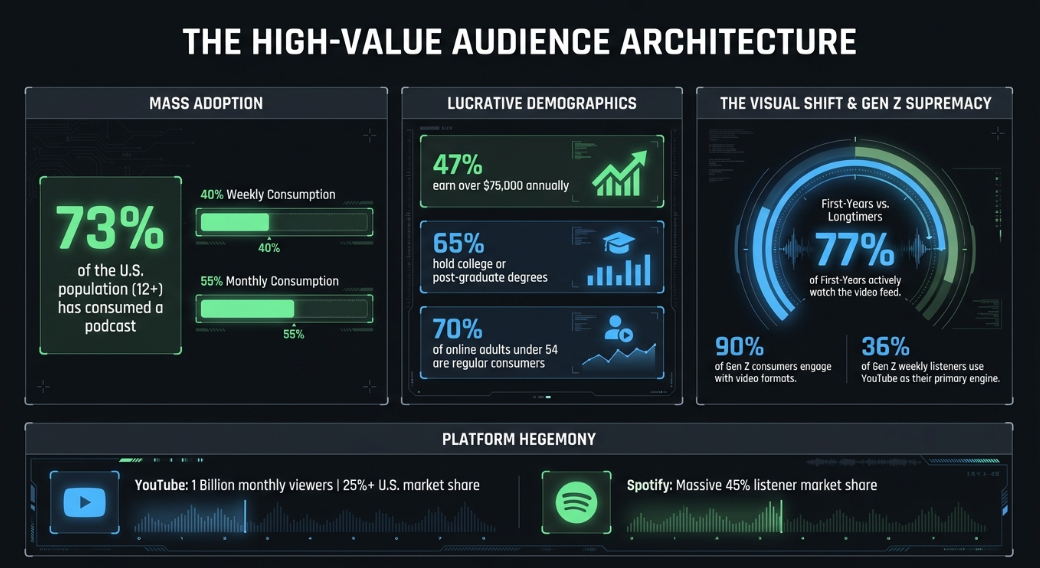
The fundamental architecture of media consumption has undergone a tectonic shift, repositioning podcasting from a niche, audio-only distribution mechanism into a dominant, multi-format digital ecosystem. By the beginning of 2026, audience engagement with the medium reached unprecedented levels. Data indicates that 73% of the United States population aged 12 and older has consumed a podcast, with monthly and weekly consumption rates achieving all-time highs of 55% and 40%, respectively.1 This audience is not only vast but remarkably lucrative for advertisers and brands; monthly podcast consumers skew significantly toward higher-income brackets, with 47% earning over $75,000 annually, compared to just 43% of the general U.S. population.3 The demographic composition reveals that 70% of online adults under the age of 54 are regular podcast consumers, and 65% possess college, university, or post-graduate degrees, highlighting a highly educated and engaged listener base.4 The integration of video has redefined audience expectations, transforming passive listeners into active viewers. Research distinguishing between new consumers ("First-Years") and established fans ("Longtimers") reveals that 77% of newer audiences actively watch the video feed while listening, signifying that visual engagement is no longer supplementary but central to audience acquisition.
What’s Happening: Growth and Trends
The most consequential trend in modern podcasting is the aggressive transition toward video-first distribution and the subsequent battle for platform supremacy. YouTube has officially emerged as a primary engine for podcast consumption, reporting 1 billion monthly podcast viewers by early 2025.6 This platform now commands more than 25% of U.S. podcast consumption, functioning alongside Spotify, which holds a 45% market share of the listener marketplace.4 For Generation Z, this visual shift is profoundly evident: 36% of Gen Z weekly podcast listeners utilize YouTube as their primary consumption platform, and a staggering 90% of Gen Z podcast consumers engage with video podcasts in some capacity.1 This evolution has prompted traditional streaming giants to adapt rapidly; Spotify, for instance, expanded its video capabilities to third-party hosting providers and reported a 300% surge in video podcast revenue following the launch of dual revenue streams.9 Furthermore, short-form video clips distributed across platforms like TikTok and Instagram Reels have become the primary discovery engines, with podcasts leveraging these channels experiencing an average audience reach growth rate of 65%.11
How to Explain Podcasting to Your Clients
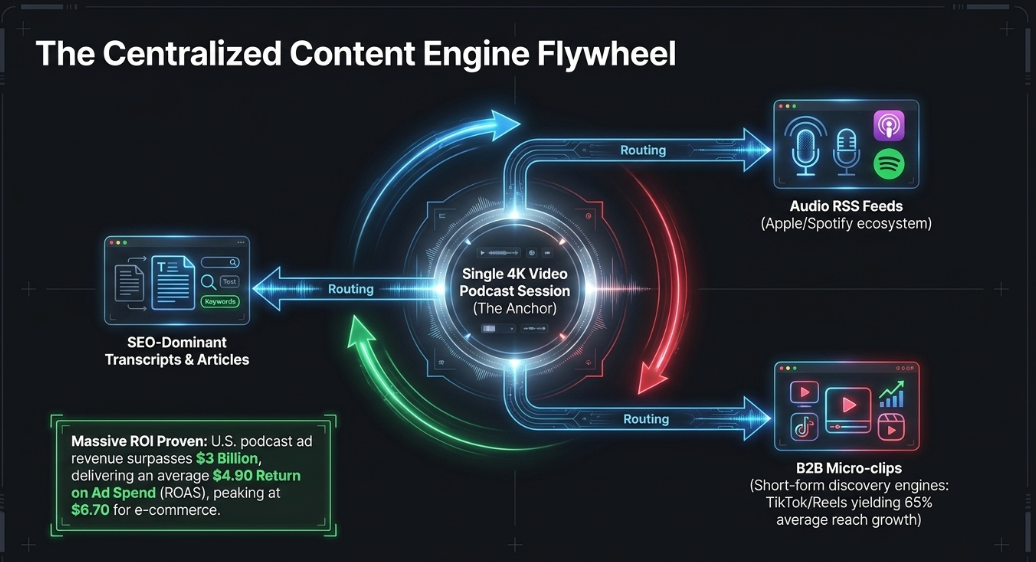
When articulating the business case for podcasting to corporate clients or stakeholders, it is vital to position the medium not as an isolated marketing experiment, but as a strategic anchor for brand humanization and omnichannel content syndication. A video podcast serves as a centralized content engine that establishes deep industry authority, dominates search engine optimization (SEO), and generates a vast reservoir of marketing collateral from a single recording session.12 By utilizing a video-first approach, brands can capture attention significantly faster than through text or audio alone, utilizing visual cues to enhance complex storytelling and build profound parasocial relationships with target demographics.11 The financial justification is clear: U.S. podcast ad revenue surpassed $3 billion recently, delivering an average Return on Ad Spend (ROAS) of $4.90 across thousands of campaigns, and reaching $6.70 for e-commerce advertisers—outperforming traditional social media metrics.14
When to Use Podcasting
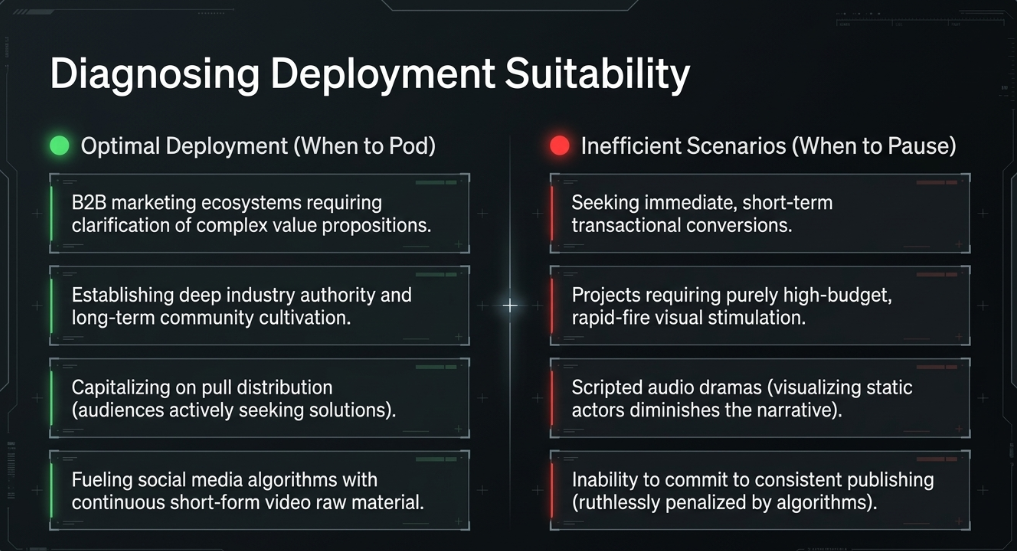
Podcasting should be deployed when an organization aims to establish deep industry authority, build a loyal community, or capture a high-value, highly specific niche demographic. It is exceptionally effective in B2B marketing ecosystems, where long-form discussions can clarify complex value propositions that cannot be adequately conveyed in traditional 30-second advertisements. Furthermore, the medium is ideal when capitalizing on "pull" distribution—where audiences actively seek out specialized content to solve specific problems—rather than relying solely on expensive, interruptive "push" advertising strategies.15 If a brand seeks to continuously generate short-form video clips to feed social media algorithms, a video podcast provides the necessary raw material, acting as a foundational pillar for a broader digital marketing strategy.
When Not to Use Podcasting
Conversely, podcasting is an inefficient vehicle for brands seeking immediate, short-term transactional conversions without the willingness to invest the time required for long-term audience cultivation. Furthermore, if the subject matter relies entirely on high-budget, rapid-fire visual stimulation rather than narrative or conversational depth, a traditional video podcast format will fail to retain viewer attention. Purely scripted audio dramas, for instance, often struggle in video podcast formats, as the visual element of individuals standing at microphones does not enhance the scripted audio experience; traditional streaming platforms remain a more appropriate comparative distribution model for such highly produced narrative content.8 Finally, if an organization cannot commit to consistent publishing, the medium should be avoided, as algorithms ruthlessly penalize sporadic upload schedules.16
How Does it All Come Together?
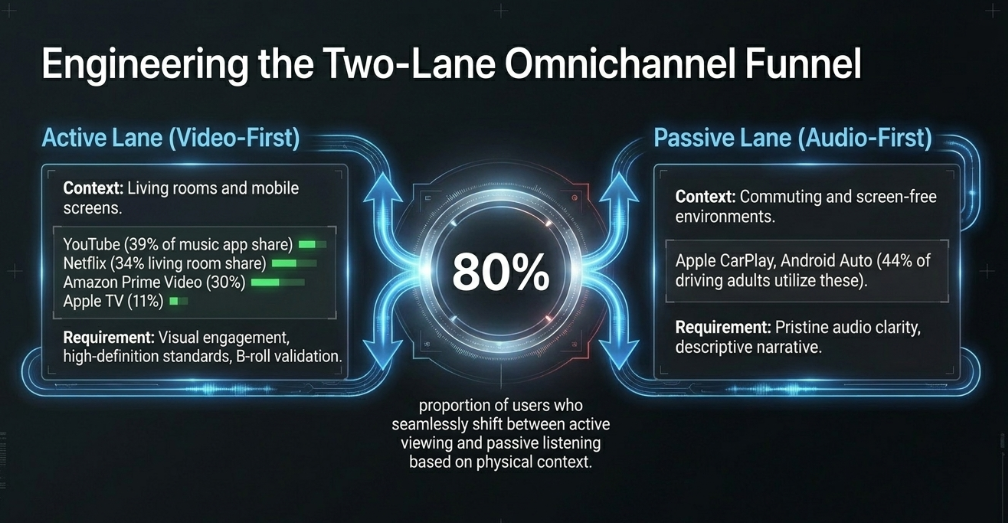
The convergence of high-income demographics, video-first platform algorithms, and the multi-lane consumption habits of modern audiences dictates that a successful podcasting strategy must be purposefully hybrid. Creators and brands must build a "two-lane" show.9 Because an estimated 80% of audiences seamlessly shift between actively watching and passively listening depending on their immediate environment, the content strategy must satisfy both the visual engagement required by YouTube algorithms and the passive, screen-free accessibility demanded by traditional audio RSS feeds.9 Success in this ecosystem requires tying episodic content directly to overarching business goals, ensuring every production hour yields maximum strategic value.17
What Podcasting Is and Is Not
The Clear Understanding of the Technology
At its technological core, a traditional podcast is a "Personal on Demand broadCAST," fundamentally structured as an online media file posted alongside an XML (Extensible Markup Language) document known as an RSS feed.18 Unlike traditional linear broadcasting, which enforces a strict schedule upon the audience, podcasting operates on a direct, on-demand relationship.18 However, the definition has expanded dramatically. Video podcasting (or vodcasting) represents the latest evolution, shifting the technology from simple audio enclosures to high-definition video files wrapped in complex syndication protocols.15 Modern podcasting is not merely an audio file downloaded to an MP3 player; it is a dynamic, decentralized media ecosystem that intersects heavily with video streaming infrastructure.20
Technology Choices
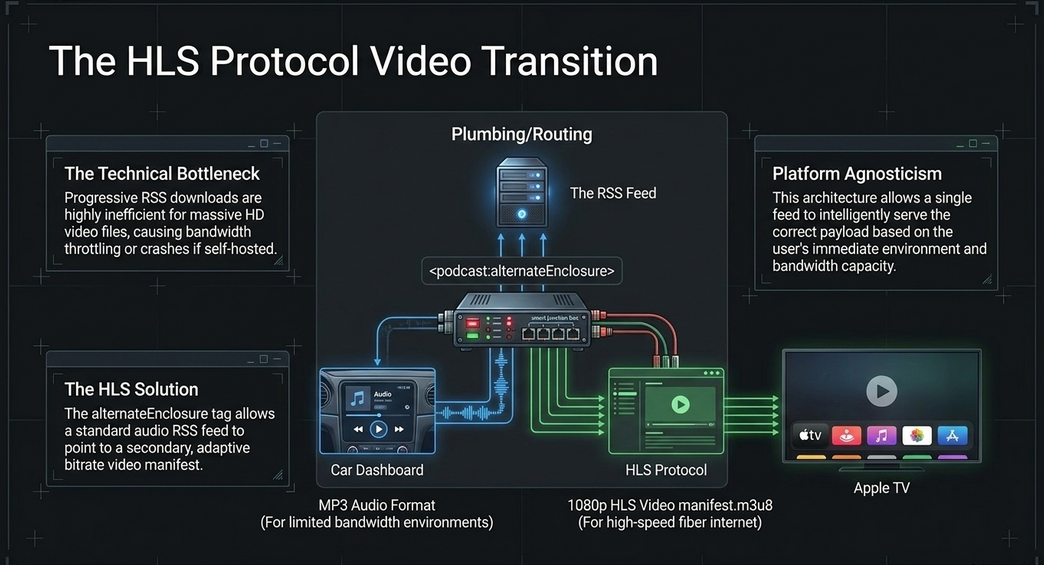
The technological dichotomy facing modern creators lies between traditional RSS-based progressive downloading and centralized platform streaming. While traditional RSS pushes single media files to decentralized aggregators, the integration of advanced video necessitates more robust delivery methods. The industry is currently adopting HTTP Live Streaming (HLS) protocols for video podcasts.20 HLS allows for variable bitrate delivery, dynamically adjusting video quality based on the viewer's internet connection, a feature now supported by Apple Podcasts to parallel the sophisticated capabilities of dedicated video platforms like YouTube and Netflix.9 This technological choice dictates whether a publisher retains decentralized ownership via RSS or trades some autonomy for the advanced algorithmic reach of proprietary video platforms.
Portable Players
The ecosystem of portable players is entirely dominated by mobile applications connected to smart devices. The market is fragmented yet heavily concentrated among a few primary applications: Spotify commands a massive 45% share of the podcast listener marketplace, while YouTube Music claims 39%.4 The hardware ranges from standard smartphones to highly integrated connected vehicle infotainment systems. Notably, 44% of adults who drive and utilize Apple CarPlay or Android Auto listen to podcasts in their primary vehicles, reinforcing the necessity for media that can transition flawlessly between active viewing on a mobile screen and passive, safe listening while navigating traffic.2
Other Players
Beyond portable mobile devices, video podcasts are increasingly penetrating the living room, challenging traditional television programming. Television streaming platforms are capturing substantial podcast audiences, effectively turning the video podcast into a modern talk show. Demographic data indicates that 34% of users consume podcast content via the Netflix application interface, 30% utilize Amazon Prime Video, and 11% access shows through Apple TV ecosystems.4 This migration to large-format, high-definition displays necessitates significantly higher production values and stricter adherence to broadcast-quality visual and audio standards.
The Road Ahead
The future of podcasting technology lies in the total synthesis of audio and video through unified, intelligent distribution mechanisms. As RSS feeds evolve to natively support dual-format experiences—allowing listeners to seamlessly toggle between an audio stream and an HD video stream without losing their temporal place—the medium will achieve true platform agnosticism.22 Furthermore, AI-driven contextual routing will eventually allow portable players to automatically determine whether to serve the video or audio file based on the user's immediate physical context, such as switching to audio-only the moment a smartphone connects to a vehicle's Bluetooth system.
THE Pre- PRODUCTION OF PODCASTS
Success Doesn’t Just Happen
High-quality video podcasting requires exhaustive and meticulous planning. The friction introduced by multiple cameras, complex lighting grids, and multi-track audio routing necessitates a rigorous preproduction workflow. Failure to standardize this workflow prior to recording results in exponential increases in postproduction costs, which routinely become the most significant recurring financial drain for ongoing independent and branded shows.25 True success is engineered during the planning phase by establishing repeatable templates, standardizing metadata rules, and defining clear operational protocols.25
Making the Go/No Go Decision
Before investing capital in equipment, studio rentals, or personnel, producers must evaluate market viability through a systematic "go/no-go" framework.26 Strong market validation for a new podcast concept requires identifying tangible economic and attention signals. Key indicators include the presence of existing corporate sponsorships within the specific niche, government or regulatory investments signaling future sector growth, and a measurable gap in current content offerings.27 If a rigorous competitive analysis yields strong validation (defined as possessing six or more strong market signals), production should proceed with a primary focus on differentiation and execution.27 Mixed signals suggest the need for caution and continued market validation, perhaps targeting a more highly specialized sub-segment, while weak validation strongly indicates the project should be abandoned or fundamentally retooled to avoid sunk costs.27
Creative Development
Creative development in the modern era relies heavily on structuring content that serves both deep narrative arcs and algorithmic discoverability. This development must define the show's visual identity, ensuring the physical set design, color palette, and framing accurately reflect the brand's strategic story and resonate with the target demographic.29 Furthermore, producers are increasingly utilizing generative AI during the creative phase not as a replacement for human hosts, but as a high-level strategic collaborator. AI is deployed to challenge opinions, play devil's advocate during script development, summarize complex literature, and suggest structural counterarguments, ensuring the core narrative is intellectually rigorous before recording begins.
Determining Production Needs
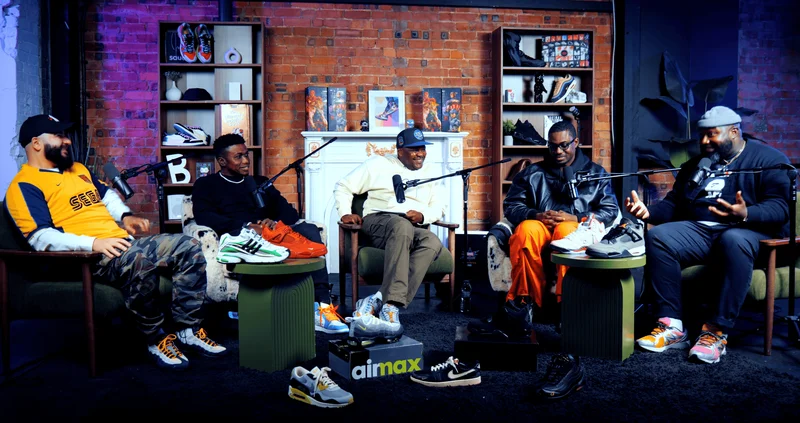
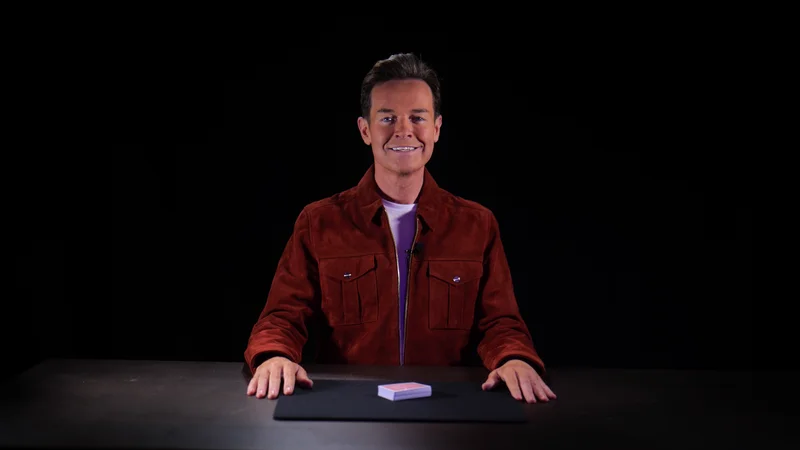
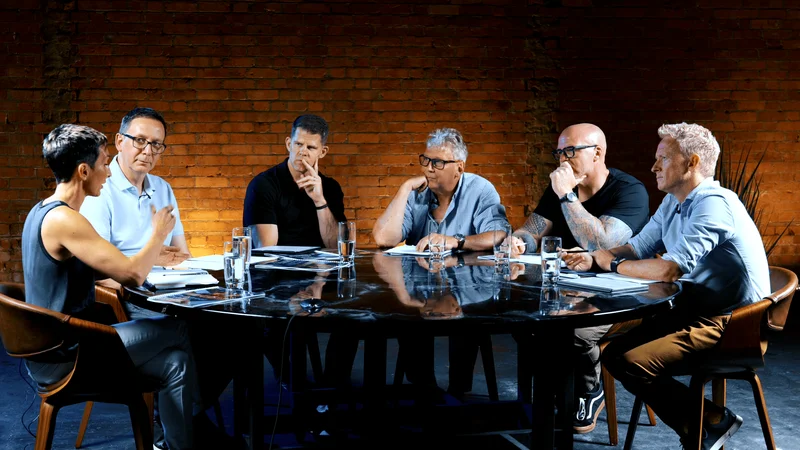
Production needs scale directly and aggressively with the chosen format of the show. A solo host delivering direct-to-camera monologues requires minimal infrastructure, whereas a four-person dynamic roundtable demands multi-camera live switching, individualized lighting zones, and isolated audio tracks. In major metropolitan production hubs like London, creators can leverage comprehensive broadcast equipment rental services to meet these needs dynamically. Professional rental outfits and studios provide broadcast-grade optical lenses (e.g., Canon KJ20x8.2B KRSD or Fujinon HA23X7.6), advanced EVS servers, multi-cam setups, and 24/7 technical backup, ensuring contingency plans are embedded into the production architecture without requiring the outright purchase of depreciating assets.33
Budgeting Guidelines
Budgeting for video podcast production is highly variable but generally categorizes into three distinct tiers based on production value, technical complexity, and external agency support:
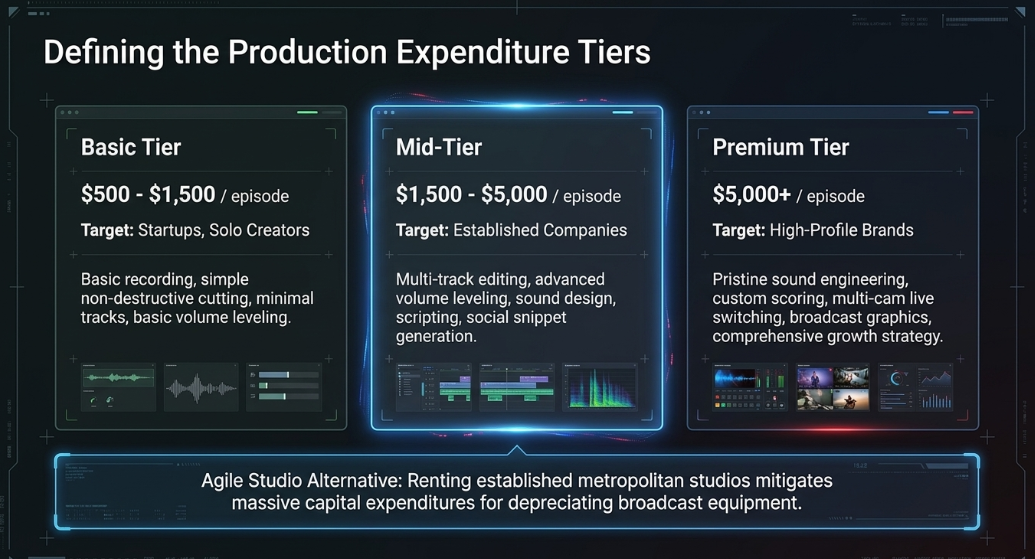
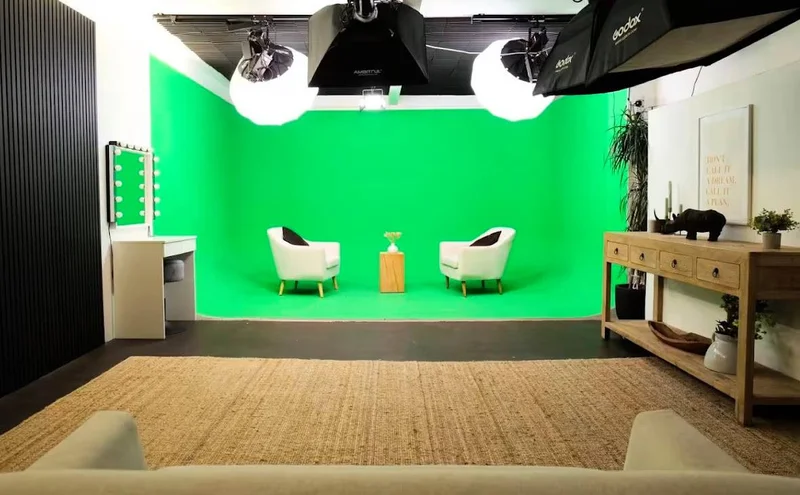
For organizations prioritizing agility over infrastructure ownership, renting established studio space offers a predictable operational expenditure model. London-based studios provide fully treated acoustic environments, 4K camera arrays, professional lighting, and on-hand engineers for rates ranging from £49 to £140 per hour, mitigating the massive capital expenditure required to construct a proprietary soundstage.36
Production: Lighting and Sound
Lighting on a Deadline and Budget
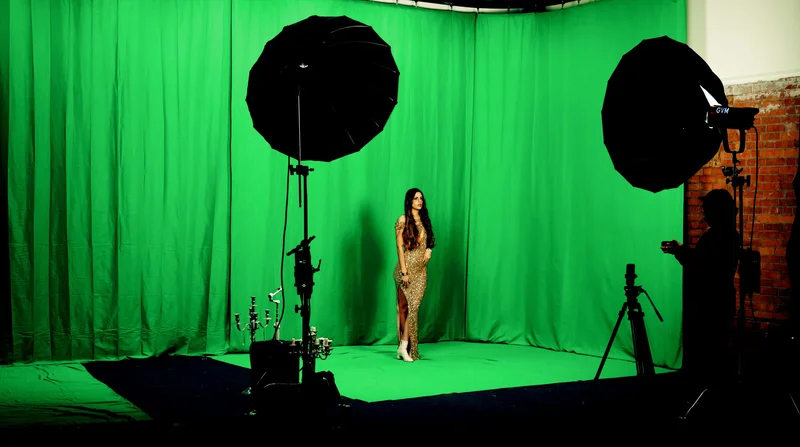
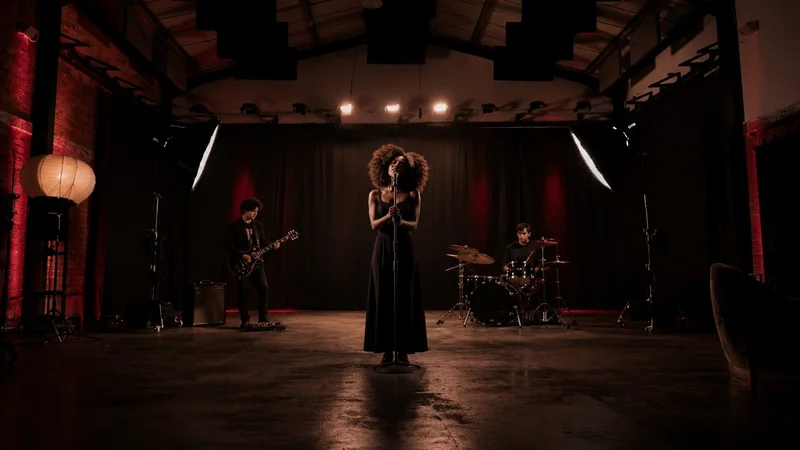
Lighting serves as the critical psychological differentiator between amateur web-camera footage and professional, cinematic video podcasting.40 Achieving a high-end visual aesthetic does not inherently require a massive Hollywood budget; rather, it requires a fundamental understanding of how to control light to create depth, establish mood, and separate the subject from the background so the resulting two-dimensional image does not appear flat to the viewer.40
Recommended Lighting Instruments
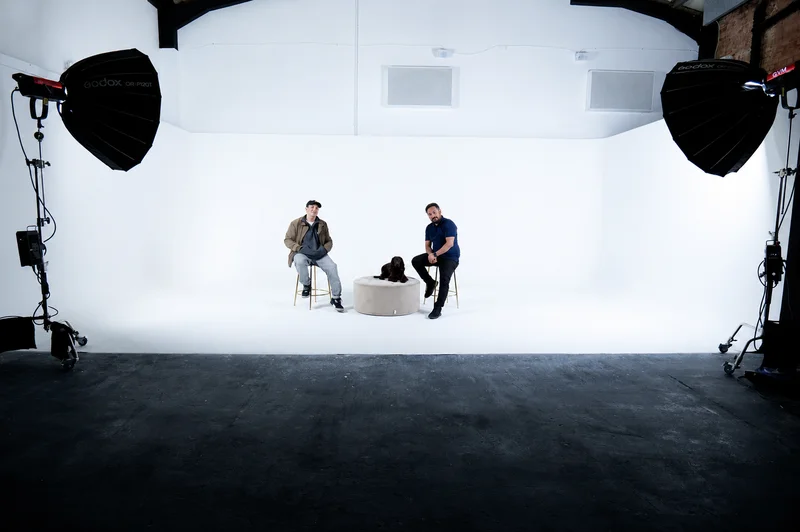
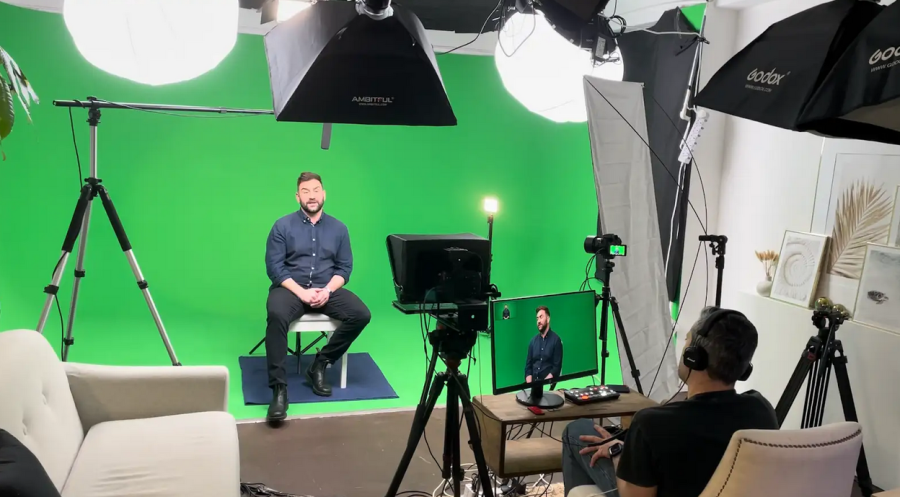
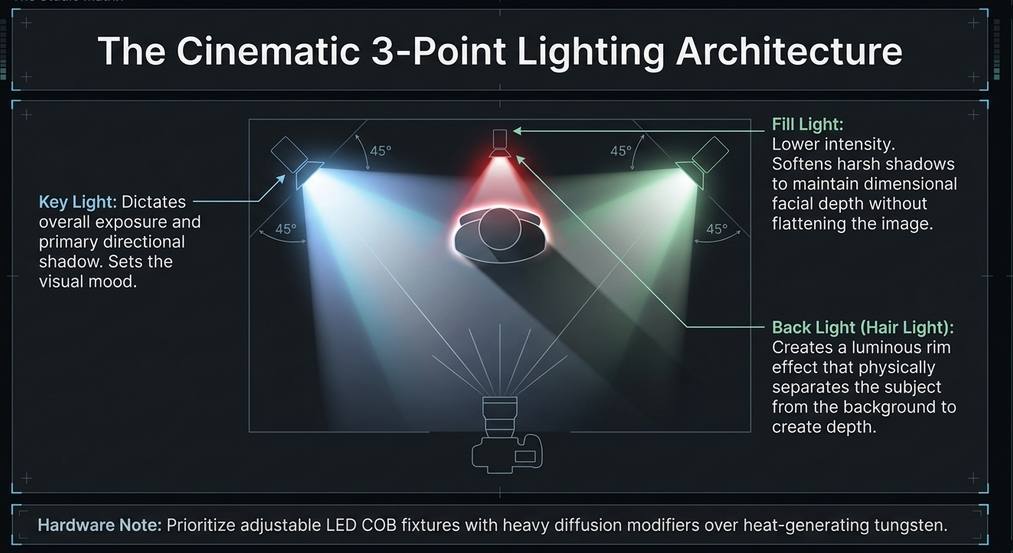
Modern video podcasts benefit immensely from the rapid advancement of LED technology, which offers highly adjustable color temperatures (bicolor or full RGB spectrums) without the dangerous heat output and massive power draw of traditional tungsten fixtures. Recommended primary fixtures for independent creators include COB (Chip on Board) lights paired with heavy diffusion modifiers, such as Aputure Light Domes or Neewer CB100C units, which soften the photon output to wrap around the subject, creating highly flattering skin tones.40 For tighter studio spaces where large parabolic softboxes are impractical, LED panel lights (like the Litepanels Gemini 2x1) provide excellent, controllable ambient fill.40
Lighting Diagrams
The foundational architecture for professional podcast lighting is the classic 3-point lighting setup, a technique refined over decades in the film industry that utilizes three distinct light sources to control all visual variables and shadows.41
The Key Light: This is the primary source of illumination, typically positioned at a 45-degree angle to the subject. It dictates the overall exposure of the scene and establishes the primary directional shadow, setting the visual mood.
The Fill Light: Placed on the opposite side of the key light, the fill is set to a significantly lower intensity. Its sole purpose is to soften the harsh shadows cast by the key light without eliminating them entirely, thereby maintaining dimensional depth across the subject's face.42
The Back Light (or Hair Light): Positioned behind the subject, outside the camera's frame, this light strikes the shoulders and the back of the head. It creates a luminous rim or halo effect that physically separates the subject from the background, which is the quintessential element required for achieving a "cinematic" aesthetic.42
Capturing Good Audio
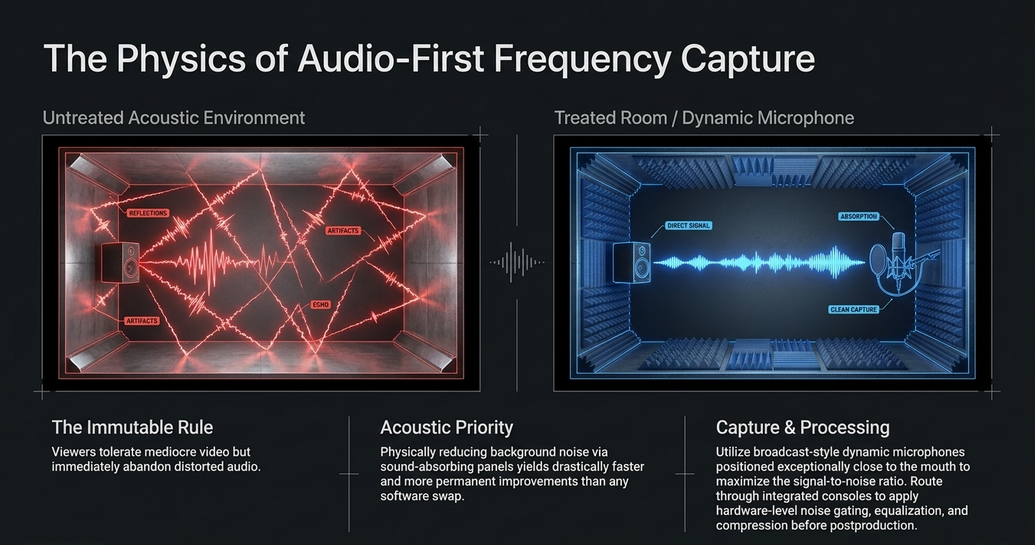
Despite the rapid integration of high-definition video, podcasting remains fundamentally an audio-first medium; viewers will routinely tolerate mediocre video quality if the content is compelling, but they will immediately abandon a stream afflicted by distorted, echoing, or unbalanced audio.5 High-quality audio capture requires dynamic, broadcast-style microphones (such as the industry-standard Shure SM7B or the Lewitt RAY) positioned exceptionally close to the speaker's mouth to maximize the signal-to-noise ratio and mechanically reject ambient room reflections.36
Furthermore, routing these microphones through a dedicated audio interface or integrated production console (e.g., the RØDECaster Pro 2) allows for critical real-time processing.43 Applying noise gating to eliminate breath sounds, equalization to enhance vocal clarity, and compression to control sudden volume spikes at the hardware level significantly reduces the postproduction workload. However, before investing heavily in electronic gear upgrades, producers must first prioritize acoustic room treatment, as physically reducing background noise through sound-absorbing panels improves sound quality far faster and more permanently than any software or hardware swap.
Production: Videography
Camera Considerations
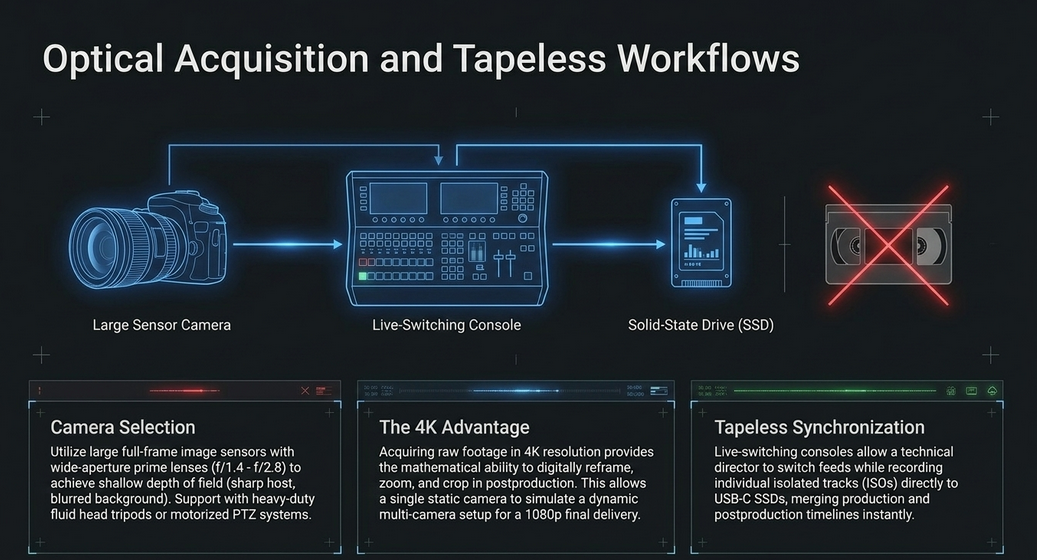
Selecting the appropriate camera depends entirely on the podcast's operational model, budget, and aesthetic goals. While flagship smartphone technology has advanced remarkably, dedicated mirrorless hybrid cameras or compact cinema cameras (such as the Sony FX3, Sony A7IV, or the Panasonic Lumix line) remain the undisputed industry standard for serious productions.40 These cameras feature large, full-frame image sensors capable of producing a shallow depth of field—the optical phenomenon that keeps the host in sharp focus while pleasantly blurring the background. This visual isolation instantly elevates the perceived production value. Lenses play an equally vital role; versatile zoom lenses with focal lengths between 24mm and 70mm provide operational flexibility, while wide-aperture prime lenses (f/1.4 to f/2.8) maximize light gathering capabilities and enhance the background blur effect.33
Choosing an Acquisition Format
While 1080p high-definition is the baseline acceptable delivery standard across streaming platforms, acquiring the raw footage in 4K resolution is increasingly recommended as standard operating procedure.38 Filming in 4K provides editors with the crucial mathematical ability to digitally reframe, crop, zoom, and punch in on subjects during postproduction without suffering a perceivable loss of quality when delivering a final 1080p file. This effectively allows a single static camera to provide both a wide establishing shot and a medium close-up, simulating the dynamic editing pace of a multi-camera setup without the associated hardware costs.
Camera Support Options
Static, unmoving framing is a traditional hallmark of the video podcast format. Therefore, heavy-duty tripods equipped with fluid heads are mandatory to prevent micro-vibrations, especially in studios situated in dense urban environments or on suspended floors.33 However, for productions seeking a more dynamic and premium visual aesthetic, motorized sliders or remote-operated PTZ (Pan-Tilt-Zoom) cameras can be integrated. These systems add subtle, programmed kinetic movement to the frame, maintaining viewer visual engagement during long, highly technical conversational segments without requiring additional human camera operators on the studio floor.
Tapeless Acquisition
The era of magnetic tape acquisition is entirely obsolete in modern digital workflows.15 Modern production relies exclusively on tapeless acquisition, utilizing high-speed SD cards, CFexpress media, or direct-to-SSD (Solid State Drive) recording via USB-C outputs. In advanced multi-camera podcast studios, devices like the ATEM Mini Pro ISO serve as revolutionary tools; they allow a technical director to live-switch the camera feeds while simultaneously recording all individual isolated camera feeds (ISOs) directly to an external drive. This generates a synchronized timeline project file that dramatically accelerates the postproduction editing process, effectively merging production and postproduction workflows.
THE POSTPRODUCTION OF PODCASTS
Acquiring Additional Sources
Working with B Roll
To prevent profound visual fatigue during long-form, hour-plus interviews, producers must systematically intercut the primary camera feeds with B-roll footage. This supplementary imagery serves as visual evidence directly supporting the spoken dialogue, ensuring that the visual component of the podcast is continuously justifying its existence rather than merely acting as a static surveillance feed of a radio broadcast.
Working with Photos
Similarly, incorporating high-resolution photographs provides crucial historical or contextual anchoring for the discussion. When working with static images in a video timeline, editors should employ subtle digital movements (often referred to as the "Ken Burns effect")—slow pans and zooms—to maintain kinetic energy on screen and prevent the video compression algorithms from interpreting the scene as entirely static, which can cause jarring visual artifacts when transitioning back to moving video.
Working with Screen Captures
For educational or specialized B2B video podcasts, incorporating screen captures, software demonstrations, and data visualizations is essential. When displaying these elements, producers must utilize picture-in-picture (PiP) layouts that retain the host's facial expressions on screen alongside the data. Behavioral psychology in media suggests that seeing the host's micro-expressions and reactions while they explain complex data significantly deepens the parasocial connection with the audience and aids in viewer information retention.11
Working with Speaker Support/Slides
When integrating speaker support materials, such as PowerPoint or Keynote slides, the primary concern shifts from aesthetic beauty to absolute legibility across diverse viewing devices. Slides designed for a massive conference room projector often fail completely when scaled down to a mobile phone screen. Editors must frequently rebuild or heavily crop provided slides, ensuring that vital text and charts occupy the maximum possible screen real estate while adhering to strict typographic standards.
Motion Graphics
Motion graphics—including animated lower-thirds (name graphics), introductory title cards, and transition bumpers—infuse the production with a distinct brand identity. Developing highly repeatable, standardized graphical templates that can be easily updated for each episode is a postproduction necessity; rebuilding complex animations for every release creates an unsustainable workflow bottleneck that inflates costs and jeopardizes publishing consistency.25
Technical Issues for Podcasting Graphics
Graphic design for video podcasts is constrained by strict technical platform parameters. A critical technical issue often overlooked involves podcast cover art transparency. Apple Podcasts, a major directory, strictly specifies that cover art must be formatted as a PNG or JPG without any alpha-channel transparency; the artwork must possess a solid background.47 Furthermore, primary artwork must be scalable, maintaining visual coherence and legibility whether displayed at a maximum resolution of 3000x3000 pixels on a desktop monitor or minimized to a tiny thumbnail on a smartwatch display.47
Graphic Design Issues for Video Podcasts
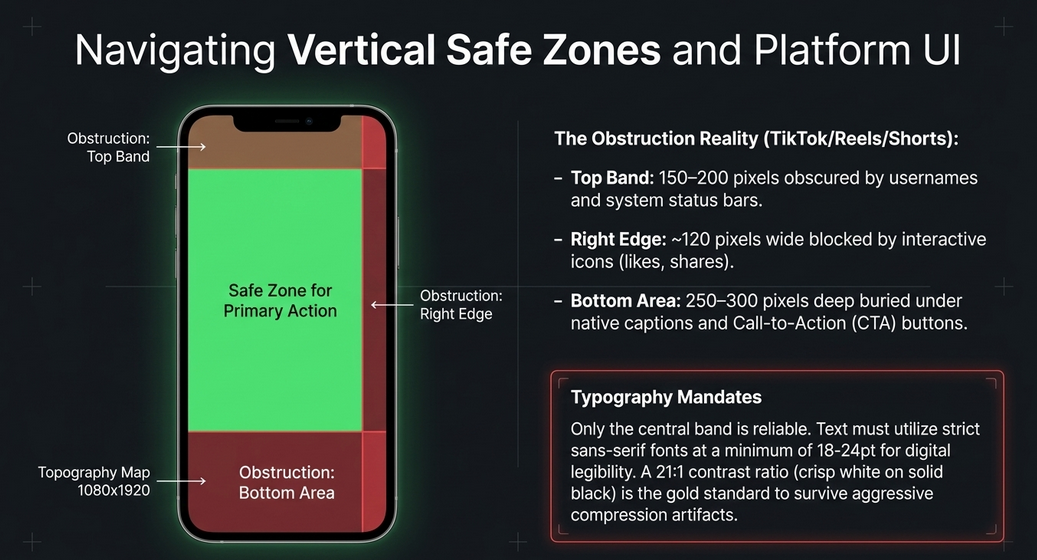
Beyond directory artwork, the internal video graphics must navigate the severe friction between desktop design aesthetics and mobile consumption reality. Designers must adhere to strict legibility and safe-zone standards.
Typography and Accessibility: For on-screen captioning and lower-thirds, sans-serif fonts (e.g., Open Sans, Roboto) are mandatory. They offer superior digital readability, survive aggressive video compression artifacts far better than intricate serif fonts, and provide greater accuracy for AI-driven visual recognition tools.46 Font sizing must adopt a mobile-first approach, with primary text set to a minimum of 18-24pt.46 Color contrast is equally vital; the gold standard remains crisp white text on a solid black background, which yields an optimal 21:1 contrast ratio, ensuring accessibility across various lighting conditions and screen brightness levels.46
Mobile Safe Zones: When exporting vertical video graphics for social media syndication (such as TikTok, YouTube Shorts, or Instagram Reels), producers must rigorously adhere to platform-specific "safe zones." A standard 1080x1920 vertical canvas is heavily obstructed by unmovable live user interfaces.49
Placing vital branding, key text, or hardcoded captions within these specific pixel ranges guarantees they will be covered, directly degrading video performance and conversion rates.49 The central band—representing the core action safe area—is the sole reliable location for critical visual information.49
Music for Podcasts
Music establishes the emotional baseline and momentum of the show. Intros must be exceptionally tight and concise, earning the viewer's attention quickly before fading out gracefully so as not to distract from the spoken dialogue.47 From a legal and compliance perspective, producers must exclusively utilize royalty-free music or original compositions with licenses that explicitly cover both audio and video syndication. A common pitfall involves utilizing a track cleared solely for an audio RSS feed; when the video version is subsequently uploaded to YouTube, the platform's strict Content ID system will flag the music, resulting in automated copyright strikes or the immediate demonetization of the creator's video.
Editing Considerations
The Evolution of Nonlinear Editing
Nonlinear editing (NLE) has evolved from a highly specialized, hardware-dependent technical discipline utilizing proprietary consoles into a highly streamlined, software-driven workflow accessible on consumer laptops. The recent integration of artificial intelligence into modern NLE platforms has revolutionized the process by automating traditionally tedious, labor-intensive tasks. Features such as algorithmic multi-camera synchronization based on audio waveforms, automated silence and dead-air removal, and text-based editing—where an editor cuts the video by deleting text in an AI-generated transcript rather than manipulating clips on a timeline—allow producers to focus entirely on narrative pacing rather than technical timeline management.24
NLE Selection Criteria
When selecting an NLE for podcasting workflows, the primary operational criteria are robust multi-track audio capabilities and sophisticated multicam video switching. The software must effortlessly allow the editor to view all recorded camera angles simultaneously in a grid and cut between them in real-time during playback, simulating a live broadcast switch. Furthermore, the chosen NLE should support customizable, highly specific export presets tailored to the exact encoding requirements of major distribution platforms like Spotify and YouTube, ensuring technical compliance upon upload.52
Technical Considerations During Editing
Postproduction is the phase where workflow standardization pays immense operational dividends. Developing rigid project templates for episode structures, graphical overlays, and intro/outro sequences dramatically reduces turnaround times and ensures brand consistency across hundreds of episodes.25 Editors must also be exceptionally diligent in applying audio processing during this phase. Essential steps include applying noise reduction algorithms to eliminate HVAC hums or electrical buzzes, utilizing precise EQ (equalization) to balance differing vocal tonalities between hosts and remote guests, and aggressively utilizing dynamic range compression to ensure a consistent volume level so the listener does not have to constantly adjust their device's volume knob during sudden laughs or whispers.
Encoding the Podcast
The Challenge of Encoding
Encoding a video podcast is a complex exercise in balancing uncompromising visual quality with the strict file size and bandwidth limitations imposed by hosting servers and streaming platforms. An uncompressed, raw video file is astronomically large and entirely unsuitable for internet distribution. This necessitates the use of sophisticated codecs (Coder-Decoders) to compress the digital data efficiently, discarding redundant information without introducing noticeable visual artifacts, macroblocking, or color banding.53
Determining Delivery Format
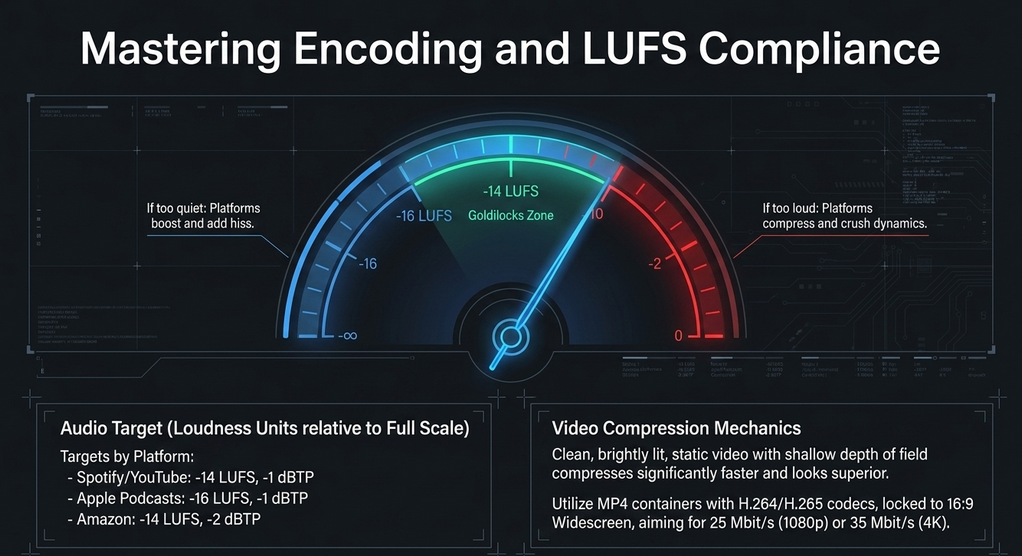
The universally accepted container format for video podcasting is MP4, with MOV acting as a viable secondary option. Formats such as FLV and AVI are considered obsolete for modern streaming infrastructure and are heavily discouraged by major platforms.53 The video data housed within this container must be compressed using the H.264 High Profile codec—or its more efficient successor, H.265/HEVC—which offers the optimal blend of aggressive compression efficiency and widespread hardware decoding compatibility across billions of mobile devices.52
Delivering Podcasts with Apple Compatibility (and Spotify)
To ensure flawless playback and prevent upload rejection across the massive Apple and Spotify ecosystems, producers must strictly adhere to specific encoding specifications regarding resolution, bitrate, and temporal framing:
What About Alternate Delivery? Technical Loudness Standards (LUFS)
While video specifications are critical, audio encoding for alternate streaming platforms relies on strict compliance with Loudness Units relative to Full Scale (LUFS). LUFS is a measurement that gauges perceived human loudness over the duration of the file, rather than just measuring the highest peak volume. Platform algorithms ruthlessly enforce these standards. If an uploaded file is mastered too quietly, platforms apply aggressive digital limiters that boost the volume, inadvertently raising the background noise floor and causing audible hiss; if mastered too loud, the file is aggressively compressed, destroying the dynamic range and making the voices sound crushed.55
Compression Tools and Encoding Advice
Professional NLEs feature built-in software encoders, but dedicated compression tools often provide superior, multi-pass encoding algorithms that analyze the video multiple times to optimize data distribution. Hardware acceleration, utilizing the dedicated encoding chips on modern GPUs, can drastically reduce export times from hours to minutes.
Simple Techniques for Better Compression
To optimize the mathematical efficiency of compression algorithms, producers should ensure their shooting environment is brightly and evenly lit. Digital noise—the grainy artifacts generated by underexposed camera sensors struggling in low light—profoundly confuses compression algorithms. The codec wastes massive amounts of available bitrate attempting to render this random, shifting noise accurately, rather than allocating that data to preserving sharp edge details and subject clarity. Clean, well-lit video compresses significantly faster and looks drastically superior at much lower bitrates. Furthermore, utilizing static, locked-off camera shots with shallow depth of field helps, as blurred, unchanging backgrounds require almost zero data to encode, saving bandwidth for the host's facial movements.
THE DELIVERY OF PODCASTS
Hosting the Podcast
The Essential Steps to Publish a Podcast
Publishing a podcast requires an intermediary digital server—a podcast host—to securely store the large audio and video files and automatically generate the XML syndication feed.56 Attempting to host a podcast directly on a standard corporate website server is a critical operational error; it inevitably leads to severe bandwidth throttling, exorbitant overage charges, or complete site crashes due to the simultaneous, massive large-file data requests triggered by thousands of apps the moment a new episode drops.
Budgeting for Hosting
While free hosting tiers exist and appear attractive to amateur creators, they often impose severe bandwidth restrictions, limit analytics, and, most dangerously, hijack the show's monetization potential by forcibly inserting their own unvetted advertisements.25 Professional hosting is a mandatory, albeit relatively minor, monthly operational expenditure. Proper budgeting must account for the platform's storage limits, the bandwidth required to serve the projected audience size, and access to premium features required by brands, such as private gated feeds for internal corporate communications or advanced programmatic dynamic advertising integrations.57
Hosting Requirements
A viable modern podcast host must feature robust, global high-bandwidth content delivery networks (CDNs), advanced analytics dashboards capable of parsing geographic and consumption data, and seamless integration with major directories. Crucially, the hosting server must be explicitly configured to allow HTTP HEAD requests and byte-range requests, which are mandatory technical requirements for Apple Podcasts to allow smooth streaming playback without requiring the user to download the entire multi-gigabyte file first.58
Hosting Options
The market offers diverse hosting options tailored to different scales of operation. Platforms have evolved rapidly to handle the influx of video data. Modern hosting platforms provide simplified, automated distribution tools that push the generated RSS feed directly to Apple Podcasts, Spotify, Amazon Music, and Google with minimal friction, managing the complex API handshakes required by these tech giants on behalf of the creator.