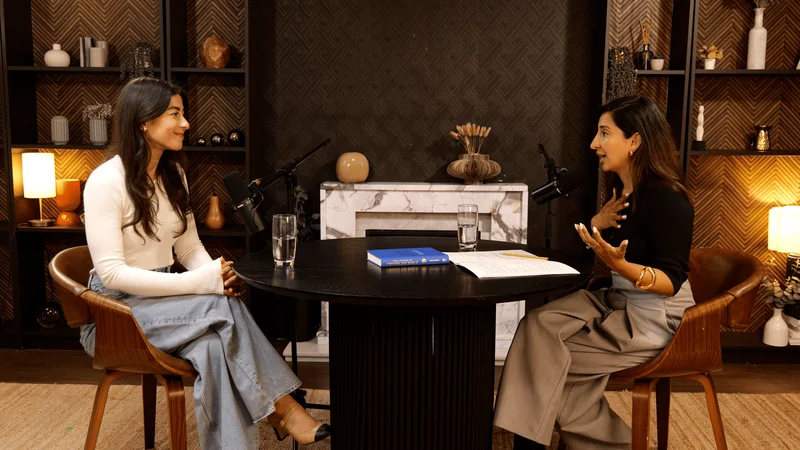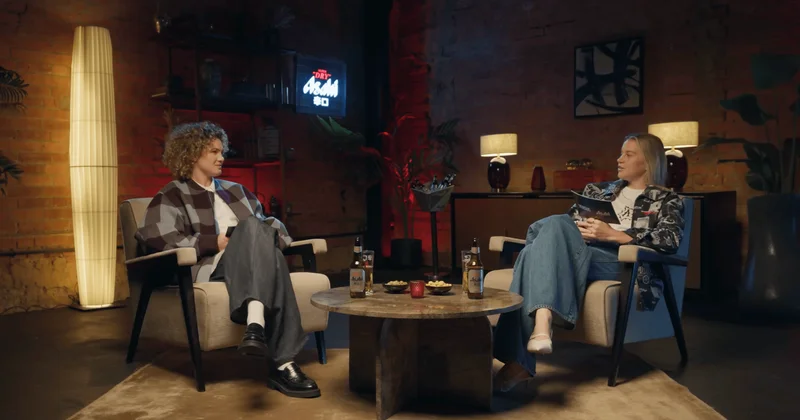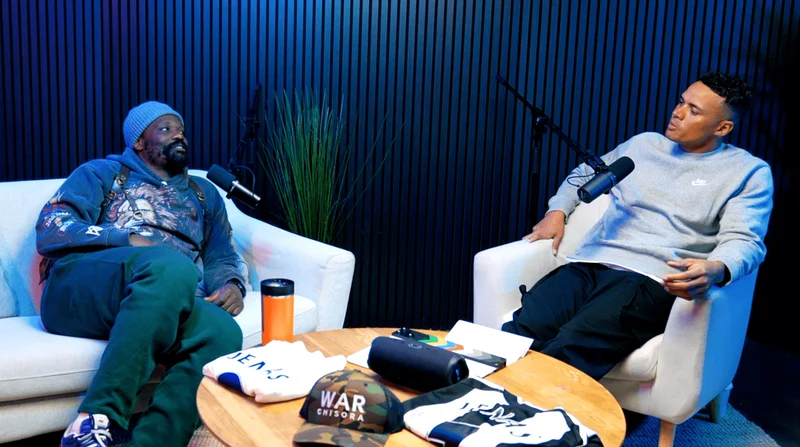
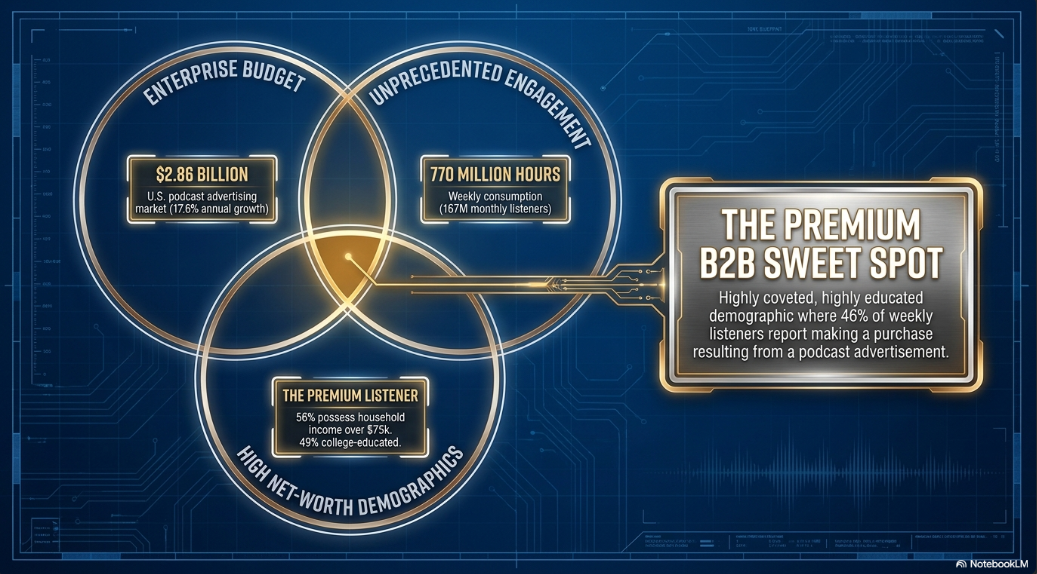
The podcasting medium has transitioned entirely from an experimental digital format into a highly sophisticated, multi-billion-dollar global media ecosystem. Corporate entities, independent media networks, and thought leaders are increasingly allocating substantial enterprise budgets to audio and video programming. The United States podcast advertising market reached a record $2.86 billion in recent measurements, growing at an annual rate of 17.6% and substantially outpacing the broader digital audio sector1. Furthermore, consumer engagement has reached unprecedented levels, with Americans spending 770 million hours per week consuming podcasts—a 355% increase over a ten-year period1. Monthly listenership now encompasses 167 million Americans, representing 58% of the population over the age of twelve, while weekly listeners total approximately 130 million1.
For commercial enterprises, the demographic composition of this audience is particularly valuable. Research indicates that 56% of monthly podcast consumers report an annual household income exceeding $75,000, and 49% possess college degrees, making them a highly coveted demographic for premium advertisers and business-to-business (B2B) marketers4. Moreover, the medium drives tangible commercial action, with 46% of weekly listeners reporting a purchase resulting from a podcast advertisement4.
Capturing and retaining the attention of this affluent, educated demographic requires production standards that rival traditional broadcast television. Success is no longer achieved by placing two individuals behind microphones and recording an unscripted conversation. Instead, premium audio properties are meticulously engineered months before recording software is initiated. Strategic pre-production represents the critical infrastructure of any high-performing professional podcast. This comprehensive report details the exhaustive mechanisms of podcast pre-production, focusing heavily on content planning, the architecture of editorial calendars, the generation of episode topics, the compilation of deep-research guest dossiers, and the complex economic realities dictating audio-first versus video-first content delivery.
Strategic Blueprinting and Niche Definition
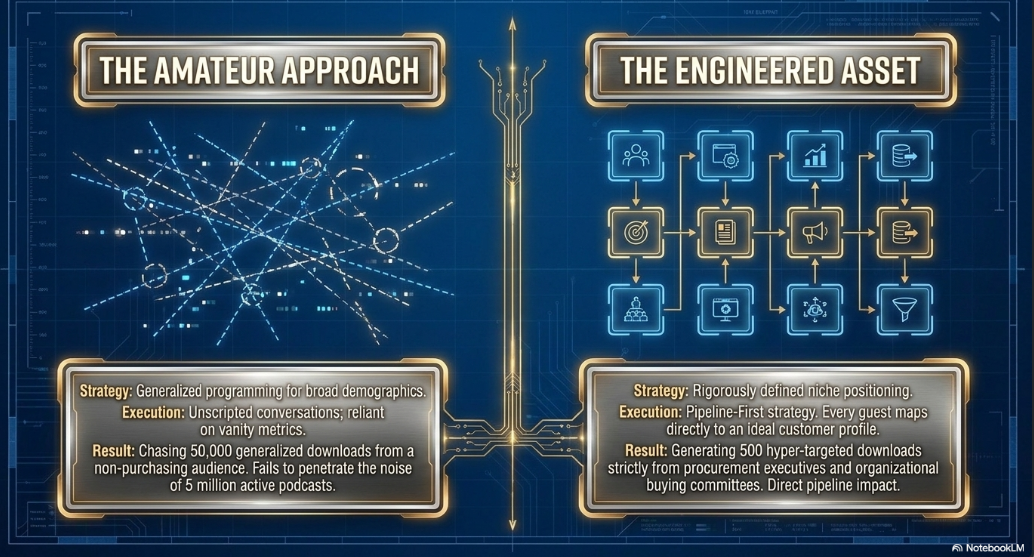
Before an editorial calendar can be populated, the production team must engage in an extensive pre-planning phase to determine the exact market positioning of the intellectual property. There are over five million active podcasts in the global directory, meaning that launching a generalized program is a severe strategic vulnerability5. A show attempting to capture a broad demographic inevitably fails to penetrate the noise, whereas a highly defined niche allows a program to dominate a specific sector5. For example, rather than launching a general "business management" podcast, an enterprise might specifically target "how to bootstrap technology startups in emerging markets"5.
The pre-planning phase mandates a rigorous market analysis, often beginning with a SWOT (Strengths, Weaknesses, Opportunities, Threats) analysis of existing competitor shows6. Producers must evaluate similar programs to establish a baseline for quality, noting their structural flaws, typical guest profiles, and thematic blind spots6. This process is driven by curiosity rather than immediate certainty. Leading producers conduct preliminary interviews with internal stakeholders, existing customers, and prospective listeners to determine what specific information the target demographic feels is absent from the current media landscape7. The most lucrative podcast concepts rarely emerge from initial brainstorming sessions; they surface when production teams detect friction points in existing media and pivot toward an unserved audience demand7.
Simultaneously, the program must define explicit audience personas and business objectives. These personas must transcend basic demographics to include psychographics, such as specific career pain points, daily commuting habits, and lifestyle constraints5. For B2B podcasts, broad download metrics are frequently dismissed as vanity indicators. A B2B podcast generating a modest 500 downloads per episode from highly targeted procurement executives will drastically outperform a generalized business show with 50,000 downloads from an irrelevant, non-purchasing audience8. Shows engineered for B2B pipeline impact utilize a "Pipeline-First" strategy, ensuring that every guest selected and topic generated maps directly to an ideal customer profile and the organizational buying committee9.
Operational Infrastructure: Content Calendars and Workflow Automation
The operational backbone of a professional podcast relies on sophisticated project management systems. The mental overhead required to decide what content to produce on a week-to-week basis is a significant drain on creative energy, pulling focus away from the actual quality of the performance10. Operating without a robust editorial calendar risks missed deadlines, wildly inconsistent audio quality, and severe creator burnout11.
A meticulously structured content calendar eliminates this ongoing decision fatigue. By locking in content decisions weeks or months in advance during dedicated planning sessions, hosts and producers can direct their entire cognitive capacity toward research, scripting, and performance10. Furthermore, advanced scheduling creates a distinct operational advantage for guest acquisition. High-value guests—such as Fortune 500 executives, specialized academics, or recognized industry thought leaders—operate on demanding schedules. A content calendar that projects guest requirements six to eight weeks in advance provides the necessary lead time to secure top-tier talent, navigate their public relations teams, and prepare thoroughly for the dialogue10. Relying on episode-by-episode scheduling typically limits a production to whichever guests happen to be immediately available, severely degrading the program's authority and quality10.
The architecture of a professional workflow generally divides tasks into distinct chronological phases, each requiring clear ownership and strict deadlines. Pre-production encompasses research, topic ideation, guest outreach, and the signing of release forms12. Production covers the physical or virtual recording environment, equipment checks, and the interview itself12. Post-production involves audio engineering, sound design, transcript generation, and platform uploading12. Finally, marketing includes asset creation, social media scheduling, and cross-promotion12.
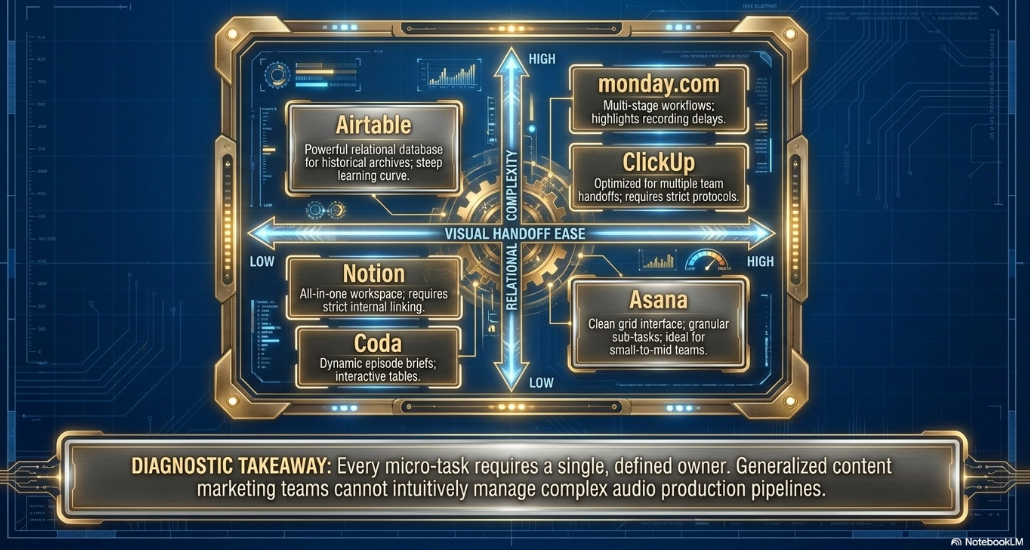
To manage this complex pipeline, production teams utilize specialized project management software. The selection of the platform is dependent on the size of the team and the complexity of the seasonal arcs.
Regardless of the chosen software ecosystem, the workflow protocols must be rigidly enforced. A frequent point of failure in corporate podcasting is the assumption that a generalized content marketing team can intuitively manage audio production16. Podcasting is a highly specific discipline requiring dedicated skills, and every micro-task—from processing audio files to writing search-engine-optimized show notes—must have a single, clearly defined owner to prevent operational failure16.
Generating Episode Topics and Developing Seasonal Arcs
Topic generation must transcend the host's immediate personal interests and align strictly with verifiable market demand, search intent, and the strategic objectives of the brand.
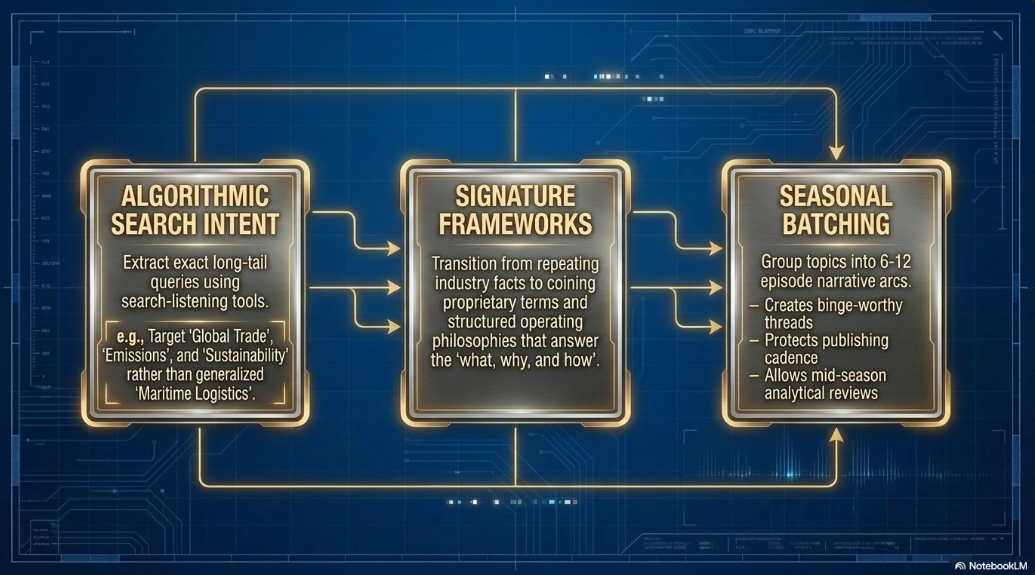
Modern podcast directories, particularly Apple Podcasts, Spotify, and YouTube, function as highly sophisticated search engines17. Consequently, topic ideation must be intrinsically linked to strategic keyword research. Production teams are advised to launch a program with a comprehensive list of potential topics that correspond to primary industry keywords17. Advanced producers utilize search-listening tools like AnswerThePublic to uncover the exact questions and long-tail keywords consumers are actively querying across different platforms18. By analyzing how artificial intelligence and search algorithms describe specific keywords, producers can build a data-backed foundation for episode themes18.
For example, an enterprise podcast focused on maritime logistics might identify ten primary keywords, such as "Sustainability," "Shipping," "Maritime," "Global Trade," and "Emissions"17. The production team then develops episode titles specifically engineered to capture organic search traffic around these terms17. Optimizing episode titles, show notes, and embedded website transcripts with these keywords ensures that the content remains discoverable long after the initial publication date17.
In highly saturated intellectual markets, simply restating established industry facts is insufficient to command attention. True thought leadership demands that hosts guide their audiences through the underlying mechanics of an issue, answering the complex "what, why, and how"20. A highly effective methodology for generating compelling topics is the creation of "signature content"20. This involves the host conceptualizing and naming a unique framework, coined term, or distinct operating philosophy20. By developing content arcs around proprietary frameworks, the podcast transitions from a generic interview show into a structured, highly valuable educational curriculum.
While many podcasts operate on a continuous, "always-on" weekly publishing schedule, organizing content into distinct seasonal arcs provides significant strategic and operational advantages. Seasonal structuring allows production teams to explore a single, complex theme deeply over six to twelve episodes, creating a binge-worthy narrative thread21. From an operational standpoint, seasons facilitate "batch production." Recording a high volume of episodes within a condensed window protects the consistency of the publishing schedule, creates vital buffer time for post-production editing, and prevents the host from constantly operating in a reactive, high-stress state7.
Furthermore, seasons naturally accommodate a strategic review gate. By pausing production at the midpoint of a season, the team can analyze listener completion rates, retention graphs, and audience feedback from the first half of the arc before finalizing the scripts and topics for the concluding episodes22.
The Master Interviewer: Guest Dossiers and Pre-Interview Architecture
For interview-format podcasts, the quality of the final audio is directly proportional to the depth of the pre-interview research. Producing elite-level content requires far more than simply booking a high-profile individual and asking generalized questions; the host must possess a clear architectural vision for the narrative they intend to extract23.
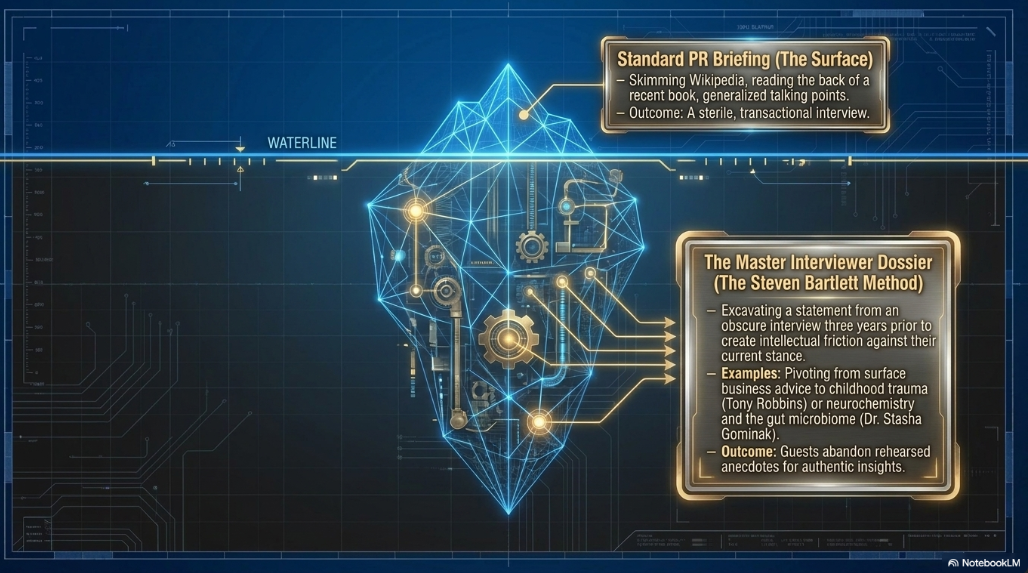
The standard industry practice of skimming a guest's public Wikipedia page or reading the back cover of their latest publication is entirely inadequate for professional broadcasting24. The most successful interviewers treat preparation as a core craft, investing heavily in research to ensure the conversation transcends standard public relations talking points24.
A premier example of this methodology is demonstrated by Steven Bartlett, host of The Diary of a CEO, a podcast that scaled from a modest audience to over sixteen million subscribers by treating deep research and psychological framing as distinct competitive advantages24. The goal of deep research is to build a comprehensive guest dossier that uncovers the gaps, contradictions, and overlooked nuances in their extensive public record24. By locating a statement the guest made in an obscure interview three years prior and contrasting it with their current philosophical stance, the host creates intellectual friction24.
This level of preparation serves as a profound psychological signal of respect to the guest24. When a high-profile individual realizes the host has genuinely engaged with the totality of their work, they routinely abandon their polished, rehearsed anecdotes and offer highly authentic, vulnerable insights24. For instance, deep research allows a host to pivot from surface-level business advice into profound psychological discussions, such as exploring childhood trauma and pattern recognition with Tony Robbins, or dissecting the neurochemical relationship between Vitamin D deficiency, sleep apnea, and the gut microbiome with Dr. Stasha Gominak27.
However, this meticulous preparation must never become a rigid, inescapable constraint. A host arriving with a strict list of thirty pre-written questions, determined to ask them in order regardless of the conversation's natural flow, will produce a sterile, transactional interview24. The host must be prepared enough to possess a strategic roadmap, yet disciplined enough to abandon the script entirely when the guest pulls on an unexpected, highly compelling narrative thread24. True conversational listening dictates that the most effective follow-up questions often have nothing to do with the pre-written outline; they are direct, active responses to the guest's immediate statements24. Pushing a guest on difficult topics only works after this foundation of deep trust and active listening has been firmly established24.
Preparing the Guest for the Recording Environment
Guest preparation is equally critical to the success of the episode. A formalized pre-interview workflow must be established to ensure the guest is technologically prepared, conceptually aligned, and emotionally comfortable before the recording begins.
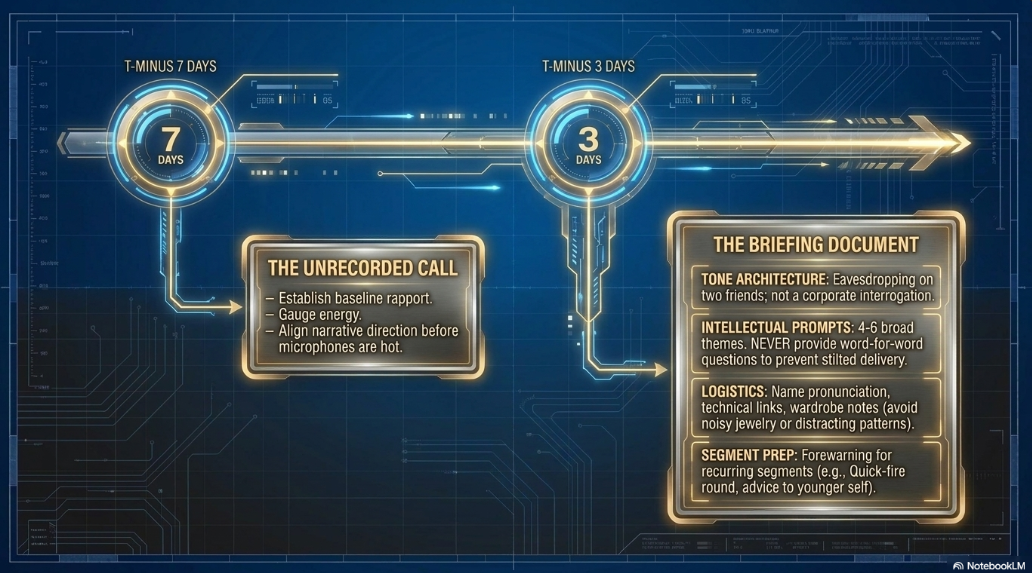
Effective guest preparation involves transmitting a structured briefing document three to seven days prior to the session29. This document must explicitly avoid providing a word-for-word list of exact questions, as this encourages the guest to pre-write and memorize their answers, resulting in a stilted, unnatural vocal delivery29. Instead, the producer should provide four to six broad conversational themes or intellectual prompts29.
A standard, highly effective Guest Information Sheet is designed to foster an intimate, relaxed environment. Exemplified by templates used by professional impact-focused podcasts, this briefing document should outline several core components. First, it must clearly articulate the podcast's overarching vision and identify the target audience, explaining exactly what actionable takeaways the listeners expect30. Second, the document must establish the desired tone of the recording; for example, requesting that the guest treat the session as an "eavesdropping on two friends" scenario rather than a formal corporate interrogation30.
Logistical clarity is paramount. The briefing must detail the exact date, time, physical location or remote studio link, and the expected duration of the recording29. If the podcast incorporates a video element, the briefing must include specific wardrobe and technical notes, explicitly advising the guest to avoid noisy jewelry, distracting patterns, or environments with poor lighting29. Furthermore, the document should request the guest's preferred biographical information, current job titles, and name pronunciation notes to ensure a flawless introduction29.
Finally, the briefing can introduce recurring segment structures to allow the guest minor preparation time. This might include preparing for a "quick-fire round," reflecting on a specific hardship they overcame, or formulating one piece of critical advice they would offer their younger self30. Many elite producers also mandate a brief, unrecorded pre-interview phone call a week prior to the actual recording. This establishes baseline rapport, allows the host to gauge the guest's energy, and aligns the narrative direction, ensuring the guest feels entirely comfortable before the microphones are activated31.
Scripting the Episode Architecture
While the core interview must remain fluid and reactive, the structural framework of the episode requires a meticulously crafted script. This script guides the host through the introduction, segment transitions, and conclusion, ensuring the episode opens with a high-retention hook and closes with a purposeful Call to Action (CTA)12. A standardized script is not a word-for-word teleprompter feed; it is a conversation guide that prevents repetitive questions and provides backup prompts if the discussion stalls32.
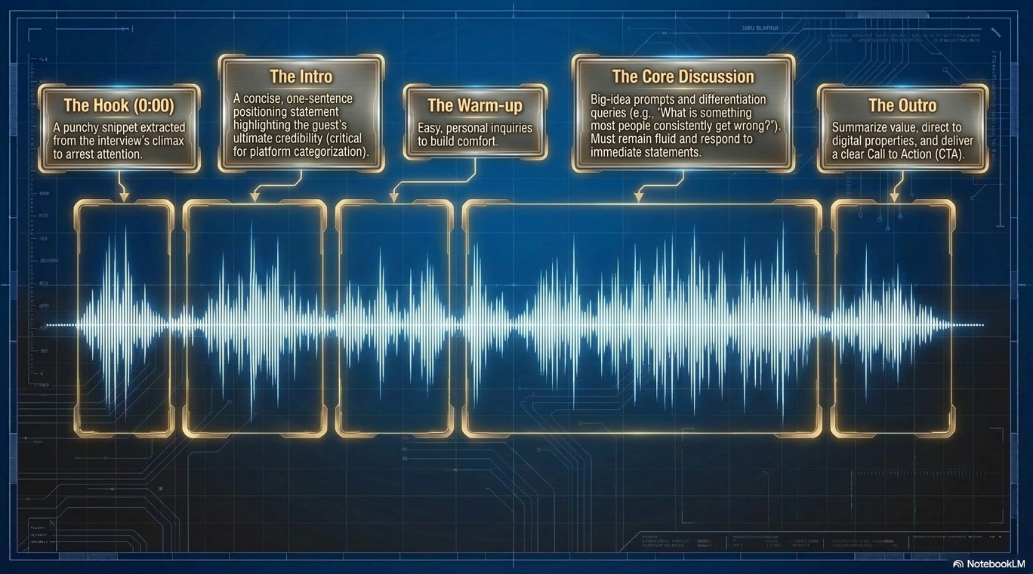
The architecture of a premium interview script generally follows a proven chronological flow. The episode commences with the Hook: a short, punchy, pre-recorded audio or video snippet extracted from the climax of the interview, placed at the very beginning to immediately arrest the listener's attention33. This is immediately followed by the Introduction, where the host frames the episode's thematic core and delivers a concise, one-sentence positioning statement highlighting the guest's ultimate credibility and relevance33. Academic research into podcast consumption indicates that intros carry the critical summary signals for an episode, aiding both human listener retention and algorithmic platform categorization32.
Following the introduction, the host utilizes Warm-up Questions—easy, personal inquiries designed to build the guest's comfort level and transition smoothly into the dialogue33. The script then outlines the Core Discussion, providing the host with big-idea prompts, frameworks to explore, and targeted follow-up queries designed to elicit specific stories or real-world case studies33. To ensure the content remains unique, the script should include differentiation prompts, asking questions such as, "What is something most people consistently get wrong about this topic?"33. The script concludes with the Outro, summarizing the primary value delivered, directing the audience to the guest's digital properties, and delivering a clear CTA for subscriptions or reviews32. Using standardized templates ensures consistency, though producers must maintain separate script variants for solo episodes, interviews, and sponsored formats to avoid structural errors34.
The Format Economics: Audio-First versus Video-First Production
One of the most consequential, cost-intensive decisions made during the pre-planning phase is determining the delivery format of the podcast. The industry is currently undergoing a massive paradigm shift toward video-first podcasting. With YouTube surpassing one billion monthly viewers of podcast content and Spotify aggressively integrating video capabilities, the temptation to immediately adopt a video-first strategy is immense36. Data indicates that 77% of "first-year" podcast listeners actively watch video podcasts, effectively redefining the nature of the medium for incoming demographics2. Furthermore, Gen Z audiences utilize YouTube as their primary podcast discovery engine, with 84% finding new shows on the platform8.
However, adopting a video-first strategy fundamentally alters the economic, technical, and operational reality of the production. Video is not simply an audio podcast with a camera turned on; it is an entirely separate, highly demanding production discipline38.
The Hidden Costs of Attention
The Podcast Marketing Trends: Cost of Attention Report, published jointly by Podcast Marketing Academy and Lower Street, reveals the severe financial and temporal implications of video production. The data demonstrates that transitioning from a standard audio-only workflow to a video workflow increases average monthly production costs from $388 to $1,267 (a 3.6x increase)39. On a per-episode basis, costs escalate from $67 to $24439.
The cost of capturing and holding audience attention rises proportionately. Producing one hour of audio content costs an independent creator approximately $0.56 per listener hour. For video, that figure rises to $0.9939. Consequently, every hour of attention won through video becomes 77% more expensive to produce39.
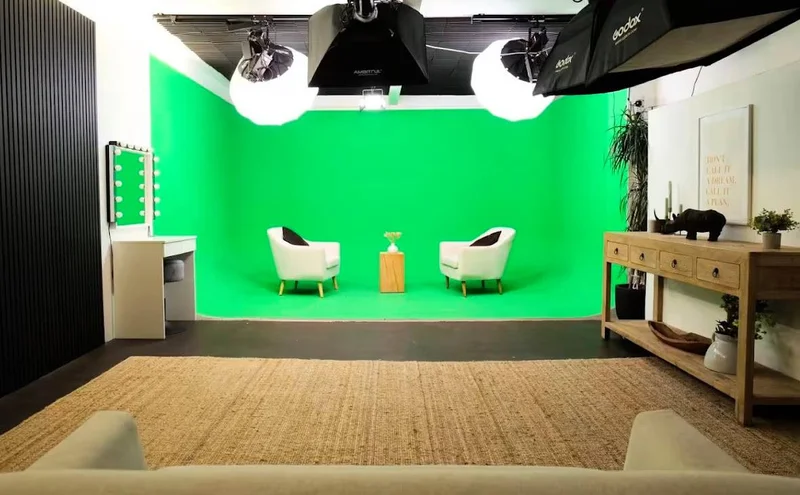
The logistical requirements of video are vastly more complex. In audio production, a quiet room and a high-quality microphone suffice; lighting is irrelevant, and guests can look anywhere38. In video production, lighting dictates 30% of the overall quality. A minimum viable lighting setup (key and fill lights) costs between $200 and $400, while studio-quality setups range from $800 to $2,00038. Furthermore, camera framing, eye-lines, background aesthetics, and wardrobe matter for every second the guest is on screen, drastically altering how guests must be briefed and positioned38.
If a creator chooses to rent a purpose-built video podcast studio rather than building one, costs in major markets (such as Houston or London) range from $75 to $300 per hour38. Building a dedicated office studio demands an upfront capital expenditure of $3,000 to $15,00038. Additionally, data storage requirements explode; a 30-minute audio file is approximately 50MB, whereas a 30-minute 4K multi-camera video file ranges from 5GB to 15GB, necessitating expensive cloud storage and heavy computing power38.
The post-production burden of video is equally massive. Audio editing for a standard one-hour interview typically requires two to four hours of audio engineering time37. Adding video synchronization, multi-camera angle cutting, color correction, lower-third graphics, and platform-specific exports inflates post-production time to between ten and sixteen hours per episode (a 3x to 5x increase)37. If an organizational team cannot sustain this intensive labor load, the video strategy will inevitably break the show's publishing cadence within six months37. Consistency in publishing frequency always defeats the format; a highly consistent audio show will invariably outperform a sporadically published video show with twice the budget37.
Completion Rates and The "Video Threshold"
While video offers unparalleled advantages for algorithmic discovery and the creation of highly engaging social media snippets (which cost an additional $75 to $200 per clip to produce professionally)37, it struggles significantly with deep audience retention.
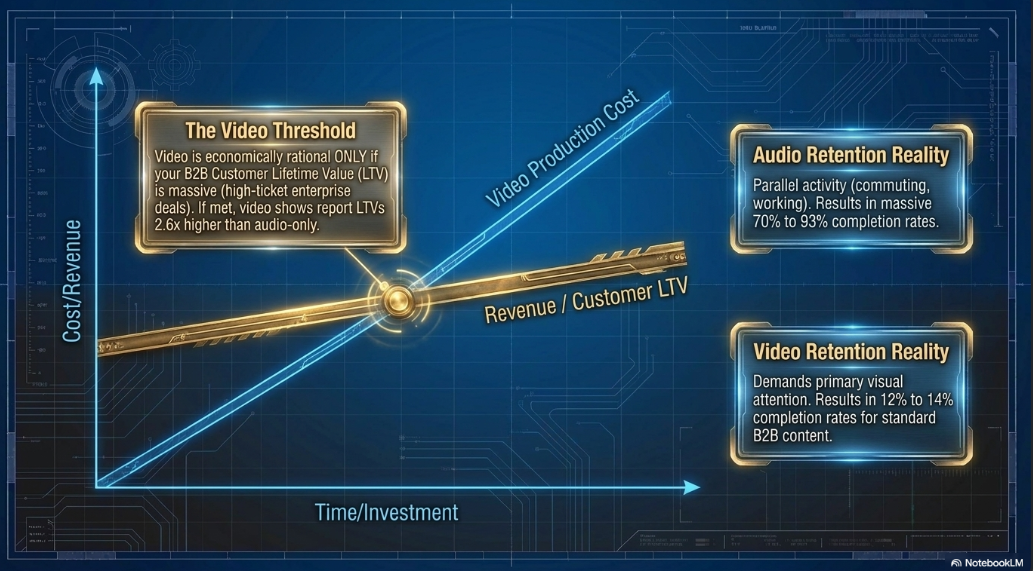
Data from the Fame B2B Podcasting Trends Report and MIDAS surveys indicate that audio-only podcast episodes routinely achieve massive 70% to 93% completion rates8. This is because audio is primarily consumed as a secondary, parallel activity. Listeners consume audio while commuting, exercising, or performing professional tasks, allowing for prolonged, 45-minute engagements without interrupting their workflow41.
By stark contrast, video demands primary, active visual attention. Consequently, standard B2B video content often languishes at a 12% to 14% completion rate8. A guest who is highly compelling in a relaxed audio conversation may appear rigid, hesitant, or distracted on camera, which directly degrades brand credibility37.
Therefore, the strategic decision to pursue video must be dictated by the "Video Threshold"—the specific point at which a podcast generates enough high-margin customer value to fund a sustainable video operation without eroding business profitability39. For B2B brands with high-ticket enterprise offerings, where a single closed client can generate tens of thousands of dollars in pipeline revenue, the 3.6x increase in video production costs is easily justifiable as an efficient customer acquisition investment39. Shows producing both audio and video report customer lifetime values (LTV) more than 2.6 times higher than audio-only shows, allowing them to justify the investment earlier39. Conversely, for independent creators relying solely on low-CPM programmatic advertising, the leap to video requires massive, often unattainable scale to remain economically rational39.
For many corporations, the most defensible path is to prove the concept with an "audio-first" strategy, minimizing production complexity while utilizing AI tools to generate short-form video snippets specifically for social media8.
Partnering with Production Agencies
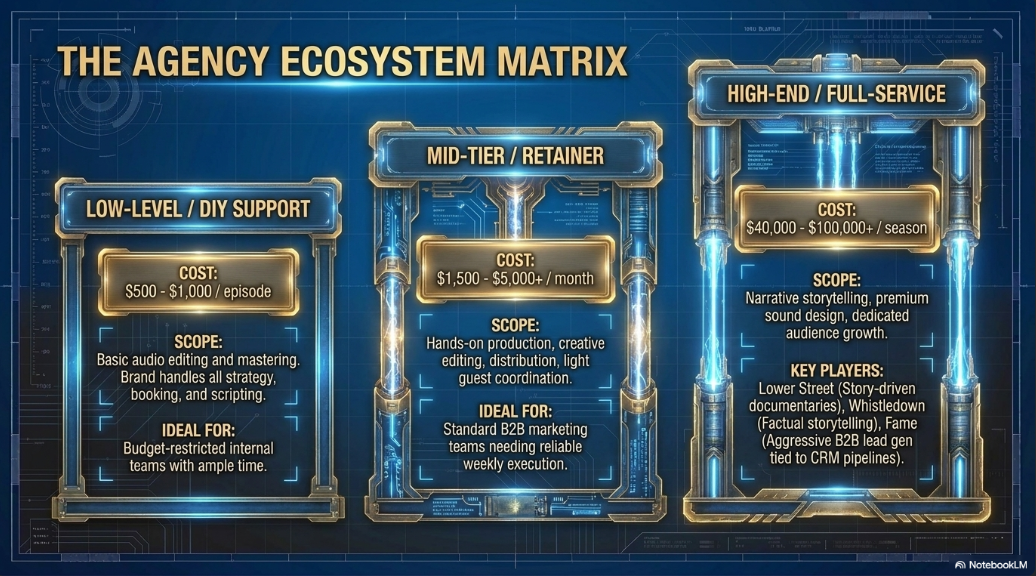
Given the extreme technical and strategic demands of professional podcasting, many enterprise brands and thought leaders opt to outsource the entire lifecycle to specialized podcast production agencies. The agency ecosystem is tiered, offering varying levels of strategic input, production polish, and audience growth capabilities.
Selecting the correct agency requires aligning the firm's specific methodology with the brand's ultimate business objectives.
For brands seeking high-end, story-driven narratives rather than standard "two-people-talking" interviews, Lower Street operates as a premium agency45. Their methodology focuses heavily on the pre-production phase, crafting seasonal narrative arcs, writing complex scripts for voiceovers, and utilizing intricate sound design to create immersive documentaries for clients like BCG and PepsiCo21.
For organizations operating in the academic, social science, or historical sectors, Whistledown Productions brings decades of broadcast radio expertise. With studios in London and Glasgow, Whistledown specializes in long-form journalism, factual storytelling, and BBC Radio documentaries47. They frequently partner with academic institutions, such as producing "The We Society" for the Academy of Social Sciences, taking deep, evidence-backed research and translating it into highly engaging public audio47.
Fresh Air, another UK-based agency born out of broadcast radio, blends high-level creative flair with commercial effectiveness, focusing on ensuring that the audio is not just well-produced, but measurably effective for the brand's bottom line46. Similarly, Cue Podcasts, a London-based full-service agency, specializes in branded storytelling and internal corporate podcasts, managing the entire pipeline from creative strategy to technical execution for major global brands46.
If the primary objective of the podcast is aggressive B2B lead generation and pipeline growth, agencies like Fame or Content Allies are highly optimized. Fame utilizes proprietary systems to tie podcast exposure directly to CRM pipeline progression, actively mapping guests to ideal buyer profiles and prioritizing listener quality over broad download quantities9. Content Allies similarly focuses on revenue outcomes, positioning the podcast as an inbound networking tool to build relationships with key decision-makers46.
Data-Driven Content Refinement: Leveraging Retention Analytics
Pre-production is not a static phase that concludes upon the publication of the first episode; it is a cyclical, iterative process that must be continuously informed by post-production analytics. To refine episode structuring and topic generation, producers must look far beyond surface-level download metrics and analyze deep listener retention data across multiple platforms55.
The analytics ecosystem provides highly granular insights. Tools range from platform-specific dashboards like Apple Podcasts Connect and Spotify for Podcasters, to sophisticated third-party measurement tools like Triton Digital, Podtrac, OP3 (for verifiable open metrics), and CoHost (for tracking B2B account-level engagement)56. Furthermore, audience research tools like Rephonic and Podchaser Pro allow producers to analyze competitor demographics and chart rankings to inform future guest outreach56.
Deciphering the Retention Graph
Platforms like Apple Podcasts and Spotify provide detailed consumption curves, mapping exactly where listeners start, skip, or abandon an episode55. Apple Podcasts specifically measures "Average Consumption" and identifies "Engaged Listeners" (those who consume at least 20 minutes or 40% of the episode)55.
A standard retention graph presents several critical data points that directly dictate future pre-production choices:
The First Five Minutes (The Initial Drop-Off): Industry data consistently demonstrates that 20% to 35% of listeners abandon an episode within the first five minutes59. If a retention graph shows a steep, immediate cliff, it indicates a catastrophic structural failure in the script's introduction60. Episodes with meandering, 90-second introductions lose nearly twice as many listeners as those with concise, 30-to-60-second openings59. The actionable pre-production response is to ruthlessly trim introductory music, skip lengthy biographies, and script powerful, one-sentence hooks that deliver the core value proposition within the first thirty seconds59.
The Dips (Red Flags): A sharp, sudden drop in listenership mid-episode points to a specific structural problem, such as a jarring transition, an overly long sponsor read, or a confusing tangent60. If a B2B podcast experiences a consistent 15% drop every time the host directly pitches a new software feature, the analytical insight is clear: the audience resents direct, uncontextualized sales pitches60. The pre-production remedy is to rewrite future scripts to weave product mentions seamlessly into broader customer success stories, framing the product as a solution to a problem rather than a blatant advertisement60.
The Spikes and Plateaus (Green Lights): Areas where the retention curve stabilizes or spikes (indicating listeners deliberately rewound the audio to hear a segment again) represent content gold60. Producers must pinpoint the exact timestamps of these spikes. Was the spike caused by a practical how-to guide, a vulnerable personal story, or a specific data-backed framework? Once identified, this exact format or thematic style should be immediately integrated into the upcoming editorial calendar60.
Adjusting Episode Length and Pacing
If a podcast's average completion rate drops significantly below the 80% industry benchmark—for example, hovering around 55%—it warrants a fundamental structural review of the show's pacing, intro quality, and content density59. A highly effective, data-driven tactic is to systematically reduce the planned episode length by 15% to 20% for four consecutive episodes and monitor the analytics to see if the completion rate recovers61.
Audio quality and editorial pacing directly and profoundly impact a listener's willingness to maintain attention. A tightly edited, professionally paced 40-minute episode will always retain listeners longer than a rambling, poorly produced 20-minute episode61. Ultimately, analytical data serves as a continuous feedback loop, relentlessly sharpening the strategic decisions made during the pre-production phase.
Conclusion
The evolution from a casual, hobbyist audio project to a professional, brand-defining media property hinges entirely on the exhaustive rigor of its pre-production. A high-quality microphone and a charismatic host are merely the final delivery mechanisms for a complex strategy that must be carefully architected months in advance.
By grounding the podcast in a thoroughly researched market niche, enforcing strict editorial workflows to eliminate cognitive load, and engaging in deep-dive guest research that prioritizes psychological trust over rigid scripting, producers can consistently deliver elite-level broadcasting. Furthermore, by soberly evaluating the steep economic realities and complex labor requirements of the "Video Threshold," organizations can select a format that aligns with their actual post-production capacity, ensuring the long-term consistency required to build audience habits.
Finally, by treating retention analytics not merely as a historical report card, but as a diagnostic instrument used to rewrite future scripts and adjust narrative pacing, a podcast can continuously optimize its grip on audience attention. In an increasingly saturated media landscape where listener attention is the most expensive and heavily contested commodity, strategic pre-production ensures that every minute of recorded audio—and every dollar of organizational budget—is purposefully directed toward measurable growth, sustained thought leadership, and ultimate commercial impact.
Works cited
Podcast Advertising Statistics and Trends for 2026 | Lets Go Wildcast, https://www.gowildcast.com/podcast-advertising-statistics-2026/
How New Consumers are Shaping Podcasting's Next Chapter - The Evolving Ear Webinar, https://www.edisonresearch.com/how-new-consumers-are-shaping-podcastings-next-chapter-the-evolving-ear-webinar/
The Podcast Consumer 2024 by Edison Research, https://www.edisonresearch.com/the-podcast-consumer-2024-by-edison-research/
9 Ways Your Brand Can Benefit From a Podcast Agency in 2026, https://www.quillpodcasting.com/blog-posts/benefits-of-a-podcast-agency
Podcast Roadmap for Success - PAVILION | DINFOS Online Learning, https://pavilion.dinfos.edu/Article/Article/3251297/podcast-roadmap-for-success/
Podcast Strategy Guide: 7 Steps to Build and Scale Your Show - Lower Street, https://lowerstreet.co/blog/podcast-strategy
B2B Podcasting for UK Businesses - Whitehat SEO, https://whitehat-seo.co.uk/blog/podcasting-for-businesses
2025 B2B Podcasting Trends: Data, Insights, And What Actually Moves the Needle | Fame, https://www.fame.so/post/b2b-podcasting-trends-data
How to Create a Content Calendar for Your Podcast and Video Channel - Fox Talkx Studio, https://www.foxtalkxstudio.com/blog/how-to-create-a-content-calendar-for-your-podcast-and-video-channel
Podcast Workflows: The 12 Best Podcast Editorial Calendar Templates in 2025 - Fame.so, https://www.fame.so/post/podcast-editorial-calendar-template
Podcast Planning Template for Production, Episodes & Scripts [2026] - Asana, https://asana.com/templates/podcast-planning
Free Podcast Editorial Calendar Template - Airtable, https://www.airtable.com/templates/podcast-editorial-calendar/expsI33kQMTB2vASp
10 Podcast Planning Templates Every Creator Needs in 2026 - project-management.com, https://project-management.com/podcast-planning-templates/
Podcast Content Calendar Template | Notion Marketplace, https://www.notion.com/templates/podcast-content-calendar
How to Build a Podcast Team That Actually Works | Lower Street, https://lowerstreet.co/how-to/build-a-podcast-team
How to Create a Podcast Content Strategy (Why Your Brand Needs One) - Lower Street, https://lowerstreet.co/how-to/create-a-podcast-content-strategy
AnswerThePublic by Neil Patel: Keyword Research & Content Ideas, https://answerthepublic.com/en
How Much Does Podcast Production Cost? | Lower Street, https://lowerstreet.co/blog/podcast-production-costs
From Influencer to Thought Leader: Mastering the Art of Content Creation - Brandingmag, https://www.brandingmag.com/rachel-b-lee/from-influencer-to-thought-leader-mastering-the-art-of-content-creation/
Storytelling-Led B2B Podcast Service - Lower Street, https://lowerstreet.co/services/narrative-podcasting
Podcast Content Strategy: Planning Topics, Seasons, and Series, https://podcastingauthority.com/podcast-content-strategy/
Comprehensive Guide How to Produce a Podcast [2025] - Lower Street, https://lowerstreet.co/how-to/produce-a-podcast
Diary of a CEO host Steven Bartlett's Interview Style: What Makes It Work, https://somanyquestions.show/podcast/diary-of-a-ceo-steven-bartlett-interview-style/
You're procrastinating 80% of your time (here's how I fixed it) - YouTube, https://www.youtube.com/watch?v=bzVuNxEVScs
The Team Behind The World's Biggest Podcast - Diary of a CEO - YouTube, https://www.youtube.com/watch?v=ItwXE0093QU
Diary Of A CEO Interview: Neurologist Dr. Stasha Gominak (Transcript) - The Singju Post, https://singjupost.com/diary-of-a-ceo-interview-neurologist-dr-stasha-gominak-transcript/
The Diary Of A CEO with Steven Bartlett — Full Episode Transcripts - Page 5, https://podcasts.happyscribe.com/the-diary-of-a-ceo-with-steven-bartlett?page=5
How to Prepare a Podcast Guest Before Recording - VenPro Solutions, https://venpro.solutions/sun-city-sitrep/how-to-prepare-a-podcast-guest/
Template - Guest Briefing - Impact, https://www.hashtagimpact.com/wp-content/uploads/2019/10/Template-Guest-Briefing-impact-Information-Sheet-Template-for-Guests.pdf
How to conduct a podcast interview and find the right podcast guest - Acast, https://www.acast.com/en/blog/how-to-conduct-a-podcast-interview-and-find-the-right-podcast-guest
How to Write an Interview Podcast Script (Template & Guide) - Podcastor – AI, https://podcastor.ai/blog/interview-podcast-script
9 Best Podcast Interview Templates (Copy & Use) + Examples & Guide - Talks.co, https://talks.co/p/podcast-interview-template/
Podcast Script Template (Free Word) - Business in a Box, https://www.business-in-a-box.com/template/podcast-script-D13852
How to Write a Podcast Script [8 Free Script Templates] - Buzzsprout, https://www.buzzsprout.com/blog/write-podcast-script-examples
The Cost of Attention: Podcast Marketing Academy & Lower Street Publish New Report Detailing the ROI of Audio vs Video Podcasts, https://podcastmarketingacademy.com/podcast-marketing-academy-lower-street-publish-new-report-detailing-the-roi-of-audio-vs-video-podcasts/
Audio-Only vs Video Podcast: A True Cost Breakdown for B2B | Resonate Recordings, https://resonaterecordings.com/podcast-for-businesses/audio-only-vs-video-podcast-cost-breakdown/
Video Podcast Studio Houston — YouTube-Ready Setup, Cost, and DIY vs Rental Guide, https://www.beyondflexspace.com/news/video-podcast-studio-houston-youtube-ready-setup-cost-guide-2026
The Price of Visibility: The Hidden Economics of Podcast Video - Podnews, https://podnews.net/article/the-video-threshold
Podcast vs YouTube for Financial Advisors: The Data Behind the Debate - Medium, https://medium.com/@mrandrewmurdoch/podcast-vs-youtube-for-financial-advisors-the-data-behind-the-debate-071e37745a37
Why Podcasts Are Becoming B2B's Most Powerful Trust Channel - Solvo Creations, https://www.solvocreations.com/marketing-podcast/
Podcast Studio Sydney: The Complete 2026 Guide - AIIMS Group, https://aiims.group/podcast-studio-sydney-guide/
The Power of Podcasts for B2B: Build Trust, Thought Leadership & ROI - Acorn Marketing, https://acornmktg.com/power-of-podcasts/
How Much Do Tech & SaaS Podcast Hosts Charge in 2026? | Rate Guide - Launchpoint, https://www.launchpointhq.com/guides/rates/how-much-do-tech-podcast-hosts-charge
The Best Podcast Management Agencies for Growth in 2026 - Big Pond Podcasts, https://bigpondpodcasts.com/the-best-podcast-management-agencies-for-growth-in-2026/
Top 17 Podcast Production Companies, Agencies & Services in 2026 for B2B & B2C, https://contentallies.com/learn/podcast-production-companies-agencies-services-for-b2b-b2c
'The We Society' – new podcast series from the Academy of Social Sciences, https://acss.org.uk/news/the-we-society-new-podcast-series-from-the-academy-of-social-sciences/
Humanities Pitching Competition: Training Session | TORCH, https://www.torch.ox.ac.uk/event/humanities-pitching-competition-training-session
The We Society - Apple Podcasts, https://podcasts.apple.com/my/podcast/the-we-society/id1626694421?l=ms
Fresh Air - Branded Podcast Production and Strategy, https://freshair.agency/
The Best Podcast Production Companies [2026] - Lower Street, https://lowerstreet.co/blog/podcast-production-companies
The Ecosystem of Podcast Production, Search Engine Optimization, https://www.finchley.co.uk/finchley-learning/visual-podcast/the-ecosystem-of-podcast-production-search-engine-optimization-and-strategic-promotion
Top B2B Podcast Production Agencies in London (2026) - ThePod.fm, https://thepod.fm/resources/top-b2b-podcast-production-agencies/london-united-kingdom
Top B2B Podcast Production Agencies in 2026 | ROI-Focused Podcasting by ThePod.fm, https://thepod.fm/resources/best-b2b-lead-generation-agencies
Use Podcast Analytics to Grow Followers & Make Money - RSS.com, https://rss.com/blog/podcast-analytics-grow-monetize/
10 Best Podcast Analytics Tools for Growth (2026) - Get Up Productions, https://getupproductions.com/podcast-analytics-tools/
How to See How Many Listeners a Podcast Has (& More Podcast Stats) - Rephonic, https://rephonic.com/blog/how-to-see-how-many-listeners-a-podcast-has/
Why does your listener retention look different on Apple vs Spotify? - Pacific Content, https://pacific-content.com/retention-look-different-on-apple-vs-spotify/
Checklist for Analyzing Episode Completion Rates - Podgagement, https://podgagement.com/checklist-for-analyzing-episode-completion-rates/
Mastering Apple Podcast Analytics For B2B Growth - Fame.so, https://www.fame.so/post/apple-podcast-analytics
How Long Should a Podcast Episode Be for Maximum Retention? - NextMedia London, https://nextmedia.london/podcast-length-for-retention/