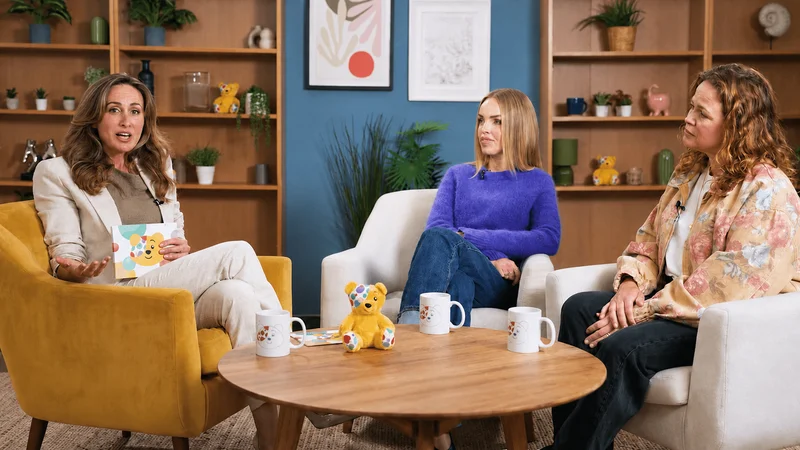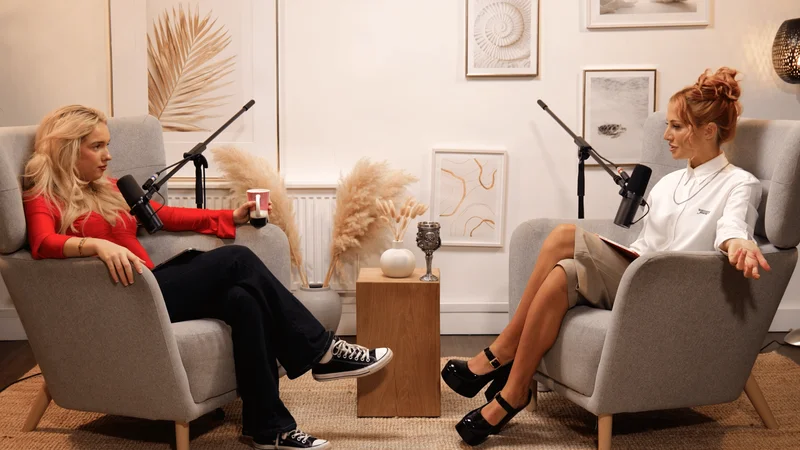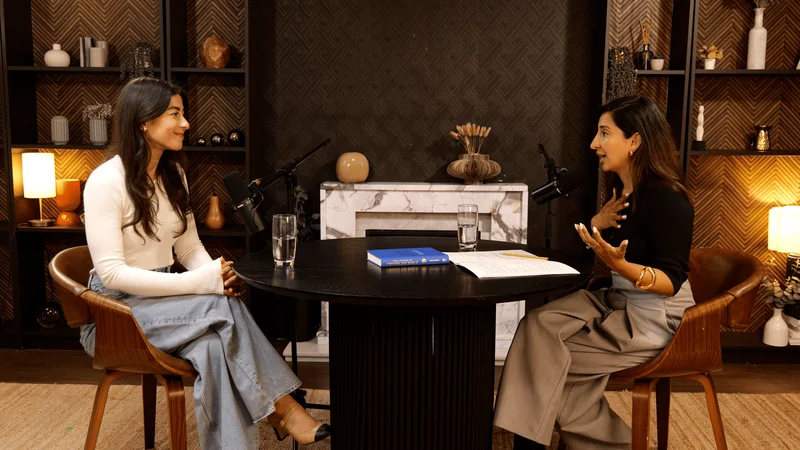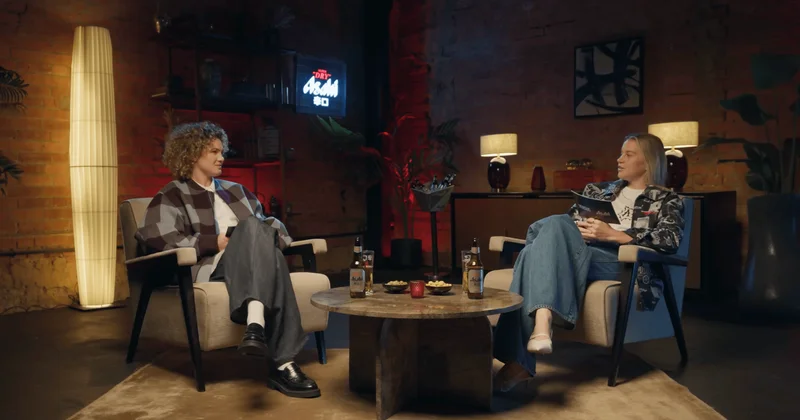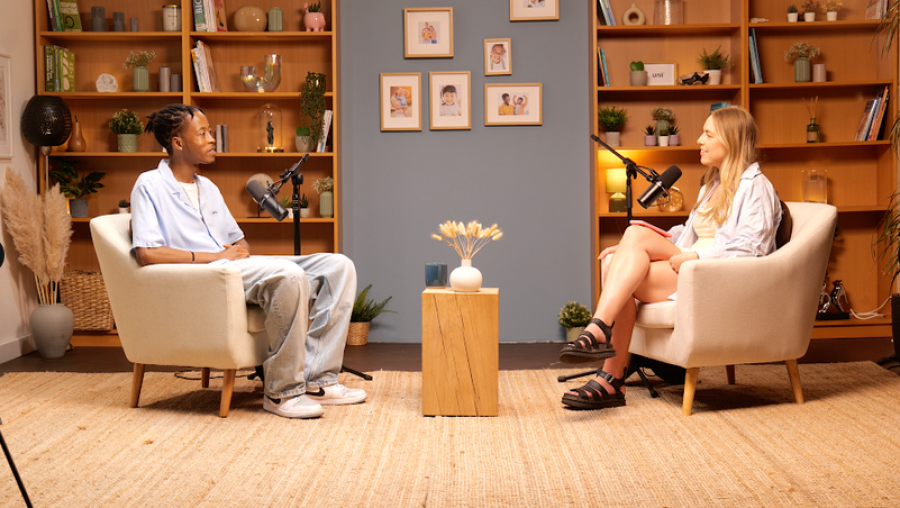
The medium of podcasting has matured from a decentralized, hobbyist audio experiment into a highly industrialized, aggressively monetized, and fiercely competitive broadcast sector. As the technological barrier to entry remains deceptively low, the strategic barrier to sustainable success and audience retention has grown exponentially high. In this saturated landscape, the differentiation between amateur content and professional media production lies heavily in the strategic rigor applied long before the recording hardware is even activated. Pre-production operates as the architectural foundation of the medium, dictating the structural integrity, commercial viability, and psychological resonance of the final broadcast.
At the center of this architecture is the podcast host. The host is not merely a narrator or an interviewer; the host is the central node of a complex parasocial network, the primary driver of audience retention, and the brand's most potent commercial asset. Delivering a message effectively through this medium requires a nuanced, interdisciplinary mastery of psychological engagement, vocal and physical ergonomics, rigorous script formatting, technical audio-visual fidelity, and strict adherence to commercial compliance. This report provides an exhaustive analysis of the strategic pre-production required to optimize the dynamics of podcast hosting, exploring the intersections of broadcast strategy, behavioral psychology, physical ergonomics, and audio engineering.
Architectural Frameworks of Pre-Production
The illusion of a spontaneous, effortlessly engaging podcast is almost exclusively the result of meticulous, engineered preparation. Relying on organic conversation alone introduces unquantifiable risk into the production pipeline, leading to structural drift, inconsistent pacing, and audience abandonment. Professional pre-production mitigates this risk by establishing robust, repeatable frameworks that govern the show’s creative direction, operational logistics, and moment-to-moment execution.
Project Management and Workflow Automation
To sustain a regular publishing cadence without succumbing to production burnout, professional teams utilize integrated project management software. Platforms such as Asana, Notion, Trello, ClickUp, and monday.com have become industry standards for managing the complex dependencies inherent in episodic broadcasting1. These platforms utilize visual workflows to move episodes through predefined lifecycle stages, effectively removing the cognitive friction of logistical planning from the host's responsibilities. By assigning specific owners, dependencies, and deadlines to each micro-task, the production pipeline is stabilized, allowing the host to remain exclusively focused on performance and delivery1.
The optimization of a podcast workflow requires the categorization of tasks into distinct, trackable phases.
The Show Bible: Defining the Strategic Core
In traditional television and film production, a "Show Bible" serves as the definitive reference manual for a series. The adaptation of the Show Bible into the podcasting industry provides a necessary structural anchor for audio and video productions, preventing mission drift and ensuring that every episode aligns with the core value proposition originally promised to the audience8. This is particularly critical for long-running series, or when production responsibilities are handed over to new editors or associate producers.
A comprehensive podcast Show Bible encompasses several critical dimensions that define the brand's identity. It begins with the Logline and Mash-up, which is a concise, one-sentence summary of the show's premise. Often utilizing a "mash-up" format (for instance, describing a new investigative series as "Serial meets The Daily"), this tool immediately communicates the genre, tone, and target demographic to internal stakeholders and prospective sponsors8. Furthermore, the Show Bible strictly defines the format and cadence, establishing explicit parameters for episode length, release schedules, and the structural arrangement of the broadcast (such as solo commentary, co-hosted dialogue, or interview-style frameworks)8.
Beyond logistics, the document articulates the overarching themes and value proposition, clarifying the specific problem the podcast solves for the listener and the psychological or educational takeaways intended for the audience8. Finally, it details character profiles and host personas, mapping out the backgrounds, recurring anecdotes, and the specific "brand voice" the hosts project, which is essential for maintaining consistency over years of serialization8. The Show Bible operates as a living document, prompting producers to conduct periodic audits to assess whether the structure is functioning optimally, whether the host is delivering on the promised themes, and how the content can be refined to better serve listener retention and advertiser integration8.
The Run of Show (ROS) versus The Agenda
While the Show Bible dictates the macro-level strategy of the podcast, the Run of Show (ROS) governs the micro-level, minute-by-minute execution of a specific episode or live broadcast10. It is a common operational error among novice broadcasters to conflate a public-facing "agenda" with a production "Run of Show."
An agenda is typically an attendee-facing or guest-facing document that outlines the broad topics to be discussed, setting expectations for the conversation11. In stark contrast, the ROS is an internal, highly detailed, operational blueprint utilized exclusively by the host, producers, and technical crew to synchronize the production11. It chronicles the exact chronological sequence of the production, mapping out technical cues, host responsibilities, and structural transitions down to the second.
For podcast hosts, the ROS serves as a vital cognitive offloading tool. By transferring the burden of time management, segment tracking, and structural transitions onto a strictly formatted document, the host's cognitive bandwidth is freed10. This allows the host to focus entirely on vocal delivery, active listening, and empathetic guest engagement10. A standard podcast ROS will break an episode down into specific acts, assigning target timestamps and buffer zones to prevent the recording from running over schedule, which directly mitigates excessive post-production editing costs10. Advanced productions may even integrate dynamic rundown software, such as Shoflo, which automatically recalculates event timings in real-time as the broadcast progresses, ensuring the host is always aware of the exact remaining duration15.
Scripting, Prosody, and Vocal Execution
Delivering the message requires translating the structural blueprint of the ROS into spoken word. Writing for the ear is fundamentally different from writing for the eye. A podcast script must balance the necessary delivery of dense information with the rhythmic, conversational cadences of natural speech, avoiding the rigid, formal structures typical of written prose.
Script Formatting and Structural Rigor
Podcast scripts generally fall into two dominant methodologies: the full script and the outline-only format16. The full script approach is utilized primarily for narrative, documentary-style, or highly technical educational podcasts, where every word is pre-written to ensure strict factual accuracy, complex sound design integration, and tight pacing16. The inherent risk of a full script is that it can induce a robotic, monotone delivery, destroying the illusion of spontaneity that podcast listeners crave. Conversely, the outline-only script is utilized for interview, conversational, or comedy formats16. This script provides only bulleted talking points, essential data, and segues, relying heavily on the host's improvisational skill to bridge the gaps authentically16.
Regardless of the chosen methodology, a professional podcast script must be meticulously optimized for vocal delivery. Industry best practices dictate double-spacing for readability and the implementation of visual cues to guide the host's breath and timing16. Pauses must be explicitly marked with bracketing (e.g., [PAUSE]) or em-dashes, and emphasis must be denoted through capitalization or specific formatting (e.g., [stress this word])16. Furthermore, dense paragraphs must be broken into short, breath-sized chunks to prevent the host from running out of air mid-sentence, and phonetically spelled pronunciations (e.g., Aoife [pronounced ee-fuh]) must be embedded directly into the text to avoid momentum-killing stumbles16. Platforms like StudioBinder or Podbean offer specialized templates that accommodate these specific dialogue and audio cue formatting requirements16.
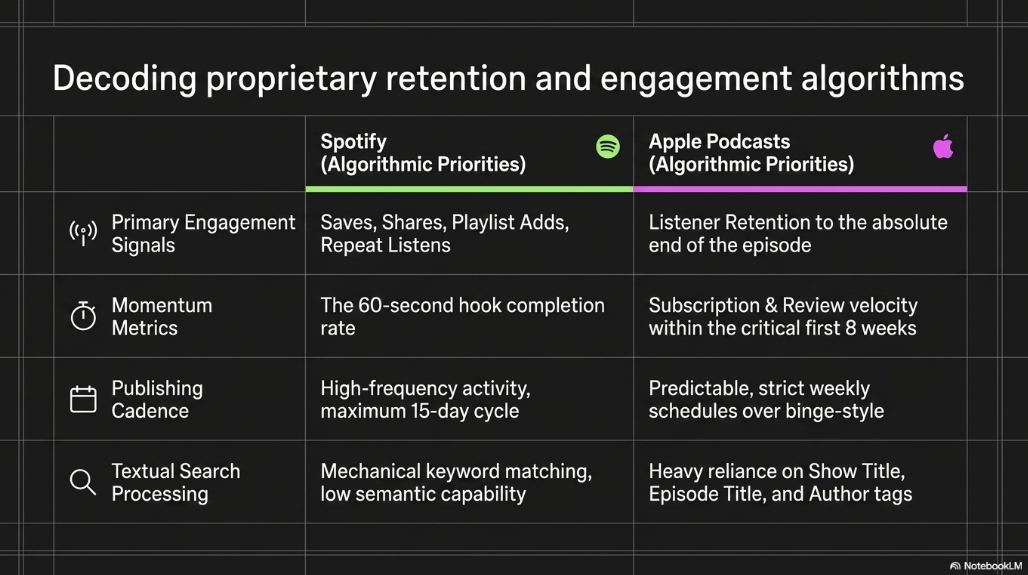
Crucially, the script must adhere to strict structural targets, beginning with the metadata header. This block records the episode title, recording date, host names, and target runtime, serving as the reference point that ties the script to a specific production file17. Following the header, the episode relies on a highly efficient "cold open." Consumer behavior research indicates that listeners make the subconscious decision to stay or abandon an episode within the first 30 to 60 seconds18. An effective script eliminates lengthy, self-indulgent host biographies at the top of the show; instead, it immediately presents a "hook"—a compelling question, startling statistic, or open narrative loop—that explicitly states the exact value the listener will extract from the episode16. When introducing a guest, the script should avoid reading full LinkedIn biographies verbatim, which can take upwards of 45 seconds and bore the listener; instead, the script should distill the guest's credentials into a two-sentence spoken introduction focused on their single most relevant achievement17.
The Science of Prosody
A flawless script is rendered useless by poor delivery. "Prosody" refers to the suprasegmental elements of speech—the musicality of language that operates above individual vowels and consonants (phonemes) to convey emotion, structure, and intent20. These prosodic features shape how listeners interpret information beyond the literal meaning of the words.
Key prosodic features that a podcast host must consciously manipulate include intonation, stress, rhythm, tempo, and pausing20. Intonation governs the pitch contour across an utterance. For example, a rising intonation at the end of a sentence naturally signals a question or uncertainty, while a falling intonation signals authority, finality, and confidence20. Hosts must be trained to avoid "upspeak" when delivering factual information, as it subtly but persistently undermines their perceived credibility. Stress involves the relative emphasis placed on specific syllables or words, which fundamentally alters the implied meaning of an identical sentence20.
Tempo and pausing are equally critical for listener comprehension. Skilled hosts dynamically alter their speech rate, slowing down to deliver complex instructions or emotional information, and speeding up during energetic, conversational banter20. The strategic use of silence—pausing—is perhaps the most powerful prosodic tool. A deliberate micro-pause before a key phrase acts as an auditory highlighter, drawing the listener's focus, marking clause boundaries, and allowing the audience the necessary cognitive processing time to absorb complex ideas20.
Vocal Health, Ergonomics, and Care
The vocal folds are delicate, highly sensitive muscular tissues. A podcast host is essentially a vocal athlete, and sustained, multi-hour recording schedules can quickly lead to vocal fatigue, inflammation, and a degradation of tone22. Professional pre-production requires a strict regimen of vocal health and acoustic ergonomics to ensure the host's instrument remains robust over time.
Topical versus Systemic Hydration
Hydration is the absolute cornerstone of vocal health, but the mechanics of vocal fold hydration are deeply misunderstood by many amateur broadcasters. Systemic hydration involves drinking water, which passes down the esophagus and into the stomach; it takes several hours for this moisture to be systemically distributed by the body to the laryngeal tissues24. Therefore, drinking a glass of water immediately before pressing record provides little to no instant relief to the vocal folds themselves, though it prevents a dry mouth25.
To rapidly and directly hydrate the vocal folds, hosts must utilize topical hydration through steam inhalation24. Inhaling steam allows the water vapor to pass directly through the larynx and over the vocal folds on its way to the lungs24. This direct contact soothes mucous membranes, reduces minor swelling, clears catarrh, and restores elasticity to the folds26. Broadcasters utilize various steaming methods, ranging from the traditional bowl-and-towel method to inexpensive plastic facial steamers, to professional-grade tools like Dr. Nelson's ceramic double-valved inhaler26. However, clinical science dictates that steaming is a maintenance and soothing tool, not a cure-all; it cannot repair structural pathologies such as vocal nodules, cysts, or polyps, nor can it repair nerve damage from viral injuries, all of which require specialized medical intervention and potentially surgery24. Furthermore, hosts are cautioned against using nebulizers that aerosolize oils (like eucalyptus), as carrying oils deep into the lungs can cause lipoid pneumonia, a severe condition that has permanently ended professional vocal careers29.
Postural Ergonomics and Diaphragmatic Breathing
The physical posture of the host directly dictates their respiratory capacity and, consequently, their vocal resonance and stamina. While the casual, "relaxed" aesthetic of modern podcasting often encourages hosts to slump deeply into soft chairs, this posture is anatomically disastrous for sustained vocal performance31.
Slouching compresses the rib cage and forces the pelvis into a posterior tilt32. This anatomical compression physically traps the diaphragm, restricting its ability to descend fully during inhalation31. Consequently, the host is forced to rely on "chest breathing"—utilizing the accessory muscles of the neck (scalenes) and upper shoulders (upper trapezius)—which leads to a shallow, breathless delivery, rapid vocal fatigue, and heightened physiological stress32.
Proper acoustic ergonomics require the host to utilize diaphragmatic breathing, where the abdomen expands outward during inhalation to allow full lung expansion32. Clinical studies on brass musicians, whose respiratory demands closely mirror those of professional broadcasters, indicate that standing provides the optimal alignment for maximum vital capacity (lung volume)35. If the host must sit, the study demonstrated that utilizing a flat or slightly downward-sloping seat reduces the severe drop in abdominal muscle activity seen in standard seated postures35. Therefore, hosts should sit toward the edge of the chair with the pelvis neutral (sacrum pointing down), the spine elongated, the chest open, and the feet planted firmly hip-width apart21. This posture allows the abdomen and lower ribs to expand freely, providing a steady, powerful column of subglottic air pressure to support the vocal folds. This physiological support results in a richer, deeper, and more authoritative tone, while simultaneously activating the vagus nerve to reduce performance anxiety21.
To maintain this exacting standard of delivery, many professional broadcasters undergo formal, continuous training at established institutions. For example, the Royal Central School of Speech and Drama and City Lit in London offer highly specialized short courses in voiceover technique, radio presenting, microphone technique, and vocal pedagogy, emphasizing the critical link between physical posture, breath control, and on-mic presence36.
Technical Execution and Audio-Visual Fidelity
A masterful, ergonomically supported vocal performance will be immediately abandoned by the listener if the technical delivery mechanism is flawed. In the medium of podcasting, audio engineering is not a post-production afterthought to be fixed in the mix; it is a critical pre-production strategy that directly impacts audience retention and perceived authority.
Microphone Technique: Proximity and Polar Patterns
The interaction between the host's mouth and the microphone capsule is governed by strict physical acoustic principles. Most professional podcast setups utilize directional microphones, specifically those with a cardioid polar pattern. A cardioid pattern is highly sensitive to sound arriving directly from the front (on-axis) while actively rejecting ambient room noise arriving from the rear and sides, effectively isolating the host's voice from the recording environment41.
When utilizing directional (pressure gradient) microphones, hosts must strategically navigate the Proximity Effect. The proximity effect is a physical phenomenon where the low-frequency (bass) response of the microphone increases exponentially as the sound source moves closer to the capsule41.
This effect presents both a strategic advantage and a significant technical risk. By moving within two to six inches of the capsule, a host can dramatically boost the warmth, depth, and resonance of their voice, creating that classic, intimate "late-night radio" or "Voice of God" aesthetic41. This artificial depth directly enhances the parasocial feeling of closeness and authority. However, moving too close exacerbates plosives—the explosive bursts of air generated by "P," "B," and "T" consonants that cause the microphone capsule to physically pop and distort41. Furthermore, excessive proximity effect can make the audio sound overwhelmingly muddy or boomy, masking the mid-range frequencies where human speech intelligibility resides, rendering the host difficult to understand41.
To mitigate these issues while retaining vocal warmth, professional hosts utilize off-axis positioning. Rather than speaking directly into the dead-center of the capsule (on-axis), the host angles the microphone slightly (15 to 30 degrees) to the side, or positions it slightly above or below the mouth, tilting it toward the chin or nose41. This precise angle allows the forceful bursts of air from plosives to pass by the capsule rather than slamming directly into the diaphragm, while the microphone's pickup pattern still captures the full, rich frequency spectrum of the voice41.
Loudness Normalization and Broadcast Standards
A major factor in listener fatigue and subsequent episode abandonment is inconsistent volume levels. This occurs either dynamically within the episode (e.g., a quiet host speaking with a deafeningly loud guest) or macroscopically between the podcast and other applications on the listener's device18. To combat the historical "loudness wars," where producers simply compressed audio to be as loud as possible, the modern broadcast industry relies on standardized, perceived loudness measurements, specifically LUFS (Loudness Units relative to Full Scale)48.
Unlike Peak normalization, which simply measures the loudest single transient spike in an audio file, LUFS measures the perceived average loudness of a broadcast over its entire duration. The algorithm utilizes a K-weighted frequency filter designed to accurately mimic human hearing sensitivity, recognizing that the human ear perceives mid-range frequencies as louder than low-bass frequencies of the same exact electrical amplitude48.
As outlined in the table, podcasts are generally mastered to a significantly louder standard (-16 LUFS) than traditional television or radio broadcasts (-23 LUFS)48. This discrepancy exists because podcast listeners frequently consume the media via earbuds in noisy, high-ambient environments such as public transit commutes, city streets, or gyms48. If a podcast is mastered too quietly, the listener's smartphone may not possess enough amplification output to overcome the environmental background noise, leading to immediate frustration and episode abandonment48. A strict post-production workflow must include LUFS metering (evaluating Momentary, Short-term, and Integrated loudness) and True Peak limiters to ensure strict compliance with these specific distribution standards, ensuring a seamless listening experience49.
The Visual Evolution: Navigating the Vodcast Paradigm
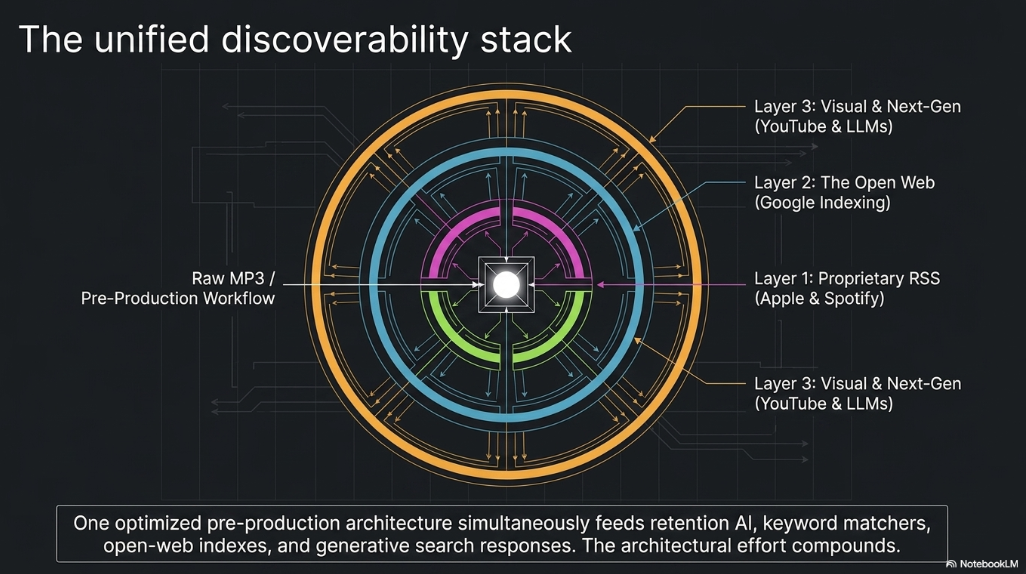
The strategic landscape of podcasting is currently undergoing a massive structural realignment. The industry is shifting away from a decentralized, audio-only RSS distribution model toward closed, algorithmically driven video ecosystems, predominantly dominated by YouTube and Spotify Video55. The "video podcast" or "vodcast" offers vastly superior discoverability due to algorithmic recommendation engines, enhanced parasocial connection through the visibility of facial expressions and body language, and the ability to generate highly shareable, vertical micro-content for the "viral funnel" of platforms like TikTok, YouTube Shorts, and Instagram Reels55.
However, integrating video completely alters the pre-production calculus, the budget requirements, and the cognitive load placed on the host57.
In an audio-first environment, a host can read directly from a paper script, slouch in their chair, or close their eyes to focus intently on the emotion of their vocal delivery. In a video environment, the host is a visual performer who cannot break the illusion of conversation by staring down at a script; they must maintain engaging eye contact with the camera lens or their guest, requiring scripts to be memorized, heavily internalized, or relegated to an unobtrusive teleprompter57. Brands and creators must critically evaluate whether they possess the budget, skillset, and personnel to execute a high-fidelity video podcast. A visually poor, improperly lit, or poorly framed video podcast can actively damage a brand's reputation, signaling low quality and undermining the host's perceived authority before they even speak57.
The Psychology of Hosting: Parasocial Interaction and Audience Retention
The auditory nature of podcasting creates a highly unique psychological phenomenon. Unlike traditional broadcast television, where a physical screen and distance establish a psychological barrier, audio podcasts are frequently consumed via headphones or earbuds. This distinct spatial proximity—where the host's voice literally resonates directly inside the listener's head—fosters a profound, unparalleled sense of intimacy. Understanding, cultivating, and manipulating this intimacy is the primary psychological task of the professional podcast host.
The Mechanics of Parasocial Relationships (PSR)
In 1956, psychologists Horton and Wohl coined the term "Parasocial Interaction" (PSI) to describe the phenomenon where mass media consumers develop the illusion of a face-to-face, reciprocal relationship with media performers64. In the context of modern digital media, this foundational framework has been refined into the Two-Level Model of Parasocial Interactions (2LM). The 2LM framework explicitly distinguishes between PSI (the situational, immediate experience of interaction and connection occurring during a single, specific listening session) and PSR (the long-term, stable, affective bond that forms cumulatively over repeated exposures to the media figure)64.
Podcasting represents the zenith of parasocial media. Because podcasts often utilize conversational language, unscripted tangents, raw emotional delivery, and highly niche subject matter, listeners frequently begin to view the host not as a distant, untouchable celebrity, but as a peer, a mentor, or a personal friend64. This psychological bond is the foundational currency of the podcasting industry; it is the core metric that dictates audience stickiness, subscriber loyalty, backchannel engagement, and the commercial efficacy of the broadcast64.
Markers of Authenticity and Conversational Tactics
To actively cultivate PSI, a host cannot simply rely on charisma; they must strategically project specific "markers of authenticity" that trigger psychological alignment in the listener. Research into podcast listener psychology identifies several critical traits and conversational tactics that accelerate the formation of deep parasocial bonds:
Ordinariness and Similarity: Listeners connect deeply with hosts who project a relatable, everyday persona, effectively minimizing the perceived social or status gap between the broadcaster and the audience. Relatability fosters trust68.
Self-Disclosure and Confessions: The strategic sharing of personal information, vulnerabilities, thoughts, and feelings by the host acts as a powerful catalyst for intimacy. When a host utilizes phrases like "I feel" or "I think," they invite the listener into their internal emotional landscape, simulating the reciprocal, vulnerable sharing found in genuine human friendships64.
Direct Address and Immediacy: Treating the audience as active, present participants rather than passive, distant observers. Utilizing the pronoun "you" rather than referring to "the audience" or "the listeners" creates a direct psychological tether that commands attention19.
Spontaneity and Imperfection: While pre-production is highly rigid, the final delivery must feel wholly spontaneous. Leaving minor vocal imperfections, organic laughter, or slight, natural deviations from the script in the final audio edit significantly enhances the perception of unvarnished authenticity, proving to the listener that the host is a real human being, not a corporate mouthpiece68.
Parasocial Conversion and Commercial Influence
The ultimate strategic objective of fostering these deep PSRs is "parasocial conversion"—the process by which repeated, persona-based familiarity and trust are transformed into business-relevant authority, influence, and commercial action65.
When a listener develops a strong PSR with a host, their "persuasion knowledge"—the cognitive, skeptical defense mechanism consumers naturally use to critically evaluate promotional content or advertisements—is significantly lowered72. Because the listener inherently trusts the host as a friend or trusted advisor, host-read advertisements and product recommendations are processed not as intrusive marketing, but as valuable peer-to-peer advice. Academic studies consistently indicate that high levels of PSI significantly increase positive attitudes toward endorsed brands and directly, measurably drive purchase intentions66. Conversely, if a host abuses this immense trust by promoting inauthentic products, utilizing overly corporate ad copy that breaks their established persona, or failing to disclose a sponsorship, the parasocial bond can fracture irreversibly, leading to immediate audience churn and reputational damage.
Navigating Guest-Host Dynamics
For interview-format podcasts, the host's role expands from solo performer to psychological mediator. The dynamic established between the host and the guest dictates the entire energy and trajectory of the episode. The host must rapidly establish rapport, manage potential conflicts or overly dominant personalities, and elevate the guest's authority while firmly maintaining control of the narrative pacing69.
The presence of a guest also fundamentally alters the parasocial dynamic for the listener. The interaction between the guest and the host serves as an auditory proxy for the listener's own social interactions. If the host demonstrates deep curiosity, active listening, and empathetic engagement with the guest, the listener's parasocial attachment to the host is reinforced. Simultaneously, this positive interaction sparks increased interest, inspiration, and sharing intent regarding the guest's specific expertise or the destination/topic being discussed69.
Legal Compliance, Commercial Realities, and Monetization
The successful monetization of a podcast, particularly through the highly effective medium of host-read sponsorships, introduces significant legal, regulatory, and liability obligations. Failure to navigate these obligations meticulously during the pre-production phase can result in severe regulatory fines, platform removal, and permanent reputational destruction.
Host-Read Advertising and Regulatory Disclosures
The host-read advertisement is the most lucrative and highly sought-after ad format in the podcasting industry. Because the host leverages their accumulated parasocial capital to deliver the ad copy in their authentic, trusted voice, listener conversion rates are exceptionally high72. However, this seamless blending of editorial content and commercial messaging creates a significantly high risk of deceiving the consumer, triggering strict regulatory oversight.
In the United Kingdom, podcast advertising is strictly regulated by the Advertising Standards Authority (ASA) under the Non-broadcast Code (CAP Code)74. Furthermore, the implementation of the UK's Digital Markets, Competition and Consumers (DMCC) Act grants the Competition and Markets Authority (CMA) sweeping new powers to levy heavy financial penalties against creators and brands for deceptive marketing practices, bypassing the need for protracted court cases74.
To comply with the CAP Code, a host-read advertisement must be "obviously identifiable" to the listener as marketing material74. The ASA explicitly states that it is insufficient for a host to merely change their tone of voice, introduce a subtle sound effect, or utilize ambiguous phrases like "Quick one" to denote an ad break, as this unfairly forces the listener to deduce that an advertisement has begun74.
To achieve compliance, the ASA mandates explicit, unambiguous verbal disclosures placed at the very beginning of the commercial read74. Acceptable, highly compliant disclosure phrases include:
"This is a paid advertisement for..."75
"This is an ad for..."75
"Today's episode is sponsored by..."75
Furthermore, the duration of the ad read should be tightly controlled—ideally restricted to 60 to 90 seconds. This time constraint prevents the host from wandering into long, editorial-style tangents that blur the line between the commercial advertisement and the show's primary editorial content, which could inadvertently mislead the audience75.
Guest Release Forms and Liability Insulation
When hosting external guests, securing a signed Podcast Guest Release Form prior to the recording session is a non-negotiable legal requirement. Many amateur podcasters rely on verbal consent, which is legally insufficient, incredibly difficult to prove in a dispute, and leaves the host, production company, and distributors highly vulnerable to litigation80.
A robust, legally binding release form protects the entire production pipeline by securing several critical legal rights before any audio is captured. First, it explicitly grants the producer the consent to record the guest's voice, image (for vodcasts), and likeness, and the right to distribute it across all current and future media platforms82. Second, it assigns all copyright and intellectual property rights of the final edited recording to the podcast producer, which legally prevents the guest from issuing takedown notices if they simply dislike the final episode81.
Crucially, the release form must contain an editing and moral rights waiver. This grants the producer the unilateral right to edit, cut, or alter the recording without requiring the guest's final approval, preventing the guest from claiming their words were misrepresented due to standard time-editing practices82. Additionally, the form should include a release of liability regarding defamation, protecting the host and production company if the guest makes libelous or slanderous statements regarding third parties during the unscripted recording82. Finally, particularly for UK and European audiences, the form must ensure that the collection and storage of the guest's personal data complies with stringent data privacy laws, such as the GDPR80. By securing these rights strictly in pre-production, the host is insulated from the chaotic variables of post-production legal disputes, allowing for uninhibited, confident editorial freedom.
Mitigating Drop-Offs and Elevating Retention (Synthesis)
The ultimate metric of a podcast's strategic health is listener retention, which is meticulously visualized and tracked through algorithmic drop-off curves provided by hosting platforms. Analytics across the podcasting industry consistently reveal that the first 60 seconds of a broadcast are hyper-critical; episodes featuring unfocused, rambling introductions that exceed 90 seconds suffer nearly double the abandonment rate of episodes utilizing tight, focused, 30-to-60-second hooks18.
Audience abandonment is rarely caused by a sudden disinterest in the subject matter itself; rather, it is triggered by friction in the delivery18. This friction manifests in three primary modalities that pre-production aims to eliminate:
Technical Friction: Poor audio quality, echoing room acoustics, distracting plosives, or wildly inconsistent LUFS levels (e.g., a whisper-quiet host interacting with a deafeningly loud guest) force the listener to constantly adjust their device's volume. This breaks their immersion, shatters the parasocial illusion, and leads to immediate churn18.
Structural Friction: Tangential conversations, inside jokes that exclude the listener, and a lack of a clear Run of Show severely frustrate listeners who are seeking specific educational or entertainment value. If the host fails to articulate a clear roadmap for the episode in the opening hook, the listener cannot calculate the return on their time investment and will abandon the stream18.
Consistency Friction: An irregular publishing schedule prevents the audience from integrating the podcast into their daily habits and routines (such as morning commutes or gym sessions). Shows that adhere strictly to a consistent publishing cadence experience vastly superior audience growth over time, as consistency breeds trust18.
By systematically identifying and eliminating these friction points during the pre-production phase—through rigorous scripting, technical standardization, physical ergonomic optimization, and disciplined schedule management—a host ensures that the only variable left to the listener's judgment is the quality of the ideas being discussed.
Conclusion
The dynamics of hosting a professional podcast extend far beyond possessing a charismatic voice or a compelling topic. It is a highly complex, multidisciplinary endeavor that demands the technical precision of an audio engineer, the behavioral insight of a media psychologist, the structural discipline of a project manager, and the compliance awareness of a traditional broadcaster.
As the industry pivots aggressively toward the visually demanding, algorithmic realities of video podcasting, the cognitive load and performance pressure on the host will only intensify. Producers, brands, and hosts must counteract this escalating complexity by leaning heavily into rigorous, industrialized pre-production frameworks. By establishing a definitive Show Bible, automating workflow logistics, mastering acoustic and physical respiratory ergonomics, standardizing LUFS audio outputs, and strictly adhering to legal disclosures, production teams can effectively insulate the host from operational and technical chaos.
Ultimately, this structural insulation is the key to broadcast success. It allows the host to allocate their cognitive resources entirely to their primary mandate: cultivating deep, authentic parasocial intimacy with the audience, establishing unwavering authority, and delivering the message with uncompromised clarity and impact.
This is for informational purposes only. For medical advice or diagnosis, consult a professional.
Works cited
Podcast Planning Template for Production, Episodes & Scripts [2026] - Asana, https://asana.com/templates/podcast-planning
Top 6 Production Schedule Templates - Notion, https://www.notion.com/en-gb/templates/collections/top-6-production-schedule-templates-in-notion
10 Podcast Planning Templates Every Creator Needs in 2026 - project-management.com, https://project-management.com/podcast-planning-templates/
Podcast Workflow Template - Trello, https://trello.com/templates/marketing/podcast-workflow-template-5boCNZwE
Free Shooting Schedule Template for Production Teams [2026] - Asana, https://asana.com/templates/shooting-schedule
Podcast Production Suite Template - Coda, https://coda.io/@digimojo/podcast-production-suite-template
Podcast Workflow - Templates - Todoist, https://www.todoist.com/templates/podcast-workflow
How to Define (and Refine) Your Podcast with a Show Bible, https://podcastmovement.com/resources/creation/how-to-define-and-refine-your-podcast-with-a-show-bible/
Checklist for Starting a Podcast - Physician Side Gigs, https://www.physiciansidegigs.com/starting-a-podcast-checklist
Keep Things Running Smoothly: Free Run of Show Template - Goldcast, https://www.goldcast.io/blog-post/virtual-event-run-of-show
Run of Show Template (Free PDF, Excel, Google Sheet) - MobileUp Software, https://mobileup.io/blog/run-of-show-template/
What is Run Of Show? | Generate FREE Template - vFairs.com, https://www.vfairs.com/blog/run-of-show/
Run of Show Template: Expert Guide for Flagship Conferences - Bizzabo, https://www.bizzabo.com/blog/run-of-show
Podcast Script Template (Free Word) - Business in a Box, https://www.business-in-a-box.com/template/podcast-script-D13852
What is a rundown? - LASSO, https://www.lasso.io/articles/what-is-a-rundown/
How to Write a Podcast Script [7 Examples & Free Templates] - StudioBinder, https://www.studiobinder.com/blog/podcast-script/
Podcast Script Template (Free Word) - Business in a Box, https://www.business-in-a-box.com/template/podcast-script-D13852/
Why Podcast Listeners Drop Off: 5 Proven Retention Strategies for Creators - propodcastsolutions.com, https://propodcastsolutions.com/podcast-listener-retention-strategies/
7 Podcast Engagement Mistakes That Are Killing Your Growth!, https://thepodcastinguniversity.com/podcast-engagement-mistakes/
Prosodic Features: A Comprehensive Guide for 2025 - Shadecoder, https://www.shadecoder.com/topics/prosodic-features-a-comprehensive-guide-for-2025
How to Be a Confident Podcast Guest - Amplify by MatchMaker.fm, https://amplify.matchmaker.fm/podcast-guest-confidence-tips/
Voice Work: Art and Science in Changing Voices [2 ed.] 111993320X, 9781119933205 - DOKUMEN.PUB, https://dokumen.pub/voice-work-art-and-science-in-changing-voices-2nbsped-111993320x-9781119933205.html
Sound and Noise: A Listener's Guide to Everyday Life 9780228003885, 9780228004493, 9780228004509 - DOKUMEN.PUB, https://dokumen.pub/sound-and-noise-a-listeners-guide-to-everyday-life-9780228003885-9780228004493-9780228004509.html
Why Water Alone Won't Fix Your Voice - YouTube, https://www.youtube.com/shorts/UkrCH8W6vK8
The Truth About Steam Inhalation: Can It Fix Your Voice? - YouTube, https://www.youtube.com/watch?v=w6pJX0x6eC4
Take care of your voice by steaming - Stefan Holmström, https://www.stefanholmstrom.co.uk/single-post/take-care-of-your-voice-by-steaming
The Wonders of Steaming Your Voice - Sally Stanton, https://sallysalmononline.com/2014/08/10/the-wonders-of-steaming-your-voice/
Vocal Hydration Plan In Action, https://completevocalcoach.com/healthy-voice-hydration/
Nebuliser vs Steam Inhalation for your Vocal Health by Olivia Sparkhall - Wix.com, https://oliviasparkhall.wixsite.com/sparkhallo/single-post/nebuliser-vs-steam-inhalation-for-your-vocal-health-by-olivia-sparkhall
Steam, Gargle or Inhale? – All Articles - CS Music, https://www.csmusic.net/content/articles/steam-gargle-or-inhale/
Why sitting upright helps you breathe better - YouTube, https://www.youtube.com/shorts/uslXnyTZX9A
The Key to Posture Improvement: "Diaphragmatic Breathing"! What is Truly Correct Posture? - Alter Physio & Acupuncture, https://www.alterphysio.com/the-key-to-posture-improvement-diaphragmatic-breathing-what-is-truly-correct-posture
How Breathing Affects Your Posture and Spinal Support - Precision Health, https://precisionhealthclinics.com.au/health-hub/how-proper-breathing-supports-good-posture-and-why-it-matters/
What Does Posture Have To Do with Breathing & Sleeping Well? - More Than Teeth, https://www.morethanteeth.com/podcast/what-does-posture-have-to-do-with-breathing-sleeping-well
(PDF) The effect of standing and sitting postures on breathing in brass players, https://www.researchgate.net/publication/263477966_The_effect_of_standing_and_sitting_postures_on_breathing_in_brass_players
Voice for Performance: An Introduction | The Royal Central School of Speech and Drama, https://www.cssd.ac.uk/short-courses/evening-and-online-courses/voice-performance-introduction
Short Courses | The Royal Central School of Speech and Drama, https://www.cssd.ac.uk/short-courses
Voiceover & Radio Acting Courses Online & In London - City Lit, https://www.citylit.ac.uk/courses/performing-arts/tv-radio-and-film/voiceover-and-radio
Radio and podcast presenting: beginners | Performing arts course | London - City Lit, https://www.citylit.ac.uk/courses/radio-and-podcast-presenting-beginners
Radio and podcast presenting: improvers | Performing arts course | London - City Lit, https://www.citylit.ac.uk/courses/radio-and-podcast-presenting-improvers
How does microphone placement affect vocal tone? Understanding distance, angle, and proximity effect | TzAudios, https://tzaudios.com/blogs/microphone-placement-vocal-tone-distance-angle-proximity-effect
Proximity effect in microphones explained - how it affects different sound sources, https://www.dpamicrophones.com/mic-university/background-knowledge/proximity-effect-in-microphones-explained/
A Brief Guide to Microphones - What's The Pattern? - Audio-Technica, https://www.audio-technica.com/en-us/support/a-brief-guide-to-microphones-whats-the-pattern
What is the Proximity Effect? - Neumann, https://www.neumann.com/en-us/knowledge-base/neumann-im-homestudio/homestudio-academy/what-is-the-proximity-effect
The Complete Guide to Microphone Technique for Podcasters - Buzzsprout, https://www.buzzsprout.com/blog/mic-technique-podcasting
A Brief Guide to Common Podcast Microphones - Transducer Audio, https://www.transducer-audio.com/post/a-brief-guide-to-common-microphones
Proper Microphone Technique For YOUR Podcast - Audient, https://audient.com/tutorial/podcast-mic-technique/
Loudness (LUFS) | Podcasting Articles - Audio Audit, https://audioaudit.io/articles/podcast/loudness-lufs
HOW LOUD SHOULD YOUR PODCAST BE? LUFS AND DB EXPLAINED, https://content.sport-social.co.uk/blog/how-loud-should-your-podcast-be
EBU R.128 & Clearcast Audio Standards - Cape.io, https://cape.io/knowledge-base/ebu-r-128-clearcast-audio-standards
EBU R 128 - Wikipedia, https://en.wikipedia.org/wiki/EBU_R_128
LUFS: How to Mix Audio to Broadcast Specification EBU R128, https://soundguy.london/lufs-loudness-and-levels/
EBU R128, Broadcast Loudness Target - APU Software, https://apu.software/ebu-r128-loudness-target/
How loud should podcast audio be? - Reddit, https://www.reddit.com/r/podcasting/comments/ey0di0/how_loud_should_podcast_audio_be/
How Videography Elevates Your Podcast from Amateur to Pro - Finchley Studios, https://www.finchley.co.uk/finchley-learning/how-videography-elevates-your-podcast-from-amateur-to-pro
How to Start a Video Podcast and Why You Should - IdeaRocket, https://idearocketanimation.com/22275-start-video-podcast/
what is the difference between a podcast and visual podcast? - Finchley Studios, https://www.finchley.co.uk/finchley-learning/visual-podcast/what-is-the-difference-between-a-podcast-and-visual-podcast
What is Video Podcasting? | Updated for 2025 - Async, https://async.com/blog/video-podcasting/
Video Podcast Production: A B2B Brand's Complete Guide - Content Allies, https://contentallies.com/learn/video-podcast-production-for-b2b-brands
How to Create Podcast Video in 2026: Complete Guide, https://podcastmonkey.co/blogs/news/create-podcast-video
How to Transition From Audio-Only to Video Podcasting - Fox Talkx Studio, https://www.foxtalkxstudio.com/blog/how-to-transition-from-audio-only-to-video-podcasting
How to Start a Video Podcast: Step-by-Step Setup Guide [2026], https://thepodcastconsultant.com/blog/how-to-start-video-podcast
Why video is the new standard for podcasting - Triton Digital, https://tritondigital.com/static/0886f7820d251299eb62f33b1ad43188/TVE10.pdf
The Role of Parasocial Interactions for Podcast Backchannel Response - ResearchGate, https://www.researchgate.net/publication/352480360_The_Role_of_Parasocial_Interactions_for_Podcast_Backchannel_Response
Parasocial Business: Platformed Authority and Organizational Influence in the Visibility Economy - MDPI, https://www.mdpi.com/2076-3387/16/7/309
Full article: Corporate Communication Through Podcasts: The Impact of Voice-Fit and Attention During Listening on Parasocial Interaction with the Host and Persuasive Effects - Taylor & Francis, https://www.tandfonline.com/doi/full/10.1080/19376529.2024.2396840
(PDF) Parasocial Interactions and Relationships in Science Podcasts: A Configurative Mapping Review on Digital Trust, Engagement, and Cognitive Elaboration - ResearchGate, https://www.researchgate.net/publication/403832877_Parasocial_Interactions_and_Relationships_in_Science_Podcasts_A_Configurative_Mapping_Review_on_Digital_Trust_Engagement_and_Cognitive_Elaboration
Full article: “One of Us”: Examining the Authenticity and Parasocial Relationships of Stand-Up Comedian Podcast Hosts - Taylor & Francis, https://www.tandfonline.com/doi/full/10.1080/19376529.2024.2432023
The impact of podcast guest–host destination interactions on viewers' inspiration and sharing intentions: the role of parasocial interaction - Emerald Insight, https://www.emerald.com/ihr/article/doi/10.1108/IHR-11-2024-0053/1271604/The-impact-of-podcast-guest-host-destination
Understanding user stickiness to WeChat official accounts: a cognition-affect-conation perspective - Frontiers, https://www.frontiersin.org/journals/communication/articles/10.3389/fcomm.2026.1839439/pdf
Aural Parasocial Relations: Host-Listener - HeinOnline, https://heinonline.org/hol-cgi-bin/get_pdf.cgi?handle=hein.journals/jradstud29§ion=32
Consumer response to podcast advertising: the interactive role of persuasion knowledge and parasocial relationships - OUCI, https://ouci.dntb.gov.ua/en/works/7Pw3ZJ09/
Co-Hosted Podcasts: How to Succeed Without Ruining Your Relationship - Sarah Mikutel, https://sarahmikutel.com/how-to-podcast/co-hosted-podcast-succeed-without-ruining-relationship
Recognising ads: Podcasts and audio streaming - ASA | CAP, https://www.asa.org.uk/advice-online/recognising-ads-podcasts-and-audio-streaming.html
UK Host Reads - staying legal - Audioboom Help, https://support.audioboom.com/hc/en-us/articles/19477511111698-UK-Host-Reads-staying-legal
Disclosure of host-read ads in podcasts | ASA, https://www.asa.org.uk/static/a6c2f182-a5c1-4a1e-8b891e82cc0bdf31/Disclosure-of-host-read-ads-in-podcasts.pdf
Legal considerations for influencer marketing in the UK – The 2026 guide - LegalLens, https://www.legallens.co.uk/blog/legal-considerations-influencer-marketing-uk
Influencer Disclosure for Different Content Types: A Complete 2026 Guide, https://influenceflow.io/resources/influencer-disclosure-for-different-content-types-a-complete-2026-guide/
Free Podcast Sponsorship Agreement Template – AI-Powered Editing - Go Legal Ai, https://go-legal.ai/template/podcast-sponsorship-agreement/
Podcast Guest Release Form Template - Jotform, https://www.jotform.com/form-templates/podcast-guest-release-form
Podcast Guest Release Agreements: A Practical Guide - Promise Legal Insights, https://blog.promise.legal/podcast-guest-release-agreement-guide/
Podcast Guest Release Form Template: Recording and Media Rights - AI Lawyer, https://ailawyer.pro/templates/podcast-guest-release-form-template-recording-and-media-rights
Free Podcast Guest Release Form Template | Download & Customize - Agreements.AI, https://www.agreements.ai/templates/podcast-guest-release-form
Managing podcast guest release forms with the Gravity Forms Signature Add-On, https://www.gravityforms.com/blog/podcast-guest-release-forms-gravity-forms-signature-add-on/
Free Podcast Guest Release Form Template - Legal Foundations, https://legalfoundations.org.uk/document/free-podcast-guest-release-form-template/