1. Introduction: The Visual Renaissance of Audio Media
The digital landscape of the mid-2020s has witnessed a paradoxical evolution in the medium of podcasting. What began two decades ago as a purely auditory experience—a digital resurrection of the radio star, distributed via RSS feeds to iPods—has fundamentally transformed into a visual-first medium. As we navigate 2025 and look towards 2026, the data is unequivocal: the "podcast" is no longer just something you listen to; it is something you watch. For creators, brands, and thought leaders operating in the competitive London market, this shift represents both an existential threat and an unprecedented opportunity. The era of the low-fidelity, "bedroom" recording is effectively over, replaced by a demand for broadcast-quality videography that elevates content from amateur hobbyism to professional media assets.
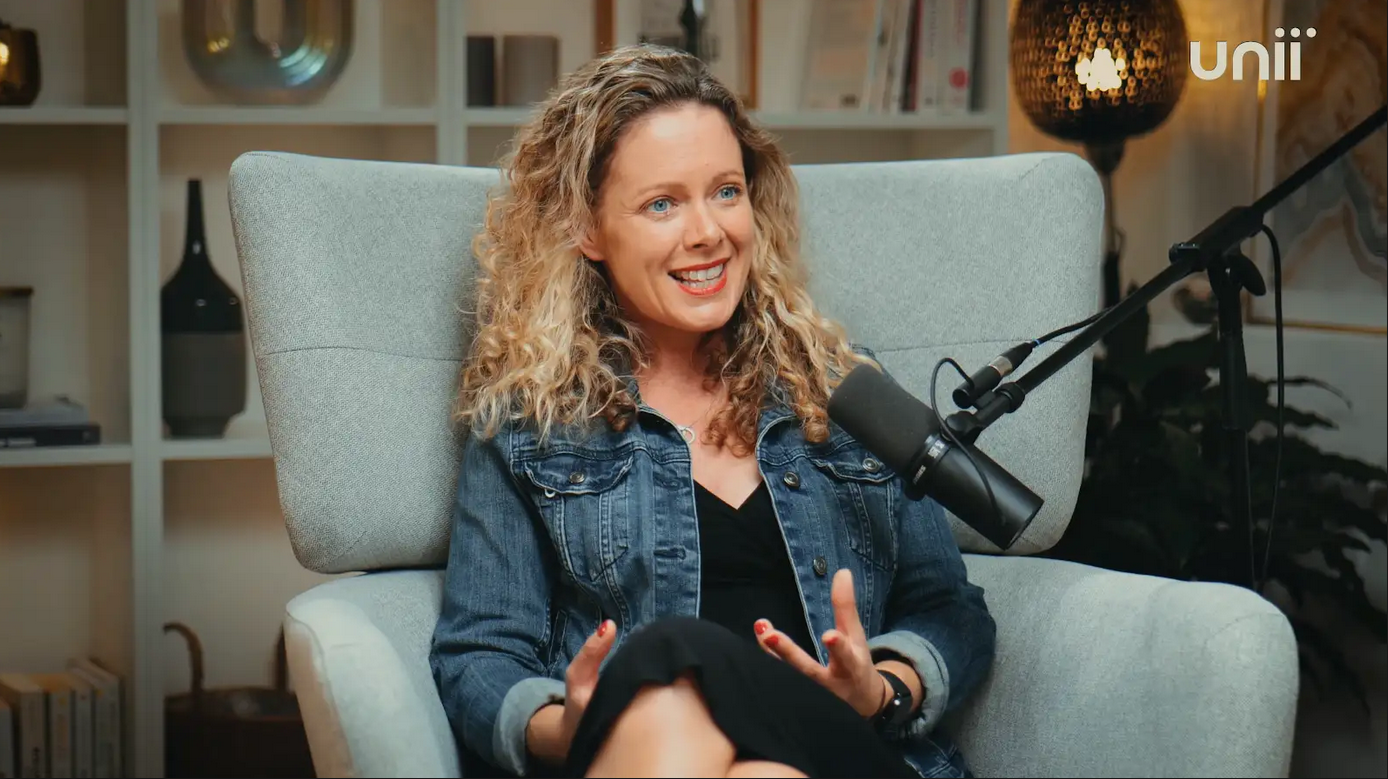
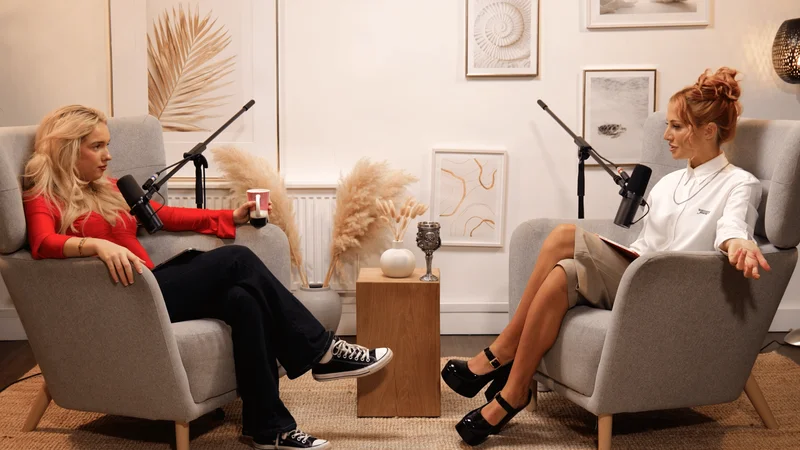
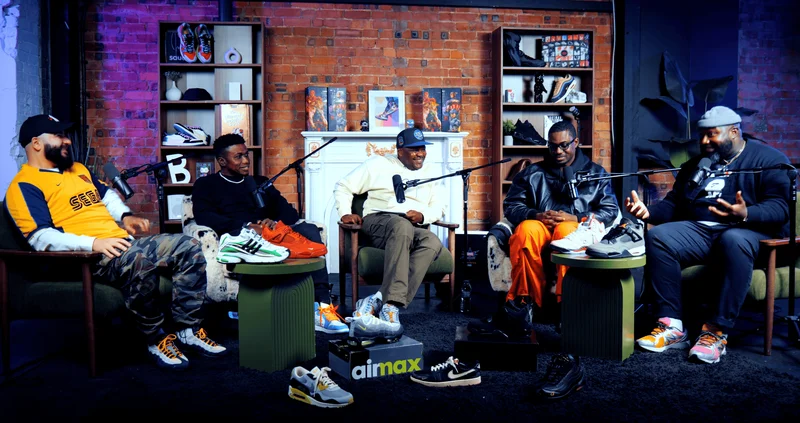
Finchley Studio (Dialogue set): book this setup for your podcast
The catalyst for this shift is multifaceted, driven by changing consumer behaviors, the maturation of distribution platforms, and the relentless algorithm of the attention economy. Research indicates that YouTube has now eclipsed dedicated audio platforms to become the single most dominant destination for podcast consumption, with approximately one in three listeners citing it as their primary method of accessing content.1 This is not a mere statistical blip but a structural realignment of the industry. The modern audience, particularly the demographic cohorts of Gen Z and Millennials who now constitute a significant portion of the listener base, expects a multi-sensory experience.2 They demand the intimacy of audio combined with the engagement of video—a "vodcast" that captures the nuanced facial expressions, the dynamic body language, and the high-definition reality of a conversation.
However, meeting this new standard is not merely a matter of pointing a webcam at a host. The bar for quality has been raised to a height that is prohibitively expensive and technically complex for the average home creator to clear. The "amateur" aesthetic, once forgiven as a sign of authenticity, now signals a lack of authority. In a saturated market with over 4.5 million indexed podcasts 1, quality acts as the primary filter. Listeners, subconsciously conditioned by the high production values of Netflix and YouTube, possess a low tolerance for poor audio and grainy video. The phenomenon of "cognitive friction"—the mental effort required to process substandard input—means that a noisy recording or a poorly lit video leads to immediate disengagement.4
For the serious creator in London, the solution lies in the strategic utilisation of professional infrastructure. A London podcast studio is no longer just a luxury; it is a force multiplier. It provides the acoustic fortress necessary to defeat the relentless noise of the capital, the high-end signal chain required to produce "radio-ready" sound, and the cinematic videography that arrests the scrolling thumb on social media. This report will exhaustively analyse the transition from home recording to professional studio hire, dissecting the hidden economics, the psychological impact of fidelity, and the tangible benefits of leveraging a podcast studio hire service in London. We will explore why videography is the lever that elevates a podcast from a passion project to a professional brand asset.
1.1 The Attention Economy and the "Clip" Culture
The driving force behind the necessity for videography is the fragmentation of attention. We live in an era of the "infinite scroll," where content is consumed in rapid bursts on platforms like TikTok, Instagram Reels, and YouTube Shorts. For a long-form podcast to survive, it must be discoverable in short-form feeds. This creates a dependency on high-quality video clips. A sixty-second highlight of a profound insight or a hilarious anecdote, delivered in crisp 4K resolution with professional lighting, serves as the most effective marketing funnel available today.2
Data suggests that social posts containing video elements see engagement rates up to 1200% higher than text and image combinations.2 Consequently, the "video podcast" is not just a product; it is a marketing engine. A creator recording in a podcast studio near me in Shoreditch or Soho leaves the session not just with an hour-long episode, but with dozens of potential micro-assets—vertical clips, quote cards, and teasers—that can fuel a social media strategy for weeks. An audio-only podcast, by contrast, is invisible to these algorithms. It relies on the passive hope that a listener will commit 40 minutes of their time without a preview. In 2025, that is a losing wager.
1.2 The Professional Differentiator
As the podcasting market matures, it mirrors the trajectory of other media industries: consolidation and professionalisation. The "middle class" of podcasting is being squeezed. At the bottom, millions of hobbyists produce content for friends and family. At the top, media companies and serious personal brands produce broadcast-quality shows that dominate the charts. To move from the former to the latter requires a step-change in production value.
This report argues that the most efficient, cost-effective, and reliable method to achieve this step-change is not to build a studio, but to hire one. The specific advantages of a London podcast studio—from the "walk-in, walk-out" convenience to the on-site engineering expertise—provide a competitive moat that DIY setups simply cannot bridge. We will detail the specific technical deficiencies of home recording environments, particularly in a dense urban metropolis like London, and contrast them with the acoustically perfected environments of professional facilities. Through this analysis, it will become clear that videography and professional audio are not merely aesthetic choices—they are the foundational pillars of a professional podcasting strategy.
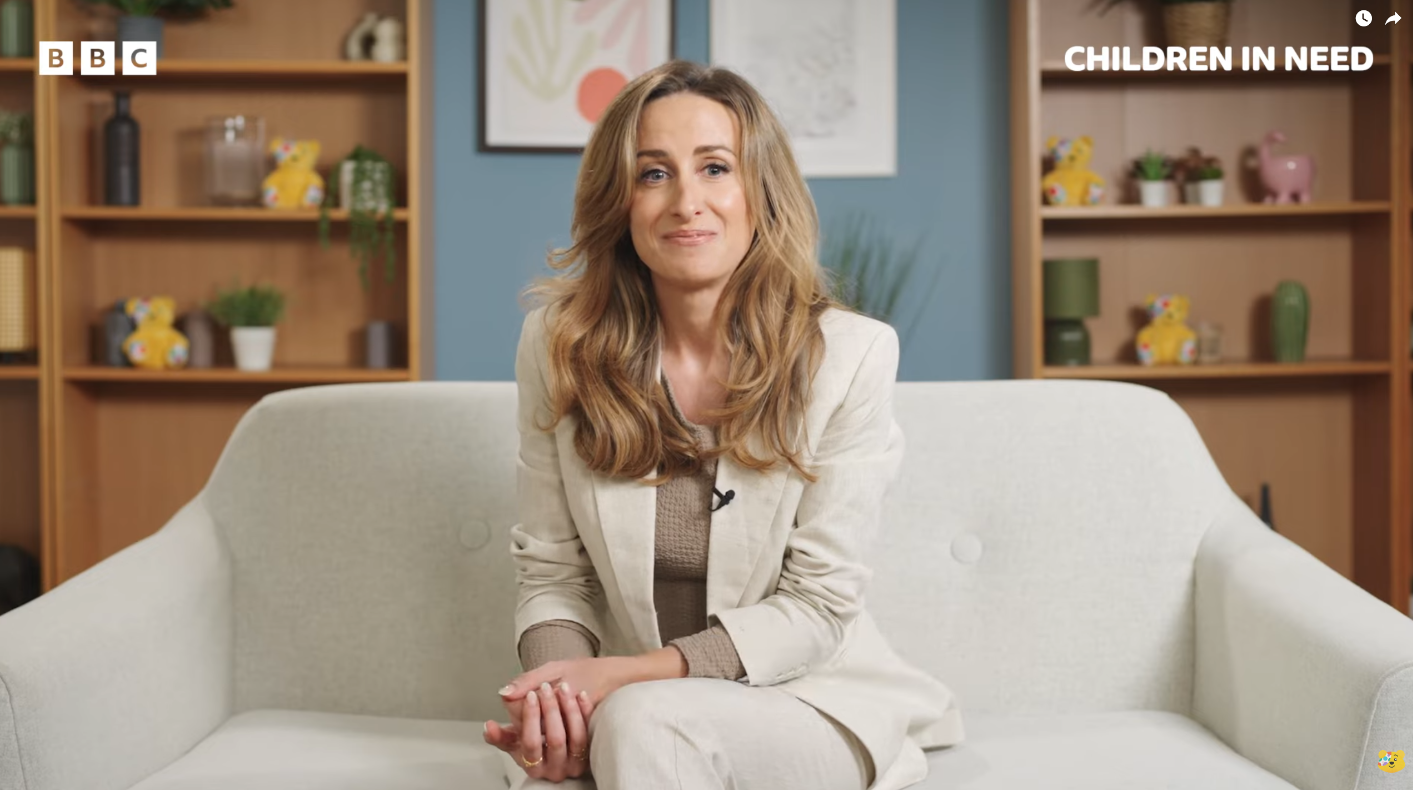
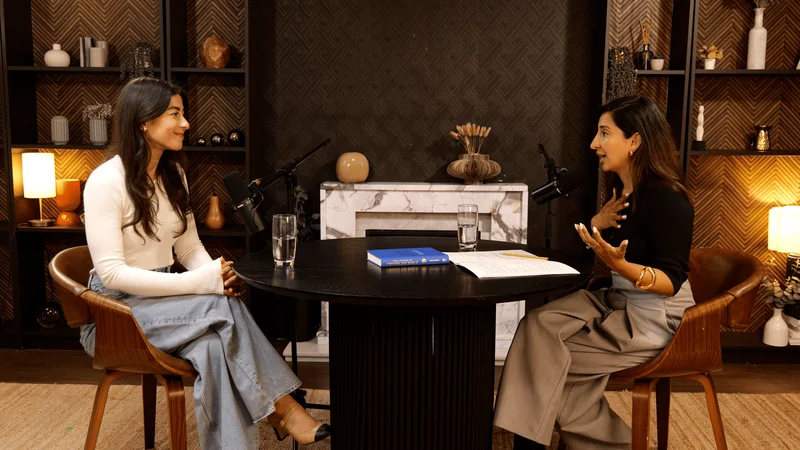
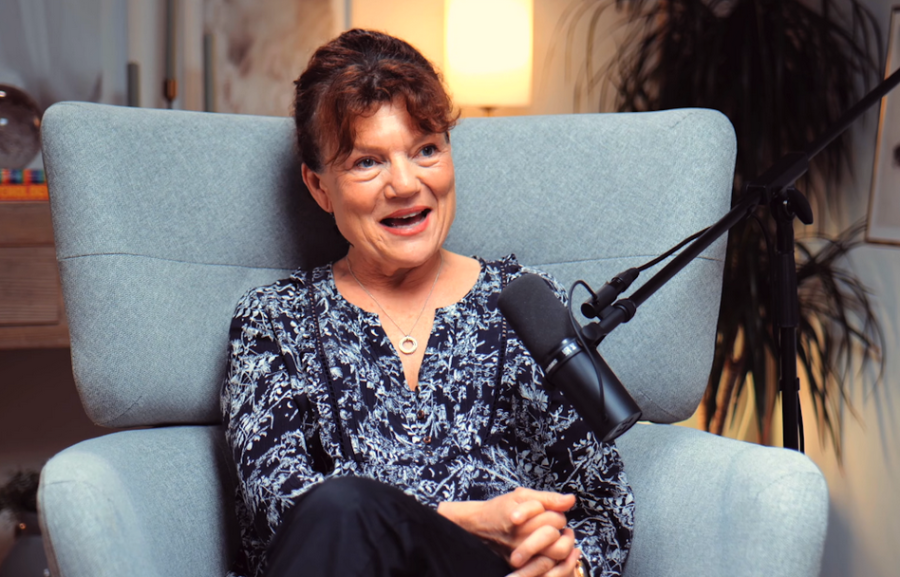
See the 'BBC Children in Need' podcast setup used by Dr Julie from BBC at Finchley Studio (Lounge setup). Book this setup for your podcast
2. The Acoustics and Physics of Sound: Why London is a Recording Nightmare
To understand the value proposition of a professional podcast studio London, one must first understand the physics of sound and the specific acoustic hostility of the London environment. Audio quality is the bedrock of podcasting; while video attracts the eye, audio holds the ear. If the audio is fatiguing, no amount of 4K videography will retain the audience. The "amateur" sound that plagues so many podcasts is rarely the fault of the microphone itself, but rather the result of the room in which it is recorded.
2.1 The Hostile Acoustic Environment of the Capital
London is a cacophony. It is a city defined by a high noise floor—the measure of background sound present when "silence" is intended. In a typical London flat or office, the ambient noise floor often sits between -35dB and -45dB. A professional recording requires a noise floor closer to -60dB or lower. Bridging this 20dB gap is exponentially difficult and expensive due to the logarithmic nature of sound pressure.6
The sources of noise pollution in London are distinct and pervasive:
Transport Infrastructure: London is crisscrossed by flight paths (Heathrow, City, Gatwick), rattled by the Underground, and saturated with the low-frequency rumble of bus lanes and sirens. Low-frequency noise (below 100Hz) is notoriously difficult to block, passing easily through standard double glazing and brickwork.7
Victorian Architecture: Much of London's housing stock consists of Victorian or Edwardian conversions. These properties, while characterful, are acoustically porous. Sash windows leak air and sound; suspended timber floors transmit impact noise (footsteps) from neighbours above and below; and thin party walls allow conversations to bleed between terraced houses.8
Internal Mechanical Noise: In a home environment, silence is an illusion. The refrigerator compressor, the central heating boiler, the laptop fan, and the hard drive spin—all these generate a constant hum that a sensitive condenser microphone will amplify with ruthless clarity.9
When a podcaster attempts to record in this environment, they are fighting a losing battle against physics. They may attempt to use "noise reduction" software in post-production, but this often introduces digital artifacts, making the voice sound robotic or "underwater".9 The only true solution is a controlled physical environment.
2.2 The Science of Soundproofing vs. Acoustic Treatment
A common misconception among amateur creators is that sticking foam tiles to a wall constitutes "soundproofing." This is factually incorrect. It is crucial to distinguish between soundproofing (Isolation) and acoustic treatment (Absorption).
2.2.1 Soundproofing (Isolation)
Soundproofing prevents sound from entering or leaving the room. It requires mass and decoupling. A professional London podcast studio is typically built as a "room within a room."
Decoupling: The floor, walls, and ceiling of the studio do not touch the structural shell of the building. They "float" on rubber shock absorbers or resilient channels. This breaks the path of vibration, stopping the rumble of the Tube or the footsteps of the floor above.11
Mass: Walls are constructed with multiple layers of high-density acoustic plasterboard, sandwiched with damping compounds like Green Glue that convert sound energy into heat.
Sealing: Sound behaves like water; it will find any leak. Professional studios use heavy, solid-core doors with perimeter seals and magnetic thresholds to create an airtight lock.
Achieving this level of isolation in a rented London flat is legally and structurally impossible. For a homeowner, the cost is astronomical—often ranging from £10,000 to over £100,000 depending on the scope.11
2.2.2 Acoustic Treatment (The Sound of the Room)
Once the noise is kept out, the sound inside the room must be controlled. In an untreated room (like a spare bedroom or office), sound waves bounce off hard surfaces (drywall, glass, laminate flooring). This creates:
Reverberation (RT60): A "boxy" or "echoey" sound that smears speech intelligibility.
Comb Filtering: A phase cancellation effect caused by reflections arriving at the microphone slightly later than the direct sound, making the voice sound thin or hollow.6
Standing Waves: Low frequencies get trapped in corners, causing some notes in a voice to boom resonantly while others disappear.
A podcast studio hire facility is treated by acousticians to achieve a "flat" frequency response. This involves:
Broadband Absorbers: Thick panels of high-density fibreglass or rockwool that absorb mid and high frequencies.
Bass Traps: Massive dense absorbers placed in corners to control low-end energy, giving the voice that rich, warm "broadcast" authority without the mud.13
Diffusers: Geometric surfaces that scatter sound in multiple directions, keeping the room sounding "alive" and natural, rather than uncomfortably dead.
2.3 The "London Studio" Advantage
By hiring a studio, the creator rents this physics. They gain access to a space where the noise floor is negligible and the acoustics are tuned to flatter the human voice. This is the difference between a listener having to strain to hear the conversation through a veil of background hiss and echo (High Cognitive Friction) and the listener feeling like the host is speaking directly into their brain (Low Cognitive Friction).4
In the competitive landscape of 2025, where listener retention is the primary metric of success, audio fidelity is a subconscious trust signal. It tells the audience that the creator is a professional. A London podcast studio provides the only reliable way to achieve this standard consistently in the noisy capital.
3. The Equipment Chasm: Home Setup vs. Professional Studio
While the room is the foundation, the equipment is the toolset. The marketing of consumer audio gear often suggests that a £100 USB microphone can deliver "studio quality." This is a marketing fabrication. The gap between consumer/prosumer gear and the broadcast-grade signal chains found in a podcast studio London is vast, both in terms of cost and performance.
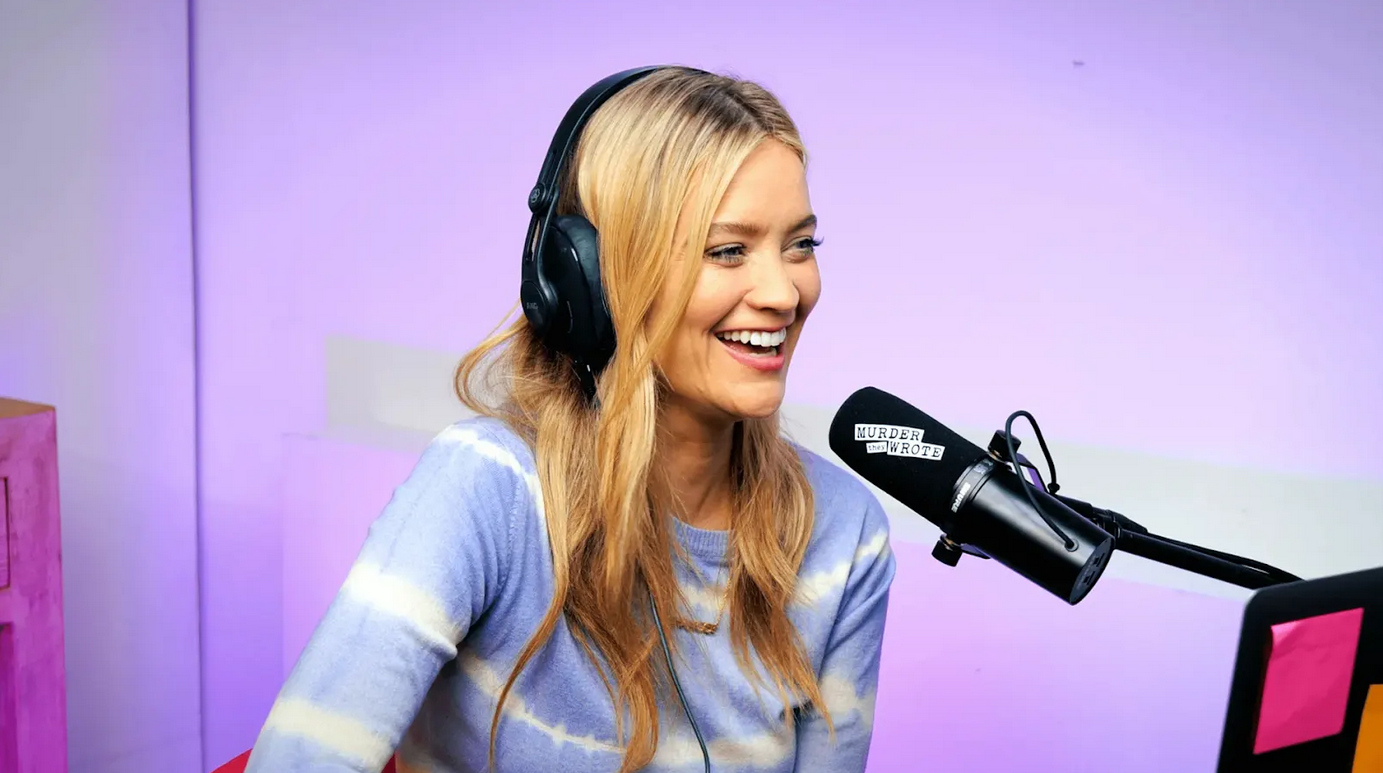
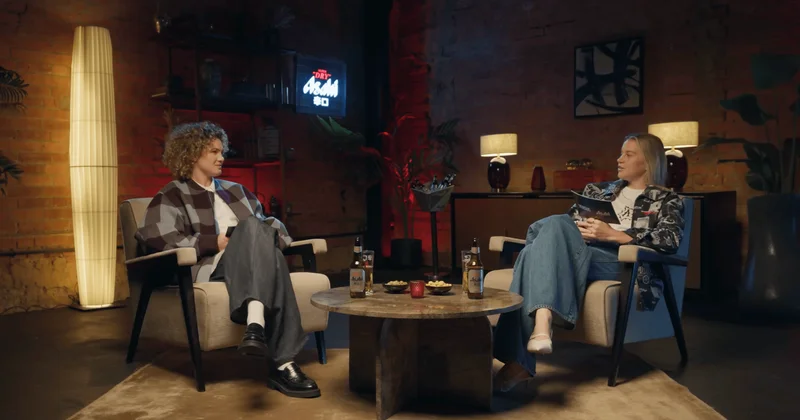
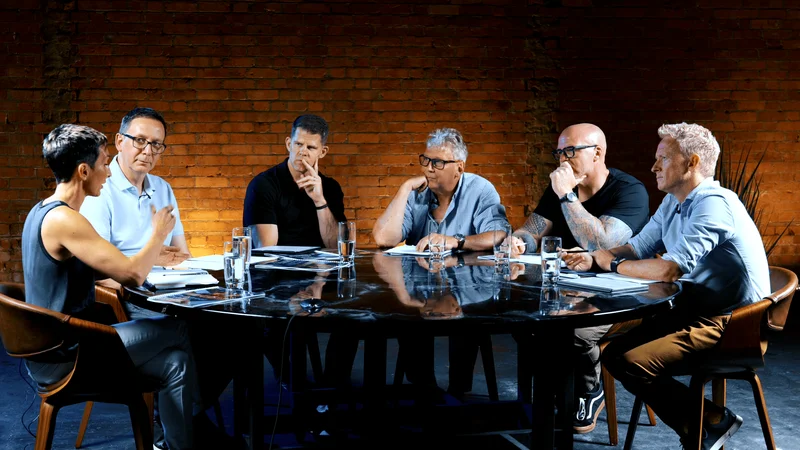
See the 'Murder They Wrote' podcast setup used by Laura Whitmore and Iain Stirling from BBC at Finchley Studio (Gathering setup). Watch Murder They Wrote at BBc sound , Spotify , Apple podcasts , Youtube , Instagram , Amazon music
3.1 The Microphone Reality: Dynamic vs. Condenser
The amateur podcaster's first purchase is often a USB condenser microphone (e.g., Blue Yeti). While convenient, these microphones are designed to be highly sensitive. In an untreated room, they act as acoustic microscopes, picking up every lip smack, chair squeak, and distant siren.
Professional studios predominantly utilise Large Diaphragm Dynamic Microphones, such as the Shure SM7B, Electro-Voice RE20, or high-end condensers like the Neumann U87 in acoustically perfect rooms.14
The Physics of Rejection: Dynamic microphones have a low sensitivity and a tight polar pattern (Cardioid). They essentially ignore sound that is not directly in front of them. This "off-axis rejection" is critical for multi-person podcasts, preventing "bleed" (where the guest's voice leaks into the host's mic), which ruins the ability to edit tracks independently.16
The Gain Requirement: The trade-off for this rejection is that dynamic mics are "gain hungry." They produce a very weak electrical signal. Plugging a Shure SM7B directly into a cheap interface results in a recording that is too quiet or buried in static hiss. They require powerful, clean preamplification—often 60dB or more.
3.2 The Signal Chain: Preamps and Processing
This brings us to the "hidden" equipment that amateurs overlook: the signal chain. In a London podcast studio, the microphone is just the start.
Preamps: Studios use high-end preamps (e.g., from Neve, API, or integrated into consoles like the RØDECaster Pro II) that amplify the signal without adding noise.
Outboard Gear / DSP: The signal is often processed in real-time.
Compression: Automatically lowers the volume when a guest laughs loudly and raises it when they whisper, ensuring a consistent listening volume (Loudness Normalisation).5
De-essing: Removes the harsh, piercing "S" sounds that can be painful on earbuds.
Noise Gating: Automatically mutes the microphone when the person isn't speaking, ensuring absolute silence in the gaps.9
3.3 The Visual Arsenal: Cinematic 4K Videography
If audio is the baseline, video is the differentiator. The standard for 2025 is "Cinematic 4K." This is distinct from the flat, sharp look of a webcam or a smartphone.
Sensor Size: Professional studios use cameras with Large Sensors (Full Frame or Super 35mm), such as the Sony FX3, Sony A7IV, or Blackmagic Pocket Cinema Camera 6K.14 Large sensors capture more light and dynamic range, allowing for rich, nuanced skin tones.
Depth of Field (Bokeh): Large sensors combined with fast prime lenses (f/1.8 or f/2.8) create a shallow depth of field, where the subject is sharp and the background is softly blurred. This separation focuses the viewer's attention entirely on the speaker and creates that premium "broadcast" aesthetic.
Multi-Cam Architecture: A single static shot is boring. Professional studios employ a multi-camera setup (typically 3 cameras: one wide, two tight). This allows for dynamic editing—cutting to the guest's reaction while the host is speaking—which mimics the visual language of television and maintains viewer engagement.19
3.4 Lighting: The Art of Shaping
A camera is only as good as the light that enters it. Amateurs often rely on overhead room lights (which cast unflattering raccoon-eye shadows) or cheap ring lights (which create flat, lifeless features).
A podcast studio hire includes professional lighting design, typically a 3-point setup using high-CRI (Colour Rendering Index) fixtures from brands like Aputure or Godox.13
Key Light: A large softbox that wraps soft light around the face, smoothing skin texture.
Fill Light: Fills in the shadows on the dark side of the face.
Back Light (Hair Light): A rim of light behind the subject that separates them from the background, adding three-dimensional depth to the image.
3.5 Table: The Cost of Trying to Match a Studio at Home
To illustrate the economic argument, let us itemise the cost of replicating a standard 3-camera, 4-microphone London podcast studio setup at home.
This breakdown reveals the hidden barrier to entry. A podcaster would need to invest roughly £15,000 just to acquire the gear, before accounting for the cost of the room, insurance, maintenance, and the steep learning curve required to operate it. By contrast, hiring a podcast studio for £100-£150 per hour turns this massive Capital Expenditure (CapEx) into a manageable Operating Expense (OpEx).20
4. The Visual Revolution: Why Audio is No Longer Enough
The shift to video is not merely a trend; it is an adaptation to the changing landscape of digital discovery. In 2025, the "discoverability" of a podcast is almost entirely dependent on its visual footprint.
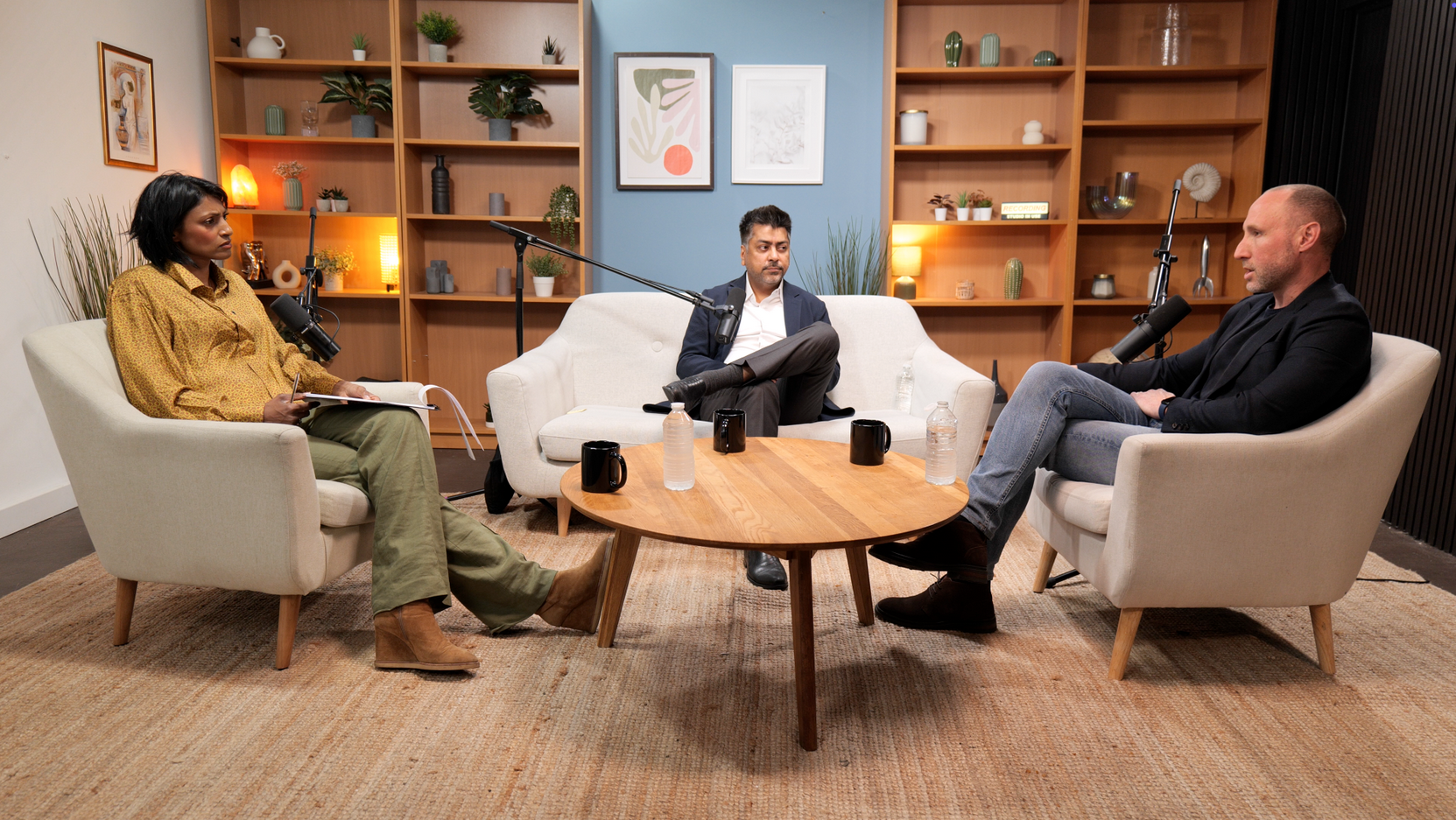
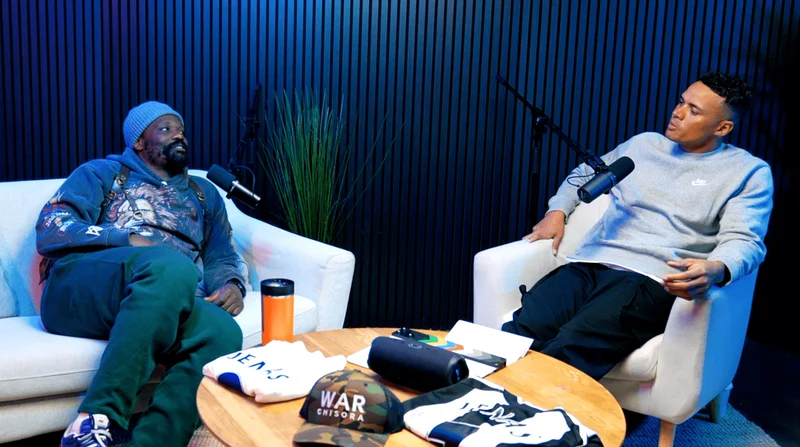
See the 'No ordinary tech podcast ' from Lloyds Banking Group by Rohit D (AI Leader for Lloyds Banking Group) and DR. shini somara (Pro-Chancellor of Brunel University) . at Finchley Studio (Lounge setup). Book this setup for your podcast.
4.1 YouTube as the Primary Discovery Engine
Historically, podcast discovery was broken. Apple Podcasts and Spotify offered limited ways to find new content outside of "Top Charts." YouTube changed this. It is the world's second-largest search engine, and its algorithm is frighteningly effective at serving content to users based on interest graphs.
The Data: Research shows that 70% of global podcast consumers now use YouTube to listen to (or watch) podcasts.22 For Gen Z, this figure is even higher.
The "Watchable" Preference: 42% of listeners prefer to actively watch the video of a podcast.23 They are looking for the non-verbal cues—the skepticism in a raised eyebrow, the warmth of a smile, the tension of a pause. Video humanises the voice, accelerating the formation of parasocial relationships (the one-sided bond between listener and host).3
4.2 The Social Media Ecosystem: Shorts, Reels, and TikTok
The most powerful argument for videography is the "Clip." Long-form content (45-60 minutes) is the product, but short-form content (60 seconds) is the advertisement.
The Viral Funnel: Platforms like TikTok, Instagram Reels, and YouTube Shorts are voracious consumers of vertical video. A podcast recorded in a London podcast studio with 4K cameras can be cropped vertically while retaining high definition quality.
Engagement Metrics: A static image with a waveform (audiogram) is no longer effective. Video clips with captions and facial expressions generate significantly higher engagement. Snippets of high-tension or high-humour moments act as hooks, driving traffic back to the full episode.24
Algorithmic Bias: Social algorithms prioritise video. They deprioritise links to external audio sites. To grow a podcast in 2025, you must feed the algorithm native video content.
4.3 Visual Authority and Brand Perception
Finally, videography signals authority. In a world of Zoom calls and blurry webcams, a crisp, studio-lit video stands out. It signals that the creator has resources, standards, and seriousness. For businesses using podcasts for B2B marketing, this "production value signalling" is crucial. It aligns the podcast with the premium nature of the brand's services. A CEO recorded in a grainy home office looks like a hobbyist; a CEO recorded in a podcast studio London looks like an industry leader.19
5. The Operational Reality: Engineering & Convenience
Beyond the hardware and the acoustics, there is a soft-skill advantage to studio hire that is often undervalued until it is experienced: the workflow. Professional studios are designed for efficiency and reliability, removing the friction that leads to "podfade" (the tendency for creators to quit after a few episodes due to burnout).

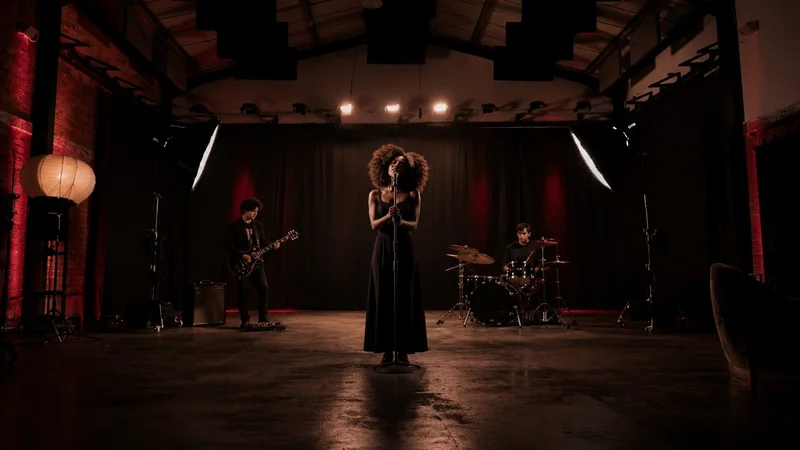
Finchley Studio (Dialogue set): book this setup for your podcast
5.1 The Role of the Engineer: The Unsung Hero
Most London podcast studios, particularly in the mid-to-high tier, include an audio engineer in the hire rate.14 This human element is transformative.
Cognitive Load: When self-recording, the host is split-brained. They are trying to interview a guest while simultaneously worrying: Is the red light on? Is the battery dying? Is the audio clipping? This anxiety stifles creativity and presence. The host cannot listen deeply because they are managing tech.
The Safety Net: An engineer handles the technical burden. They monitor levels, adjust gain in real-time, check focus, and ensure files are saving correctly. If a technical glitch occurs, they fix it while the host keeps the conversation flowing.
Live Switching: Many studios offer live video switching (using tools like the ATEM Mini Pro). The engineer cuts between camera angles in real-time during the recording. This means that at the end of the session, the client receives a video file that is 90% edited. This saves hours of post-production time and cost.18
5.2 The "Walk-In, Walk-Out" Convenience
Time is money. Setting up a 3-camera, 4-mic shoot at home can take 60-90 minutes of cable management, lighting adjustment, and testing. Tearing it down takes another 45 minutes.
In a studio, the workflow is "Walk-In, Record, Walk-Out."
Batch Recording: The efficiency of a studio allows for "batching." A host can book a full day (8 hours) and record 4-5 episodes back-to-back. The consistent environment means the sound and lighting match perfectly across all episodes. This strategy allows a creator to produce a month's worth of content in a single day, freeing them to focus on marketing and business for the rest of the month.20
5.3 Reliability and Redundancy
Professional studios build redundancy into their systems. They record to the camera's SD card, but also to a separate hard drive, and often to the cloud simultaneously. If one drive fails, the session is saved. In a DIY setup, a corrupted SD card means the episode is lost forever—a disaster if you have just interviewed a high-profile guest who will not return for a re-do.28
6. The London Advantage: Location, Prestige, and Logistics
For creators based in or targeting the UK market, the physical location of the studio is a strategic asset. London is a global media hub, and leveraging its infrastructure offers benefits beyond just the recording quality.
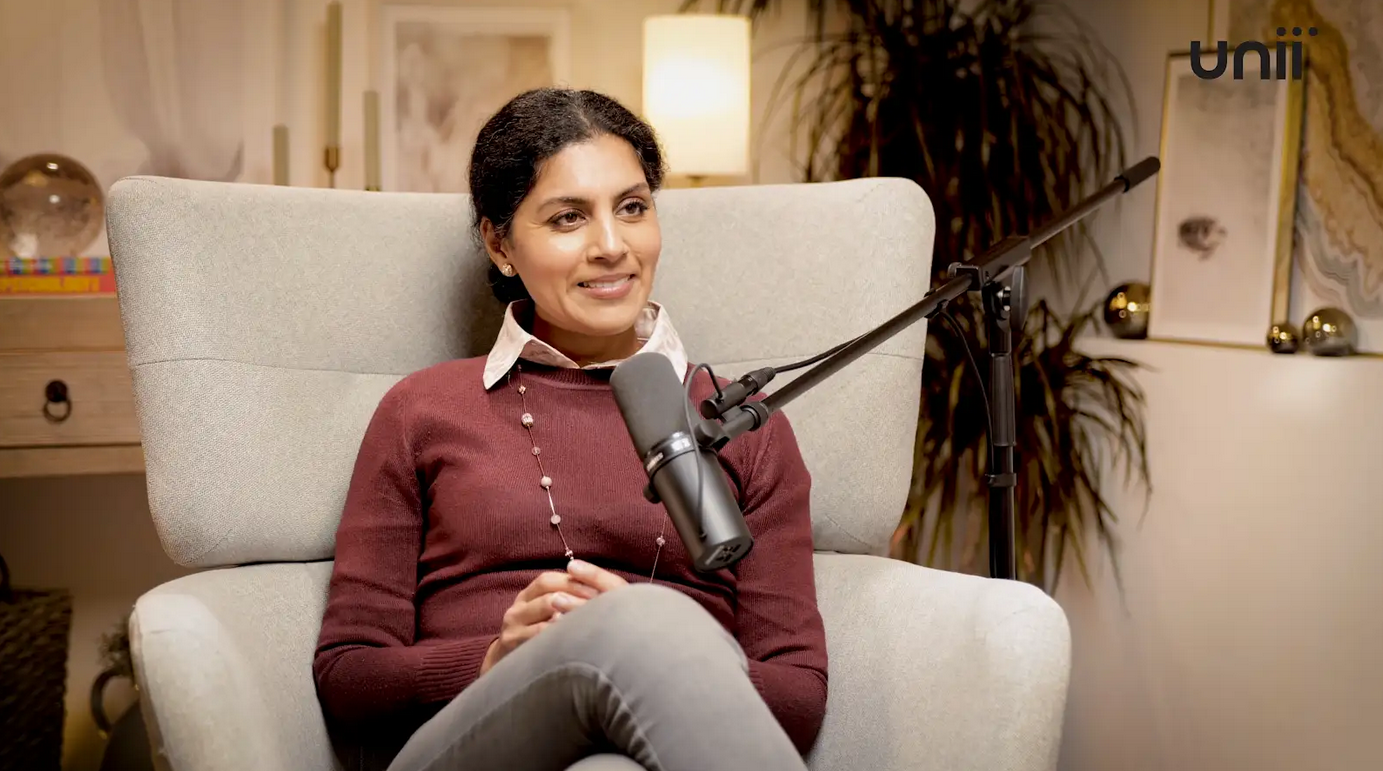
Finchley Studio (Dialogue set): book this setup for your podcast
6.1 Guest Logistics and Experience
The calibre of guests a podcast can attract is often directly proportional to the ease of the experience for them. High-value guests—CEOs, authors, celebrities, experts—are time-poor.
Accessibility: Asking a guest to travel to a home studio in a residential suburb (Zone 4 or 5) is a significant friction point. It can feel unprofessional or even unsafe. Conversely, inviting them to a podcast studio near me in a central hub like Shoreditch, Soho, or London Bridge is seamless. These locations are serviced by major transport links (Liverpool Street, King's Cross, the Elizabeth Line), making it easy for guests to slot the recording into their working day.29
The "Green Room" Experience: Professional studios provide a hospitality layer. Guests are greeted by a receptionist, offered coffee or water, and given a private "Green Room" to decompress, check emails, or prep before the show.13 This professional treatment puts the guest at ease, resulting in a more relaxed and open conversation.
6.2 Brand Prestige and Networking
Associating a podcast with a known London studio adds a layer of geographic prestige. "Recorded live at, London" carries weight.
The Visual Backdrop: Many London studios offer sets that reflect the city's aesthetic—whether it's the exposed brick "loft" look of East London (Shoreditch/Hackney) or the sleek, glass-walled corporate look of the City.13 This visual branding aligns the show with the cultural capital of London.
Collision Density: Studios are creative hubs. By recording in a facility like Premiere Podcast Studios or Finchley Studio, creators are physically present in a building filled with other media professionals. The "collision density"—the chance of bumping into other podcasters, producers, or potential sponsors in the kitchen—is a tangible networking benefit that does not exist in a home studio.18
6.3 Local SEO Benefits
For businesses, recording in a London studio supports a local SEO strategy.
Metadata: Tagging video content with location data and using keywords like "London Podcast Studio" helps the content surface in local search results for users looking for industry-specific discussions in the UK.
Collaboration: Being part of the London ecosystem facilitates in-person collaborations with other London-based creators, allowing for cross-promotion and audience sharing.
7. Strategic Implementation: Navigating the Studio Market
Transitioning from a home setup to a studio requires understanding the market landscape. London offers a tiered ecosystem of studio options, catering to different budgets and production needs.
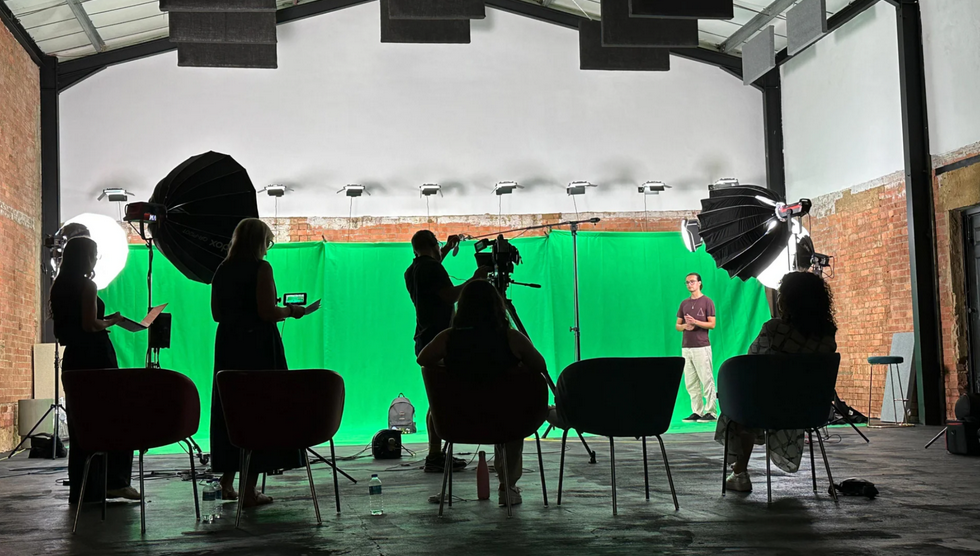
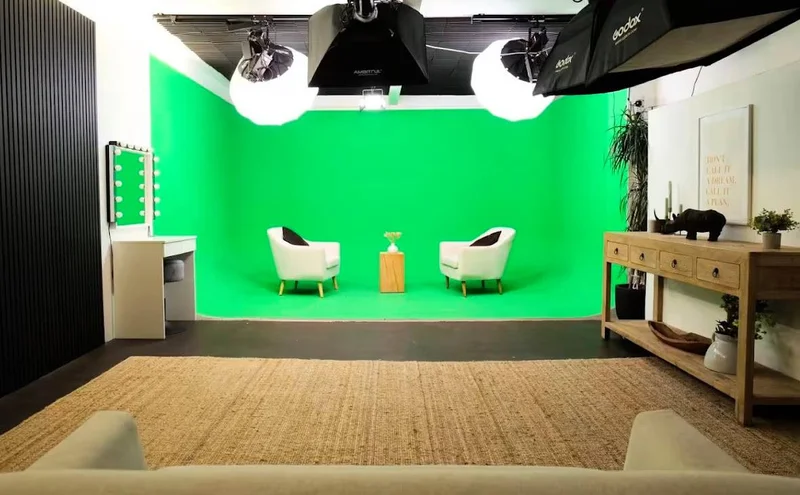
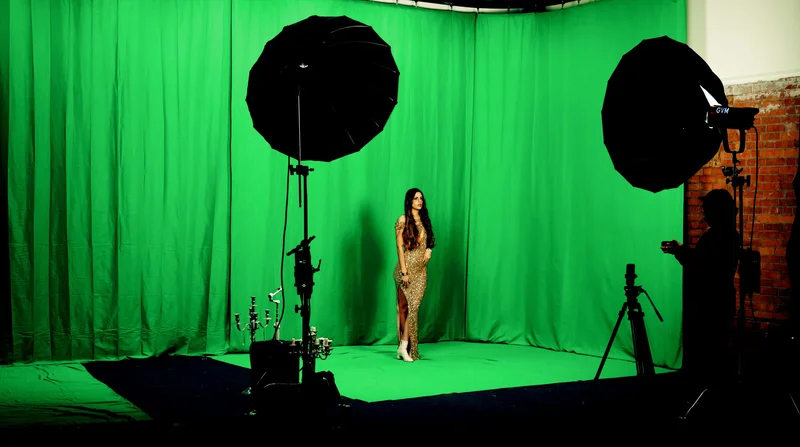
Finchley Studio (Giant Green Screen): book this setup for your podcast
7.1 Understanding Studio Tiers
Creators should identify which tier aligns with their business model.
Tier 1: Dry Hire (The DIY Pro)
Cost: £50 - £90 per hour.
What you get: A soundproof room, professional acoustic treatment, and microphones connected to an interface.
What you don't get: An engineer, cameras, or file transfer services. You bring your own SD cards and run the board yourself.
Best for: Audio engineers, experienced producers, or budget-conscious creators who are technically proficient.26
Tier 2: Standard Video Hire (The Content Creator)
Cost: £100 - £150 per hour.
What you get: A fully equipped room with 3-camera 4K setup, professional lighting, and an engineer to set everything up and monitor the session.
Best for: Regular podcasters who need high-quality video clips for social media but don't need complex post-production services included in the session fee.32
Tier 3: Concierge / Full Service (The Brand/Enterprise)
Cost: £150 - £300+ per hour.
What you get: A "white glove" experience. Dedicated engineer, live video switching, green room access, refreshments, and often file transfer/upload services. The client simply shows up and talks.
Best for: Corporate podcasts, high-profile celebrity interviews, and brands where time efficiency and risk mitigation are more important than cost.26
7.2 The Economic Case: OpEx vs. CapEx
For businesses, the choice between building a studio and hiring one is a classic "Capital Expenditure vs. Operating Expense" decision.
Building (CapEx): Requires a large upfront cash outlay (£15k+), creates a depreciating asset (cameras lose value), and requires ongoing maintenance and rent for the space.
Hiring (OpEx): Turns production into a flexible cost. If the podcast pauses for a month, the cost drops to zero. If the podcast scales up, the studio can accommodate it. This flexibility is crucial in the volatile media landscape. Furthermore, studios constantly upgrade their gear. By hiring, the creator always has access to the latest technology (e.g., the newest Sony cameras or Shure mics) without having to buy it themselves.20
8. Conclusion: The Tipping Point
The trajectory of podcasting is clear: it is becoming a visual, professionalised medium. The days of the "amateur" aesthetic being a badge of honour are gone. Today, audiences equate quality with authority. They vote with their attention, and they are voting for 4K video, crystal-clear audio, and polished production values.
For the London-based creator, the London podcast studio represents the bridge across the chasm of quality. It provides the acoustic sanctuary that the city's architecture denies; it provides the £20,000 equipment arsenal that is financially risky to own; and it provides the engineering expertise that allows the host to be a host, not a technician.
Videography is not just an add-on; it is the new baseline. It is the key to unlocking the algorithmic growth of YouTube and TikTok. It is the tool that elevates a podcast from a background noise to a foreground brand. By stepping out of the spare room and into the studio, creators signal their intent to compete at the highest level.
Ready to Elevate Your Voice?
Do not let your message be diminished by poor audio or amateur visuals. Your content deserves the platform that only professional production can provide. Book a tour or a session at our London studio today, and experience the difference that a professional environment makes to your sound, your look, and your confidence. Step up to the mic, and let us handle the rest.
Appendix: Comparative Data Analysis
Table 1: Home Studio vs. Professional London Studio – A Cost-Benefit Analysis
This table breaks down the tangible and intangible differences between a high-end DIY setup and a professional studio hire in London.
Data Sources: 11
Table 2: The Impact of Video on Podcast Growth Metrics (2025 Data)
This table illustrates why videography is the primary driver of growth in the modern podcast ecosystem.
Data Sources: 2
Table 3: London Studio Tier Pricing & Inclusions Guide (2025 Estimates)
A guide for creators to understand what to expect at different price points in the London market.
Data Sources: 18
Works cited
Podcast Statistics 2025: Global Listener Growth and Trends - Teleprompter.com, accessed January 1, 2026, https://www.teleprompter.com/blog/podcast-statistics
State of Video Podcasts 2025: Key Trends, Insights & Strategies - Sweet Fish Media, accessed January 1, 2026, https://www.sweetfishmedia.com/blog/the-2025-state-of-video-podcasts
Does Your Branded Podcast Need Video in 2025?, accessed January 1, 2026, https://www.quillpodcasting.com/blog-posts/branded-podcast-video
accessed January 1, 2026, https://www.cuepodcasts.com/post/improve-podcast-audio-quality#:~:text=In%20fact%2C%20research%20shows%20that,stop%20people%20from%20hitting%20subscribe.
How to Improve Your Podcast Audio Quality, accessed January 1, 2026, https://www.cuepodcasts.com/post/improve-podcast-audio-quality
How Room Acoustics Affect Your Recordings - ZeroHour Studio, accessed January 1, 2026, https://zerohour.uk.com/blog/how-room-acoustics-affect-your-recordings
Do UK flats offer optimal soundproofing in London today - Select Recording Studios, accessed January 1, 2026, https://selectrecordingstudios.co.uk/hub/are-uk-flats-soundproof-in-london/
Moved into a new UK flat and there is a loud noise every 10 minutes, between the walls, losing sleep, what can we do? : r/AskUK - Reddit, accessed January 1, 2026, https://www.reddit.com/r/AskUK/comments/1oswcb8/moved_into_a_new_uk_flat_and_there_is_a_loud/
3 Common Podcast Audio Issues To Watch For - Band Barracks, accessed January 1, 2026, https://bandbarracks.com/blog/3-common-podcast-audio-issues-to-watch-for/
Buzzing noise on my recordings : r/podcasting - Reddit, accessed January 1, 2026, https://www.reddit.com/r/podcasting/comments/13d8l4b/buzzing_noise_on_my_recordings/
How Much Does It Cost to Build a Recording Studio? A Comprehensive Breakdown, accessed January 1, 2026, https://sonatune.co.uk/mss-blog/how-much-does-it-cost-to-build-a-recording-studio-a-comprehensive-breakdown
Cost to Build a Recording Studio in 2025 | Checkatrade, accessed January 1, 2026, https://www.checkatrade.com/blog/cost-guides/recording-studio-cost-to-build/
Podcast Studio London: Why Location Matters for Guests and Production Quality, accessed January 1, 2026, https://www.finchley.co.uk/finchley-learning/visual-podcast/podcast-studio-london-why-location-matters-for-guests-and-production-quality
Podcast Studio London Equipment Guide - Finchley Studios, accessed January 1, 2026, https://www.finchley.co.uk/finchley-learning/podcast-studio-london-equipment-guide
The Psychology of Audio: Why Listeners Connect with Quality Sound - Podcast Provisions, accessed January 1, 2026, https://podcastprovisions.com/blogs/news/the-psychology-of-audio-why-listeners-connect-with-quality-sound
JOURNAL OF THE NACAA Sound Matters: Enhancing Educational Audio Quality for Extension Programs Increases Learning, accessed January 1, 2026, https://www.nacaa.com/file.ashx?id=ec54c403-2ebe-48c6-a5ca-f0a870d37aa7
Why Podcast Listeners Drop Off: 5 Proven Retention Strategies for Creators, accessed January 1, 2026, https://propodcastsolutions.com/podcast-listener-retention-strategies/
Professional Studio vs. DIY Home Setup: A Cost-Benefit Analysis for ..., accessed January 1, 2026, https://www.finchley.co.uk/finchley-learning/visual-podcast/professional-studio-vs-diy-home-setup-a-cost-benefit-analysis-for-uk-creators
The Benefits of Using a Professional Podcast Studio vs. DIY Setup | Umbrella Creative, accessed January 1, 2026, https://umbrellacreative.com.au/the-benefits-of-using-a-professional-podcast-studio-vs-diy-setup/
Renting & Leasing Podcast Studios in the UK: Daily, Weekly, and Monthly Options + How to Profit from Your Own Studio | Lyvi UK, accessed January 1, 2026, https://lyvi.co.uk/renting-leasing-podcast-studios-in-the-uk-daily-weekly-and-monthly-options-how-to-profit-from-your-own-studio/
Rent Podcast Studio vs Build Home Podcast Setup in Pasadena - CTRL Collective, accessed January 1, 2026, https://www.ctrlcollective.com/podcast/rent-podcast-studio-vs-build-home-podcast/
Must-Know Podcast Statistics in 2025 - Loopex Digital, accessed January 1, 2026, https://www.loopexdigital.com/blog/podcast-statistics
Podcast Statistics You Need To Know in 2026 - Backlinko, accessed January 1, 2026, https://backlinko.com/podcast-stats
Podcast Statistics 2025: 99+ Stats & Insights [Expert Analysis] - Marketing LTB, accessed January 1, 2026, https://marketingltb.com/blog/statistics/podcast-statistics/
Why Podcast Clips for Social Media Get More Shares - Castmagic, accessed January 1, 2026, https://www.castmagic.io/post/podcast-clips-for-social-media
Podcast Studio London Rates and Policy - Finchley Studios, accessed January 1, 2026, https://www.finchley.co.uk/finchley-learning/podcast-studio-london-rates-and-policy
Podcast Studio in London | Professional Audio & Video Services, accessed January 1, 2026, https://premierepodcaststudios.com/podcast-studio-london/
5 Mistakes to Avoid When Recording a Remote Podcast (And How We Fixed Them), accessed January 1, 2026, https://www.iamhellostudios.com/5-mistakes-to-avoid-when-recording-a-remote-podcast-and-how-we-fixed-them/
Premiere Podcast Studio in London | Audio & Video Recording, accessed January 1, 2026, https://premierepodcaststudios.com/
Podcast Studio Hire in Central London, accessed January 1, 2026, https://nextmedia.london/services/podcast-studio-hire/
How much does it cost to rent a podcast studio London? - Finchley Studios, accessed January 1, 2026, https://www.finchley.co.uk/finchley-learning/how-much-does-it-cost-to-rent-a-podcast-studio-london
Recording Studio Costs: A Full Breakdown of 2025 Pricing - Finchley Studios, accessed January 1, 2026, https://www.finchley.co.uk/finchley-learning/visual-podcast/recording-studio-costs-a-full-breakdown-of-2025-pricing
10 Best Podcast Studios London to Hire in 2025 - Saspod, accessed January 1, 2026, https://saspod.com/blog/post/best-podcast-studios-london