Introduction to Acoustic Bleed and the Necessity of Isolation
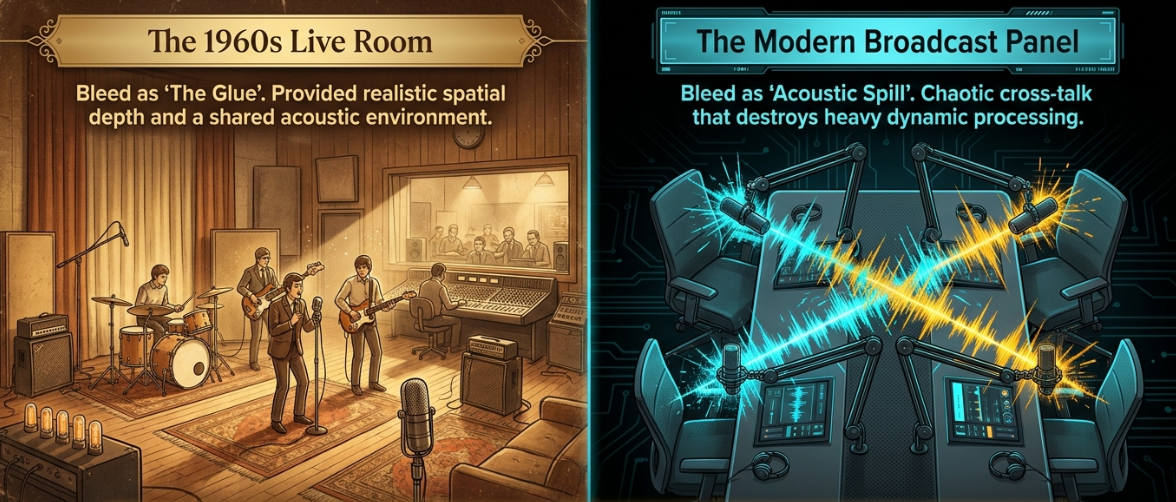
Within the domain of professional audio engineering, the phenomenon of microphone bleed-also widely referred to as acoustic spill, crosstalk, or leakage-is fundamentally defined as the inadvertent and unwanted capture of extraneous acoustic energy by a microphone that is deployed to record a specific, isolated sound source. While the principles of acoustic capture dictate that every transducer within a shared physical environment will capture some degree of the total acoustic event, the practical implications of this bleed vary drastically depending on the specific medium, the genre of the production, and the intended post-production workflow. In certain historical and musical contexts, microphone bleed has not only been tolerated but actively embraced as an aesthetic enhancement. Engineers tracking live ensembles in the 1960s frequently relied on the natural leakage of sound between instrument microphones to provide a cohesive, glued sonic signature that accurately represented the physical dimensions of the recording studio. This bleed provides a realistic spatial depth and a sense of shared acoustic environment that modern, hyper-isolated recordings sometimes lack. However, the transition from musical recording to multi-guest spoken-word environments-such as broadcast journalism, professional podcasting, corporate panel discussions, and dramatic film dialogue-fundamentally alters the utility of acoustic spill. In these modern production environments, microphone bleed transforms from a musical enhancement into a severe technical liability. When multiple subjects speak in close proximity within a multi-guest studio setup, each microphone captures its designated primary speaker alongside delayed, attenuated, and acoustically colored versions of the neighboring speakers. This creates overlapping audio tracks that inherently degrade the intelligibility, clarity, and isolation of the dialogue. The pursuit of absolute isolation in modern production stems from the necessity for extreme post-production control. When an audio engineer is tasked with executing precision edits to repair grammatical errors, removing cross-talk, replacing flawed dialogue via Automated Dialogue Replacement (ADR), or applying aggressive dynamic processing such as heavy compression, the source audio must be fundamentally clean (Beverly Boy Productions). If a production relies on heavily spilled tracks, any attempt to compress a primary speaker's dialogue will simultaneously apply make-up gain to the bled signal of a secondary speaker, artificially inflating the background noise and creating distracting volume fluctuations. Furthermore, careless microphone placement, the utilization of unsuitable transducer polar patterns, and highly reflective recording environments exacerbate this bleed, causing post-production processors to behave unpredictably and drawing the listener's attention away from the narrative content. Therefore, tackling these acoustic issues at the source through the application of physics, spatial geometry, and specialized electroacoustic hardware is paramount. Relying solely on post-production restoration software to "fix it in the mix" often yields artificial, degraded, or compromised audio artifacts. This comprehensive report explores the underlying acoustic physics of microphone bleed, the geometric principles of transducer placement, hardware-level automixing algorithms, and advanced artificial intelligence restoration techniques required to achieve broadcast-quality dialogue isolation in multi-guest environments.
The Physics of Sound Attenuation and the Inverse Square Law
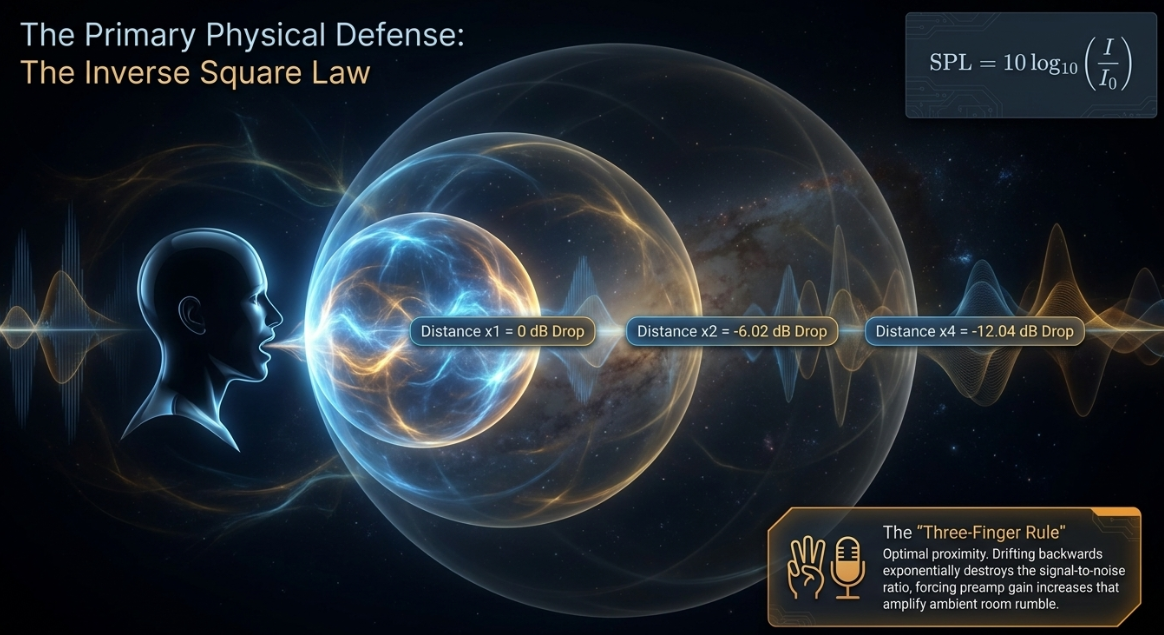
To systematically mitigate microphone bleed, it is necessary to first understand the physical behaviors of sound propagation and intensity attenuation within an enclosed environment. The primary physical mechanism governing the volume and impact of acoustic bleed is the Inverse Square Law of sound (Harvard Natural Sciences Lecture Demonstrations). In a theoretical free field completely devoid of reflective boundaries, sound intensity obeys a strict geometric divergence. As acoustic energy radiates outward spherically from a point source-such as a human mouth-the intensity of that sound is inversely proportional to the square of the distance from the source (Harvard Natural Sciences Lecture Demonstrations). This means that as the sound wave travels further from the speaker, the acoustic energy is spread over a rapidly expanding spherical area, causing a drastic reduction in measurable intensity. Mathematically, the sound pressure level (SPL) is calculated using a logarithmic formula:
$SPL=10~log_{10}(I/I_{0})$
In this equation, $I$ represents the measured root mean square of the amplitude of the intensity, and $I_{0}$ represents a reference level corresponding to approximately $20\mu Pa$, which is widely accepted as the baseline threshold of human hearing (Harvard Natural Sciences Lecture Demonstrations). The practical implication of the Inverse Square Law in a recording environment is that every time the distance between a sound source and a microphone is doubled, the sound pressure level drops by a factor of four, which equates to a measurable drop of approximately 6 decibels (dB) in sound pressure level (Harvard Natural Sciences Lecture Demonstrations).
This rapid loss of acoustic energy emphasizes why proximity is the most critical factor in multi-guest recording. Maximizing the signal-to-noise ratio relies heavily on minimizing the distance between the primary speaker and their designated microphone, while simultaneously maximizing the distance between that same microphone and all other extraneous sound sources (Reddit). Audio engineers frequently instruct podcast guests to adhere to a "three-finger rule," placing their mouth merely the width of three fingers away from the microphone capsule (Big Podcast). By maintaining this incredibly close proximity, the primary vocal signal is captured at an optimal intensity. If a guest leans back or falls out of the optimal operating distance-even by a few inches-the direct signal level drops precipitously due to the Inverse Square Law (University Center for Teaching and Learning). When this occurs, the recording engineer is forced to increase the preamplifier gain to compensate for the lost volume, which simultaneously and unavoidably amplifies the ambient room noise, HVAC rumble, and the acoustic bleed from neighboring speakers (Reddit).
However, it must be noted that the Inverse Square Law assumes a perfect free-field environment without reflections or reverberation (HyperPhysics). In an untreated acoustic space, such as a typical dining room or a corporate boardroom, the sound waves bounce off hard surfaces and sustain the acoustic energy within the room, severely mitigating the rapid loss associated with the inverse square law and causing secondary bleed pathways that cannot be solved by distance alone (HyperPhysics).
Phase Cancellation, Comb Filtering, and Psychoacoustics
When microphone bleed occurs in a multi-guest studio, the exact same acoustic event is captured by multiple microphones at slightly different moments in time (iDrumTune). Because sound travels at a relatively slow speed of approximately 343 meters per second (at 20°C in dry air), a spatial distance of roughly 34 centimeters equates to a 1-millisecond (ms) delay in arrival time. When these multiple microphone channels are routed into a mixing console or a digital audio workstation (DAW) and summed together to a mono or stereo mix bus, the time-delayed bleed signals interact directly with the primary signals, resulting in severe acoustic anomalies (DPA Microphones).
The Mechanics of Phase Interference This temporal interaction creates what is known as phase interference. Phase describes the position of a periodic process, such as a sine wave, typically measured in degrees ranging from 0° to 360° (YouTube). When two signals of the same frequency are summed together, their phase relationship determines the resulting amplitude. If the signals arrive at the exact same time, their peaks and troughs align perfectly; they are considered "in phase," and the waveforms add together constructively, increasing the total signal voltage by 6 dB (Sound On Sound). Conversely, if the signals arrive at different times, they exhibit a phase shift. The most extreme and destructive scenario occurs when the peak of one signal coincides exactly with the trough of the delayed signal, representing a 180-degree phase shift (Q-SYS). When this happens, the two waveforms subject each other to destructive interference, completely canceling each other out and producing total silence at that specific frequency (Q-SYS). In real-world multi-microphone setups, the phase offset is rarely a perfect 180 degrees across the entire spectrum; instead, the combination of the waves exhibits varying degrees of addition and cancellation across different frequency bands (Sound On Sound).
The Comb Filtering Phenomenon When this alternating pattern of constructive addition and destructive cancellation occurs repeatedly across the frequency spectrum due to a short time delay, it is referred to as comb filtering (Q-SYS). Comb filtering typically emerges when a sound adds to a delayed version of itself within a specific time interval ranging from less than 1 ms to approximately 25 ms (DPA Microphones). If the delay time extends beyond 35 ms, the human brain and auditory system process the delayed signal as a distinct, separate echo rather than a timbral alteration of the original sound (Q-SYS).
The specific frequencies affected by comb filtering are mathematically tied to the duration of the time delay (iDrumTune). For example, a 2 ms delay will cause perfectly in-phase constructive interference (a doubling of amplitude) at frequencies such as 500 Hz, 1000 Hz, and 1500 Hz, while creating deep, destructive notches at alternating intervals between those peaks (iDrumTune). If the distance between the microphones is increased, resulting in a 6 ms delay, the frequencies of cancellation shift downward to 83 Hz, 249 Hz, 415 Hz, and 588 Hz (iDrumTune). When this frequency response is plotted on a linear spectrum graph, the resulting curve consists of a series of regularly spaced, deep notches that visually resemble the teeth of a hair comb, giving the phenomenon its name (Q-SYS).
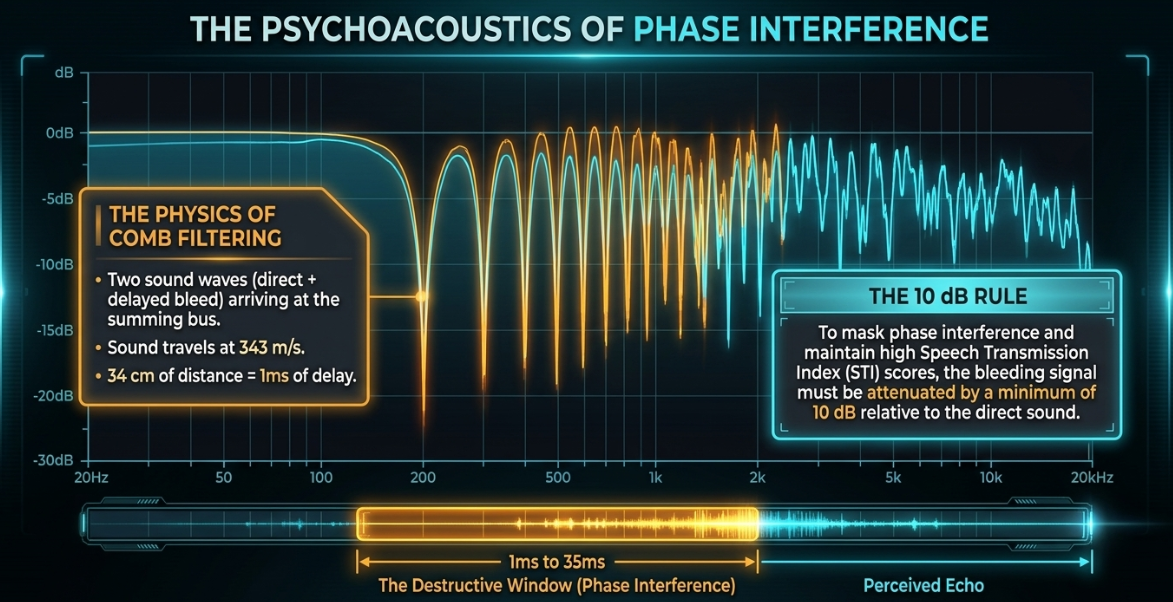
Psychoacoustically, comb filtering destroys the natural warmth, presence, and clarity of the human voice. The resulting audio is frequently described by acoustic engineers as sounding "hollow," "metallic," "robotic," "thin," or "phasy" (Q-SYS). Furthermore, if the guests or microphones move during the recording process, the arrival times continuously fluctuate, causing the comb filter notches to migrate across the audio spectrum in real-time, creating a highly distracting, sweeping "phasing" effect (Q-SYS).
The 10 dB Threshold and Speech Intelligibility Comb filtering, while mathematically present in any multi-microphone array, is not always psychoacoustically audible. For the destructive phase interference to be perceptible to the human ear, the amplitude of the delayed signal (the acoustic bleed) must be within 10 dB of the primary direct signal (Q-SYS). If the bleeding signal is successfully attenuated by more than 10 dB relative to the direct sound, the comb filtering artifacts are effectively masked by the louder direct signal, rendering the timbral coloration almost unnoticeable at short delays (DPA Microphones). While 10 dB is the standard operational threshold for general broadcast dialogue, highly stringent psychoacoustic studies suggest that for absolute total transparency, reflections or delayed signals within the critical 15-20 ms window should ideally be attenuated by 15 dB to 20 dB (DPA Microphones).
Failing to achieve this necessary attenuation delta has a direct and measurable impact on speech intelligibility. Human speech relies heavily on a complex harmonic structure. Comb filtering arbitrarily preserves certain fundamental frequencies while aggressively attenuating the vital harmonics located between those peaks (VOCAL Technologies). Because human speech intelligibility relies entirely on the listener's ability to decode high-frequency transient consonants and subtle harmonic formants, the degradation of this acoustic structure forces the listener to strain to understand the dialogue. Clinical studies evaluating speech intelligibility demonstrate that phase interference and comb filtering significantly reduce the Speech Transmission Index (STI), making conversations fatiguing to consume and inherently harder to understand than clean, isolated speech (Acoustical Surfaces).
Transducer Selection: Polar Patterns and Microphone Types
Spatial geometry and acoustic boundaries cannot effectively isolate dialogue without the correct electroacoustic hardware. The selection of the microphone capsule-specifically its transducer mechanism and its inherent directional characteristics (polar pattern)-dictates exactly how effectively the device will reject off-axis bleed in a multi-guest environment (Lewitt Audio).
Dynamic vs. Condenser Transducers The fundamental electromechanical design of the microphone capsule heavily influences its susceptibility to capturing unwanted ambient noise and acoustic bleed.
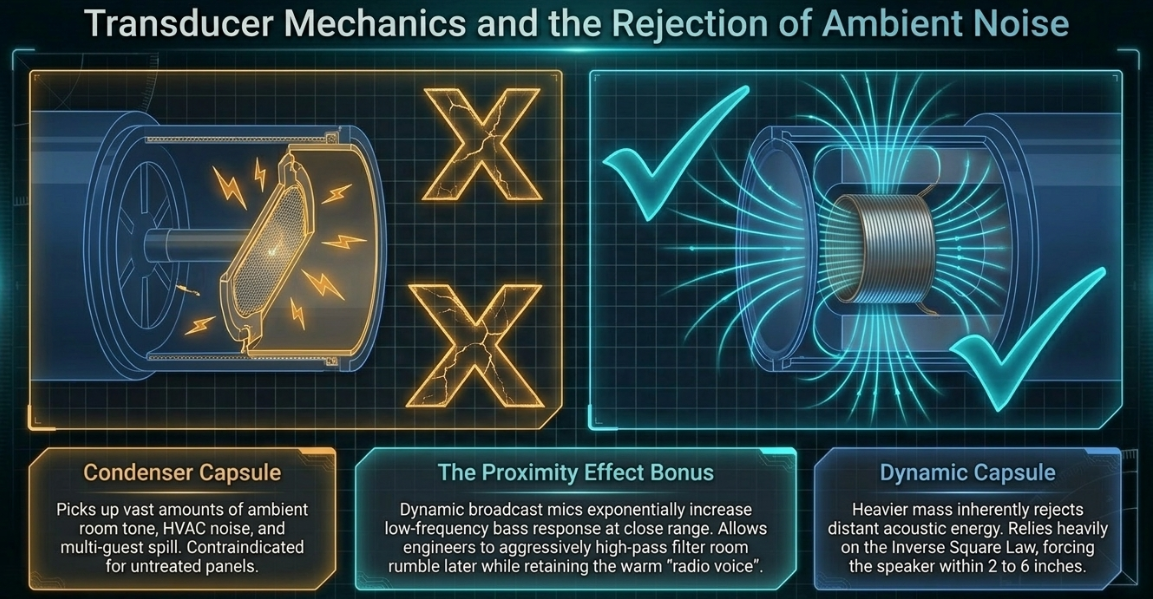
Condenser Microphones: Condenser microphones utilize a highly sensitive, electrically charged diaphragm positioned in close proximity to a solid metal backplate (Shure). This design yields an incredibly fast transient response and a pristine, wide-frequency capture that is ideal for studio vocalists and acoustic instruments (University Center for Teaching and Learning). However, this extreme sensitivity makes condenser microphones notoriously susceptible to picking up significant ambient sound, room reflections, HVAC noise, and multi-guest bleed, regardless of their polar pattern. Due to this characteristic, condenser microphones are generally contraindicated for untreated podcast environments or live panel discussions where isolation is critical (Heil Sound).
Dynamic Microphones: Dynamic microphones operate via electromagnetic induction, utilizing a heavier diaphragm attached to a moving coil suspended within a magnetic field. Because the moving mass is heavier, dynamic microphones are inherently less sensitive to distant sound sources and subtle acoustic details. They typically require the speaker to be in very close proximity (ideally 2 to 6 inches from the capsule) to generate a robust electrical signal (Big Podcast). By forcing the speaker physically closer to the capsule, the dynamic microphone naturally exploits the Inverse Square Law, heavily weighting the signal-to-noise ratio in favor of the direct voice while naturally rejecting distant bleed (Heil Sound). Consequently, dynamic broadcast microphones are widely considered the industry standard for multi-person panels and live broadcast environments (Talks.co).
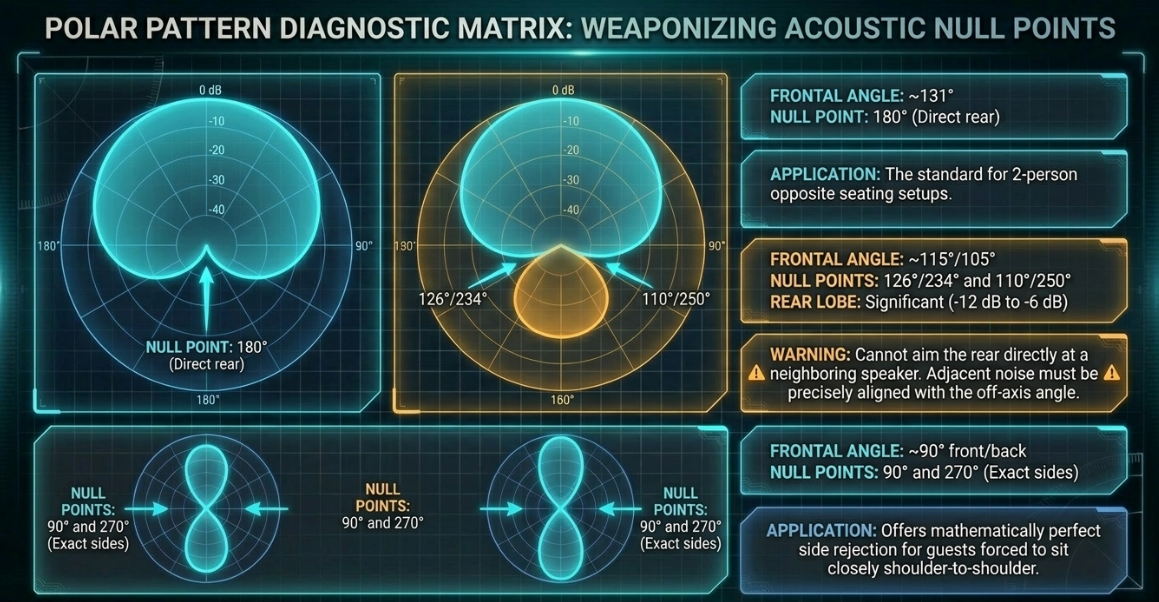
Analyzing Polar Patterns for Acoustic Rejection A microphone's polar pattern is a three-dimensional mathematical representation of its sensitivity to sound arriving from different angles. These patterns are plotted on a circular 360-degree graph, where 0° represents the direct front of the capsule (on-axis), and the concentric circles radiating inward represent 5 dB decreases in acoustic sensitivity (Lewitt Audio). Selecting the correct polar pattern allows an audio engineer to strategically aim the microphone's "null points"-the specific physical angles of maximum acoustic rejection-directly at the offending noise sources, thereby minimizing cross-talk (Sound On Sound).

The following table categorizes the standard polar patterns utilized in audio production, detailing their acceptance angles, critical null points, and operational use cases in multi-guest environments:
The Cardioid Family The standard cardioid pattern derives its name from its heart-shaped pickup area. It exhibits maximum sensitivity at 0° and absolute maximum rejection at 180° (directly behind the microphone capsule) (Shure USA). A well-designed cardioid microphone typically provides at least 15 to 20 dB of rear rejection, picking up approximately one-third as much ambient sound as an omnidirectional microphone (Service & Repair). In a standard two-person podcast setup where the hosts are seated directly across a table from one another, pointing two cardioid microphones 180 degrees apart guarantees that the rear null point of Host A's microphone is aimed perfectly at Host B's mouth, thereby maximizing bleed rejection and ensuring a clean recording (University Center for Teaching and Learning).
When guests are seated shoulder-to-shoulder or clustered in a tight semi-circle, the standard cardioid microphone's relatively wide 131-degree acceptance angle may inadvertently capture the voice of the adjacent speaker (Shure USA). In these tighter geometric configurations, supercardioid and hypercardioid patterns are deployed. These patterns offer a much tighter frontal pickup angle (115° and 105°, respectively), aggressively isolating the intended speaker from peripheral noise (Service & Repair).
However, this increased frontal directivity alters the physics of the acoustic capsule, resulting in the creation of a "rear lobe" of sensitivity (Service & Repair). A supercardioid microphone has distinct null points at approximately 126° and 234°, with a rear lobe that captures sound at roughly -12 dB (Service & Repair). A hypercardioid microphone pushes the null points forward to 110° and 250° resulting in a much larger rear lobe that captures sound at -6 dB (Service & Repair). Therefore, if a hypercardioid or supercardioid microphone is used, the audio engineer cannot simply aim the rear of the microphone (180°) at another speaker or a reflective computer monitor, as the rear lobe will capture the bleed (Service & Repair). Instead, the microphone must be meticulously angled on its boom arm so that the adjacent noise source aligns precisely with the 110° or 126° off-axis null point (Editors Keys).
Figure-8 (Bidirectional) Microphones Bidirectional microphones, which frequently utilize delicate ribbon transducer elements, capture sound equally from the front (0°) and the rear (180°) (Lewitt Audio). While this may seem counterintuitive for isolation, Figure-8 microphones feature deep, mathematically perfect null points at exactly 90° and 270° (the sides of the capsule) (Lewitt Audio). In a multi-guest studio, if two guests are forced to sit closely side-by-side, placing a Figure-8 microphone in front of each guest and carefully aligning the 90° side-null directly toward the neighboring guest provides unparalleled isolation, far exceeding the rejection capabilities of standard directional cardioid microphones (Reddit).
Exploiting the Proximity Effect An important acoustic characteristic shared by all directional microphones (Cardioid, Supercardioid, Hypercardioid, and Figure-8) is the proximity effect. This phenomenon dictates that low-frequency bass response increases exponentially as the sound source moves closer to the microphone capsule (Sonarworks). Professional broadcasters and voice-over artists frequently exploit this effect to achieve a resonant, authoritative, and warm "radio voice" (Sonarworks). By encouraging guests to speak within 2 to 3 inches of the capsule, the engineer simultaneously achieves two goals: they minimize acoustic bleed via the Inverse Square Law, and they artificially boost the low-end frequencies of the direct voice. Consequently, during the post-production mixing phase, the engineer can aggressively apply a high-pass filter (low-cut EQ) to the track to remove low-frequency room rumble, HVAC noise, and desk thumps without stripping the fundamental warmth from the human voice, resulting in an exceptionally clean and isolated dialogue track (Shure).
Spatial Geometry and the 3:1 Rule of Microphone Placement
While utilizing highly directional dynamic microphones provides the hardware foundation for isolation, engineers must also adhere to strict spatial geometry protocols to combat the physics of comb filtering and achieve the necessary 10 dB attenuation threshold between tracks. The foundational acoustic guideline for arranging multiple open microphones in a shared acoustic space is known universally as the 3:1 Rule (DPA Microphones).
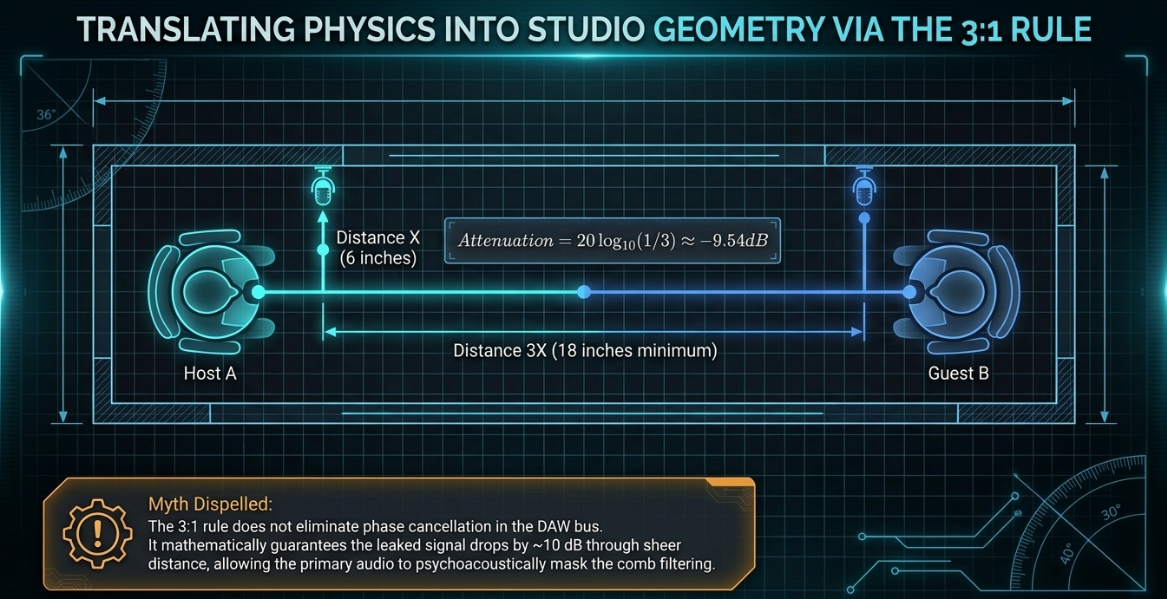
Mathematical Framework of the 3:1 Rule The 3:1 rule dictates that when capturing multiple distinct sound sources with multiple microphones simultaneously, the physical distance between any two microphones must be at least three times the distance between the primary sound source and its designated primary microphone (DPA Microphones).
For example, if a podcast host is speaking into a dynamic microphone from a distance of 6 inches (approximately 15 cm), any secondary microphone intended for a guest must be placed at least 18 inches (approximately 45 cm) away from the host's microphone (YouTube). If the acoustic setup requires the host to sit further back, at a distance of 1 foot from the microphone capsule, the adjacent microphones must be separated by a minimum geometric distance of 3 feet (Reddit).
The efficacy of the 3:1 rule is rooted entirely in the mathematics of the Inverse Square Law. By mandating a strict 3:1 distance ratio, the physical propagation of the sound wave guarantees a specific, predictable reduction in acoustic amplitude by the time the delayed sound wave reaches the secondary microphone capsule. Mathematically, the amplitude reduction through distance is calculated as:
Attenuation 20log10(1/3) -9.54dB
Therefore, strictly adhering to the 3:1 rule reliably drops the level of the bleeding signal by nearly 10 dB (DPA Microphones). As established in the acoustic physics analysis, a 10 dB reduction is the critical threshold required to push the destructive phase interference and comb filtering outside the realm of human psychoacoustic perception (DPA Microphones).
It is a pervasive misconception within amateur audio communities that the 3:1 rule miraculously eliminates microphone bleed or mechanically "fixes" phase cancellation (Reddit). Technically, the phase cancellation still occurs in the summed electrical signal within the DAW (Reddit). However, the rule ensures that the leaked acoustic signal is sufficiently attenuated by distance, allowing the louder, primary direct audio to dominate the mix and psychoacoustically mask the phase anomalies caused by the bleed (Reddit).
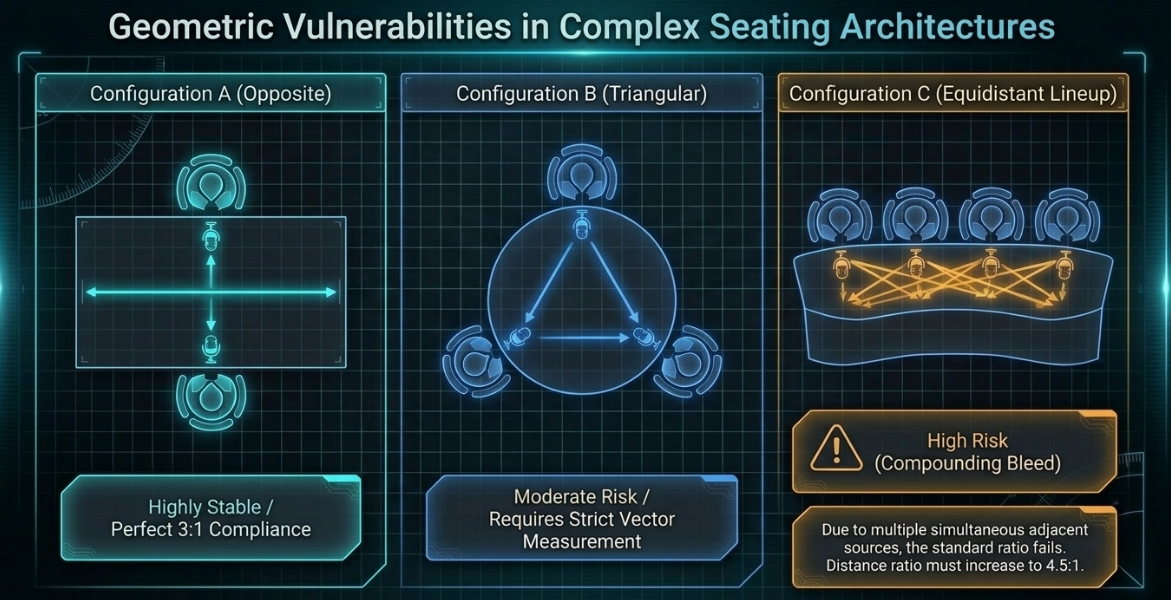
Geometric Limitations and Multi-Guest Configurations While the 3:1 rule provides a reliable mathematical baseline, it is not an infallible remedy, and its application becomes highly complex as the number of participants increases. Furthermore, the rule operates under the assumption of a relatively controlled acoustic environment and must be adapted for different seating arrangements.
The following geometric configurations are considered optimal for maximizing null-point rejection and maintaining 3:1 compliance:
As noted in the table above, if microphones are arranged in an equidistant lineup-where multiple microphones are spaced equally from each other in a straight line, common in live theatrical panels or news desks-the theoretical distance ratio between the source and neighboring microphones must be increased to 4.5:1 (DPA Microphones). This is because the bleed is compounding from multiple adjacent sources simultaneously, meaning a simple 10 dB drop from a single adjacent microphone is insufficient to mask the combined phase interference of the entire array (DPA Microphones).
Acoustic Treatment and Physical Isolation Barriers
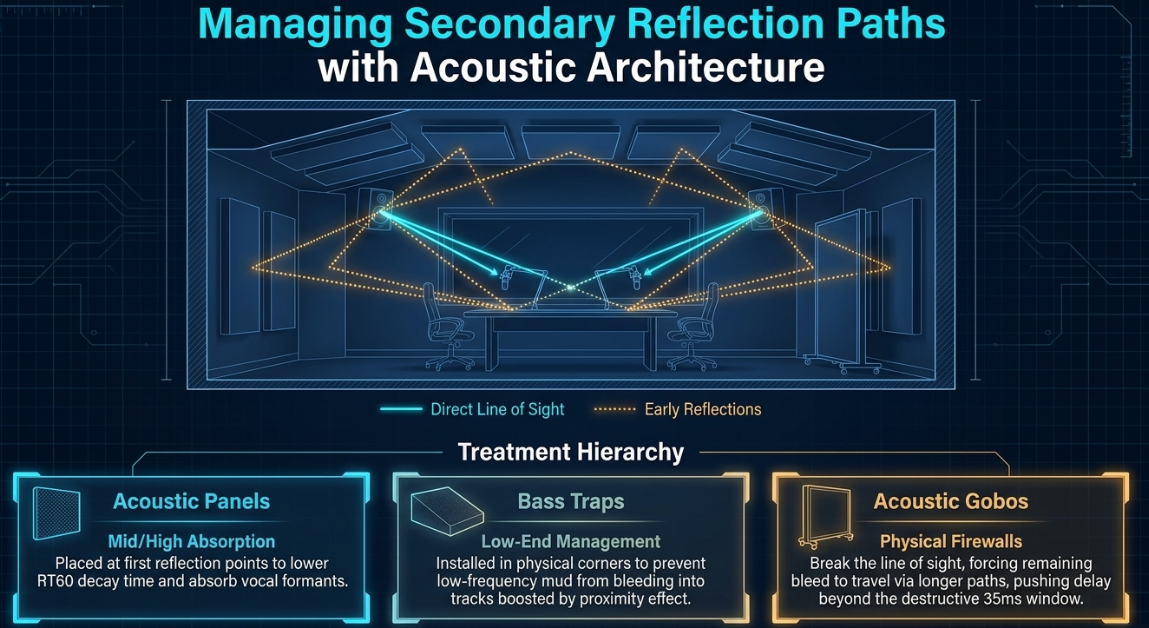
Mathematical placement rules and directional microphones are highly effective at managing direct, line-of-sight acoustic bleed. However, they cannot prevent sound waves from reflecting off the architectural boundaries of the studio environment. In untreated spaces, comb filtering is frequently introduced by early reflections-sound waves that bounce off a hard table, a glass window, or a nearby wall, arriving at the microphone capsule mere milliseconds after the direct sound (Q-SYS). These reflections introduce secondary and tertiary delay paths that the 3:1 rule cannot mathematically account for, thereby reinstating destructive comb filtering regardless of how perfectly the microphones are spaced (Sound On Sound).
To manage non-acoustical comb filtering and environmental bleed, the physical studio space must be modified using structural acoustic treatments and physical barriers. The objective is to control both the reverberation time (RT60) and the specific pathways of the acoustic reflections (Acoustical Surfaces).
The primary methods of acoustic treatment utilized in multi-guest studios include:
In dense roundtable setups where guests are seated too closely to adhere to the 3:1 rule, acoustic gobos (also known as go-betweens or sound baffles) are heavily utilized (Soundproof Your Studio). Gobos consist of a rigid wooden frame packed with dense sound-absorbing materials like mineral wool or fiberglass, covered in acoustically transparent fabric (Soundproof Your Studio). By physically breaking the direct paths of sound between microphones, gobos eliminate the interdependence between the recording tracks. This isolation allows the mix engineer to execute radical deviations from the natural acoustical balance of the room-such as turning one quiet guest up by 15 dB-without inadvertently dragging the other guests' dialogue up, down, or panning them off-center (Sound On Sound).
Algorithmic Automixing and Hardware Gate Solutions
In highly dynamic, unscripted multi-guest environments-such as roundtable podcasts or live broadcast panels-participants frequently interrupt one another, laugh simultaneously, or interject with brief affirmations. In these volatile scenarios, maintaining optimal isolation by manually riding faders on a mixing console is physically impossible for an engineer (Yamaha). Leaving all four or five microphones open at unity gain results in maximum ambient bleed, severe compounding comb filtering, and an elevated room noise floor that drastically reduces speech intelligibility (Dan Dugan Sound Design).
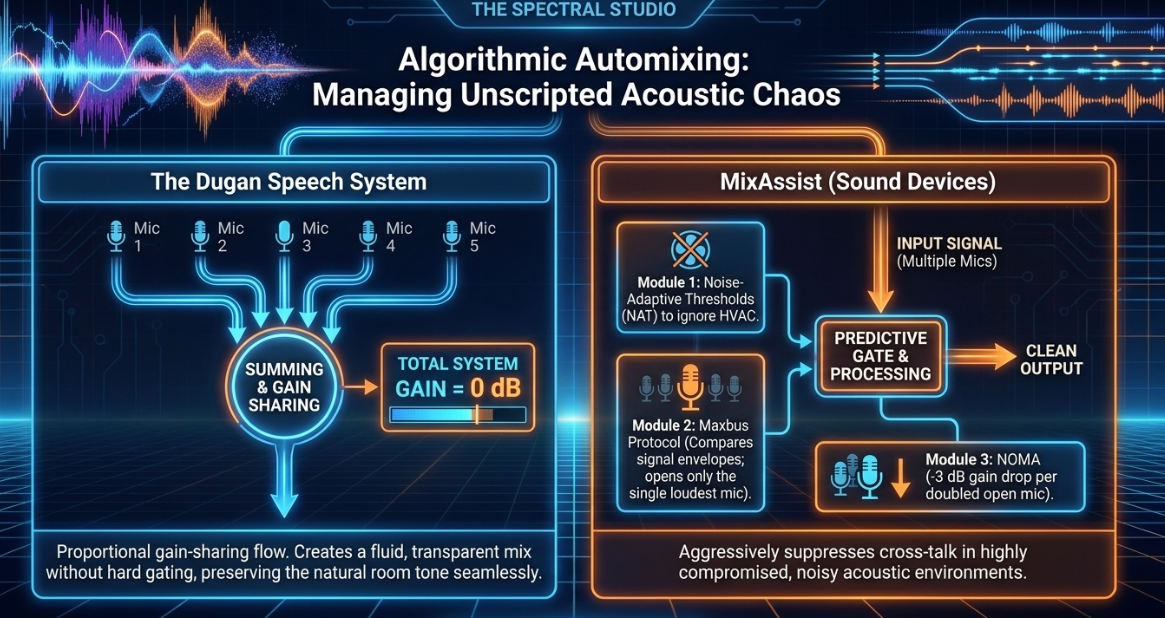
To combat this during the live capture phase, modern digital consoles and professional field recorders (such as those manufactured by Sound Devices, Yamaha, and Zoom) employ automatic microphone mixers (automixers) (Reddit). Automixers are sophisticated, real-time algorithms designed to instantaneously attenuate microphones that are not actively being addressed, seamlessly managing the gain structure of the entire array. The two dominant algorithmic protocols in the industry are the Dugan Speech System and Sound Devices' MixAssist (Sound Devices).
The Dugan Speech System Invented by audio pioneer Dan Dugan, this automixing algorithm utilizes an elegant, mathematical gain-sharing construct rather than traditional noise gates (Dan Dugan Sound Design). The Dugan system calculates the real-time gain of each individual microphone channel by attenuating it by a decibel amount exactly equal to the difference between that specific channel's input level and the total sum of all channel input levels (Sound Devices).
The defining characteristic of the Dugan Automix algorithm is that the total system gain through the console always remains at exactly 0 dB-the mathematical equivalent of having exactly one microphone open at all times (Dan Dugan Sound Design). The channel gains are adjusted continuously and smoothly in real-time based on the acoustic input; the microphones are never hard-gated "off" or fully switched "on." Instead, they are constantly mixed in fluid, shifting proportions (Sound Devices). This proportional gain-sharing yields an incredibly natural and transparent sound. It preserves the ambient room tone without the abrupt, jarring acoustic drop-offs and clipped consonants that are universally associated with rudimentary noise gates (Dan Dugan Sound Design).
The MixAssist Algorithm Developed by Steve Julstrom and utilized primarily within Sound Devices hardware, the MixAssist algorithm operates on an entirely different technical premise. Rather than proportional gain-sharing, MixAssist functions as a highly sophisticated, predictive gate that utilizes extremely smooth transitions and finite off-attenuation (Sound Devices).
MixAssist relies on several distinct, proprietary technological pillars to achieve isolation:
Noise-Adaptive Threshold (NAT): Standard noise gates fail in live environments because background noise fluctuates; a threshold set during a quiet moment will be triggered falsely when the HVAC turns on (Dan Dugan Sound Design). MixAssist solves this by continuously calculating a unique, dynamic threshold for each individual microphone. It utilizes a slow attack and an extremely fast decay to act as an intelligent "hole detector," accurately distinguishing between steady-state background noise and the varying transient envelopes of human speech (Sound Devices).
The Maxbus Protocol: To aggressively eliminate comb filtering caused by microphone bleed, the envelopes of all microphone signals are logically compared (OR'd together) within the processor (Sound Devices). If a loud guest's voice bleeds heavily into a quiet guest's adjacent microphone, MixAssist identifies the origin of the sound source and ensures that only the loudest microphone (the one closest to the speaker) opens, keeping the secondary microphone firmly attenuated (Sound Devices).
Finite Attenuation and NOMA: When MixAssist determines a microphone is "off," it does not mute the channel completely; doing so would sound unnatural. Instead, it applies a finite attenuation, typically dropping the channel by 15 dB to preserve a subtle acoustic reality (Sound Devices). Furthermore, it employs a Number of Open Microphone Attenuator (NOMA) protocol, which automatically drops the total system gain by 3 dB for every doubling of open microphones, thereby preventing acoustic feedback when routing the mix through a live public address (PA) system (Sound Devices).
While the Dugan system is frequently praised by broadcast engineers for its transparent, imperceptible smoothness, MixAssist is often favored in highly compromised, noisy acoustic environments. Because MixAssist aggressively attenuates microphones that are picking up constant ambient noise, it results in a substantially lower overall noise floor and actively suppresses cross-talk bleed with greater severity (Sound Devices).
Post-Production: Digital Signal Chain and Manual Attenuation
Even with flawless studio geometry, strict 3:1 spatial compliance, hypercardioid dynamic microphones, and real-time hardware automixing, a degree of acoustic bleed will inevitably be recorded into the multi-track session. Finalizing the audio for distribution requires meticulous post-production processing. Within the Digital Audio Workstation (DAW), the order of Digital Signal Processing (DSP) operations is absolutely critical. Incorrectly ordering the dialogue mixing chain can violently exacerbate microphone bleed rather than cure it, completely breaking the mix (YouTube).
The Optimal Dialogue Processing Chain To ensure that dynamic processors do not inadvertently pump or amplify acoustic cross-talk, the processing chain must follow a logical attenuation hierarchy. The standard operational order for post-production dialogue mixing is as follows:
Manual Attenuation Techniques: Strip Silence and Downward Expansion Prior to the widespread availability of artificial intelligence plugins, audio engineers relied heavily on manual attenuation techniques within the DAW to silence bleed during a guest's inactive periods.
Strip Silence / Deleting Silence: Tools such as "Deleting Silence" in Adobe Audition or "Strip Silence" in Pro Tools are designed to analyze an audio track and automatically slice and delete regions of audio that fall below a specified decibel threshold (Adobe Help Center). In Adobe Audition, the engineer configures the "Define Silence As" parameters, dictating that any signal below a specific dB limit (e.g., -40 dB) that lasts "For more than" a specific millisecond duration (e.g., 200 ms) is categorized as silence (Adobe Help Center). While this technique is highly effective at permanently and visually removing bleed from the timeline, it is inherently a destructive editing process. If the threshold parameters are set too aggressively, the algorithm will inadvertently clip the natural decay of spoken words, quiet breath intakes, and subtle conversational affirmations (such as "uh-huh" or "yeah"), leading to a disjointed, choppy, and unnatural edit. To mitigate this, engineers can utilize the "Split Silence" option, which slices the clips but leaves them on the timeline, allowing the editor to manually verify the cuts before committing to deletion (Adobe Help Center).
Downward Expansion: Standard noise gates operate at extreme, hard-knee ratios (e.g., 10:1 up to 100:1), slamming the audio channel shut the exact moment the signal drops below the designated threshold (Reddit). In a multi-guest podcast, absolute digital silence on a track sounds highly unnatural, as the underlying ambient room tone suddenly drops out, creating an audible vacuum (Auphonic). To solve this, engineers utilize a downward expander, which serves as a "soft gate." By setting a gentle ratio (e.g., 2:1 or 4:1) and establishing a floor of roughly -15 dB of gain reduction, the expander gently pushes the microphone bleed down into psychoacoustic imperceptibility without completely muting the track (Reddit). This technique successfully preserves the illusion of a continuous, shared acoustic space while effectively isolating the primary dialogue from the distraction of loud cross-talk.
Artificial Intelligence and Advanced Spectral De-Bleeding
In recent years, the audio post-production industry has undergone a radical paradigm shift driven by the integration of machine learning and artificial intelligence (AI). Modern deep-learning algorithms have been trained on millions of hours of dialogue, enabling them to intelligently distinguish between direct human speech, reverberation, background noise, and-most complex of all-microphone bleed (Reddit). These AI tools represent the cutting edge of dialogue isolation and are rapidly replacing traditional gating workflows.
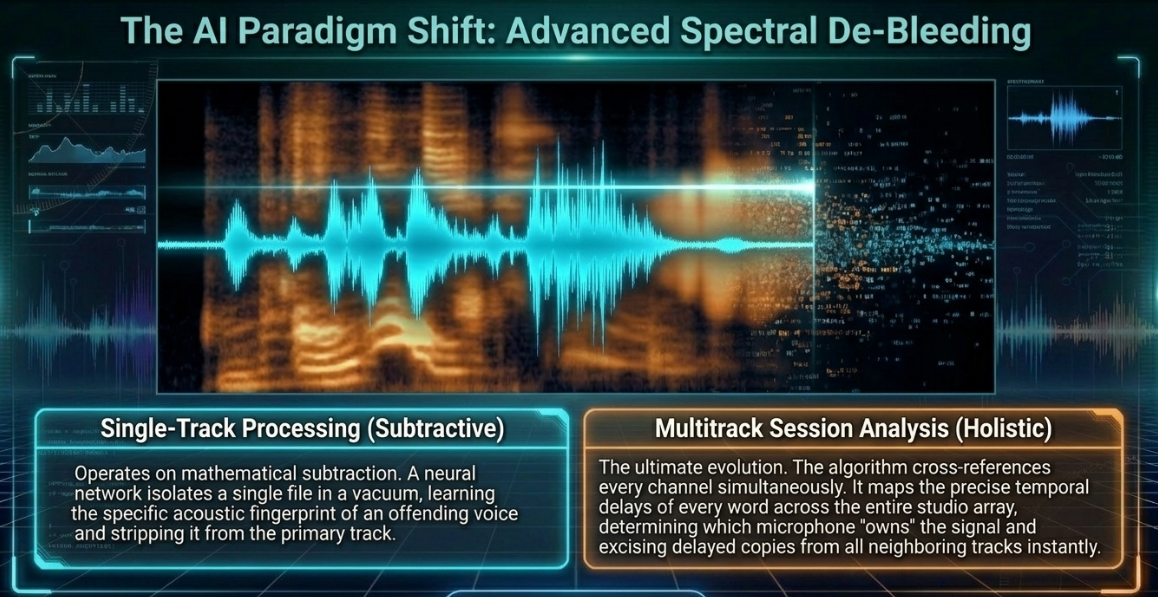
Single-Track Spectral Processing Tools Industry-standard software suites utilize advanced neural networks to recognize the specific acoustic fingerprint of a direct voice, separating it from unwanted artifacts on a single, isolated audio track (iZotope).
Waves Clarity Vx / Pro: Operating as a real-time plugin directly within the DAW's insert chain, Clarity Vx uses an advanced neural network to instantaneously isolate the foreground voice while aggressively suppressing ambient noise and bleed. Its primary operational advantage is its speed and zero-latency workflow. Engineers can turn a single knob and instantly monitor the isolated audio during playback, allowing mixers to clean extensive multi-track sessions rapidly without requiring offline rendering (B&H eXplora).
iZotope RX (De-Bleed & Dialogue Isolate): Operating primarily as a standalone spectral editor, iZotope RX visually plots the audio frequencies on a high-resolution spectrogram (iZotope). Its dedicated "De-bleed" module utilizes a highly specific workflow: it learns the acoustic profile of the offending track (e.g., the acoustic signature of Guest B's voice) and then mathematically subtracts that exact signature from the primary track (Guest A's track) (YouTube). While heavily CPU-intensive and requiring offline processing, it offers surgical precision that standard gates and real-time plugins simply cannot achieve (B&H eXplora).
Multi-Track Session Analysis and Cross-Talk Removal The primary limitation of single-track AI tools is that they evaluate the audio in a vacuum; they attempt to determine what constitutes "bleed" by analyzing only one isolated file at a time (Reddit). The latest innovation in bleed mitigation comes from holistic session-level analysis, exemplified by sophisticated algorithms like the Auphonic Mic Bleed Remover. Instead of processing each channel individually, these advanced algorithms ingest the entire multitrack session simultaneously. By cross-referencing all channels at once, the AI maps the precise temporal delays and amplitude differences of every spoken word across the entire microphone array. The algorithm definitively learns which specific microphone "owns" the direct signal for that particular word, and it aggressively removes the delayed, bleeding copies of that word from all neighboring tracks. Because the algorithm understands the context of the entire room, it can execute highly complex operations, such as attenuating cross-talk during moments of simultaneous speech (e.g., interruptions, arguments, and overlapping laughter) without inadvertently cutting off the room's natural ambience-a feat that traditional noise gates, expanders, and manual strip-silence workflows fundamentally cannot perform. Other automated tools, such as Adobe Podcast Enhance and Cleanvoice AI, also provide one-click solutions for dialogue cleanup, targeting mouth sounds, filler words, and ambient bleed with high accuracy, drastically reducing the labor required to finalize multi-guest audio (Podseeker).
Conclusion
Microphone bleed in a multi-guest acoustic environment is not an isolated technical glitch, but rather a highly complex manifestation of acoustic physics, wave interference, and transducer mechanics. When left unchecked, bleed introduces severe phase cancellation and comb filtering, destroying the harmonic integrity of the recording and drastically reducing the intelligibility of the human voice. Effectively mitigating this phenomenon requires a comprehensive, multi-tiered approach rather than a single post-production fix. The foundation of clean, broadcast-quality dialogue begins in the physical realm: exploiting the Inverse Square Law by enforcing strict microphone proximity, adhering rigorously to the 3:1 spatial geometry rule, and deploying physical acoustic absorption panels and gobos to break the direct line of sight between sources. The meticulous selection of dynamic microphones featuring precise supercardioid, hypercardioid, or bidirectional polar patterns allows audio engineers to surgically target acoustic null points at neighboring guests, ensuring maximal sound rejection at the point of capture. Furthermore, integrating algorithmic hardware solutions-such as the Dugan Speech System or Sound Devices' MixAssist automixers-ensures that inactive microphones are seamlessly and proportionally attenuated during the live recording process. This drastically lowers the session's overall noise floor and prevents the compounding of destructive phase artifacts. Finally, adhering to a strict, logically ordered post-production signal chain-deploying downward expansion or advanced multitrack AI de-bleeding software prior to any dynamic compression or equalization-ensures that whatever minimal cross-talk remains is surgically excised. By synthesizing acoustic physics, precise geometric setup, intelligent hardware routing, and advanced spectral post-production processing, audio producers can reliably overcome the inherent challenges of the multi-guest studio, achieving an isolated, pristine mix that ensures absolute clarity and intelligibility.