Executive Summary: The Convergence of Acoustic Physics and Brand Semiotics
The trajectory of the digital media landscape in the mid-2020s has been defined by a singular, overarching trend: the collapse of the distinction between audio and video formats. The emergence of the "visual podcast" or "vodcast" has fundamentally reconfigured the strategic requirements for production infrastructure. For the creator, the brand, and the agency, the podcast is no longer a purely auditory experience consumed passively via headphones; it is a multi-sensory brand asset distributed across high-fidelity video platforms such as YouTube, TikTok, and Instagram Reels. This shift necessitates a rigorous re-evaluation of the recording environment, specifically the interplay between microphone selection ("Mic Types"), acoustic engineering, and visual aesthetics.

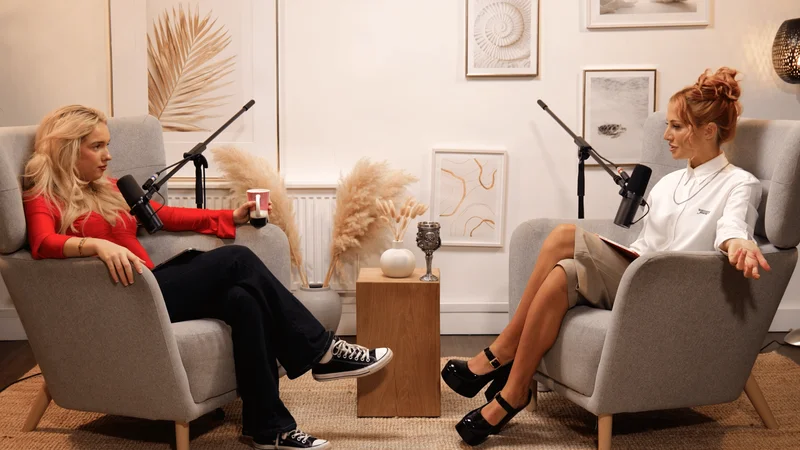
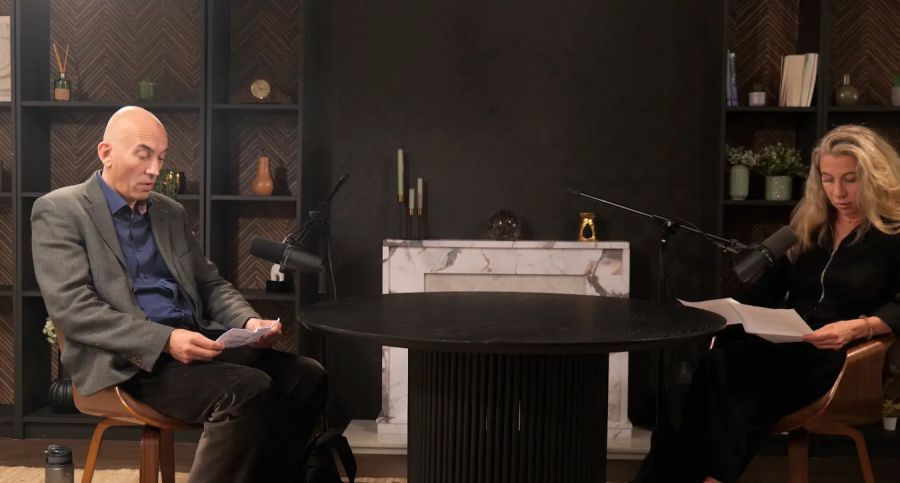
See the 'The Tooney & Russo Show' from BBC and Lionesses Ella Toone and Alessia Russoat from England national football team at Finchley Studio (Lounge setup). Book this setup for your podcast. Watch 'The Tooney & Russo Show' at BBc sound , Spotify , Youtube, Amazon music.
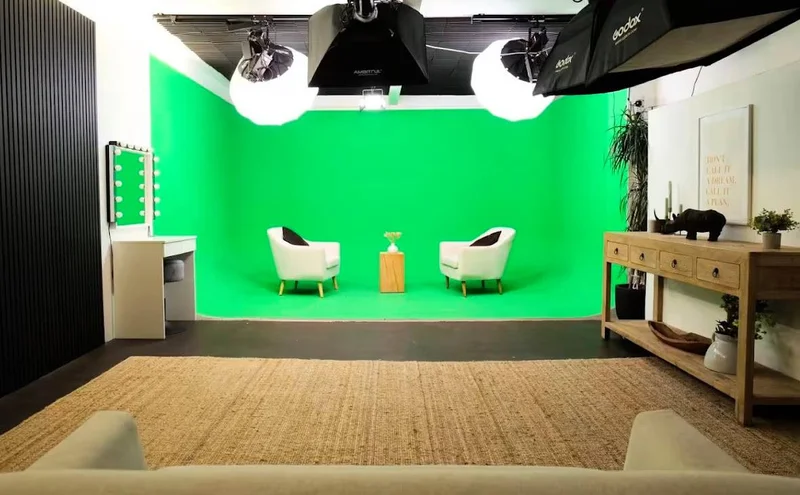
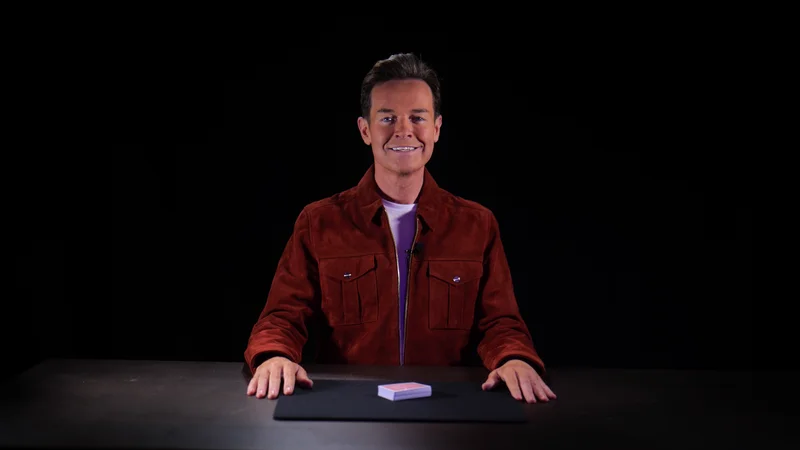
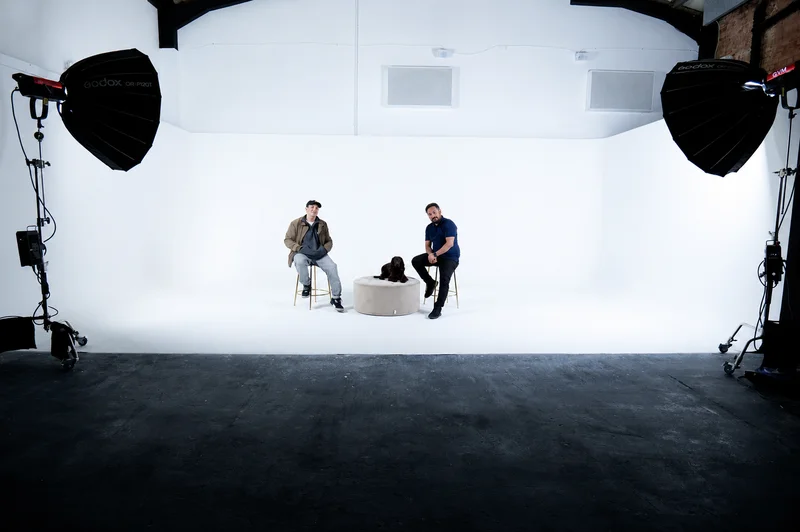
Book this setup for your podcast
1. The London Acoustic Environment: A Strategic Context
To understand the strategic selection of microphones, one must first analyze the environment in which they operate. The selection of a transducer is never a decision made in a vacuum; it is a contextual choice dictated by the signal-to-noise ratio (SNR) of the recording space. London, for all its cultural vibrancy, presents one of the most hostile acoustic environments for high-fidelity recording in the developed world. This environmental reality is the primary variable dictating the choice between dynamic and condenser microphones for any facility that lacks industrial-grade isolation.
1.1 The "London Rumble" and Structural Vibration
The dense urban fabric of London generates a unique sonic signature often referred to by acousticians as the "London Rumble." This is not merely the audible noise of traffic, but a complex matrix of airborne and structure-borne vibration that permeates the built environment.
The Physics of Subterranean Vibration
The London Underground network, specifically the deep-level tube lines (Northern, Central, Piccadilly), generates significant vibrational energy. As trains pass through the tunnels, they create low-frequency vibrations, typically centered between 30 Hz and 60 Hz [Finchley Studios]. This energy does not travel through the air; it travels through the earth (London Clay) and couples with the structural foundations of buildings. It then travels up through the steel and concrete skeletons of offices and apartments, exciting the floors and walls of potential recording spaces.
For a podcast creator, this presents a critical engineering challenge. A microphone is a device designed to detect vibration. It does not distinguish between the vibration of vocal cords transmitted through the air and the vibration of the microphone stand transmitted through the floor. A sensitive condenser microphone with an extended low-frequency response will capture this rumble as a pervasive, muddy "hum" that eats up headroom and destroys the clarity of the voice.
The Surface Noise Layer
Above ground, the acoustic assault continues. London's intricate network of roads carries a relentless stream of Heavy Goods Vehicles (HGVs) and buses. These vehicles generate high-energy low-frequency noise (63Hz - 125Hz) that easily penetrates standard double-glazing and masonry walls [Finchley Studios]. Furthermore, the proliferation of rooftop HVAC systems, chillers, and air handling units in commercial districts like Soho, Shoreditch, and Canary Wharf adds a constant broad-band mechanical drone to the environment.
1.2 The "Noise Floor" and Dynamic Range
The cumulative effect of these noise sources is a high "noise floor." The noise floor is the measure of the signal created from the sum of all noise sources and unwanted signals within a measurement system. In a typical London apartment, untreated office, or makeshift home studio, the noise floor is shockingly high, often hovering around -40dB to -30dB [Finchley Studios].
Strategic Implication for Mic Choice
The noise floor defines the achievable dynamic range of the podcast. If the noise floor is high (-30dB) and the speech level is standard (-12dB), the creator has a very narrow window of usable audio. A High-Sensitivity Condenser Microphone (like a Neumann U87) acts as an acoustic microscope. In an apartment with a -30dB noise floor, it will render the background hiss and rumble with crystal clarity, often making the recording unusable [The Podcast Consultant]. A Low-Sensitivity Dynamic Microphone (like a Shure SM7B) acts as a natural gate. It is naturally less sensitive to distant sounds and highly sensitive to the source directly in front of the capsule. Therefore, the "best" microphone is not defined by its frequency response in an anechoic chamber, but by its SNR performance within the specific acoustic limitations of the recording site.
1.3 The Architecture of Silence: Soundproofing vs. Acoustic Treatment
A critical distinction in the London studio market is the difference between soundproofing and acoustic treatment.
1.3.1 Acoustic Treatment (Control)
Acoustic treatment involves the management of sound within a room.
Absorption: The use of porous materials to convert sound energy into heat via friction. This reduces reverberation, preventing the room from sounding "echoey" [Finchley Studios].
Diffusion: The use of irregular surfaces to scatter sound waves [Finchley Studios].
Limitations: Foam cannot stop the energy of a police siren or a tube train from entering the room; it merely stops that siren from echoing once it is inside.
1.3.2 Soundproofing (Isolation)
Soundproofing is the physics of preventing sound from transmitting between spaces.
Mass Law: Heavy, dense materials stop sound. Professional studios utilize multiple layers of high-density acoustic plasterboard and damping compounds [Finchley Studios].
Decoupling: To combat the "London Rumble," the space must be mechanically decoupled. This involves a "floating floor" resting on resilient rubber isolators [Finchley Studios].
Market Reality: Many "studios" in Zone 1 lack the mass to block city noise, making the off-axis rejection of dynamic microphones a critical insurance policy [Finchley Studios].
2. Technical Analysis of Microphone Transducer Types
2.1 Dynamic Microphones: The Broadcast Workhorses
Dynamic microphones, like the Shure SM7B, operate on the principle of electromagnetic induction [Riverside].
Strategic Advantages
Low Sensitivity: Requires significant acoustic pressure to overcome diaphragm inertia, allowing it to "ignore" background noise [The Podcast Consultant].
High SPL Handling: Can handle extremely high Sound Pressure Levels without distortion [Riverside].
Passive Operation: They are "plug and play" without needing Phantom Power.
The "Broadcast Tone": A rolled-off high end and proximity effect create the warm "radio" sound [Produce Like A Pro].
Strategic Disadvantages
Transient Response: Slower to react to rapid changes, resulting in a sound that is less "airy" [RØDE].
Gain Requirements: Very low output voltage requires a preamp with +60dB of clean gain, often necessitating inline activators like Cloudlifters [Geeks Rising].
2.2 Condenser Microphones: The Studio Fidelity Standard
Condenser microphones utilize variable capacitance and require Phantom Power [NearStream].
Strategic Advantages
Transient Response: Low-mass diaphragm tracks sound with extreme precision [RØDE].
High Sensitivity: Requires less gain from the preamp, often resulting in a lower electronic noise floor [Reddit].
Extended Frequency Response: Captures 20Hz to 20kHz, providing a "larger than life" representation [Hello Studios].
Strategic Disadvantages
Acoustic Unforgiveness: In a London apartment, a condenser will capture traffic rumble with the same fidelity as the voice [Umbrella Creative].
Visual Obstruction: Bulky elastic shock mounts can obscure the host's face in video podcasts [Finchley Studios].
2.3 Shotgun Microphones: The Video-First Solution
Shotgun mics, like the Sennheiser MKH 416, use an interference tube for high directionality [Home Brew Audio].
Strategic Advantages
Visual Cleanliness: Used at a distance on boom poles out of frame, providing a cinematic look [Matchmaker.fm].
Reach: Captures focused audio from a greater distance than dynamic mics [Home Brew Audio].
Strategic Disadvantages
Room Tone Sensitivity: Lower direct-to-reverb ratio demands a treated room [COMV].
Off-Axis Coloration: Sound from the side is tonally distorted. If a host moves their head, quality changes drastically [Home Brew Audio].
3. Comparative Deep-Dive: The "Big Three" Podcast Microphones
3.1 Shure SM7B: The Podcast Icon
Favored by high-profile shows like The Joe Rogan Experience [Hello Studios].
London Use Case: The strategic "safety" choice. Its low sensitivity rejects the "London Rumble" [Reddit].
Technical Note: Requires a high-end preamp or the newer SM7dB with built-in preamp [The Podcast Host].
3.2 Electro-Voice RE20: The Broadcast Standard
Used by the BBC and podcasts like SmartLess [Hello Studios].
Variable-D: Uses ports to cancel the proximity effect. Tone remains stable regardless of distance [Produce Like A Pro].
3.3 Neumann U87: The Luxury Choice
Used by narrative heavyweights like The Daily [Hello Studios].
London Use Case: Only viable in fully soundproofed suites. Otherwise, it captures the noise floor effortlessly [YouTube].
Sonic Profile: Offers three switchable polar patterns [Andertons].
4. Visual Strategy: The Mic as a Prop in 4K
4.1 Framing, Occlusion, and the "Radio Face"
A critical failure point is the obstruction of the host's face [Finchley Studios].
Boom Arm Solutions: Professional studios use articulated arms to clear the frame [The Audio Cafe].
Lens Focal Length: Wide-angle lenses exaggerate mic size; longer focal lengths make it look proportional [COMV].
4.2 The "Invisible" Audio Aesthetic
High-end "Lounge" setups reject visible mics entirely using overhead shotgun mics [Matchmaker.fm]. This differentiates content from the "bedroom" aesthetic but requires a silent room [Home Brew Audio].
4.3 Lighting Interaction and Glare
Shiny mics act as mirrors, creating "hot spots" [Ikan International]. Matte finishes like the SM7B are preferred for video [Ikan International]. Pop filters can cast shadows, requiring coordination between lighting and audio [COMV].
4.4 Set Design Trends: The "Limewash" Aesthetic
Visuals have moved toward textured walls and earthy tones [Finchley Studios]. Studios now match mic aesthetics, using white microphones to integrate technology into the palette [Finchley Studios].

See the 'Murder They Wrote' podcast setup used by Laura Whitmore and Iain Stirling from BBC at Finchley Studio (Gathering setup). Watch Murder They Wrote at BBc sound , Spotify , Apple podcasts , Youtube , Instagram , Amazon music
5. Market Analysis: The London Studio Landscape
5.1 Pricing Models and Tiers
Tier 1: Entry-Level (£30-£60/hr): Dry hire at Pirate Studios or Tagvenue. Minimal soundproofing; technical liability is 100% on the client [Finchley Studios].
Tier 2: Mid-Range (£70-£120/hr): Outset Studio or London Podcast Studios. Often "treated" but not "soundproofed" [Outset Studio].
Tier 3: Premium (£150-£300+/hr): Finchley Studio or Premiere Podcast Studios [Finchley Studios]. Offers "Room-in-Room" construction and dedicated engineers.
5.3 Hidden Costs and Logistics
File Transfer Fees: Premiere and Mango Studios may charge fees if you don't bring your own drives [Finchley Studios].
Logistics Tax: Zone 1 studios involve the Congestion Charge and ULEZ [Skylum]. Finchley Studio leverages its Zone 4 location to offer free parking [Finchley Studios].
Setup Time: London Podcast Studios offers a 30-minute buffer; others bill the moment the door opens [Finchley Studios].
6. The "Home vs. Studio" Decision Matrix
6.1 The Economics of the Home Studio
Acoustic Ceiling: Professional isolation is nearly impossible in a rental and expensive to build [Finchley Studios].
Mic Strategy: Home studios must use dynamic mics to reject household noise [The Podcast Consultant].
6.2 The Professional Studio Advantage
Studios like Premiere invest in floating floors for a cleaner noise floor, requiring less digital de-noising [Finchley Studios]. An engineer reduces the host's cognitive load, allowing focus on content [Umbrella Creative]. A high-end set signals brand authority [Umbrella Creative].
7. Operational Policy: Accessibility and Workflow
7.1 Accessibility and Inclusivity
Studios like The Recording Studio London and 15Hatfields emphasize step-free access [The Recording Studio London][15Hatfields]. Top-tier facilities install induction loops for hearing aids [Warner Bros. Studio Tour London].
7.2 Data Security and File Management
London Podcast Studios deletes files after 7-28 days [London Podcast Studio]. Raw files require post-production color grading for a cinematic look [Tooting Film Studios].
8. Strategic Recommendations for the Multimedia Studio
8.1 Infrastructure & Hardware Strategy
Standardize on the Shure SM7B as it handles the London noise floor well. Offer a "Premium Audio" upsell with Neumann U87s for audio-only clients. Implement shotgun mics for "Invisible" audio in lounge sets to command higher price points.
8.2 Operational Strategy
Eliminate hidden file transfer fees to improve the client experience [Premiere Podcast Studios]. Explicitly market "Floating Floors" as a USP [Finchley Studios]. Market accessibility features to win corporate contracts [The Recording Studio London].
8.3 The Visual "Limewash" Pivot
Invest in modular sets with daylight-balanced lighting and integrated white cabling to maintain the clean visual dominant on social platforms [Finchley Studios].