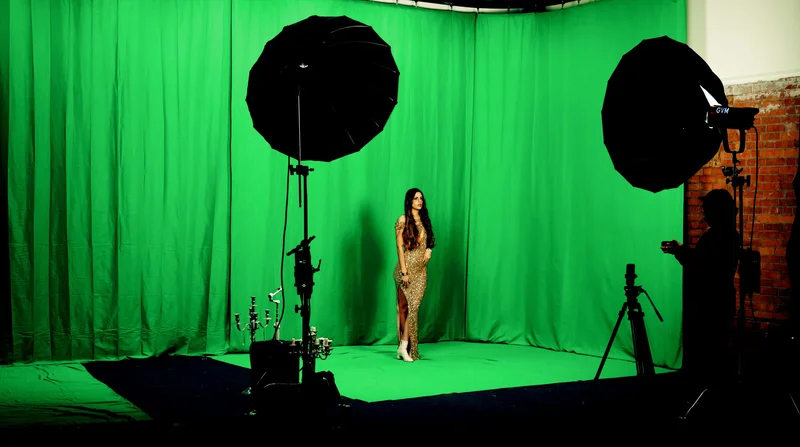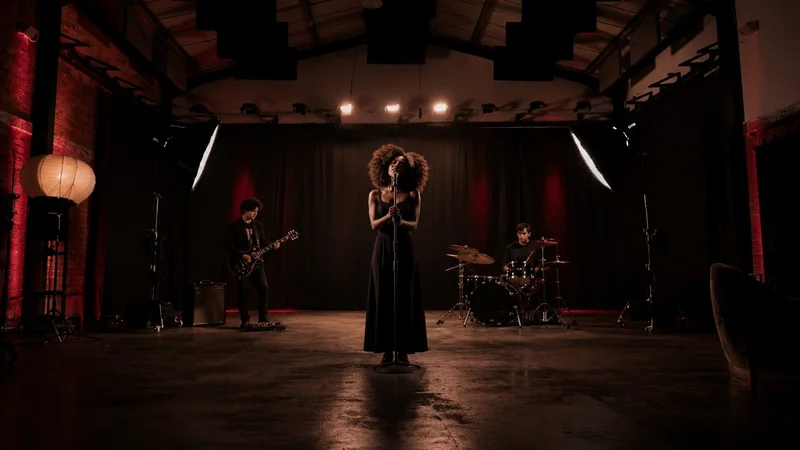
Executive Summary: The Convergence of Broadcast and Broadband in London
The digital media landscape in the United Kingdom has undergone a radical transformation, driven by the inexorable shift from audio-only formats to "Vodcasting" (Video Podcasting) and the permanent integration of hybrid remote workflows. As we move through 2025 and into 2026, the definition of a Podcast studio in London has expanded significantly. It is no longer sufficient to provide a sound-treated room with a few microphones; the modern London podcast production facility must function as a broadcast-grade node in a global network, capable of capturing cinematic 4K video while simultaneously integrating remote guests from New York or Tokyo with near-zero latency. Riverside
This report offers an exhaustive analysis of the technical, logistical, and operational requirements for a high-end multimedia production facility in London. It explores the critical interplay between physical location and digital connectivity, contrasting the prestige of Central London hubs like Soho and Shoreditch with the logistical advantages of emerging "Destination Studios" in Outer London zones like Finchley and Canary Wharf. Finchley Studios We examine the severe impact of London noise pollution—exacerbated by infrastructure projects like HS2 and the necessity for architectural decoupling to achieve professional noise floors. GOV.UK
Furthermore, this analysis provides a deep-dive technical roadmap for connectivity. We dissect the differences between residential broadband and enterprise-grade fibre, explaining why metrics like jitter and packet loss are far more critical than raw bandwidth for professional Video studio operations. iTel Detailed workflows for remote guest integration are presented, covering the engineering behind Mix-Minus audio routing and the deployment of NDI (Network Device Interface) for high-fidelity video transmission. YouTube Finally, we survey the equipment landscape, from the ubiquity of the Shure SM7B and Sony FX30 to the rising dominance of AI-driven post-production tools. Outset Studio This document serves as a definitive guide for studio operators and high-level creators navigating the complex ecosystem of Recording studio infrastructure in the UK capital.

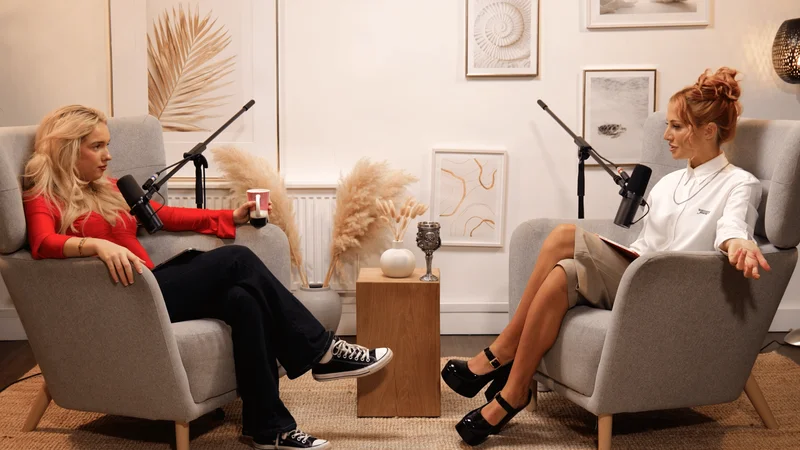
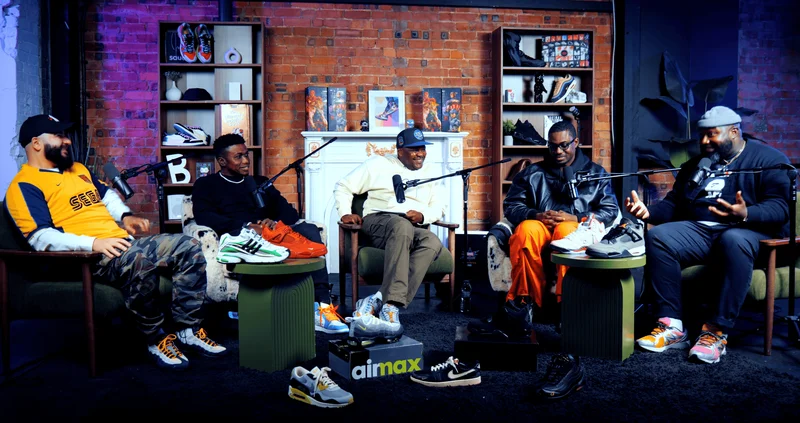
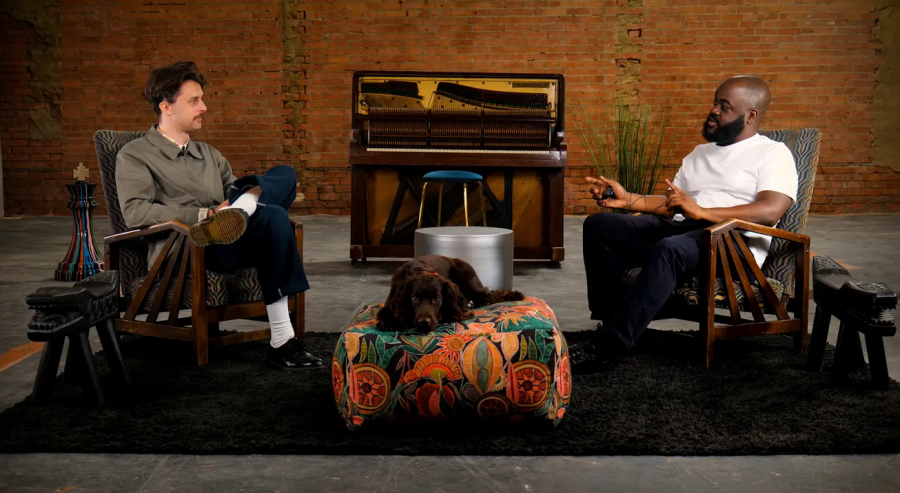
See the 'The Tooney & Russo Show' from BBC and Lionesses Ella Toone and Alessia Russoat from England national football team at Finchley Studio (Lounge setup). Book this setup for your podcast. Watch 'The Tooney & Russo Show' at BBc sound , Spotify , Youtube, Amazon music.
Podcast Production: Connectivity & Remote Workflows
In the heart of London, the difference between a hobbyist setup and a professional broadcast facility isn't just about microphones—it's about infrastructure. This analysis breaks down the critical data points defining modern production standards, from fiber-optic latency to acoustic isolation.
1. The Strategic Geography of London Production
The success of a Podcast studio in London is not determined solely by its equipment list, but by its ability to solve the unique logistical friction points of the capital. London is a city of duality: it offers access to world-class talent and media density, yet it presents severe challenges in terms of transport, cost, and acoustic integrity. A nuanced understanding of these geographical dynamics is essential for positioning a facility that meets the needs of the "Smart Professional" market. Finchley Studios
1.1 The Central Hubs: Prestige vs. Friction
Historically, the gravity of the UK media industry has centered on W1 (Soho) and increasingly EC1 (Shoreditch/Farringdon). These districts offer undeniable proximity to advertising agencies, PR firms, and tech startups, making them the default choice for quick, impromptu sessions.
1.1.1 The Shoreditch and City Ecosystem
Studios located in Shoreditch, such as Premiere Podcast Studios and Outset Studio, capitalize on the vibrant creative economy of East London. Outset Studio The appeal here is cultural cachet and walkability for guests working in the City or Silicon Roundabout.
User Intent: The typical client here is often a corporate team or agency requiring a convenient location for a lunchtime recording. They value speed and proximity over logistical ease.
The Operational Friction: However, the operational reality of these zones is harsh. The dense urban fabric often means studios are located in repurposed Victorian warehouses or basements. While aesthetically pleasing (exposed brick, industrial vibes), these spaces frequently suffer from accessibility issues. Many lack elevators, making load-ins for video production teams with heavy flight cases difficult, and rendering the facility inaccessible to wheelchair users. Finchley Studios
1.1.2 The Cost of Centrality
The "Central London Tax" extends beyond rent. For clients and production teams, the ancillary costs of attending a session in Zone 1 are significant.
Congestion and ULEZ: Any production vehicle entering the Congestion Charge zone faces a £15.00 daily fee. If the vehicle is not Euro 6 compliant—common for older production vans—an additional £12.50 ULEZ charge applies. This creates a baseline "entry fee" of £27.50 before a single minute of studio time is booked. Finchley Studios
Parking Economics: On-street parking in Soho or Shoreditch is both scarce and extortionate, often exceeding £5.30 per hour. A typical 5-hour video podcast session involving a host and a producer driving separately can incur parking costs upwards of £50-£60. This logistical friction is a major pain point for high-net-worth guests or talent who prefer the privacy of personal transport over public transit. Finchley Studios
1.2 The Rise of the "Destination Studio"
In response to the friction of the center, a new tier of London podcast production facilities has emerged in the outer zones, specifically North London (Finchley) and East/South East (Canary Wharf, Bermondsey). These studios, such as Finchley Production Studio and Next Media, operate on a "Destination" model that prioritizes logistical seamlessness. Finchley Studios
1.2.1 The Parking Advantage
The single most significant differentiator for these studios is the provision of free on-site parking. In the context of London production, this is a luxury service.
The Guest Experience: A guest driving from the affluent suburbs of Hampstead or Hertfordshire to Finchley can park directly at the studio door, avoiding the stress of circling for a space or navigating the Congestion Zone. This "cognitive unburdening" ensures that talent arrives relaxed and focused, directly improving the quality of the on-air performance. Finchley Studios
Logistical Efficiency: For video productions requiring substantial equipment (lighting, props, wardrobe), the ability to load directly from a vehicle into the studio without navigating stairs or parking wardens is invaluable.
1.2.2 Transport Connectivity
Successful destination studios position themselves on major arterial transport links.
The Northern Line Corridor: Finchley Central offers a direct 20-minute link to King's Cross St. Pancras (Eurostar) and Euston (National Rail). This connectivity allows the studio to serve international guests arriving by train while still offering the benefits of an outer-London location. Finchley Studios
The Docklands Hub: Studios near Canary Wharf leverage the Jubilee Line and the Elizabeth Line (Crossrail), providing rapid access to Heathrow Airport and the West End while serving the massive financial services market in the Docklands. NextMedia London
1.3 The Acoustical Battleground: Noise in the Metropolis
London is acoustically hostile. The density of traffic, emergency sirens, and flight paths creates a high noise floor that is incompatible with professional audio recording standards.
1.3.1 Infrastructure and Construction Noise
The ongoing construction of HS2 (High Speed 2) and rampant residential redevelopment poses a constant threat. While monitoring reports from boroughs like Brent and Camden in 2025 indicate general compliance with noise thresholds GOV.UK, the risk of ground-borne vibration remains.
Vibration Transmission: Heavy piling or tunneling generates low-frequency vibration (rumble) that travels through the building structure. This manifests in recordings as a low-end hum (40-60Hz) that is difficult to remove in post-production without compromising the voice.
Airborne Noise: The relentless wail of sirens in Central London is a frequent interrupter of sessions. A studio relying on simple acoustic foam (absorption) rather than structural isolation (soundproofing) will be forced to pause recordings every time an ambulance passes, disrupting the flow of conversation. Finchley Studios
1.3.2 The Necessity of Isolation
To guarantee a professional product, high-end studios must employ Room-within-a-Room construction. This involves building a floating floor on rubber isolators and decoupling the walls and ceiling from the main building structure using resilient channels. This architectural decoupling prevents external energy—whether from a passing tube train or a siren—from entering the recording environment. Listings that describe a space as merely "acoustically treated" often fail to mention this distinction, leading to disappointed clients who find their quiet moments ruined by external noise. Finchley Studios
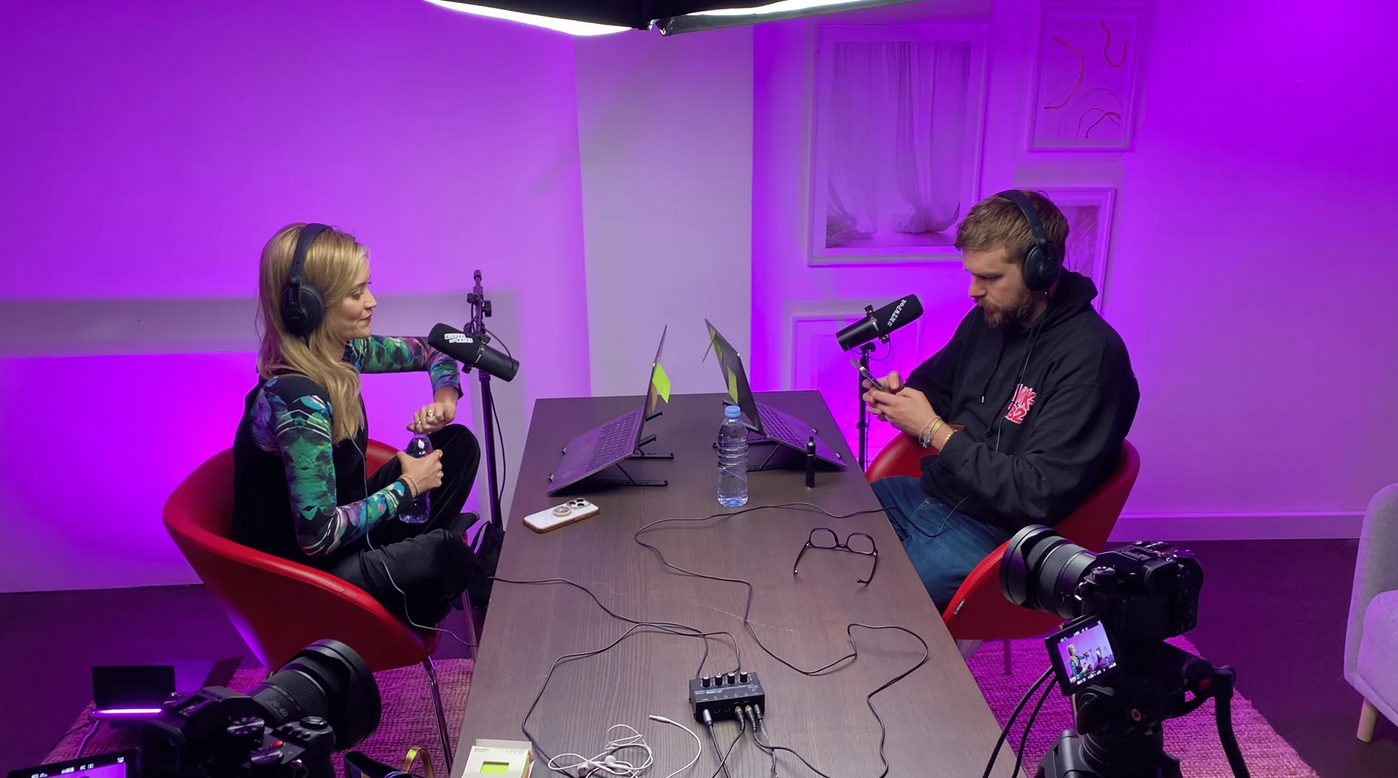
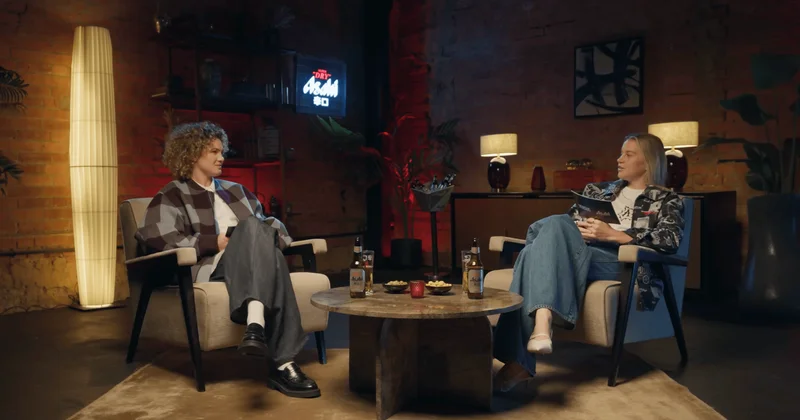
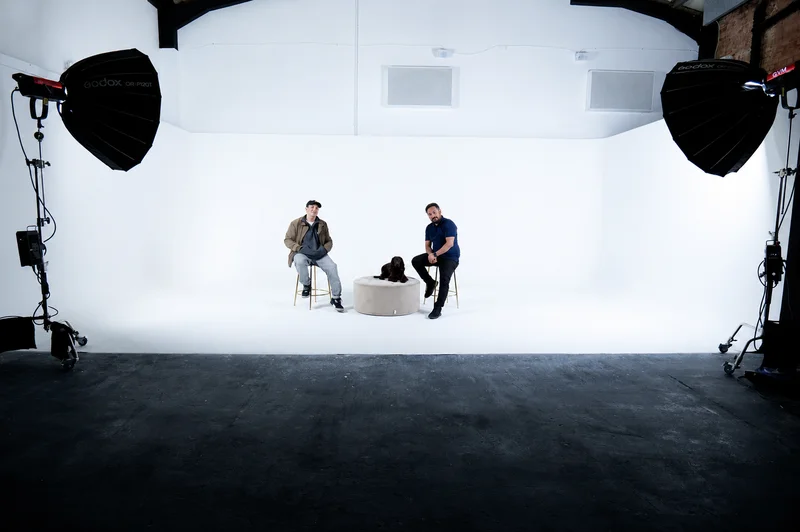
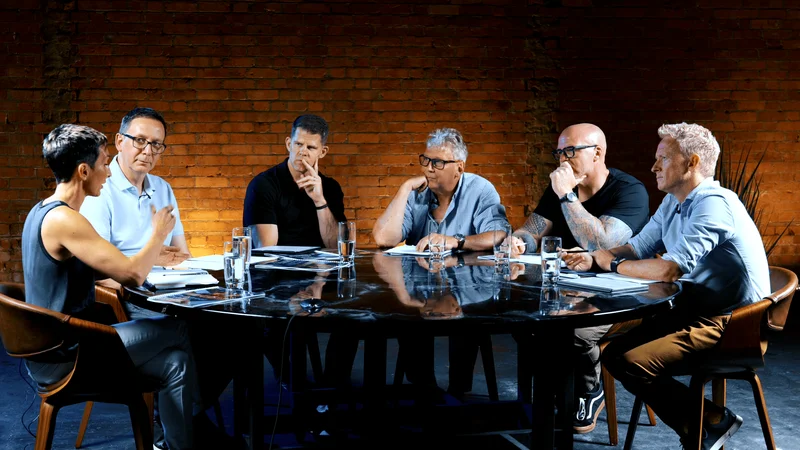
See the 'Murder They Wrote' podcast setup used by Laura Whitmore and Iain Stirling from BBC at Finchley Studio (Gathering setup). Watch Murder They Wrote at BBc sound , Spotify , Apple podcasts , Youtube , Instagram , Amazon music
2. Connectivity: The Digital Nervous System
In 2026, a Recording studio without enterprise-grade connectivity is obsolete. The shift towards cloud-based production, where 4K video files are uploaded progressively during recording (using platforms like Riverside), means that the internet connection is a single point of failure. A studio must offer "Broadcast-Safe" internet that exceeds the capabilities of residential broadband.
2.1 The Technical Triad: Latency, Jitter, and Packet Loss
Marketing materials often focus on "Speed" (Bandwidth), but for real-time communication and remote guest integration, Stability is the governing metric.
2.1.1 Latency (Ping)
Latency measures the time delay for a data packet to travel from the studio to the server and back.
Impact on Dialogue: In a remote podcast, high latency (>100ms) destroys the natural rhythm of conversation. It causes the "talk-over" phenomenon, where the host and guest inadvertently interrupt each other because they are hearing responses on a delay.
The Target: For natural, fluid conversation, round-trip latency should be consistently below 30ms.
Infrastructure: Dedicated fibre connections (FTTP - Fibre to the Premises) typically offer latency of <5ms to local London exchanges. In contrast, legacy copper-based networks (FTTC) or coaxial cable can suffer from 15ms+ latency on the first hop alone. iTel
2.1.2 Jitter (The Silent Killer)
Jitter quantifies the variance in latency. It is the critical metric for video streaming quality.
The Mechanism: If a connection usually has 20ms latency but spikes to 150ms every few seconds, the receiving software (Zoom, vMix, Riverside) cannot predict packet arrival. To compensate, the software increases its buffer (delay), or if the buffer is exceeded, it drops the packets entirely.
Visual Artifacts: High jitter results in the "robotic" audio and frozen video frames that characterize poor Zoom calls. For a broadcast studio, this is unacceptable.
The Cause: Jitter is often caused by network congestion. On a shared residential line (e.g., Virgin Media in a dense residential block), network performance can degrade significantly at peak times (e.g., 6 PM) when neighbors begin streaming video. Business-grade dedicated lines eliminate this contention. IR
2.1.3 Packet Loss
Packet loss occurs when data fails to reach its destination.
Thresholds: While file transfers (TCP) can tolerate packet loss by re-sending data (resulting in slower speeds), real-time protocols (UDP) used for live streaming cannot wait. A lost packet results in a glitch. Professional standards demand packet loss to be maintained strictly below 0.1%. IR
2.2 The London ISP Ecosystem: Business Fibre vs. Residential Broadband
A high-end facility must distinguish itself by investing in Dedicated Business Fibre. The London market offers several tiers of service.
2.2.1 Provider Landscape
Community Fibre: A major "Altnet" in London, offering symmetrical speeds up to 10 Gbps. Their full-fibre network is independent of the Openreach copper infrastructure, offering high reliability and pricing that undercuts traditional leased lines. Community Fibre
G.Network: Focused on upgrading London's connectivity infrastructure, G.Network offers dedicated fibre solutions specifically for businesses in boroughs like Camden and Westminster. Their SLAs typically promise a 5-hour fix time, a critical safety net for studio operations. G.Network
Redundancy Strategy: A professional studio should not rely on a single ISP. Best practice involves a Dual-WAN setup: a primary leased line (e.g., G.Network) and a secondary backup line (e.g., a standard 5G business router or a separate residential fibre line). A load-balancing router can automatically switch to the backup if the primary line fails, ensuring that a live stream never goes dark. Business Broadband Hub
3. Remote Workflow Architectures: The Hybrid Standard
The capability to seamlessly integrate remote guests is now a baseline requirement. The "Hybrid Model"—where a host is in the studio and the guest is remote—requires sophisticated audio and video routing to ensure the guest looks and sounds as if they are in the room.
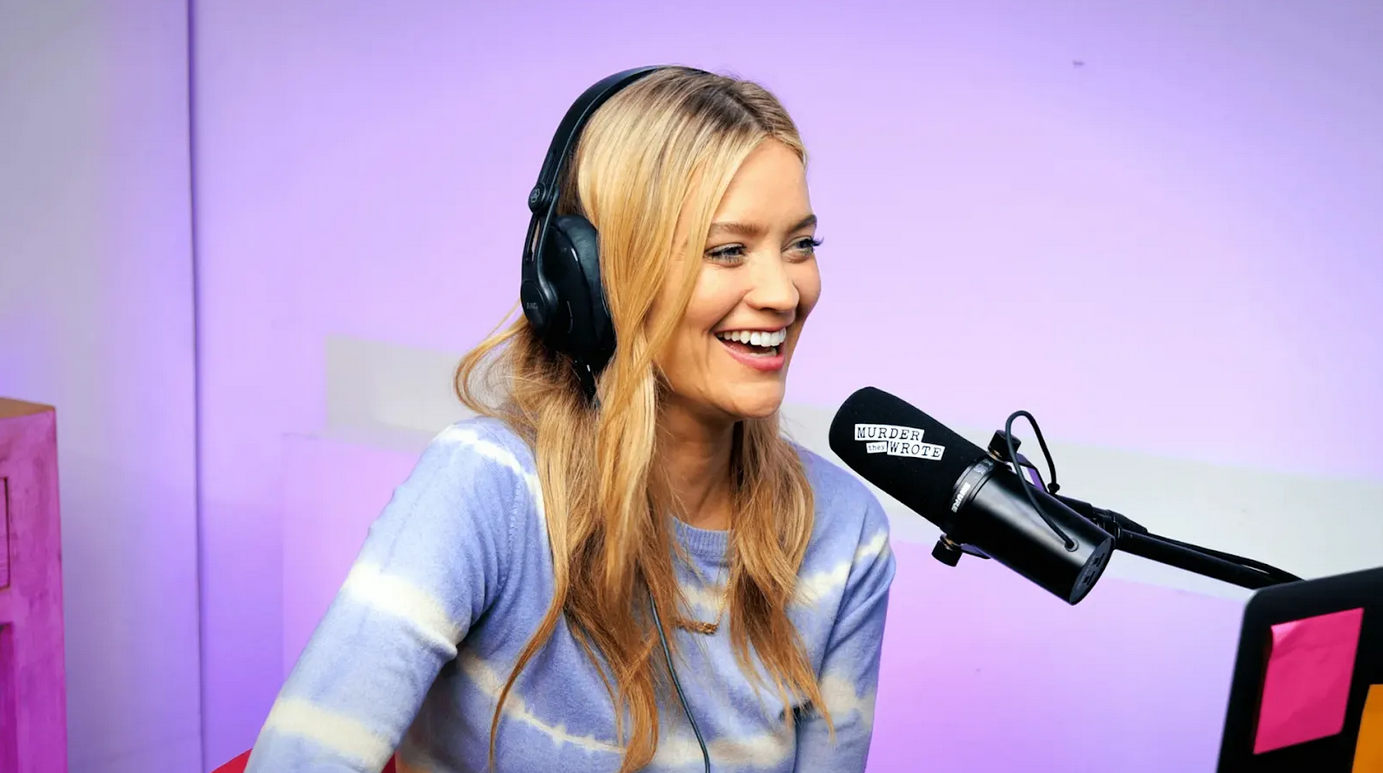
See the 'Murder They Wrote' podcast setup used by Laura Whitmore and Iain Stirling from BBC at Finchley Studio (Gathering setup). Watch Murder They Wrote at BBc sound , Spotify , Apple podcasts , Youtube , Instagram , Amazon music
3.1 The Audio Challenge: Mix-Minus Engineering
The fundamental challenge in remote broadcasting is the "Mix-Minus" feed. This is the audio mix sent back to the remote guest.
3.1.1 The Physics of Echo
If the studio sends the main "Program Mix" (Master Output) to the guest, that mix includes the guest's own voice. Due to the round-trip latency of the internet, the guest will hear their own voice echoed back to them with a ~200ms delay. This "slap-back" is psychologically disorienting and makes speech nearly impossible. Podcast Gym
3.1.2 The Solution: Mix-Minus Routing
The studio must generate a specialized auxiliary bus (Aux Mix) that contains every audio source in the studio (Host Mic, Music, Sound Effects) minus the guest's own input channel.
Hardware Implementation: Modern podcast-specific interfaces like the Rodecaster Pro II handle this automatically. When a device is connected via USB or Bluetooth, the internal DSP (Digital Signal Processor) automatically subtracts the incoming audio from the return feed. The Podcast Host
Advanced Routing: For studios using general-purpose recorders like the Zoom F8n or Zoom H6, the engineer must manually configure the internal mixer to mute the remote channel's fader in the sub-mix sent to the computer's output. Podcast Gym
Switcher Implementation: In video-centric workflows using the Blackmagic ATEM Mini, the mix-minus is often managed by the hardware's routing logic. The host's microphone is fed into the ATEM, which passes it via USB to the computer (Zoom). The computer's audio output (the guest) is routed to the studio headphones but not back into the ATEM'S USB input, preventing the feedback loop. YouTube
3.2 The Video Challenge: NDI and High-Fidelity Capture
For a Video studio, screen-capturing a pixelated Zoom window is insufficient. The goal is to extract a clean, high-resolution video feed of the guest, free from the interface clutter (names, mute icons, watermarks).
3.2.1 NDI (Network Device Interface)
NDI is a royalty-free standard that allows video sources to be transmitted over a local Ethernet network. It effectively turns a standard LAN cable into a high-definition video cable.
3.2.2 The ZoomISO Workflow
To achieve broadcast-quality remote video, studios utilize ZoomISO, a specialized application for macOS. Reddit
Ingest: ZoomISO joins the Zoom meeting as a participant.
Extraction: It extracts the raw video stream of each participant at 1080p resolution.
Output: It broadcasts each participant as a separate NDI source on the studio network.
Production: The studio's vision mixer (e.g., vMix, TriCaster, or OBS) picks up these NDI signals. The technical director can then switch between the in-studio cameras and the remote guest's clean video feed seamlessly. This allows for professional "Super Source" layouts (e.g., Host and Guest side-by-side) with custom branding and backgrounds.
3.3 The "Double-Ender" Recording Standard
While live streaming relies on internet stability, the industry standard for recording remote podcasts utilizes Asynchronous Local Recording.
3.3.1 Riverside.fm and SquadCast
Platforms like Riverside.fm have revolutionized this workflow. Riverside
Local Capture: When a guest joins the session, the software records high-quality audio and up to 4K video locally on the guest's own device.
Progressive Upload: This high-quality file is uploaded to the cloud in the background while the conversation happens.
The Benefit: Even if the internet connection experiences jitter and the live video stream degrades to a blocky, pixelated mess, the final downloaded file is pristine. This effectively decouples the recording quality from the live internet quality, allowing studios to produce 4K content with guests on unstable residential connections.
Studio Protocol: A robust workflow involves using Riverside for the "Master Record" while simultaneously feeding the live audio/video into the studio's ATEM switcher for a backup "Line Cut." This redundancy ensures that the session is preserved even if one system fails. YouTube
4. Equipment Ecosystem: The Tools of the Trade
A high-end Podcast studio justifies its rates by offering equipment that provides a tangible leap in quality over a home setup. The equipment choices signal the studio's competence and determine the aesthetic "ceiling" of the production.
4.1 Audio Acquisition: The Industry Standards
Audio is the non-negotiable element of podcasting. Listener tolerance for bad audio is significantly lower than for bad video.
4.1.1 Microphones
Shure SM7B / SM7dB: The ubiquitous standard. Its dynamic capsule with a cardioid pattern offers excellent off-axis rejection, making it ideal for studios where multiple people are speaking. The "proximity effect" gives voices a rich, radio-broadcast warmth. The SM7dB variant includes a built-in pre-amp, solving the historical issue of the mic's low output level. Finchley Studios
Electro-Voice RE20: Another broadcast staple, favored for its "Variable-D" technology which minimizes proximity effect. This allows guests to move around the mic without their tone changing drastically, reducing the need for constant post-production leveling. OBSBOT
4.1.2 Interfaces and Recorders
Zoom F8n Pro: A field recorder that has found a home in the studio. Its defining feature is 32-bit float recording. This technology provides such massive dynamic range that it is virtually impossible to clip (distort) the audio. If a guest suddenly laughs loudly or screams, the audio can be attenuated in post-production with zero loss of quality. This is a critical safety net for unscripted, dynamic content. Outset Studio
Rodecaster Pro II: An integrated production console that combines a mixer, sound pads (for jingles), and recorder. It is user-friendly and handles mix-minus automatically, making it the preferred choice for self-service or mid-tier studios. The Podcast Host
4.2 Visual Engineering: The Cinematic Vodcast
The trend in 2026 is away from the sterile "webcam" look and towards a "cinematic" aesthetic characterized by shallow depth of field and dynamic lighting.
4.2.1 Camera Sensors: Super 35 vs. Full Frame
Sony FX30 (Super 35): The Super 35 sensor size is arguably the "sweet spot" for podcast production. It offers a cinematic field of view and depth of field (bokeh) that separates the host from the background, but maintains a deep enough focus plane to keep the host sharp even if they lean back in their chair. It records in 4K 10-bit 4:2:2, providing massive flexibility for color grading. Outset Studio
Sony A7IV/FX3 (Full Frame): Used in premium setups. The larger sensor offers better low-light performance and an even shallower depth of field. However, the razor-thin focus requires reliable autofocus systems, an area where Sony excels. Finchley Studios
Blackmagic Pocket Cinema 4K/6K: Favored by studios using the ATEM ecosystem. These cameras can be colour-shaded and controlled remotely from the switcher software, allowing a single operator to adjust exposure and focus for all cameras without entering the live set. Qube London
4.2.2 Lighting Design
Lighting is what separates a professional Video studio from an office with a camera.
Three-Point Lighting: The standard setup involves a Key Light (main source), a Fill Light (to lift shadows), and a Back/Rim Light (to separate the subject from the background).
Fixtures: Brands like Aputure (Light Storm, Amaran), Nanlite (Forza), and Godox are the industry standard.
Soft Light: Large softboxes (domes) are essential to create flattering light that smooths skin textures.
RGB Integration: The use of RGB tube lights (e.g., Nanlite PavoTube, Amaran T4C) allows the studio to instantly change the background colors to match the client's brand palette (e.g., turning the room "Coca-Cola Red" or "Spotify Green"). AVC Store
Control: High-end studios use DMX or app-based control (Sidus Link) to adjust all lights from an iPad, speeding up the turnaround between clients. B&H eXplora
4.3 The Control Room: Switching and Post-Production
4.3.1 The Vision Mixer
The Blackmagic ATEM Mini Extreme ISO is the central nervous system of the video podcast.
Live Editing: It allows a producer to cut between cameras in real-time, delivering a "Line Cut" or "Live Mix" at the end of the session. This offers immediate value to clients who need quick turnaround. Outset Studio
DaVinci Resolve Project: Crucially, the "ISO" model records a DaVinci Resolve project file alongside the raw video files. The editor can open this file and see the entire live cut as an editable timeline. If the producer cut to Camera 2 a second too late, the editor can simply drag the edit point back. This workflow saves hours of manual syncing and multi-cam editing. Saspod
4.3.2 Post-Production & AI
AI Tools: The integration of AI into the workflow is standard. Tools like Riverside's Magic Clips or Descript automatically identify viral moments, generate transcripts, and remove filler words ("um," "ah"). High-end studios offer these AI-assisted edits as a value-add service. Riverside
Delivery: Speed is a feature. Studios use high-speed transfer services or physical SSD transfers to deliver massive 4K datasets to clients immediately. Formats must be strictly managed: clients expect individual WAV files for each microphone (multitrack), not a single stereo MP3. Finchley Studios
5. Strategic Comparison: London Studio Tiers
Understanding the competitive landscape is vital for positioning. The market is segmented into three tiers, each catering to a specific User Intent.
5.1 Entry-Level / Self-Service (<£60/hr)
Examples: Pirate Studios, simple "Pod" hires.
Offering: Basic acoustic treatment, automated recording (often automated mix-minus), no staff.
User Persona: The "Hobbyist" or "Bootstrapper." They are price-sensitive and willing to handle the technical risk themselves.
Equipment: Often fixed setups with Rodecaster Pro consoles and simple USB or XLR mics. No video or basic webcam. Finchley Studios
5.2 Mid-Range / Assisted (£60 - £120/hr)
Examples: London Podcast Studios, Podshop.
Offering: Professional gear (Sony cameras, Shure mics) and a staff member to set up ("Get you started"), but often the client manages the session.
User Persona: Content creators with some budget who want quality but don't need a full production team.
Value: Good balance of quality and cost, but higher risk of user error during the session. Finchley Studios
5.3 High-End / Full-Concierge (£150 - £300+/hr)
Examples: Premiere Podcast Studios, Finchley Production Studio.
Offering: The "Smart Professional" tier. Includes a dedicated Senior Engineer/Producer who monitors levels, switches cameras, and manages remote guests.
Amenities: Free parking (Outer London), Lounge areas, 4K Multi-Cam, branded set design.
User Persona: Corporate Comms, B2B Brands, High-Frequency Series.
Value Proposition: Risk Mitigation. The client is paying to ensure that the recording cannot fail. They are buying the redundancy of the internet connection, the expertise of the engineer, and the "White Glove" service. Finchley Studios
6. Conclusion
The trajectory of the London podcast production market is clear: the studio of the future is a hybrid facility that merges the acoustic purity of a traditional recording studio with the connectivity and agility of a television broadcast suite.
For facility operators and creators, the roadmap to success in 2026 involves three strategic pillars:
Logistical Empathy: Recognizing that accessibility—whether through the central location of Shoreditch or the "drive-in" convenience of Finchley—is a core part of the product.
Uncompromising Connectivity: Treating internet jitter and latency with the same seriousness as audio acoustics. Business fibre is the new soundproofing.
Visual Excellence: Investing in the "Cinematic" aesthetic (Super 35 sensors, RGB lighting, customized sets) to meet the demands of a video-first social media landscape.
By addressing these pillars, a studio does more than rent space; it provides the technical certainty required for brands and creators to compete on the global stage.
This evolution from "Audio Booth" to "Broadcast Hub" is not merely a trend but the new baseline for professional content creation in the capital.