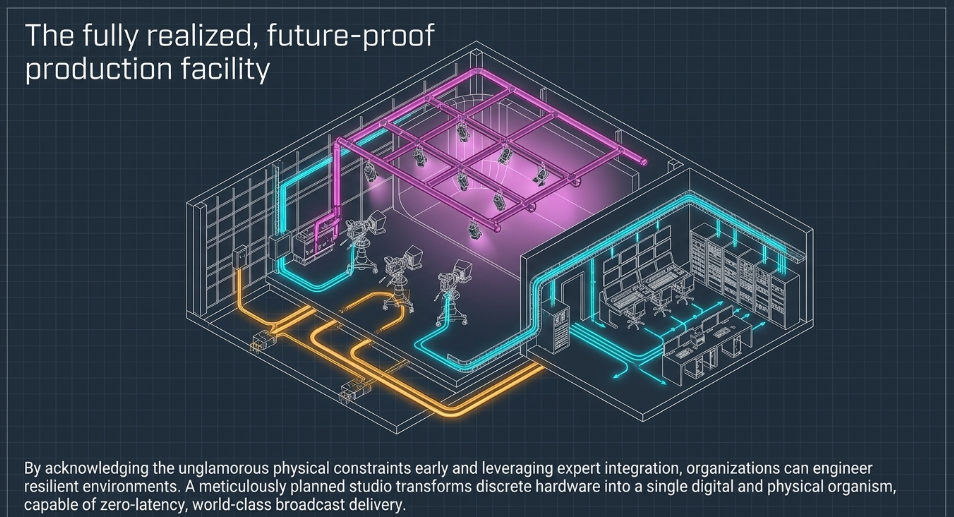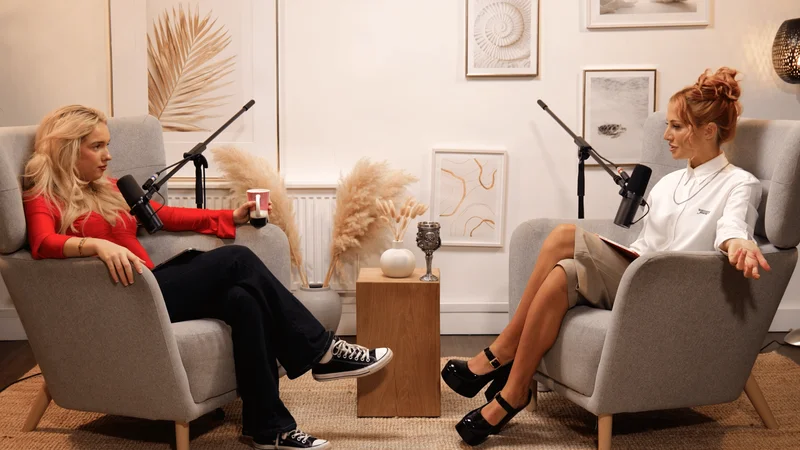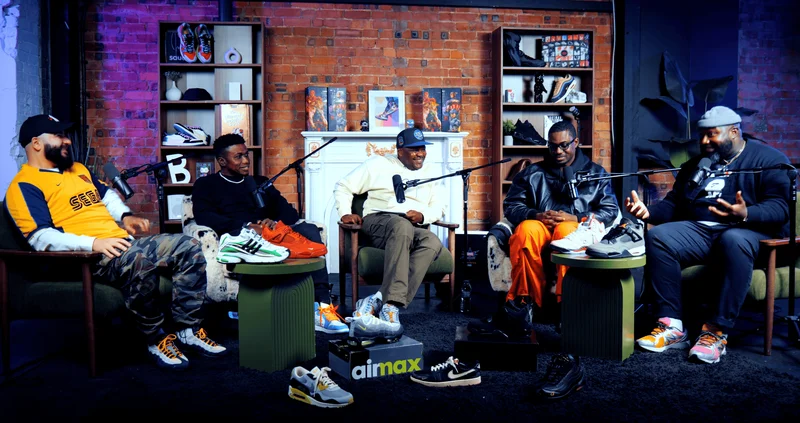
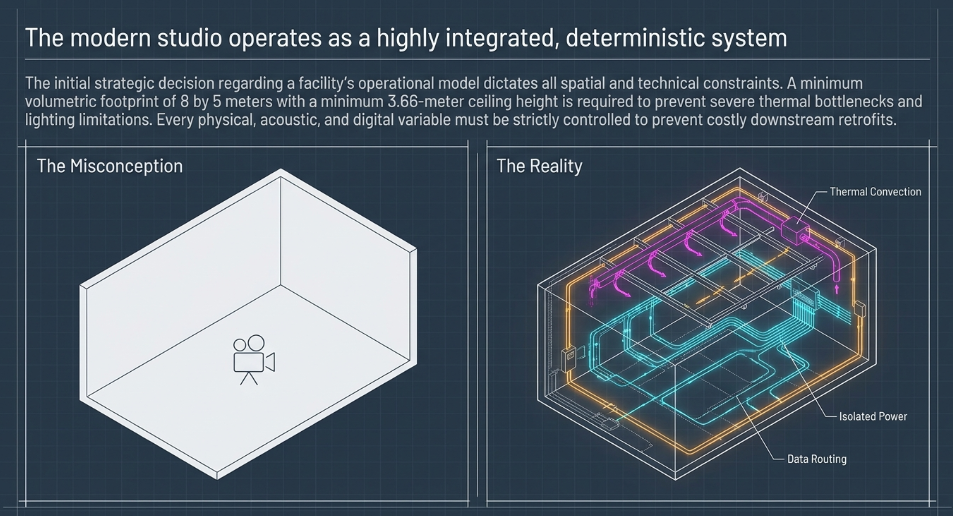
The construction and commissioning of a professional video production studio represent a highly complex convergence of architectural engineering, acoustic science, electrical infrastructure, and advanced digital broadcast technologies. The modern studio environment can no longer be conceptualized merely as a large room equipped with optical sensors ; rather, it must be architected as a highly integrated, deterministic system where every physical and digital variable is strictly controlled. The initial strategic decision regarding the facility's operational model—whether the infrastructure will support purely on-site traditional broadcasting, cloud-based virtual production, or a hybrid network architecture—serves as the foundational framework that dictates all subsequent spatial, acoustic, and technical requirements. A failure to address these interconnected factors during the early feasibility and planning stages invariably leads to costly infrastructural retrofits, compromised audio-visual fidelity, and severe limitations on the facility's production capabilities and commercial viability.
This exhaustive technical report provides a multi-disciplinary analysis of the requirements for engineering a state-of-the-art video production studio. The analysis transitions logically from the baseline physical and environmental infrastructure through specialized structural set design, overhead rigging, optical acquisition, acoustic capture, control room architecture, and high-bandwidth post-production networks, concluding with a definitive framework for capital expenditure and professional systems integration.
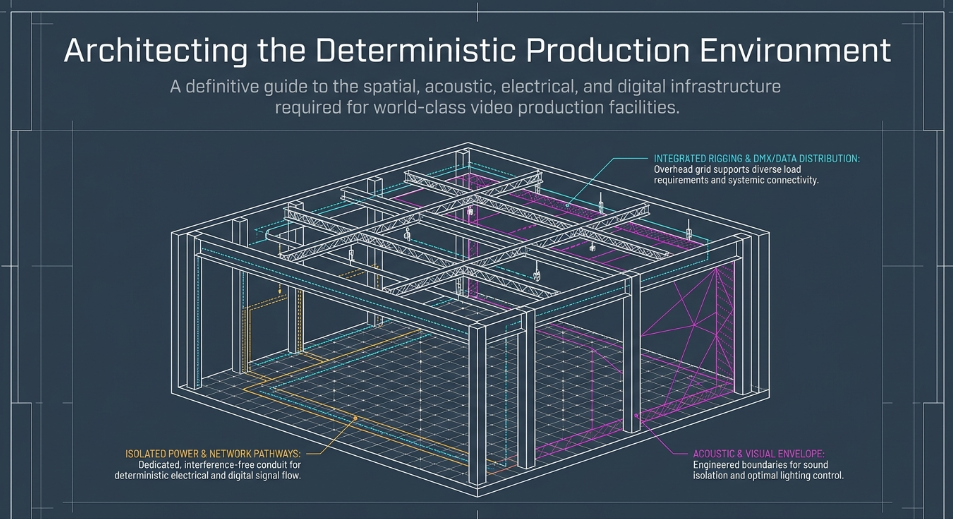
Phase 1: Spatial Infrastructure, Environmental Engineering, and Acoustics
The physical characteristics of the chosen real estate fundamentally constrain the ultimate capabilities of the broadcast facility. Infrastructure planning must precede any equipment procurement, as floor plans, load-bearing capacities, and environmental systems influence the reliability of the entire production ecosystem. Before construction begins, specialized systems integrators typically conduct comprehensive premises appraisals, including ambient noise and vibration surveys, to assess the structural and acoustic suitability of the intended environment.
Volumetric Footprint and Spatial Allocation For a standard commercial or corporate broadcast environment, the studio floor must meet specific two-dimensional and volumetric thresholds. The absolute minimum footprint for a functional volumetric capture or dual-set area is approximately 8 by 5 meters, equating to roughly 25 by 16 feet. For dedicated broadcast environments, such as those utilized in global sporting events like the Winter Olympics, a standard studio working room is optimally 70 square meters, maintaining a width of at least 7 meters and a depth of 10 meters [Aircolder].
However, square footage is merely a two-dimensional metric; volumetric capacity, specifically overhead ceiling height, is a far more critical architectural parameter. A ceiling height of 2.8 meters (approximately 9 feet) represents the absolute minimum operational clearance, but a height of 3.66 meters (12 feet) to over 4 meters is strongly advised for professional workflows [Evercoast]. Insufficient vertical clearance severely compromises the ability to suspend lighting grids, limits the geometric angles required to separate key lights from background elements to prevent unwanted shadows, and creates dangerous thermal bottlenecks near the ceiling. Additionally, spatial allocation must extend beyond the active shooting floor. A standard facility typically dedicates 15 square meters to talent green rooms and requires dedicated ingress and egress corridors to facilitate the secure movement of highly expensive gear [Winter Olympics HVAC Analysis]. Additional auxiliary spaces, including dedicated machine rooms, post-production suites, and storage facilities, effectively push the total facility footprint well beyond 100 square meters depending on the scale of the operation [Winter Olympics HVAC Analysis].
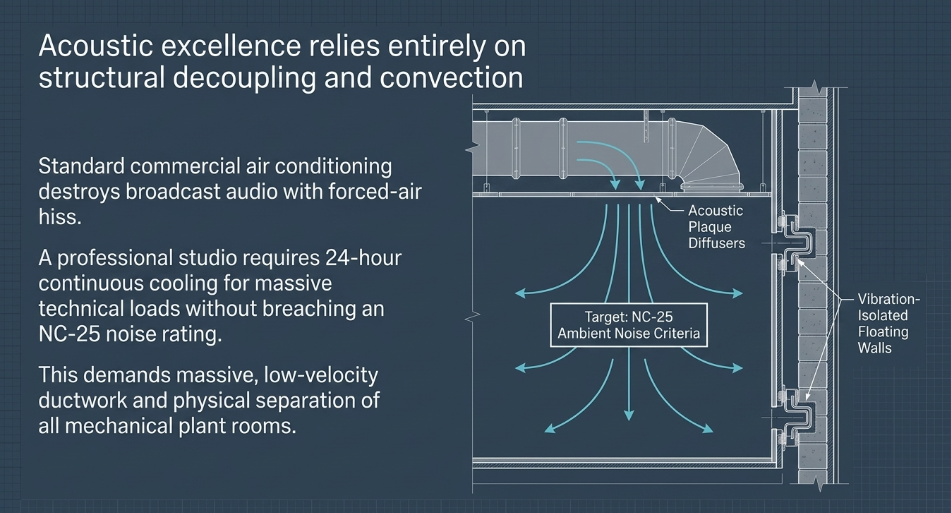
Acoustic Isolation and Room Tuning Acoustic excellence begins with structural isolation. The ambient sound floor of a professional studio must be strictly controlled, necessitating advanced building techniques to prevent both external noise intrusion (such as traffic or HVAC rumble) and internal reverberation [NewscastStudio]. Acousticians and acoustic consultancy teams employ advanced diagnostic tools, including 3D room modeling and environmental impact assessments, to design highly specific interventions. The industry standard for structural acoustic dampening is the "room-within-a-room" construction methodology. This technique utilizes high-mass materials and specialized decoupling mounts to physically separate the interior studio walls, floating floor, and drop ceiling from the exterior building structure. This ensures zero sound bleed, which is a critical necessity in dense urban environments, corporate settings, or residential garden studios where sound must be prevented from seeping in or out.
Beyond structural isolation, the internal acoustics of the volume must be meticulously tuned for a flat, mathematically accurate frequency response. Acoustic fabric walls, custom low-frequency bass traps, and geometric high-frequency diffusers are deployed to control reverberation times, thereby eliminating standing waves and flutter echoes that muddy vocal clarity. This precise acoustic tuning is not limited to the live studio floor ; it extends into associated post-production, podcasting, and Dolby Atmos mixing suites, where critical listening environments are essential to prevent external noise from infiltrating tight production deadlines and compromising high-fidelity audio workflows.
Environmental Control: HVAC System Design Heating, Ventilation, and Air Conditioning (HVAC) systems pose one of the most complex mechanical engineering challenges in studio design. The system must simultaneously provide 24-hour continuous cooling for high-thermal-output technical equipment and lighting arrays, maintain a comfortable ambient temperature (typically between 22 and 24 degrees Celsius, or below 72 degrees Fahrenheit), and operate with near-absolute silence [Evercoast]. Live-audience television broadcasting facilities and professional recording studios mandate an ambient Noise Criteria (NC) rating of 25 or lower. Standard commercial HVAC systems entirely fail to meet this stringent specification due to the audible rush of forced air. Achieving an NC-25 rating requires specialized air handling systems that deliver conditioned air at extremely low velocities. This is achieved using convection and diffusion principles through massively over-sized ductwork, specialized fan-coil systems, and acoustic plaque diffusers, which eliminate the audible "hiss" associated with traditional vents. Furthermore, mechanical and electrical plant rooms must be architecturally located as far as physically practical from the studio and other sound-sensitive zones to prevent the transfer of low-frequency mechanical vibration through the building's infrastructure. Failure to properly specify these HVAC parameters compromises audio quality and introduces severe overheating risks to temperature-sensitive server equipment [NewscastStudio].
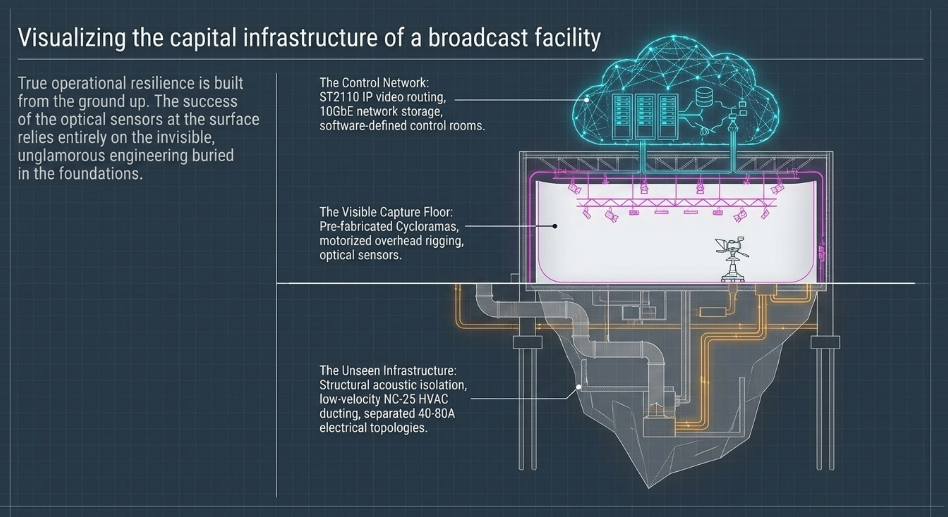
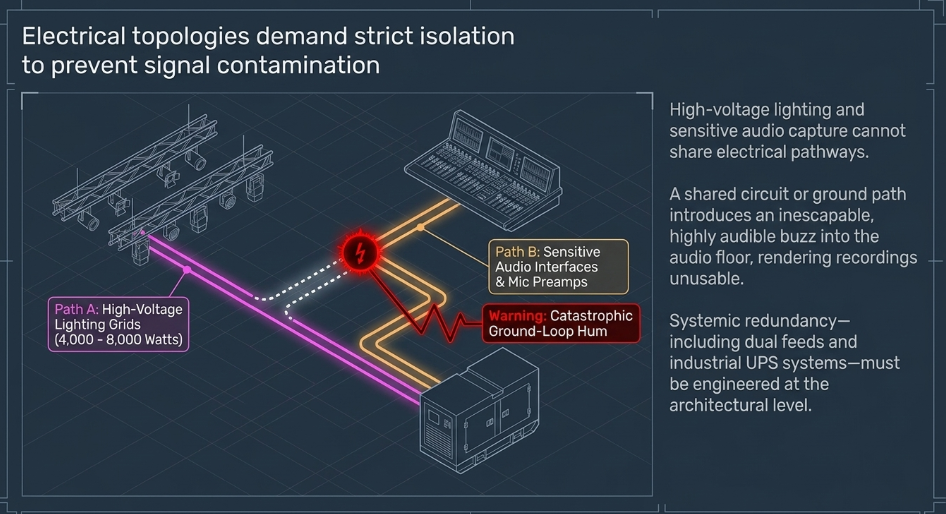
Electrical Infrastructure and Network Redundancy Power distribution within a video studio requires meticulous electrical engineering to prevent signal interference and ensure operational stability during live broadcasts. The baseline power requirement for a standard volumetric capture area ranges between 40 to 80 Amperes at 120 Volts, yielding an operational load of 4,000 to 8,000 watts [Evercoast]. A critical architectural requirement is the implementation of strictly isolated power lines [Ball Media Innovations]. Lighting grids and heavy electrical equipment must be wired on entirely separate circuits from sensitive audio and microphone systems [Ball Media Innovations]. If audio equipment shares a circuit or ground path with high-voltage lighting dimmers or power supplies, ground loops and electrical interference will inevitably introduce a highly audible hum or buzz into the sound floor, completely ruining the recording [Ball Media Innovations]. The power needs of a studio require continuous liaison between broadcast engineers and building contractors to ensure sufficient load balancing [Ball Media Innovations]. Furthermore, systemic redundancy must be built into the electrical grid [Ball Media Innovations]. Production control rooms necessitate dual power feeds, redundant routing paths, and industrial Uninterruptible Power Supply (UPS) systems to ensure that a localized power failure does not take a live show off the air.
Phase 2: The Studio Floor - Structural Backgrounds and Virtual Sets
Once the spatial, acoustic, and electrical infrastructure is established, the internal architecture of the studio floor must be constructed to support advanced cinematic techniques, seamless visual backgrounds, and flexible lighting distribution.
Cyclorama Infinity Walls
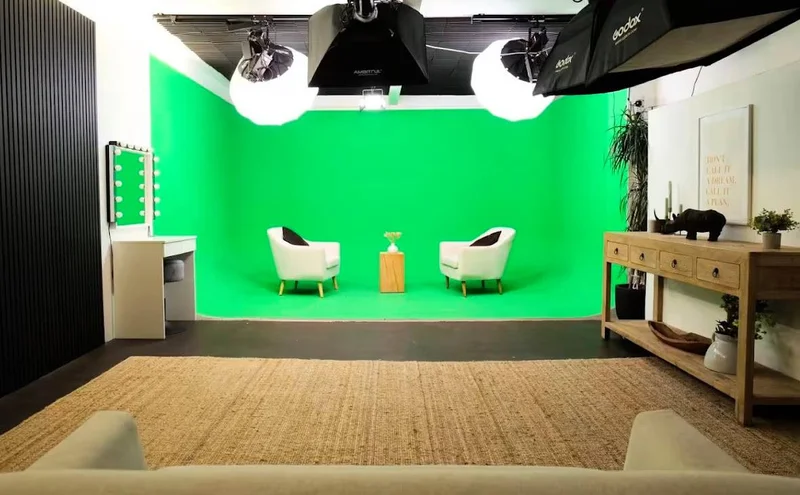
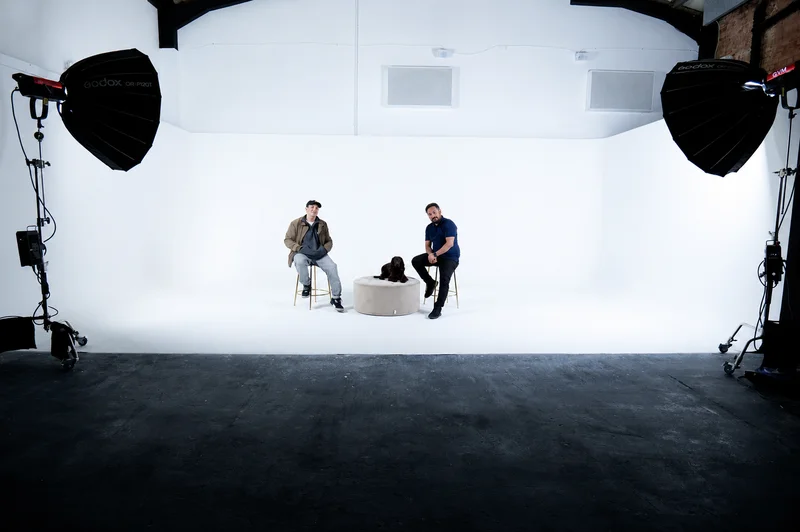
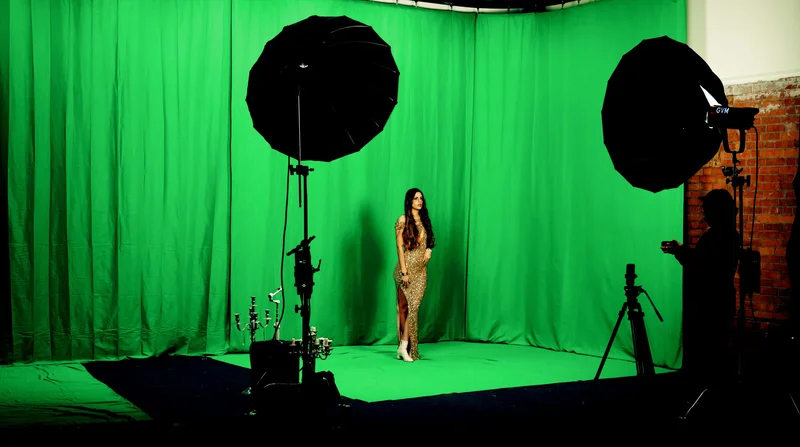
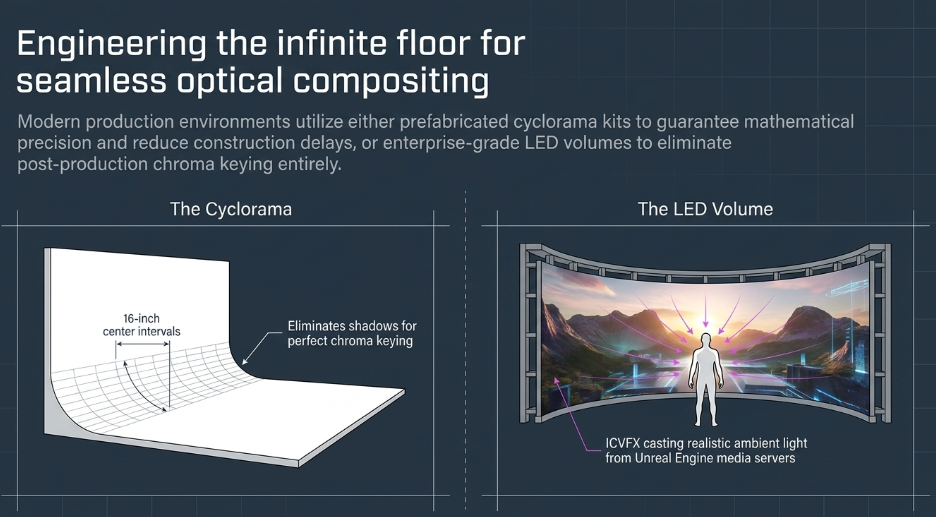
A cyclorama (commonly referred to as a cyc wall or infinity curve) is a specialized structural background designed with curved, invisible corners that merge seamlessly into flat walls and floors [Pro Cyc]. This unique geometry removes all distracting corners and harsh shadows, creating a flawless optical illusion of infinite space behind the subject [Pro Cyc]. This effect is critical for still photography, product videography, and chroma key (green screen or blue screen) virtual production workflows, as it enables easy cropping and graphic compositing in post-production [Pro Cyc].
The physical construction of a cyclorama wall is a highly specialized architectural discipline. Traditional, bespoke builds require the removal of existing drywall to expose the underlying studs [Pro Cyc]. Next, wooden support bends are affixed to the corners from top to bottom to create the transitional framework [Pro Cyc]. The most challenging phase involves wetting down and physically bending sheets of drywall, or alternatively utilizing chicken wire and plaster, to create perfectly rounded corners [Pro Cyc]. The surface is then heavily coated with joint compound (mud), allowed to dry, and meticulously sanded to a smooth, blemish-free finish before being painted with specialized matte white or Chroma Key green studio paint [Pro Cyc]. Even microscopic bumps, ridges, or poorly sanded screw holes will catch overhead lighting, casting micro-shadows that instantly ruin the infinity effect [Infinity Coves UK]. Because this process requires highly skilled carpenters and can take weeks to complete at a cost of thousands of dollars, it can severely disrupt production schedules [Pro Cyc].
To mitigate these construction delays and ensure mathematical precision, modern studios increasingly utilize prefabricated cyclorama kits [Archways & Ceilings]. These systems employ high-grade, moisture-resistant Medium Density Fiberboard (MDF) or engineered plywood (Plyworx) modules featuring precise, pre-cut sweeping radii [Archways & Ceilings]. The modular pieces (typically ranging from 0.5 inches to 2.5 inches in thickness, with depths ranging from 36mm up to 12 inches depending on the radius) are spaced at intervals of 16 inches on center [Archways & Ceilings]. By utilizing prefabricated curved framing components, the installation process is reduced from weeks to mere hours, yielding a highly durable, flawless finish without the risk of plaster ripples [Infinity Coves UK]. Custom builders in the UK can also integrate specialized elements such as ramps, soundproofing, and equipment storage directly into the infinity cove structure [Infinity Coves UK].
Virtual Production and LED Volumes As an alternative to traditional painted cycloramas and green screens, high-end enterprise studios and cinematic facilities are rapidly adopting In-Camera Visual Effects (ICVFX) driven by massive LED volumes. Facilities such as the ARRI Stage London utilize state-of-the-art LED screen packages paired with powerful media servers and creative software platforms [ARRI Stage London]. These environments allow filmmakers to project real-time, photorealistic 3D environments (often rendered in engines like Unreal Engine) directly behind the talent [ARRI Stage London]. LED volumes eliminate the need for post-production chroma keying and have the added benefit of casting highly realistic, environmentally accurate ambient light directly onto the subjects, significantly reducing the complexity of the lighting setup [ARRI Stage London].
Phase 3: Overhead Rigging and Lighting Control Topologies
To maintain a clear studio floor free of hazardous light stands, tripods, and cable runs, lighting fixtures and auxiliary hardware must be suspended from specialized overhead grid systems. The structural integrity, load-bearing capacity, and acoustic properties of the ceiling dictate the type of rigging that can be safely deployed [Stagecraft Industries].
Grid Infrastructure and Motorized Hoists Rigging systems are categorized into fixed grids and dynamic motorized systems, each serving distinct operational requirements.
In news and interview studios with ceiling heights exceeding 4 meters, key lights and fill lights are typically positioned at a height of approximately 2 meters to ensure flattering facial illumination. Therefore, constant force hinges or highly stabilized motorized telescopes (such as those manufactured by De Sisti or IFF) are essential to lower the fixtures safely while providing rigidity to prevent swaying [EverSirius].
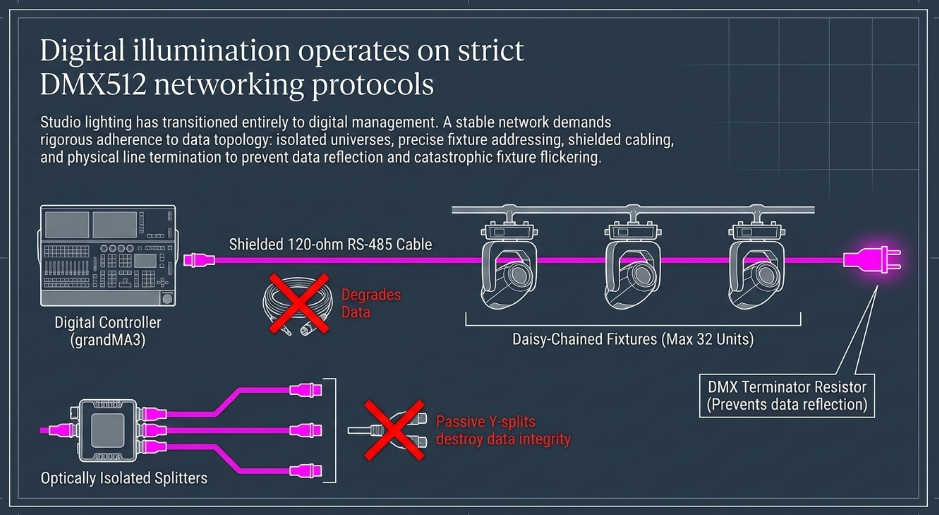
Lighting Distribution and the DMX512 Protocol Studio lighting has transitioned entirely from analog dimming to digital management via the DMX512 protocol. DMX (Digital Multiplex) is the globally standardized digital language for stage and studio lighting control, allowing a central console or software application to orchestrate parameters such as brightness, color temperature, RGBW color mixing, and motorized pan/tilt movements across hundreds of independent fixtures [Thomann].
The physical implementation of a stable DMX network requires strict adherence to specific data topologies and electrical engineering rules:
Addressing and Universes: A single DMX line, referred to as a "universe," contains exactly 512 distinct control channels [Thomann]. Each lighting fixture on the network requires a unique starting address, assigned via onboard DIP switches or digital displays [Ikan International]. A complex fixture, such as a moving head or advanced multi-color panel, may consume 4 to 40 channels [Betopper]. To prevent address conflicts, fixtures must be assigned non-overlapping ranges [DMX-Guide.com]. Once a 512-channel universe is saturated, additional universes must be physically added via expanded network nodes or supplementary console outputs [Thomann].
Cabling Specifications: DMX relies on RS-485 compliant shielded twisted pair cables, typically utilizing 3-pin or 5-pin XLR connectors [Betopper]. A critical failure point in amateur and budget studios is the improper use of standard analog audio microphone cables instead of specialized 120Ω impedance DMX cables [Betopper]. Audio cables have different capacitance and impedance characteristics, which leads to severe digital signal degradation, data reflection, and ultimately erratic flickering of the lighting fixtures [Betopper].
Daisy Chaining and Termination: Fixtures are linked sequentially, routing a cable from the controller's "DMX OUT" port to the first fixture's "DMX IN," and continuing down the physical line [Betopper]. Industry best practices dictate a maximum of 32 fixtures per chain and a maximum total cable run of 300 meters (1,000 feet) [Betopper]. Crucially, the final fixture in the physical chain must be capped with a 120Ω DMX terminator (a resistor plugged into the final output port) [Betopper]. Without a terminator, the digital signal bounces back down the line, causing severe interference [Ikan International]. Furthermore, network splits must be handled by active, optically isolated DMX splitters; passive Y-split cables are strictly prohibited as they destroy data integrity [Betopper].
Lighting Control Consoles and Software The hardware used to orchestrate these networks ranges from tactical, hardware-dense desks to highly portable software-driven interfaces. For large-scale, multimedia-driven concerts and network television broadcasts, the grandMA3 by MA Lighting is universally considered the most powerful and versatile console available [Springtree Media]. It provides robust networking capabilities and deep customization, though it carries a massive price tag and a steep learning curve [Springtree Media]. Conversely, theatrical environments requiring meticulous cueing and precise color control heavily favor the ETC EOS Series.
For mid-sized corporate video studios, broadcast environments, and live streams, more accessible systems provide exceptional power without the overwhelming footprint. The ChamSys MagicQ and QuickQ series offer highly compact, multi-universe control with tactile faders, while Obsidian produces powerful PC-wing controllers [Sweetwater]. Increasingly, wireless and tablet-based solutions are dominating the space. The Blackout application, running on an Apple iPad Pro, provides full-size console capabilities in a sleek form factor, utilizing universal output protocols like sACN E1.31 and Art-Net over WiFi, alongside Bluetooth control via LumenRadio TimoTwo chips [Blackout App]. Hardware ecosystem integrators, such as Visual Productions, supply essential backend infrastructure including the QuadCore, CueCore, and various Node series to bridge software controllers with the physical DMX grid [LDI 2025 YouTube].
Phase 4: Optical Acquisition, Camera Support, and Teleprompting
The visual aesthetic and operational efficiency of a studio are ultimately determined by the choice of optical sensors, the glass utilized to focus light onto them, and the mechanical support structures that govern their movement. The selection of optical acquisition equipment varies dramatically based on the studio's budget and target audience.
Camera Architecture Paradigms
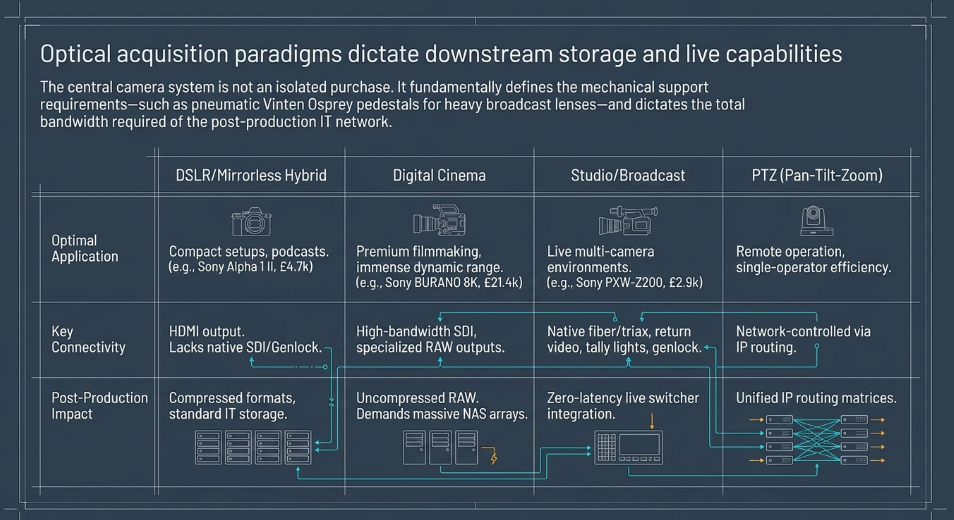
The central choice of camera system dictates the entirety of the downstream visual workflow, from cable routing to post-production storage constraints [CVP].
Professional Lens Ecosystems While camera bodies process the image, the optical lenses fundamentally define the aesthetic character of the video. Studio workflows frequently demand high-performance parfocal zoom lenses, which uniquely maintain absolute sharp focus while zooming in or out [Vindicta Digital]. Broadcast environments rely heavily on massive box lenses or Cine-Servo lenses, such as the newly announced Canon CN30x40 Cine Servo Lens [CVP].
For narrative, high-end commercial, and cinematic corporate productions, prime lenses (which have a fixed focal length) are favored over zooms for their superior optical clarity, wider apertures, and ability to achieve a shallow depth of field [Vindicta Digital]. Leading suppliers like CVP offer an unparalleled selection of elite cinema glass, including the Zeiss Supreme Prime, Cooke, and Leitz series [CVP]. Furthermore, the industry is seeing a surge in specialized anamorphic options, such as the DZOFILM Arcana 1.5x Anamorphic Primes and the Blazar Remus 50mm T2.0 1.5x Full Frame Anamorphic, which provide unique cinematic flares and ultra-widescreen aspect ratios [CVP]. The mounting standards for these lenses must align perfectly with the camera systems, spanning PL Mount (industry standard for high-end cinema), EF Mount, RF Mount, and E Mount [CVP]. Advanced productions also integrate wireless lens control systems, such as the ARRI Hi-5 Hand Unit or the Tilta Nucleus-M II, allowing dedicated focus pullers to operate remotely [CVP].
Camera Support Pedestals and Teleprompting Static, traditional tripods are entirely insufficient for the dynamic tracking required in professional studio environments. Broadcast cameras, often weighed down by heavy box lenses, teleprompters, and talent monitors, must be mounted on robust pneumatic or hydraulic pedestals [Vinten]. Pedestals, such as the highly regarded Vinten Osprey series, are engineered with perfectly balanced columns that allow camera operators to execute flawlessly smooth, noise-free elevation changes [Vinten]. This enables the operator to seamlessly transition from framing a standing subject at shoulder height to dropping the lens below the eye line of a seated guest without disrupting the fluid head's stability or requiring extra concentration [Vinten].
Teleprompters are critical accessories integrated directly onto these pedestals. These systems utilize a high-brightness monitor reflecting text onto a specialized beam-splitter glass positioned directly in front of the camera lens, allowing talent to read scripts while maintaining direct eye contact with the audience [Autocue YouTube]. Industry-standard systems, such as the Autocue Pioneer and Explorer series, are available in large 17-inch and 19-inch configurations [Autocue]. These systems feature toolless, adjustable mounting kits that make it simple to perfectly position the lens in the center of the glass [Autocue YouTube]. For the largest broadcast setups, specialized extra-large hood openings are required to accommodate box lenses, complete with internal cable management and supplementary brackets for talent monitoring screens [Autocue YouTube].
Phase 5: Audio Transducers, Signal Processing, and Broadcast Mixing
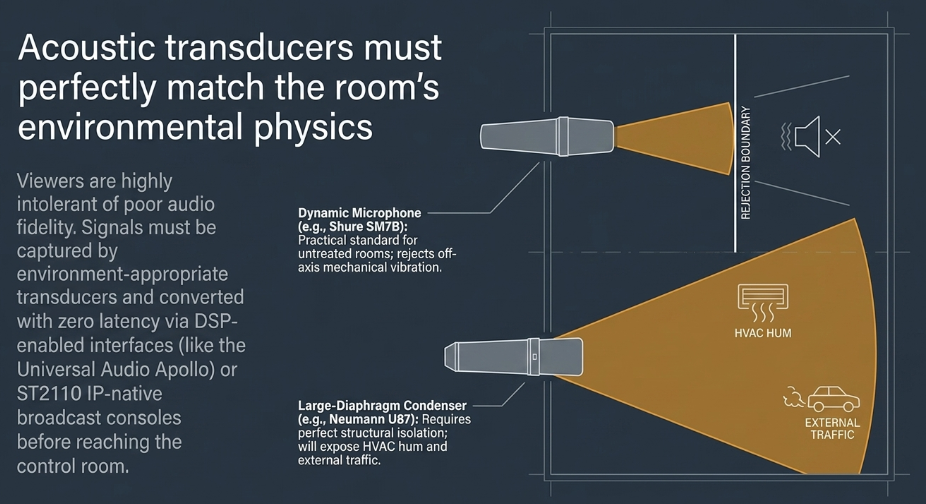
Audio fidelity is paramount to the success of a video studio; viewers are highly intolerant of poor audio, and bad sound will degrade the perceived value of a broadcast far more rapidly than sub-optimal video resolution [Wipster]. Achieving pristine audio involves selecting the correct acoustic transducers, high-quality pre-amplification, and sophisticated mixing infrastructure.
Acoustic Transducers: Microphone Selection Microphone selection must be carefully paired with the acoustic properties of the recording space.
Dynamic Microphones: In rooms lacking perfect, multi-layered acoustic treatment, dynamic microphones are the practical industry standard [Zencastr]. Models such as the ubiquitous Shure SM7B, the updated Shure SM7dB, the legendary Electro-Voice RE20, and the budget-friendly Rode PodMic are highly directional and significantly less sensitive to off-axis ambient noise [LRB Media]. They provide rich, warm, broadcast-style vocal tones and utilize robust internal shock mounts and pop filters to reject mechanical vibrations and vocal plosives [LRB Media]. Because they require the talent to be close to the capsule, they effectively drown out room echo [Zencastr].
-
Condenser Microphones: In highly treated, soundproofed environments, large-diaphragm condenser microphones, such as the Audio-Technica AT2020 or the premium Neumann U87, are deployed [Zencastr]. Condensers offer superior transient response, capturing minute vocal details, presence, and crisp high frequencies [Zencastr]. However, they will mercilessly expose any HVAC hum, computer fan noise, or ambient traffic if the structural acoustic isolation is flawed, often creating more problems than they solve in untreated rooms [Zencastr].
Desktop Interfaces and Hybrid Switchers The analog signals generated by microphones must be pre-amplified and converted to digital data via audio interfaces. Budget to mid-tier studios and creator setups rely on desktop USB interfaces like the Arturia MiniFuse, the Universal Audio Volt series, or the Native Instruments Komplete Audio 6 [YouTube: Top Audio Interfaces 2025]. High-end desktop environments transition to premium interfaces like the Universal Audio Apollo X series (desktop or rack-mounted), which feature onboard DSP (Digital Signal Processing) allowing for real-time application of EQ and compression without introducing latency [YouTube: 2025 Studio Setup].
A major evolution in creator and corporate studios is the advent of hybrid, all-in-one switching consoles. Devices like the Rodecaster Video revolutionize workflows by combining a multi-channel audio mixer with a live video switcher, allowing operators to record live to a massive 2TB SSD, switch scenes on the fly, and stream broadcast-quality content without post-editing delays [YouTube: 2025 Studio Setup]. Similarly, the Rodecaster Duo provides dedicated, studio-grade audio control in a highly compact footprint [YouTube: 2025 Studio Setup].
Large-Format Broadcast Consoles and IP Audio
In comprehensive, multi-room broadcast studios, discrete desktop interfaces are replaced by large-format digital mixing consoles that manage complex routing and multi-channel live audio [MetroEast]. Manufacturers like Calrec, Allen & Heath, and Studer dominate this high-end sector [Calrec]. Modern broadcast consoles, such as the Calrec Argo M, Argo S, Apollo, Artemis, and the Allen & Heath dLive series, are no longer traditional standalone analog desks [Calrec Audio Ltd]. They act as highly configurable control surfaces for massive, virtualized digital processing engines located in central machine rooms [Calrec Audio Ltd]. These enterprise systems have fully embraced ST2110 IP-native networking, allowing hundreds of discrete audio channels to be routed over standard high-speed ethernet [Calrec]. This architecture facilitates remote production (REMI), where a control surface in one city can mix audio generated in a studio hundreds of miles away, utilizing virtualized DSP software like Calrec's ImPulseV [Calrec]. For smaller regional broadcasters or radio-focused environments, systems like the Calrec Type R or the compact plug-and-play Brio console offer IP-enabled flexibility at a lower cost [Calrec].
Phase 6: The Production Control Room (PCR) Architecture
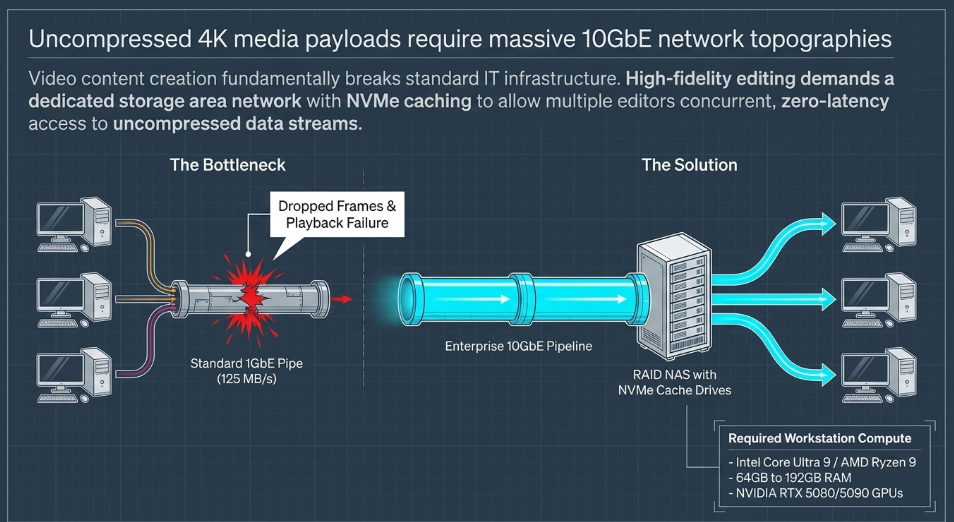
The Production Control Room (PCR) acts as the operational nerve center of the entire broadcast facility. The architectural layout of the PCR must prioritize ergonomics, clear sightlines, and logical signal paths to facilitate low-latency decision-making under high-pressure live broadcasting conditions [Broadcast Management Group].
Operational Roles and Ergonomics
The physical layout of the PCR is organized around specific technical roles, each requiring dedicated workstations and uninterrupted access to monitor walls [MetroEast].
The Director: Occupies the central leadership position, orchestrating the production, calling camera shots, queuing graphics, and ensuring the program adheres to the operational rundown [MetroEast].
The Technical Director (TD): Sits adjacent to the Director and operates the video production switcher to execute the Director's commands [MetroEast]. The TD manages visual transitions (dissolves, wipes), downstream keys, and complex chroma key/green screen effects [MetroEast].
The Audio Engineer: Operates from the adjoining Audio Control Room (ACR) or a dedicated acoustically treated zone within the PCR, mixing microphone inputs, sound effects, and playback audio [MetroEast].
Graphics/CG Operator: Manages the Character Generator (CG) computer, deploying lower-thirds, titles, logos, and live data feeds [MetroEast].
The physical furniture must support 24/7 continuous operation. Consumer-grade desks are entirely inadequate and will rapidly fail; professional control room consoles integrate deep cable management, rack-mount spacing for hardware, and sit-stand ergonomic capabilities [TakeOne]. High-end ergonomic operator chairs, essential to prevent fatigue during long broadcasts, can cost between $800 and $2,000 per seat, while the broadcast-grade console desks themselves range from $8,000 to $25,000 per operator position [TakeOne].
Routing, Switching, and Signal Architecture Modern PCRs are undergoing a massive transition toward software-defined workflows and IP-based signal routing (such as SMPTE ST 2110, NDI, or hybrid paths), actively moving away from traditional baseband SDI infrastructure [Broadcast Management Group]. A unified routing core connects cameras, replay servers, graphics generators, and audio consoles, providing operators with a predictable, unified signal map that drastically reduces errors [Broadcast Management Group]. The video switcher remains the core piece of active hardware. While space-limited or budget-conscious facilities may utilize fully integrated software-defined systems (where switching, graphics, chromakeys, and ingest are handled by a single unified appliance like a TriCaster), enterprise facilities rely on massive traditional hardware switchers [The Broadcast Bridge]. These network-grade switchers, capable of processing up to 96 inputs and executing complex multi-effects routing, operate in tandem with vast multiviewer systems that consolidate video sources onto massive monitor walls, allowing the entire team unparalleled situational awareness [Broadcast Management Group].
Financial Allocation in the PCR
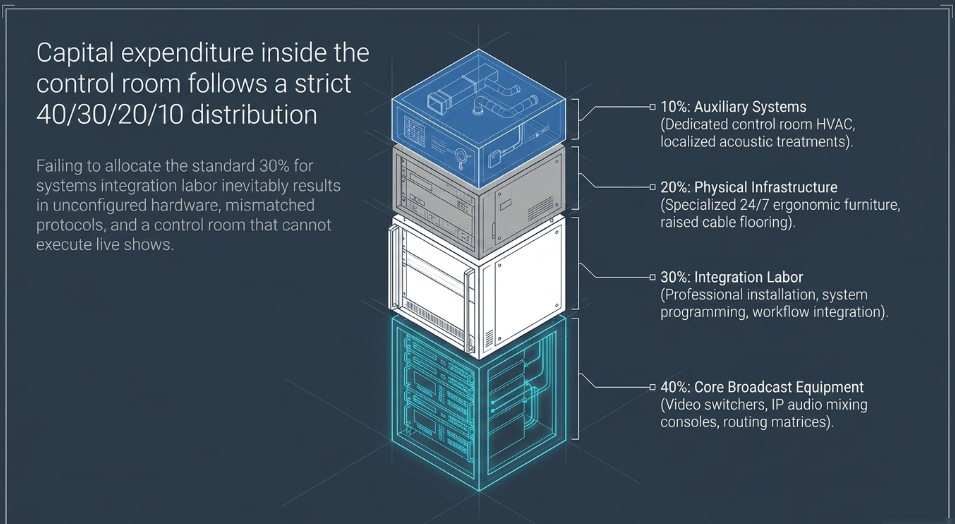
Control room budgets follow a highly standardized distribution model across the industry, commonly referred to as the 40/30/20/10 model [TakeOne].
40% is allocated to core broadcast equipment (video switchers, audio mixing consoles, routing infrastructure). Entry-level switchers start around $5,000-$15,000, while broadcast-grade systems scale from $50,000 to over $200,000. Audio consoles span $3,000 to $100,000, and multiviewers cost between $10,000 and $50,000 [TakeOne].
30% is dedicated to professional installation, system programming, and integration labor [TakeOne].
20% covers specialized furniture, raised flooring, and physical cable infrastructure [TakeOne].
10% supports supplementary systems, including dedicated control room HVAC, acoustic treatments, and architectural lighting [TakeOne].
Phase 7: Post-Production Workstations and High-Speed Network Storage
Capturing high-fidelity video and audio is only the first half of the production equation. High-resolution video formats (4K, 6K, and 8K RAW) generate massive, uncompressed volumes of data, placing immense strain on local computing resources and network bandwidth [Pixflow.Net]. A robust post-production ecosystem is required to ingest, edit, color grade, and render these files.
Network Attached Storage (NAS) and Data Topologies
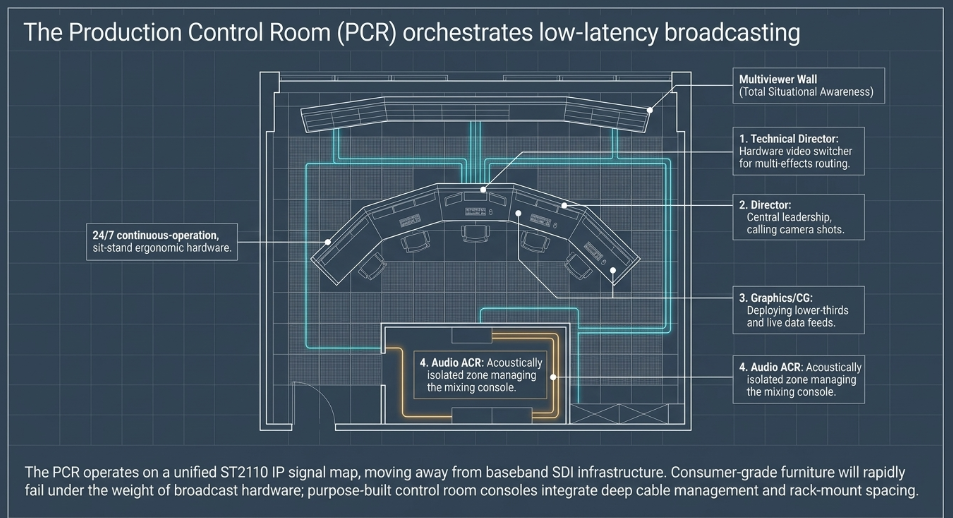
As video content creation scales and editing teams expand, local storage on individual computers quickly becomes an insurmountable bottleneck [Reddit: r/editors]. A team of five editors working concurrently on short-form content and full commercials requires a centralized, high-speed storage array, typically a Network Attached Storage (NAS) or Storage Area Network (SAN) system [Reddit: r/editors]. A standard 1-Gigabit Ethernet (1GbE) connection maxes out at approximately 125 MB/s, which is entirely insufficient for scrubbing a single stream of high-bitrate 4K ProRes or RAW footage, let alone supporting multiple editors simultaneously [Pixflow.Net]. Therefore, the studio's IT infrastructure must be upgraded to a 10-Gigabit Ethernet (10GbE) or Thunderbolt backbone [Seagate].
Hardware solutions such as the Synology DS1821+ (upgraded with a 10GbE NIC card and expanded RAM) or the UniFi UNAS Pro serve as the centralized data hub. These massive units are populated with specialized, high-capacity mechanical hard drives (e.g., 8TB Seagate IronWolf drives) configured in RAID arrays (Redundant Array of Independent Disks, such as RAID 5 or RAID 10) to provide essential data redundancy against catastrophic drive failure [UNAS Pro YouTube]. To overcome the physical speed limitations of spinning magnetic disks, these NAS units must be equipped with M.2 NVMe SSD cache drives to vastly accelerate read/write operations, allowing editors to pull massive files across the network with zero playback stutter or dropped frames [Pixflow.Net].
Workstation Computational Specifications
Off-the-shelf consumer PCs cannot sustain the data throughput required for multi-layered VFX, HDR color grading, and non-linear editing (NLE) [Origin PC]. A dedicated post-production workstation in 2025/2026 requires strict minimum hardware architectures to deliver real-time playback and blazing-fast exports [Origin PC].
Custom workstation builders, such as Origin PC or bespoke builds sourced from specialist retailers like Micro Center, engineer these components into precision-crafted powerhouses designed to prevent system bottlenecks and keep creative processes uninterrupted [Origin PC].
Phase 8: Capital Expenditure, Operating Costs, and Systems Integration
Budgeting for a professional studio encompasses both the massive capital expenditure (CapEx) for equipment and physical infrastructure, as well as the operational expenditure (OpEx) related to crew and daily production costs.
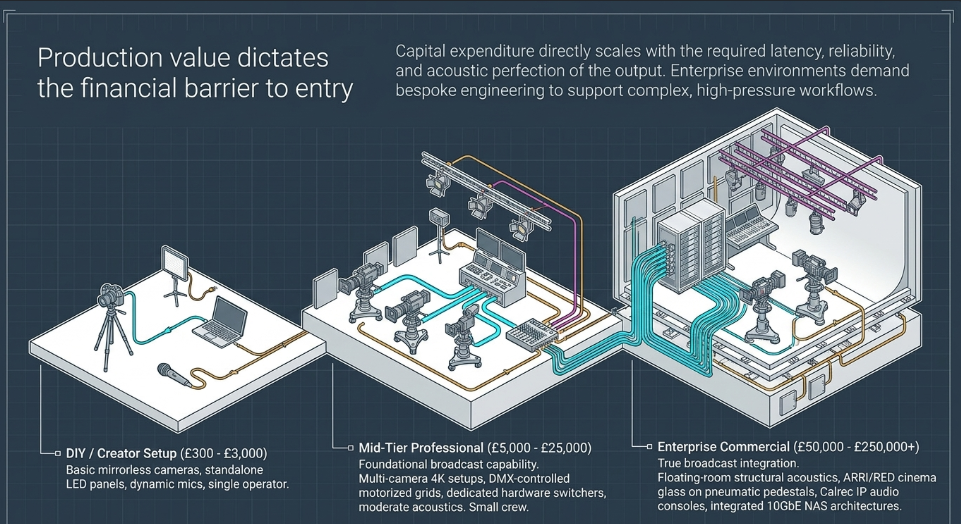
Budgetary Tiers and Operational Costs The financial barrier to entry scales dramatically based on the target production value. In the UK market (2025/2026 estimates), video production costs can be distinctly categorized:
DIY and Low-Budget (£300 - £3,000 / $3,000 setup): Relies on basic mirrorless cameras, simple LED panels, entry-level dynamic mics (Rode PodMic), and minimal editing. A single solo videographer typically charges $500-$1,500 per day. Final output costs average £500-$1,500 for a basic social media video [Firework].
Mid-Tier Professional (£5,000 - £25,000 / $10,000 setup): Introduces foundational broadcast capability, including multiple 4K cameras, multi-point DMX-controlled lighting, dedicated switchers, and moderate acoustic treatments. A small-to-medium crew costs $2,000-$5,000 per day. Output costs average £1,500-£5,000 for corporate promotional videos, and up to £7,000 for animated explainers [Firework].
Premium/Enterprise Commercial (£50,000 - £250,000+ setup): True broadcast-grade integration. Features floating-room acoustics, ARRI/RED optical systems on pneumatic pedestals, motorized DMX hoists, Calrec IP audio consoles, and fully integrated control rooms with 10GbE NAS architectures. Large crews charge $5,000-$10,000 per day, plus highly specific talent and specialty gear costs. The final product, such as a TV commercial or high-end brand storytelling film, commands £10,000 to £50,000+ [Firework].
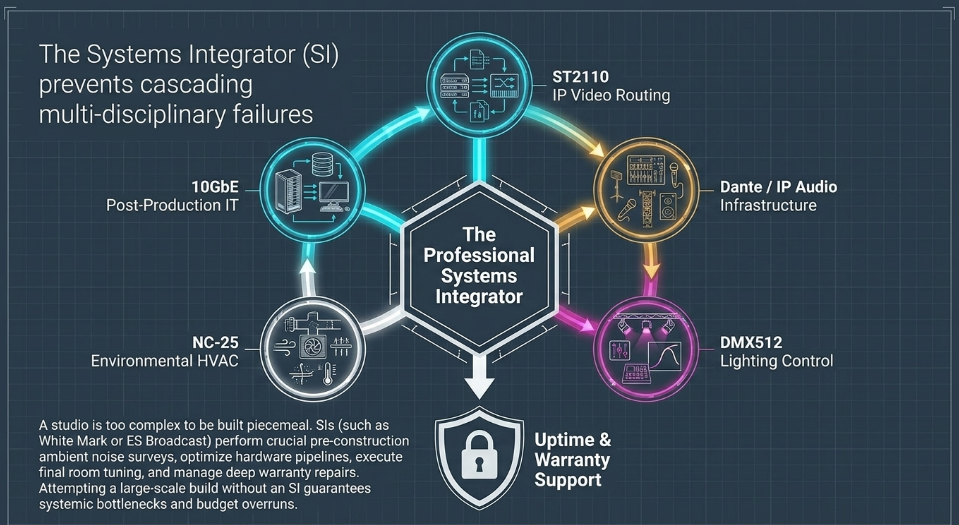
The Role of Professional Systems Integrators Given the extreme complexity of integrating precision acoustics, high-voltage power, proprietary DMX grids, IT networking, and ST2110 broadcast hardware, organizations rely heavily on professional Systems Integrators (SIs). SIs act as the central nexus between architectural firms and the end-user [ES Broadcast]. Prominent international integrators operating in this space (such as White Mark, ES Broadcast, Altered Images, Bold Content Video, and Dynamix) do not simply sell equipment. They conduct deep feasibility studies, performing pre-construction ambient noise surveys to troubleshoot structural flaws before breaking ground. They design customized workflows for VFX support, color precision, and pipeline optimization [Altered Images]. Integrators manage the entire supply chain, utilizing established vendor networks to source highly specialized components, wire complex IP topologies, program the video switchers, and perform the final acoustic tuning of the completed room [Bold Content Video].
Furthermore, high-end equipment suppliers like CVP and Visual Impact provide critical post-sales support that guarantees studio uptime [CVP]. CVP’s ProRepairs platform, for instance, operates as an Authorised Service Centre for brands like Sony, RED, Cooke, and ARRI, offering deep warranty repairs, genuine spare parts, and real-time tracking to ensure multi-million dollar equipment fleets remain functional [CVP]. Attempting a large-scale commercial studio build without engaging a dedicated systems integrator generally results in systemic bottlenecks, incompatible hardware protocols, cascading failures, and catastrophic budget overruns [Broadcast Management Group].
Conclusion
The design, construction, and commissioning of a video production studio is an exercise in rigorous systems engineering and architectural compromise. Success is not defined merely by the acquisition of the most expensive cinema sensors or the largest mixing consoles ; it is fundamentally dictated by the seamless, invisible interplay of the room's physical geometry, the isolated electrical infrastructure embedded within its walls, and the specialized data architectures that move massive media payloads from optical capture to final broadcast delivery. Stakeholders must address the foundational, unglamorous constraints—such as structural acoustic isolation, volumetric ceiling height, HVAC air velocity, and isolated grounding paths—before a single piece of hardware is procured. As the broadcast industry irrevocably transitions toward IP-based ST2110 routing, software-defined control rooms, 10GbE collaborative editing environments, and in-camera virtual production volumes, the integration between traditional construction and advanced network IT has never been closer. By meticulously planning spatial layouts, leveraging robust DMX and IP networking standards, understanding the economic realities of capital vs. operational expenditure, and engaging specialized systems integrators, organizations can construct resilient, future-proof facilities. These studios will be uniquely capable of executing complex, zero-latency productions that meet and exceed the highest tiers of global broadcast standards.