Here is a comprehensive, deep-dive SEO article tailored for your high-end London production facility. It is designed to rank for your target keywords while establishing authority and trust.
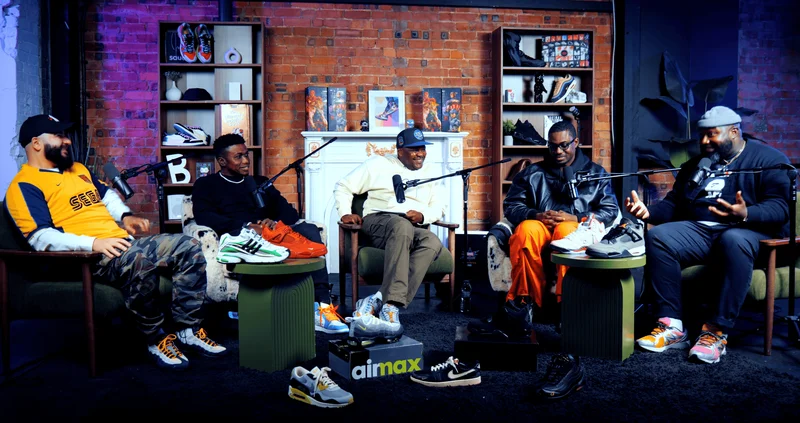
The podcasting landscape in London has shifted dramatically. It is no longer enough to simply have great audio; today, the most successful creators are dominating with "vodcasts"—video podcasts that capture the eye as well as the ear. But with real estate in the capital at a premium, building a visually stunning, physical set for every single show isn't always feasible.
Enter green screen videography.
Once reserved for Hollywood blockbusters and weather reports, chroma key technology has found a new home in the modern podcast studio. It offers creators the ultimate flexibility: the ability to transport their audience anywhere, reinforce branding, and visualize complex topics, all from the comfort of a controlled video studio environment.
In this deep dive, we explore why green screen technology is the secret weapon for engaging podcast videos, and why a professional studio hire in London is the only way to do it right.
The Visual Revolution: Why Audio-Only is No Longer Enough
The statistics are clear: YouTube is now one of the largest podcast listening platforms in the world. Platforms like Spotify have aggressively pivoted to support video. If you aren't filming your episodes, you are leaving a massive demographic on the table.
However, "filming" implies more than pointing a webcam at a host in a spare bedroom. Viewers crave high production value. They want clear lighting, crisp audio, and an engaging background.
This presents a unique challenge for London-based creators. A dedicated physical set requires space—a luxury in the city—and significant investment in carpentry and props. A green screen setup eliminates these barriers, allowing you to simulate a high-end penthouse, a newsroom, or an abstract branded environment with the click of a button.
What is Green Screen (Chroma Key) in Podcasting?
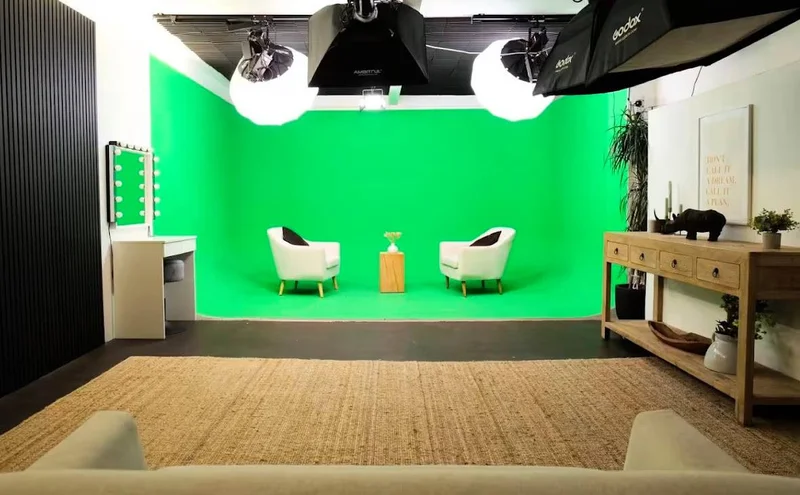
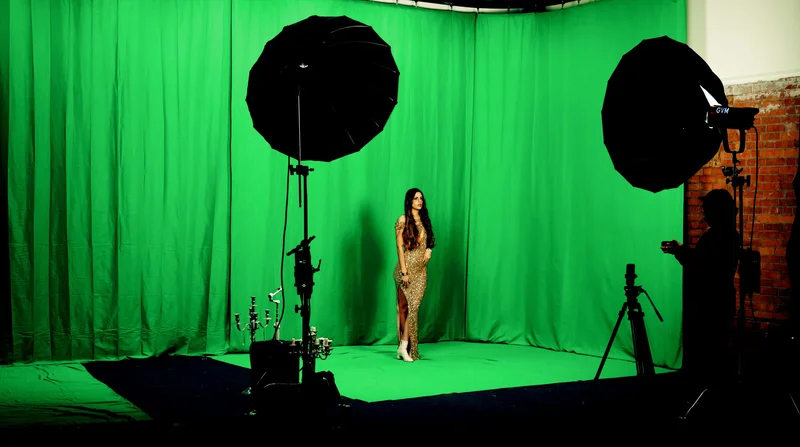
At its core, green screen videography involves filming a subject in front of a solid bright green backdrop. In post-production (or live during the recording), that green colour is made transparent, allowing you to layer any image or video behind the subject.
For a podcast studio, this means the background is no longer static. It is a digital canvas.
The Psychological Impact on the Viewer
Static shots of two people talking can get visually stale after 20 minutes. Green screen allows for:
Visual Context: Displaying graphs, news articles, or b-roll footage behind the speaker as they talk.
Atmosphere Control: Changing the mood from a bright, daytime look to a moody, late-night vibe without changing the physical lights.
Brand Retention: Subtly integrating your logo or sponsor colours into the virtual environment helps imprint your brand on the viewer’s mind.
5 Reasons to Choose a Green Screen for Your Next Production
If you are debating between a physical set and a virtual one, here is why green screen is the superior choice for modern content strategies.
1. Infinite Versatility from One Location
Imagine recording three different podcast series in one day.
Morning: A corporate finance show requiring a sleek, Canary Wharf-style office backdrop.
Afternoon: A casual pop-culture chat requiring a neon-lit, retro lounge vibe.
Evening: A narrative storytelling piece requiring abstract, moving textures.
In a physical recording studio, changing sets between these sessions would take hours and cost a fortune. With a green screen, it takes seconds. This is particularly valuable for production agencies or networks managing multiple shows.
2. Live-Streaming Capabilities
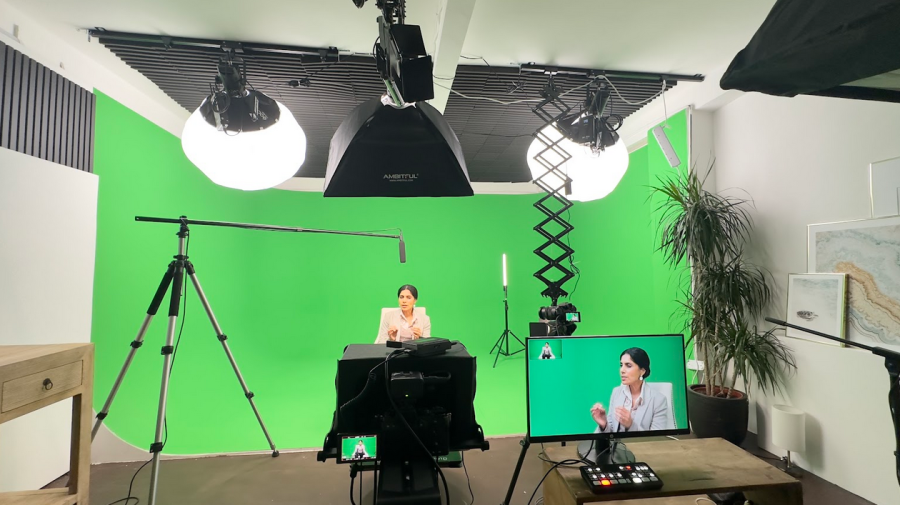
Modern video studio setups in London are equipped with live-switching technology (such as the Blackmagic ATEM series). This allows the technical director to key out the green screen in real-time.
You can live-stream to YouTube or Twitch with the full virtual background already in place. There is no need for hours of post-production rendering; your audience sees the finished, polished product instantly.
3. Solving the "London Space" Problem
London is a noisy, crowded city. Finding a quiet location with enough depth to create a blurry background (bokeh) is difficult.
Depth of Field: To make a green screen look real, the subject must be several feet away from the screen to avoid shadows.
Controlled Environment: A professional studio provides the necessary square footage and ceiling height that a home setup simply cannot match.
4. Future-Proofing Your Content
Rebranding your podcast? If you used a physical set, you would have to tear it down and rebuild. With green screen footage, you can theoretically update the background years later (if you kept the raw files), or simply change the digital asset for the next episode. Your set evolves as fast as your brand does.
5. Enhanced Storytelling
For educational or "explainer" podcasts, the host can interact with the background. You can "point" to data appearing over your shoulder (like a weather presenter). This turns a passive listening experience into an active visual lesson, keeping retention rates high.
The Professional Difference: Why You Can't DIY Green Screen
A common misconception is that you can buy a pop-up green screen on Amazon and achieve BBC-quality results in your living room. The reality is often a jagged, amateurish mess.
Here is why London podcast production demands a professional environment.
The Critical Importance of Lighting
Lighting is the make-or-break factor for chroma key.
Even Illumination: The green screen must be lit perfectly evenly. Even a slight gradient or shadow creates different shades of green, making it impossible for the software to remove the background cleanly.
Backlight: The subject needs a "hair light" or backlight to separate them from the background and prevent green light spill (reflection) on their shoulders.
Colour Temperature: Mixing daylight from a window with tungsten indoor bulbs will confuse the camera sensor.
A professional studio hire in London comes pre-rigged with industry-standard lighting (such as Aputure or Nanlite LED panels) aimed specifically for chroma key, ensuring a crisp key every time.
Soundproofing and Acoustics
Green screens are often made of fabric or painted cycloramas (curved walls). These hard surfaces can create reverb (echo).
The DIY Risk: A green screen set up in a kitchen will sound "boxy" and echoey.
The Studio Solution: A dedicated recording studio uses acoustic treatment outside the camera's view (bass traps, acoustic foam, and isolated vocal booths) to ensure the audio is as crisp as the video. You won't hear the sirens passing by or the rumble of the Tube.
High-End Camera Equipment
To pull a clean key, you need high data rates.
Compressed Video: Standard webcams compress video, blurring the edges of your hair. When you try to remove the green background, your hair looks like it's sizzling.
Professional Standard: Studios use 4K cameras (like the Sony FX6 or Blackmagic Pocket Cinema Camera) that record in 10-bit colour. This provides enough digital information to separate your hair from the background perfectly.
What to Look for in a London Podcast Production Studio
When searching for the right facility, ensure they tick these boxes to guarantee a return on your investment.
1. The "Cyclorama" Wall
Ideally, look for a studio with a painted infinity curve (cyclorama) rather than just a hanging cloth. This allows for full-body shots and wider angles without seeing the edge of the fabric.
2. Integrated Audio Solutions
The studio should offer top-tier microphones like the Shure SM7B or Electro-Voice RE20, running through high-quality preamps. Audio is still 50% of the video experience; do not compromise on it.
3. Technician Support
Does the studio hire include an engineer? Green screen can be finicky. Having an expert on-site to adjust the lighting and monitor the keying process ensures you walk away with usable footage.
4. Client Comfort and Connectivity
If you are inviting high-profile guests, the facility needs to reflect your professionalism. Look for:
Fast, reliable fibre internet for live streaming.
A comfortable green room (ironically, not usually green) for guests to relax.
Accessibility: Is the studio near major transport links (e.g., Northern or Victoria lines)?
Frequently Asked Questions (FAQ)
Here are the most common questions we receive from creators looking into studio hire in London.
Q: Can I wear green in a green screen studio?
A: No! If you wear green, your clothes will disappear along with the background, leaving you looking like a floating head. We recommend wearing contrasting colours. Since green is removed, magenta or red tones often pop well, but standard blues, greys, and blacks are safest. Avoid fine patterns (like herringbone), which can cause "moiré" visual interference on camera.
Q: Is a green screen podcast more expensive than a standard set?
A: Not necessarily. While the technical setup requires expertise, it saves money on physical set construction. You don't need to buy furniture, props, or neon signs. You are paying for the video studio time and the technology, which is often more cost-effective than building a custom physical set in London.
Q: Can you do the background replacement live, or does it have to be in post-production?
A: We can do both. For live streams, we use hardware switchers to replace the background in real-time. For pre-recorded high-end productions, we recommend recording "raw" and replacing the background in post-production (using software like Adobe After Effects or DaVinci Resolve) for the highest possible quality.
Q: Do I need to bring my own background images?
A: It helps if you have brand assets, but a good London podcast production house will often have a library of high-quality virtual sets or can design a custom background for you as part of the package.
Conclusion: Elevate Your Brand Today
The podcasting market is crowded, but the "vodcast" market is just getting started. By utilising green screen technology, you differentiate your content, professionalism, and brand identity from the thousands of creators recording in their bedrooms.
You need a partner who understands the technical nuances of lighting, audio, and chroma key technology. You need a space that offers sanctuary from the noise of the city, located conveniently in the heart of London.
Ready to transform your podcast into a visual experience?
Don't let technical limitations hold your creativity back. Book a tour of our state-of-the-art podcast studio today. Let’s discuss how we can build the perfect virtual environment for your next episode.