Executive Summary
The London podcast studio market in 2025 is a mature, dynamic, and highly segmented ecosystem, catering to a diverse spectrum of content creators, from independent hobbyists to global brands. This report provides a comprehensive analysis of the costs, services, and strategic considerations involved in renting a professional podcast studio in the city. The findings indicate a clear cost hierarchy driven primarily by two factors: the inclusion of video recording capabilities and the provision of professional engineering support.
Hourly rental rates exhibit a wide range, from budget-tier, self-service audio-only studios available for as little as £30 per hour, to premium, fully-serviced video podcasting suites that command rates in excess of £170 per hour. The market is broadly segmented into four key tiers: Premium Full-Service Boutiques offering a "concierge" experience; Mid-Range Value Studios providing a balance of professional quality and flexible pricing; Flexible Self-Service Networks leveraging technology for 24/7 access; and Budget-Conscious options that provide an accessible entry point to professional recording.
A fundamental division exists in the market's service philosophy. One segment operates on a "Production-as-a-Service" model, where expert staff are integral to the offering and included in the price. The other operates on a "Space-as-a-Service" model, providing high-quality, unstaffed facilities for technically proficient creators. This distinction presents a critical strategic choice for any potential client.
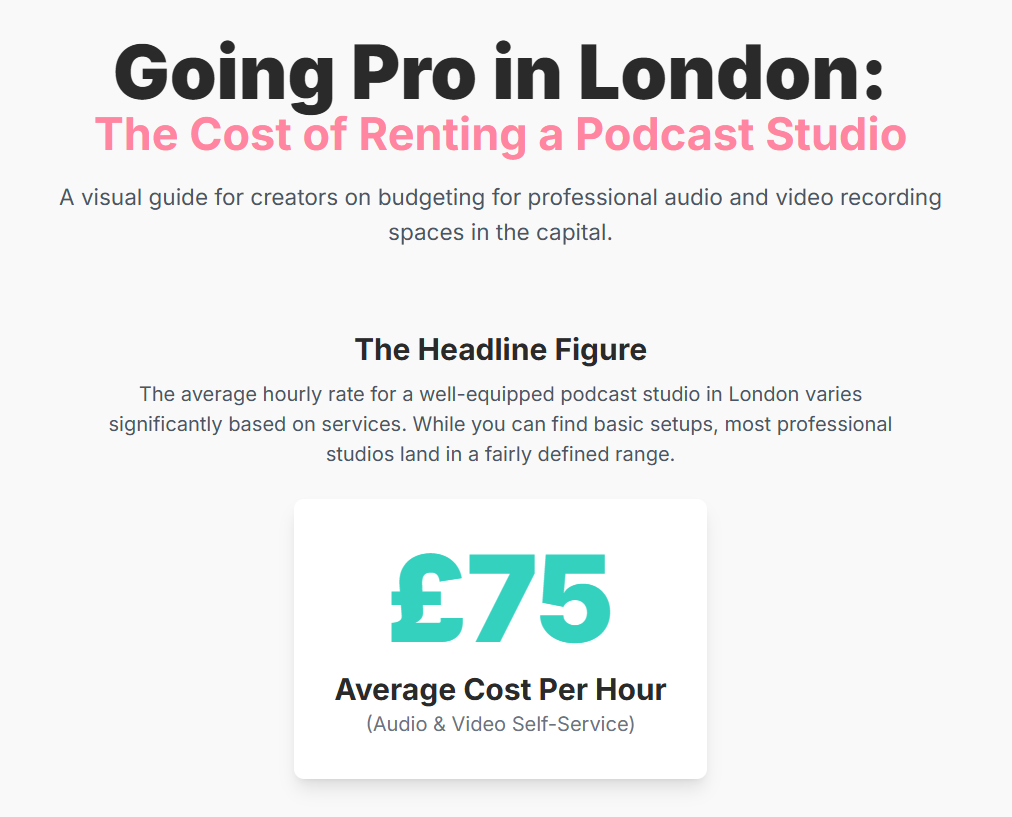
Image Credit: Finchley studio
Crucially, the analysis reveals that the total cost of podcast production extends significantly beyond the initial studio hire fee. A realistic budget must account for ancillary charges such as Value Added Tax (VAT), minimum booking periods, and potential overtime fees. Furthermore, post-production services—including audio and video editing, mixing, and the creation of social media assets—represent a substantial and necessary additional investment for maximizing content reach and impact. The optimal studio choice is therefore not a matter of finding the lowest price, but of aligning a studio's service model, technical specifications, and pricing structure with the specific creative, technical, and financial profile of the project.
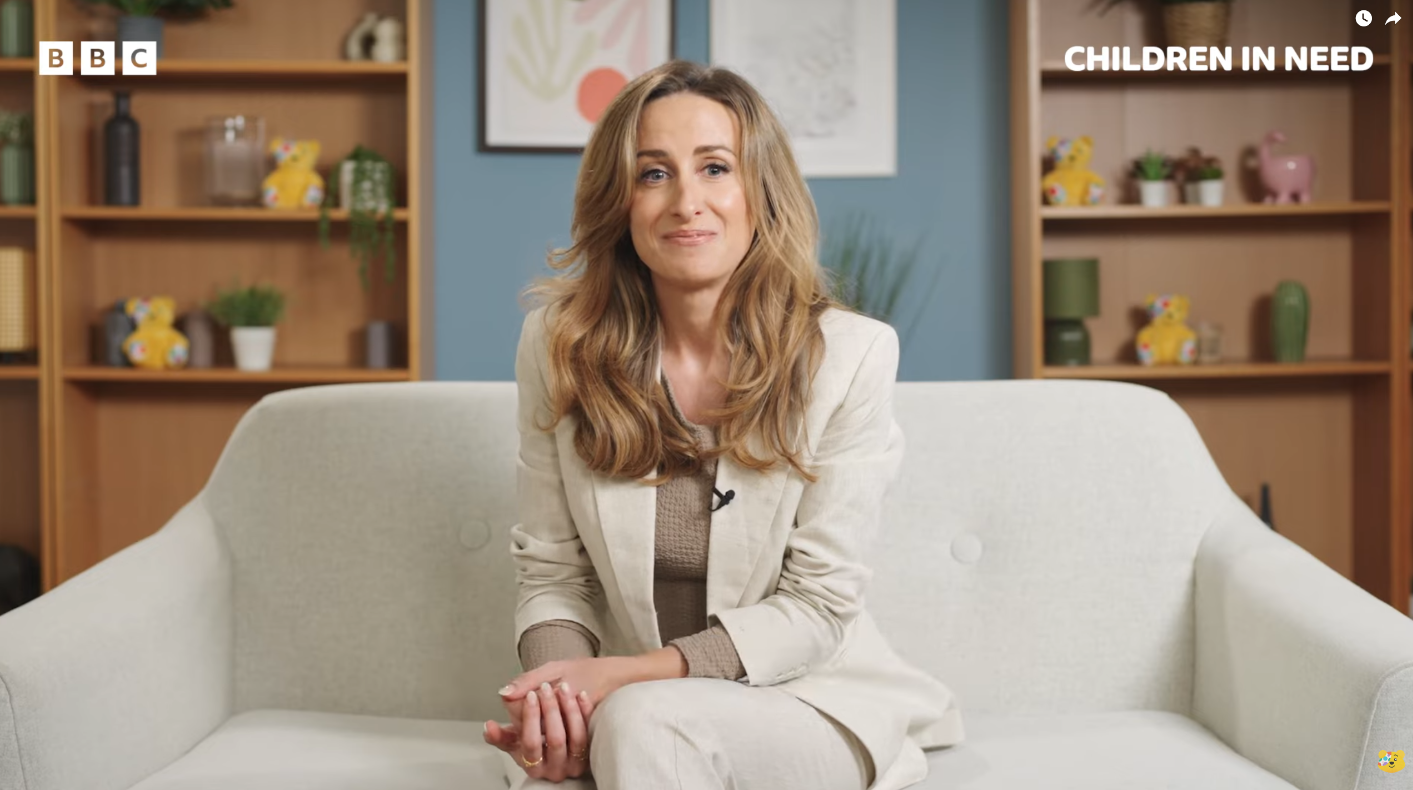
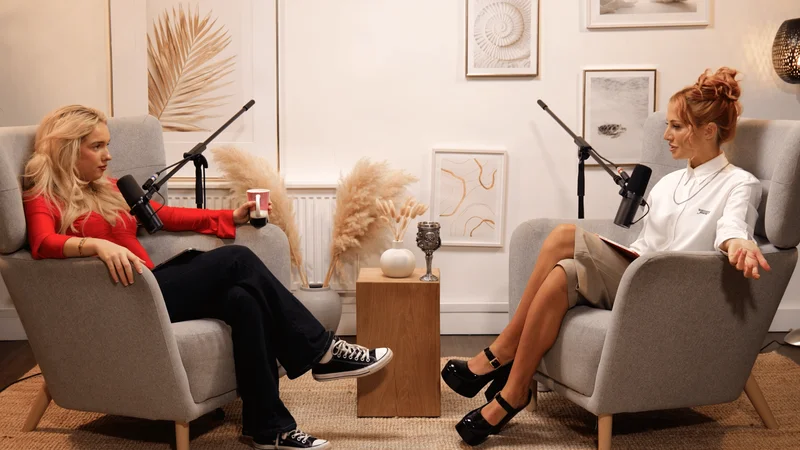
See the 'BBC Children in Need' podcast setup used by Dr Julie from BBC at Finchley Studio (Lounge setup). Book this setup for your podcast
Section 1: The London Podcast Studio Market Landscape
To accurately assess the cost of renting a podcast studio in London, it is essential to first understand the structure and dynamics of the market itself. The landscape is not monolithic; rather, it is a complex and stratified environment characterized by distinct tiers of service, strategic geographical clustering, and evolving business models that cater to a wide array of production needs and budgets.
1.1 Market Segmentation: Identifying the Tiers of Service
The London market can be effectively segmented into several distinct categories, each defined by its target clientele, service level, equipment specification, and pricing philosophy.
Premium Full-Service / "Concierge" Studios
This top tier targets corporate clients, established media brands, and high-profile creators who demand the highest quality production and a seamless, high-touch experience. These studios are defined by their use of broadcast-grade equipment, such as the "Netflix approved cameras" cited by Podcast House and Outset Studio's premium offering.1 They are typically situated in prime central London locations and, critically, their pricing models almost invariably include the services of experienced engineers, producers, and videographers. Studios like Premiere Podcast Studios explicitly market a "concierge service" with complete pricing transparency, ensuring clients can focus on content without technical distractions.3 Similarly, TYX Studios includes a dedicated technician with every session to guarantee a smooth process.4 The value proposition of this tier is quality assurance, expertise, and convenience, with hourly rates for video podcasting typically starting at £150.
Mid-Range and Value-Oriented Studios
This segment represents the largest and most competitive part of the market, serving serious independent creators, small-to-medium-sized businesses (SMEs), and production companies. These studios strike a balance between professional-grade equipment and flexible, transparent pricing. They offer a significant step up from home recording without the premium cost of the "concierge" tier. Exemplars of this category include Outset Studio, which provides clear pricing for both audio-only (from £84/hr) and audio-and-video (from £108/hr) sessions, with options for either self-service or engineered support.5 London Podcast Studios in Whitechapel offers a similar model, with competitive entry-level pricing (from £69/hr) and a menu of optional add-on services.7 Podshop, near Liverpool Street, also fits this profile, offering self-service audio from £50 per hour (+VAT) and providing engineer support as an optional extra.9
Flexible and Self-Service Networks
A significant and growing segment of the market is characterized by a technology-first, self-service model. These studios, often part of larger networks, provide 24/7 access to standardized, high-quality, and user-friendly recording booths. The model is predicated on the user's technical competence, often described as "bring your own producer" (BYOP). Pirate Studios is the archetypal example, with numerous locations across London offering acoustically treated rooms equipped with industry-standard gear like the RØDECaster Pro, all accessible via a self-service online booking system.10 Acast Studios in Hoxton explicitly adopts this "BYOP" philosophy, providing a professional space but making it clear that the user is responsible for the technical operation of the session.12 The Qube operates on a similar membership-based model, providing access to a network of studios for frequent creators.13 The value proposition here is flexibility, autonomy, and cost-efficiency.
Budget-Conscious Options
For creators at the beginning of their journey or those with tight budget constraints, a number of studios offer an accessible entry point to professional recording. These facilities may be located outside the central creative hubs or feature more basic, though still professional, equipment. Nostars Studios in Wood Green, North London, is a prime example, offering a two-hour session for £60 (£30/hr), which notably includes complimentary filming with a 6K camera, representing exceptional value.14 The Creative Digital Lab in Croydon offers highly competitive "dry hire" rates, particularly for block bookings, with an eight-hour day costing just £175.15 These studios provide the essential professional environment—primarily acoustic treatment and quality microphones—that is difficult to replicate at home.
Alternative and Niche Locations
A smaller, specialized sub-segment consists of non-traditional recording spaces that offer a unique aesthetic, primarily for video podcasts. These are often multi-purpose locations available for hire, rather than dedicated podcast studios. The research identifies spaces like converted Victorian factories, warehouse lofts, and even a luxury grooming club in Chiswick with Georgian panelling and a speakeasy bar.16 Members' clubs like Soho House also offer high-spec recording facilities for their members and guests.17 These locations are chosen for their visual appeal and are particularly suited for branded content or lifestyle podcasts where the backdrop is an integral part of the content.
The clear segmentation of the market reveals a fundamental bifurcation in service philosophy. On one side are studios operating a "Production-as-a-Service" model. For providers like Podcast House and Premiere Podcast Studios, the product is not just the room and the equipment; it is the holistic, expert-led service that guarantees a professional outcome.1 Their pricing reflects this integrated approach. On the other side is the "Space-as-a-Service" model, perfected by networks like Pirate and Acast.10 Here, the product is flexible, on-demand access to a professional-grade, technology-enabled space. This model empowers technically proficient creators and offers a lower cost of entry by unbundling the engineering service from the studio hire. This division creates a clear strategic choice for the consumer: the decision is not just about price, but about whether they are purchasing a professional
space to operate themselves or a professional service to manage the production for them.
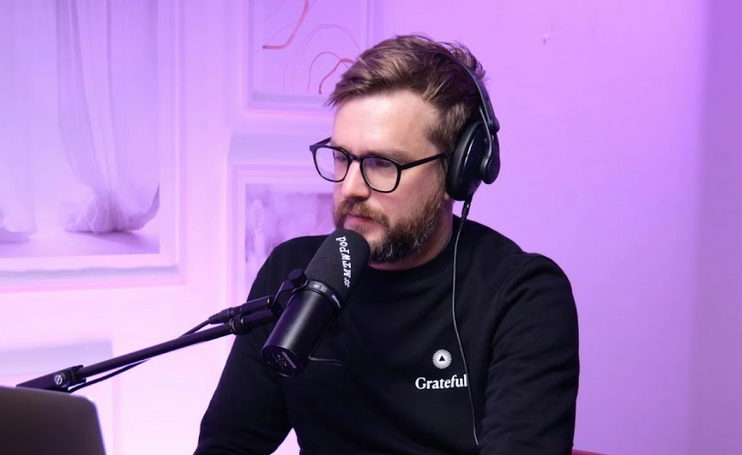
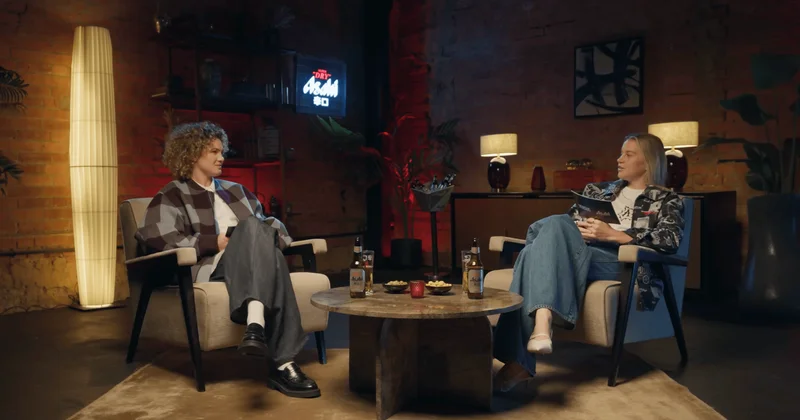
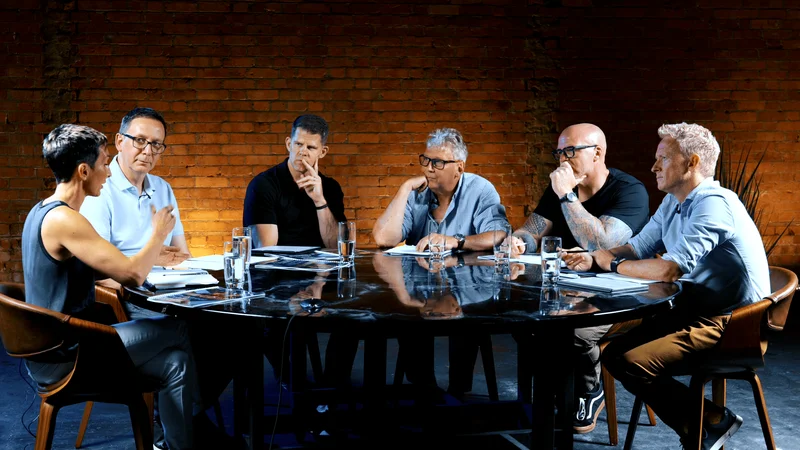
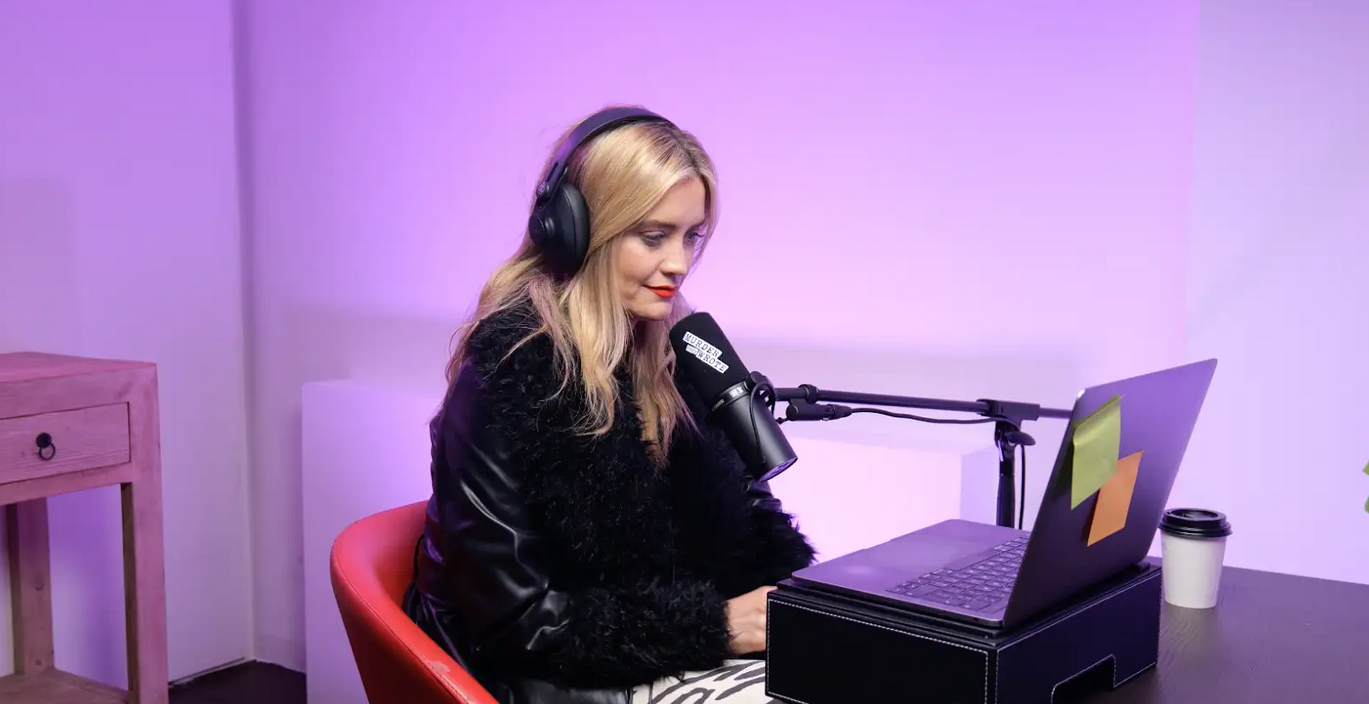
See the 'Murder They Wrote' podcast setup used by Laura Whitmore and Iain Stirling from BBC at Finchley Studio (Gathering setup). Watch Murder They Wrote at BBc sound , Spotify , Apple podcasts , Youtube , Instagram , Amazon music
Book this setup for your podcast
1.2 Geographical Distribution and Its Strategic Implications
The physical location of podcast studios in London is not arbitrary but reflects a strategic positioning to serve key client bases. A significant concentration of studios is found within the city's primary creative and business districts. Shoreditch, Hoxton, and Old Street form a major hub, hosting providers such as Premiere Podcast Studios, Acast, and Podshop.12 This area is a nexus for technology companies, media agencies, and a dense population of creative professionals.
Other key clusters include London Bridge, home to Outset Studio 2, and King's Cross, which hosts TYX Studios within the Tileyard creative campus and the high-end Spiritland Productions.4 These central locations offer unparalleled convenience for attracting high-profile guests and serving corporate clients headquartered in the City of London or Canary Wharf.8
For the budget-conscious creator, this geographical concentration has important implications. While central studios offer prestige and accessibility, providers located outside these prime postcodes can offer substantial cost savings. Studios in North London, such as Nostars in Wood Green 14, or South London, like The Creative Digital Lab in Croydon 15, provide professional facilities at a fraction of the cost of their central London counterparts. The strategic trade-off for the user is one of convenience versus cost. A production company filming a major branded series may find the premium for a Shoreditch location justifiable, whereas an independent creator may achieve a far greater return on investment by travelling to a more peripheral, but equally well-equipped, studio.
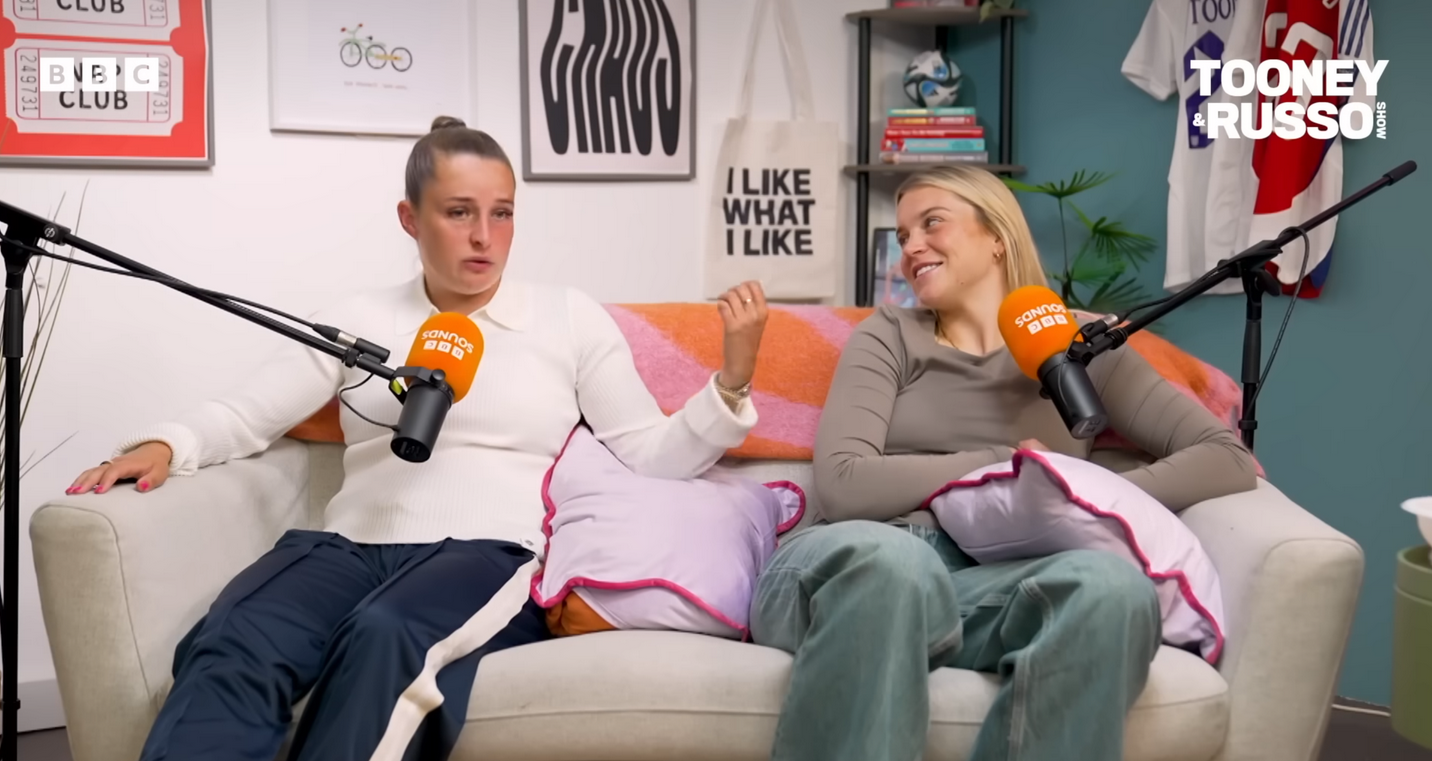
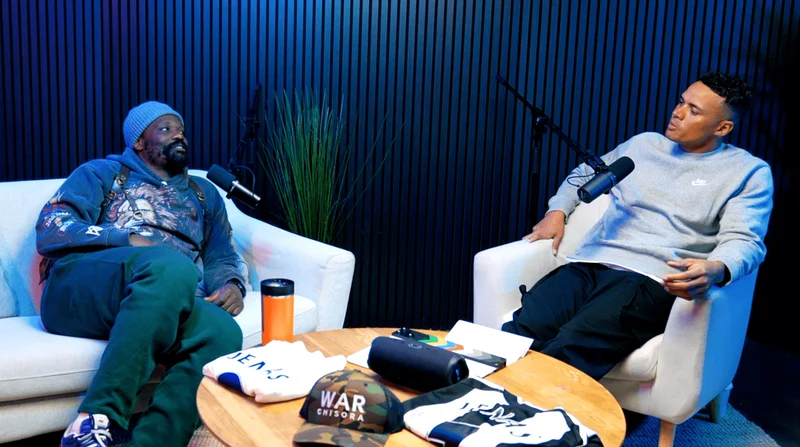
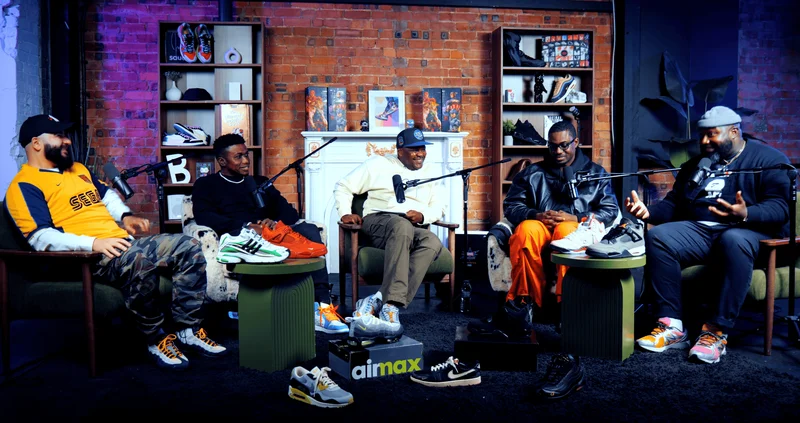
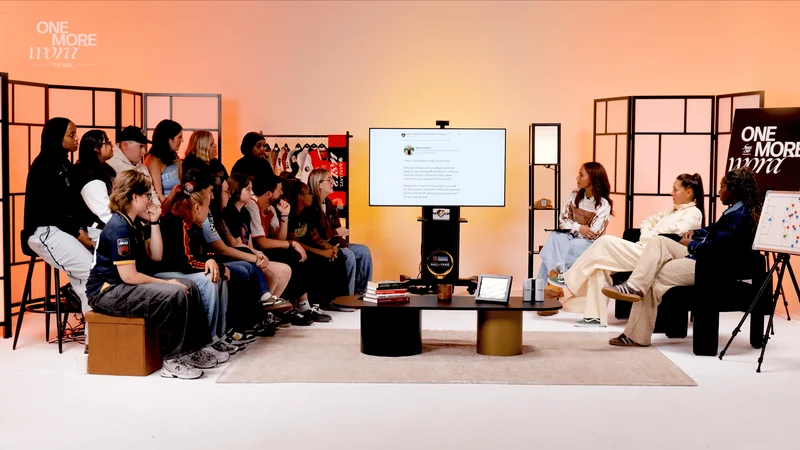
See the 'The Tooney & Russo Show' from BBC and Lionesses Ella Toone and Alessia Russoat from England national football team at Finchley Studio (Lounge setup). Book this setup for your podcast. Watch 'The Tooney & Russo Show' at BBc sound , Spotify , Youtube, Amazon music.
Book this setup for your podcast
Section 2: A Granular Analysis of Studio Rental Costs
While the market landscape provides context, the core of the decision-making process for most creators lies in the detailed financial breakdown of studio rental. The headline hourly rate is only the starting point. A comprehensive budget must account for the foundational costs of different service levels, alternative pricing structures that can offer value, and a range of ancillary fees that can significantly impact the final invoice.
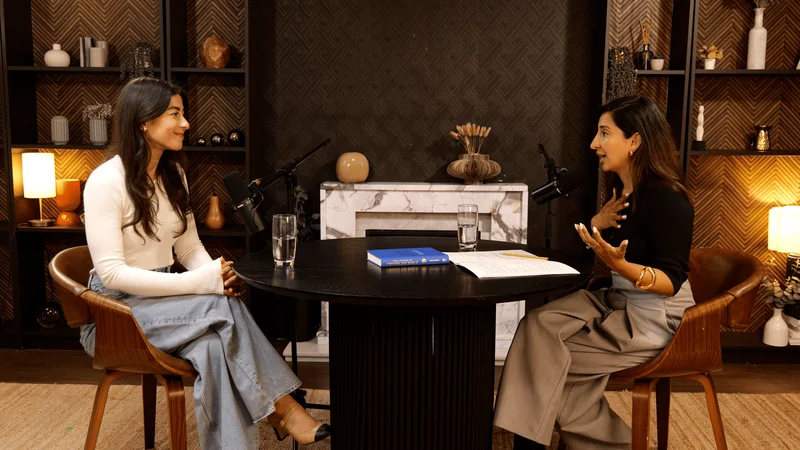
See the 'No ordinary tech podcast ' from Lloyds Banking Group by Rohit D (AI Leader for Lloyds Banking Group) and DR. shini somara (Pro-Chancellor of Brunel University) . at Finchley Studio (Lounge setup). Book this setup for your podcast.
2.1 Foundational Costs: Deconstructing Hourly Rates
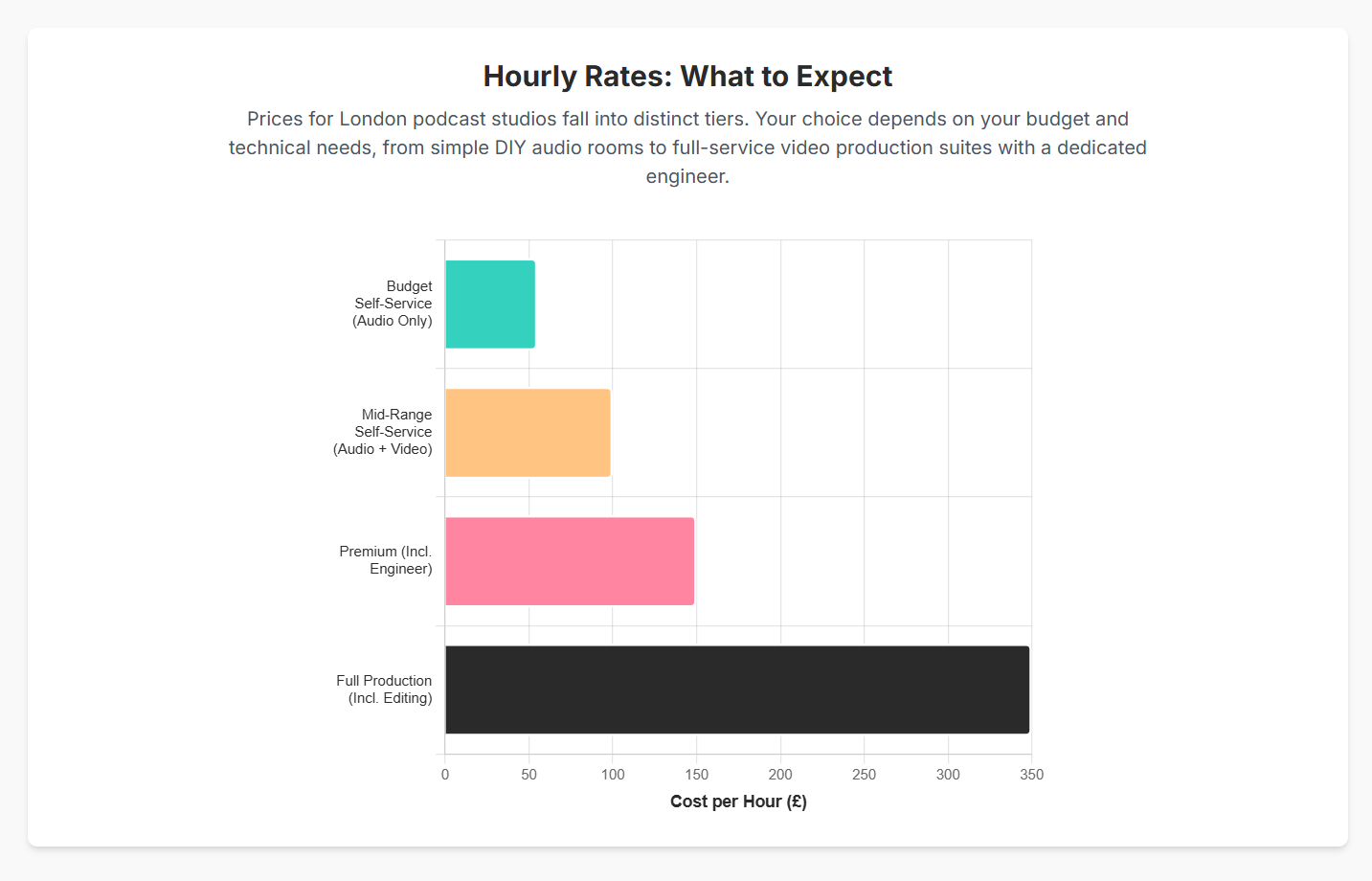
The cost of renting a studio is primarily determined by the services and equipment included. The two most significant cost drivers are the provision of video recording capabilities and the inclusion of a sound engineer or technician. Based on these variables, the market's hourly rates can be broken down into four main categories.
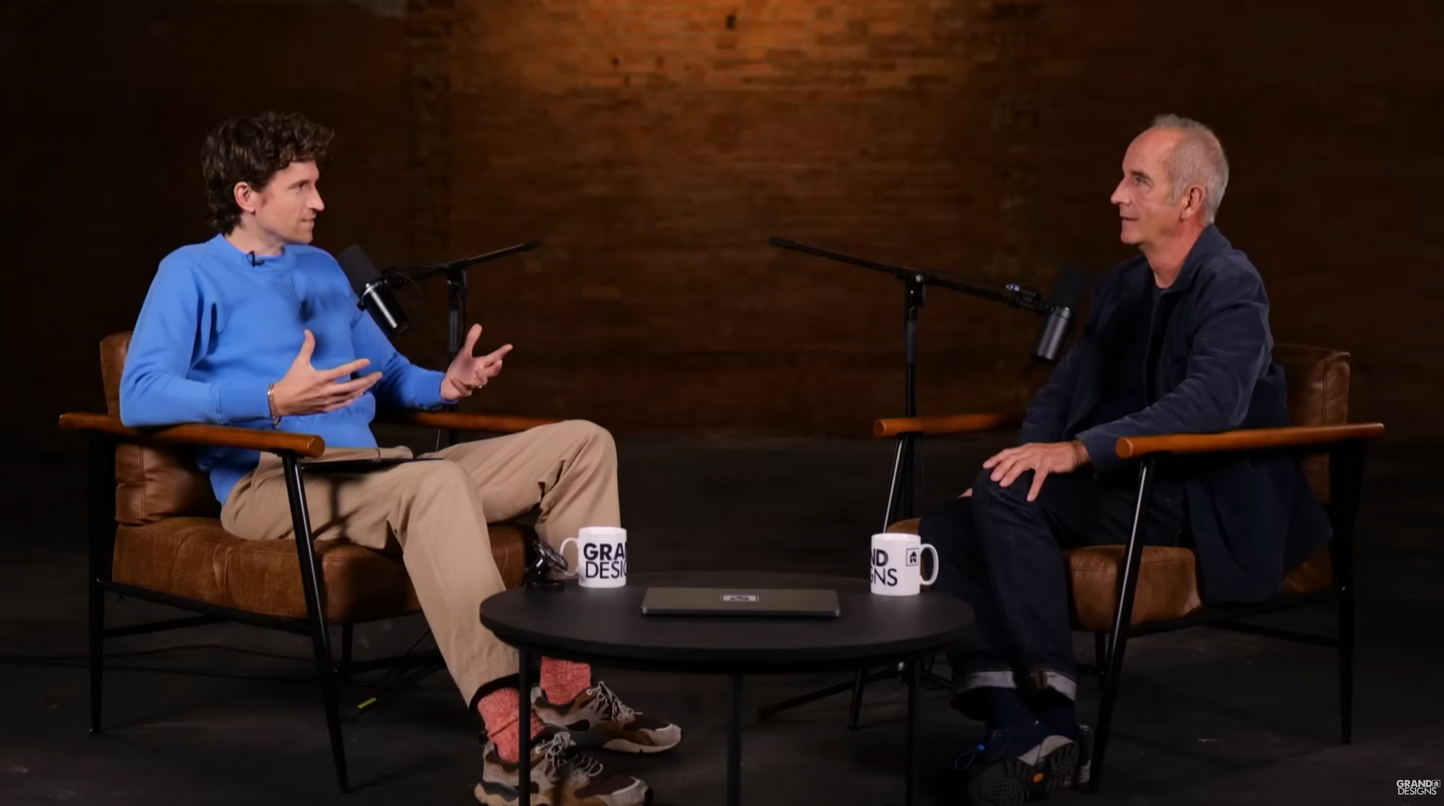
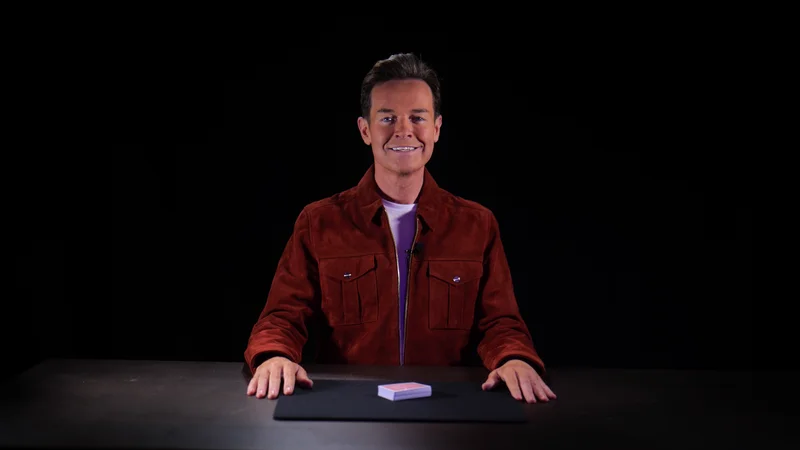
See the 'Grand designs' from Channel 4 by Kevin McCloud at Finchley Studio (Brick studio). Book this setup for your podcast.
Audio-Only (Self-Service)
This is the most accessible and affordable entry point into professional podcast recording. The creator is responsible for all technical aspects of the session. Rates for a self-service, audio-only studio typically range from £30 to £84 per hour. At the lower end, Nostars Studios offers a two-hour session for £60, equating to £30 per hour.14 Podshop provides its Studio 2 for £50 per hour (plus VAT).9 At the higher end of this category, Outset Studio's self-service audio sessions start from £84 per hour.5
Audio-Only (with Engineer)
For creators who require technical support for an audio recording, the inclusion of an engineer adds a significant premium. This service ensures optimal sound quality and allows the host to focus entirely on the conversation. Premiere Podcast Studios, which includes an engineer as standard, charges £120 per hour for an audio-only session.3 Mavro Worldwide offers a compelling value proposition in this category, providing a studio with an engineer for £50 per hour (plus VAT).19
Audio and Video (Self-Service)
The addition of video equipment—typically multiple 4K cameras, professional lighting, and a video switcher—elevates the cost, even in a self-service environment. This option is for creators who are comfortable managing a multi-camera setup. Podshop charges £100 per hour (plus VAT) for a self-service audio and video session.9 Outset Studio's equivalent offering starts at £108 per hour.5 A studio listed on the Peerspace platform shows a rate of £138 per hour for a self-service audio and video setup.20
Audio and Video (with Engineer/Videographer)
This represents the premium tier of standard studio hire, providing a fully supported audio and video recording experience. This is the standard for corporate podcasts, branded content, and productions with high-profile guests. Rates generally fall within the £100 to £190 per hour range. Podcast House and Premiere Podcast Studios both charge a flat rate of £150 per hour, which includes an engineer and a multi-camera 4K setup.1 TYX Studios, which includes a technician in all bookings, prices its two video-ready studios at £100 and £170 per hour (plus VAT).4 A high-end Peerspace listing quotes an engineered audio and video session at £188.40 per hour.20
Table 1: Comparative Hourly Rate Matrix (ex. VAT)
2.2 Alternative Pricing Structures: Packages and Memberships
Beyond simple hourly rates, many studios offer alternative pricing models designed to provide better value for regular clients or longer projects.
Block Bookings and Day Rates
For creators recording multiple episodes in one session or producing long-form content, booking a block of time can lead to significant savings. The Creative Digital Lab has a transparent tiered structure: a two-hour session is £60, but a four-hour half-day is £100, and an eight-hour full-day is £175, reducing the effective hourly rate to just £21.88 for a full day.15 Premiere Podcast Studios also offers a reduced hourly rate for any booking of four hours or more.3
Membership Models
This model is tailored to frequent creators, such as those producing weekly shows. By paying a monthly fee, members gain access to a set number of studio hours at a reduced rate or receive a discount on all bookings. The Qube offers several membership tiers, with the entry-level "House" membership providing up to six hours of studio time per month for £120.13 TYX Studios offers a "Standard Membership" for £100 per month (plus VAT) which grants a 20% discount on all bookings, a model that benefits high-volume users.4 London Podcast Studios also provides a membership option starting from £199 per month.17
Long-Term Lets
For professional production companies, media outlets, or creators producing daily content, securing exclusive, long-term access to a studio can be the most efficient option. Pirate offers monthly rentals of its studio spaces, with rates in Camden starting from £800 per month. This provides the user with a dedicated, private space for their operations.11
2.3 The Hidden Ledger: Ancillary Fees and Surcharges
A prudent financial assessment must look beyond the advertised rates to consider various additional charges that can affect the total cost.
VAT (Value Added Tax): This is the most significant and easily overlooked additional cost. At the standard UK rate of 20%, it can substantially increase the final price. Many studios, including Podshop, Mavro Worldwide, and TYX Studios, list their prices exclusive of VAT.4 It is critical for any potential client to clarify whether a quoted price is inclusive or exclusive of VAT.
Minimum Booking Times: To ensure profitability, many studios, particularly in the premium tier, impose a minimum booking period. TYX Studios, for example, requires a two-hour minimum booking for both of its studios.4 This practice prevents the studio from being occupied for very short, less profitable sessions.
File Transfer Fees: While most studios include file delivery, some may charge a fee for the service, especially if the client does not provide their own storage media. SE1 Studios, for instance, charges a £45 file transfer fee for recordings if the user does not bring their own SD cards.13 This policy incentivizes clients to be self-sufficient.
Overtime Charges: Sessions that extend beyond the pre-booked time will incur additional fees, often at a premium rate to discourage overruns. London Podcast Studios has a granular overtime policy, charging by the minute at rates starting from £1.15 per minute.7 Mavro Worldwide explicitly states that the booked session time must include all necessary time for setup, pack-down, and data transfer.19
Add-On Equipment Rental: While a standard package of microphones and cameras is included in the hire price, specialized equipment often comes at an extra cost. A Peerspace listing details a menu of add-ons, such as extra Shure SM7B microphones (£6.67 each), a camera teleprompter (£12.00), and an additional 4K camera (£20.83).20 London Podcast Studios charges £29 per hour for the use of a teleprompter.7
The pricing strategies observed in the market reveal a philosophical divide between "all-inclusive" and "a la carte" models, which serves as a key market differentiator. On one hand, providers like Premiere Podcast Studios and Podcast House champion the "all-inclusive" approach.1 Their headline rates of £150 per hour are high, but they are transparent and comprehensive, including a professional engineer, multiple 4K cameras, lighting, and the studio space. They are selling a complete, predictable, and hassle-free production package, appealing to clients who prioritize budget certainty and simplicity.
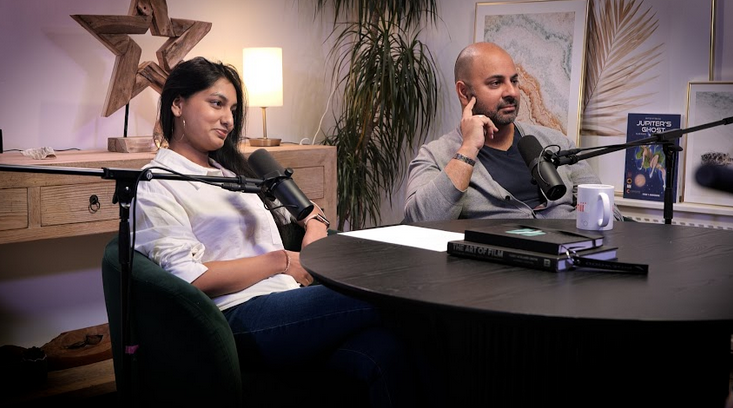
Image Credit: Finchley studio
Conversely, studios such as London Podcast Studios and many listed on Peerspace adopt an "a la carte" philosophy.7 Their base rates are often much lower and more attractive (e.g., £69 per hour), providing a lower barrier to entry. However, the final cost can escalate as the client adds necessary components from a menu of options: an operator for £49 per hour, a teleprompter for £29 per hour, or audio/video syncing for £14.99. This model requires the client to be a more sophisticated buyer, carefully calculating the total cost of their specific requirements. It offers greater flexibility and cost control for those who may not need every service, but it places the onus of budget management firmly on the client.
Section 3: The Value Equation: Equipment, Staffing, and Facilities
The hourly rate is only one side of the cost-benefit analysis. To understand the true value of a studio rental, a creator must assess the quality of the equipment, the expertise of the staff, and the overall professionalism of the recording environment. These factors directly influence the final quality of the podcast and determine whether a given price point represents a sound investment.
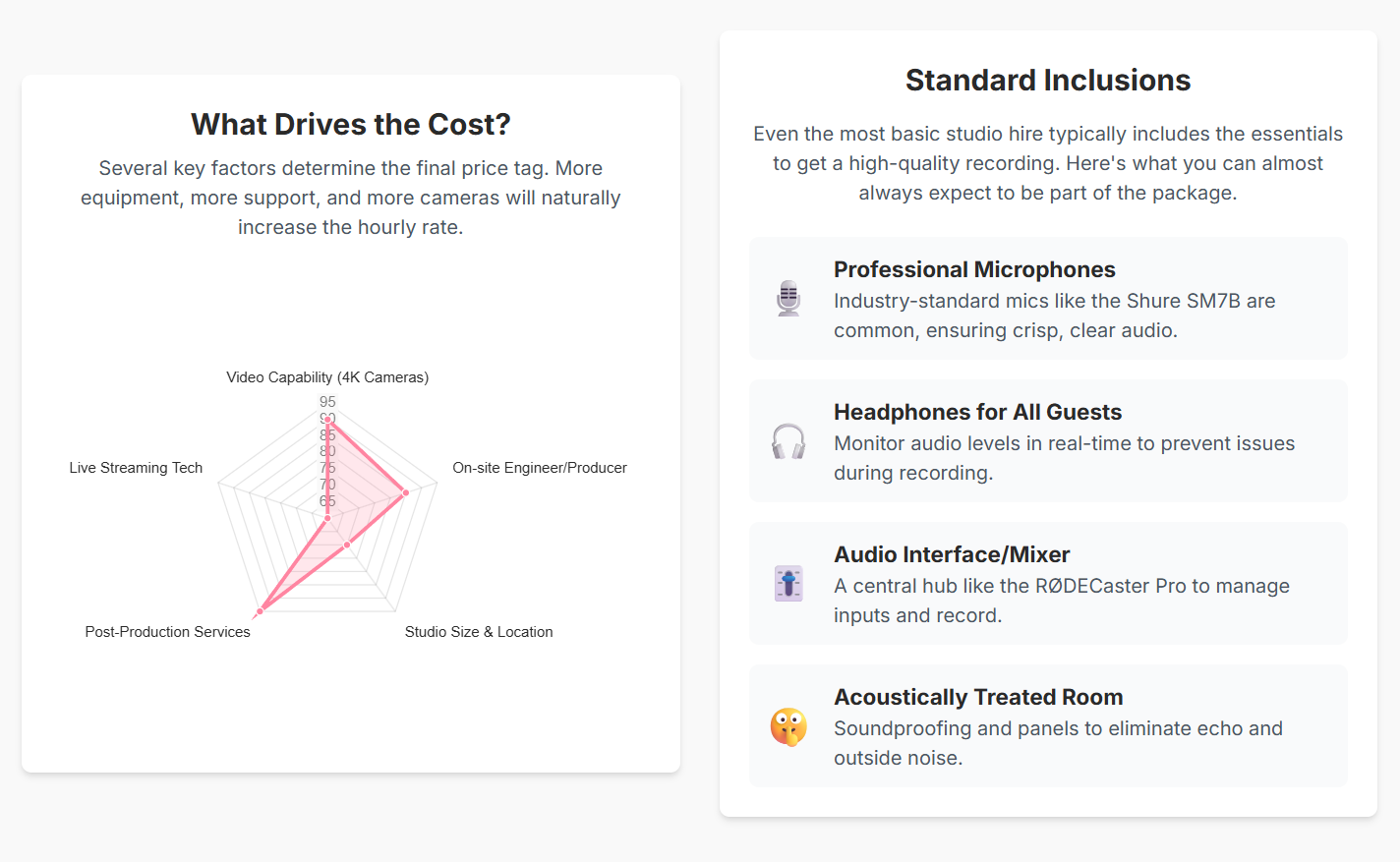
Image Credit: Finchley studio
3.1 The Technical Specification: A Guide to Standard Equipment
The quality and type of equipment provided are primary indicators of a studio's professionalism and target market.
Microphones: The Shure SM7B is widely regarded as the industry standard for professional podcasting due to its warm vocal reproduction and excellent rejection of background noise. Its presence is a hallmark of a quality studio, and it is offered by providers across all tiers, including Nostars, Outset, and Acast.2 Other professional-grade microphones commonly found are the Rode Procaster, used by Pirate Studios, and the Rode Podmic, available at Mavro Worldwide.10
Cameras: For video podcasts, or "vodcasts," 4K resolution has become the baseline professional standard. High-quality studios like TYX, Outset, and Premiere all specify the use of 4K cameras from reputable brands like Sony (A7 series), Blackmagic, and Panasonic (GH5 series).3 To signal a truly premium, broadcast-level offering, Outset Studio's flagship space highlights its "Netflix-approved Sony FR7 6K sensor cameras," a specification designed to attract high-end production clients.2
Mixing Desks: The audio mixer is the hub of the recording setup. In self-service environments, the RØDECaster Pro is a popular choice due to its integrated, user-friendly design that simplifies the recording process for non-engineers. It is a key piece of equipment at Pirate Studios and is also available at Premiere Podcast Studios.3 More advanced studios may use more complex digital mixers, operated by the in-house engineer.
Acoustics and Environment: A critical, non-negotiable component of a professional studio's value is the recording environment itself. All reputable studios emphasize that their rooms are acoustically treated and soundproofed.3 This acoustic control is what eliminates echo, reverb, and external noise, producing the clean, crisp audio that distinguishes professional content from amateur recordings. It is one of the most difficult and expensive elements to replicate in a home setup. Additional facilities, such as client waiting areas, breakout spaces, private roof terraces, and complimentary refreshments, also contribute to the overall value and professional experience.4
The specific equipment a studio chooses to list in its marketing materials serves as a powerful signifier of its market position and price point. It is not merely a technical inventory but a deliberate communication of its target audience. A studio that prominently features the "RØDECaster Pro" and "Rode Procaster mics" is signaling accessibility, plug-and-play simplicity, and a focus on the prosumer and independent creator market that values ease of use.10 In stark contrast, a studio that highlights its "Netflix-approved Sony FR7 6K sensor cameras," "32-bit lossless audio," and a "private control booth" is making a clear and unambiguous appeal to high-end production companies, advertising agencies, and corporate brands.2 This language and technical specification are designed to justify a premium price point by promising broadcast-level quality. This creates a discernible hierarchy in the market, allowing a potential client to infer a studio's quality standards and likely cost structure simply by analyzing its gear list, enabling them to pre-qualify potential options before making a formal inquiry.
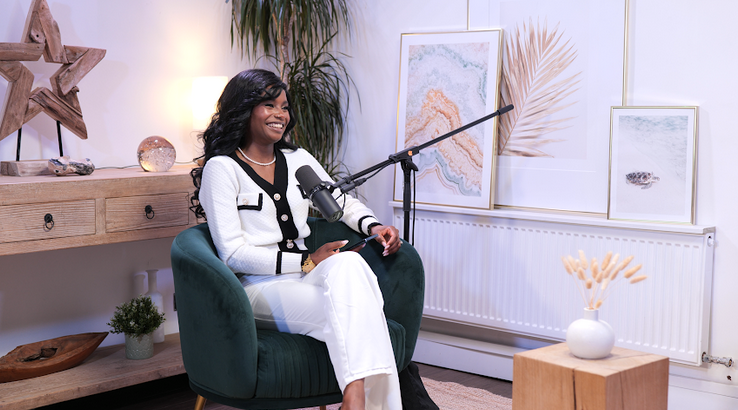
Image Credit: Finchley studio
3.2 The Human Element: The Role and Cost of an Engineer
The decision of whether to hire an engineer is one of the most significant choices a creator will make, with major implications for both budget and final product quality.
An engineer's role can vary depending on the studio and the client's needs. At a minimum, they will set up the equipment, ensure correct microphone placement, and establish optimal audio levels. In a more comprehensive capacity, they will actively monitor the recording, mix audio in real-time, switch camera angles for a video podcast (live editing), and manage the integration of remote guests or phone-ins.
Cost of Hiring an Engineer
Where an engineer is not included in the base price, their services represent a significant additional cost. London Podcast Studios charges a flat rate of £49 per hour for an operator.7 A Peerspace listing shows an "Uplift to Video Engineer Session" at a rate of £60 per hour.20 The Qube offers a very competitive rate, with sound engineers or videographers available from £24 per hour.13
Self-Service vs. Engineered: A Cost-Benefit Analysis
Opting for a self-service session is a direct cost-saving measure. However, this approach places the entire technical responsibility on the creator. This introduces a significant element of risk. User error—such as incorrect gain staging leading to distorted audio, failing to press record on all devices, or poor camera framing—can compromise or even ruin an entire recording session. In such a scenario, the money saved on an engineer is lost along with the irrecoverable time and content of the session.
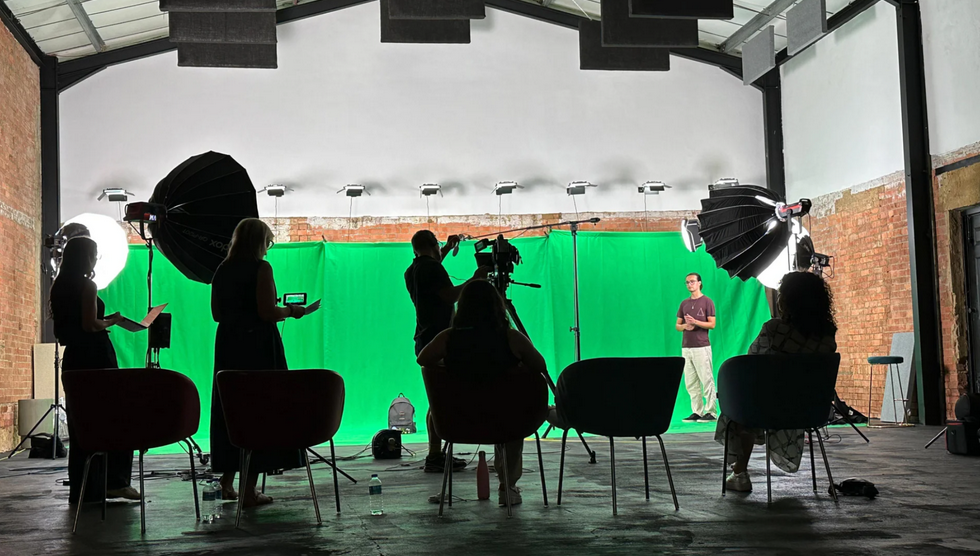
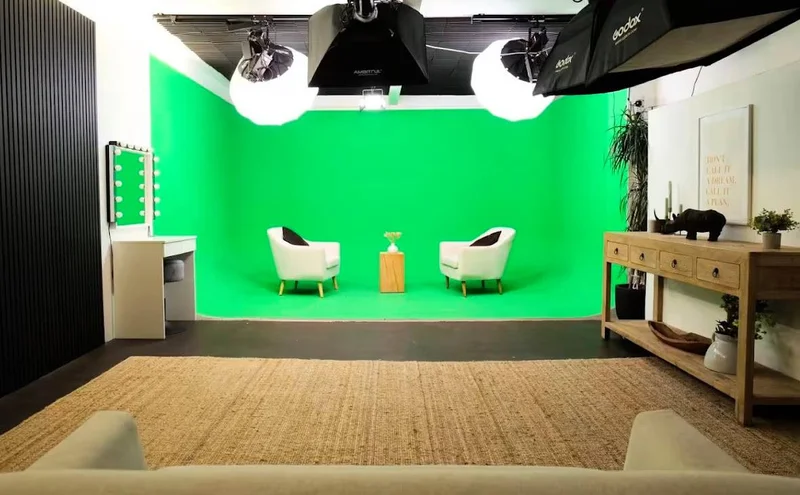
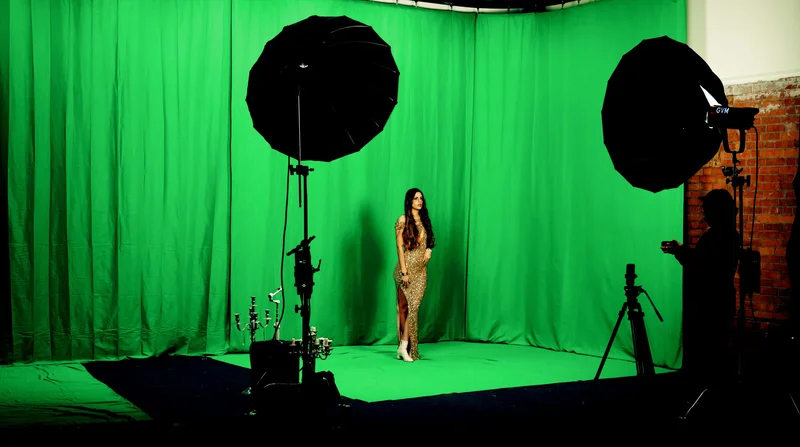
Finchley Studio (Giant Green Screen): book this setup for your podcast
Conversely, hiring an engineered session is an investment in quality assurance. The presence of a professional technician mitigates the risk of technical failure and ensures the recording is of the highest possible quality. More importantly, it liberates the creator and their guests from technical concerns, allowing them to focus exclusively on delivering their best performance and creating compelling content. For high-stakes recordings, such as interviews with VIP guests, sponsored content, or a flagship branded series, the cost of an engineer is not just a fee but a crucial form of production insurance.
Section 4: Beyond the Recording: Post-Production and Ancillary Service Costs
A comprehensive budget for a podcast must extend beyond the time spent in the recording studio. The raw audio and video files are merely the starting point. Post-production is the critical phase where these raw materials are refined into a polished, professional final product. Many studios now offer these services in-house, providing a streamlined workflow but also introducing another layer of cost to consider.
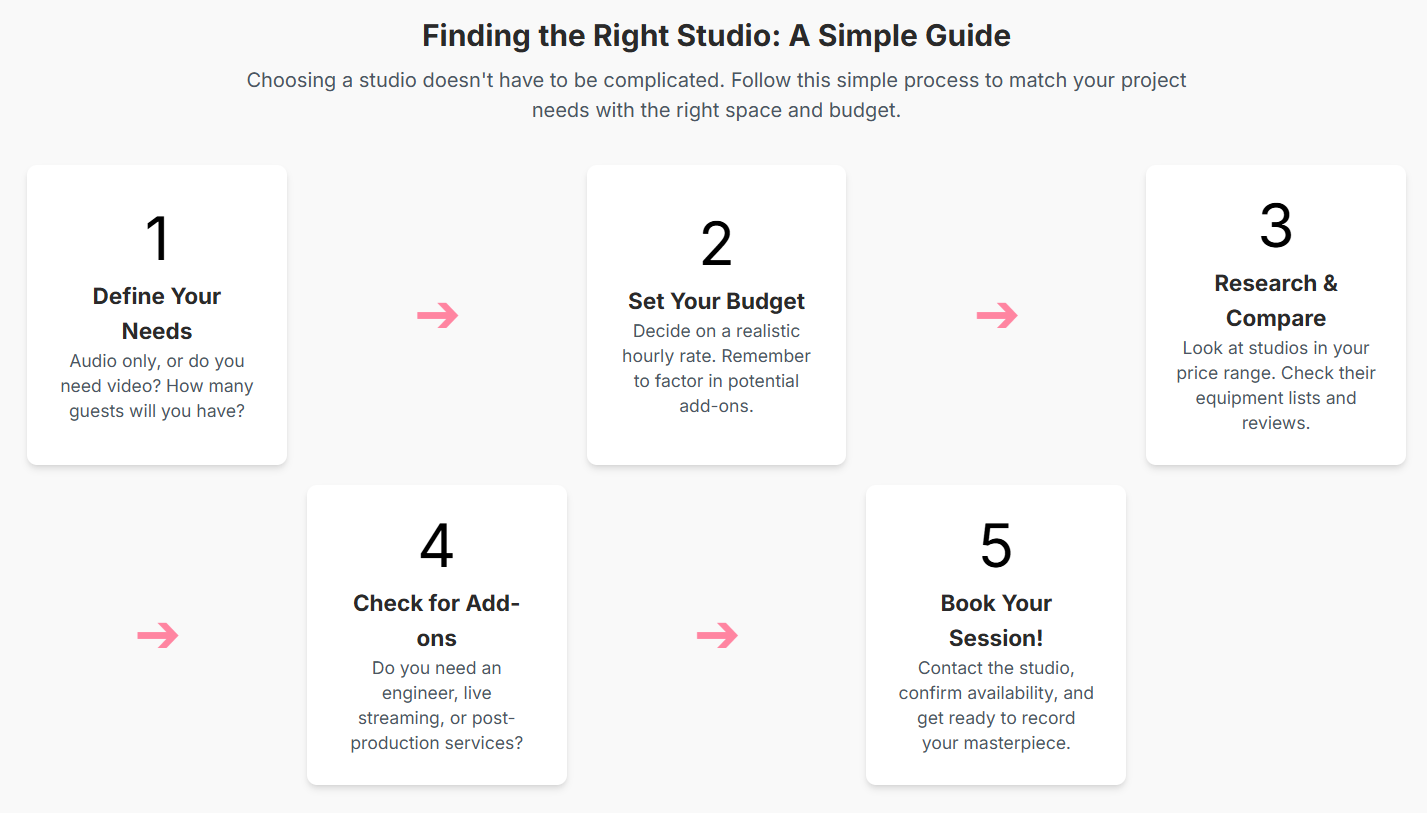
Image Credit: Finchley studio
4.1 Editing, Mixing, and Mastering
This is the foundational stage of post-production, essential for transforming a raw recording into a listenable and engaging episode.
Audio Editing: This process involves removing mistakes, "ums" and "ahs," long pauses, and false starts. It also includes mixing the various audio tracks (e.g., multiple hosts, guests, intro/outro music) to ensure consistent volume levels, reducing background noise, and applying equalization (EQ) and compression to enhance vocal clarity and presence. London Podcast Studios offers a clear pricing structure for this service, charging £49 for a one-hour audio episode.7 Mavro Worldwide prices its audio post-production at £60 per hour of recorded material.19
Video Editing: This is a more complex and time-consuming process. It includes all the elements of audio editing, plus synchronizing audio with multiple camera angles, cutting between the different shots to create a dynamic viewing experience, applying color correction and grading to ensure a consistent and professional look, and adding on-screen graphics, titles, and logos. The cost reflects this increased complexity. London Podcast Studios charges £99 for a one-hour video episode, or a bundled rate of £129 for combined audio and video editing.7 Premiere Podcast Studios offers a full suite of editing services, including colour grading and customised branding, with prices starting from £90 per hour.3
Social Media Clips: Creating short, engaging clips from the main episode is a vital part of modern content marketing. These shareable assets are key to promoting the podcast on platforms like TikTok, Instagram Reels, and LinkedIn. Studios have recognized this need and offer it as a specific service. London Podcast Studios, for example, charges £29 for each 60-second social media clip it produces.7 This is a high-value service that helps creators maximize the return on their initial recording investment.
The growing emphasis on post-production services, particularly the specific pricing for "Social Media Clips," points to a crucial trend in modern content strategy: "content atomization." The long-form podcast episode is no longer viewed as the sole end product. Instead, it serves as the central "atom" or raw material from which a multitude of smaller content assets are created. These assets—short video clips, audiograms, quote graphics, blog posts—are then distributed across various platforms to drive awareness and funnel audiences back to the main episode. Studios are increasingly positioning themselves to facilitate this entire workflow, moving from being simple recording spaces to integrated production partners. This creates a powerful flywheel effect for creators: the more they invest in atomizing their content, the greater their potential audience reach, which in turn justifies a greater initial investment in high-quality studio production. For anyone budgeting for a podcast, this reframes the financial model. The true cost of producing a successful episode is not just the £150 for two hours of studio time, but potentially an additional £100 to £200 for the essential post-production work required to make that content discoverable in a crowded digital landscape.
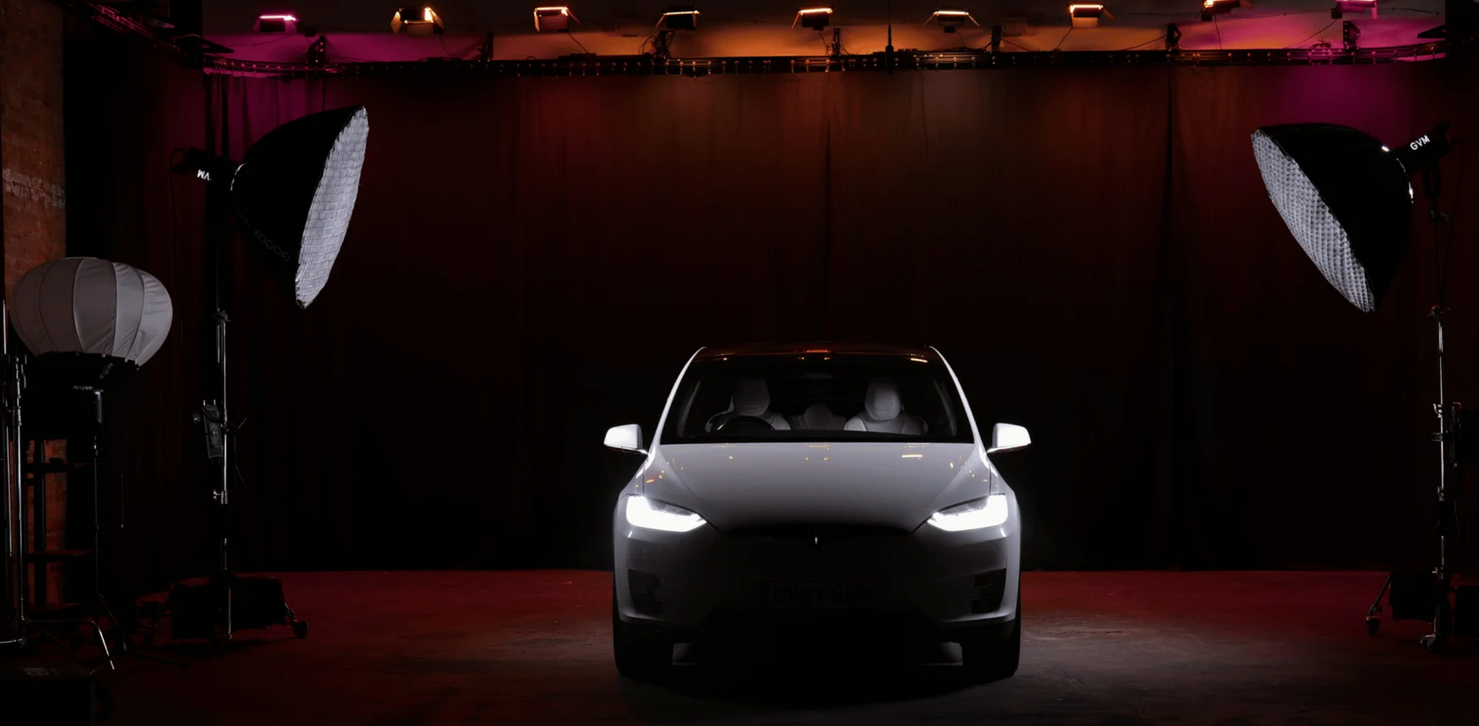
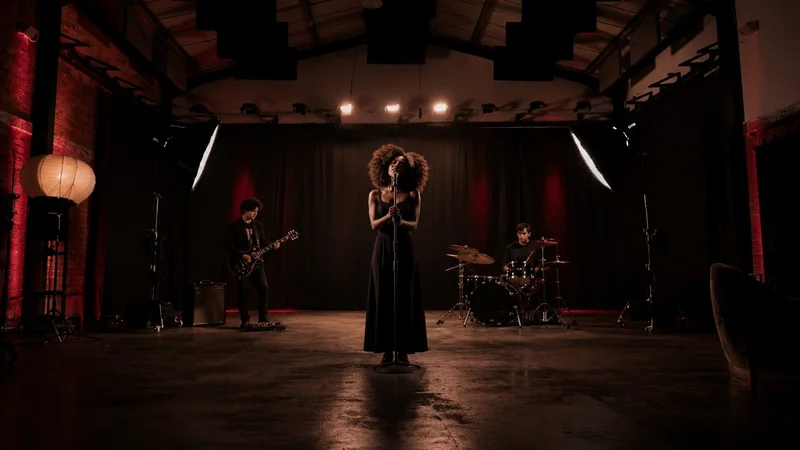
Finchley Studio (Giant Blackout Set): book this setup for your podcast
4.2 Advanced Production Services
Beyond standard editing, many studios offer more advanced production capabilities to meet the evolving demands of content creation.
Live Streaming: Broadcasting a podcast live to platforms like YouTube, Facebook, or Twitch adds a layer of audience engagement and immediacy. This requires specialized hardware (video switchers like the ATEM Mini), stable high-speed internet, and a technician to manage the live broadcast. Outset Studio lists live streaming services starting from £158 per hour.5 London Podcast Studios offers a package for live streaming or live-editing with an operator for £129 per hour, which allows the creator to leave the studio with a fully edited multi-camera video file immediately after the session.7
Remote Guest Integration: As podcasting becomes more global, the ability to seamlessly integrate remote guests with high-quality audio and video is a crucial service. Professional studios are equipped to manage these connections, ensuring that the remote feed is stable and of the highest possible quality, far superior to a standard consumer video call. Studios like Outset and Spiritland Productions list this as a key capability.6
Full Production Packages: For businesses or creators who want a completely hands-off experience, some studios offer end-to-end production services. This can encompass the entire podcasting lifecycle, from initial concept development, scriptwriting, and guest booking, through to recording, comprehensive post-production, distribution, and social media strategy. Podcast House and iD Studios are examples of providers that offer these bespoke, full-production solutions.1 The costs for such services are highly variable and are typically quoted on a project-by-project basis.
Section 5: Market Provider Analysis: A Comparative Overview
To translate the market analysis into actionable intelligence, this section provides a comparative overview of key studio providers in London. The studios are categorized by the market segments identified in Section 1, allowing for a direct comparison of their pricing, services, and core value propositions.
Table 2: Key Provider Feature and Cost Comparison
5.1 Premium Full-Service Studios
Podcast House: Positioned at the apex of the market, Podcast House caters to the UK's biggest podcasts and celebrity hosts like Romesh Ranganathan and Jamie Laing.1 With locations in Kennington and Farringdon, it charges a flat rate of £150 per hour for a fully engineered video podcast session. Its key selling point is guaranteed broadcast quality, underscored by its use of "Netflix approved cameras" and an award-winning in-house production team for post-production.1
Premiere Podcast Studios: Located in the creative hub of Shoreditch, Premiere focuses on delivering a "concierge service" with complete pricing transparency.3 An engineer is always included in their rates of £120 per hour for audio-only and £150 per hour for audio and video. They offer discounts for block bookings over four hours and provide distinct visual setups like their 'Fireside' and 'Desk' studios to suit different brand aesthetics.3
TYX Studios: Situated within the Tileyard creative community near King's Cross, TYX offers a high-end, creative-led environment.18 A technician is included with every booking for its two studios, priced at £100 and £170 per hour (plus VAT), with a two-hour minimum.4 TYX also fosters a community feel with membership options, co-working spaces, and a range of high-end ancillary services like Dolby Atmos mixing.4
5.2 Flexible and Self-Service Networks
Pirate Studios: With multiple locations across London in areas like Camden, Hackney, and Notting Hill, Pirate is the leading provider of 24/7 self-service studio space.10 Their model is built on providing standardized, easy-to-use podcasting booths equipped with RØDECaster Pro units, allowing creators to record independently at any time. While specific hourly rates are not detailed in the research, the model is designed for affordability and flexibility, appealing to creators who are technically self-sufficient.10 They also offer long-term monthly lets for dedicated use.11
Acast Studios: Located in Hoxton, Acast has created a hub for podcasters that includes five high-spec recording studios and ground-floor co-working space.12 Operating a strict "BYOP" (bring your own producer) model, they offer very competitive introductory rates, with one studio starting at just £49 per hour. However, access to some studios is initially exclusive to podcasters hosted on the Acast platform. They also have a partnership with Amazon Music to provide free studio time to emerging creators.12
5.3 Mid-Range and Value-Oriented Studios
Outset Studio: With professional spaces in London Bridge and Hoxton, Outset offers a clear, tiered pricing system that provides flexibility for creators.2 Self-service audio-only sessions start at £84 per hour, while self-service audio and video starts at £108 per hour. They also provide fully supported sessions with a videographer and sound engineer, as well as advanced services like live streaming and full post-production, making them a versatile one-stop-shop.5
London Podcast Studios: This Whitechapel-based studio is a strong example of the "a la carte" service model. It has an attractive entry price of £69 per hour for audio-only and £89 per hour for a two-camera video setup.8 Clients can then add services as needed, such as an operator for £49 per hour or social media clips for £29 each. This allows for granular budget control and appeals to creators who know exactly what services they do and do not need.7
Podshop: With two locations near Liverpool Street, Podshop is highly convenient for City-based clients.17 It offers competitive rates, particularly for self-service sessions, with audio-only at £50 per hour (+VAT) and audio/video at £100 per hour (+VAT).9 Engineer support is available as an optional extra, and they offer a 25% discount on all weekend bookings, providing excellent value for those able to record outside of peak hours.9
5.4 Budget-Conscious Options
Nostars Studios: Located in Wood Green, North London, Nostars offers one of the best value propositions in the city. Their podcast room can be booked for as little as £30 per hour (£60 for a two-hour session).14 Crucially, this rate includes complimentary filming with a 6K Black Magic camera, a feature that would cost significantly more at almost any other studio. For budget-conscious creators who need video, Nostars is a standout option.14
The Creative Digital Lab: Situated in Croydon, this "dry hire" facility offers extremely competitive rates for those who can bring their own production team or operate independently. A half-day (4 hours) costs £100, and a full day (8 hours) is £175, bringing the hourly cost down significantly for longer sessions.15 It is an ideal choice for productions that require a professional space for an extended period but have the internal resources to manage the technical aspects.15
Section 6: Strategic Framework for Studio Selection
The extensive data and analysis presented in this report demonstrate that selecting a podcast studio is a multi-faceted decision that goes far beyond a simple price comparison. The optimal choice depends on a nuanced understanding of a project's specific needs, technical requirements, brand positioning, and budget. This final section provides a strategic framework to guide creators and brands through this decision-making process.
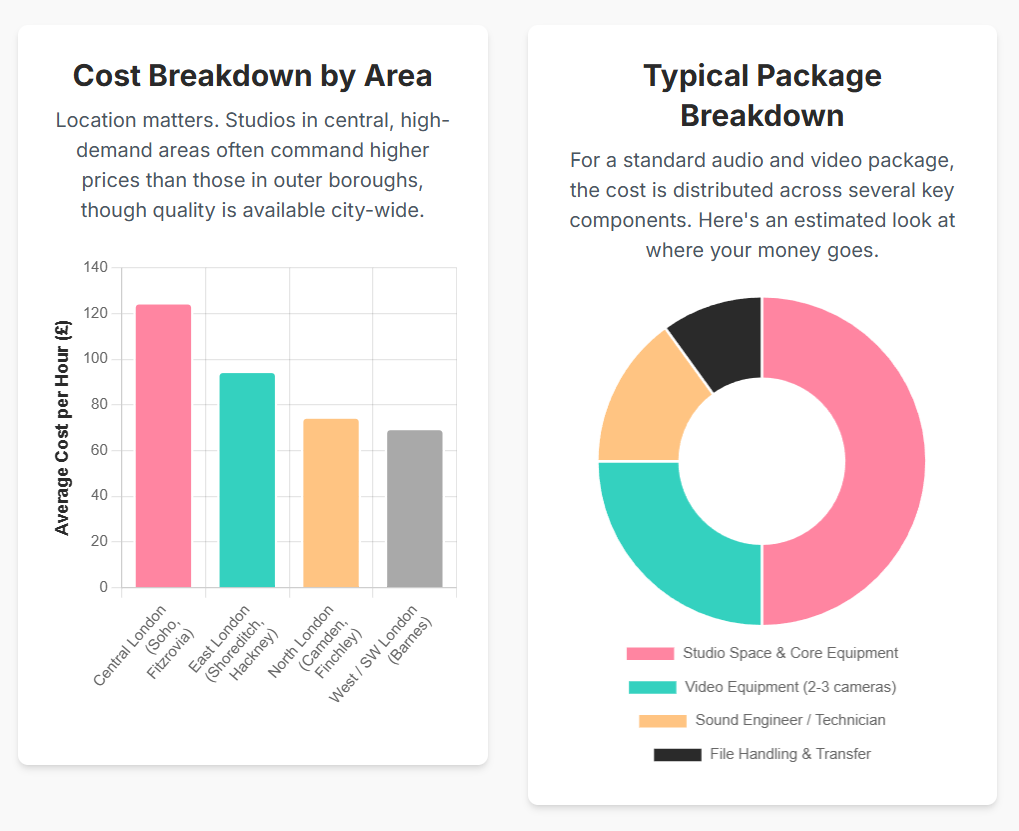
Image Credit: Finchley studio
6.1 A Needs-Assessment Matrix
Before approaching studios, a potential client should conduct a thorough internal needs assessment. Answering the following questions will create a clear project profile, which can then be used to identify the most suitable market segment and shortlist specific providers.
Format and Complexity:
Will the podcast be audio-only or will it have a video component?
What is the format: a solo monologue, a one-on-one interview, or a multi-person roundtable discussion? (This determines the number of microphones and camera angles required).
Will there be remote guests, requiring specialized integration?
Technical Proficiency:
Does the production team include individuals comfortable operating a sound mixer, setting up microphones, and managing cameras?
Is there a high degree of confidence in being able to troubleshoot technical issues under pressure during a recording session?
Or is the priority to have an expert on hand to manage all technical aspects, ensuring a risk-free recording?
Brand Perception and Aesthetics:
Is the podcast for a premium brand where the physical environment of the studio must reflect a high-end, professional image for guests and for on-camera visuals?
Is a central London location with easy transport links essential for attracting high-profile guests?
Or is a functional, clean, and professional-looking space sufficient, regardless of its location or prestige?
Frequency and Duration:
Is this a one-off recording or part of a recurring series (e.g., weekly, bi-weekly)? (This will determine if a membership or block booking model is more cost-effective).
What is the typical duration of a recording session, including setup and pack-down time? (This will influence whether a studio with a minimum booking period is suitable).
Budget and Post-Production:
What is the total, all-inclusive budget per episode?
Does this budget account for VAT, potential overtime, and other ancillary fees?
Crucially, does the budget allocate sufficient funds for post-production services like audio/video editing and the creation of social media assets?
6.2 Cost-Benefit Scenarios: Illustrative Case Studies
Applying the needs-assessment framework to common creator profiles illustrates how different studios serve distinct needs.
"The Bootstrapped Solo Creator"
Profile: A new creator launching a weekly audio-only interview podcast. The primary constraints are budget and a need for consistent quality. They are technically competent and comfortable managing their own recording sessions.
Recommendation: The most cost-effective strategy would be to leverage a membership model at a self-service network or block-book at a budget-friendly studio. A membership at The Qube 13 or regular bookings at Nostars Studios 14 would be ideal. The focus is on minimizing the recurring hourly cost while gaining access to a professional acoustic environment.
Projected Cost Per Episode: £30 - £60 for studio hire. Post-production would likely be handled by the creator themselves to minimize costs.
"The SME Branded Content Series"
Profile: A small or medium-sized enterprise producing a bi-weekly video podcast featuring industry experts and clients. The podcast must reflect the company's professionalism. The internal team is focused on content, not technology, so a degree of technical support is required to ensure quality and reliability.
Recommendation: A mid-range studio that offers a balance of quality, professionalism, and cost control is the best fit. Studios like Outset or Podshop, where an engineer can be added as an optional extra, are perfect.6 This allows the SME to have professional support during the recording without committing to the highest price tier. For a slightly higher budget and a guarantee of a high-end experience, a premium studio like Premiere Podcast Studios would also be a strong choice.3
Projected Cost Per Episode: £200 - £400. This would typically cover a 1.5-hour engineered video session and a basic professional edit.
"The High-Production Vodcast"
Profile: A major brand or media company producing a weekly, multi-camera video show with A-list guests. The production values must be of broadcast quality, and the entire experience for the host and guests must be seamless and premium. Budget is secondary to quality and brand safety.
Recommendation: A premium, full-service "concierge" studio is the only viable option. Providers like Podcast House, TYX Studios, or Spiritland Productions are designed for this market.1 The cost is justified by the guaranteed broadcast-quality output, the expertise of the in-house engineers and producers, the high-end equipment, and the premium environment suitable for accommodating VIPs.
Projected Cost Per Episode: £500 - £800+. This would encompass a 2-hour session at a premium studio and a comprehensive post-production package, including multi-camera video editing, colour grading, sound design, and the creation of multiple social media assets.
6.3 Final Recommendations and Market Outlook
The analysis of the 2025 London podcast studio market leads to a clear concluding recommendation: there is no single "best" or "cheapest" studio. The optimal choice is entirely contingent on the creator's specific project profile, as defined by the needs-assessment matrix. The most critical decision point in the London market is the trade-off between the direct cost savings of a self-service model and the quality assurance and risk mitigation provided by an engineered session.
See the 'Murder They Wrote' podcast setup used by Laura Whitmore and Iain Stirling from BBC at Finchley Studio (Gathering setup). Watch Murder They Wrote at BBc sound , Spotify , Apple podcasts , Youtube , Instagram , Amazon music
Book this setup for your podcast
Final Recommendations:
Prioritize a Needs Assessment: Before researching any studios, creators must first define their technical skills, brand requirements, format, and total production budget.
Budget Holistically: The studio hire fee is only one component of the total cost. A realistic budget must include VAT, a contingency for overtime, and, most importantly, a significant allocation for post-production services.
Align Model with Skillset: Technically proficient creators on a budget should focus on the self-service networks. Those for whom content is the sole focus and quality cannot be compromised should invest in an engineered session, viewing the additional cost as production insurance.
Market Outlook:
The London podcast studio market is poised for continued evolution. The growth in the flexible, self-service sector is likely to accelerate as the technical proficiency of the average creator increases and as technology continues to make professional equipment more user-friendly. At the premium end of the market, competition will be driven by investments in cutting-edge technology (e.g., 6K and 8K cameras, advanced live streaming capabilities) and the quality of the end-to-end client experience.
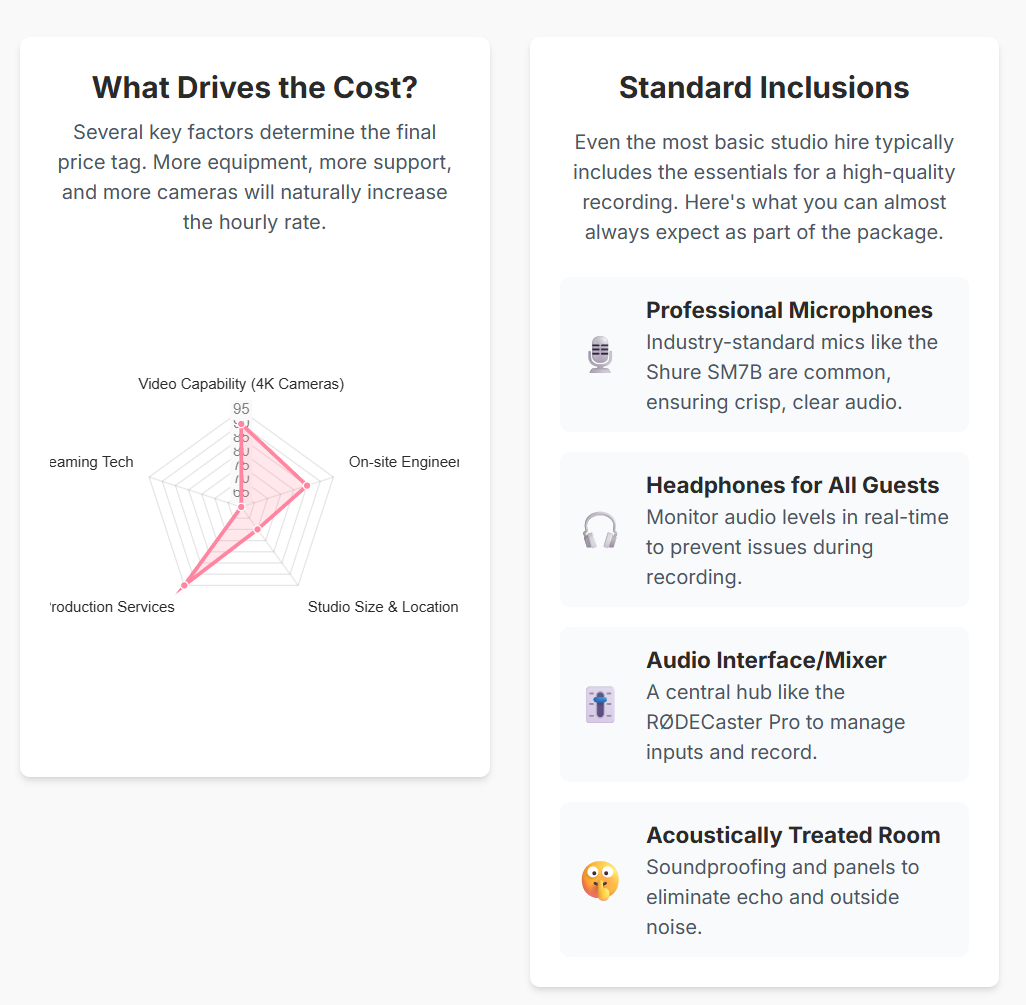
Image Credit: Finchley studio
For the consumer, this dynamic landscape means an ever-expanding range of choices. However, it also necessitates greater due diligence to understand the true value and total cost of each offering. The inexorable rise of video as a standard, rather than optional, component of podcasting will continue to be the primary force shaping market development and cost structures for the foreseeable future.
## Dry Hire: Room Only
This is the most affordable option, where you are essentially just renting the professionally soundproofed and acoustically treated space. You are expected to bring and operate all of your own equipment.
Typical Cost: £50 - £90 per hour
## Standard Hire: Studio & Equipment
This is the most popular choice for podcasters. The rental fee includes the fully equipped studio with access to all the professional gear, including broadcast-quality microphones, 4K cameras, and cinematic lighting. This package usually includes initial setup support from a technician.
Typical Cost: £100 - £200 per hour
## Full-Service Hire: Studio, Equipment & Engineer
This is the premium, all-inclusive package that provides a completely stress-free experience. It includes the room, all the equipment, and a dedicated professional engineer who will manage the entire technical side of your recording from start to finish.
Typical Cost: £150 - £300+ per hour
## Additional Costs to Consider
It's important to remember that the hourly rental fee covers the recording session itself. Post-production services are typically a separate cost. For example, a professional Video Editing Service can be added to your package to transform your raw footage into a polished final episode.
The cost of renting a studio like Finchley Studio is an investment in quality and efficiency, ensuring your podcast meets the highest professional standards.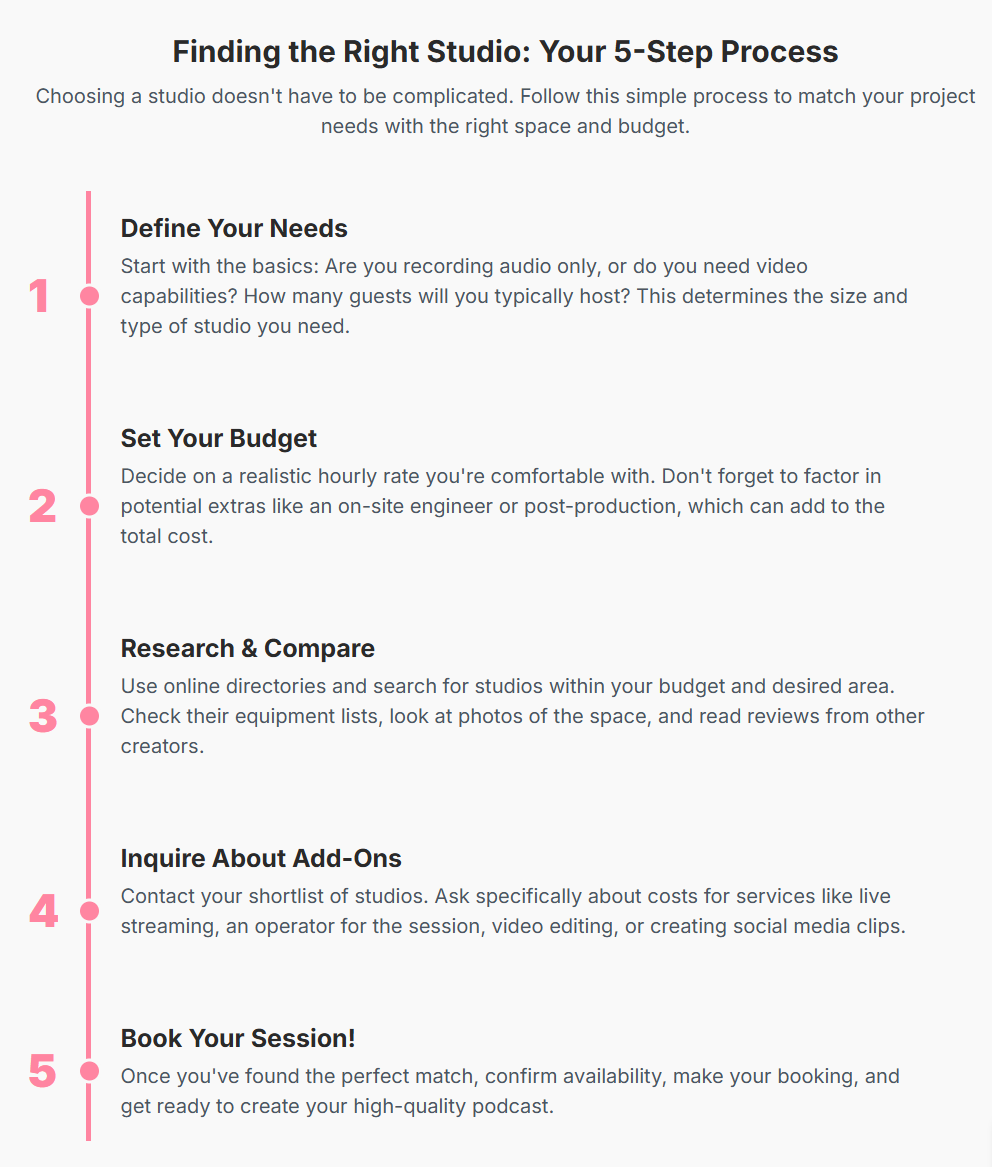
Image Credit: Finchley studio
Find the Right Price and Package at Finchley Studio
Now that you have an idea of the costs, you can find the perfect solution for your budget and needs at Finchley Studio. We offer competitive pricing across our range of services, ensuring you get the best value for your investment. Our commitment to quality is why organisations like the BBC and Lloyds Bank trust us with their productions. See what our clients are saying in our Google reviews and on Trustpilot.
We offer a diverse range of meticulously designed sets, available with different service packages to fit your needs:
Our professional Video Editing Service offers a complete post-production solution for just £299 per episode. The team at Finchley Studio is here to ensure your vision is realised perfectly.
Ready to find the perfect package for your podcast? See why top creators rate Finchley Studio as their go-to production partner.
Find Us Easily: Our studio is conveniently located just a two-minute walk from Finchley Central on the Northern Line and adjacent to the Travelodge London Finchley. We offer one free parking space per booking.
what3words: orders.yards.jokes
Stay Connected: Follow our journey and see behind-the-scenes content on our social media channels:
Have questions? Check our FAQ or get in touch directly.
WhatsApp: +447587827200
Phone: +447587827200
Email: [email protected]
Works cited
Podcast House | Podcast Recording Studio in Central London, UK ..., accessed September 11, 2025, https://www.podcasthouse.uk/
Podcast Studio Hire in London Bridge, accessed September 11, 2025, https://outsetstudio.com/london-podcast-studio-in-central-london/
Podcast Studio For Hire in Central London | Shoreditch, accessed September 11, 2025, https://premierepodcaststudios.com/
London Podcast Studios | Podcast Recording From £80/hr!, accessed September 11, 2025, https://tyxstudios.com/podcast-studio-london
Outset Studio | Podcast Studios in London & Manchester, accessed September 11, 2025, https://outsetstudio.com/
Podcast Studio Hire | London & Manchester - Outset Studio, accessed September 11, 2025, https://outsetstudio.com/podcast-studio-hire/
Bookings & Pricing — London Podcast Studio | The Home of Podcasting!, accessed September 11, 2025, https://www.londonpodcaststudios.co.uk/london-podcast-studio-hire-bookings
London Podcast Studio | Podcast Recording From £69/hr!, accessed September 11, 2025, https://www.londonpodcaststudios.co.uk/
Podcast Studio in London, Podcast Studio Hire London - Podshop, accessed September 11, 2025, https://www.podshoponline.co.uk/services/podcast-studio
London Podcast Studios - 24/7 Studio Hire | Pirate Studios, accessed September 11, 2025, https://pirate.com/en/podcast-studios/london/
Camden North London Podcast Studios | Podcast Recording Studios, accessed September 11, 2025, https://pirate.com/en/podcast-studios/london-camden/
Acast Studios London, accessed September 11, 2025, https://www.acast.com/en/acast-studios-london
10 Best Podcast Studios London to Hire in 2025 - Saspod, accessed September 11, 2025, https://saspod.com/blog/post/best-podcast-studios-london
Podcast Studio London, Hire Podcast Room From 30/hr - Nostars Studios, accessed September 11, 2025, https://nostars.uk/podcast/
Podcast Recording Studio | Get 50% Off Your First Booking - The Creative Digital Lab, accessed September 11, 2025, https://www.creativedigitallab.co.uk/lab-facilities/podcast-studio
Affordable Podcast Locations in London 2025 | SL - Silverstein Locations, accessed September 11, 2025, https://www.silversteinlocations.com/journal/affordable-podcasto-locations-in-london-2025
7 podcast studios in London for your next recording - Fallow, Field & Mason, accessed September 11, 2025, https://www.fallowfieldmason.com/blog/8-podcast-studios-in-london-for-your-next-recording
Best Podcasting Studios in London | Our Picks for 2025 - TYX Studios, accessed September 11, 2025, https://tyxstudios.com/blog/best-podcast-studios-in-london
Podcast Studio Hire From £60p/h in London | Mavro Worldwide |, accessed September 11, 2025, https://www.mavroworldwide.com/podcaststudiohire-black
Podcast Recording Studios, London | Production - Peerspace, accessed September 11, 2025, https://www.peerspace.com/pages/listings/657c7193045c32000e2dcb98
East London Recording Studios | PIRATE.COM, accessed September 11, 2025, https://pirate.com/en/recording-studios/east-london/
London Podcast Studio | Studio Hire in King's Cross - Spiritland Productions, accessed September 11, 2025, https://spiritlandproductions.com/studio/
iD Studios, accessed September 11, 2025, https://idpodcaststudio.co.uk/
Music Studio Booking and Rates | Hire Studio | Nostars, accessed September 11, 2025, https://nostars.uk/rates/