Part 1: The New Topography of Podcasting: Defining the Mobile Studio
1.1 The Strategic Shift to On-Location Content
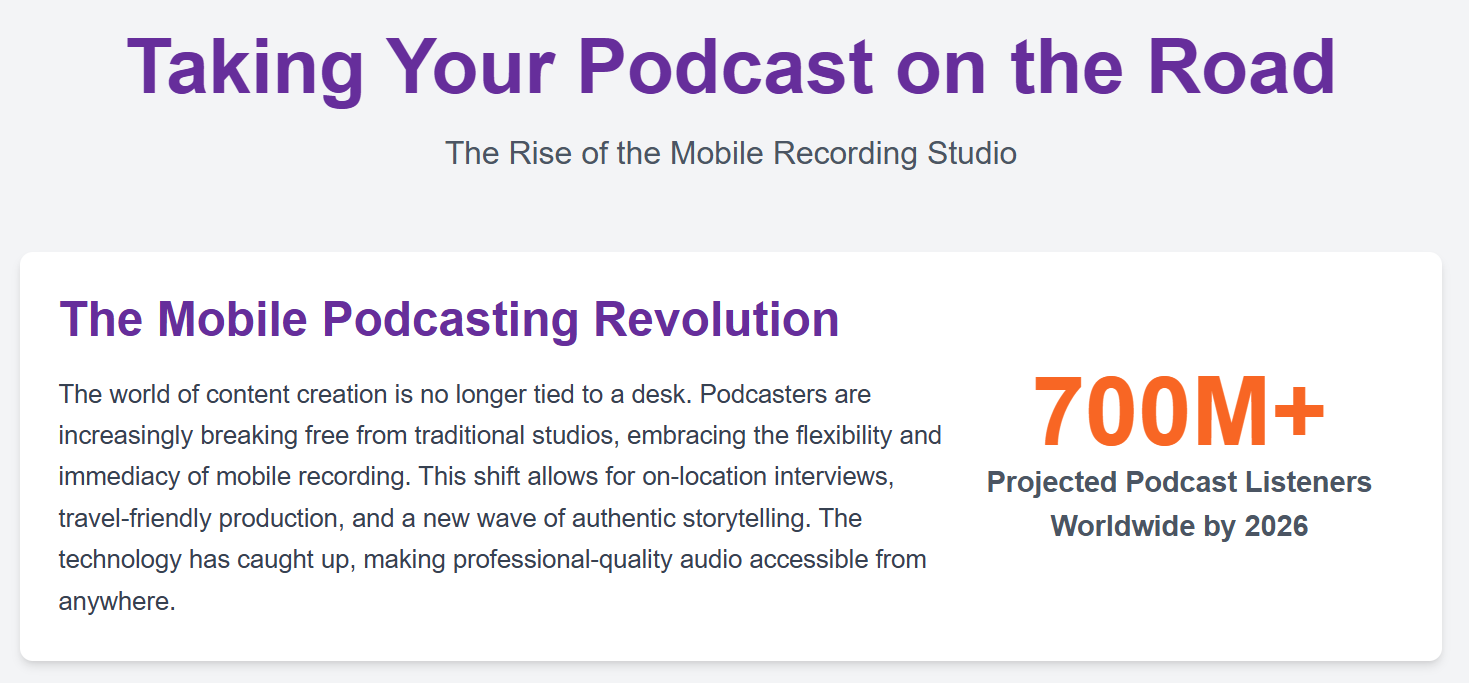
The podcasting industry has matured far beyond its origins in static, studio-bound recording. A significant strategic shift is underway, driven by audience demand for authenticity and a creator's need to access unique content and high-caliber guests. Mobile production is not merely a trend but a strategic response, transforming the podcast from a disembodied audio file into an immersive experience rooted in a specific place and time.
This move to on-location content is predicated on several value propositions. By untethering from a fixed studio, podcasters can "bring your studio to your guests," facilitating "more natural, engaging interviews" with high-profile individuals who may be otherwise inaccessible.1 Furthermore, it allows for environmental storytelling, where the "sonic personality" of a location—be it a bustling city center, a quiet rural setting, or the floor of a live event—becomes an integral part of the narrative.1 This provides a layer of transparency and immersion that a sterile studio environment cannot replicate.3
1.2 The Mobility Spectrum: A Foundational Taxonomy
The term "mobile podcast studio" is commercially ambiguous, used to describe everything from a custom-built trailer to a backpack full of gear.1 To conduct a meaningful analysis, it is essential to establish a clear taxonomy. The market for mobile production can be segmented into three primary modalities, each with distinct technical, logistical, and financial implications.
Modality 1: The "Mobile Studio" (Asset-Vehicle Model)
This model represents the most significant capital investment. It is defined as a dedicated, self-contained production vehicle (such as a durable, customizable trailer or van) where the vehicle is the studio.1
Key Attributes: The vehicle is treated as a "blank canvas".1 It is purpose-built to provide a "soundproof, fully equipped space" 1, offering a professional and repeatable recording environment that can be transported to any location. This model emphasizes customization, allowing for integrated, high-quality audio production, multi-camera video setups, and client-facing amenities.
Use Case: This model is ideal for brands, media companies, or event producers who require a consistent, high-quality, and often branded studio presence while traveling to different cities, festivals, conferences, or on-location interviews.1
Modality 2: The "Portable Setup" (Carry-Kit Model)
This model defines the "podcast-in-a-suitcase" or "field recording setup".4
Key Attributes: This approach is, by nature, "compact, portable, and usually pretty minimalistic".4 It is a collection of essential, lightweight gear designed to be "easy to set up and tear down on a whim".5 Unlike the vehicle model, this setup does not provide its own acoustic environment; it relies entirely on the existing acoustics of the recording location, for better or worse.8
Use Case: This is the model for journalists, "van life" podcasters, documentarians, and traveling creators. The primary priorities are mobility, flexibility, and the ability to capture authentic sound in unpredictable environments, rather than achieving perfect acoustic control.2
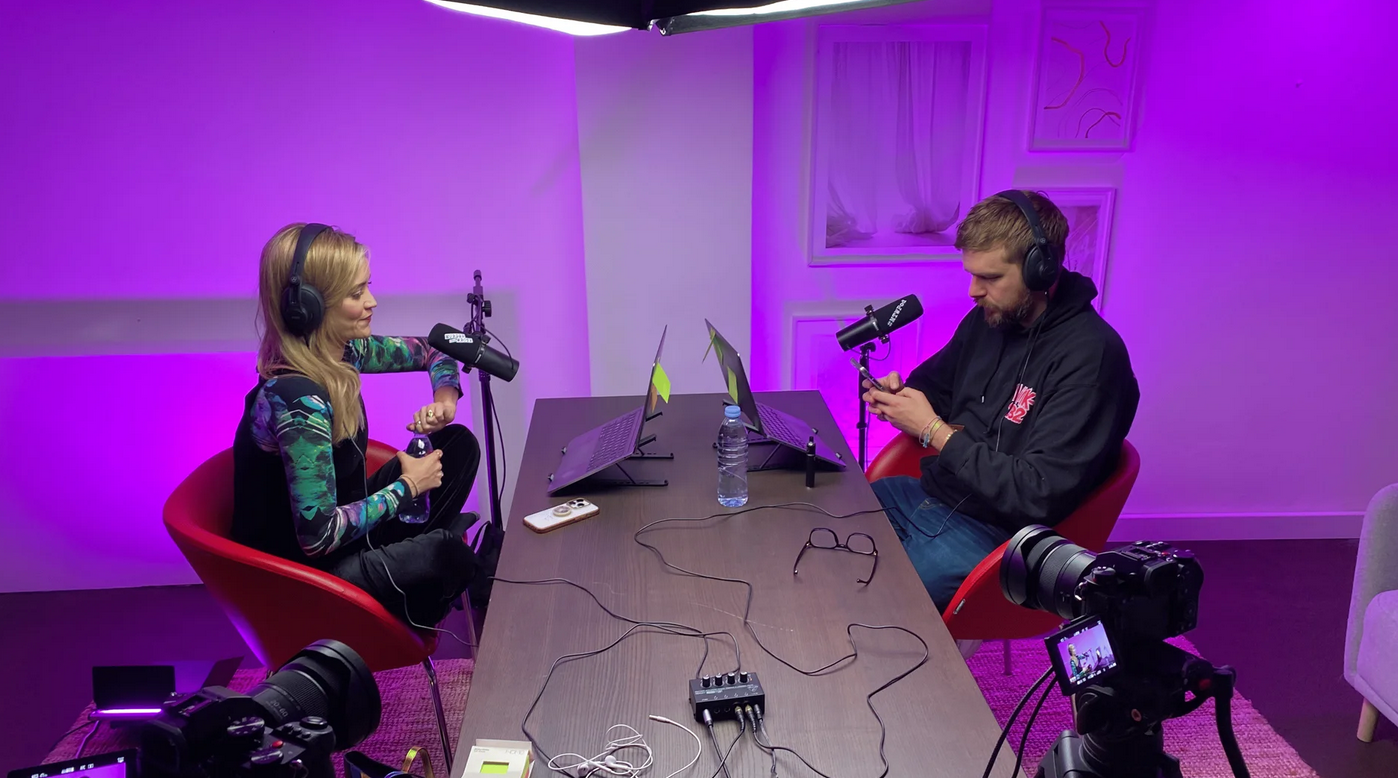
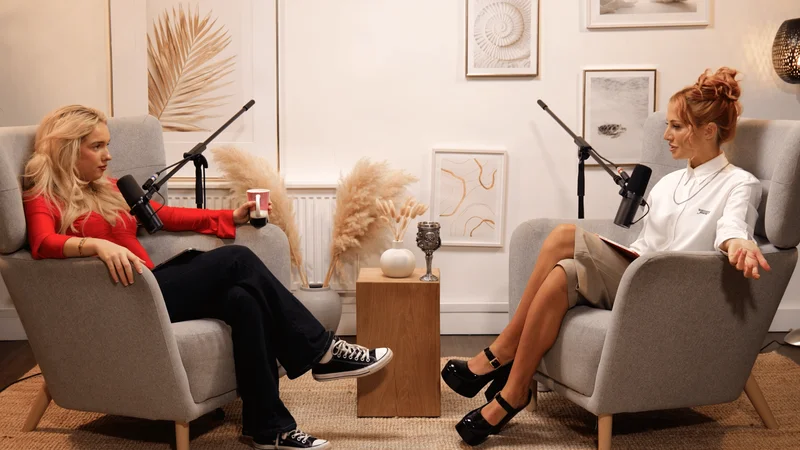
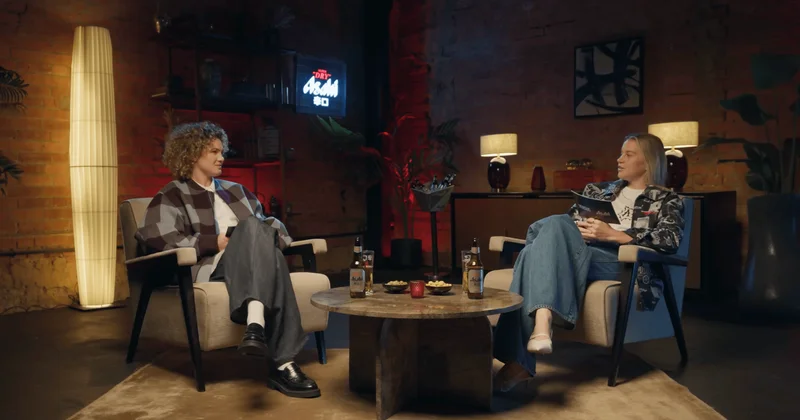
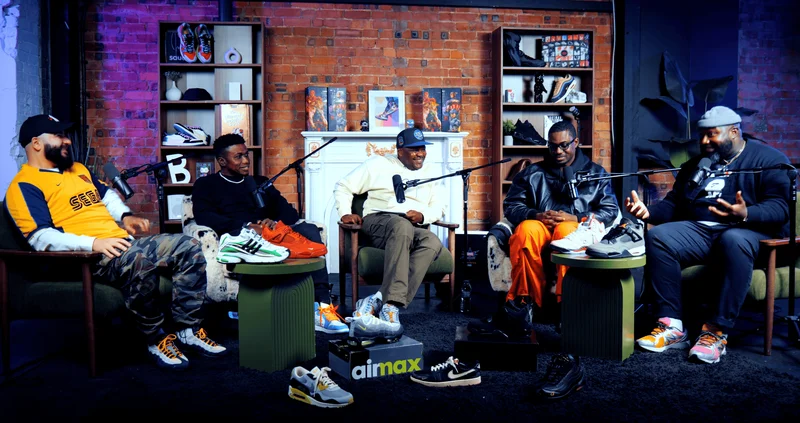
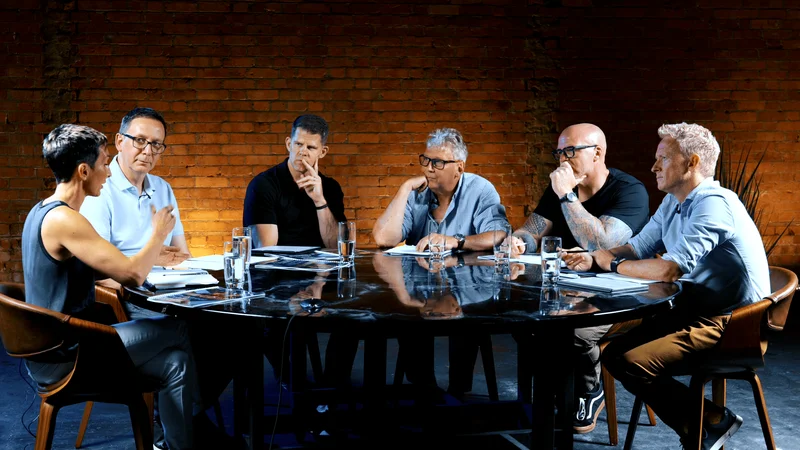
See the 'Murder They Wrote' podcast setup used by Laura Whitmore and Iain Stirling from BBC at Finchley Studio (Gathering setup). Watch Murder They Wrote at BBc sound , Spotify , Apple podcasts , Youtube , Instagram , Amazon music
Book this setup for your podcast
Modality 3: The "Pop-Up Studio" (Service-Hire Model)
This model defines the professional, on-demand rental service where a production company brings a studio-quality setup and technical crew to a client's chosen location.10
Key Attributes: This is an operational expenditure (Opex) model that outsources all technical and logistical challenges. The service can scale from a simple "mobile audio podcast production kit" 12 to a full, "acoustically treated booth" complete with 4K multi-camera production, custom branding, and on-site engineering support.10
Use Case: This is the preferred solution for corporate clients, brand activations at conferences, and live events.10 It is also used by podcasters who require a one-time, high-production-value recording at a specific location but lack the equipment or technical expertise, or wish to avoid the capital investment of a "Build" model.10
1.3 The Core Conflict: Control vs. Authenticity
The choice between these three modalities is not about determining which is "best," but about navigating the central, unavoidable conflict of mobile production: the trade-off between acoustic control and environmental authenticity.
A traditional, fixed studio offers complete control over acoustics, power, and interruptions, but it is a sterile environment, disconnected from the world.13 At the other extreme, a "Portable Setup" (Modality 2) used in a dynamic field setting 2 offers maximum authenticity—capturing the "sonic personality" of a location—but provides almost no control over unpredictable background noise, power, or other logistical issues.8
The other two models are strategic compromises. The "Mobile Studio" (Modality 1) is an attempt to move a controlled environment (the soundproof van) to an authentic location.1 The "Pop-Up Studio" (Modality 3) is an attempt to temporarily create a controlled environment (an acoustic booth) within an authentic, and often chaotic, location, such as a conference floor.10
This report will analyze the "Hire," "Build," and "Carry" models through this framework, examining the trade-offs each solution presents in managing the critical balance between production quality and content authenticity.
Part 2: The Service Model: "Hire" — Analysis of On-Location Podcast Production
2.1 The Value Proposition: Offloading Logistical Risk
The "Hire" model's primary value proposition is the professional-level management and offloading of logistical risk. Recording on location presents a gauntlet of challenges: "environmental noise, unreliable power sources, limited space, and setup time constraints".8 These factors can "impact your recording quality" 8 and, in a high-stakes setting, lead to a total loss of content.
The service model directly solves this by providing not just high-end equipment, but also, crucially, the "expert crew" 10, "experienced videographers and sound engineers" 10, or "on-site technician" 10 to manage the entire process. This includes delivery, setup, operation, and de-rigging.10 The client is paying a premium 10 to guarantee a professional, high-quality outcome, making this the ideal solution for corporate, B2B, or live-streamed events where technical failure is not an option.10
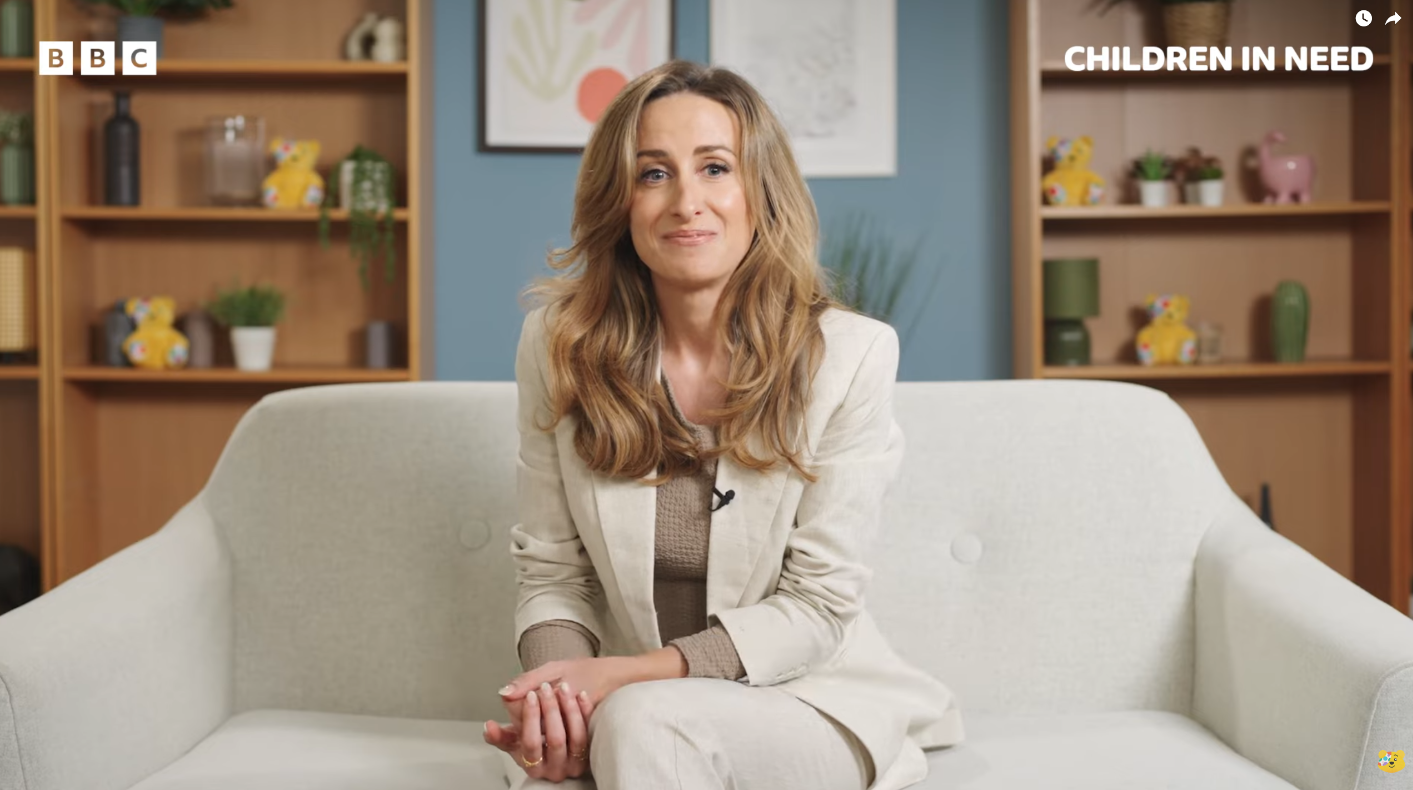
See the 'BBC Children in Need' podcast setup used by Dr Julie from BBC at Finchley Studio (Lounge setup). Book this setup for your podcast
2.2 Market Case Study: The London "Pop-Up" Ecosystem
An analysis of the on-location podcast service market in London provides a representative model of this mature, service-based ecosystem.7 A close examination of offerings from various providers reveals a segmented market designed to meet diverse client needs, from full-scale event production to intimate, producer-led sessions.10
2.3 Market Segmentation and Comparative Analysis
The London market can be broadly segmented into three tiers, differentiated by their service focus, technical capabilities, and pricing structure.
Tier 1: The Event Production Service (e.g., Outset Studio)
This tier is aimed at B2B clients for high-visibility events. The service is a complete, temporary studio build.
Services: Outset Studio's "POP-UP" service includes 4K, multi-camera setups (up to four angles), 32-bit WAV lossless audio capture, and full live-streaming production.10 Their key differentiator is a portable, "acoustically treated booth" that can be "custom-built" or hired, and "customized with your company logo, slogan, or visuals".10 This offering is designed to deliver "studio-quality audio in busy environments" like "events, offices, [or] exhibitions".10
Pricing: Starts from £720 for a half-day booking, which includes delivery, setup, recording, and de-rig.10
Analysis: This is a high-end B2B solution for "brand activations" or "conferences".10 The high price reflects the significant capital cost of the acoustic booth, high-end video gear, and the technical expertise required to execute a flawless live or recorded event in a challenging environment.
Tier 2: The On-Site Engineering Service (e.g., Podcast Room, Podshop)
This tier functions as a "workhorse" professional service, bringing a high-end kit and technical operator to a client's private location, such as an office or home.
Services: Podcast Room offers hourly on-location packages, including "Audio Only" (up to 6 microphones, 1-2 engineers) or "Audio & Video" (adding 2x Blackmagic 4K cameras).11 They also offer live editing and streaming, with travel included within London.11 Podshop offers a similar service with high-end Shure/RODE mics and Sony A7iii-level cameras, but emphasizes a more project-based approach, including an initial "location review" to assess acoustics.14
Pricing: This tier features transparent hourly rates or clear project-based pricing. Podcast Room charges £80 per hour (Audio) or £100 per hour (Audio/Video), with a one-hour buffer for setup/teardown.11 Podshop is Price on Application (POA) with a 3-hour minimum for audio and a 4-hour minimum for video, plus explicit travel fees for locations outside central London.14
Analysis: This is the ideal solution for corporate, C-suite, or multi-guest interviews where quality and reliability are paramount, but the spectacle of a branded booth is not required. The hourly model 11 offers flexibility, while the minimum-booking model 14 indicates a focus on more complex, full-session productions.
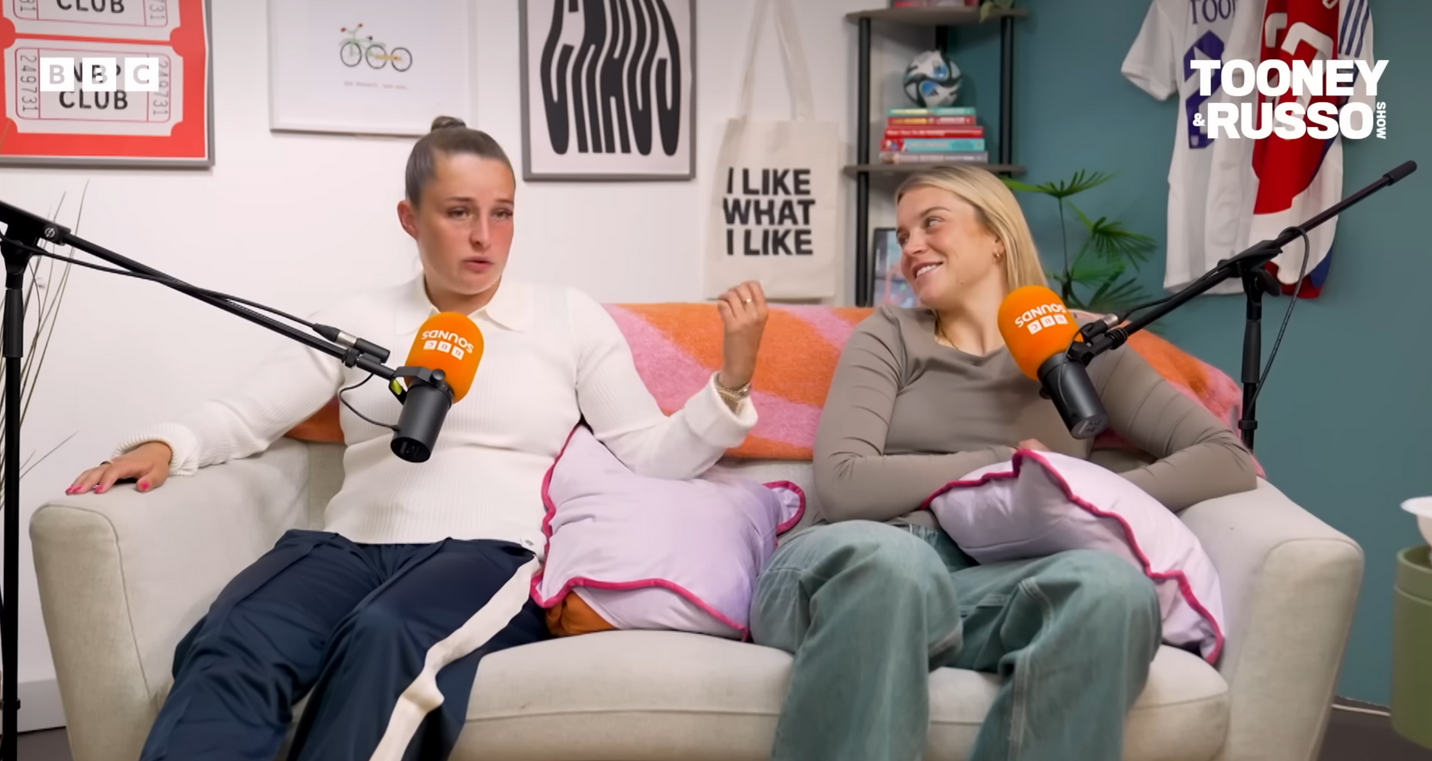
See the 'The Tooney & Russo Show' from BBC and Lionesses Ella Toone and Alessia Russoat from England national football team at Finchley Studio (Lounge setup). Book this setup for your podcast. Watch 'The Tooney & Russo Show' at BBc sound , Spotify , Youtube, Amazon music.
Book this setup for your podcast
Tier 3: The "Producer-as-Service" Model (e.g., Monkeynut, Buffoon Media)
This tier emphasizes creative and production support in addition to the technical setup.
Services: Buffoon Media's "Mobile Audio Podcast Studio" kit (for 1 host + 3 guests) includes services like "bespoke intros, outros, stings and music" and podcast hosting/submission.12 Monkeynut highlights the human element, providing an "experienced podcast producer on site" who will "guide you through the process" with "advice on delivery" and "vocal inflection".17 This service is explicitly marketed to clients who are "nervous about coming into a studio environment" or "time-pressured".17
Pricing: Typically POA, reflecting the custom, high-touch nature of the creative service.12
Analysis: This is a "white-glove" service for clients who need more than an engineer—they need a producer. The value is in the comfort, convenience, and content coaching, making it ideal for busy executives, authors, or first-time podcasters who prefer to record in their own space.17
2.4 Comparative Analysis of London On-Location Podcast Services
2.5 The "Hire" Model as a Business Strategy
The maturity of this "Hire" market demonstrates that mobile podcasting is a key tool in B2B content marketing and corporate communications. The case studies provided for on-site and remote production services show a clear B2B focus: T-Mobile created a podcast on mobile technology's impact, Cirque du Soleil used its podcast to deepen audience connection, and Lululemon created an internal podcast to unite its global staff.18
High-profile organizations like Marvel, Spotify, and TED use remote and on-location production to scale their content, engage with global guests, and tell compelling customer stories.19 This confirms that the "Hire" model is a high-value solution for brands using podcasting as a strategic tool for both external marketing and internal engagement.20
Part 3: The Asset Model: "Build" — The Dedicated Mobile Podcast Vehicle
3.1 Strategic Assessment: The Total Cost of Ownership
The "Build" model (Modality 1) represents a significant capital expenditure (Capex) and a commitment to a "total cost of ownership" approach. The primary driver for this model is the desire for total control and absolute consistency in a mobile environment. By investing in a dedicated vehicle, the creator eliminates per-use rental fees (Opex) and owns a production asset that can be deployed at any time.1 This analysis will deconstruct this model using several case studies, from low-cost DIY builds to more professional concepts.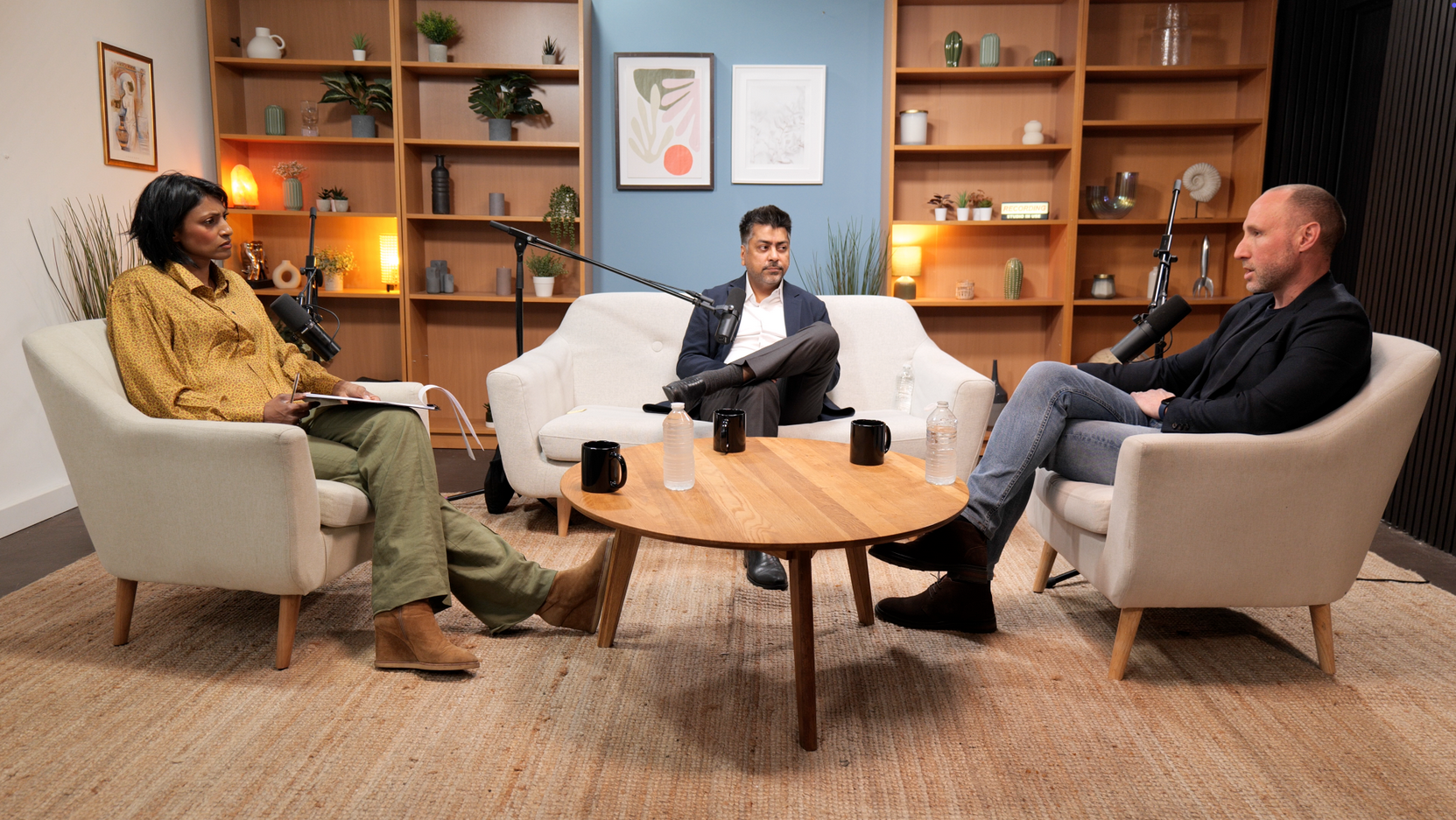
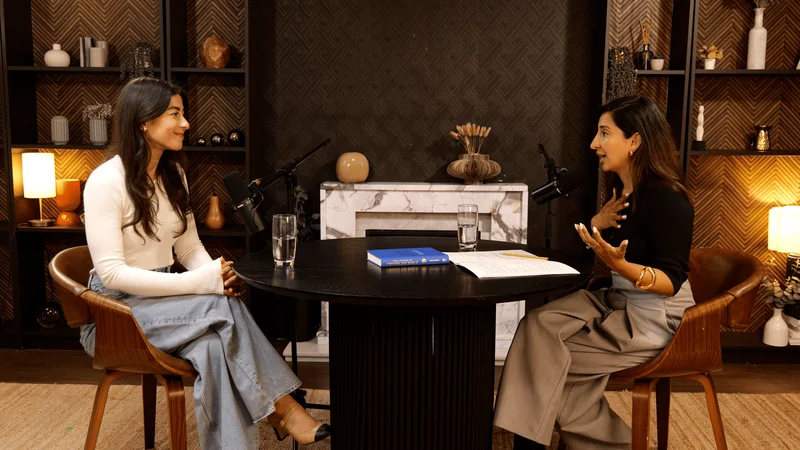
See the 'No ordinary tech podcast ' from Lloyds Banking Group by Rohit D (AI Leader for Lloyds Banking Group) and DR. shini somara (Pro-Chancellor of Brunel University) . at Finchley Studio (Lounge setup). Book this setup for your podcast.
3.2 Phase 1: Vehicle Selection and Layout
The choice of vehicle platform dictates the build's entire scope, from available space to power and acoustic limitations.
Conversion Candidates:
Trailers: Offer a "blank canvas" and can be detached, but require a separate tow vehicle.1
Vans (e.g., Renault Trafic, Ford Transit): Offer better maneuverability and "stealth" for urban recording, but space is extremely limited.23
Camper Vans: A common "van life" solution, but creates a conflict for space between living systems (beds, kitchens) and dedicated studio needs.22
Design Case Study 1: The "Minimalist" Build ("Sketchy Van Podcast") 22
Layout: This is a "podcast-in-a-van," not a "podcast van." The build is a multi-purpose "van life" conversion. The "studio" is non-permanent and must be set up for each recording: a Murphy bed is folded up, and a folding table and storage ottomans (for guest seating) are deployed.22
Audio/Video: The gear is minimal and low-cost: a single Blue Yeti USB microphone, two gifted DSLR cameras (one with a broken lens), and an iPad for the wide shot.22
Cost: Approximately $6,100, including the purchase of the van ($3,700).22
Analysis: This build prioritizes the "van life" aspect over production quality. The non-permanent setup and single USB mic represent significant compromises in audio quality and setup efficiency for the sake of a multi-purpose living space.
Design Case Study 2: The "Audio-First" Build (Renault Trafic) 23
Layout: This is a purpose-built audio studio. The studio is permanent and located in the rear of the van. Two Rode PodMic microphones are permanently mounted on articulating arms attached to the van's back doors.23
Audio/Video: The gear is professional, low-power, and robust: two (2) Rode PodMics (XLR) running into a Zoom H6 sound recorder.23 No video is mentioned.
Cost: Approximately €1,647.55 (build only).23
Analysis: This is a far more effective design. The permanent mic arms solve the critical problem of setup/teardown time. By recording directly to a Zoom H6, the build eliminates the need for a laptop, drastically reducing power consumption and removing a significant technical point of failure.
Design Case Study 3: The "Aesthetic" Build (Rental Trailer) 21
Layout: This build, documented in a 48-hour transformation, prioritized a "rental-friendly," video-first aesthetic. It featured modular couches and interchangeable decor for different "themes" (e.g., "girly," "corporate," "masculine").21
Analysis: This case study provides a critical lesson: the conflict between aesthetics and physics. The team's "rental-friendly" attempt to mount acoustic panels using industrial Velcro failed, tearing the peel-and-stick wallpaper.21 This demonstrates that effective acoustic treatment is not a non-permanent, aesthetic choice; it requires a robust, often permanent, installation.
Alternative Model: The "Podcastinator" Rolling Cart 25
Layout: A brilliant alternative to a vehicle, this "mobile studio" is built on a height-adjustable AV media cart (approx. $400).25 It was modified to permanently hold a Behringer Xenyx mixing board, a Tascam DR-07 recorder, an iPad (for intros/outros), and five (5) microphones on goosenecks.25
Analysis: This design solves the institutional mobility problem: recording in various rooms across a campus or corporate office.25 Its primary achievement is the elimination of the 30-minute setup and teardown time by having all equipment permanently wired and "ready to go".25 It is the perfect "Build" solution for indoor, multi-location use.
3.3 Phase 2: Critical Sub-system 1: Off-Grid Power Solutions
Power is the primary technical constraint of a mobile studio. Powering sensitive audio equipment, laptops, and video lights requires a stable, quiet, off-grid source. The choice of power system dictates the production's capability.
Option 1: Portable Power Station (e.g., Jackery, EcoFlow)
Analysis: This is an all-in-one solution combining a battery, a charge controller, and an inverter into one simple box.26 The "Minimalist" van build used a $300 Jackery power station and solar panel.22 This is a user-friendly, non-installation-required solution.
Limitation: This is a low-power solution.27 The Jackery 240 (240Wh) used in the case study 22 is sufficient for a low-power setup (e.g., a Zoom H6 or a laptop and a single USB mic). It will be rapidly depleted by professional gear, such as studio lighting, multi-camera rigs, or mixers with phantom power.
Option 2: Integrated DIY System (Battery + Inverter)
Analysis: This is the professional "van life" standard.28 It involves a separate, high-capacity deep cycle or LiFePo4 battery bank 29 and a pure sine wave inverter.29 Low-power "car inverters" (150-1000W) are distinct from high-power "home inverters" (1000-5000W).27 Sensitive audio and video equipment requires the clean, stable power of a pure sine wave inverter to avoid audio hum and potential damage.
Implication: The power solution must be chosen first, as it dictates all subsequent equipment choices. A podcaster who chooses a low-cost portable station 22 is simultaneously choosing to limit their production to low-power gear. A user who requires a multi-camera, multi-mic setup must invest in a high-capacity, pure-sine-wave-inverter system.
3.4 Phase 3: Critical Sub-system 2: The Acoustic Challenge
A vehicle interior is an acoustic "worst-case scenario": a small, reflective box made of parallel surfaces of glass and metal.31 This creates two distinct problems: noise ingress (external noise) and reverberation (internal echo). A successful build requires a mandatory two-stage solution.
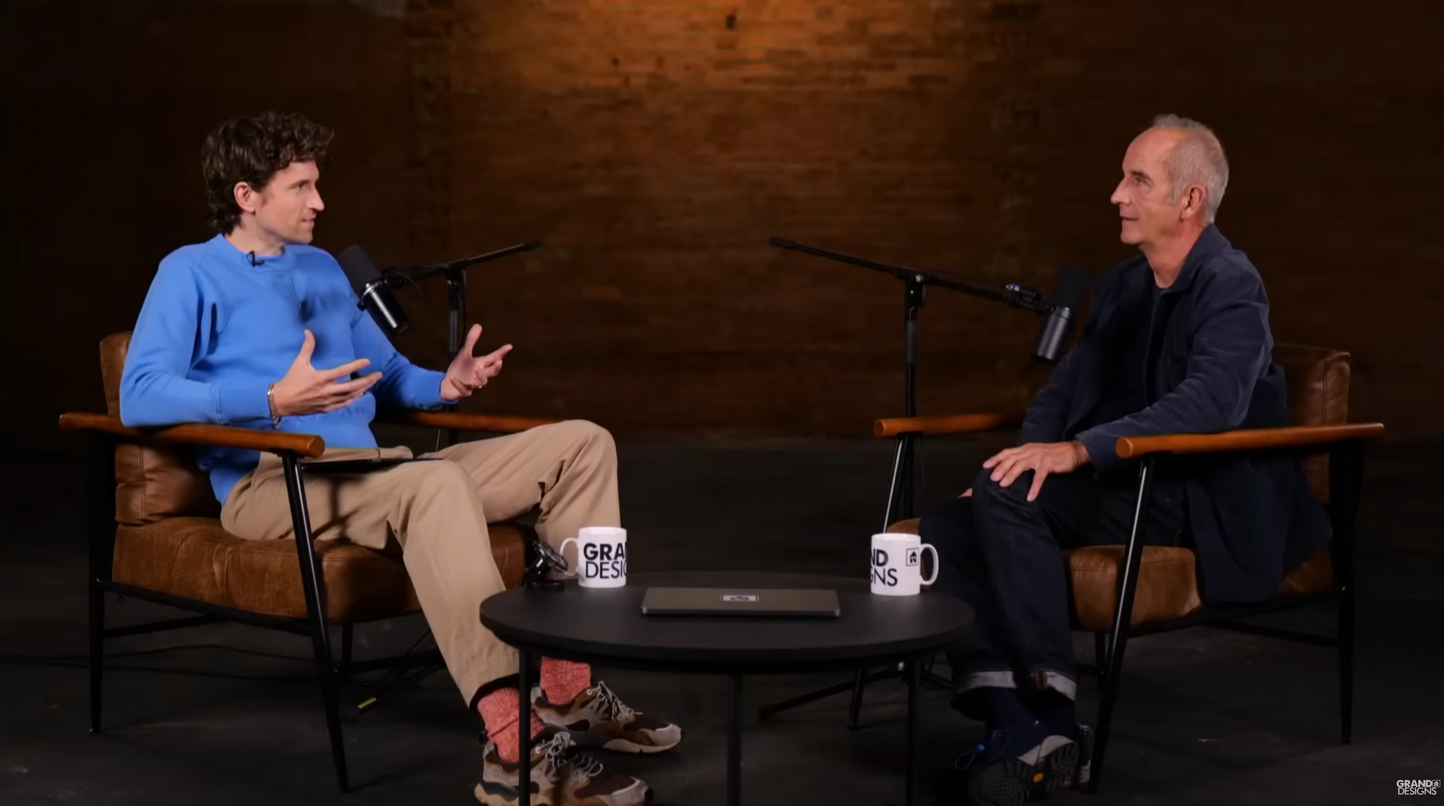
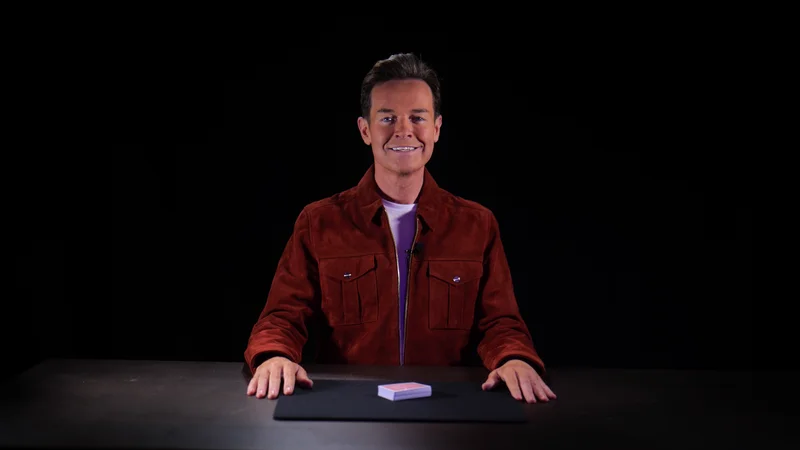
See the 'Grand designs' from Channel 4 by Kevin McCloud at Finchley Studio (Brick studio). Book this setup for your podcast.
Solution Stage 1: Soundproofing (Isolation)
Goal: To block external noise (road noise, wind, people) and stop the vehicle's body from rattling.
Method: This is not acoustic foam. This is automotive sound deadening material (e.g., Kilmat).22 This is a dense, foil-backed butyl material that is applied directly to the vehicle's sheet metal chassis. It adds mass and "cut[s] down on airborne road noise" by stopping vibration.33 This is a foundational, build-time-intensive step.
Solution Stage 2: Acoustic Treatment (Absorption)
Goal: To absorb internal sound, kill reflections (reverb/echo), and "tighten" the vocal recording.34
Method: This involves covering the now-soundproofed, hard interior surfaces with soft, porous materials. This can be a DIY, budget-friendly solution (heavy blankets, curtains, rugs, repurposed cushions) 31 or a professional one (acoustic foam panels, fabric-wrapped fiberglass, bass traps).31
The Two-Stage Mandate: A builder who only installs foam (Stage 2) will fail, as road noise will still enter the cabin. A builder who only installs sound deadener (Stage 1) will also fail, as the interior will become a quiet but highly-reflective "echo chamber." A successful build requires both stages. This proves that the "rental-friendly" approach from the trailer case study 21 is non-viable; the weight and density of effective acoustic treatment requires permanent installation (screws, glue), not Velcro.21
3.5 Phase 4: Cost Analysis
The cost of a "Build" is overwhelmingly dominated by the vehicle and conversion materials, not the podcasting equipment itself.
Data:
"Minimalist" Build 22: ~$6,100 (including $3,700 van)
"Audio-First" Build 23: ~€1,647 (approx. $1,800 USD) (build only)
Pro-Build Van 36: $35,859 (including van)
DIY Studio Booth 37: A $20,000-$30,000 commercial booth was replicated for $2,000 in materials.
Analysis: The "Audio-First" build 23 is the most telling. The ~$1,800 conversion cost was approximately three times the cost of the professional audio kit (Zoom H6 + 2x Rode PodMics, approx. $600). This 3:1 ratio of "studio" cost to "gear" cost is a critical finding for anyone budgeting a build.
DIY Mobile Studio Build Comparison
Part 4: The Lightweight Model: "Carry" — The Professional "Podcast-in-a-Suitcase"
4.1 The "Carry" Philosophy: Adaptability and Discretion
This section focuses on Modality 2, the "Portable Setup".4 The guiding philosophy of this model is not to control the environment, but to adapt to it.8 This requires a radical shift in priorities. The "best" gear is not the most expensive, but the most reliable.
An expert analysis of gear for this purpose emphasizes three criteria: 1) Simplicity (avoiding unnecessary cables and accessories that can break), 2) Reliability (time-tested equipment over new, "fancy" features), and 3) Hardware > Software (physical buttons and knobs over finicky touch-screen interfaces).38 This approach aims to minimize the "setup time constraints" 8 and "technological hiccups" 39 that plague field recording.
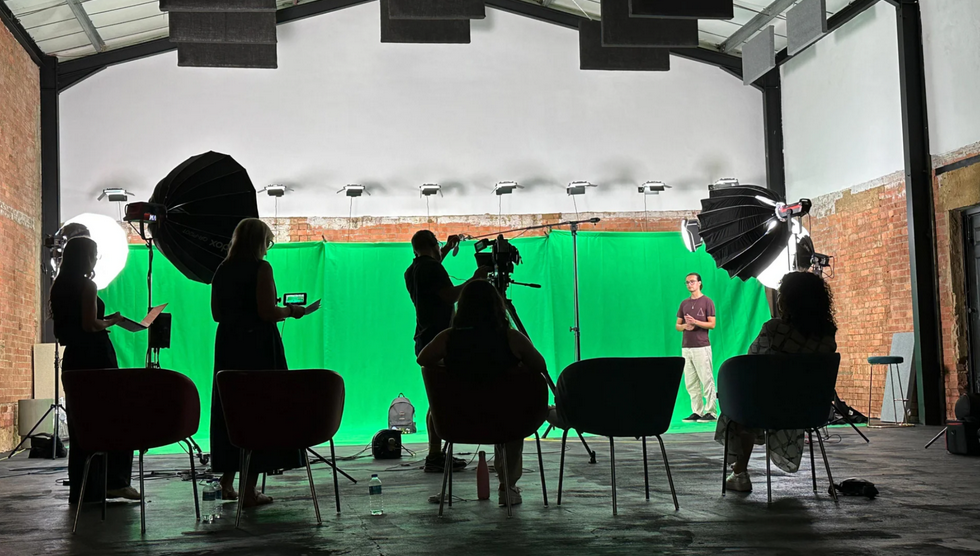
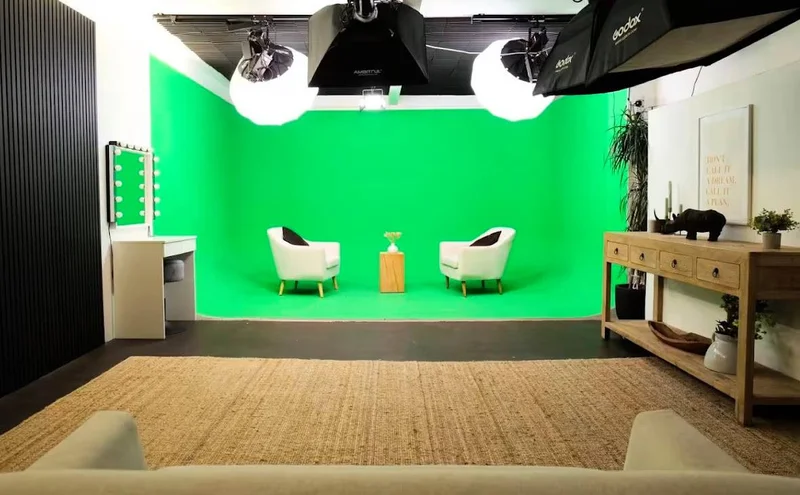
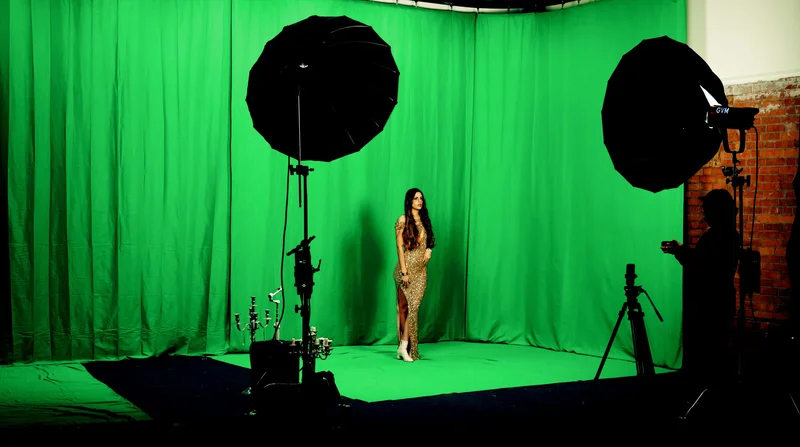
Finchley Studio (Giant Green Screen): book this setup for your podcast
4.2 Case Study in Practice: The Far From Home Model
The "Carry" philosophy is perfectly embodied by the "rugged journalist" model, exemplified by Peabody award-winning public radio journalist Scott Gurian.40
Context: Gurian's Far From Home podcast documents his 11,000-mile road trip from London to Mongolia and other travels, during which he recorded over 65 hours of audio.41
The Gear: The core of this "rugged, road-tested" 43 setup is a TASCAM DR-40 handheld digital recorder.41
The "Why" - Discretion as a Primary Spec: A professional journalist's decision to use a simple $150 recorder over a high-end rig reveals a critical, non-obvious priority: discretion. The TASCAM DR-40 was chosen because it is "small," "handheld," and "doesn't look like a pro setup".41 This was a deliberate, strategic choice.
Given the "political climate of Central Asia," there were "many situations where [Gurian] didn't want to identify himself as a reporter".41 He even carried a separate flash card with music on it so he could "play it back and say... 'I'm just using it for listening'".41 For this type of mobile podcaster, technical specifications are secondary to portability, durability, and—most importantly—deniability. This is the conceptual opposite of the "Build" and "Hire" models, which are designed to look professional.
4.3 Kit Architecture: Scalable Setups for Field Recording
Based on this philosophy, several scalable "podcast-in-a-suitcase" kits can be architected, balancing cost, portability, and host count.
Level 1: The "Backpack" Kit (1 Host, Max Portability)
Core: Smartphone + Dual-Channel Wireless Microphone System (e.g., RØDE Wireless ME or PRO).9
Analysis: This is the ultimate "carry" setup. It leverages the phone's "RØDE Reporter App" as the recording device.9 Using a dual-channel wireless system is critical, as it records host and guest on separate tracks, solving the "balance volume levels" problem that makes a phone's built-in mic unusable for interviews.9
Level 2: The "Self-Contained" Kit (1-4 Hosts, No Laptop)
Core: Portable Multitrack Recorder (Zoom PodTrak P4) + 2-4 Dynamic XLR Mics (e.g., RØDE PodMics) + Headphones.44
Analysis: This is arguably the new gold standard for reliable, multi-person mobile podcasting. The Zoom PodTrak P4 is the key component. It is budget-friendly (approx. $150-$200), has four XLR inputs, four independent headphone outputs, and runs on AA batteries or USB power.46 This setup eliminates the laptop, which, as one field recorder noted, is a major advantage in terms of space, power, and reliability.45
Cost: A professional 2-person kit (Zoom P4, 2x RØDE PodMics, headphones, and accessories) can be purchased for $350-$420.47 This entire professional kit costs less than one half-day "Hire" service.10
Level 3: The "Laptop-Powered" Kit (1-2 Hosts, High Quality)
Core: Laptop 6 + Portable Audio Interface (e.g., Focusrite Scarlett 2i2 or Audient Evo 4) 49 + 1-2 Hybrid (USB/XLR) Mics (e.g., Shure MV7 or Samson Q2U).44
Analysis: This is the classic "home studio" adapted for the road. Its strength is flexibility. The hybrid mic 44 can be used via USB directly into the laptop for a simple 1-person show, or via XLR into the interface for a 2-person show, offering maximum adaptability.
Level 4: The "Pro Console" Kit (1-4 Hosts, Max Features)
Core: All-in-One Console (e.g., RØDECaster Pro II/Duo or Mackie DLZ Creator XS) + 2-4 XLR Mics.9
Analysis: This setup offers the highest audio quality, with superior preamps and onboard APHEX processing.44 However, this quality comes at the cost of mobility. One podcaster explicitly stated they were "tired of traveling with... the Rødecaster Pro" due to its size.45 This kit is for "portable" use where audio quality is the only priority, and size/weight are secondary.
4.4 Professional "Podcast-in-a-Suitcase" Kit
Part 5: 2025 Mobile Podcasting Gear Matrix (Technical Analysis)
5.1 Core Components Analysis
The following is a technical review of equipment categories optimized for mobile recording, based on 2025-focused market analysis.6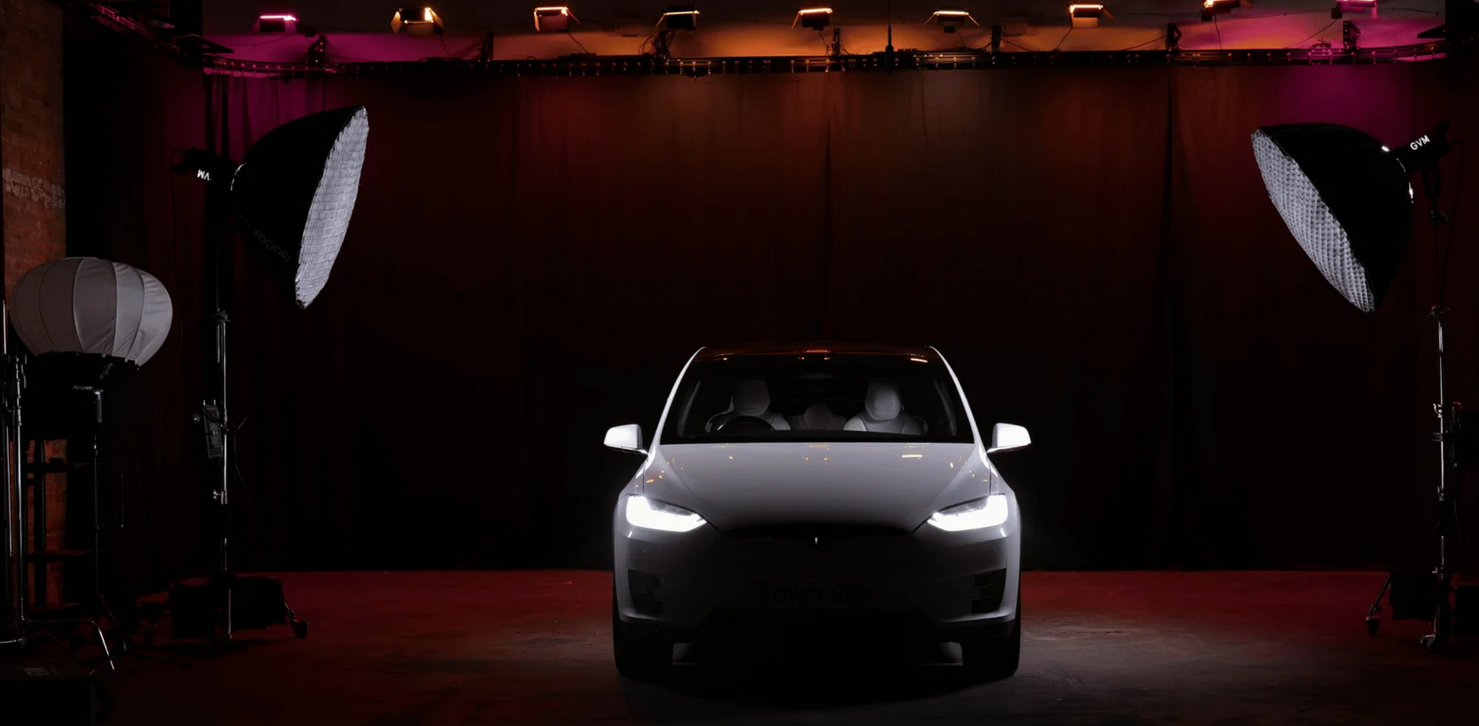
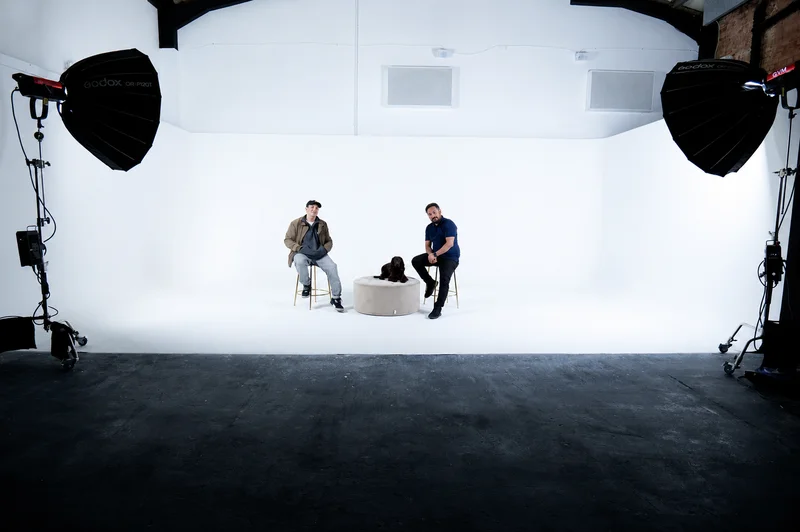
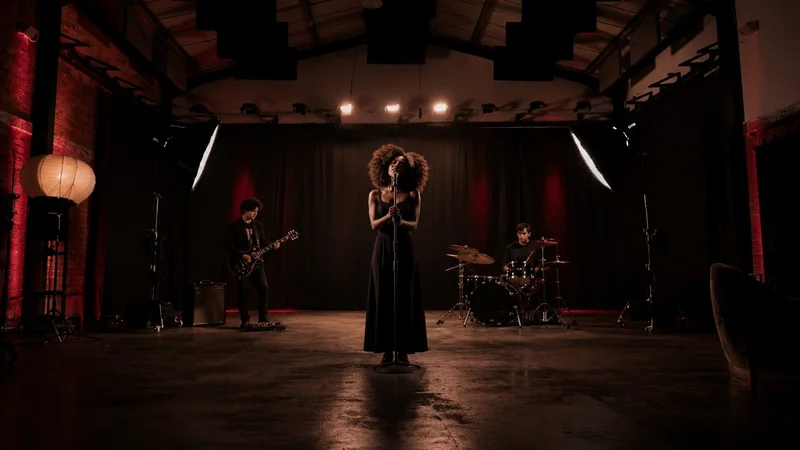
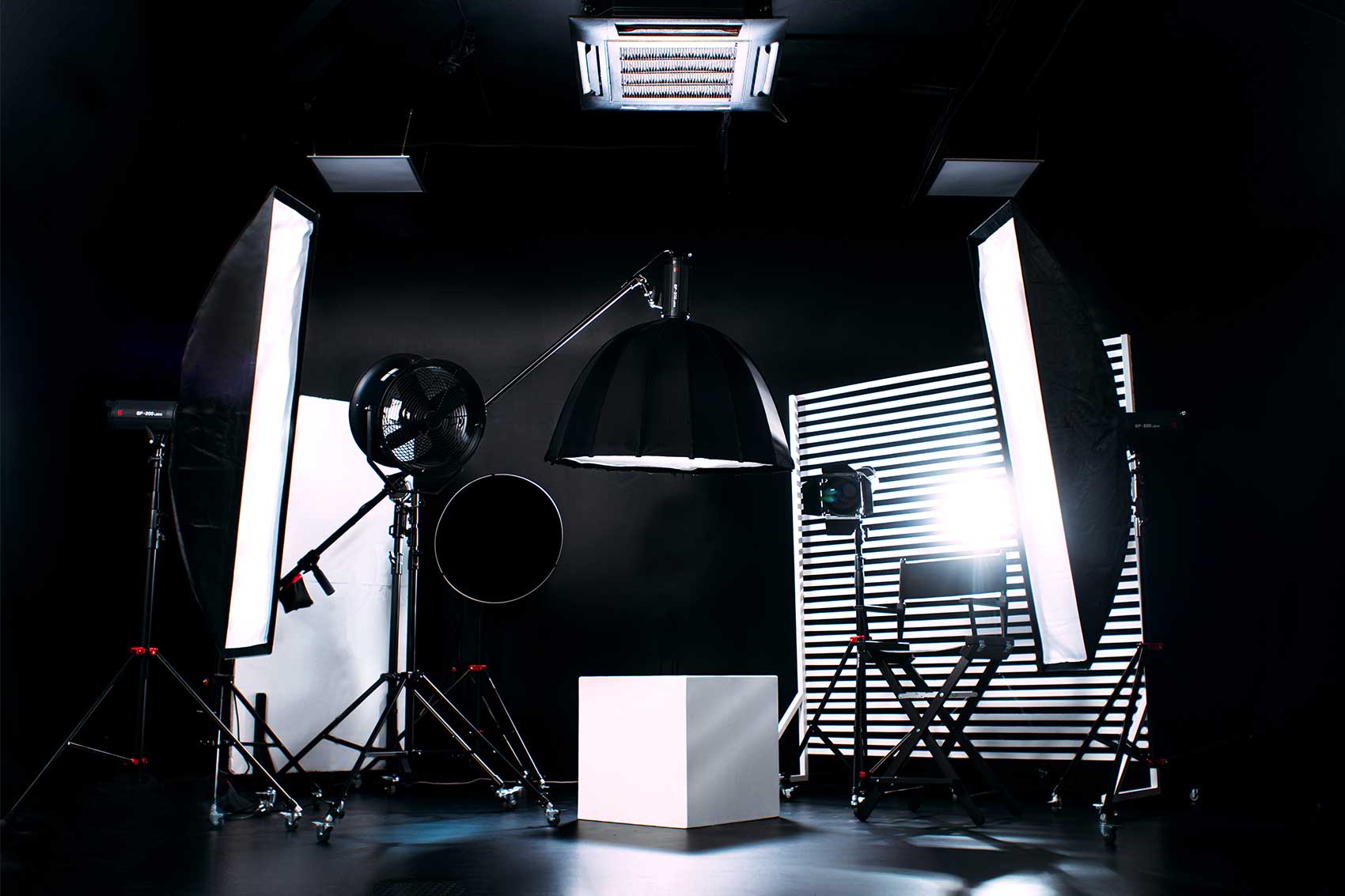
Finchley Studio (Giant Blackout Set): book this setup for your podcast
5.2 Mobile Multitrack Recorders
These devices are the "brains" of the "Self-Contained Kit" (Level 2), enabling high-quality, multi-channel, laptop-free recording.55
Recommendations:
Best for Podcasting: Zoom PodTrak P4. Its design is unbeatable for mobile podcasting: 4 XLR inputs, 4 headphone outputs with individual volume, built-in sound pads, and phone call integration, all in a compact, affordable ($150-$200) unit that can run on AA batteries.44
Best for "Rugged" Use: Zoom H-Series (H4essential, H6essential). These are durable, versatile "field recorders" that are also excellent for podcasting.56 They are a "self-contained" solution favored by field recorders for their durability and built-in mic options.45
Best for Budget: Tascam DP-006. A highly affordable, compact recorder that can record 2 inputs simultaneously, making it a great budget-friendly option.57
5.3 Portable Audio Interfaces
For the "Laptop-Powered Kit" (Level 3), the interface is the bridge between analog microphones and the computer.59
Recommendations:
Best Overall: Focusrite Scarlett 2i2 (4th Gen). This is the industry standard, providing reliable connectivity, "reliable... sound quality" 7, and high-quality preamps in a durable metal chassis.49
Best for Beginners: Audient Evo 4. Praised for its user-friendly "smart" features that automate levels, making it a top recommendation for those new to audio engineering.51
Best for Portability (Podcast-Specific): Focusrite Vocaster One. A compact interface "best [for] portable audio," designed specifically for the needs of podcasters.52
5.4 Durable Dynamic Microphones
The microphone is the most critical component for sound quality. In mobile recording, dynamic microphones are heavily favored over sensitive condenser mics due to their durability and superior rejection of background noise.61
The Hybrid (USB/XLR) Mic: The Ultimate Mobile Solution
The single most intelligent microphone choice for a mobile podcaster is a hybrid model with both USB and XLR outputs, such as the Samson Q2U 44 or Shure MV7+.44
The "dual output" 44 provides maximum flexibility and adaptability. A podcaster can use the USB output to plug directly into a laptop for a simple, 1-person recording (as in the "Beginner Kit").44 The next day, they can use the same microphone's XLR output to plug into an interface or portable recorder (like the PodTrak P4) for a multi-guest "Pro Kit".44 This allows the mic to "grow with you" 44 and adapt to any recording scenario.
Recommendations:
Best Hybrid: Samson Q2U (approx. $70). The top pick for new podcasters, offering fantastic value, forgiving sound in untreated rooms, and the crucial dual-output.44
Best (XLR) Durability: Shure SM58. A legendary, "indestructible" live-vocal mic that is "our top recommendation... for durability / on-location" use.61 It is ideal for chaotic field use.
Best (XLR) Value: RØDE PodMic. Offers a "broadcast-style" dynamic sound for around $100.44 It is known to be "gain-hungry" (like the Shure SM7B 44), meaning it requires a recorder or interface with strong, clean preamps (like the RØDECaster series or Zoom P4).
5.5 Wireless & Compact Systems
For ultimate portability, especially for video, wireless systems are key.
Recommendations: RØDE Wireless Series (ME, GO II, PRO).9 These systems have revolutionized mobile production. A dual-channel kit like the Wireless ME or PRO allows a host and guest to be miked separately, with the audio sent via USB to a smartphone.9 The system records "each person's voice... separately and in high quality," allowing for proper mixing in post-production—a task that is impossible with a phone's built-in mic.9
Part 6: Strategic Implications: Benefits, Challenges, and Final Assessment
6.1 The Strategic Advantage: Why Go Mobile?
The decision to take a podcast on the road, despite the challenges, is rooted in three distinct strategic advantages.
Access: The primary logistical benefit is gaining access to high-profile guests. Mobility allows the production to "bring your studio to your guests" 1, accommodating their schedule and location. This is often the only way to secure interviews with busy executives, politicians, or celebrities.
Authenticity (Environmental Storytelling): This is the core creative benefit. Recording on location "will play a huge part in setting the scene for listeners".3 The environment itself—"Animal noises, background chatter, sounds from the street"—becomes a "key character" in the story.2 This creates an "immersive and engaging listening experience" and a layer of transparency that a sterile studio cannot achieve.3
Intimacy: Recording in person is strategically superior to remote recording via platforms like Zoom or Skype.64 It fosters a "more natural, engaging" interview.1 While virtual recording is convenient, in-person meetings "accelerate relationships" and capture a non-verbal dynamic that is lost online.67 One analysis suggests that "speaking virtually is 70% as good as in person," or even lower.67
6.2 The Logistical Gauntlet: A Sober Assessment of the Challenges
The benefits of mobile recording are significant, but they are earned by overcoming a series of formidable logistical and technical hurdles.
Environmental: The single greatest challenge is "environmental noise".8 A studio's primary function is to eliminate this variable. In the field, the podcaster must contend with uncontrollable noise from traffic, weather, and people, as well as poor acoustics (echo).8 This requires "inspect[ing] the space prior to recording" 69 and choosing locations carefully.
Technical (Power): "Unreliable power sources" are a constant threat.8 This necessitates meticulous planning, including "sufficient battery life or portable power sources" 7, carrying spare batteries, and testing power outlets.69
Technical (Gear): The "learning curve for the uninitiated is steep".39 Mobile kits have more points of failure (cables, batteries, software, data corruption). A single loose "micro-USB cable" can slip out and "ruin a big podcast interview".38 This is why reliability and simplicity are paramount.38
Logistical: "Limited space" and "setup time constraints" add significant pressure to a recording session.8 This is precisely why the pre-cabled, "roll-and-record" designs of the "Podcastinator" cart 25 and the "Audio-First Van" 23 are such effective solutions—they are engineered to minimize setup time.
6.3 Final Recommendations:
The appeal of a mobile recording studio—the idea of capturing conversations anywhere from a bustling event floor to a quiet park bench—is undeniable. For established podcasts seeking unique B-roll content or coverage of specific, off-site events, taking the show on the road can break visual monotony and capture spontaneous energy. However, for most producers, the practical reality of mobile recording often proves more challenging and expensive than anticipated.
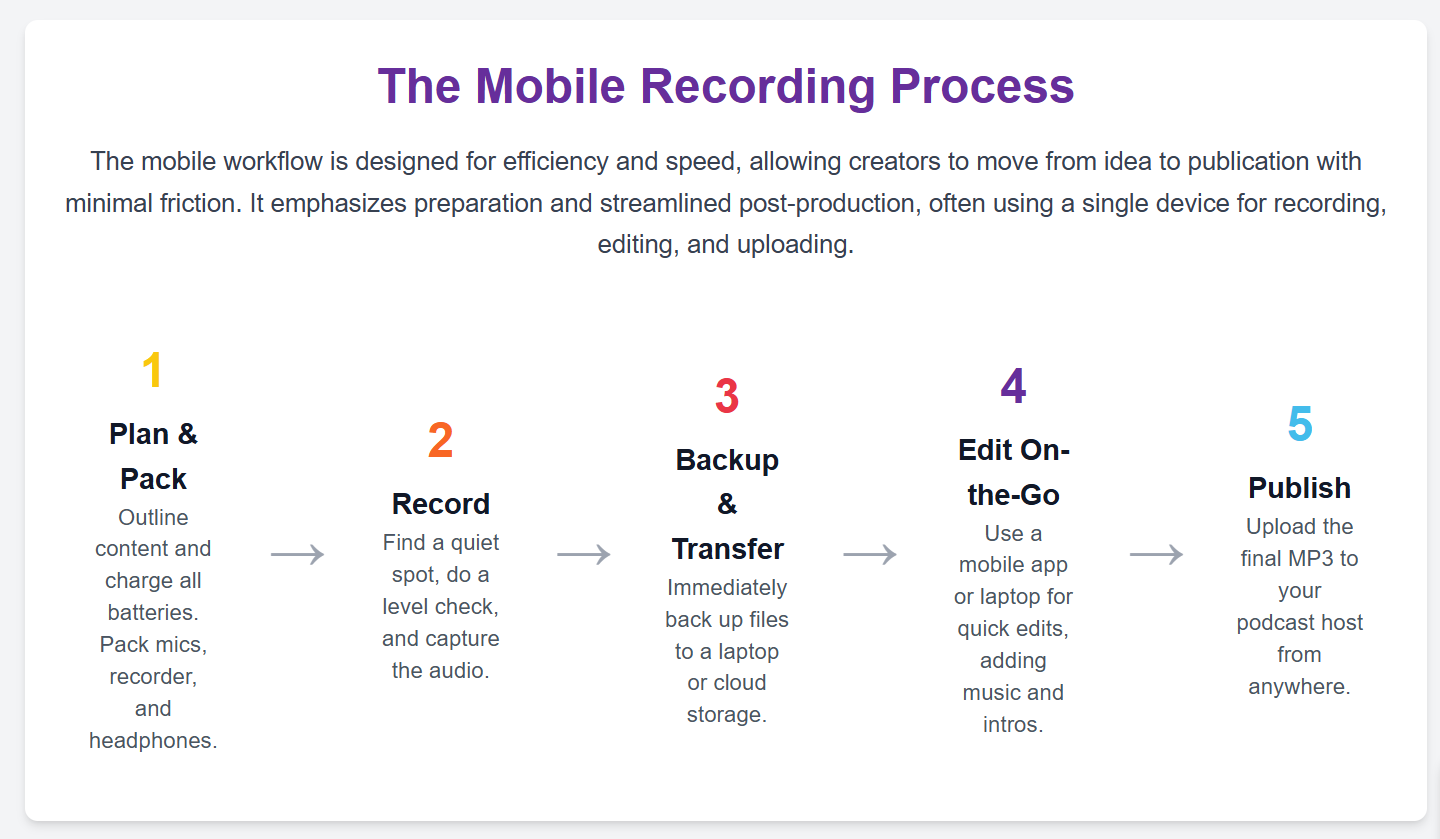
The Pitfalls of Portability
While professional-grade mobile kits exist, they require significant investment in portable acoustic baffling, redundant audio recorders, and highly specialized lighting setups to ensure broadcast quality. The biggest hurdle is acoustics; successfully isolating professional audio from unpredictable environments (traffic, nearby chatter, sudden loud noises) is incredibly difficult, often resulting in unusable segments. The overhead associated with hiring a dedicated technical team to set up, monitor, and tear down a full mobile studio for every location quickly outweighs the cost efficiency.
The Superiority of the Fixed Studio
For consistent, high-quality content, the dedicated, fixed studio remains the undisputed champion. By booking a professional space, creators instantly benefit from:
Guaranteed Quality: Flawless acoustic isolation, eliminating the primary risk factor of mobile recording.
Visual Consistency: Access to unique, pre-lit sets—like the versatile LOUNGE STUDIO or a dedicated Green Screen Cove—that build reliable brand recognition without the setup time.
Logistical Simplicity: Centralized location and services. Guests are easily directed to a professional hub (like Finchley Studio) that offers easy access and parking, rather than navigating a pop-up set.
Ultimately, while mobile recording has its niche for event coverage, achieving the necessary technical quality for a major podcast brand—the quality relied upon by clients like the BBC and Lloyds bank—is far more reliably and efficiently accomplished within a dedicated, professional environment.
We hope this article helps you on your podcasting journey. To take your production to the next level, the right environment is key. We invite you to see what makes Finchley Studio the top choice for creators. As a professional podcast recording studio, Finchley Studio is built to handle all your production needs.
We're trusted by industry leaders and regular clients like the BBC and Lloyds bank, who rely on our professional spaces. We offer a diverse range of unique, pre-lit sets to match any brand or aesthetic. Explore our spaces to find your perfect fit:
Dialogue Room: For intimate 2-4 person conversations.
LOUNGE STUDIO: A relaxed, versatile set for up to 5 people.
CEO SET: Premium, sleek, and executive.
Green Screen Cove: A pre-lit, curved studio for seamless virtual backgrounds.
Blackwood Studio: A sophisticated, modern set with a striking black wood backdrop.
THE BRICK STUDIO: A 180m² warehouse space with authentic red brick.
White Infinity Cove: For clean, minimalist, edge-free visuals.
BLACKOUT SET: Full light control for dramatic, high-contrast content.
GATHERING STUDIO: A professional space for larger roundtable discussions.
GIANT GREEN SCREEN: One of London's largest green screens in our 180m² warehouse.
GIANT BLACKOUT: Our 180m² warehouse for large-scale, controlled dark sets.
Once your recording is complete, let our expert team handle the rest. Our professional Video Editing Service will make your content shine, with a two-week turnaround guaranteed. Choosing Finchley Studio means choosing a seamless experience from start to finish. We're proud of the community we've built at Finchley Studio. Don't just take our word for it—see what other producers have to say about their experience on our Google review page and Trust Pilot.
Finding us is simple. We are conveniently located just Two minutes from Finchley Central (https://tfl.gov.uk/tube/stop/940GZZLUFYC/finchley-central-underground-station?lineId=northern) on the Northern Line. We offer One free parking space per booking, and for those travelling, we are Adjacent to Travelodge London Finchley (https://www.travelodge.co.uk/hotels/614/London-Finchley-hotel). You can find our exact location on Google map, Apple maps, [suspicious link removed], or using our What 3 words (https://w3w.co/orders.yards.jokes) address.
Stay connected with our creative community and see behind-the-scenes content by following us on Instagram, YouTube, TikTok, LinkedIn, and X (Twitter). Have any questions before you book? Check our FAQ page, chat with us directly on WhatsApp, or give us a call at +447587827200. You can also send us an Email. Ready to elevate your podcast? Your next great episode starts here. Book now to secure your spot in one of London's premier podcast studios.
Works cited
Mobile Podcast Studio: Take Your Voice Anywhere 🎙️ - Expandable Trailers, accessed November 14, 2025, https://www.expandable-trailers.com/na/applications/mobile-podcast-studio
When to Record your Podcast On-Location - FRQNCY Media, accessed November 14, 2025, https://frqncy.media/blog/record-podcast-on-location-2/
On-Location Podcast Recording: What, Why, & How (+ Examples), accessed November 14, 2025, https://www.cuepodcasts.com/post/on-location-podcast-recording
Portable Podcast Setup: Best Tools for Your Mobile Podcast Studio - Riverside, accessed November 14, 2025, https://riverside.com/blog/portable-podcast-setup
accessed November 14, 2025, https://thepodcastconsultant.com/blog/portable-podcast-setup#:~:text=If%20you're%20planning%20on,tear%20down%20on%20a%20whim.
Portable Podcast Setup: The Essential Gear List, accessed November 14, 2025, https://thepodcastconsultant.com/blog/portable-podcast-setup
Mobile Recording Studios Taking Your Podcast on the Road - Finchley Studios, accessed November 14, 2025, https://www.finchley.co.uk/finchley-learning/mobile-recording-studios-taking-your-podcast-on-the-road
Mobile Podcast Starter Kit: The Portable Equipment You Need - Castmagic, accessed November 14, 2025, https://www.castmagic.io/post/portable-podcasting-setup
The Best Portable Podcast Setup for Any Budget | RØDE (US), accessed November 14, 2025, https://rode.com/en-us/about/news-info/the-best-portable-podcast-setup-for-any-budget
POP-UP - Outset Studio, accessed November 14, 2025, https://outsetstudio.com/pop-up-podcasts/
Podcast Recording at Your Location - Podcast Room, accessed November 14, 2025, https://podcast-room.com/portable-podcasts/
Podcast Production Services | Full Service | Buffoon Media UK, accessed November 14, 2025, https://www.buffoonmedia.co.uk/video/podcast/
7 podcast studios in London for your next recording - Fallow, Field & Mason, accessed November 14, 2025, https://www.fallowfieldmason.com/blog/8-podcast-studios-in-london-for-your-next-recording
Podcast Recording Studio, On-Location Podcast Recording - Podshop, accessed November 14, 2025, https://www.podshoponline.co.uk/services/on-location-recording
Podcast Studio Hire From £60p/h in London - Mavro Worldwide, accessed November 14, 2025, https://www.mavroworldwide.com/podcaststudiohire-black
Mobile Podcast Studio Hire in London - Aspect Rental, accessed November 14, 2025, https://aspectrental.com/mobile-podcast-studio
PODCASTS ON LOCATION — Monkeynut Audiobooks & Sound, accessed November 14, 2025, https://www.monkeynutuk.com/locationpodcast
Case Studies | JAR Podcast Solutions, accessed November 14, 2025, https://jarpodcasts.com/case-studies/
Case Studies - Riverside, accessed November 14, 2025, https://riverside.com/case-studies
Podcast Case Studies - Speakerbox Media, accessed November 14, 2025, https://speakerboxmedia.com/case-studies/
Rental Friendly Hacks turning a Trailer into a Mobile Podcast Studio!? | 48 Hour Transformation - YouTube, accessed November 14, 2025, https://www.youtube.com/watch?v=444v03N7iUI
Building a Mobile Podcast Studio to Live In - YouTube, accessed November 14, 2025, https://www.youtube.com/watch?v=jrveyOowUKc
DIY camper van conversion WITH PODCAST STUDIO? - YouTube, accessed November 14, 2025, https://www.youtube.com/watch?v=pNfYpN4yOiE
Studio in a van? : r/audioengineering - Reddit, accessed November 14, 2025, https://www.reddit.com/r/audioengineering/comments/qlsada/studio_in_a_van/
THE PODCASTINATOR: a MOBILE PODCASTING STUDIO : 4 Steps ..., accessed November 14, 2025, https://www.instructables.com/THE-PODCASTINATOR-A-MOBILE-PODCASTING-STUDIO/
Inverter vs. Portable Power Station: What's the Best Choice for Your Power Needs?, accessed November 14, 2025, https://www.boltpowergroup.com/blog/inverter-vs--portable-power-station--what%E2%80%99s-the-best-choice-for-your-power-needs
What is the difference between a car inverter and a home inverter? - Carspa New Energy, accessed November 14, 2025, https://carspa.cc/what-is-the-difference-between-a-car-inverter-and-a-home-inverter/
The Van Conversion | Learn how to build a campervan, accessed November 14, 2025, https://www.thevanconversion.com/
Most Cost Efficient? Power Stations vs. Inverter/LifePo4/Lithium Setup - Buy It or Build It Van/RV, accessed November 14, 2025, https://www.youtube.com/watch?v=r910P2u-Gbw
Power Stations vs Battery/Inverter for remote charging electronics batteries - Reddit, accessed November 14, 2025, https://www.reddit.com/r/batteries/comments/1f30cvf/power_stations_vs_batteryinverter_for_remote/
How to Build a Podcast Studio in Your Garage - The Home Depot, accessed November 14, 2025, https://www.homedepot.com/c/ah/how-to-build-a-podcast-studio-in-your-garage/9ba683603be9fa5395fab901919afeb3
Recording in garage - tips on acoustic treatment and mic placement? Pic inside : r/podcasting - Reddit, accessed November 14, 2025, https://www.reddit.com/r/podcasting/comments/b40a0s/recording_in_garage_tips_on_acoustic_treatment/
EASILY Sound Treat your Car for Better Sound! - CarAudioFabrication - YouTube, accessed November 14, 2025, https://www.youtube.com/watch?v=oIzkhrkTZwk
Essential Podcast Equipment Setup for Beginners in 2025 - Descript, accessed November 14, 2025, https://www.descript.com/blog/article/podcast-equipment-for-beginners
ACOUSTIC TREATMENT - How to Build a KILLER Home Studio - YouTube, accessed November 14, 2025, https://www.youtube.com/watch?v=yrHBCCQT3gs
HOW MUCH DID OUR DIY SPRINTER VAN CONVERSION COST? - YouTube, accessed November 14, 2025, https://www.youtube.com/watch?v=zuyIPeKpbUc
How To Build Your Own Podcast Studio On a Budget - The Simplecast Blog, accessed November 14, 2025, https://blog.simplecast.com/how-to-build-a-20k-podcast-studio-for-2k
Podcast Equipment Guide: What I Recommend After 500 Episodes - Buzzsprout, accessed November 14, 2025, https://www.buzzsprout.com/blog/podcast-equipment-guide
Navigating The Challenges And Triumphs Of Podcasting, accessed November 14, 2025, https://podcastlaunchlab.com/navigating-the-challenges-and-triumphs-of-podcasting/
Far From Home - Apple Podcasts, accessed November 14, 2025, https://podcasts.apple.com/us/podcast/far-from-home/id1091969414
Journalist Scott Gurian Carries TASCAM DR-40 Far From Home | News Details, accessed November 14, 2025, https://tascam.jp/int/support/news/5699
Press Kit - Far From Home podcast, accessed November 14, 2025, https://farfromhomepodcast.org/presskit
Appearances - scott gurian, accessed November 14, 2025, https://scottgurian.com/media
Best Podcast Equipment for Beginners & Pros in 2025 - All Budgets - Riverside, accessed November 14, 2025, https://riverside.com/blog/podcast-equipment
Gear for podcast recording in crowded places, that is relatively easy to travel with? - Reddit, accessed November 14, 2025, https://www.reddit.com/r/podcasting/comments/1542dde/gear_for_podcast_recording_in_crowded_places_that/
Zoom PodTrak P4 Review: A Quality Multitrack Podcast Recorder - Riverside, accessed November 14, 2025, https://riverside.com/blog/zoom-podtrak-p4-review
Comparing Zoom PodTrak P4 Portable Multitrack Podcast Recorder, accessed November 14, 2025, https://www.bhphotovideo.com/c/compare/Zoom_PodTrak+P4+Portable+Multitrack+Podcast+Recorder+with+2-Person+Podcast+Mic+Pack+Kit_vs_RODE_RODECaster+Pro+II+4-Person+Podcasting+Kit+with+PodMics%2C+Broadcast+Arms%2C+and+Headphones_vs_RODE_RODECaster+Pro+II+4-Person+Podcasting+Value+Kit+with+Mics%2C+Boom+Arms%2C+Headphones%2C+and+More/BHitems/1580535-REG_1704433-REG_1720385-REG
Zoom PodTrak P4 Portable Podcast Recorder with 2x Rode Podmic Dynamic Podcast Microphone and Essential Podcast Accessories | Reverb, accessed November 14, 2025, https://reverb.com/item/85699026-zoom-podtrak-p4-portable-podcast-recorder-with-2x-rode-podmic-dynamic-podcast-microphone-and-essential-podcast-accessories
The Best Podcast Equipment for 2025 - PCMag, accessed November 14, 2025, https://www.pcmag.com/picks/the-best-podcast-equipment
Best audio interface 2025: For home recording, podcasting, and streaming - MusicRadar, accessed November 14, 2025, https://www.musicradar.com/news/the-best-audio-interfaces
The Best Audio Interfaces For Podcasters in 2025: Complete Buyer's Guide, accessed November 14, 2025, https://thepodcasthaven.com/the-best-audio-interfaces-for-podcasters-in-2025-complete-buyers-guide/
Podcast Audio Interfaces in 2025: Expert Picks & Advice - Descript, accessed November 14, 2025, https://www.descript.com/blog/article/what-is-the-best-audio-interface-for-recording-a-podcast
Best podcasting microphones 2025: My top picks, with audio demos - MusicRadar, accessed November 14, 2025, https://www.musicradar.com/news/best-podcasting-microphones
Podcast Equipment Guide for Beginners 2025 - YouTube, accessed November 14, 2025, https://www.youtube.com/watch?v=Fyd2hMwIXGk
Best Multitrack Recorders 2025 - Top 5 - YouTube, accessed November 14, 2025, https://www.youtube.com/watch?v=eFOZFjXDe5M
Best Digital Voice Recorders in 2025: From Budget to Pro-Level Gear - The Podcast Host, accessed November 14, 2025, https://www.thepodcasthost.com/equipment/best-digital-podcast-recorders/
9 Best Multitrack Recorders & How to Pick (2025) - Riverside, accessed November 14, 2025, https://riverside.com/blog/multitrack-recorders
6 Best Multi-Track Recorders: Digital vs Analog Options 2025 | Equipboard, accessed November 14, 2025, https://equipboard.com/posts/best-multi-track-recorders
15 Best Audio Interfaces For Music Production 2025 | Top Picks - Mixing Monster, accessed November 14, 2025, https://mixingmonster.com/best-audio-interfaces-for-music-production/
Best Podcast Equipment & Setup for 2025, accessed November 14, 2025, https://www.thepodcasthost.com/equipment/podcast-equipment-guide/
Best Podcast Microphones 2025: The Ultimate Buying Guide, accessed November 14, 2025, https://www.nearstream.us/blog/ultimate-guide-best-podcast-microphone
The Best Podcast Microphones for All Abilities and Budgets, accessed November 14, 2025, https://www.thepodcasthost.com/equipment/the-best-podcasting-microphones-on-the-market/
Professional Podcast Equipment | RØDE (US), accessed November 14, 2025, https://rode.com/en-us/solutions/podcast
Which kind of set up is better for portable podcast equipment? Also would it be advisable to do podcast in a public setting? - Reddit, accessed November 14, 2025, https://www.reddit.com/r/podcasting/comments/8fxxcm/which_kind_of_set_up_is_better_for_portable/
What Are The Advantages Of In Person Recording Vs. Virtual Podcast Recording, accessed November 14, 2025, https://podcastersunited.org/feed-your-brand/what-are-the-advantages-of-in-person-recording-vs-virtual-podcast-recording/
In person recording vs remote : r/podcasts - Reddit, accessed November 14, 2025, https://www.reddit.com/r/podcasts/comments/6sipw7/in_person_recording_vs_remote/
Why it's better to record podcast interviews in-person, accessed November 14, 2025, https://transistor.fm/record-podcast-in-person/
Mobile Podcast Studio: Everything About Gear & Tips 2025, accessed November 14, 2025, https://s321.ae/mobile-podcast-studio/
Mobile Podcast Production: How to Educate and Engage through Online Audio - Clemson OPEN, accessed November 14, 2025, https://open.clemson.edu/cgi/viewcontent.cgi?article=5332&context=joe
Audio 101 | Part 4: On-Location Sound & Mobile Recording - YouTube, accessed November 14, 2025, https://www.youtube.com/watch?v=YKGjCZWSIXg