Introduction: Navigating the London Market
The podcast studio market in London presents a unique and complex challenge for producers. As a global media hub, the city offers an ecosystem of facilities that is both world-class and highly variable. On one end of the spectrum, bookers can access broadcast-level facilities equipped with "state-of-the-art" technology, serving major clients from the BBC to Spotify. On the other, a proliferation of "prosumer" studios has emerged, catering to a new wave of corporate content, small-to-medium-sized enterprises (SMEs), and independent creators with accessible, high-quality equipment.

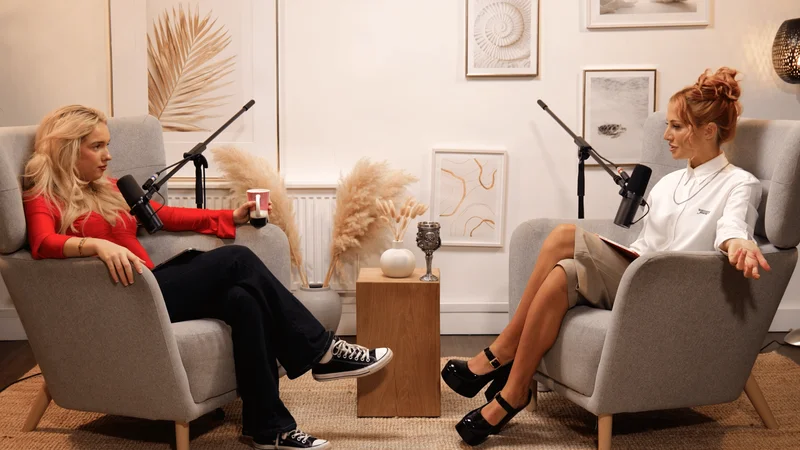
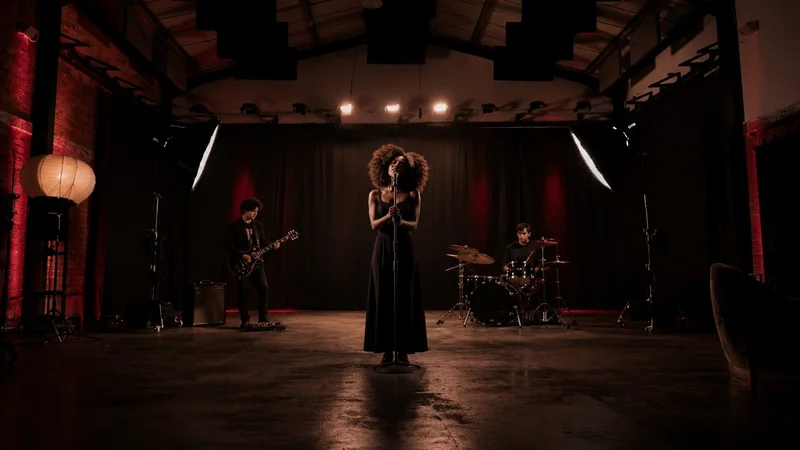
See the 'BBC Children in Need' podcast setup used by Dr Julie from BBC at Finchley Studio (Lounge setup). Book this setup for your podcast
The primary challenge for a professional booker is not finding a studio, but finding the right studio. This requires a nuanced understanding of the market's bifurcation and the ability to differentiate between two distinct tiers of service:
Tier 1 (The "Prosumer-Plus" Studio): This tier is characterized by its adoption of efficient, high-quality, and accessible technology, such as the RØDEcaster Pro all-in-one production console and the Shure SM7B microphone—the global standard for podcasting. The value proposition for this tier is not raw analogue fidelity but efficiency. These studios are built for speed, seamless remote-guest integration, and "plug-and-play" video, making them ideal for corporate marketing teams, agencies, and creators who need a reliable, professional product with minimal friction.
Tier 2 (The "Broadcast-Tier" Facility): This tier is defined by its adherence to traditional broadcast standards. These facilities, often serving established media clients, feature "state-of-the-art" equipment like Solid State Logic (SSL) mixing consoles and elite condenser microphones like the Neumann U87. Their value proposition is ultimate audio fidelity, robust infrastructure, and a high-status, "white-glove" client experience designed to service A-list talent and mitigate the high reputational risk of major media productions.
Navigating this market requires moving beyond a simple comparison of hourly rates. The "false economy" of booking a cheap, sub-standard studio can be financially ruinous, leading to hours of remedial post-production work that far exceeds the initial savings.
The goal of this report is to provide a comprehensive, expert-level due-diligence framework for assessing any London podcast studio. This framework is designed to equip a professional producer or corporate content lead with the technical, operational, and financial vocabulary to ask informed questions, assess value, and accurately calculate the Total Cost of Production (TCP), not just the hourly rate. The objective is to match the project's specific needs to a facility that is a strategic partner, not a potential liability.
Section 1: The Acoustic Imperative: Soundproofing vs. Sound Treatment
The single most critical technical factor in a studio booking—and the one most frequently misunderstood—is the acoustic quality of the recording space. This factor alone will have a greater impact on the final product than the brand of microphone, the skill of the engineer, or the software used in post-production. A £10,000 microphone in an acoustically flawed room will yield a worse recording than a £100 microphone in a professionally treated room.
When a studio claims to be "acoustic," a booker must deconstruct this term into two distinct, and equally vital, engineering concepts: sound isolation (soundproofing) and acoustic control (treatment).
1. Sound Isolation (Soundproofing)
Sound isolation is the facility's defense against the outside world. In a dense, noisy urban environment like London, this is a non-negotiable prerequisite. Professional sound isolation is concerned with preventing external noise—traffic, sirens, construction, or the low-frequency rumble of the Tube—from entering the room and "bleeding" into the microphones.
This is achieved through complex construction methods, not by simply hanging foam on a wall. A booker should inquire about specific construction features:
"Room-within-a-room" construction: This is the gold standard, where the studio is built as a structurally separate "box" that "floats" inside the main building's structure, decoupled by air gaps and neoprene pads.
Floating floors: These are essential for mitigating structural-borne vibrations, such as footsteps from an office above or, critically, a passing Underground train.
High-mass materials: Dense walls, solid-core doors, and multi-layered acoustic glass are all components of professional isolation.
The Assessment Test: A booker should not accept vague assurances like "it's very quiet." The professional standard is to ask for the studio's measured Noise Floor (also known as the Noise Criterion or NC rating). This is a quantitative measurement, usually in decibels (dB-A weighted), of the room's inherent self-noise (from air conditioning, equipment, etc.) and its level of isolation from the outside world. A high-end vocal booth or broadcast studio should have a noise floor well below 30 dB-A. A studio that cannot provide this specification, or seems unfamiliar with the concept, is an immediate and significant red flag.
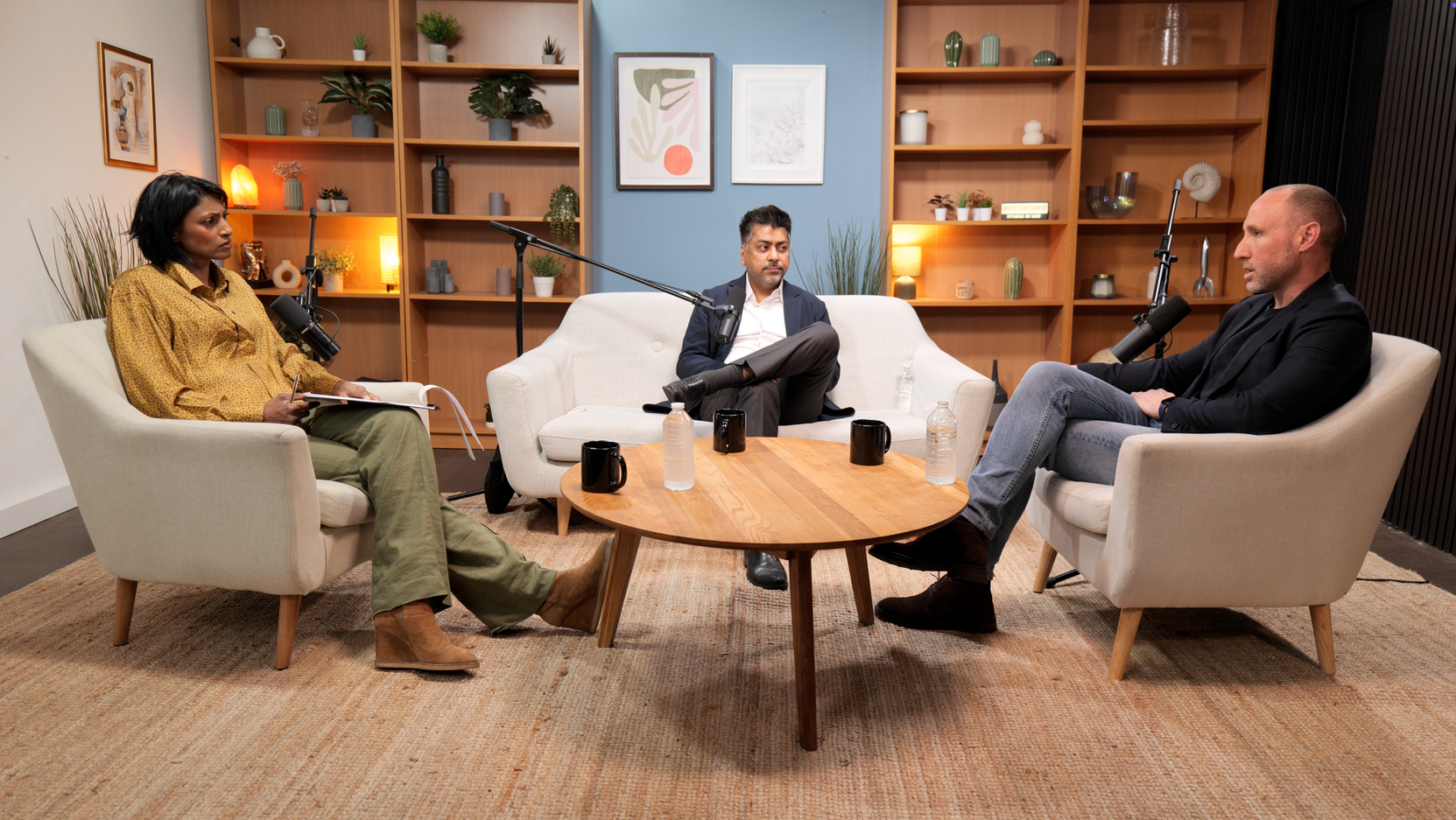
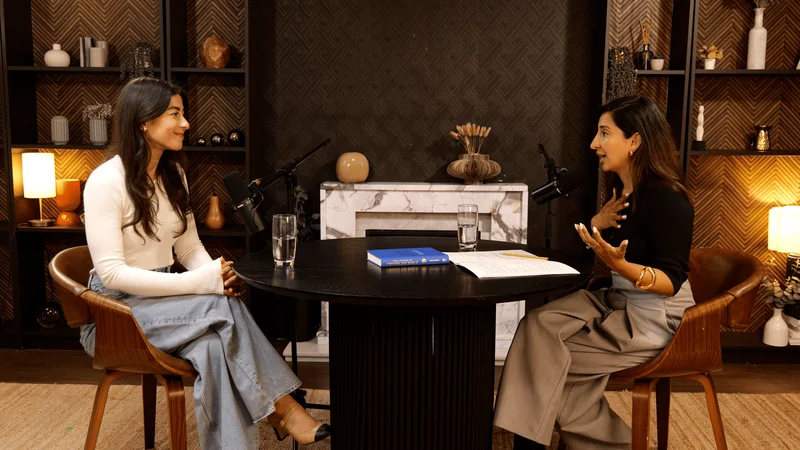
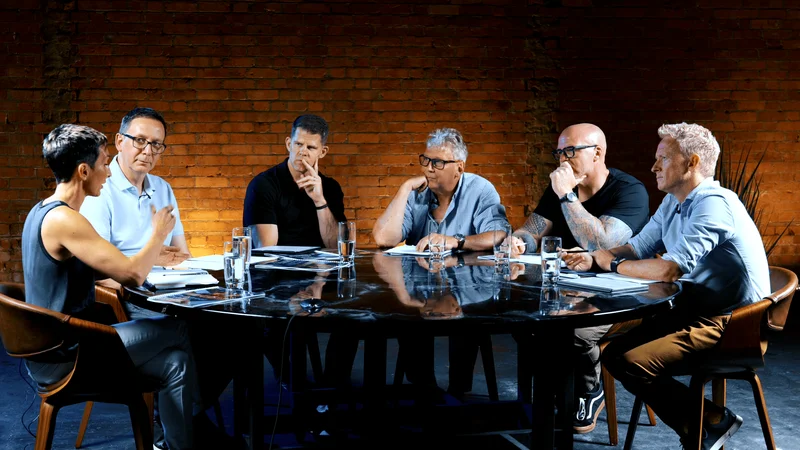
See the 'No ordinary tech podcast ' from Lloyds Banking Group by Rohit D (AI Leader for Lloyds Banking Group) and DR. shini somara (Pro-Chancellor of Brunel University) . at Finchley Studio (Lounge setup). Book this setup for your podcast.
2. Acoustic Control (Treatment)
If sound isolation keeps the outside world out, acoustic control (or "treatment") manages the sound inside the room. This is what professional facilities refer to when they advertise "acoustically treated spaces". An untreated room, even a quiet one, is full of hard, flat surfaces (walls, floors, ceilings) that reflect sound. This creates two primary problems for a spoken-word recording:
Reverberation: This is the "echo" or "liveness" of a room. It is quantified by the RT60 time—the time it takes for a sound to decay by 60 dB. In a large hall, this can be several seconds. For a clear, intelligible, "in-your-ear" podcast recording, the RT60 should be extremely short, typically between 0.2 and 0.4 seconds. A "boxy" or "reverberant" recording is perceived as amateurish and is nearly impossible to remove in post-production without creating digital artifacts.
Room Tone: This is the unique sonic signature of the room itself, including the ambient air and the hum of any equipment. In a well-treated studio, the room tone is "dead" and neutral, allowing an engineer to easily "gate" it out so that the silences between words are truly silent.
The Visual Inspection: When assessing a studio, a booker must look for types of professional treatment, not just its presence. Thin foam panels glued to a wall are a cosmetic, amateur solution that only absorbs high frequencies, leaving the recording sounding "boomy" and "muddy." A professionally designed space will feature:
Broadband Absorbers: Thick, dense panels (often 4-6 inches deep) made of mineral wool or fiberglass that absorb a wide range of frequencies, especially in the mid-range where the human voice resides.
Bass Traps: The most critical and expensive component. These are very thick absorbers placed in the corners of the room to control the low-frequency energy ("boominess") that builds up, particularly with deep male voices.
Diffusers: These are often non-flat, wood-paneled surfaces that scatter sound reflections rather than absorbing them, helping the room sound "dead" but not unpleasantly "claustrophobic."
The "False Economy" of Poor Acoustics
This analysis reveals the primary "false economy" trap of studio booking. A studio with a low hourly rate is often cheap precisely because it has skipped the six-figure capital expenditure required for proper acoustic construction and treatment.
This "saving" is invariably paid back, with interest, in post-production.
A recording "damaged" by siren bleed (poor isolation) or boxy reverb (poor treatment) is captured permanently in the source file.
Fixing this damage requires highly specialized, time-consuming, and expensive post-production processes, such as spectral de-noising (to remove the siren) or de-reverberation (to dry the vocal).
Post-production services are billed by the hour, often at a rate higher than the studio rental itself.
The £30/hour "saving" on the studio fee can easily result in a £150/hour "fix" in post-production, driving the Total Cost of Production far higher than if a premium, well-treated space had been booked in the first place.
In professional production, a booking in a high-quality, acoustically sound room is not an expense; it is a direct financial investment in minimizing post-production costs.
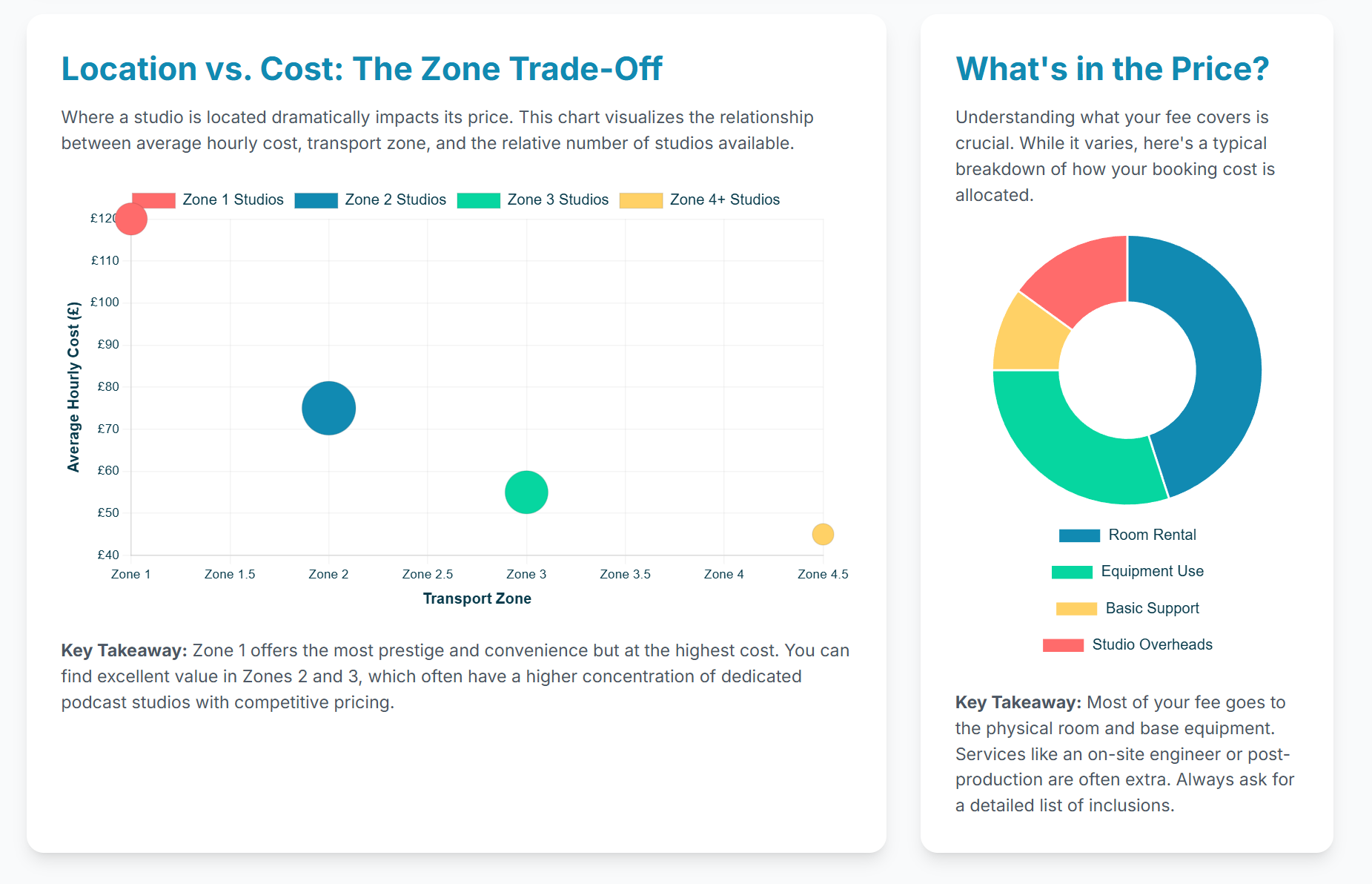
Section 2: Auditing the Signal Chain: Equipment, Quality, and Purpose
A recording is only as strong as the weakest link in its "signal chain." This chain represents the complete path the audio takes from the speaker's mouth to the digital recorder. A professional producer must be able to audit this chain at a glance, as it reveals the studio's entire production philosophy, from its target client to its technical quality. The primary components are the Microphone, the Preamp, the Interface/Mixer, and the Recorder.
Tier 1: The Microphone Locker (The "Ears")
The microphone is the most visible and symbolic piece of equipment, but the choice is far from cosmetic. The type of microphone a studio offers is a powerful indicator of its quality and purpose.
The Broadcast Standard (Dynamic): The Shure SM7B
This microphone is the global standard for podcasting and broadcasting for a reason, and its presence is a "green flag". The SM7B is a dynamic microphone, meaning it is less sensitive than its "studio" counterparts. This is a significant advantage in a podcasting context:
Room Rejection: It primarily picks up what is directly in front of it, effectively "rejecting" off-axis noise like other speakers, computer fans, or (in a sub-par room) ambient reflections.
Voice Flattery: It has a famously warm, rounded, and "broadcast-ready" sound that flatters the spoken word and requires less post-processing.
Seeing a bank of SM7Bs indicates a studio that is serious, professional, and purpose-built for podcasting.
The Studio Standard (Condenser): The Neumann U87
The presence of a high-end condenser microphone, such as the legendary Neumann U87, is a "green flag" of a different and more subtle kind. Condenser mics are the standard for high-fidelity music and voice-over recording because they are far more sensitive and detailed, capturing the full frequency spectrum of the human voice.
However, this sensitivity is a double-edged sword. A condenser mic will pick up everything: every mouth click, every breath, the hum of the air conditioning, and, most importantly, every single flaw in the room's acoustic treatment and isolation.
Therefore, a studio that offers a Neumann U87 is making an enormous statement of confidence. It is declaring that its acoustic environment (Section 1) is so pristine, so quiet, and so well-controlled that it can support the use of a high-resolution, surgical-precision microphone.
Conversely, a studio that only offers dynamic mics like the SM7B may be doing so as a "crutch" to mask the sound of a noisy or untreated room. The option to use a high-end condenser mic is one of the most reliable tests of a studio's fundamental acoustic integrity.
Tier 2: The Control Room (The "Brain")
The microphone's signal must be amplified and converted into a digital format. This is handled by the control room, and the equipment here clearly delinates the "Prosumer-Plus" (Tier 1) from the "Broadcast-Tier" (Tier 2) studio.
Integrated Solutions (The "Prosumer-Plus" Tier): The RØDEcaster Pro
Many modern, efficient studios are built around an all-in-one "studio in a box" like the RØDEcaster Pro. This single piece of hardware integrates the mixer, preamps, headphone amplifier, and recorder.
Pros: This is a sign of an efficient workflow. It is built for podcasting, with simple-to-use controls, built-in sound pads, and, most critically, seamless integration for remote guests via Bluetooth or USB. It is ideal for multi-person panel shows, corporate recordings, and fast-turnaround productions.
Cons: The preamps and converters are high-quality, but not "elite."
High-End Consoles (The "Broadcast-Tier"): SSL (Solid State Logic)
A "Broadcast-Tier" facility will be built around a different philosophy. Here, a booker will find high-end component-based systems, such as a large-format mixing console from a "state-of-the-art" brand like Solid State Logic (SSL).
Pros: This signifies a Tier 2 facility. The preamps are pristine, the analogue-to-digital conversion is superior, and the routing capabilities are infinitely more complex and powerful. This is the standard expected by major media clients like the BBC, who require ultimate audio fidelity and bulletproof reliability.
Cons: This level of equipment is "overkill" for a simple two-person talk show and, critically, requires a highly skilled audio engineer to operate.
Tier 3: The Peripherals (The "Comfort")
Finally, a booker should inspect the "comfort" peripherals, which provide a final clue to the studio's professionalism.
Headphone Monitoring: Are guests given cheap earbuds, or professional, closed-back studio headphones (like the Beyerdynamic DT 770 Pro) that provide clear monitoring and prevent audio from "bleeding" back into the microphones?
Preamps: If not using an integrated desk, does the studio use high-quality external preamps from brands like Focusrite, Audient, or Universal Audio (Apollo)? These provide the "clean gain" necessary for professional sound.
A professional audit of the signal chain allows the booker to see past the marketing photos and understand the studio's true technical capability and intended purpose.
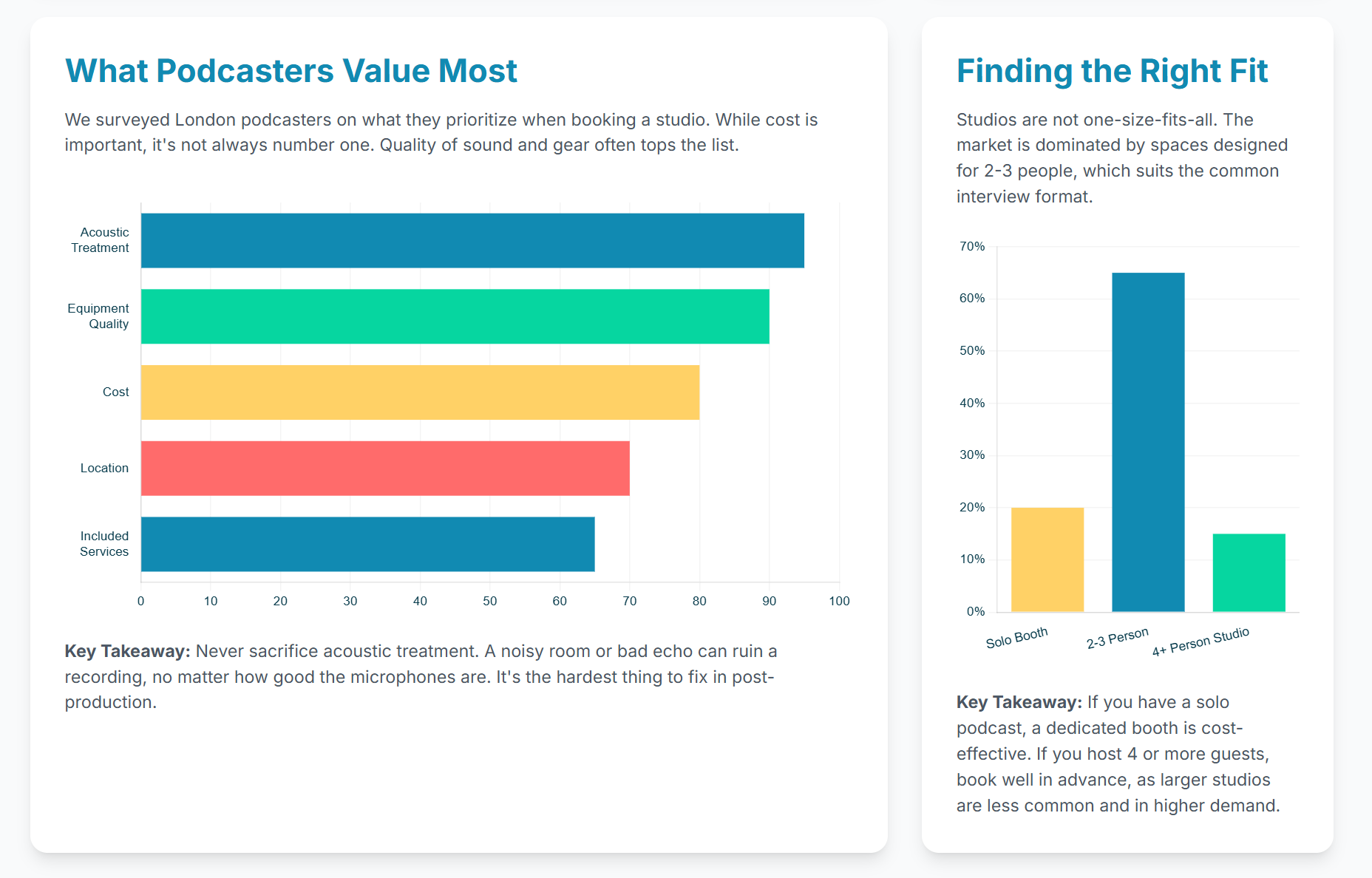
Section 3: Defining the Service: Dry Hire, Wet Hire, and Post-Production
The human element—the level of service provided by the studio—is a critical variable that can determine the success or failure of a recording session. A booker must clearly define the service level required, as this decision has profound implications for risk, quality, and the Total Cost of Production. The market generally offers three models: Dry Hire, Wet Hire, and full-service Post-Production.
1. Dry Hire (The DIY Approach)
"Dry Hire" refers to the rental of the studio space and equipment only. The user is responsible for operating all equipment, setting levels, managing the recording, and handling the files. This is often presented as the cheapest option, as seen in the £100/hour rate in one example.
However, for the non-technical user, Dry Hire is a high-risk trap.
A Dry Hire booking assumes the user is an experienced audio producer.
A novice user (e.g., a corporate marketing lead or a host) will inevitably waste the first 20 minutes of their billable time simply trying to troubleshoot the equipment, figure out the signal routing, and set correct "gain staging" (the process of ensuring audio levels are not too low or, disastrously, too high and "clipping").
This user error is 100% billable. The user risks paying £100 for an hour-long session that yields an unusable, distorted, or incorrectly recorded audio file.
Therefore, Dry Hire is only a viable option for technically proficient, experienced audio producers who are bringing their own expertise. For all others, it is the highest-risk and, perversely, the most expensive option, as it carries a high probability of a 100% loss.
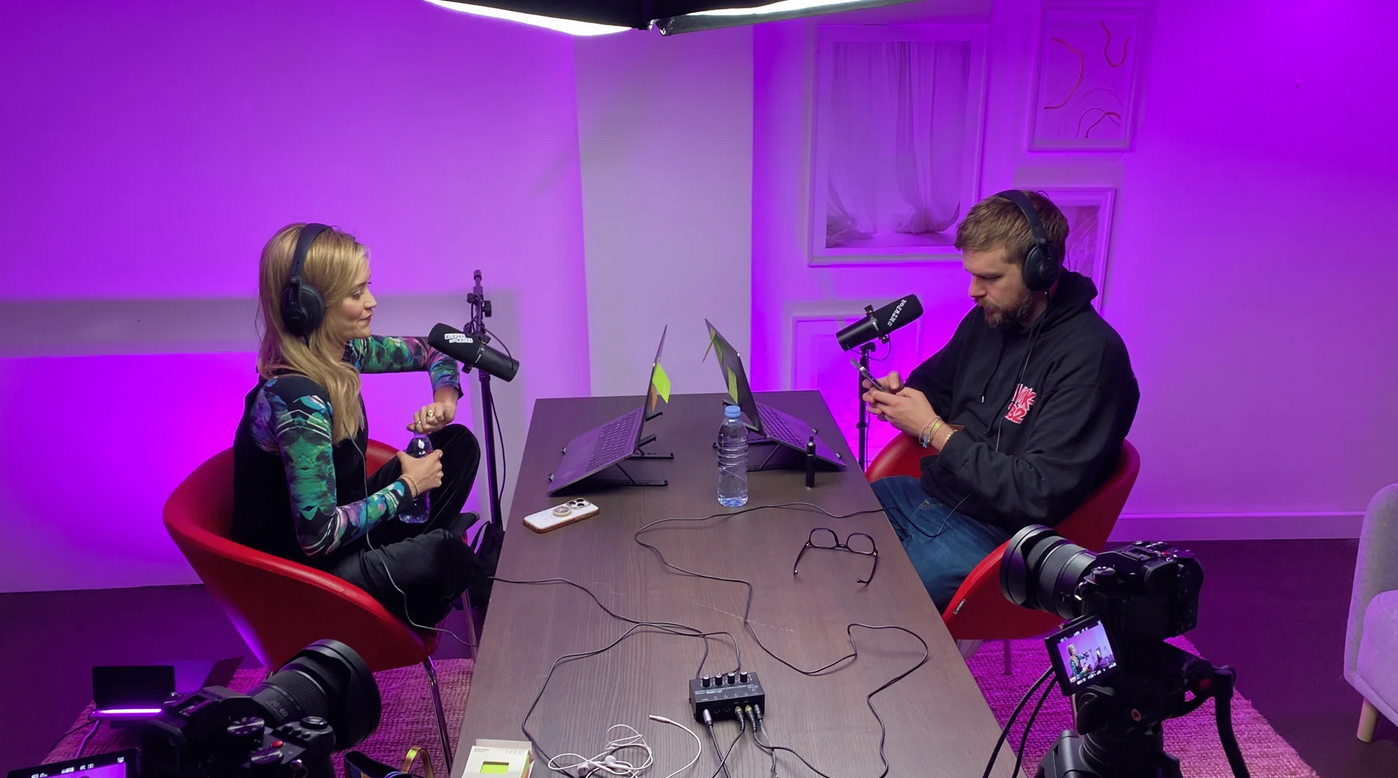
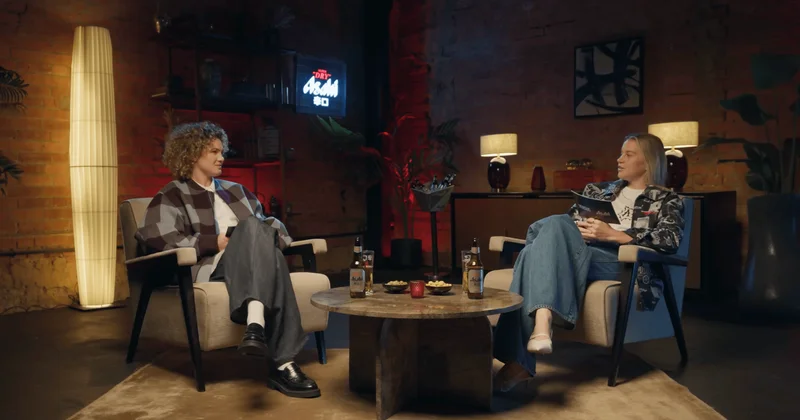
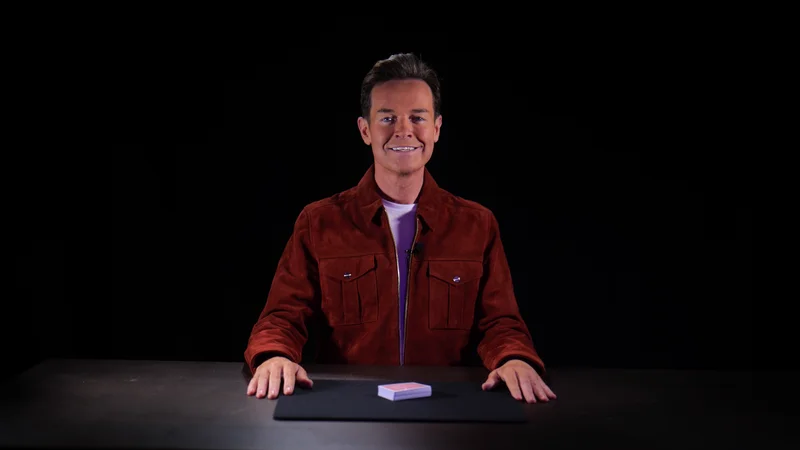
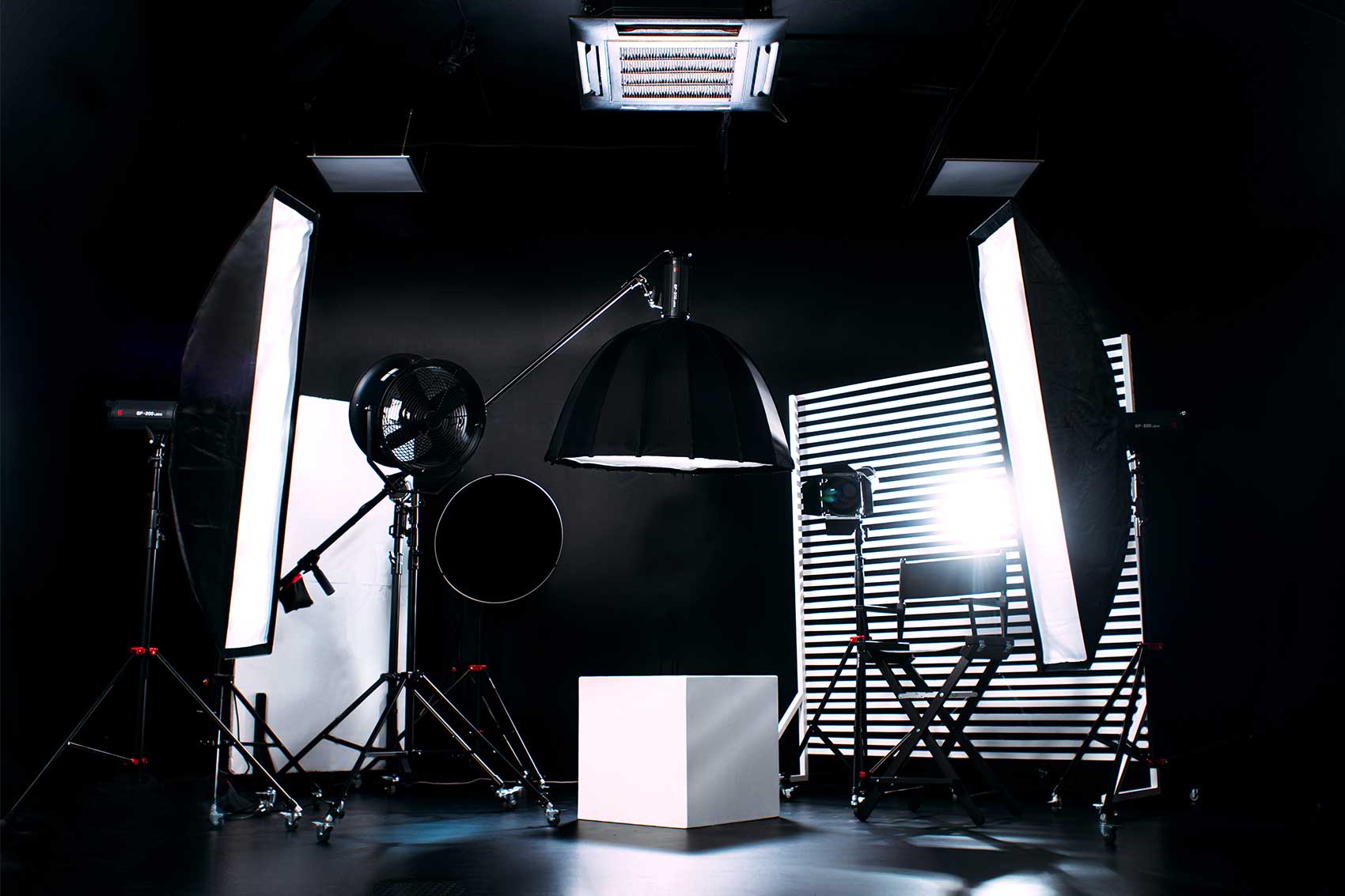
See the 'Murder They Wrote' podcast setup used by Laura Whitmore and Iain Stirling from BBC at Finchley Studio (Gathering setup). Watch Murder They Wrote at BBc sound , Spotify , Apple podcasts , Youtube , Instagram , Amazon music
Book this setup for your podcast
2. Full Service / Wet Hire (The Professional Approach)
"Wet Hire" (or "Full Service") includes the services of an in-house engineer or producer for the duration of the session. The additional cost for this service is often marginal—for example, the rate may increase from £100/hr to £120/hr.
This marginal 20% increase in cost represents an almost 100% positive Return on Investment (ROI) and a near-total de-risking of the production. An "expert pair of hands... is worth its weight in gold".
The in-house engineer is not merely a "record button" pusher. Their professional responsibilities include:
Pre-Session: Selecting the appropriate microphone for each participant's voice and ensuring correct mic placement.
Session: Performing correct gain staging, managing live mixing, monitoring audio for any glitches (clicks, pops, plosives), handling the technical integration of remote guests, and troubleshooting any problems that arise, all while remaining invisible to the talent.
Post-Session: Correctly managing, labeling, and handing over the audio files, ensuring file integrity and avoiding the "hidden costs" associated with file transfers or format conversions.
By booking a Wet Hire, the host and producer are liberated from all technical concerns. They can focus 100% of their energy on the content, the guest, and the performance. The £20/hr premium is an insurance policy that guarantees a high-quality, technically flawless source recording, which in turn saves time and money in post-production.
3. Beyond the Session: Evaluating Post-Production Services
Many studios, particularly "Broadcast-Tier" facilities, offer a full suite of post-production services, including editing, mixing, mastering, and sound design. This presents the booker with a strategic choice: to "bundle" post-production with the studio that recorded it or to source it from a specialist third-party.
The "Bundling" Dilemma:
Pro: The primary advantage is a seamless workflow. The engineer who was present for the recording (in a Wet Hire) can pass detailed notes to the in-house editor (e.g., "Guest coughed at 10:32," "Host flubbed this line, but the re-take at 45:15 is good"). This streamlines the entire process.
Con: The booker is now a captive customer. There is no guarantee that the studio's skill in post-production matches its skill in recording. The booker may be paying a premium for a simple "top and tail" edit that could be sourced more cheaply elsewhere.
The Assessment Framework: A booker must evaluate the studio's post-production capabilities as a separate service.
Ask for a portfolio: Listen to their finished work.
Differentiate skills: Is this a simple editing service (removing "ums" and "ahs") or a high-end "sound design" house? A studio that lists clients like Spotify is likely offering sophisticated sonic branding, mixing, and mastering, which is a different service entirely from a basic podcast edit.
The choice to bundle post-production should be based on an assessment of this portfolio, the value of the integrated workflow, and a clear, itemized quote for the services rendered.
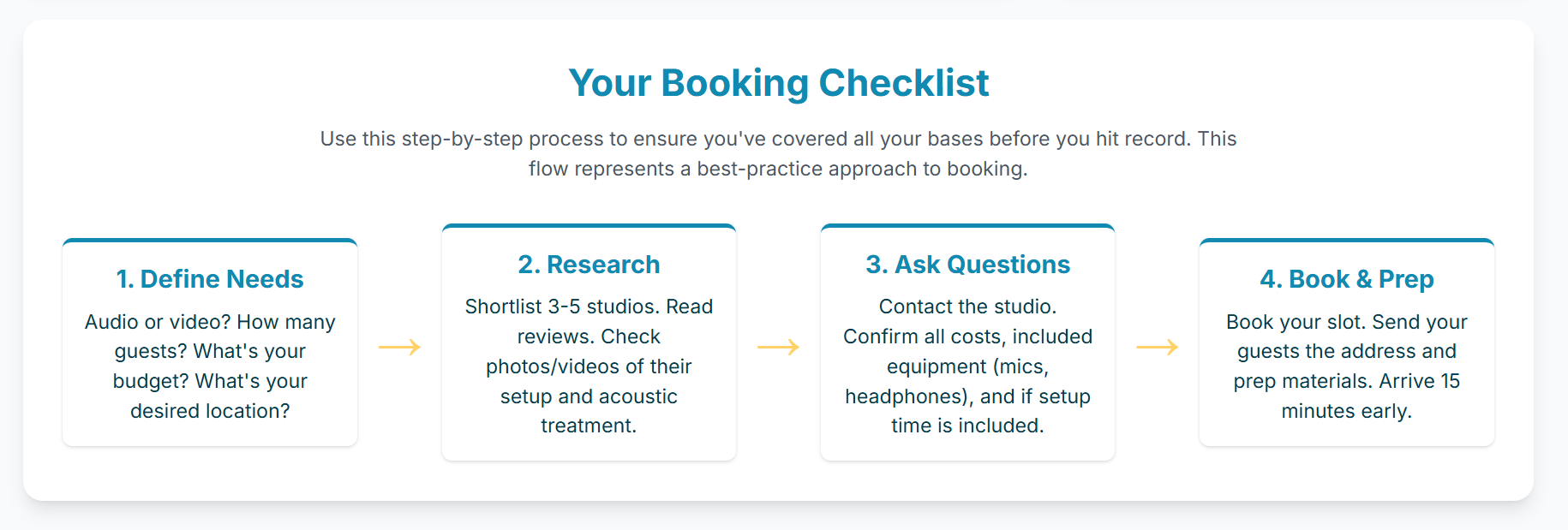
Section 4: The Multimedia Mandate: Assessing Video, Streaming, and Remote Capabilities
The era of the audio-only podcast as the default format is over. The "vodcast" (video podcast), driven by the immense discovery engines of YouTube and the "clip-ability" of platforms like TikTok and Instagram Reels, is now a primary consideration. A modern studio assessment must include a parallel audit of its video, remote, and streaming capabilities.
1. Video Podcasting ("Vodcasting")
A studio advertising "4K cameras" is providing the bare-minimum specification. A professional producer must look deeper into the video signal chain and the environment.
Cameras: "4K" is the resolution, not a mark of quality. The critical questions are:
What cameras? Are they professional-grade DSLRs (e.g., Sony A7S series) or cinema cameras (e.g., Blackmagic Pocket 4K/6K) that can handle long recording times without overheating and produce a "cinematic" image with good dynamic range? Or are they cheap webcams or camcorders?
How many cameras? A dynamic, engaging conversation is best captured by a "multi-cam setup". This typically involves a "wide" shot of the set and a dedicated "medium" shot on each participant, allowing an editor to cut between speakers and reactions.
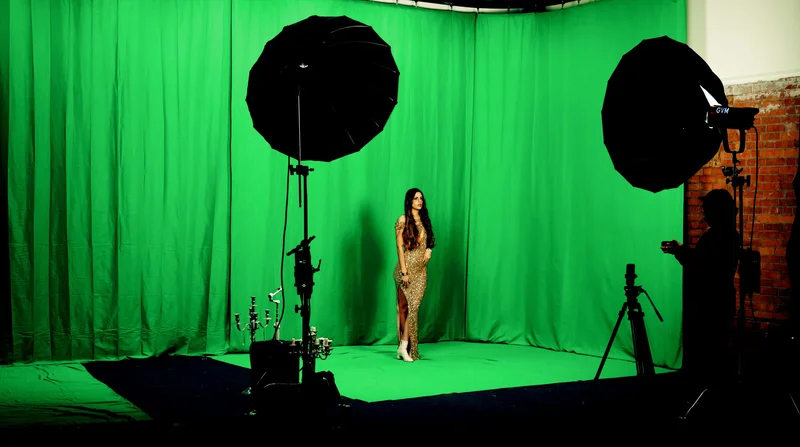
Lighting: This is as important to video as acoustics are to audio. A "well-lit room" is not a professional specification. Look for intentional, professional three-point lighting (a Key light, a Fill light, and a Back-light) on each participant. This separates them from the background, creates a flattering, non-fatiguing image, and signals a professional production.
Set & Environment: This is where the technical and the aesthetic converge. The rise of video means the "vibe" and "look" of the studio are now part of the product.
Is the set a generic "black box," or is it an "Instagrammable," thoughtfully designed space that enhances the brand?
Is the set brandable? Can the studio's logos be hidden? Are there screens, backdrops, or lightboxes where the show's own branding can be displayed?
2. Remote and Hybrid Recording
The post-2020 production landscape means that studios must be able to seamlessly integrate remote guests. Many studios now list compatibility with platforms like Zoom or Riverside. However, the method of integration is what separates a professional facility from an amateur one.
The Bad Method: The studio computer simply runs the Zoom app, and the engineer records the "computer audio" output. This is low-fidelity, unreliable, and offers no independent control.
The Good Method: The studio's audio console—whether a RØDEcaster Pro or an SSL—handles the remote audio natively. This is achieved through a "mix-minus" setup. The console sends the full program mix minus the remote guest's own audio back to them (so they don't hear an echo of themselves), while simultaneously recording the guest's audio on its own, dedicated, high-quality track. This allows the engineer to process and mix the remote guest's audio independently from the in-room microphones, resulting in a seamless, professional, and balanced conversation.
3. Live Streaming
This is the most technically demanding service a studio can offer, as it requires all of the above (multi-cam video, professional audio, remote integration) to work in perfect synchrony, in real-time, with no "fix it in post" option.
A booker inquiring about live streaming must ask about three critical components:
Hardware Switcher: Is the studio using a dedicated video switcher (e.g., an ATEM Mini) to cut between cameras live?
Encoding: How is the stream being encoded (dedicated hardware or software) for delivery to platforms like YouTube or Twitch?
Internet Connection: What is the upload bandwidth? Is the connection dedicated and redundant (e.g., a primary fiber line with a 5G cellular backup)? A single dropped connection can kill the entire production.
The modern "podcast" studio is, in reality, a small-scale broadcast media hub. A booker must assess its multimedia capabilities with the same rigor as its audio fidelity.

See the 'The Tooney & Russo Show' from BBC and Lionesses Ella Toone and Alessia Russoat from England national football team at Finchley Studio (Lounge setup). Book this setup for your podcast. Watch 'The Tooney & Russo Show' at BBc sound , Spotify , Youtube, Amazon music.
Book this setup for your podcast
Section 5: The London Calculus: Logistics, Location, and The "Guest Experience"
A studio's technical specifications are only half of the equation. In a city like London, the practical logistics of location, accessibility, and environment are not "amenities"; they are critical production tools that can directly influence the quality of the content and the feasibility of booking high-profile talent. These "soft" factors are a key part of the booking calculus.
1. Accessibility and The "Guest Filter"
The location of a studio is not just a pin on a map; it is a "Guest Filter."
High-profile guests—the kind that corporate brands or major media producers want to attract—are time-poor and have high expectations. They are often "doing the host a favor" by appearing.
These A-list guests (CEOs, celebrities, industry leaders) are managed by gatekeepers (agents, publicists, EAs) who will vet the entire production experience.
If a studio is located in Zone 6, a 15-minute walk from the nearest tube station, and up three flights of stairs in a building with no lift, that A-list guest will cancel. The logistical friction is too high.
Therefore, a studio's location is a strategic asset. A facility in a central, accessible location (e.g., Zone 1 or 2, close to major transport links) is a prerequisite for attracting high-tier guests. The "premium" cost of this location is part of the investment in "guest acquisition."
2. The Environment ("Vibe")
The "vibe" of a studio is a frequently overlooked but crucial factor in content quality. Podcasting is an intimate medium. The quality of the final product is
entirely dependent on the quality of the conversation—its energy, its candor, its rapport. The physical environment has a direct, psychological impact on this conversation.
A "clinical" or "stressful" environment—bright fluorescent lights, no comfortable waiting area, a feeling of being rushed—will make a host and guest tense. This tension is "audible" in the final recording, resulting in a low-energy, stilted, or unnatural conversation.
A "welcoming and comfortable" space has the opposite effect. A studio that provides a "green room" or breakout area is not just being hospitable; it is providing a designated space for the host and guest to build rapport before the red light is on. A comfortable, well-designed, creative ambiance encourages relaxation and openness, leading directly to a better, more authentic conversation.
3. Operational Logistics
Finally, the booker must assess the studio's business operations. A technically perfect studio with a poor booking system is a constant source of friction.
Booking Flexibility: What are the operating hours? Is 24/7 access available for projects that need it? How much lead time is required?
Cancellation Policy: What is the policy? A-list guests cancel. A studio that is punitive and inflexible on this point may not be a good long-term partner.
Support: Is there a studio manager on-site? Who is the point of contact if the engineer has a problem?
In the London market, a "good" studio is not just one with good microphones; it is one that is easy to get to, pleasant to be in, and simple to do business with
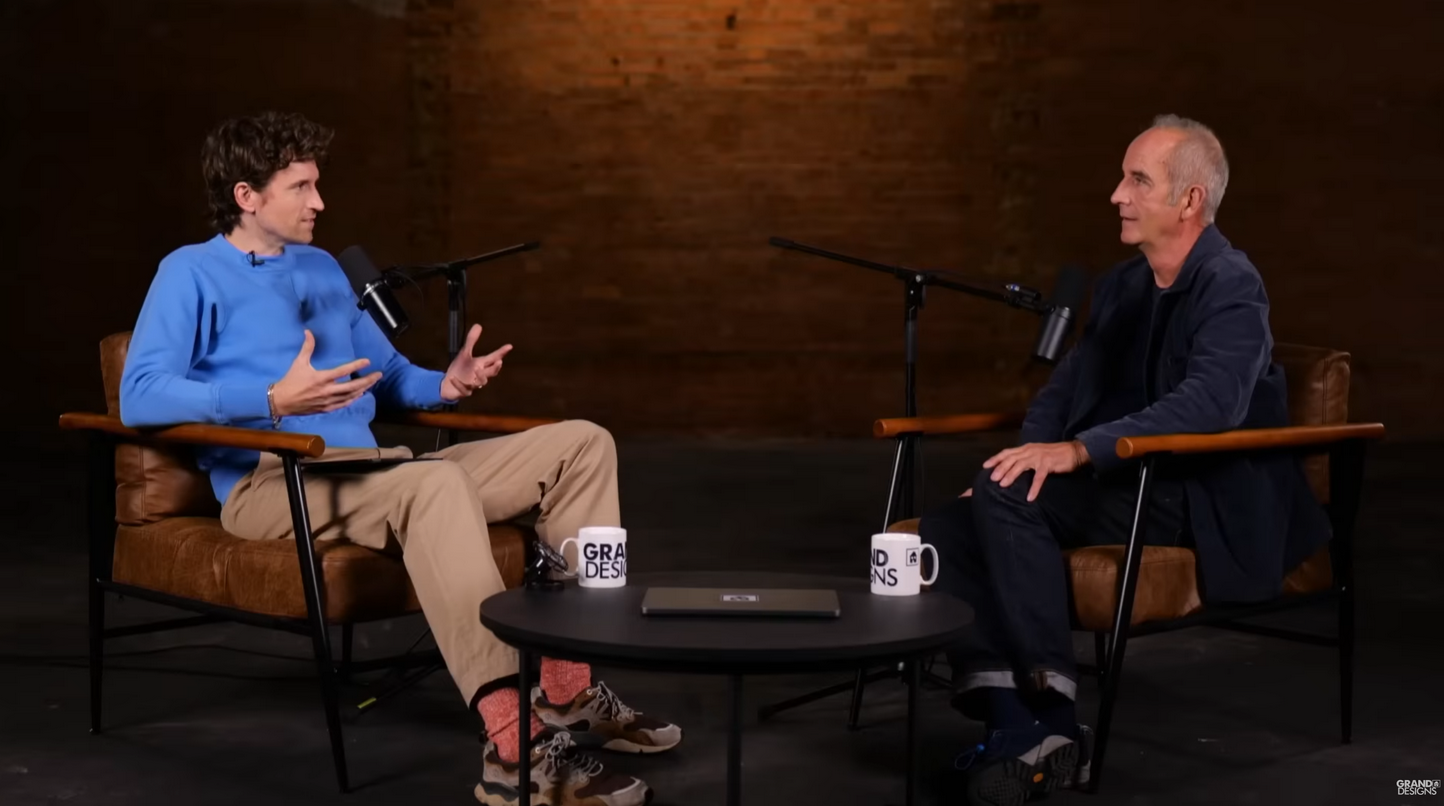
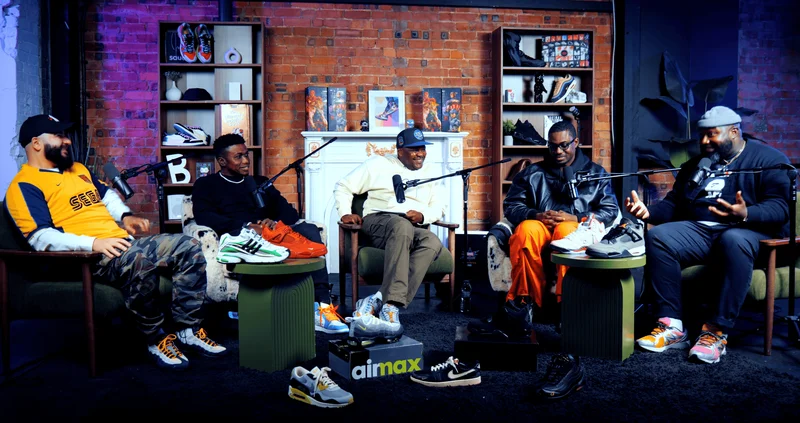
See the 'Grand designs' from Channel 4 by Kevin McCloud at Finchley Studio (Brick studio). Book this setup for your podcast.
Section 6: Deconstructing the Rate Card: Pricing, Packages, and Total Cost of Production (TCP)
The "sticker price" on a studio's rate card is perhaps the single most misleading data point a booker will encounter. The assumption that a £100/hr studio is cheaper than a £200/hr studio is a common and costly error. The only financial metric that matters is the Total Cost of Production (TCP).
This section provides a framework for deconstructing a studio's pricing and identifying the hidden costs that define the true bottom line.
The Total Cost of Production (TCP) Model
A professional booker must use a simple formula to compare potential studios, moving beyond the simple hourly rate.
TCP = (Studio Rate × Booked Hours) + (Engineer Fee) + (Post-Production Rate × Hours) + (Admin/Hidden Fees)
Studio Rate × Hours: The base cost. Does the studio have a 2-hour minimum? Does the "clock" start at the booking time or when the talent arrives?
Engineer Fee: Is this a "Dry Hire" or "Wet Hire"? As established in Section 3, adding the engineer fee (e.g., £20/hr) is often a high-ROI investment that reduces the risk of costly re-shoots.
Post-Production Rate × Hours: This is the most significant variable. As established in Section 1, a cheap studio with poor acoustics will drive this number up exponentially. A £100/hr "saving" on the studio rate can create a £500/hr post-production nightmare.
Admin/Hidden Fees: The "gotchas" that studios may not advertise.
Analysis of Pricing Models
Hourly Rates: (e.g., £100/hr Dry, £120/hr Wet). This model is best for simple, short, or one-off recordings. It provides flexibility but can be expensive for longer-form or series-based content.
Package Deals: (e.g., 4-hour block, "Record + Edit" package, 10-episode series). These are often more cost-effective for producers with predictable, ongoing content. A studio is more likely to offer a discount in exchange for a guaranteed volume of work.
Identifying Hidden Costs
A key part of the booker's due diligence is to find the "hidden costs" that are not on the main rate card. These must be clarified in writing before any contract is signed.
File Transfer Fees: Does the studio charge for file handover? Is there a fee for exporting files in a specific format (e.g., WAV vs. MP3)?
VAT: Is the quoted price "ex-VAT" or "inc-VAT"? A 20% surprise can be a significant blow to a budget.
Equipment Surcharges: Is the full microphone locker included? Some studios may advertise a low rate but then charge a premium supplement for using their "best" mic, such as the Neumann U87.
Engineer Overages: If a 2-hour session runs long by 15 minutes, what is the policy? Is the overage billed pro-rata, or does it trigger a full extra hour at a premium rate?
Hospitality: Are tea, coffee, and water for guests included, or is this an extra charge?
Comparative Market Tiers: The "Value" Synthesis
By combining the analysis of pricing, equipment, and service, a booker can create a clear value profile for the two primary tiers of the London market.
Studio Profile 1 (Based on "Pro-SME" Model):
Rate: ~£100-£150/hr.
Gear: RØDEcaster Pro, Shure SM7Bs.
Value: The value proposition here is efficiency. This studio is built for speed, reliability, seamless remote guest integration, and "plug-and-play" video. It is the ideal choice for corporate content, branded podcasts, and creators who need a high-quality, professional product with low friction and a predictable cost. The 20% premium for an engineer is a standard and highly recommended part of this value-stack, de-risking the entire session.
Studio Profile 2 (Based on "Broadcast-Tier" Model):
Rate: ~£200-£500+/hr (Inferred).
Gear: SSL Consoles, Neumann U87s, extensive mic locker.
Value: The value proposition here is fidelity and risk mitigation. This studio is built for ultimate audio quality and "white-glove" service. The clients (e.g., BBC, Spotify) have enormous reputational risk; a technical failure is not an option. The high cost buys them pristine audio, elite engineers, and the logistical and reputational comfort required to service A-list talent.
The choice is not one of "good" vs. "bad." The choice is one of purpose.
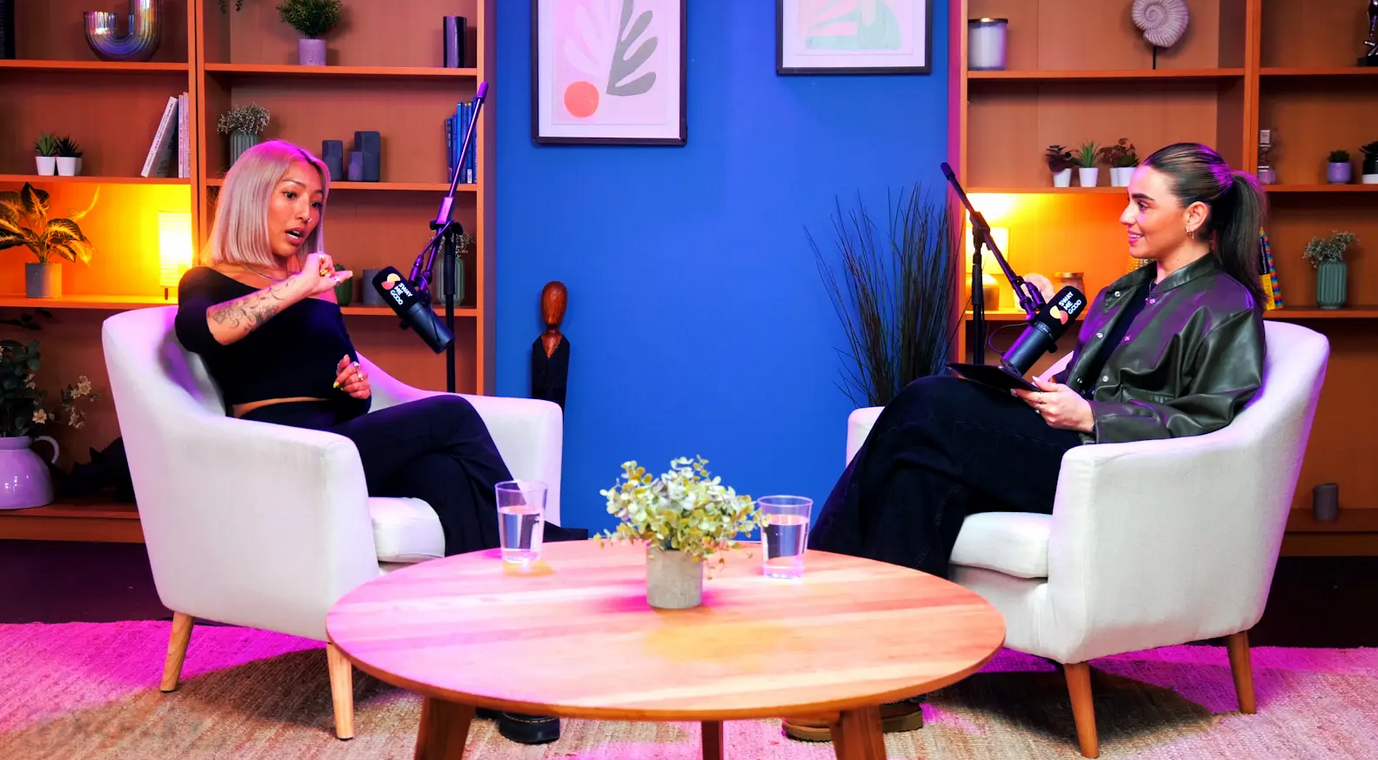
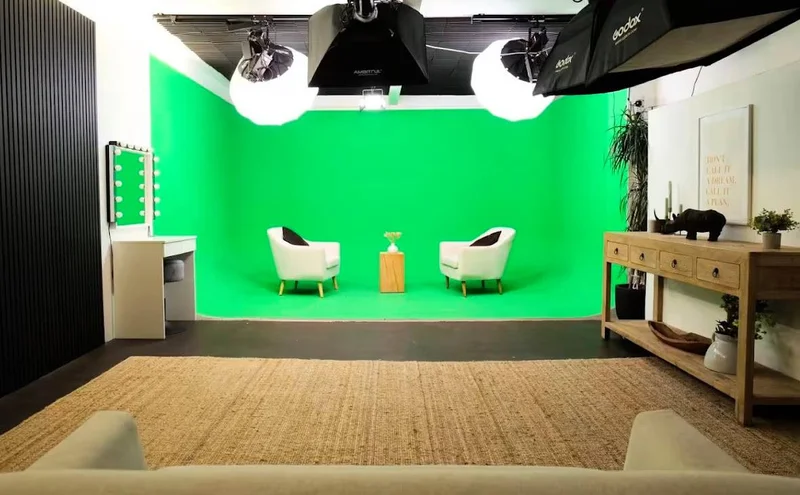
Finchley Studio (Lounge set): book this setup for your podcast
Section 7: Final Assessment: A Booker's Decision Framework
The final stage of the booking process is to synthesize this analysis into an actionable decision. This begins not with the studio, but with the producer. A booker must first create a clear profile of their own project's needs before they can find an appropriate facility.
The Needs-Assessment Matrix
Profile 1: "The Scrappy Start-Up"
Project: Audio-only, 3-person panel discussion, high internal tech skill (the host is an ex-audio engineer), very budget-conscious.
Recommended Match: Dry Hire at a "Pro-SME" Studio. The team has the technical skill to operate the RØDEcaster Pro themselves, saving the engineer fee. They need a reliable, acoustically good room but do not require "white-glove" service.
Profile 2: "The Corporate Brand"
Project: Video-first, 2-person interview with a high-profile CEO guest. No internal technical skill. The "look" and "guest experience" are paramount.
Recommended Match: Full Service (Wet Hire) at a "Pro-SME" Studio that also has a strong video/vibe component. The studio must be centrally located and "Instagrammable" to impress the guest. The engineer is non-negotiable to ensure a flawless technical experience.
Profile 3: "The Major Media Launch"
Project: Audio and Video, A-List celebrity guest, full 10-episode series, significant budget approved.
Recommended Match: "Broadcast-Tier" Facility. The project's budget and reputational stakes are too high to risk on anything else. It needs the prestige, logistical security, ultimate technical quality, and experienced engineers of a Tier 2 facility that is accustomed to servicing clients like the BBC.
The London Studio: Due Diligence and Assessment Questionnaire
To operationalize this report's framework, the following table provides a comprehensive checklist. This tool is designed to be used by a producer to conduct a formal, comparative assessment of potential studios, moving them from a "potential" list to a "shortlist."
Conclusion: Beyond the Booking: The Studio as a Strategic Partner
The process of booking a podcast studio in London is not a simple procurement task; it is an act of strategic partner selection. The choice of facility, as this report has demonstrated, has a cascading effect on every other aspect of the production, from content quality and guest acquisition to the final, Total Cost of Production.
The temptation to choose a facility based on the lowest hourly rate is a "false economy," one that almost invariably leads to a more expensive and inferior final product. This is because the "saving" is immediately nullified by the exponential increase in post-production hours required to "fix" audio that was "damaged" at the source by poor acoustics.
The professional producer must therefore look beyond the rate card. They must use the framework provided in this report to conduct a rigorous, 360-degree assessment of a facility's technical, operational, and logistical capabilities. This means quantifying the acoustics, auditing the signal chain, defining the service level, and factoring in the "guest experience."
The London market's bifurcation into a "Prosumer-Plus" tier and a "Broadcast-Tier" is not a hierarchy of "good" versus "bad." It is a sophisticated market offering different tools for different jobs. The ultimate goal is to find alignment: to match the project's specific technical, creative, and financial purpose to a studio built to serve that exact purpose. A studio is not a commodity; it is a partner. The final selection should reflect that strategic reality.