Executive Summary: The Visual Pivot in London’s Audio Economy
The digital media landscape of 2025 and 2026 has undergone a seismic shift, fundamentally altering the definition of what a "podcast" is. We have transitioned from an era where podcasting was synonymous with amateur audio experimentation—often recorded in makeshift bedroom setups with USB microphones—to a mature, industrial-grade media sector that rivals traditional broadcasting in reach, revenue, and technical sophistication. For content creators, brands, and businesses in London, the implications are stark: the barrier to entry has lowered, but the barrier to attention has skyrocketed.
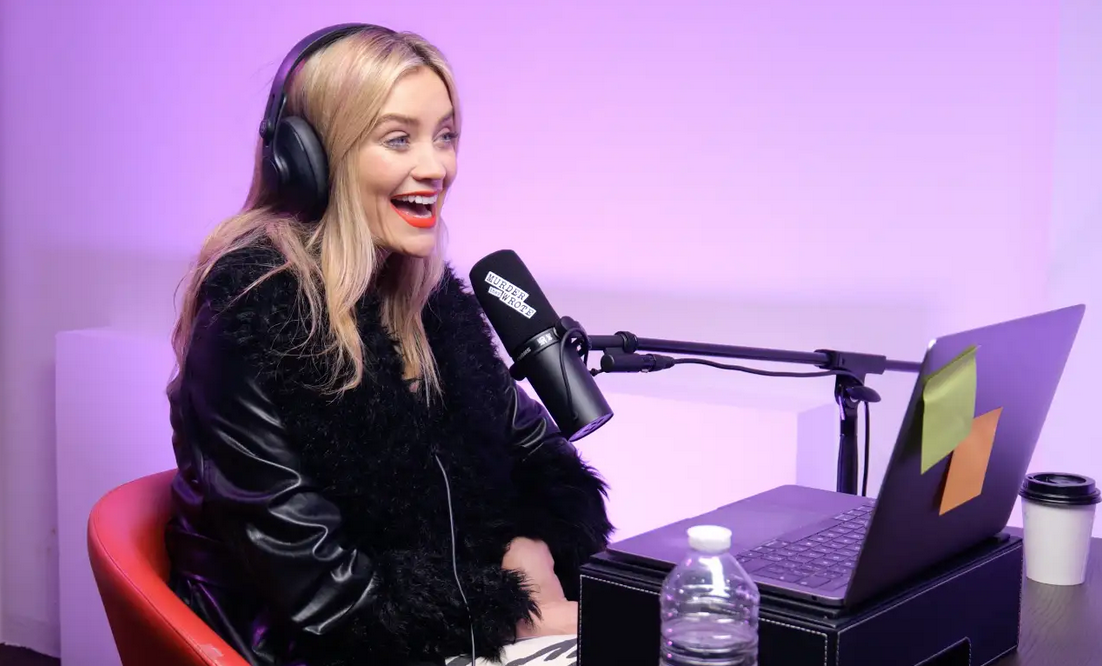
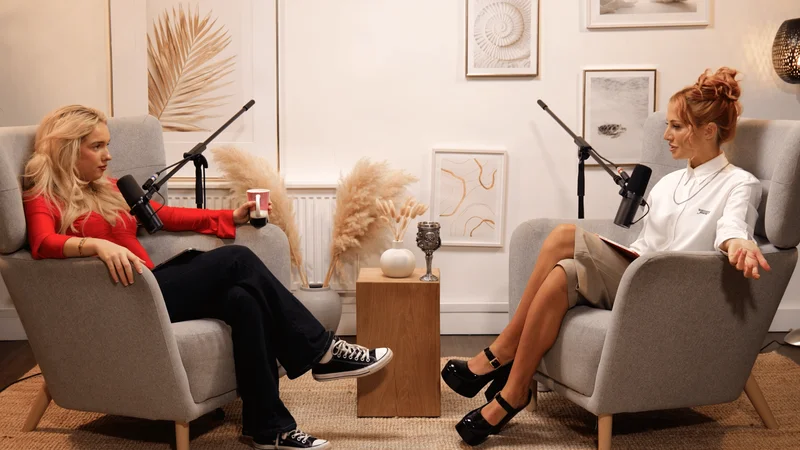
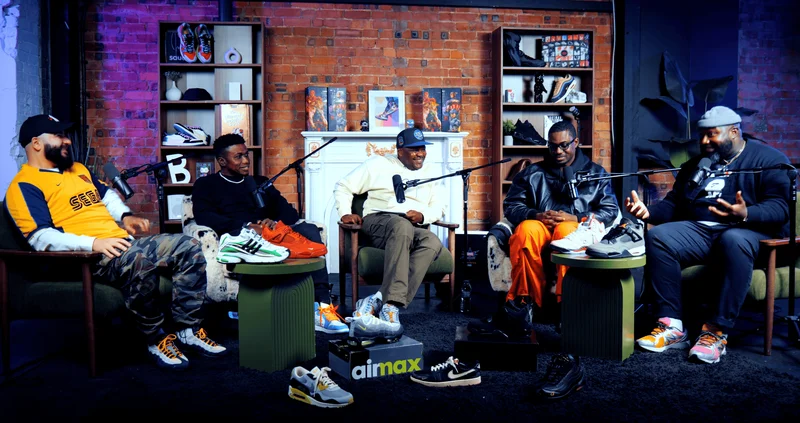
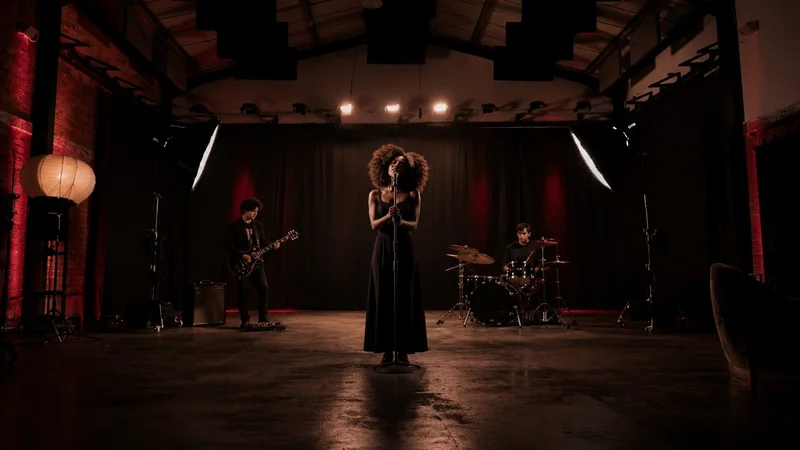
See the 'Murder They Wrote' podcast setup used by Laura Whitmore and Iain Stirling from BBC at Finchley Studio (Gathering setup). Watch Murder They Wrote at BBc sound , Spotify , Apple podcasts , Youtube , Instagram , Amazon music
The trajectory of the medium is undeniable. Global podcasting market value has surged, projected to reach unprecedented heights over the next decade, with monthly listenership in the UK and globally climbing steadily.1 However, the raw numbers hide a more critical qualitative shift: the migration to video. With 41% of podcast listeners now preferring video formats and 59% of Gen Z consuming podcasts primarily via YouTube, the "Vodcast" has become the dominant form of the medium.1 This shift has profound implications for production workflows, necessitating a move away from "audio-first" thinking toward a "video-first" strategy where the visual aesthetic is as critical as the audio signal.
This report serves as an exhaustive strategic guide for the modern podcaster. It dissects the critical intersection between high-end studio infrastructure and professional post-production. Specifically, we explore the indispensable role of the Videography Editor—not merely as a technical operator, but as the architect of audience retention and brand authority. By analysing current market data, the physics of sound, the hidden economics of home studios, and the logistical realities of the London rental market, we demonstrate why the collaboration between a professional editor and a dedicated podcast studio London facility is the single most effective strategy for growth in the current media climate.
Part 1: The 2026 Podcast Landscape – A Video-First Paradigm
1.1 The Statistical Reality of "Vodcasting"
To understand the necessity of professional video editing and podcast studio hire, one must first grasp the economic magnitude of the sector. The days of podcasting being a "niche" hobby are long gone. The global podcasting market was valued at USD 32.48 billion in 2025 and is projected to grow at a staggering CAGR of 27.3% through 2035.1 This explosive growth is not merely a result of more people listening; it is a result of how they are listening.
The most critical statistic for London-based creators is not the total market size, but the shift in consumption habits. Data from 2025 indicates that nearly half of all podcast listeners now prefer video podcasts. YouTube has effectively dethroned Apple Podcasts and Spotify to become the number one platform for podcast discovery.2 This is a fundamental disruption. Historically, podcasts were a "background" medium consumed while commuting or washing dishes. Today, video podcasts command "foreground" attention. Viewers watch the hosts, analyze their body language, and engage with the visual storytelling elements.
This "Video First" paradigm means that a podcast without a visual component is invisible to nearly half of the potential audience. Furthermore, the algorithmic architecture of discovery—driven by TikTok clips, Instagram Reels, and YouTube Shorts—relies entirely on high-quality video assets. A podcast that exists only as an audio file cannot be easily marketed on the platforms where 68% of consumers spend their daily media time.1 Consequently, the London podcast studio market has had to adapt, pivoting from sound booths to fully lit, multi-camera sets designed for visual impact.
1.2 The "Netflixification" of Audience Expectations
As major players enter the space, audience expectations regarding production value have shifted. Listeners do not compare a brand’s podcast to a hobbyist’s recording; they compare it to television standards. The entry of celebrities, major broadcasters, and high-net-worth individuals into the podcasting space has created an arms race of quality.
The "Netflixification" of podcasting means that audiences now expect:
4K Visuals: Crisp, cinema-grade video that looks professional on large television screens, not just smartphones. The days of grainy 720p webcams are over. Audiences expect shallow depth of field, high dynamic range, and professional lighting.3
Multi-Cam Dynamics: The static "webcam look" is dead. Viewers expect dynamic cutting between wide shots and close-ups that capture micro-expressions and reactions. This mimics the editing pace of television interviews, keeping the retention brain engaged.5
Broadcast Audio: A noise floor of zero. No hiss, no echo, no reverb. The tolerance for "Zoom audio" or bad acoustics has evaporated. In an era of noise-canceling headphones, every imperfection is magnified.7
In this context, the role of the Videography Editor becomes paramount. They are the gatekeepers of quality, ensuring that the final product meets these elevated standards. However, an editor is only as good as the raw material they are given. This brings us to the foundational debate facing every London creator: the choice between building a home studio or investing in a podcast studio near me.
Part 2: The Physics of Sound & The London Acoustic Environment
2.1 The Invisible Foundation: Acoustics and the "Noise Floor"
The primary adversary of the home podcaster is not equipment, but physics. Sound recording is the art of capturing air pressure variations. In a professional environment, we control these variations. In a home environment, we are at their mercy.
London presents a unique acoustic challenge. It is one of the loudest cities in the world. The "noise floor"—the measure of the ambient sound in a room when no one is speaking—of a typical residential flat or office in zones 1-3 is surprisingly high, often hovering around 40-50dB. For context, a professional recording requires a noise floor below 30dB, ideally closer to 20dB.
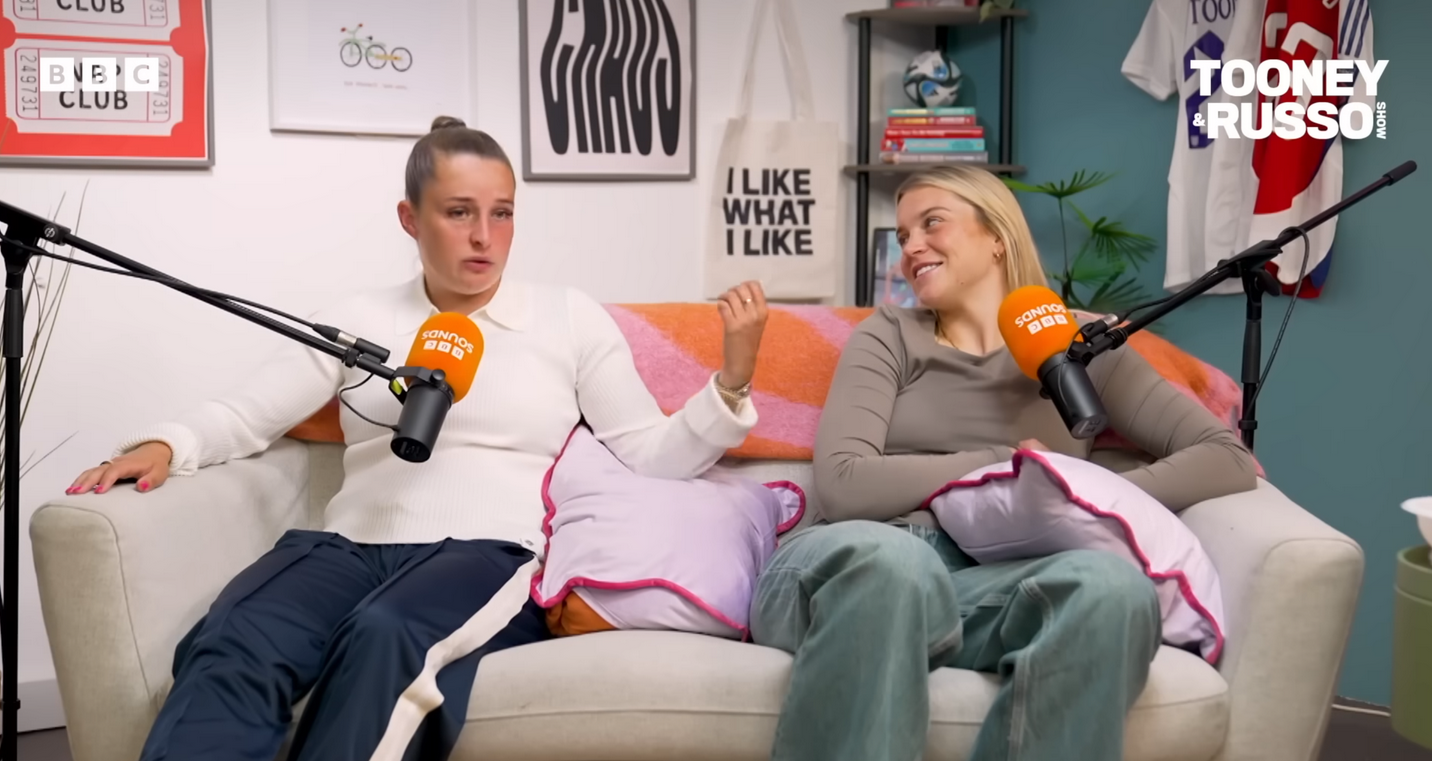
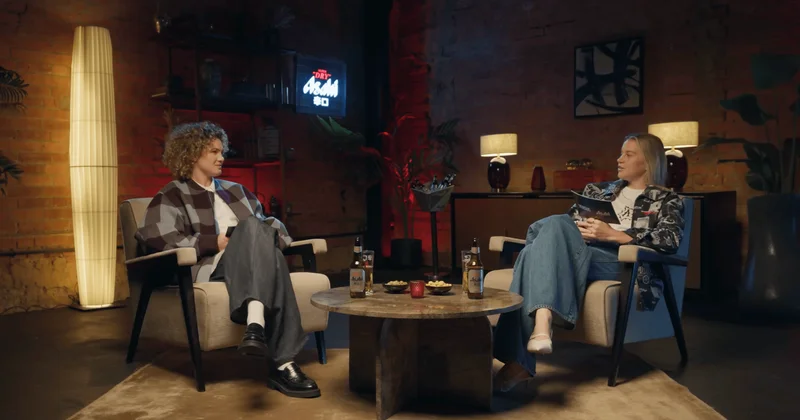
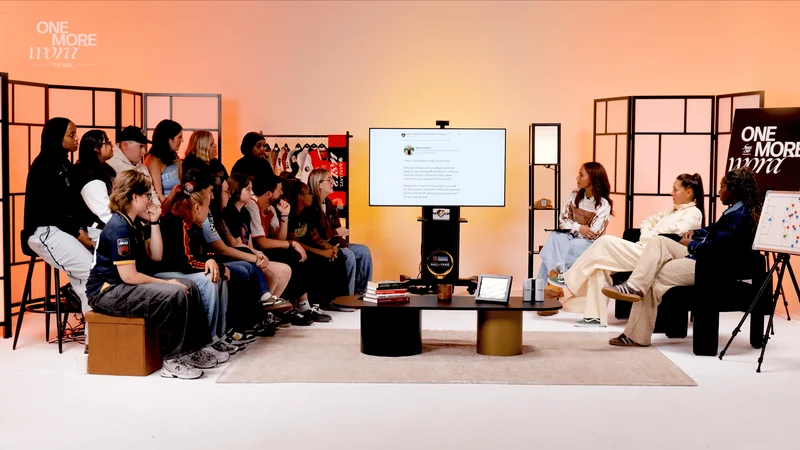
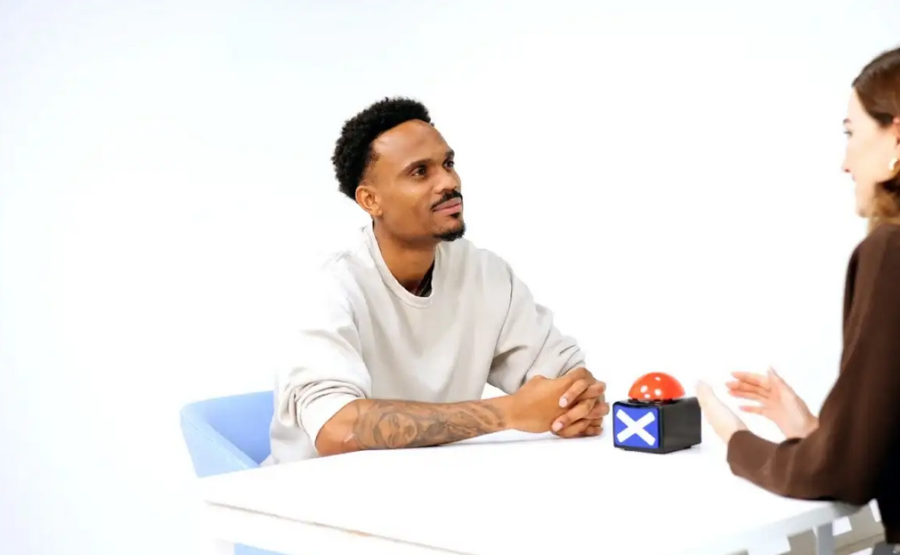
See the 'The Tooney & Russo Show' from BBC and Lionesses Ella Toone and Alessia Russoat from England national football team at Finchley Studio (Lounge setup). Book this setup for your podcast. Watch 'The Tooney & Russo Show' at BBc sound , Spotify , Youtube, Amazon music.
This noise floor consists of two distinct types of interference:
Structure-Borne Noise: This is the low-frequency rumble that travels through the physical fabric of the building. In London, this is often generated by the Underground network, heavy goods vehicles (HGVs) passing on main roads, or construction work. Low frequencies are notoriously difficult to block; they pass through standard walls and floors with ease. A microphone stand placed on a wooden floor in a Victorian terrace will pick up the vibrations of a bus passing outside as a low, muddy "hum" that muddies the vocal recording.9
Airborne Noise: This includes sirens, aircraft (especially in West London under the Heathrow flight path), neighbours, and wind. High-frequency sounds like sirens can bleed into a recording, forcing the editor to aggressively use noise reduction software, which often degrades the voice quality, making it sound "robotic" or "underwater".10
The Reverb Problem
Beyond external noise, the room itself is an instrument. Most residential rooms are rectangular boxes with hard, parallel surfaces (plaster walls, glass windows, laminate floors). When a host speaks, sound waves project outwards, bounce off these hard surfaces, and return to the microphone milliseconds later. This phenomenon, known as "room reverb" or "slapback echo," creates a "boxy" sound. It subconsciously tells the listener: "This is amateur." It reduces intelligibility and increases listener fatigue. A listener's brain has to work harder to filter out the echo to understand the speech, leading them to switch off sooner.12
2.2 The Cost of Silence: Why Home Soundproofing Fails
To fix these acoustic issues at home requires more than sticking egg cartons or cheap foam on the wall. Professional soundproofing requires "decoupling"—building a room within a room to mechanically isolate the recording space from the building's structure.
Acoustic Treatment vs. Soundproofing: It is vital to distinguish between these two. "Treatment" (foam panels, bass traps) manages the echo inside the room. It does nothing to stop the police siren outside. "Soundproofing" stops the siren.
The Construction Reality: Effective soundproofing in London requires adding mass (Mass Loaded Vinyl), damping (Green Glue), and decoupling (Resilient Channels). This involves ripping out existing drywall, installing isolation clips, and re-plastering with high-density acoustic plasterboard.14
Cost Breakdown for a Standard London Room (12m²):
Materials (MLV, Resilient Bars, Acoustic Plasterboard): £2,000 - £4,000.
Labor (Specialist Installers): £3,000 - £6,000.
Acoustic Treatment (Panels, Diffusers): £1,000 - £3,000.
Total: £6,000 - £13,000+.9
For a tenant in a rented London flat, this construction is contractually impossible. For a homeowner, it is a massive capital expenditure (CapEx) that offers no return on investment unless the room is used commercially 24/7. In contrast, a professional London podcast studio like Finchley Production Studio or Spiritland has already amortized these costs. When you hire a studio for £100/hour, you are renting millions of pounds worth of construction and acoustic engineering for a fraction of the price.17
Part 3: The Hidden Economics of Equipment Ownership
Beyond the room itself, the hardware required to meet 2026 standards is expensive, complex, and rapidly depreciating. Many creators fall into the "Gear Acquisition Syndrome" trap, believing that buying a camera is a one-time cost. They fail to account for the ecosystem of accessories required to make that camera work.
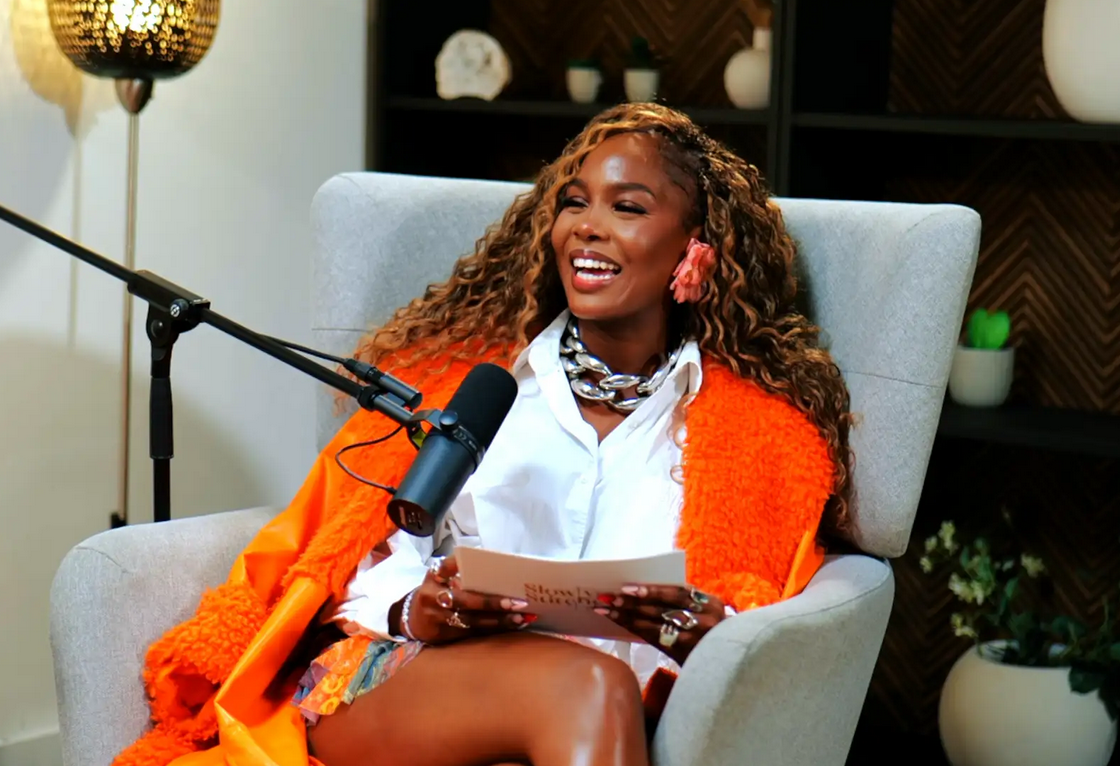
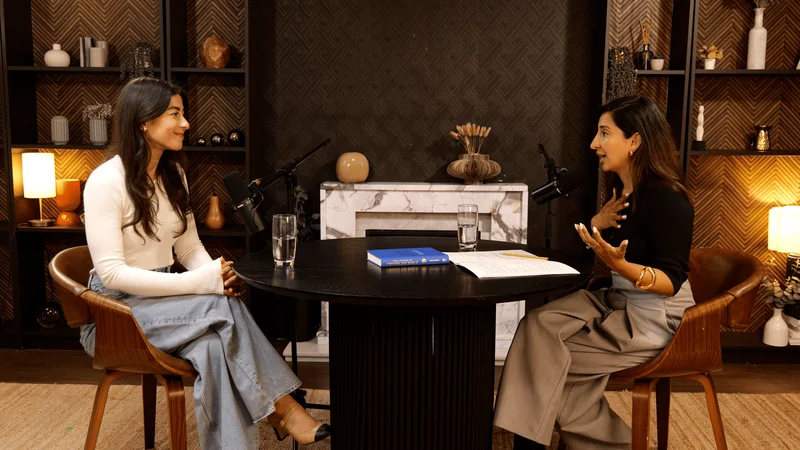
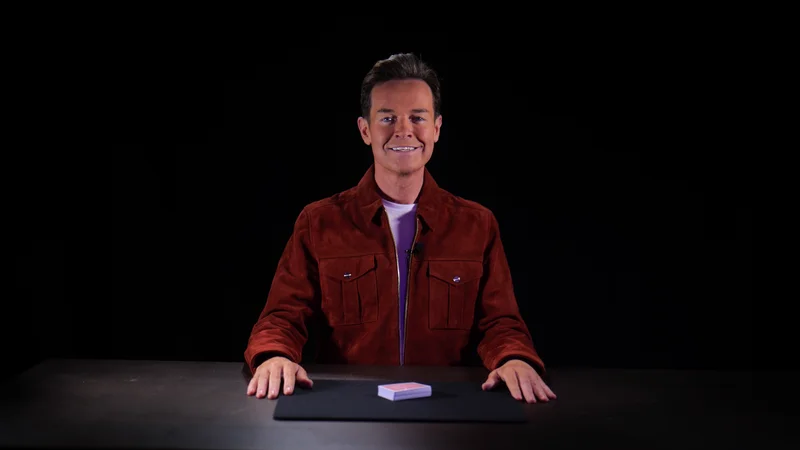
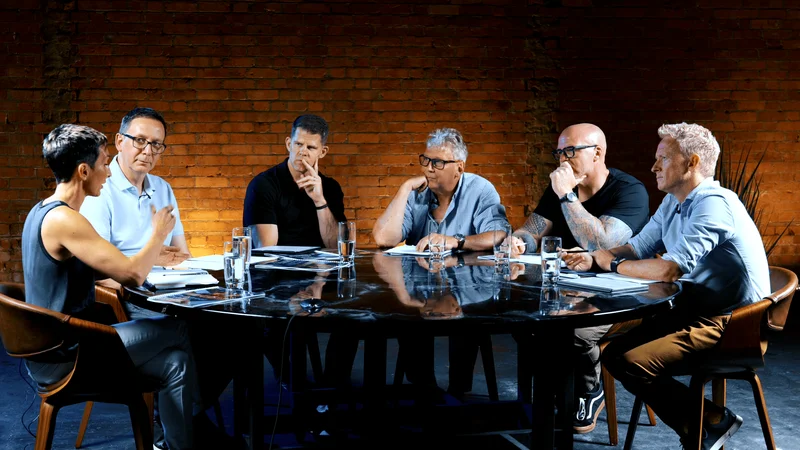
Finchley Studio (Dialogue set): book this setup for your podcast
3.1 The "Pro" Home Setup Bill
Let us construct a realistic budget for a 2-person video podcast setup that meets current broadcast standards (4K video, professional audio).
Data synthesized from equipment market analysis.17
This initial outlay of over £20,000 is prohibitive for most independent creators and even many SMEs. Furthermore, this equipment depreciates. Camera technology evolves rapidly; a body bought today will be superseded within 24 months. By hiring a podcast studio hire facility, you gain access to this tier of equipment without the depreciation hit.
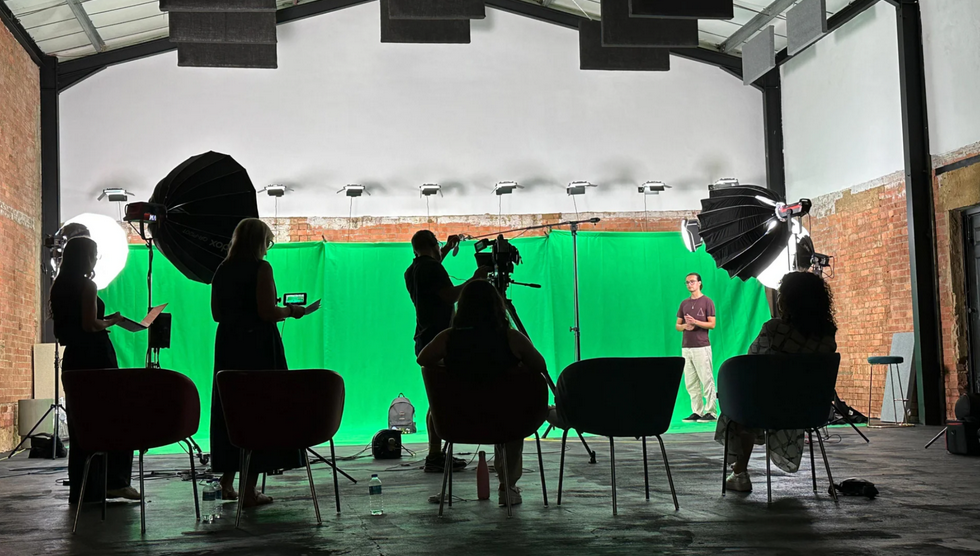
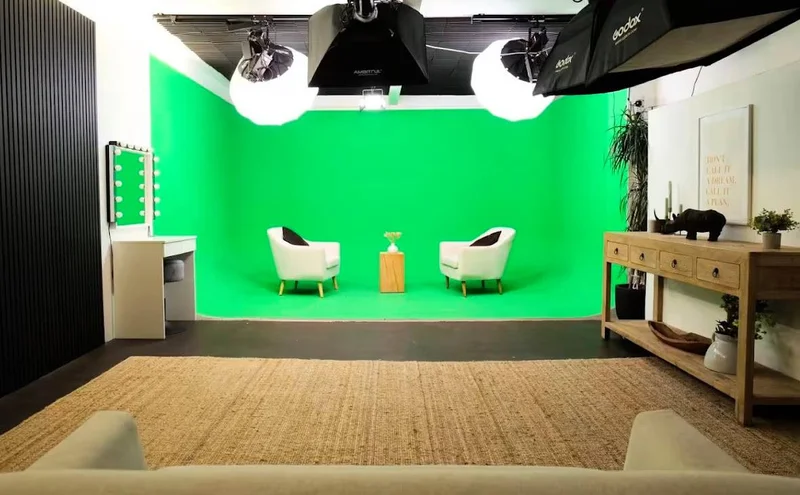
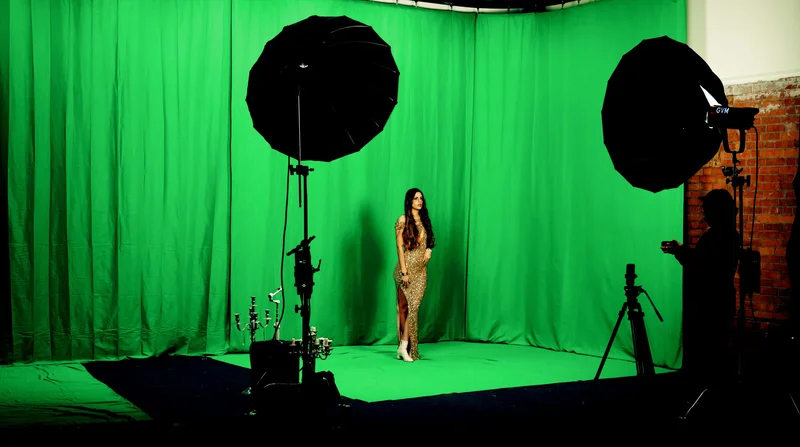
Finchley Studio (Giant Green Screen): book this setup for your podcast
3.2 The "Time Tax" of DIY Production
The most insidious hidden cost of the DIY approach is time. For a business or a creative professional, time is the scarcest resource. A DIY workflow forces the host to become the technician.
Setup/Teardown: If you do not have a dedicated room, you must set up lights, cameras, and mics for every session. This takes approx. 60-90 minutes.
Troubleshooting: If a hum appears in the audio or a camera won't sync, you must fix it. This creates "cognitive load" that distracts from the interview preparation.
Data Management: Transferring hundreds of gigabytes of 4K footage from SD cards to hard drives takes hours.
Every minute spent crawling under a desk to check a cable is a minute not spent on content strategy, guest research, or business development. By hiring a studio with an engineer included, the host buys back their focus. They walk in, record, and walk out. The technical risk is transferred entirely to the studio.21
Part 4: The Role of the Professional Videography Editor
Once the raw material is captured—ideally in a professional studio—the Videography Editor takes over. In the modern podcast workflow, the editor is not merely a "cutter" who removes "ums" and "ahs." They are a creative partner responsible for translating a raw conversation into a compelling visual narrative that retains audience attention.
4.1 Multi-Cam Architecture: The Art of the "Cut"
The hallmark of a high-end video podcast is the multi-camera setup. Typically, this involves three angles: a wide shot establishing the spatial relationship between the host and guest, and two tight "singles" focusing on each speaker.4 The editor's role here is nuanced and requires a deep understanding of visual pacing.
The Psychology of the Cut
The editor cuts not just for who is speaking, but for reaction. Human communication is 55% non-verbal. Seeing a guest's non-verbal reaction—a raised eyebrow, a smile, a wince—often tells the story better than the audio. A professional editor knows when to linger on a reaction shot to let a moment land, rather than cutting back to the host immediately. This technique mimics high-end documentary filmmaking and significantly increases viewer retention.5
Masking Edits
In audio podcasting, it is easy to cut out a boring 2-minute digression or a stumble. In video, a "jump cut" (where the video skips forward visibly) is jarring and breaks immersion. A skilled videography editor uses the multi-cam inputs to mask these cuts seamlessly. They might cut to a reaction shot of the host or a wide angle to hide the edit point in the dialogue track of the guest. This maintains the illusion of a continuous, flowing conversation while allowing for aggressive editing of the content to keep it concise.24
The Technical Workflow
Professional editors leverage tools like Adobe Premiere Pro or DaVinci Resolve. The workflow involves:
Syncing: Using timecode or audio waveforms to perfectly align 3 video tracks and 4+ audio tracks.
Multicam Editing: Using a "switchboard" interface to cut between angles in real-time playback.
AI Integration: Utilizing tools like FireCut or AutoPod to automate the rough cutting of silence and switching based on active microphones, allowing the human editor to focus on the creative nuance.25
4.2 Color Grading: The Psychology of Visuals
Color grading is often overlooked by amateurs, yet it is arguably the most important factor in establishing a show's brand identity. Raw footage from professional cameras (like the Sony FX6 or Blackmagic 6K used in top London podcast studios) is often shot in "Log" profiles—flat, desaturated images that retain maximum dynamic range.26
The Videography Editor must "grade" this footage to:
Establish Mood: A true crime podcast might demand cool, desaturated blues, crushed blacks, and high contrast to evoke tension. A business or wellness podcast might prefer warm, inviting skin tones, soft highlights, and a bright, clean look. The editor manipulates color temperature and contrast to subconsciously signal the genre to the viewer.28
Ensure Consistency: If a podcast is recorded over two hours, the lighting might change (especially if there are windows). Or, different cameras might have slightly different color science (e.g., matching a Sony A7 to a Blackmagic Pocket). The editor matches these shots so that the skin tones look identical across all angles, preventing the viewer from being distracted by visual inconsistencies.30
Brand Alignment: The editor can subtly shift the highlights or shadows to align with the brand’s specific color palette (e.g., shifting shadows towards teal if the brand logo is blue), creating a powerful subconscious association between the video content and the company’s visual identity.31
4.3 The "Social Cut": Vertical Video as a Discovery Engine
In 2026, the editor’s job extends beyond the full-length episode. They must also act as a "Micro-Content Producer." The most effective marketing strategy for a podcast is the distribution of 30-60 second vertical clips on TikTok, Reels, and Shorts.32
A professional editor understands the distinct grammar of these platforms:
The Hook: Identifying the single most viral sentence in an hour-long conversation and placing it at the very start of the clip to arrest the scroll.
Visual Density: Adding dynamic captions, progress bars, and emojis that keep the "retention brain" engaged. These are not just subtitles; they are kinetic typography animations that emphasize key words.
Re-Framing: Taking a horizontal 4K image and intelligently cropping it to 9:16 vertical. This requires "keyframing" the motion to ensure the speaker remains centered even if they move around in their chair.
Contextual B-Roll: Overlaying stock footage or images relevant to the topic being discussed (e.g., showing a graph when the guest talks about economics) to add visual interest.
This "atomization" of content is labor-intensive. A 60-minute episode might yield 10-15 viable clips. Outsourcing this to a professional editor ensures a consistent stream of marketing assets without the host having to spend days editing social clips.5
Part 5: The Studio Advantage – Choosing the Right London Facility
For a London-based Content Marketer, selecting the right studio is a strategic decision. The market in London is segmented into distinct tiers, each serving a different need. Understanding these tiers is crucial for balancing budget with quality.4
5.1 Tier 1: The Budget / Self-Service Model
Examples: Pirate Studios, simple rehearsal rooms.
Price: £15 - £50 per hour.
Target: Hobbyists, students, musicians.
Pros: Extremely cheap, 24/7 access, automated booking via app.
Cons: "Dry Hire" means no engineer. You are on your own. If the SD card is full, the battery dies, or the mic levels are peaking, the recording is ruined. Acoustics are often imperfect (bleed from adjacent drum rooms is a common complaint). Security cameras in the room can ruin the visual aesthetic.34
Strategic Verdict: High risk for professional brands. A false economy if a recording fails or looks unprofessional.
5.2 Tier 2: The Mid-Range / Assisted Model
Examples: Outset Studio, Podshop.
Price: £80 - £120 per hour.
Target: Independent creators, SMEs.
Pros: Staff are usually on-site to help with initial setup. Equipment is decent (often prosumer grade like RODE Procasters). Good balance of price and performance.
Cons: Often located in shared workspaces or converted offices. "Assisted" doesn't always mean a dedicated engineer is monitoring your levels for the entire hour—they might just set you up and leave. Visual sets may be generic (foam tiles or plain curtains).18
5.3 Tier 3: The "Smart Professional" / Concierge Model
Examples: Finchley Production Studio, Spiritland, TYX.
Price: £100 - £200+ per hour.
Target: Corporate brands, serious vodcasters, agencies, celebrities.
Pros:
Engineer Included: A senior technician monitors audio and video in real-time. This is the ultimate insurance policy against technical failure.
Cinema-Grade Gear: Sony FX6/FX3 cameras, Shure SM7B mics, professional lighting grids.
Hospitality: Green rooms, high-quality coffee, and a "vibe" that impresses high-profile guests.
Set Design: Bespoke sets (e.g., "The CEO Corner", "The Brick Wall") that look high-end on video.
The "North London Advantage": Studios outside Zone 1 (like Finchley Production Studio) often offer significantly better value than Soho equivalents. For example, Finchley offers free parking (a rarity in London) and includes 4K multi-cam filming and an engineer in their packages, whereas a central London studio might charge double for the same spec due to higher rent and congestion charges.35
5.4 Logistics: The Guest Experience
When hiring a studio, one must consider the guest. If you invite a CEO or a celebrity to a podcast, their experience dictates the quality of the conversation.
Parking: Does the studio have parking? Asking a VIP to find a meter in Shoreditch is a recipe for a stressed guest. Studios with dedicated parking offer a significant psychological advantage.
Transport: Is it near a Tube station?
Privacy: Does the studio offer a private green room for pre-show preparation? This allows the guest to decompress and prepare, leading to a better interview.35
Part 6: The Benefits of Having an Engineer On-Site
The symbiotic relationship between the Videography Editor (post-production) and the Studio Engineer (production) is what delivers a world-class product. While the editor works after the fact, the engineer ensures the raw ingredients are perfect.39
6.1 Real-Time Quality Control
An on-site engineer does more than press "record." They are active listeners and viewers.
Plosive Protection: If a guest gets too excited and starts "popping" the microphone (plosives), the engineer will intervene and adjust the mic position or pop filter immediately.
Level Riding: If a guest whispers and then suddenly laughs loudly, the engineer rides the gain levels (or sets analog limiters) to prevent digital clipping (distortion) which is impossible to fix in post-production.
Focus Pulling: In a video podcast with large-sensor cameras, the depth of field is shallow. If a guest leans back in their chair, they might drift out of focus. An engineer monitoring the video feed can correct the focus instantly. An unmonitored camera might record 20 minutes of blurry footage before anyone notices, ruining the episode.
6.2 The Psychological Safety Net
For the host, the presence of an engineer allows for "Cognitive Offloading." The host does not need to worry about battery levels, file space, or lighting. They can focus 100% on the interview, the questions, and the rapport with the guest. This results in a better conversation, better content, and ultimately, a better podcast.
Part 7: Local SEO & Brand Authority
For a London-based podcast studio, Content Marketing and SEO are intrinsically linked to the quality of the output.
7.1 Ranking for "Podcast Studio London"
To rank for high-intent keywords like podcast studio London, podcast studio hire, or London podcast studio, the content produced must validate the claim of quality. Google's E-E-A-T (Experience, Expertise, Authoritativeness, Trustworthiness) guidelines reward sites that demonstrate deep industry knowledge.
Visual Proof: High-quality video clips (vodcasts) embedded on the studio's website serve as undeniable proof of competence. They increase "dwell time" on the site, a key SEO metric.
Backlinks: Guests who have a great experience (and look great in the final video) are more likely to share the episode on their own high-authority websites, linking back to the studio. This generates powerful local backlinks that boost the studio's ranking for local search terms like "podcast studio near me".
Transcription: A professional editor can generate accurate transcripts. Publishing these on the blog targets long-tail keywords related to the specific topics discussed in the podcast, drawing in niche traffic.41
7.2 The Trust Signal
For B2B clients, a podcast is a brand asset. A grainy, echoey video shot in a basement damages the brand. A crisp, 4K multi-cam production shot in a stylish London studio signals competence, success, and authority. The Videography Editor ensures that this signal is preserved from the moment of capture to the final export.
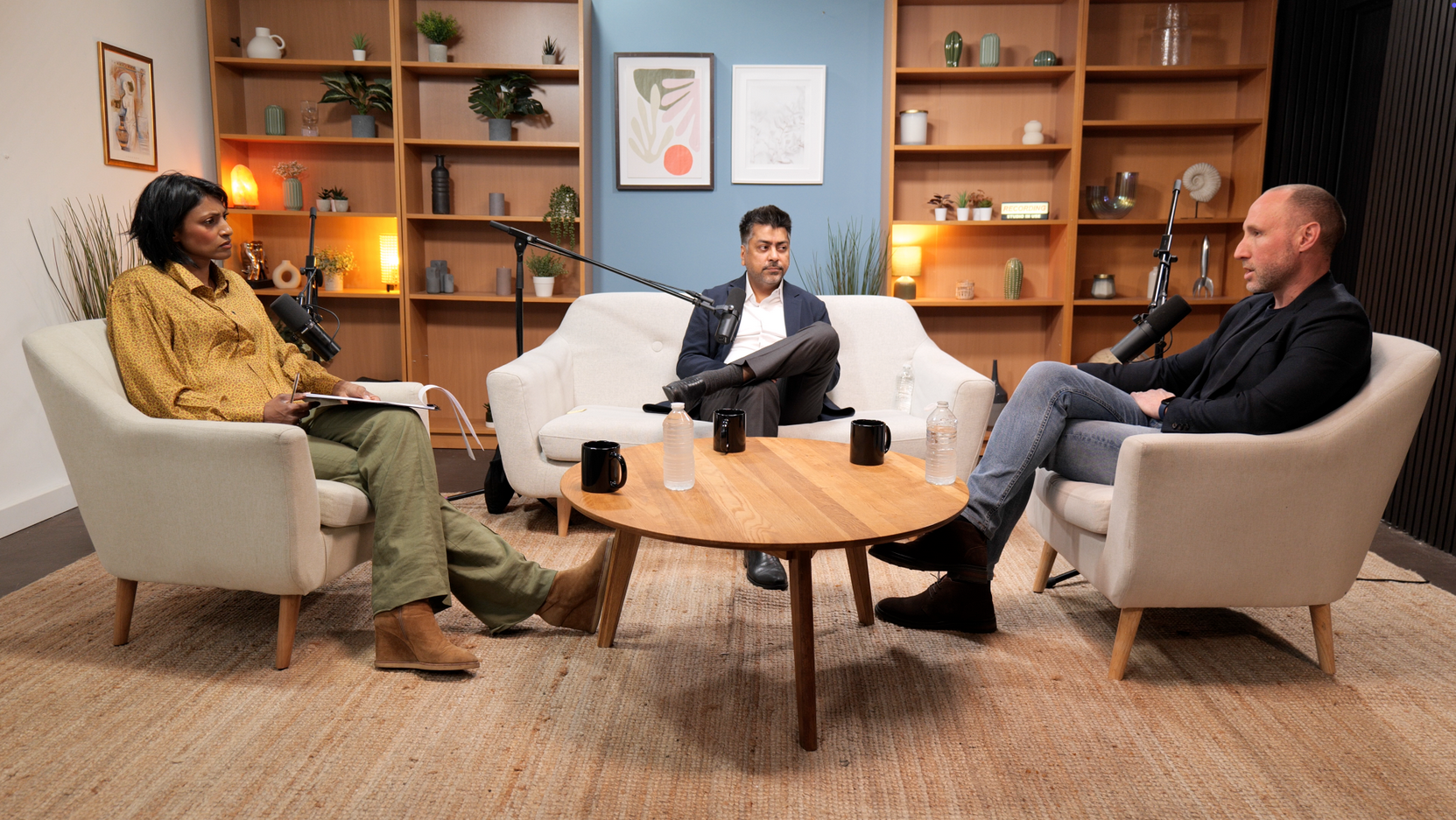
See the 'No ordinary tech podcast ' from Lloyds Banking Group by Rohit D (AI Leader for Lloyds Banking Group) and DR. shini somara (Pro-Chancellor of Brunel University) . at Finchley Studio (Lounge setup). Book this setup for your podcast.
Part 8: Financial Analysis & ROI
Is the cost of a professional editor and studio hire justified? Let us analyze the Return on Investment (ROI).
8.1 Cost-Benefit Analysis: DIY vs. Pro
Scenario A: DIY Home Studio
Initial CapEx: £15,000+ (Gear/Soundproofing).
Host Time: 10 hours per episode (Setup, Troubleshooting, Editing, Exporting).
Opportunity Cost: If the host's time is worth £100/hr, that is a £1,000 "cost" per episode in lost productivity.
Result: Variable quality, high stress, slow output, potential for burnout.
Scenario B: Professional Studio + Editor
Studio Hire (2 hours): £220 (e.g., Finchley Gold Package with Engineer).
Professional Editing: £250 - £500 per episode.33
Total Cost: ~£500 - £700 per episode.
Host Time: 2 hours (Recording only).
Result: Broadcast quality, zero stress, scalable output, fast delivery of growth assets (social clips).
8.2 The Verdict
For a hobbyist with zero budget, DIY is the only option. But for a business, brand, or serious creator, Scenario B is economically superior. The £500 cost is a marketing expense that guarantees a professional asset. To replicate that quality at home would take years to amortize the equipment costs, not to mention the infinite value of the host's time. Furthermore, the higher production value leads to higher retention, faster growth, and better sponsorship opportunities, increasing the revenue potential of the podcast.
Conclusion: The Professional Edge
In the saturated media market of 2026, "content" is a commodity, but "quality" is the differentiator. The role of the Professional Videography Editor, supported by a high-end London podcast studio environment, is not a luxury—it is a strategic necessity.
The editor is the storyteller who turns raw footage into emotional connection. The studio is the fortress that protects the production from the chaos of London's acoustic environment. Together, they provide the infrastructure that allows the host to do what they do best: communicate.
For those serious about podcasting in London, the path forward is clear. Stop fighting the physics of your living room. Stop losing hours to the timeline. Invest in the infrastructure of excellence.
Works cited
99 Future-Shaping Podcast Industry Stats & Trends (2026) [Infographic], accessed January 1, 2026, https://www.learningrevolution.net/podcast-stats/
Podcast Statistics 2025: Global Listener Growth and Trends - Teleprompter.com, accessed January 1, 2026, https://www.teleprompter.com/blog/podcast-statistics
Best Cameras for Video Podcasting: From Consumer Gear to Professional Gear, accessed January 1, 2026, https://pss.media/blog/best-cameras-for-video-podcasting-from-consumer-gear-to-professional-gear
Podcast Studios London: A Guide for Creators, Brands & Businesses, accessed January 1, 2026, https://www.finchley.co.uk/finchley-learning/visual-podcast/podcast-studios-london-a-guide-for-creators-brands-businesses
How to Edit Multi-Camera Podcast Footage: Step-by-Step Video Workflow - Vidpros, accessed January 1, 2026, https://vidpros.com/how-to-edit-multi-camera-podcast-footage-step-by-step-video-workflow/
How to Edit Multi-Camera Podcast Footage: Step-by-Step Workflow for 2025, accessed January 1, 2026, https://www.podcastvideos.com/articles/edit-multi-camera-podcast-footage-2025/
Why Audio Quality Matters in Podcasting - Paragon Creative Studios, accessed January 1, 2026, https://www.paragoncreativestudios.co.uk/why-audio-quality-matters-in-podcasting/
Why Some Podcasts Succeed – And Why Audio Quality Matters Most - Kaotica Eyeball, accessed January 1, 2026, https://www.kaoticaeyeball.com/pages/why-some-podcasts-succeed-and-why-audio-quality-matters-most
accessed January 1, 2026, https://selectrecordingstudios.co.uk/hub/how-much-does-studio-soundproofing-cost-in-london/#:~:text=The%20cost%20of%20soundproofing%20a%20recording%20studio%20in%20London%20typically,achieving%20high%2Dquality%20audio%20recordings.
Can you fix audio after you've recorded it? - Rachel Corbett, accessed January 1, 2026, https://rachelcorbett.com.au/blog/fix-podcast-audio/
5 Common Mistakes In Professional Podcast Studio Design - Sound Zero, accessed January 1, 2026, https://sound-zero.com/5-common-mistakes-in-professional-podcast-studio-design/
8 Common Podcast Audio Issues Explained - East Coast Studio, accessed January 1, 2026, https://eastcoaststudio.com/common-podcast-audio-issues/
How to Improve Podcast Sound Quality | Home Brew Audio, accessed January 1, 2026, https://www.homebrewaudio.com/35955/improve_podcast_sound_quality_tips_techniques/
Soundproofing Cost Guide for Tradespeople - Insulation - MyBuilder, accessed January 1, 2026, https://www.mybuilder.com/insulation/price-guides/soundproofing-cost-guide
Affordable studio soundproofing prices in London today, accessed January 1, 2026, https://selectrecordingstudios.co.uk/hub/how-much-does-studio-soundproofing-cost-in-london/
How Much Does Soundproofing Cost?, accessed January 1, 2026, https://www.soundproofingstore.co.uk/how-much-does-soundproofing-cost
How Much Does It Cost to Build a Recording Studio? A Comprehensive Breakdown, accessed January 1, 2026, https://sonatune.co.uk/mss-blog/how-much-does-it-cost-to-build-a-recording-studio-a-comprehensive-breakdown
How much does it cost to rent a podcast studio London? - Finchley Studios, accessed January 1, 2026, https://www.finchley.co.uk/finchley-learning/how-much-does-it-cost-to-rent-a-podcast-studio-london
Cameras For Podcasting - Best Buy, accessed January 1, 2026, https://www.bestbuy.com/site/shop/cameras-for-podcasting
How Much Does it Cost to Start a Podcast At Any Level 2026 (Free Cost Calculator), accessed January 1, 2026, https://riverside.com/blog/how-much-does-it-cost-to-start-a-podcast
Podcast Recording Studio vs. Home Setup: Which is Best for You?, accessed January 1, 2026, https://www.paragoncreativestudios.co.uk/podcast-recording-studio-vs-home-setup-which-is-best-for-you/
The Benefits of Using a Professional Podcast Studio vs. DIY Setup | Umbrella Creative, accessed January 1, 2026, https://umbrellacreative.com.au/the-benefits-of-using-a-professional-podcast-studio-vs-diy-setup/
Workflows for quick turnaround video podcast editing : r/editors - Reddit, accessed January 1, 2026, https://www.reddit.com/r/editors/comments/1p11j90/workflows_for_quick_turnaround_video_podcast/
How is everyone editing their video podcast? - Reddit, accessed January 1, 2026, https://www.reddit.com/r/podcasting/comments/1lwxgwz/how_is_everyone_editing_their_video_podcast/
The Complete Guide to Editing Your Podcast in DaVinci Resolve - FireCut, accessed January 1, 2026, https://firecut.ai/blog/the-complete-guide-to-editing-your-podcast-in-davinci-resolve/
accessed January 1, 2026, https://www.finchley.co.uk/finchley-learning/the-role-of-a-videography-editor-in-enhancing-podcast-visuals#:~:text=Color%20grading%20plays%20a%20crucial,the%20podcast's%20theme%20and%20message.
Why Color Grading Matters: Creating a Mood with Your Video Footage, accessed January 1, 2026, https://letsbackflip.com/why-color-grading-matters-creating-a-mood-with-your-video-footage/
What Are the Benefits of Professional Video Color Grading?, accessed January 1, 2026, https://www.skillmanvideogroup.com/benefits-of-professional-video-color-grading/
What is color grading? A complete guide for beginners (2025) - Podcastle, accessed January 1, 2026, https://podcastle.ai/blog/what-is-color-grading/
The Benefits of Color Grading: Why It's Crucial for Your First Video Production Project, accessed January 1, 2026, https://thinkbrandedmedia.com/blog/the-benefits-of-color-grading-why-its-crucial-for-your-first-video-production-project/
The Role of a Videography Editor in Enhancing Podcast Visuals, accessed January 1, 2026, https://www.finchley.co.uk/finchley-learning/the-role-of-a-videography-editor-in-enhancing-podcast-visuals
100+ Video Podcast Growth Statistics for 2025 - Zebracat, accessed January 1, 2026, https://www.zebracat.ai/post/video-podcast-growth-statistics
How Much Does Professional Podcast Editing Cost in 2025? - Trevor O'Hare, accessed January 1, 2026, https://www.trevorohare.com/blog/how-much-does-professional-podcast-editing-cost-in-2025
Expert Guide To London Podcast Studios 2025 | Creative Kin, accessed January 1, 2026, https://creativekin.co.uk/podcast-content-marketing/london-podcast-studios-guide
The Complete Guide to Hiring a Podcast Studio in London - Finchley Studios, accessed January 1, 2026, https://www.finchley.co.uk/finchley-learning/visual-podcast/the-complete-guide-to-hiring-a-podcast-studio-in-london
10 Best Podcast Studios London to Hire in 2025 - Saspod, accessed January 1, 2026, https://saspod.com/blog/post/best-podcast-studios-london
Podcast Studio Hire in London: Everything You Need to Know Before Booking, accessed January 1, 2026, https://www.finchley.co.uk/finchley-learning/visual-podcast/podcast-studio-hire-in-london-everything-you-need-to-know-before-booking
The Best Podcast Recording Studios in Central and North London: A Strategic Market Analysis and Content Roadmap, accessed January 1, 2026, https://www.finchley.co.uk/finchley-learning/visual-podcast/the-best-podcast-recording-studios-in-central-and-north-london-a-strategic-market-analysis-and-content-roadmap
accessed January 1, 2026, https://lowerstreet.co/careers/podcast-audio-engineer#:~:text=A%20podcast%20audio%20engineer%20has,equipment%20during%20in%2Dperson%20recordings.
Podcast Audio Engineer Jobs: Career Info & Role Description - Lower Street, accessed January 1, 2026, https://lowerstreet.co/careers/podcast-audio-engineer
2025 Podcasting Unwrapped: A Year in Review - CoHost, accessed January 1, 2026, https://www.cohostpodcasting.com/resources/podcasting-unwrapped-2025