A Beginner's Guide to Recording Studio Microphones (And Which to Use)
Stepping into a recording studio for the first time can be overwhelming, and nothing represents that technical hurdle more than the wall of microphones. What's the difference? Why are some big and others small? Why does one cost $100 and another $10,000?
A microphone is the first and most important link in your recording chain. It’s a transducer—a device that converts one form of energy (sound waves) into another (an electrical signal). Choosing the right one is the first step to capturing a great sound. This guide will break down the absolute basics every beginner needs to know.

The Three Main Types of Microphones
While there are many variations, almost all studio mics fall into three categories.
1. Dynamic Microphones
How they work: A dynamic mic works like a tiny speaker in reverse. Sound waves hit a thin plastic diaphragm (a small sheet of material) that is attached to a coil of wire. This coil is suspended in a magnetic field, and as it moves, it generates a small electrical current.
-
The sound: They are known for being robust, durable, and able to handle very loud sounds (high Sound Pressure Levels, or SPL). They are less sensitive than other types, which can be a huge advantage.
-
Best for: Loud sources like guitar and bass amps, drums (especially the kick and snare), and aggressive rock vocals. Because they are less sensitive, they are also a fantastic choice for recording in untreated rooms (like a home bedroom), as they will pick up less background noise and room echo.
-
Do they need power? No.
2. Condenser Microphones
-
How they work: Condenser mics are more delicate. They use a very thin, electrically conductive diaphragm that sits close to a solid metal backplate. This setup creates a capacitor (or "condenser"), which stores an electrical charge. As sound waves hit the diaphragm, it moves, changing the distance between it and the backplate. This change in capacitance creates the microphone's signal.
-
The sound: This design makes them far more sensitive and responsive than dynamic mics. They capture high frequencies, subtle details (known as "transients"), and nuances with exceptional clarity.
-
Best for: The studio standard for vocals, acoustic guitar, piano, and drum overheads (cymbals). They excel at capturing detail in a quiet, controlled environment.
-
Do they need power? Yes. They require a 48-volt power source, known as phantom power, which is supplied by most audio interfaces and mixing desks.
Large-Diaphragm vs. Small-Diaphragm Condensers You will see condensers categorized by the size of their diaphragm.
Large-Diaphragm (LDC): These tend to have a "bigger," warmer, and more "flattering" sound, which is why they are a top choice for vocals.
Small-Diaphragm (SDC): These are often more accurate and have a better transient response. They are ideal for capturing the crisp, detailed sound of acoustic instruments or as a pair for stereo recording.
3. Ribbon Microphones
How they work: An older technology, ribbon mics use an extremely thin, corrugated strip of metal (the "ribbon") suspended between two magnets. This ribbon vibrates with the sound waves, generating the signal.
-
The sound: Known for being incredibly warm, smooth, and natural. They have a "darker," more vintage character because they naturally roll off some of the high frequencies that condensers pick up.
Best for: Taming harsh sources (like a bright electric guitar or brass instrument), smoothing out vocals, or capturing a "room" sound with a vintage vibe.
Do they need power? Most modern "active" ribbon mics require phantom power, but vintage ones do not (and can be damaged by it!). Always check the manual.
A Quick Guide to Polar Patterns
The "type" of mic is only half the story. The other half is its polar pattern, which is simply its direction of hearing. Think of it as the shape of the mic's "listening field."
Cardioid: This is the most common pattern. It picks up sound directly in front of the mic and rejects sound from the rear. This is perfect for isolating a single sound source, like a singer, and minimizing bleed from other instruments or room noise.
-
Omnidirectional: Picks up sound equally from all directions (a 360-degree sphere). This is great for capturing the sound of a whole room, recording a group of people around a table, or for some advanced stereo recording techniques.
-
Figure-8 (Bidirectional): Picks up sound equally from the front and the back, while strongly rejecting sound from the sides. This is the natural pattern for most ribbon mics and is useful for recording two singers facing each other or for specific stereo miking.

So, Which Mic Should a Beginner Buy?
Here is the practical advice for where to start.
If you are recording vocals or acoustic guitar in an untreated room (like a bedroom): Start with a dynamic mic. A high-quality dynamic like a Shure SM7B or even a workhorse Shure SM58 will give you a clean, focused sound that rejects a lot of the echo and computer fan noise.
If you are recording in a quiet, decently-treated room: Start with a large-diaphragm condenser mic. This is the quintessential "studio" sound. It will give you that crisp, detailed, "pro" sound on vocals and acoustic instruments. An entry-level model like an Audio-Technica AT2020 or Rode NT1-A is a fantastic first choice
If you will be recording loud guitar amps or drums:
You must have a dynamic mic. The Shure SM57 is an industry-standard workhorse for a reason. You can put it right up against a loud amp or snare drum, and it will sound great.
Final Advice Don't get paralyzed by choice. The best microphone for you is the one that fits your budget, your room, and your sound source. The differences between a $100 mic and a $1,000 mic are much smaller than the difference between a bad recording and a good one. Learning how to place your mic correctly will make a much bigger impact than the price tag.
A Beginner's Guide to Recording Studio Microphones (And Which to Use)
Stepping into the world of audio recording, you are immediately confronted with one key piece of gear: the microphone. It’s the very first link in your signal chain, capturing your voice and turning it into an electrical signal. But the choice is overwhelming—dynamic, condenser, ribbon, USB, XLR... what does it all mean?
For a podcast producer, it really boils down to two main types: Dynamic and Condenser. Understanding the difference is the key to knowing which one is right for your project.
1. Dynamic Microphones (The Podcaster's Workhorse)
When you picture a classic podcast setup (like the Joe Rogan Experience) or a live music performance, you're looking at a dynamic microphone.
-
How They Work: They use a simple, durable mechanism—a moving coil attached to a diaphragm that moves in a magnetic field.
The Sound: They are excellent at handling high volumes (like a loud voice) and, most importantly, rejecting off-axis noise. This means they are designed to pick up only what is directly in front of them, ignoring room echo, computer fans, and background traffic.
-
Best For: Untreated rooms, home studios, live recordings, and multi-person podcasts where you want to minimize "bleed" from other speakers.
Classic Example: The Shure SM7B. This is the king of podcasting mics for a reason. It has a warm, rich, broadcast-ready sound and is famously used in studios worldwide, including at Finchley Studio.
2. Condenser Microphones (The Studio's Detail)
When you picture a professional singer in a studio booth with a large, sensitive microphone, you're looking at a condenser.
How They Work: They use a more delicate, sensitive design that requires an external power source (known as "48V Phantom Power") to charge a capacitor.
The Sound: They are incredibly sensitive and detailed. They capture the "air" and nuance in a voice, providing a crisp, clear, and "high-fidelity" sound.
The Catch: This sensitivity is their biggest weakness in a bad room. A condenser mic will pick up everything—your air conditioning, the floorboards creaking, the car driving by your window, and every echo in your untreated room.
Best For: Professional vocal recordings in a perfectly, acoustically-treated studio.
So, Which One is "Best" for You?
This is the trick question: the best microphone depends entirely on the room you are in.
A $1,000 condenser mic will sound worse in a bad room than a $100 dynamic mic.
This is the entire value proposition of a professional studio. The reason a place like Finchley Studio can get such amazing sound isn't just because of the mics; it's because their rooms are acoustically treated to allow those mics to perform at their best.
When you record at Finchley Studio, you are not just getting access to industry-standard equipment; you're getting an environment where that equipment can shine. The engineers have already done the hard part. They’ve selected the right microphones (like the beloved Shure SM7B), paired them with high-end preamps, and placed them in a room with zero echo or background noise.
You don't need to know the difference. Your only job is to sit down and talk, confident that the audio being captured at Finchley Studio will be flawless, rich, and broadcast-ready from the very first second.

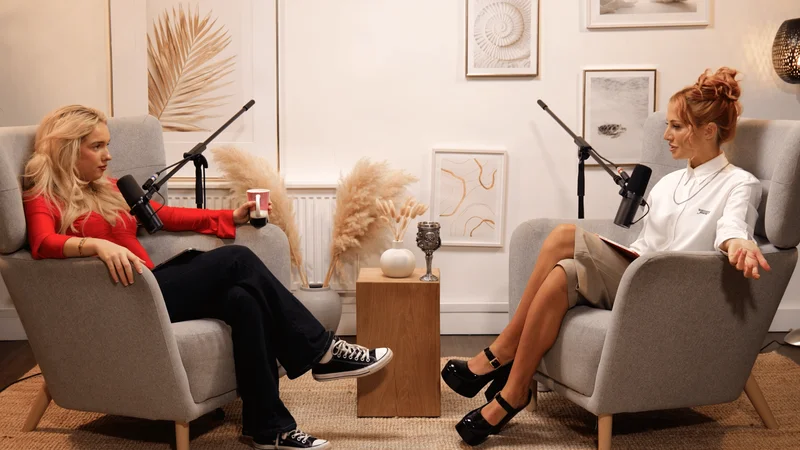
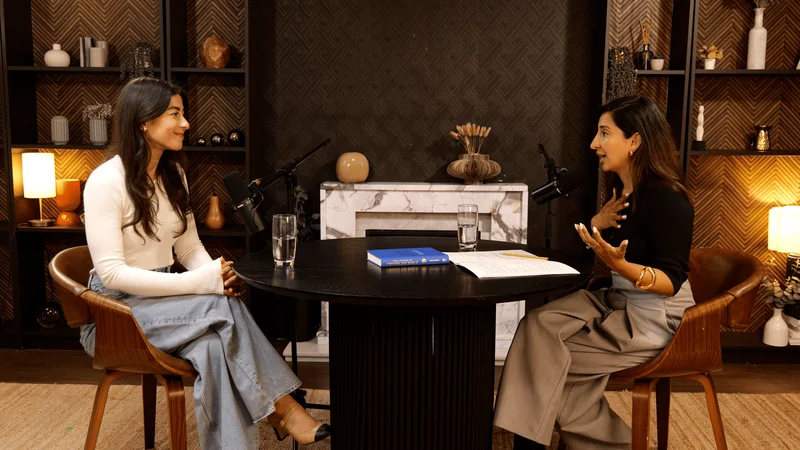
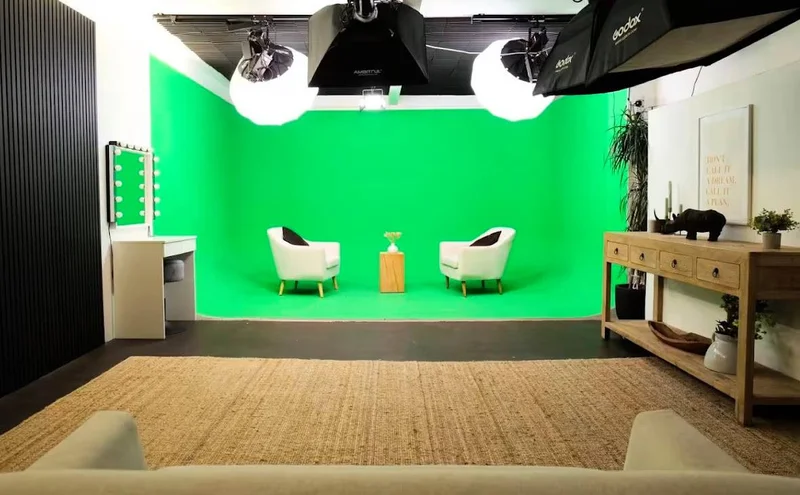
That flawless audio is the foundation, and our purpose-built sets are the stage. We encourage you to see our different sets, each designed to provide the perfect visual and acoustic environment. Explore our intimate Dialogue Room for focused conversations, the relaxed LOUNGE STUDIO for group chats, or the premium CEO SET for executive content. For more dynamic productions, we have a fully-equipped Green Screen Cove, the sleek Blackwood Studio, and the textured THE BRICK STUDIO. We also feature a flawless White Infinity Cove, a fully controlled BLACKOUT SET, the spacious GATHERING STUDIO for roundtables, and one of London's largest GIANT GREEN SCREEN warehouses.
To complete your production, you can order our professional Video Editing Service, taking your raw footage and turning it into polished, audience-ready content. We are trusted by industry leaders and creators, with regular clients including the BBC and Lloyds bank, so you know you're in good company. But don't just take our word for it; see what other creators have to say about their experience on Google review and Trust Pilot.
Finding us is simple. We are conveniently located just two minutes from Finchley Central, adjacent to the Travelodge London Finchley, and offer one free parking space per booking. You can find us easily on Google map, Apple maps, [suspicious link removed], or using What 3 words.
Stay connected and see what's happening at the studio by following us on Instagram, YouTube, TikTok, LinkedIn, and X (Twitter).
Have questions? Check our FAQ or get in touch with us directly via WhatsApp, phone at +447587827200, or Email.
Stop worrying about the gear and start your conversation. Book now to secure your session.