1. Executive Summary
The landscape of audio production in the United Kingdom has undergone a seismic shift by 2025. Podcasting, once a decentralized medium of hobbyists, has matured into a highly regulated, capital-intensive industry that rivals traditional broadcast radio in technical rigor and audience reach. The dichotomy between "chart-topping" productions and independent endeavors is no longer merely a question of content quality but of acoustic fidelity, signal chain integrity, and adherence to precise delivery specifications.
This report provides a comprehensive technical analysis of the UK podcasting sector. It examines the divergence between the legacy broadcast standards maintained by the British Broadcasting Corporation (BBC) and the loudness-centric metrics favored by digital streaming platforms (DSPs) such as Apple and Spotify. Furthermore, it dissects the physical infrastructure supporting this industry, offering a granular assessment of London’s recording studio market—from elite, video-first facilities in King’s Cross to automated, self-service booths in Dalston. By synthesizing data on hardware configurations, software workflows, and economic models, this analysis serves as a definitive roadmap for entities seeking to achieve professional-grade audio standards in the current market.
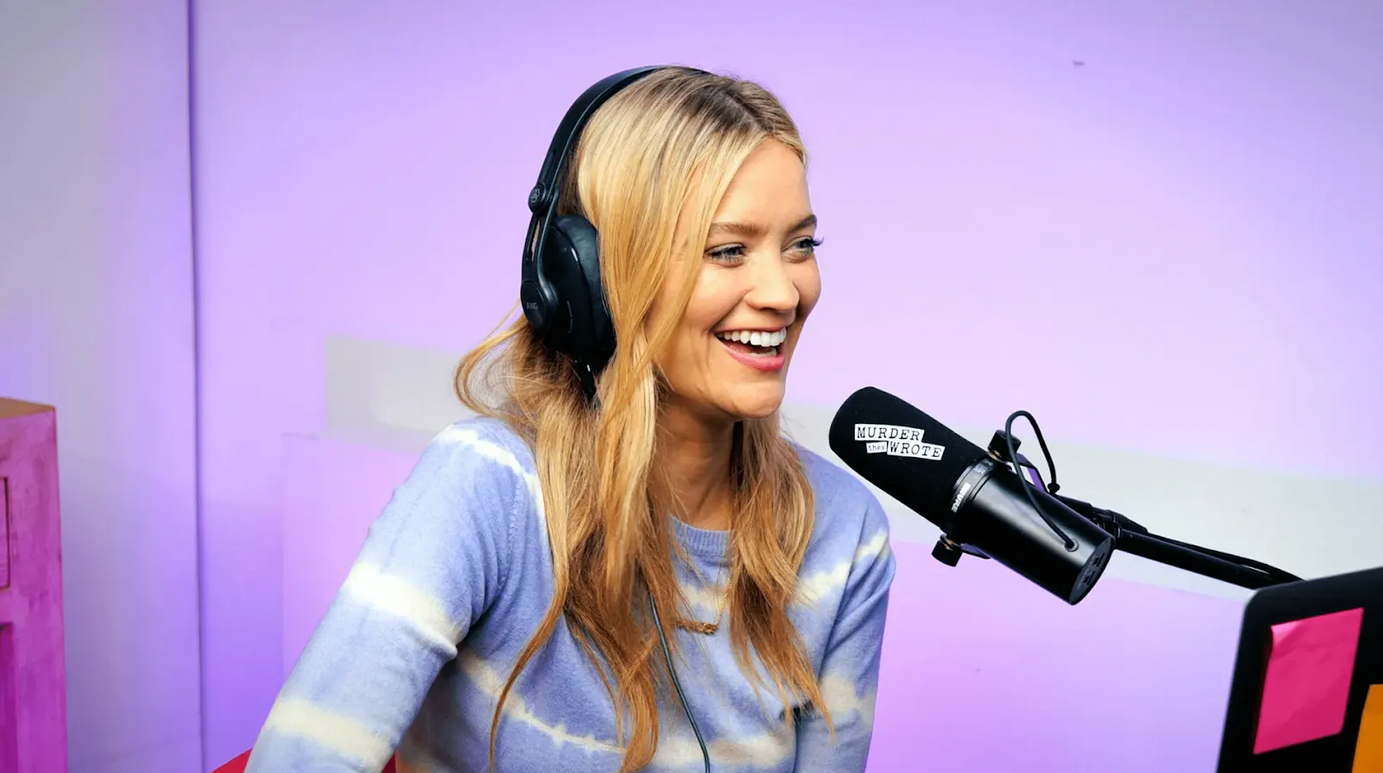
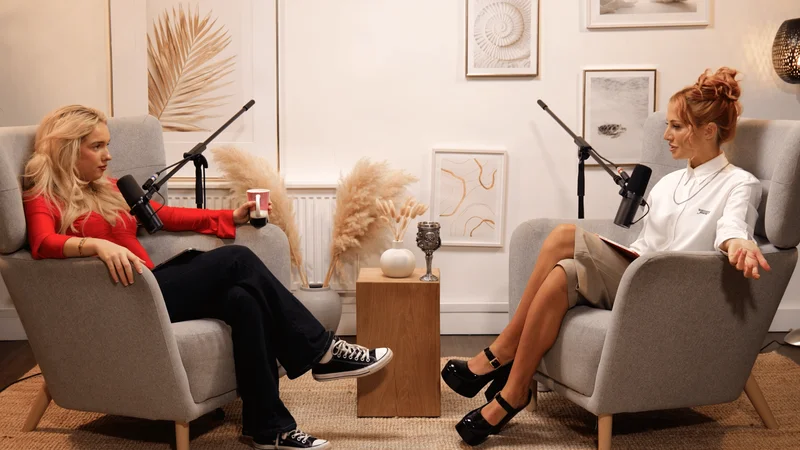
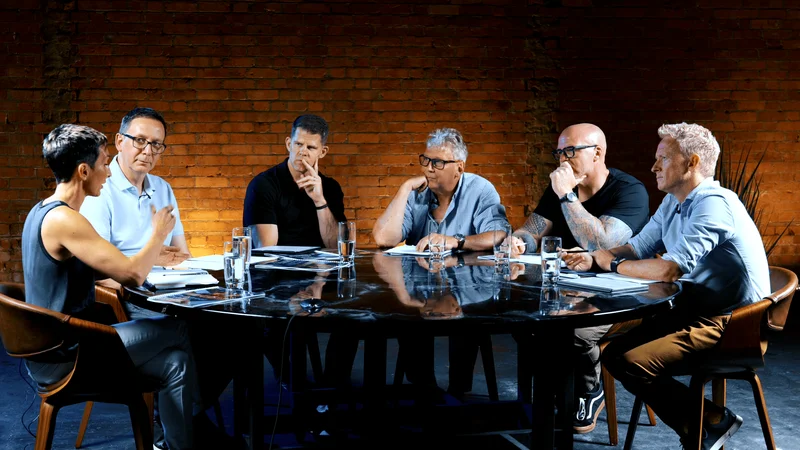
See the 'Murder They Wrote' podcast setup used by Laura Whitmore and Iain Stirling from BBC at Finchley Studio (Gathering setup). Watch Murder They Wrote at BBc sound , Spotify , Apple podcasts , Youtube , Instagram , Amazon music
Book this setup for your podcast
2. The Regulatory and Statistical Landscape of UK Audio in 2025
To understand the technical requirements of modern podcasting, one must first contextualize the market through the lens of consumption habits and regulatory oversight. The 2025 landscape is defined by a sophisticated audience that demands broadcast-quality audio on-demand, driven by significant shifts in listener demographics and platform behavior.
2.1 Audience Demographics and Consumption Patterns
The Office of Communications (Ofcom) 2025 Podcast Survey provides critical insight into the scale of the medium. Conducted by Yonder, this research utilized a nationally representative sample of 2,368 individuals, augmented by over 1,200 "boost interviews" to ensure robust data on regular podcast users.1 This methodology underscores the transition of podcasting from a niche demographic to a mass-market phenomenon.
The data suggests a maturing audience where "regular users" now significantly outnumber "occasional users," creating a stable base for advertising revenue. Crucially, the demographic spread is no longer confined to younger, tech-savvy cohorts but has permeated all age groups, regions, and social grades.1 This widespread adoption necessitates a standardization of audio quality; artifacts that might be forgiven by a niche hobbyist audience are rejected by a mass market accustomed to the pristine production values of traditional media.
Furthermore, the BBC's internal data reveals an 8.5% year-on-year increase in on-demand audio consumption, with BBC Sounds alone recording an average of 4.8 million weekly users.2 This growth is not uniform but is driven significantly by specific genres—notably true crime and historical analysis—and formats, specifically "visualised podcasts" which are gaining traction among under-35s.2 This pivot toward video has profound implications for technical standards, effectively mandating a shift from audio-centric sample rates (44.1 kHz) to video-centric rates (48 kHz), a theme that will be explored in depth in subsequent sections.
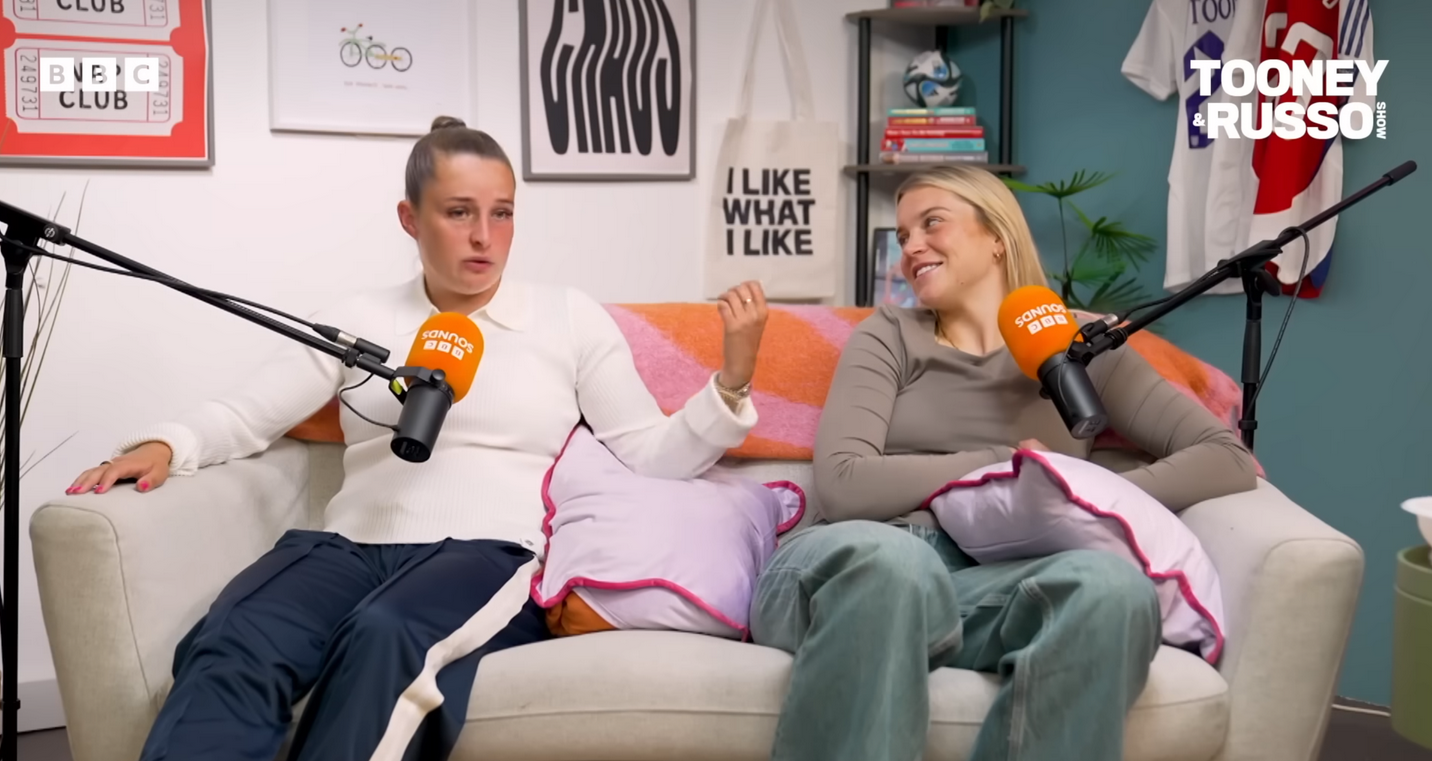
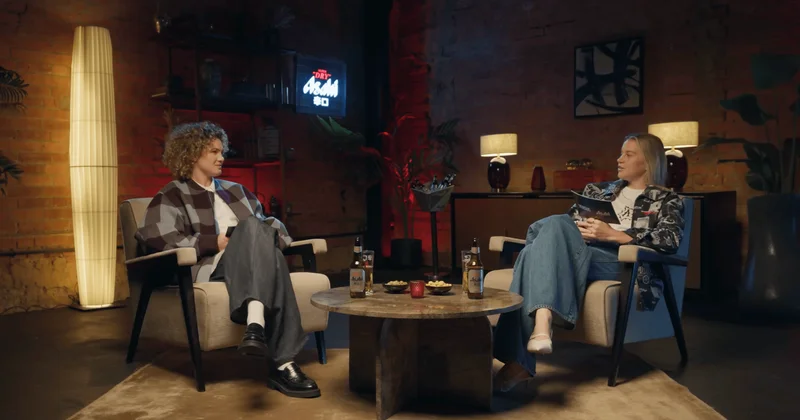
See the 'The Tooney & Russo Show' from BBC and Lionesses Ella Toone and Alessia Russoat from England national football team at Finchley Studio (Lounge setup). Book this setup for your podcast. Watch 'The Tooney & Russo Show' at BBc sound , Spotify , Youtube, Amazon music.
Book this setup for your podcast
2.2 The "British Preference" and Production Standards
A unique characteristic of the UK market is its preference for domestic content. Ofcom’s findings indicate that half of regular podcast listeners prefer UK-produced content over international rivals, a figure that rises to 60% for BBC Sounds users.3 This "home-field advantage" creates a specific acoustic aesthetic. British audiences, conditioned by decades of BBC radio production, expect a certain tonal balance—warm, dynamic, and clear—distinct from the often more heavily compressed and "hype-driven" sound of American commercial radio.
Consequently, independent UK productions aiming for the top charts often mimic this "BBC sound." This involves meticulous attention to voice profiling and noise floor management, rather than simply maximizing loudness. The success of independent yet "broadcast-style" shows like The Rest Is Politics—which utilizes veteran political figures and high-end remote production kits—demonstrates that the barrier to entry for the top charts involves replicating institutional quality without necessarily utilizing institutional infrastructure.

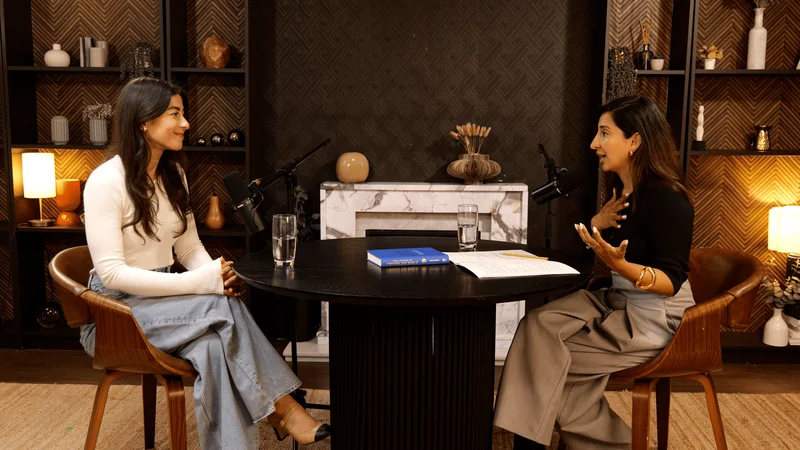
Finchley Studio (Dialogue set): book this setup for your podcast
3. Technical Audio Standards: The Metrics of Professionalism
The distinction between a "pro-sumer" independent podcast and a chart-topping production is quantifiable through strict audio metrics: Loudness Units Full Scale (LUFS), True Peak levels, noise floor, and dynamic range. These metrics form the "handshake" between the content creator and the distribution platform.
3.1 Loudness Normalization: The LUFS Divide
Loudness normalization is the industry’s method for ensuring consistent volume across different tracks. However, a significant bifurcation exists in the UK market between content intended for commercial DSPs and content originating from broadcast lineage.
3.1.1 The Digital Standard (Apple & Spotify)
For the vast majority of podcast consumption, the industry has coalesced around the standards set by Apple Podcasts. The target loudness is -16 LUFS for stereo files and -19 LUFS for mono files.5
The Rationale: This level strikes a balance between the competitive loudness required to be heard over environmental noise (e.g., commuting) and the dynamic headroom needed to preserve the nuances of human speech.
The Tolerance Window: A tolerance of +/- 1 dB is generally accepted, creating a "safe zone" between -15 and -17 LUFS.7
Spotify’s Deviation: It is crucial to note that Spotify recommends a slightly louder target of -14 LUFS.5 This discrepancy creates a dilemma for mastering engineers: mastering to -14 LUFS risks Apple automatically attenuating the file (turning it down), while mastering to -16 LUFS may leave the track sounding quieter than music on Spotify. The consensus among UK chart-toppers is to prioritize the Apple standard (-16 LUFS) as it remains the dominant platform for dedicated podcast listening, while ensuring the True Peak remains safe.
3.1.2 The Broadcast Standard (BBC & EBU R128)
Productions associated with the BBC, or independent production companies delivering content to the BBC, must adhere to the EBU R128 standard. This is a stricter, quieter standard derived from European television broadcasting regulations.
The Target: The integrated loudness target is -23 LUFS (+/- 0.5 LU).8
True Peak Compliance: The True Peak must not exceed -1.0 dBTP (decibels true peak) to prevent inter-sample clipping during transmission or transcoding.5
Strategic Implications: Independent producers attempting to mimic the "BBC sound" often fail to realize that BBC podcasts heard on third-party platforms may have been re-mastered or are relying on the listener to turn up the volume. A file mastered at -23 LUFS will sound drastically quieter than a standard -16 LUFS podcast. Conversely, submitting a -16 LUFS file to the BBC for broadcast will result in automatic rejection or severe compression by their ingest servers.10
3.2 Signal Integrity: Sample Rate, Bit Depth, and Formats
The "container" of the audio is as vital as the mix itself. While independent creators often default to standard MP3 settings, top-tier UK charts and BBC deliverables demand higher fidelity source files before final compression.
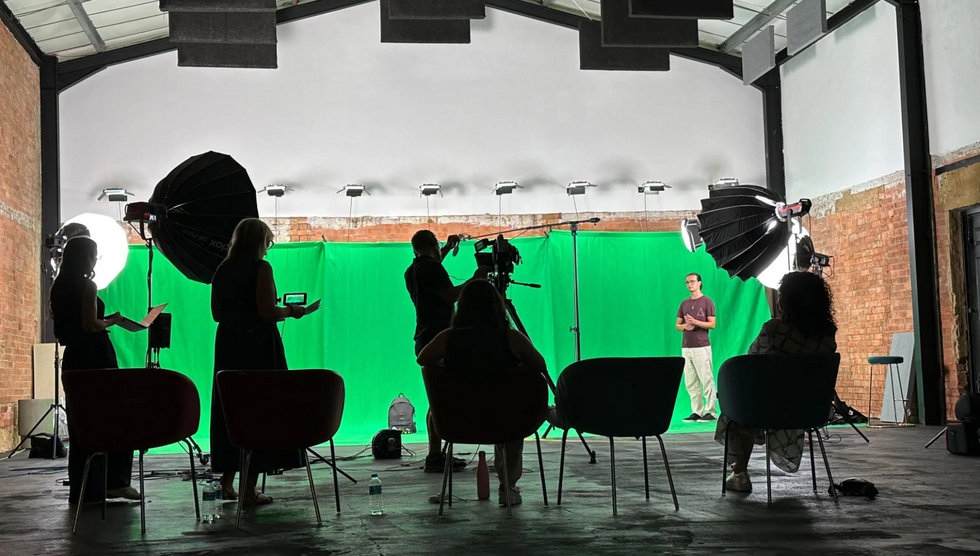
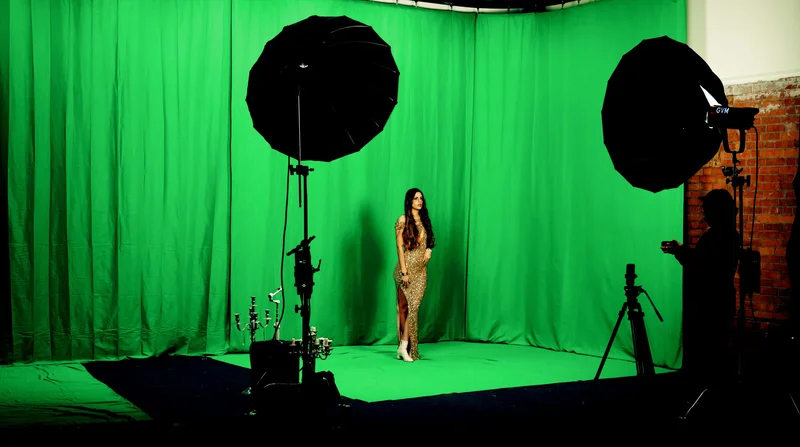
Finchley Studio (Giant Green Screen): book this setup for your podcast
3.2.1 The Shift to 48 kHz
Historically, 44.1 kHz was the standard sample rate for audio-only media (derived from CD Red Book standards). However, 2025 marks a definitive shift toward 48 kHz.11
The Video Catalyst: This shift is driven by the rise of "visualised podcasts" on YouTube and Spotify Video. Video standard frame rates align mathematically with 48 kHz audio. Recording at 44.1 kHz and then syncing to video can cause "drift" (where audio gradually falls out of sync with lips) or necessitate sample rate conversion that introduces artifacts.
BBC Requirements: The BBC’s standard audio quality for streams is explicitly 48 kHz, 16-bit.11 Independent production companies delivering content to BBC Studios are often required to provide source files at even higher rates (up to 192 kHz) for archival purposes, though 48 kHz is the broadcast minimum.12
3.2.2 Bitrate and Delivery Formats
While the end listener often streams a compressed file, the production pipeline must maintain high resolution.
Production Standard: Recording and mixing should occur at 24-bit depth. This lowers the noise floor significantly compared to 16-bit, allowing for heavy processing and volume boosting without amplifying digital hiss.12
Delivery Standard: For RSS feeds, Apple accepts MP3 or AAC. The chart standard for MP3 is a constant bitrate (CBR) of 128 kbps to 160 kbps for stereo files. Lower bitrates (64-96 kbps) result in "swirly" high-frequency artifacts that fatigue the listener.
Ad Tech Specs: It is notable that for advertising injection, specs can be even higher. BBC advertising guidelines require MP3s to be at least 192 kbps.14 This ensures that the paid spots do not sound jarringly lower quality than the host content.
3.3 The Physiology of Sound: Dynamic Range & Noise Floor
The most audible differentiator between an indie podcast and a show like The Diary of a CEO is the management of the noise floor (the volume of the silence) and dynamic range (the difference between the quietest and loudest sounds).
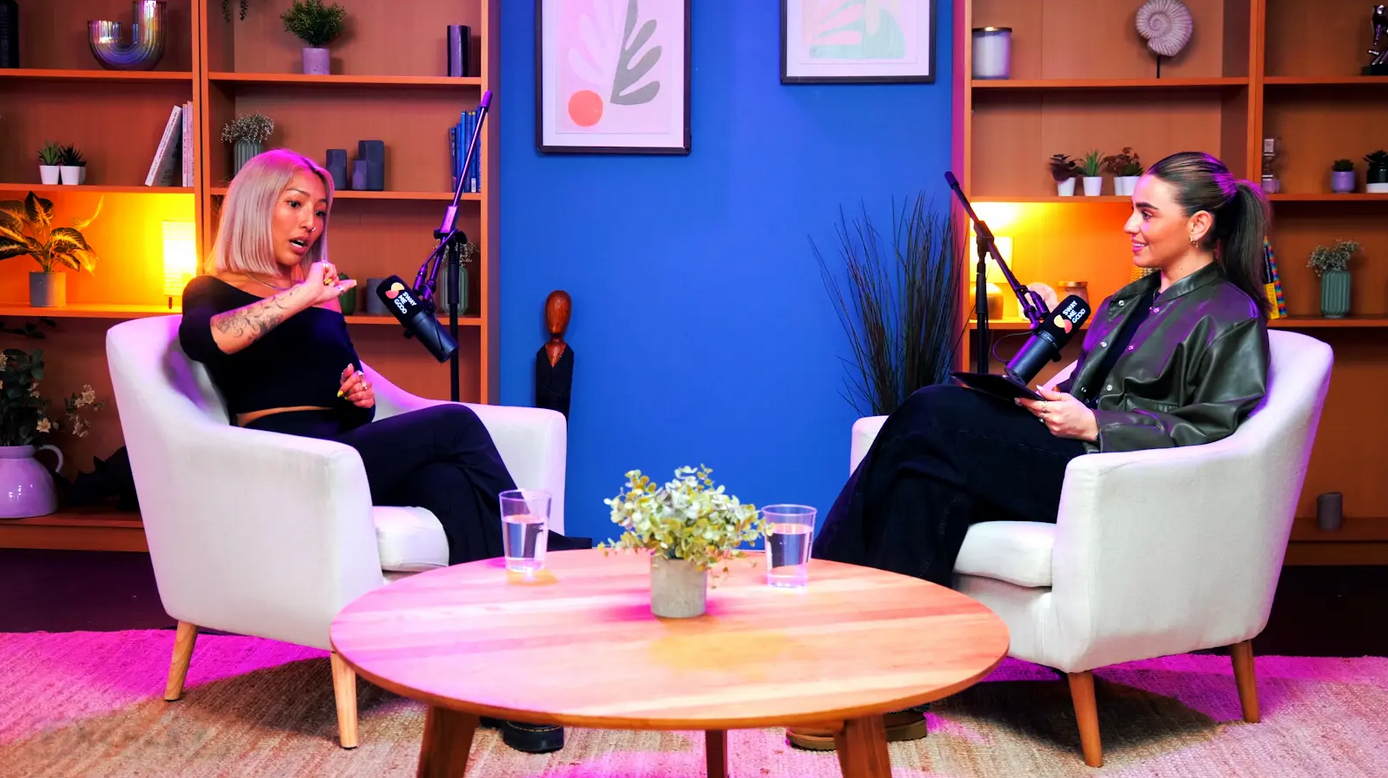
Finchley Studio (Lounge set): book this setup for your podcast
3.3.1 The Noise Floor Battle
Professional studios aim for a noise floor below -60 dB.15 This "silence" is not absolute but is quiet enough that when the voice is compressed (made louder), the background hiss does not become audible.
Indie Challenges: Home studios often struggle with a noise floor around -40 dB due to computer fans, HVAC systems, or urban traffic.16 When an indie producer applies the compression required to hit -16 LUFS, this noise floor is boosted by 10-20 dB, resulting in the amateur "hiss" or "room tone" that characterizes lower-tier shows.
Mitigation: Top productions use "expander" gates and spectral noise reduction (like iZotope RX) to push this floor down without creating the unnatural "vacuum" silence of a hard noise gate.17
3.3.2 Dynamic Range Management
A healthy human ear perceives a dynamic range of about 90 dB (from a whisper at 30 dB to a jet engine at 120 dB).17 However, podcast listening environments (subways, cars) have a high noise floor (often 60-70 dB).
The Compression Necessity: Therefore, professional podcasts must artificially compress their dynamic range. The whisper must be raised to be audible over a car engine, and the loud laugh must be limited to prevent ear pain.
The "Over-Squashed" Risk: Amateurs often over-compress, leading to a fatiguing, breathless sound. Professionals use multi-stage compression—gentle limiting at the recording stage, followed by serial compression in the mix—to reduce dynamic range while retaining the perception of dynamics.16
4. Case Studies of Chart-Topping Productions
Analyzing specific high-performing UK podcasts reveals distinct technical archetypes that define the current market.
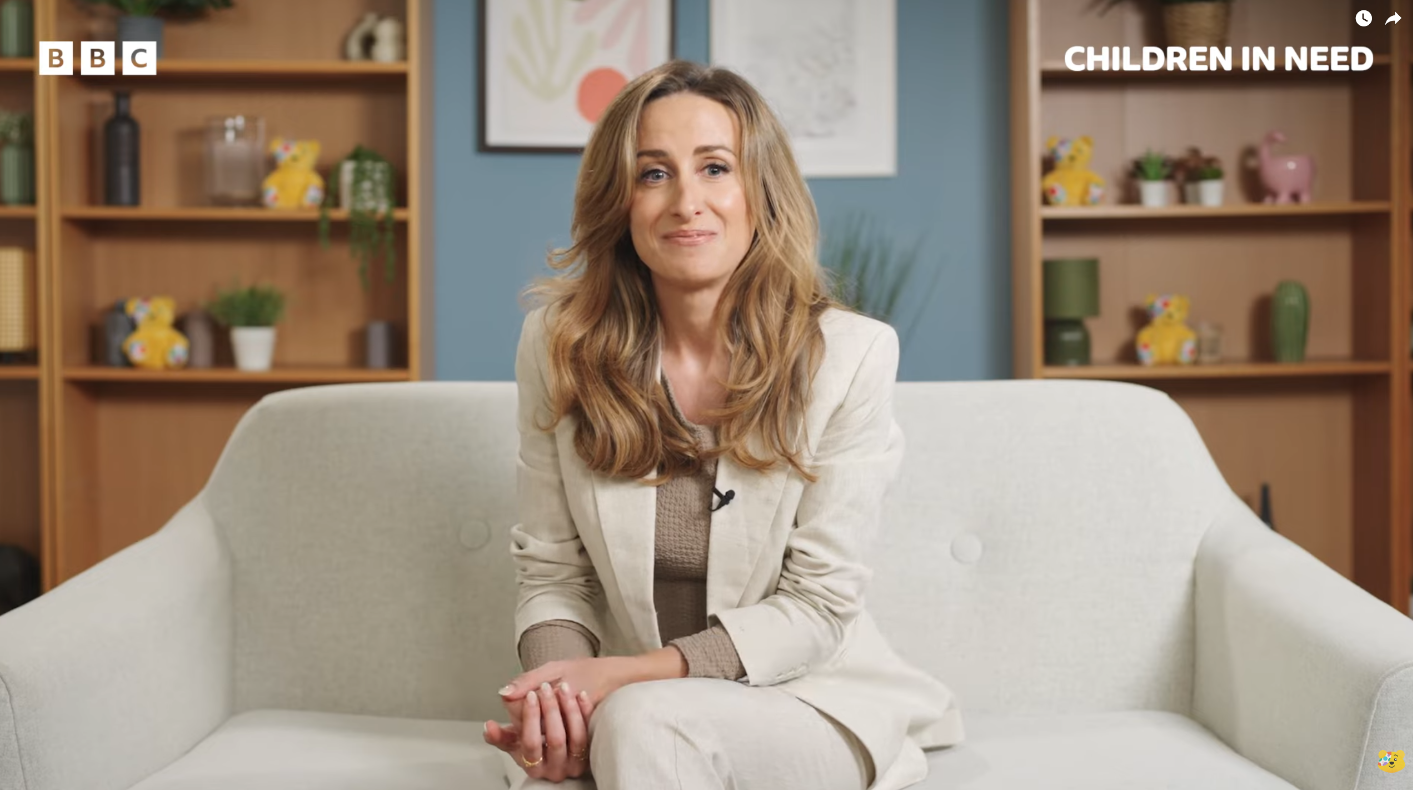
See the 'BBC Children in Need' podcast setup used by Dr Julie from BBC at Finchley Studio (Lounge setup). Book this setup for your podcast
4.1 The Visual Standard: The Diary of a CEO
Hosted by Steven Bartlett, this podcast represents the pinnacle of the "visualised podcast" format.
The Gear: The production relies heavily on the Shure SM7B microphone.20 The choice of this dynamic microphone is strategic; its low sensitivity rejects the ambient noise of the often large, aesthetically dressed sets, allowing for a "studio sound" even in spaces that are designed primarily for video rather than acoustics.
The Aesthetic: The production value is defined by its camera work, utilizing multiple angles and high-end cinema cameras (often Sony FX3 or similar grade). The audio is processed to sound intimate and close, a signature of Bartlett’s interviewing style. This requires significant gain management, typically achieved through high-quality preamps (like those in the RØDECaster Pro II or discrete units) to drive the SM7Bs without introducing hiss.21
4.2 The Hybrid Standard: The Rest Is Politics
Produced by Goalhanger Podcasts, this show demonstrates the viability of hybrid remote/studio workflows.
The Workflow: Hosts Alastair Campbell and Rory Stewart are frequently in different locations, often recording from hotel rooms or home offices.4
The "Travel Kit" Solution: To maintain audio consistency despite the location variance, the production utilizes standardized "travel kits." These typically consist of a high-quality USB interface or standalone recorder and a broadcast-grade dynamic microphone. The key here is local recording (double-ending); each host records their own audio locally, which is then synced in post-production. This bypasses the compression artifacts of VoIP platforms like Zoom.23
The Content-Tech Balance: Unlike Diary of a CEO, The Rest Is Politics prioritizes content immediacy over cinematic perfection. However, the audio remains intelligible and consistent, proving that with the right portable gear (e.g., Shure MV7 or SM7B with Cloudlifter), "studio quality" is portable.24
4.3 The Comedy Standard: Off Menu
Recorded in professional environments, this show highlights the needs of the comedy genre.
The Dynamic Challenge: Comedy involves vast dynamic shifts—from whispered asides to raucous laughter.
The Studio Requirement: Productions like this utilize facilities with excellent isolation and headphone monitoring for all guests (like Plosive’s setup). This allows the producer to ride levels in real-time and ensures that "bleed" (sound from headphones leaking into the mic) is minimized, which is critical when multiple people are laughing simultaneously.25
5. Hardware Ecosystem: The Tools of the Trade (2025)
The hardware used by UK chart-toppers has standardized around a specific ecosystem of reliable, broadcast-grade equipment. Understanding the pricing and technical interplay of these components is essential for budget planning.
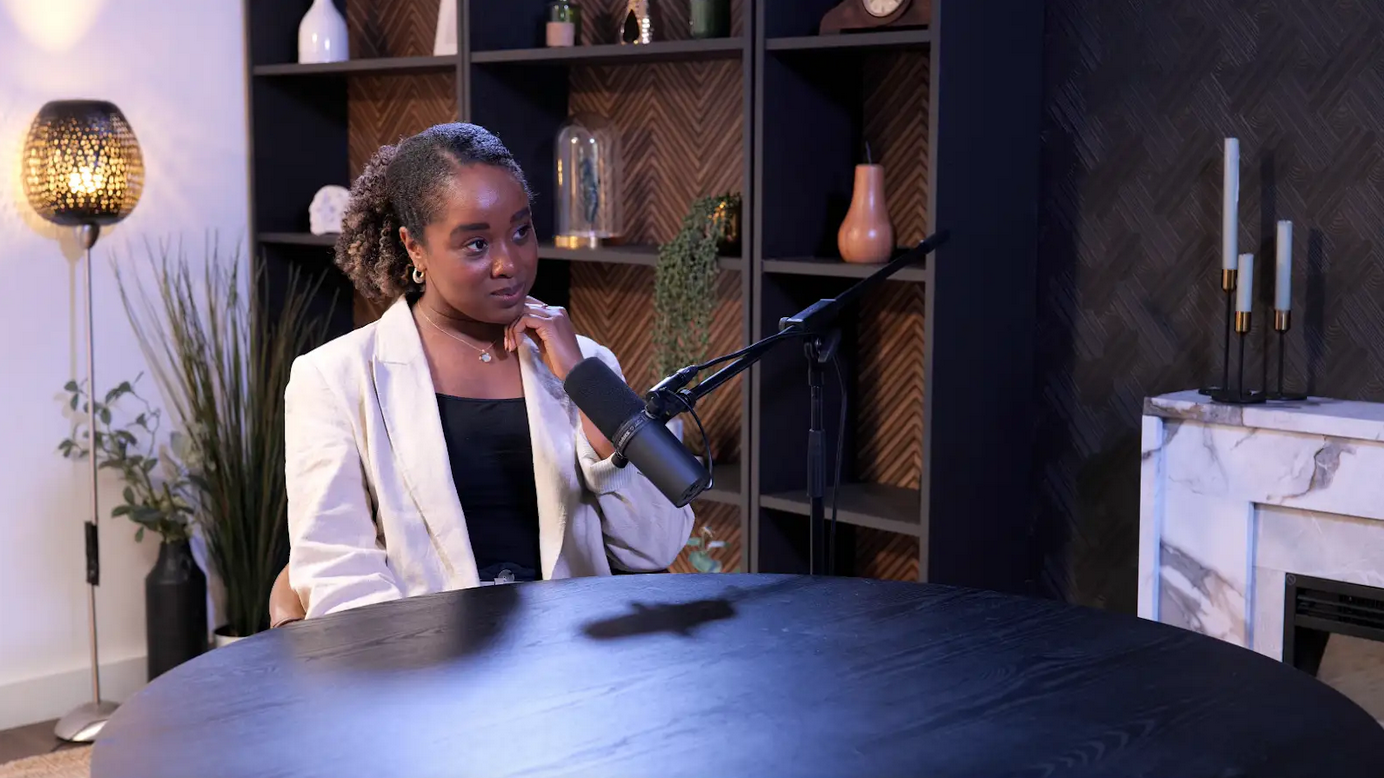
Finchley Studio (CEO Set): book this setup for your podcast
5.1 The Microphone Standard: Shure SM7B
The Shure SM7B is ubiquitously cited as the microphone of choice for professional UK podcasts.
Technical Profile: It is a dynamic microphone with a cardioid polar pattern. Its low output level (-59 dB) means it requires significant gain. Its frequency response is flat and wide (50 Hz to 20 kHz), with a "presence boost" switch that enhances vocal intelligibility.20
Why It Dominates: Its low sensitivity is its greatest asset in non-purpose-built studios. It naturally rejects off-axis noise (room reverb, traffic), making untreated rooms sound "drier" and more professional.
Cost Analysis: In the UK market, the SM7B retails between £327 and £379.26
Alternatives: For tighter budgets, the RØDE PodMic or Shure MV7+ (USB/XLR hybrid) offer similar dynamic characteristics at a lower price point, though with slightly less "air" and warmth.28
5.2 The Preamp Necessity: Cloudlifters
Because the SM7B is so quiet, plugging it directly into a standard interface often results in a noisy signal (as the interface preamp is pushed to its maximum).
The Solution: An inline microphone activator, such as the Cloudlifter CL-1. This device uses phantom power (48V) to add +25 dB of ultra-clean gain before the signal hits the interface preamp.
Market Price: The Cloudlifter CL-1 typically costs around £129 in the UK.29 This "hidden cost" must be factored into any procurement budget involving SM7Bs.
5.3 Audio Interfaces and Integrated Recorders
The "brain" of the studio has evolved from simple USB boxes to integrated production consoles.
5.3.1 The Integrated Studio: RØDECaster Pro II
This device has become the centerpiece for mid-to-high tier productions and is standard equipment in self-service studios like Pirate.
Capabilities: It features high-gain "Revolution" preamps (negating the need for a Cloudlifter), onboard audio processing (compression, de-essing, Aphex Aural Exciter), and multi-track recording to SD card.31
Pricing: UK pricing hovers between £500 and £580.33
Strategic Value: For independent creators, this unit replaces a rack of outboard gear, offering "radio ready" sound out of the box.
5.3.2 The Interface Standard: Focusrite Scarlett Series
For setups recording into a DAW (Digital Audio Workstation), the Focusrite Scarlett 2i2 (3rd or 4th Gen) remains the industry workhorse.
Specs: It offers 24-bit/192kHz conversion. The "Air" mode on newer models emulates the frequency curve of classic ISA preamps, adding high-end clarity to vocals.35
Pricing: Approximately £100 - £174.35
Limitations: Unlike the RØDECaster, it provides no onboard processing. All compression and EQ must be handled in software, increasing the post-production workload.
5.3.3 The High-End Alternative: SSL 2+
Gaining ground in 2025 is the Solid State Logic (SSL) 2+.
The "4K" Button: This feature introduces harmonic distortion modeled on the SSL 4000 series consoles, adding analog character and "grit" that helps vocals cut through a mix.38
5.4 Acoustic Treatment: The Forgotten Variable
A critical differentiator between amateur and pro sound is room treatment.
The Physics: Hard surfaces (walls, windows) create reflections that reach the microphone milliseconds after the direct voice, causing "comb filtering" (a hollow, metallic sound).
The Solution: Absorption panels. A basic "London Room Kit" (e.g., Primacoustic London 8 or 10) costs between £209 and £499.39
ROI: An SM7B in an untreated room sounds worse than a £50 mic in a treated room. For home studios, acoustic treatment offers the highest return on investment for audio fidelity.
6. Software & Post-Production Workflows
The disparity in audio quality is often less about hardware and more about the "invisible art" of editing and mastering.
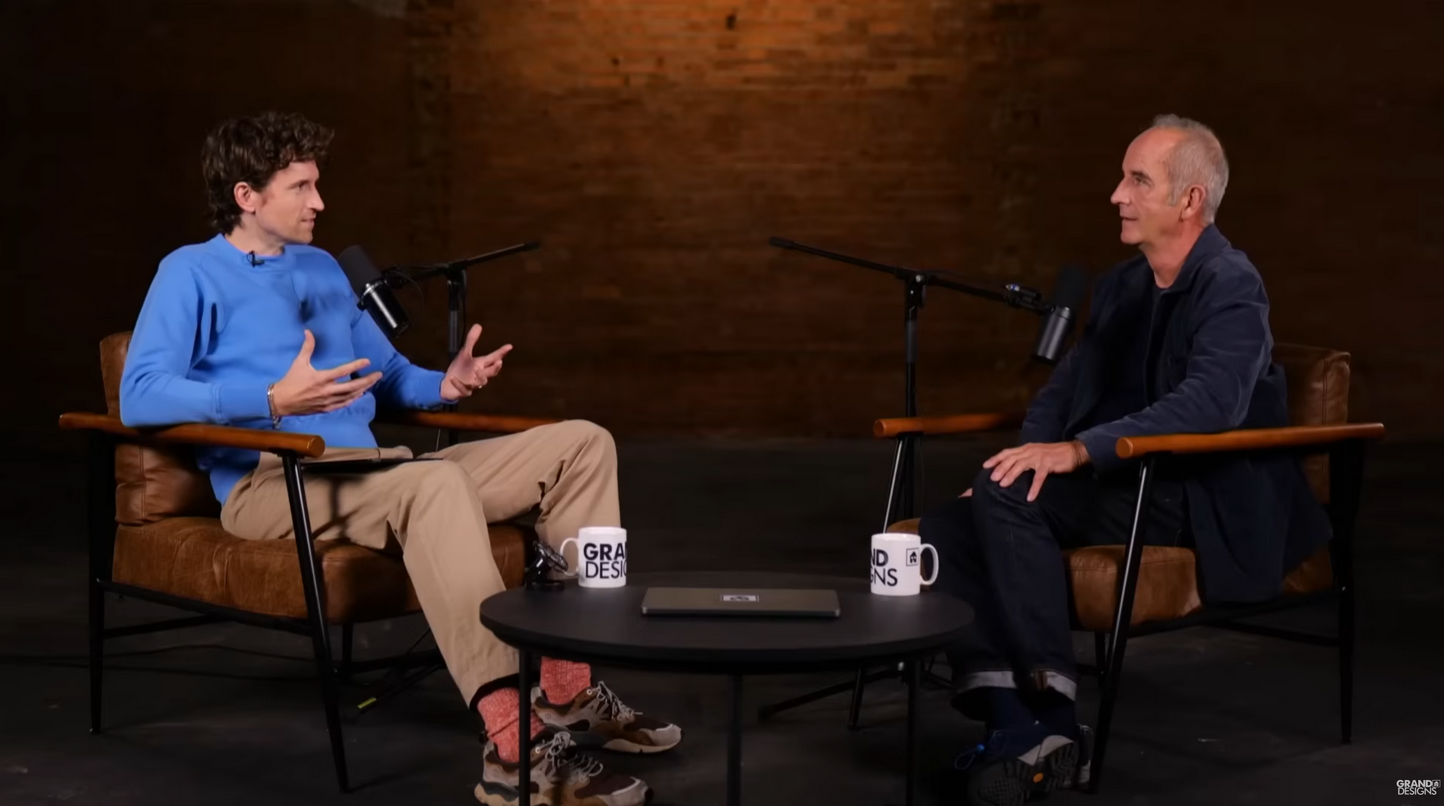
See the 'Grand designs' from Channel 4 by Kevin McCloud at Finchley Studio (Brick studio). Book this setup for your podcast.
6.1 The "Invisible" Editing Standard
Analysis of listener complaints regarding declining quality in major shows highlights the importance of editing discipline. Common artifacts in sub-par productions include breath cuts that sound unnatural, disjointed pacing, and abrupt transitions.41
Professional Workflow: Top-tier shows utilize "non-destructive" editing in DAWs like Pro Tools, Reaper, or Adobe Audition.
Room Tone Utility: Pros rely on "room tone" (a recording of the room's silence) to patch gaps between edits. This ensures the background ambience remains continuous, preventing the jarring "silence-noise-silence" effect caused by aggressive editing.42
The Noise Gate Trap: A frequent indie mistake is the use of hard noise gates that snap shut when the speaker stops talking. This creates a pumping effect that fatigues the ear. Professional productions use "downward expansion" or spectral noise reduction to gently lower the noise floor without eliminating it entirely.16
6.2 The Mastering Chain: AI vs. Manual
Mastering is the final step to ensure loudness compliance (-16 LUFS) and tonal balance.
6.2.1 Automated Mastering (Auphonic)
For the independent market, Auphonic has become a standard, almost indispensable tool.
Functionality: It uses machine learning to automate leveling (balancing speakers), loudness normalization, and noise reduction.43
Pricing/Access: It offers a free tier (2 hours/month) and paid desktop apps (approx. $89).
Pros/Cons: It provides incredible consistency and speed, democratizing the "pro sound" for non-engineers. However, it lacks creative nuance; it cannot distinguish between a dramatic, intentional silence and a mistake, potentially bringing up the noise floor during a pause.44
6.2.2 Professional Manual Chains
Engineers for chart-topping shows typically employ a manual plugin chain to retain greater control. The 2025 standard toolkit includes:
Surgical EQ (FabFilter Pro-Q 3): This plugin is revered for its transparent sound and dynamic EQ capabilities. Engineers use it to "sweep" frequencies to find resonant room nodes and cut them. A common technique involves a High Pass Filter around 80Hz (to remove rumble) and a dynamic cut in the 2-4kHz range (to reduce harshness).45
Restoration (iZotope RX): This is the industry standard for cleaning audio before mixing. Modules like "De-plosive" (removing p-pops), "De-click" (mouth noise), and "Spectral De-noise" allow for surgical repair that standard gates cannot achieve.18
Workflow: The typical pro chain is: Restoration (RX) -> Surgical EQ (FabFilter) -> Compression (Leveling) -> Tonal EQ (Additive) -> Limiting (Loudness Compliance).
7. The London Studio Infrastructure: A Comparative Analysis
For productions requiring guaranteed fidelity, client comfort, and video capabilities, the London studio market offers a tiered ecosystem. The selection of a facility depends heavily on the production's specific needs regarding video, budget, and frequency.
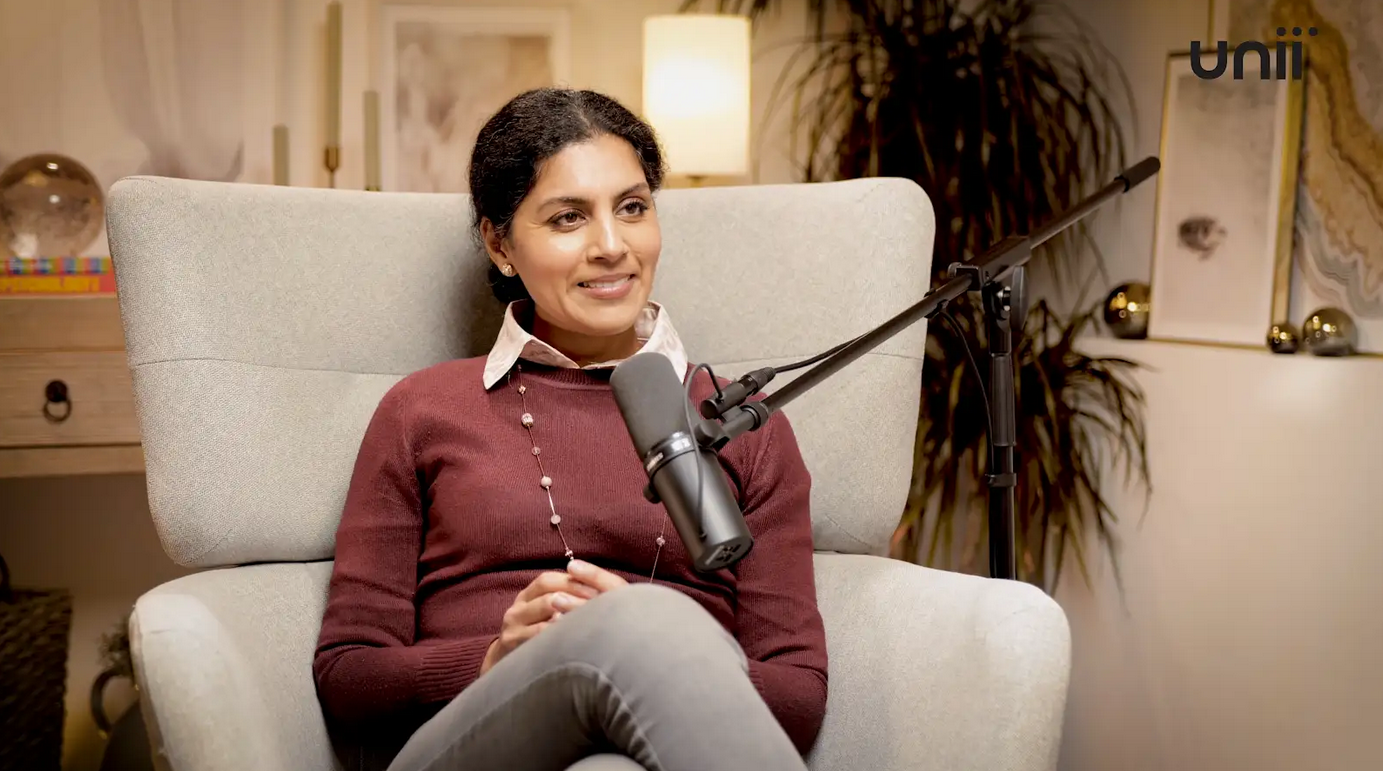
Finchley Studio (Dialogue set): book this setup for your podcast
7.1 Tier 1: Elite Broadcast & Visualised Podcast Studios
These facilities cater to high-budget productions, celebrity interviews, and shows requiring 4K video delivery and full production support.
7.2 Tier 2: Membership & Community Hubs
A growing trend in London is the "Soho House" model applied to content creation—membership-based access to high-quality facilities.
The Qube:
Locations: West London, East London, Hackney, Canary Wharf.1
The Model: Membership-based.
House: £120/mo (6 hrs studio time).
Solo: £250/mo (18 hrs).
Pro: £500/mo (40 hrs).47
The Gear: Studios feature high-end microphones typically found in music studios (Neumann U87, Sennheiser MD421) rather than just the standard SM7B. The integration of Avid HDX systems appeals to professional engineers.
Strategic Value: For serial creators or agencies, The Qube offers the best cost-per-hour value (approx. £12.50/hr at the Pro tier). The community aspect fosters collaboration, and the high-design interiors are suitable for filming.
7.3 Tier 3: Mid-Range & Self-Service Facilities
For independent creators or "on-the-fly" recordings, self-service studios offer accessibility and 24/7 operation.
Pirate Studios:
Locations: 8 locations including Dalston, Hackney, Camden, Wembley.49
The Model: Completely self-service. Unlocked via app code.
Pricing: Dynamic and highly affordable, starting around £10.50 - £20/hr for audio studios, with some sources citing averages up to £47.40 for peak/larger rooms.47
The Risk: User reviews highlight significant variability in quality. Reports of "broken CDJs," AC failures, and hygiene issues ("disgusting") suggest a lack of on-site maintenance.53 However, the widespread availability and 24/7 access make it the "McDonald's" of studios—reliable enough, everywhere, and cheap.
Tech: Equipped with RØDECaster Pro consoles and RØDE Procaster mics.51
Finchley Production Studio:
Location: North London.
The Model: A bridge between Pirate and Spiritland.
Pricing: Tiered packages.
Silver: £99/hr (Dry hire).
Gold: £109/hr (Wet hire + Video + Engineer).
Platinum: £129/hr (Includes Teleprompter).54
Strategic Value: The "Gold" package offers immense value by including an engineer and video for a price lower than many audio-only studios in central London. The teleprompter option caters specifically to corporate and scripted content creators.
Mid-Range Options: Studios like Mavro Worldwide (£50-£80/hr) and Next Media London (Bermondsey) offer alternatives for those who need a technician but cannot afford Spiritland rates.55
8. Economic Analysis: Build vs. Rent
For a London-based production entity, the decision to build an in-house studio versus renting requires a careful analysis of Capital Expenditure (CAPEX) versus Operational Expenditure (OPEX).
8.1 The "Pro" Home/Office Build Cost
To match the audio quality of a facility like The Qube (Audio-only), the required investment is significant.
Contextualizing the Cost:
Break-even Point: Renting a mid-tier studio (e.g., Finchley Gold at £109/hr) implies the home studio pays for itself after approximately 22 hours of recording time.
The Video Multiplier: If the production requires Diary of a CEO quality video, the CAPEX triples. A Sony FX3 camera costs roughly £3,800. Two cameras plus lighting and lenses can easily push the budget past £10,000.
Real Estate: This calculation excludes the most expensive variable in London: square footage. A dedicated, quiet room in London is a luxury. Renting a studio effectively outsources the cost of real estate and soundproofing.
8.2 The Value of the Rental Studio
Risk Mitigation: Studios like Podcast House and Finchley include engineers. This is an insurance policy against lost data, sync drift, or bad levels—errors that frequently ruin DIY productions.
Visual Consistency: Rental studios provide designed sets. Achieving a "depth of field" look requires a large room where the subject is far from the background wall. Home offices rarely offer this depth.
9. Strategic Recommendations
Based on the synthesis of regulatory data, technical standards, and infrastructure availability, the following strategic roadmap is recommended for UK podcasters in 2025.
9.1 Adherence to Specs is Non-Negotiable
Regardless of the recording environment, the final deliverable must meet the -16 LUFS / -1.0 dBTP standard.
Action: If lacking a professional engineer, utilize Auphonic for final leveling to ensure compliance with Apple and Spotify standards.
BBC Deliveries: If pitching to the BBC or BBC Sounds, strict adherence to -23 LUFS and 48 kHz is mandatory. Do not submit -16 LUFS files to the BBC; they will be rejected or improperly processed.
9.2 Format Selection Drives Infrastructure
Audio-Only (Narrative/Journalism): For productions resembling The Rest Is Politics, the membership model at The Qube offers the best economic efficiency and community networking. Alternatively, investing in a high-end "travel kit" (SM7B + Cloudlifter) allows for flexible recording without sacrificing audio fidelity.
Visualised Podcasts (Entertainment/Brand): For productions aiming for Diary of a CEO visual standards, the "Rent" model is superior to "Build." Facilities like Podcast House or Spiritland offer the lighting, camera depth, and engineering support that are cost-prohibitive to replicate in-house. The visual aesthetic is now a primary discoverability driver on YouTube; a bedroom wall background signals "amateur" to 2025 audiences.
9.3 The Indie "Hack"
For independent creators on a budget, the most efficient workflow is:
Record at Pirate Studios (using their RØDECaster Pro II and quiet rooms) to capture clean, dry audio.
Bring your own MicroSD card to ensure data custody.
Post-Process with iZotope RX (to clean any amp hiss or lip smacks) and Auphonic (to level).
Avoid Over-Compression: Maintain dynamic integrity to stand out against the fatigue of over-processed amateur shows.
10. Conclusion
The UK podcasting market in 2025 is a sophisticated ecosystem where "broadcast quality" is the baseline expectation. The gap between independent and chart-topping productions is defined by the rigorous application of acoustic treatment, precise loudness management, and the strategic use of visual infrastructure. While hardware like the Shure SM7B has standardized the capture of the voice, the environment in which it is captured and the workflow by which it is processed remain the true differentiators. Whether through the membership halls of The Qube or the broadcast suites of Spiritland, the path to the charts requires a fusion of technical discipline and strategic investment in the right physical spaces.
In the UK podcast ecosystem, the uncompromised quality of acoustic infrastructure is the bedrock upon which chart success is built. While compelling content draws an audience, technical excellence—specifically pristine audio free from noise and room reflections—sustains it. A technical analysis reveals that chart-topping productions, whether from major networks or ambitious independents, rely heavily on studio environments meticulously engineered for sound capture, a feature readily available in specialized London facilities.
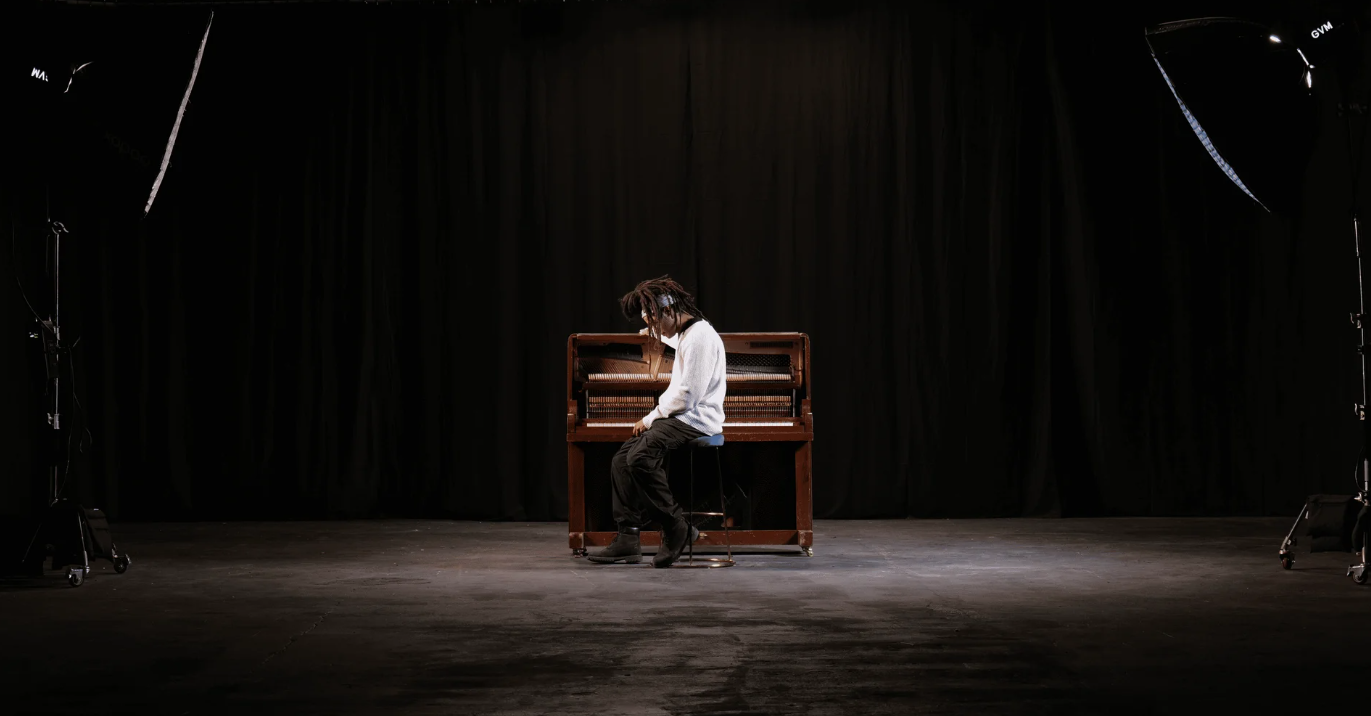
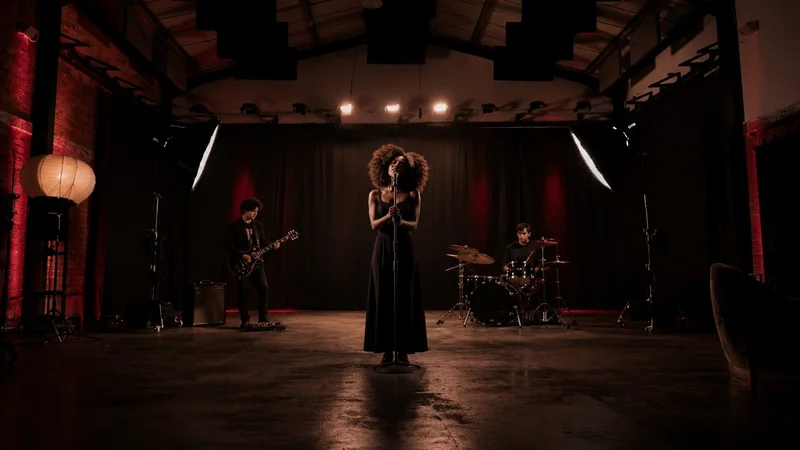
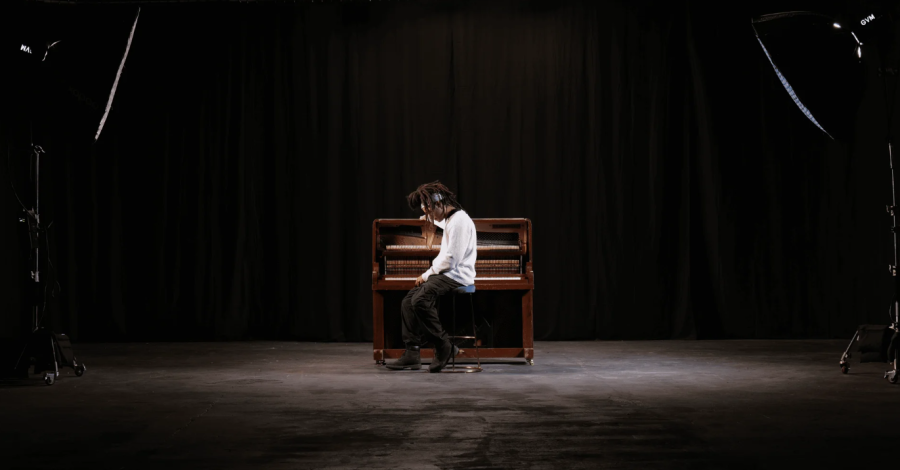
Finchley Studio (Giant Blackout Set): book this setup for your podcast
The Foundation of Quality: Sound Isolation vs. Acoustic Treatment
There are two non-negotiable pillars of professional podcast acoustics:
- Sound Isolation (Soundproofing): This is the structural defense against external noise (traffic, construction, neighboring conversations). Chart-topping productions demand studios built with decoupled walls and high-mass materials to physically block outside sounds. Without this, even the quietest recording environment is vulnerable, especially in a dense city like London.
- Acoustic Treatment: Once isolated, the room must be treated internally to manage sound reflections (echo and reverb). Professional studios use strategically placed acoustic panels (absorption and diffusion) to create a 'dead' or 'dry' sound, allowing the microphone to capture only the speaker's voice clearly. This allows the host's voice to sound professional and present, eliminating the "hollow" sound typical of untreated spaces.
Infrastructure Solutions for Visual Content
The advent of video podcasting (vodcasting) introduces the additional challenge of blending acoustic perfection with visual versatility. London studios must provide environments that are both acoustically dead and visually stunning. This has led to the development of highly specialized sets:
- Dedicated Dialogue Sets: Spaces like the Dialogue Room or the LOUNGE STUDIO are designed with a low reflection profile ideal for 2-4 person conversations, while simultaneously offering cinematic lighting and aesthetically pleasing backdrops.
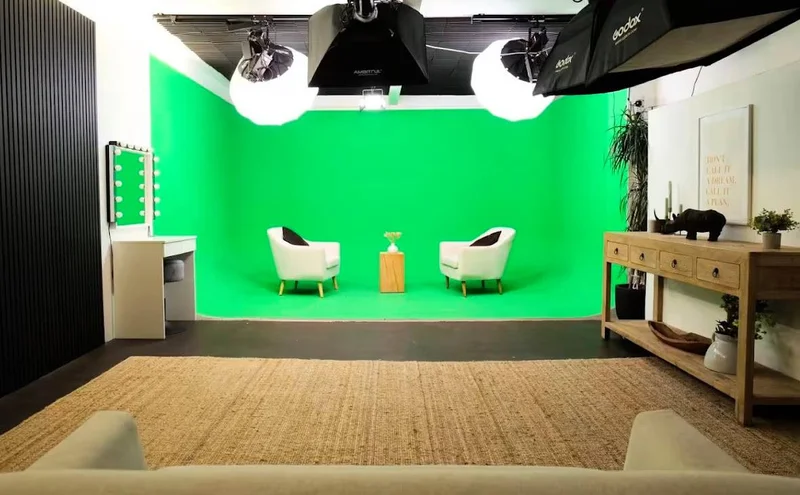
- Large-Scale Production Bays: For corporate or complex visual needs, studios must offer warehouse infrastructure with high ceilings and flexible lighting grids. These include specialized spaces like the GIANT BLACKOUT or the GIANT GREEN SCREEN, ensuring both size and acoustic integrity.
The Technical Assurance of Studio Recording
By booking into a facility with proven acoustic infrastructure—the type trusted by the BBC and Lloyds bank—creators outsource their most critical technical risk. This efficiency is further compounded when opting for an integrated service, allowing the studio's in-house team to handle post-production, guaranteeing that the final product adheres to strict LUFS (Loudness Units Full Scale) and technical delivery standards.
We hope this technical analysis clarifies the importance of acoustic infrastructure in achieving professional standards. To take your production to the next level, the right environment is key. We invite you to see what makes Finchley Studio the top choice for creators. As a professional podcast recording studio, Finchley Studio is built to handle all your production needs.
We're trusted by industry leaders and regular clients like the BBC and Lloyds bank, who rely on our professional spaces. We offer a diverse range of unique, pre-lit sets to match any brand or aesthetic. Explore our spaces to find your perfect fit:
- Dialogue Room: For intimate 2-4 person conversations.
- LOUNGE STUDIO: A relaxed, versatile set for up to 5 people.
- CEO SET: Premium, sleek, and executive.
- Green Screen Cove: A pre-lit, curved studio for seamless virtual backgrounds.
- Blackwood Studio: A sophisticated, modern set with a striking black wood backdrop.
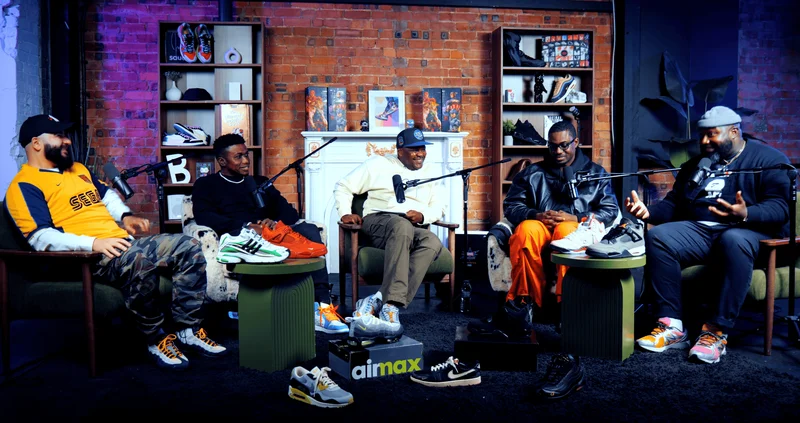
- THE BRICK STUDIO: A 180m² warehouse space with authentic red brick.
- White Infinity Cove: For clean, minimalist, edge-free visuals.
- BLACKOUT SET: Full light control for dramatic, high-contrast content.
- GATHERING STUDIO: A professional space for larger roundtable discussions.
- GIANT GREEN SCREEN: One of London's largest green screens in our 180m² warehouse.
- GIANT BLACKOUT: Our 180m² warehouse for large-scale, controlled dark sets.
Once your recording is complete, let our expert team handle the rest. Our professional Video Editing Service will make your content shine, with a two-week turnaround guaranteed. Choosing Finchley Studio means choosing a seamless experience from start to finish. We're proud of the community we've built at Finchley Studio. Don't just take our word for it—see what other producers have to say about their experience on our Google review page and Trust Pilot.
Finding us is simple. We are conveniently located just Two minutes from Finchley Central (https://tfl.gov.uk/tube/stop/940GZZLUFYC/finchley-central-underground-station?lineId=northern) on the Northern Line. We offer One free parking space per booking, and for those travelling, we are Adjacent to Travelodge London Finchley (https://www.travelodge.co.uk/hotels/614/London-Finchley-hotel). You can find our exact location on Google map, Apple maps, [suspicious link removed], or using our What 3 words (https://w3w.co/orders.yards.jokes) address.
Stay connected with our creative community and see behind-the-scenes content by following us on Instagram, YouTube, TikTok, LinkedIn, and X (Twitter). Have any questions before you book? Check our FAQ page, chat with us directly on WhatsApp, or give us a call at +447587827200. You can also send us an Email. Ready to elevate your podcast? Your next great episode starts here. Book now to secure your spot in one of London's premier podcast studios.
Works cited
Ofcom Podcast Survey and Audio Report 2025 – adambowie.com, accessed November 20, 2025, https://www.adambowie.com/blog/2025/05/ofcom-podcast-survey-and-audio-report-2025/
BBC Sounds reports 8.5% increase and podcast listening growth - PodcastingToday, accessed November 20, 2025, https://podcastingtoday.co.uk/bbc-sounds-reports-8-5-increase-and-podcast-listening-growth/
Market position of BBC Sounds - Consultation - Ofcom, accessed November 20, 2025, https://www.ofcom.org.uk/siteassets/resources/documents/consultations/category-3-4-weeks/204722-bbc-sounds-market-position/associated-documents/secondary-documents/consultation-bbc-sounds.pdf?v=326377
The Rest is Politics: Alastair Campbell and Rory Stewart are leading the podcast boom, accessed November 20, 2025, https://corq.studio/insights/the-rest-is-politics-podcast-success-trends/
Podcast Loudness Standard: Perfecting Your Sound in 2025 - Descript, accessed November 20, 2025, https://www.descript.com/blog/article/podcast-loudness-standard-getting-the-right-volume
HOW LOUD SHOULD YOUR PODCAST BE? LUFS AND DB EXPLAINED, accessed November 20, 2025, https://content.sport-social.co.uk/blog/how-loud-should-your-podcast-be
Loudness (LUFS) | Podcasting Articles - Audio Audit, accessed November 20, 2025, https://audioaudit.io/articles/podcast/loudness-lufs
Eyes on Your Audio: RTW - Worldwide Loudness Delivery Standards, accessed November 20, 2025, https://www.rtw.com/en/blog/worldwide-loudness-delivery-standards.html
Tech 3401, accessed November 20, 2025, https://tech.ebu.ch/docs/tech/tech3401.pdf
TECHNICAL STANDARDS FOR DELIVERY OF TELEVISION PROGRAMMES TO - IMAGO, accessed November 20, 2025, https://imago.org/wp-content/uploads/2013/08/images_technical_guide_lines.pdf
What is the audio quality (e.g., bit rate, formats supported)? - BBC, accessed November 20, 2025, https://help.bbc.com/hc/en-us/articles/39026749109651-What-is-the-audio-quality-e-g-bit-rate-formats-supported
Audio requirements - Apple Podcasts for Creators, accessed November 20, 2025, https://podcasters.apple.com/support/893-audio-requirements
Production Delivery Specifications – Part 2 - The Broadcast Bridge, accessed November 20, 2025, https://www.thebroadcastbridge.com/content/entry/21483/production-delivery-specifications-part-2
BBC Ad Specifications Podcast, accessed November 20, 2025, https://bbcnews.bbcstudios.com/advertising/ad-specs/21-bbc-podcasts/
How Loud Should a Podcast Be? Dynamic Range & Podcast Volume Levels, accessed November 20, 2025, https://www.thepodcasthost.com/recording-skills/how-loud-should-a-podcast-be/
Making High Quality Recordings with the Indie Music Podcast - Samson, accessed November 20, 2025, https://samsontech.com/blog/making-high-quality-recordings-with-the-indie-music-podcast/
What is a Dynamic Range in Audio and Podcasts? - Podcastle, accessed November 20, 2025, https://podcastle.ai/blog/what-is-a-dynamic-range-in-audio-and-why-it-is-important-for-your-podcast/
Ultimate Guide to Podcast Production - iZotope, accessed November 20, 2025, https://www.izotope.com/en/learn/podcast-production-guide-part2
Dynamic Range and Noise Floor | Audio Science Review (ASR) Forum, accessed November 20, 2025, https://www.audiosciencereview.com/forum/index.php?threads/dynamic-range-and-noise-floor.46747/
Your Actionable Guide to Podcast Setup Equipment | Fame, accessed November 20, 2025, https://www.fame.so/post/your-actionable-guide-to-podcast-setup-equipment
Video Podcast Setup Tour – Mics, Lights & Cameras Explained - YouTube, accessed November 20, 2025, https://www.youtube.com/watch?v=Gb03aEzHZqA
Behind The Scenes Of The Diary Of A CEO (for the first time ever!!!) - YouTube, accessed November 20, 2025, https://www.youtube.com/watch?v=Zt6nmHsR7Qs
Inside the incredible traveling podcast recording kit | by Hello, WaitWhat | Medium, accessed November 20, 2025, https://medium.com/@hellowaitwhat/inside-our-incredible-traveling-podcast-recording-kit-3a232e769ef9
On Mic, On Brand - podcasts' untapped audiences and their symphonic relationship with sponsors - Pulsar Platform, accessed November 20, 2025, https://www.pulsarplatform.com/blog/2023/on-mic-on-brand-podcasts-sponsors
Case Study: Plosive - Yellow Technology, accessed November 20, 2025, https://yellowtechnology.co.uk/case-study-plosive
Shure SM 7 B - Thomann, accessed November 20, 2025, https://www.thomann.co.uk/shure_sm_7b_studiomikro.htm
Find Shure SM7B | Price from £345 | Shure in Microphones - PriceSpy UK, accessed November 20, 2025, https://pricespy.co.uk/product.php?p=132079
The best podcasting equipment: Elevate your experience in 2025 - Streams Charts, accessed November 20, 2025, https://streamscharts.com/news/podcast-equipment-essentials-2025-guide-best-gear-beginners-and-pros
Cloud Microphones Cloudlifter CL-1 Mic Activator | Reverb UK, accessed November 20, 2025, https://reverb.com/uk/p/cloud-microphones-cloudlifter-cl-1
Cloud Microphones Cloudlifter CL-1 - Black Friday 2025 – Deals from £129 - PriceSpy UK, accessed November 20, 2025, https://pricespy.co.uk/product.php?p=2963320
Rode RODECaster Pro II 4 Person Bundle - CVP.com, accessed November 20, 2025, https://cvp.com/product/rode-rodecasterproii-pro-ii-4-person-bundle
Rode RodeCaster Pro II at Gear4music, accessed November 20, 2025, https://www.gear4music.com/Recording-and-Computers/Rode-RodeCaster-Pro-II/4U7L
Røde Rodecaster Pro II - Black Friday 2025 – Deals from £499.99 - PriceSpy UK, accessed November 20, 2025, https://pricespy.co.uk/product.php?p=6654682
Rode Rodecaster Pro II – Thomann UK, accessed November 20, 2025, https://www.thomann.co.uk/rode_rodecaster_pro_ii.htm
Focusrite Scarlett 2i2 4th Gen - Andertons Music Co., accessed November 20, 2025, https://www.andertons.co.uk/focusrite-scarlett-2i2-4th-gen/
Scarlett 2i2 4th Generation | Focusrite, accessed November 20, 2025, https://focusrite.com/products/scarlett-2i2
Focusrite Scarlett 2i2 3rd Gen - Thomann, accessed November 20, 2025, https://www.thomann.co.uk/focusrite_scarlett_2i2_3rd_gen.htm
The Best Audio Interfaces For Podcasters in 2025: Complete Buyer's Guide, accessed November 20, 2025, https://thepodcasthaven.com/the-best-audio-interfaces-for-podcasters-in-2025-complete-buyers-guide/
Advanced Acoustics Treatment Studio Foam Starter Kits, accessed November 20, 2025, https://advancedacoustics-uk.com/collections/acoustic-studio-starter-kits
London Room Kits - Primacoustic, accessed November 20, 2025, https://www.primacoustic.com/london-room-kits/
Bad editing : r/podcasting - Reddit, accessed November 20, 2025, https://www.reddit.com/r/podcasting/comments/1mcfu9i/bad_editing/
10 Common Podcast Editing Mistakes and How to Avoid Them - Vidpros, accessed November 20, 2025, https://vidpros.com/10-common-podcast-editing-mistakes-and-how-to-avoid-them/
Auphonic Review - A Podcasters Experience After 3 Years, accessed November 20, 2025, https://podcastmarketingpuzzle.com/auphonic-review-podcaster/
Auphonic: A full tutorial for newer podcasters! (It's my fave free tool post-pro tool) - Reddit, accessed November 20, 2025, https://www.reddit.com/r/podcasting/comments/gnbf50/auphonic_a_full_tutorial_for_newer_podcasters_its/
How To EQ Vocals FabFilter Pro-Q 3 - YouTube, accessed November 20, 2025, https://www.youtube.com/shorts/1euLrctMDaw
5 Minute Review: fabfilter Pro-Q 3 - A Well Thought Out EQ For Podcast Editors - YouTube, accessed November 20, 2025, https://www.youtube.com/watch?v=NeMOt-Tg5n8
Best Podcasting Studios in London | Our Picks for 2025 - TYX Studios, accessed November 20, 2025, https://tyxstudios.com/blog/best-podcast-studios-in-london
London Podcast Studio | Studio Hire in King's Cross - Spiritland Productions, accessed November 20, 2025, https://spiritlandproductions.com/studio/
10 Best Podcast Studios London to Hire in 2025 - Saspod, accessed November 20, 2025, https://saspod.com/blog/post/best-podcast-studios-london
Podcast House | Podcast Recording Studio in Central London, UK ..., accessed November 20, 2025, https://podcasthouse.co.uk/
London Podcast Studios - 24/7 Studio Hire, accessed November 20, 2025, https://pirate.com/en/podcast-studios/london/
London Recording Studios | Affordable Production Rooms | PIRATE.COM, accessed November 20, 2025, https://pirate.com/en/recording-studios/london/
Pirate Studio UK : r/Beatmatch - Reddit, accessed November 20, 2025, https://www.reddit.com/r/Beatmatch/comments/19bzmg4/pirate_studio_uk/
Podcast Studio London Cost 2025 - Finchley Studios, accessed November 20, 2025, https://www.finchley.co.uk/finchley-learning/podcast-studio-london-cost-2025
Podcast Studio Hire From £50p/h in London - Mavro Worldwide, accessed November 20, 2025, https://www.mavroworldwide.com/podcaststudiohire-colours
Affordable podcast studio hire Options for Independent Creators., accessed November 20, 2025, https://www.finchley.co.uk/finchley-learning/visual-podcast/affordable-podcast-studio-hire-options-for-independent-creators