Executive Summary
In the increasingly saturated digital media landscape, content engagement is the primary determinant of success. This report presents a comprehensive analysis of the causal relationship between the use of a professional podcast studio and the enhancement of audience engagement. The core thesis established herein is that a professional studio is not merely a cost center for improved aesthetics but a strategic investment that directly drives audience growth, deepens listener connection, enhances brand credibility, and unlocks significant monetization potential. The analysis moves beyond a superficial comparison of equipment to deconstruct the tangible and intangible benefits of a professionally controlled production environment.
The foundational argument rests on the psychological impact of audio and video quality. Superior production eradicates "cognitive friction," a key barrier to information processing and trust, thereby establishing a baseline of credibility before the content itself is even evaluated. This report will demonstrate that the controlled acoustic and visual environment of a studio is a performance-enhancing tool, optimizing the delivery of hosts and the comfort of guests, which results in a more authentic and compelling final product.
Furthermore, the professional studio is positioned as a multi-platform content engine. It provides the high-quality raw assets necessary to fuel a modern content marketing strategy, enabling the creation of a vast array of shareable micro-content that drives discovery and builds community. This is amplified through capabilities like live streaming, which transforms passive consumption into an active, participatory experience. Ultimately, the cumulative effect of these advantages translates into measurable brand equity, positioning the podcast as an authoritative voice in its niche and creating a fertile ground for diverse and sustainable monetization. The return on investment in professional production, therefore, is not measured in production values alone, but in the tangible growth of an engaged audience and a valuable brand.
The Foundation of Engagement: Eradicating Cognitive Friction with Superior Audio Quality
The primary interface between a podcast and its audience is sound. Before any idea can be conveyed or emotion felt, the audio must be processed by the listener. The quality of this audio is not a secondary feature; it is the non-negotiable bedrock upon which all engagement is built. A professional studio is an environment engineered to perfect this interface, and in doing so, it addresses a fundamental psychological barrier to audience connection and trust.
Defining the Professional Audio Environment
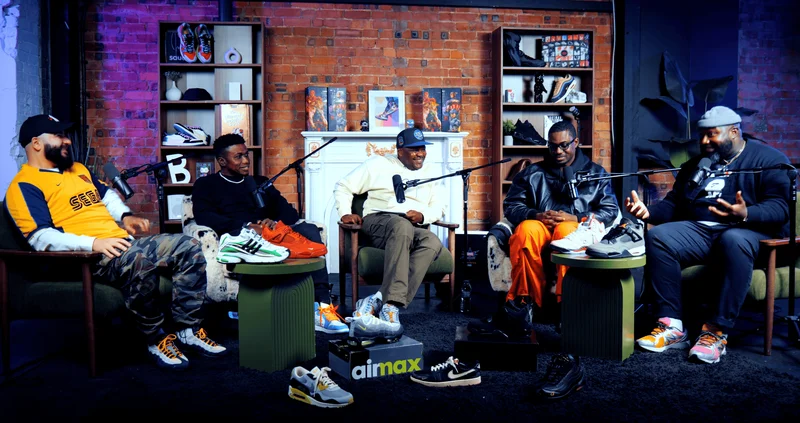
A professional podcast studio is a dedicated, purpose-built space designed for the singular goal of capturing pristine audio.1 This environment is defined by two key characteristics: superior equipment and a controlled acoustic space. Unlike a makeshift home setup, which often begins with a single USB microphone connected to a computer in a spare room, a professional studio provides access to broadcast-level technology.2 This includes high-end dynamic and condenser microphones, such as the industry-standard Shure SM7B, which are favored for their ability to capture warm, rich vocal tones with exceptional clarity.4 This core component is supported by a chain of professional-grade equipment, including audio interfaces, mixers that allow for real-time sound engineering, and premium headphones for accurate monitoring.6
In stark contrast, a home or do-it-yourself (DIY) setup, while offering flexibility and a lower initial financial outlay, presents a host of inherent challenges.4 Even with significant investment in prosumer-level equipment, the creator is faced with a steep learning curve in audio engineering and the formidable task of taming an environment not designed for recording.9 The result is often audio that, while functional, is riddled with subtle imperfections that degrade the listening experience.
The Science of a Controlled Acoustic Space
The most significant differentiator between a professional studio and a home setup is the acoustic environment itself. This is a matter of physics, and it is where most DIY efforts fall short. It is critical to distinguish between soundproofing and acoustic treatment, two distinct but complementary disciplines at which professional studios excel.1
Soundproofing is the process of isolating the recording space from the outside world, blocking external noises like traffic, sirens, household appliances, or conversations in adjacent rooms.1 Professional studios are often constructed using "room-in-a-room" designs with multiple layers of insulation and sealed doors to achieve robust sound isolation.10
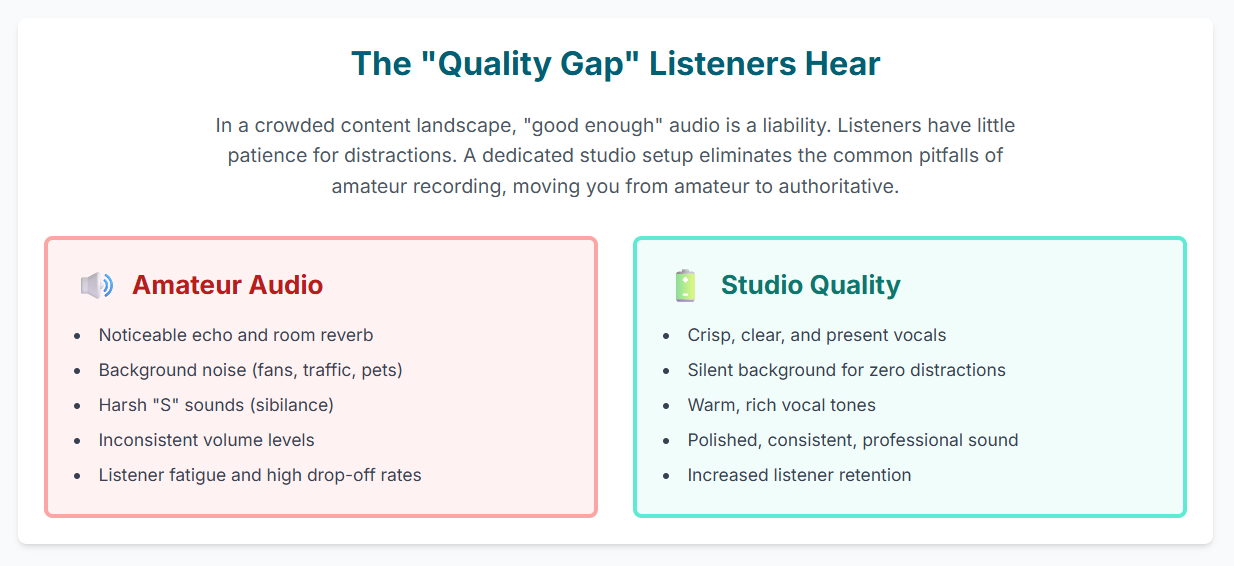
Acoustic Treatment, conversely, is the science of controlling how sound behaves within the room. In a typical untreated room, such as a home office, sound waves from a speaker's voice travel outward and reflect off hard surfaces like walls, ceilings, floors, and desks. These reflections arrive back at the microphone at slightly different times than the direct sound, creating echo (distinct repetitions) and reverberation (a wash of overlapping, decaying sound).1 This is the primary culprit behind audio that sounds distant, hollow, or "amateurish."
Professional studios employ a sophisticated combination of three strategies to manage these reflections 10:
Absorption: This is the most common form of treatment. Materials like high-density acoustic foam panels, fabric-wrapped fiberglass panels, and heavy curtains are placed on walls and ceilings to absorb sound energy, preventing it from reflecting.1 Bass traps, which are larger, denser absorbers, are placed in corners to control the build-up of problematic low-frequency sound waves.1
Diffusion: While absorption removes sound energy, diffusion scatters it. Specially designed diffusers, often made of wood with varied surface depths, break up sound waves and disperse them in multiple directions. This prevents harsh echoes without making the room sound completely "dead," resulting in a more natural and balanced acoustic environment.1
Reflection: In some cases, a small amount of reflection is desirable. Strategic placement of reflective surfaces can be used to direct sound in a controlled way, which can help optimize microphone capture and enhance vocal clarity.10

The Psychological Impact of Audio Quality: Cognitive Friction and the Trust Deficit
The technical superiority of a studio-controlled environment has profound and measurable psychological consequences for the listener. The field of psychoacoustics teaches that hearing is not a passive, mechanical process but an active, perceptual one; the brain must interpret the neural signals sent from the ear.16 When audio is clear and pristine, this process is effortless. When audio is poor, the listener's brain is forced to work harder, and this additional mental effort is the primary reason why production quality is inextricably linked to engagement and credibility.
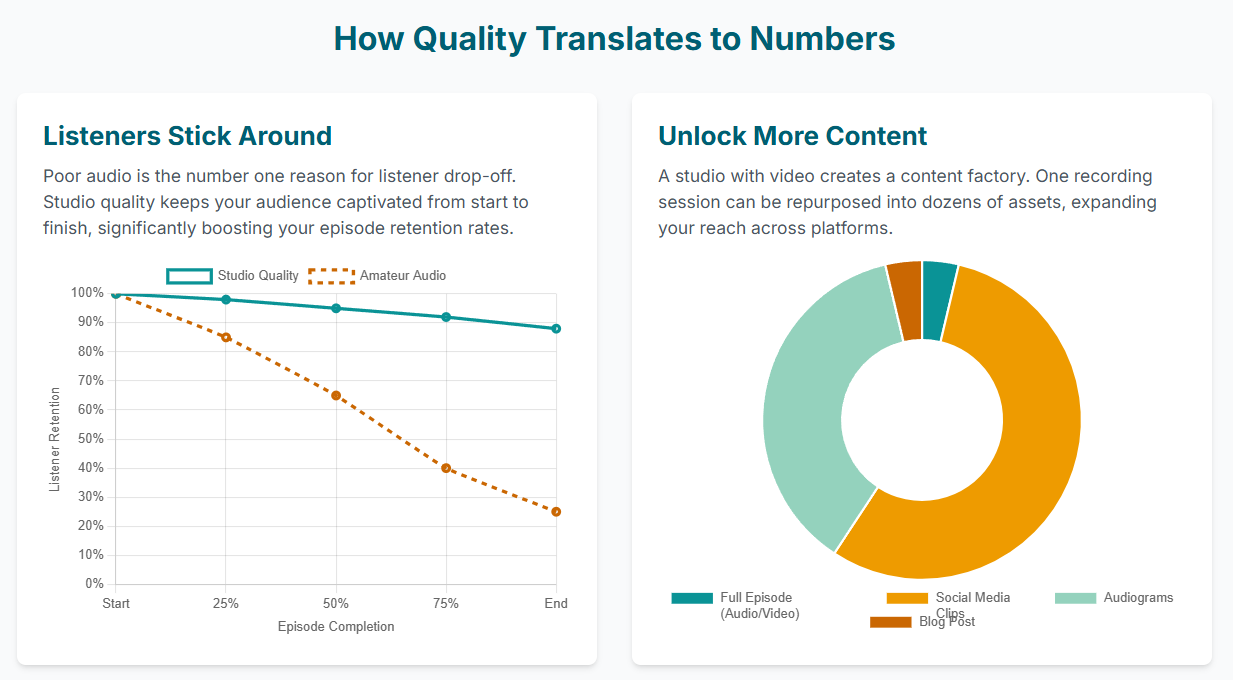
This phenomenon is known as cognitive friction. When a listener is presented with audio that is muffled, echoey, or obscured by background noise, a significant portion of their brain's limited processing power is diverted from comprehending the meaning of the content to simply deciphering the words being spoken.17 This creates a cognitive burden that is mentally exhausting and significantly reduces the listener's ability to retain information and form an emotional connection to the speaker.17 Listeners abandon podcasts with subpar audio not merely out of aesthetic preference, but because it is genuinely taxing to listen to them.
This cognitive strain translates directly into a loss of credibility. A landmark 2018 study from the University of Southern California (USC) and the Australian National University demonstrated this causal link unequivocally. Researchers presented participants with recordings of scientists discussing their work. When the audio quality was high, the speakers and their research were perceived as credible. However, when the exact same content was presented with degraded audio quality, the speakers were rated as less intelligent and less likeable, and their research was deemed less important and less believable.18 The conclusion is stark: making information difficult to process makes it less credible. The quality of the production is subconsciously interpreted as a proxy for the quality of the content itself.
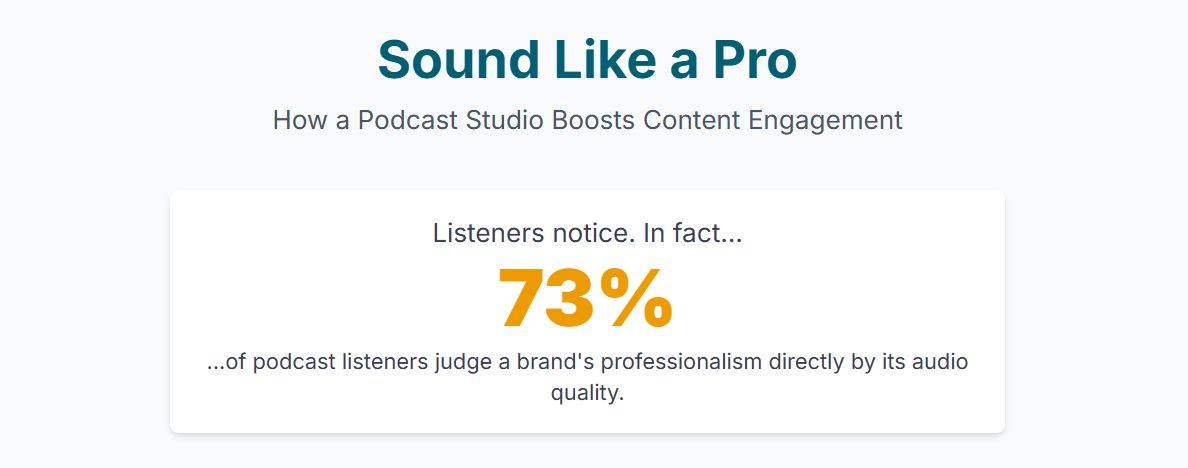
This creates what can be termed a subconscious trust factor. Listeners associate professional sound with expertise and trustworthiness.17 A 2023 study published in the Journal of Audio Engineering found that when presented with identical content, 73% of listeners rated the speaker with professional-quality audio as "highly knowledgeable," while only 36% gave the same rating to the speaker with amateur-quality audio.17 This perception gap has a direct impact on brand authority and the likelihood that a listener will act on the information presented.2 Furthermore, high-quality audio captures the subtle nuances of the human voice—the slight shifts in tone, warmth, and inflection—that are critical for creating a genuine emotional connection. Poor audio flattens these details, creating a sterile, distant experience that prevents the formation of a strong host-listener bond.17
The choice to invest in a professional studio, therefore, is not about achieving an arbitrary standard of "polish." It is a strategic decision to remove a fundamental psychological barrier between the creator's message and the audience's mind. It is an investment in the very efficacy of the content, ensuring that the message is not only heard, but also processed, understood, and believed.
This calculus fundamentally reframes the cost-benefit analysis of DIY versus professional production. While a home studio presents a lower upfront financial cost, it introduces significant hidden costs. These include the creator's time, which must be diverted from content creation to the steep learning curve of audio engineering; the hours lost to tedious post-production work attempting to fix audio problems that would not exist in a treated space; and, most importantly, the opportunity cost of lost listeners and damaged credibility from initial episodes that fail to meet audience expectations.4 A professional studio effectively outsources this technical debt, allowing the creator to focus on their core competency while ensuring a consistent, high-quality output from the very first episode.24
Table 1: Comparative Analysis of DIY vs. Professional Studio Setups
The Visual Imperative: Elevating Engagement Through Professional Video Production
As podcasting continues to evolve, the integration of video has become a primary driver of audience growth and engagement. For a significant segment of the audience, particularly on platforms like YouTube and across social media, the podcast is a visual medium. In this context, the quality of the video production is as crucial as the quality of the audio. A professional studio provides the tools and expertise to create a visually compelling experience that not only holds viewer attention but also communicates professionalism and deepens the audience's connection to the content.
The Rise of the Video Podcast and Viewer Expectations
The strategic value of video is undeniable. It expands a podcast's reach to visually dominant platforms like YouTube, TikTok, and Instagram, unlocking vast new audiences that may not frequent traditional audio-only podcast directories.7 However, this expansion comes with a new set of challenges. Today's viewers have sophisticated visual palettes, shaped by decades of professionally produced film, television, and high-quality streaming content.30 They form opinions about a video's quality within seconds, and amateur visuals—characterized by poor lighting, a single static camera angle, and a cluttered background—can lead to immediate drop-offs.30 In a competitive digital environment, a video podcast with low production values is perceived as being of low value itself, regardless of the substance of the conversation.3
Mastering the Frame: Professional Lighting for Depth, Mood, and Authority
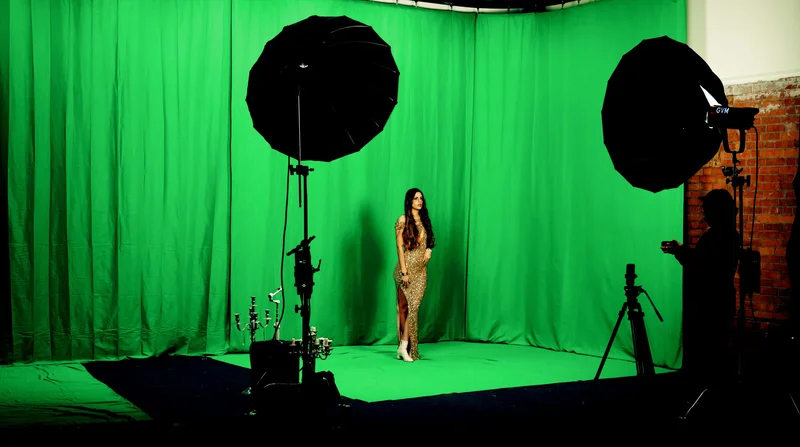
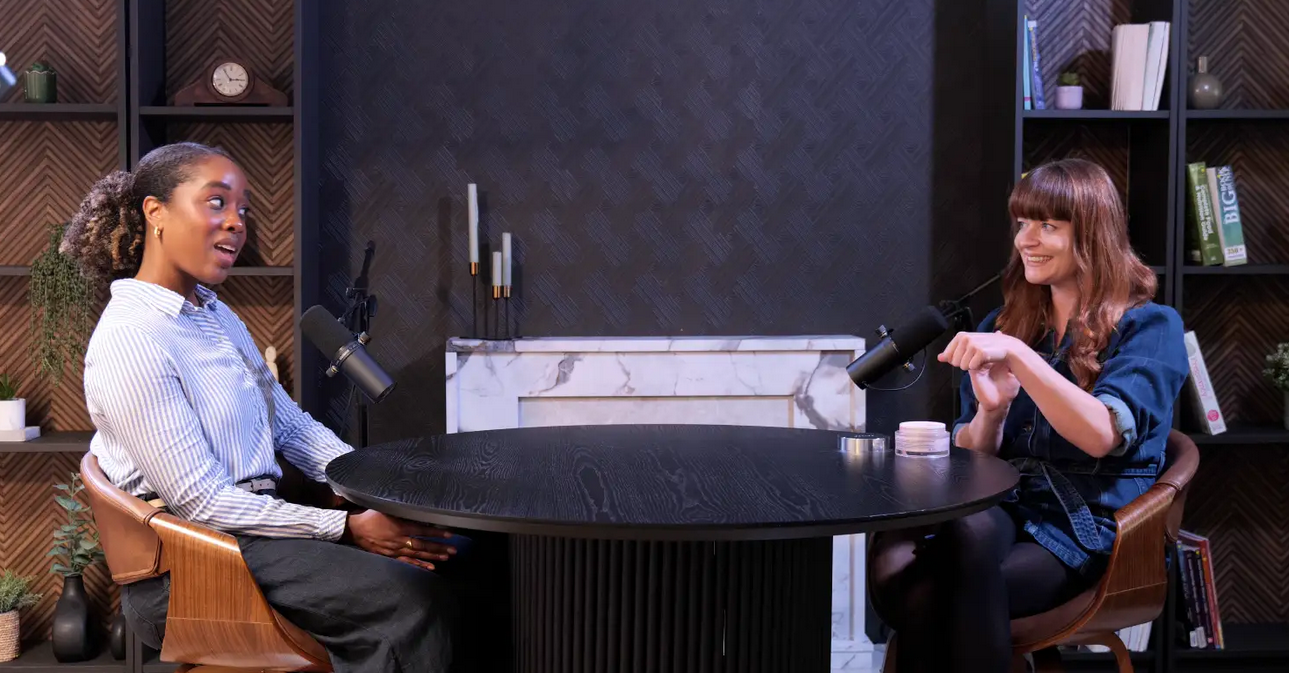
Effective lighting is the cornerstone of professional video production. It is not merely about illuminating the subjects; it is about sculpting the visual space to create depth, establish a mood, and guide the viewer's focus.32 Professional lighting design transforms a flat, two-dimensional image into a dynamic, three-dimensional scene. It achieves this by creating a clear visual separation between the hosts and their background, eliminating the "pasted-on" look that plagues many DIY video podcasts.32
The industry standard for achieving this cinematic look is the three-point lighting technique, which studios are expertly configured to execute 33:
Key Light: This is the primary and most powerful light source, positioned at an angle to the subject to create shape and dimension.
Fill Light: Placed opposite the key light, this is a softer, less intense light that "fills in" the harsh shadows created by the key light, ensuring the subject's features are clearly visible.
Back Light (or Rim Light): Positioned behind the subject, this light traces their outline, visually separating them from the background and adding a sense of depth to the frame.
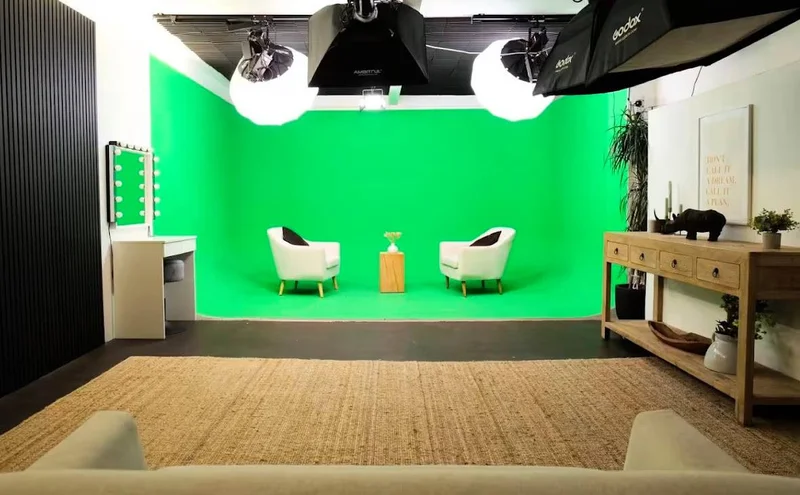
Beyond this foundational structure, professional lighting is a powerful tool for reinforcing brand identity. The color temperature of the lighting can be precisely controlled to set a specific mood. Cool, blue-toned lighting can evoke a sense of technology, professionalism, or contemplation, while warm, orange-toned lighting can create a cozy, intimate, and friendly atmosphere.32 Studios often utilize full-color RGB LED lights as accents in the background, allowing for the creation of a unique visual signature that aligns with the podcast's brand colors and personality.32 This level of control allows creators to avoid the common pitfalls of home lighting, such as unflattering shadows under the eyes, "flat" lighting that lacks contrast, and distracting glare on glasses.33
Creating a Dynamic Experience: The Power of Multi-Camera Production
Just as poor audio creates cognitive friction, a single, static camera shot creates visual monotony. The human brain is wired for novelty and stimulation; a long, unchanging shot allows the viewer's mind to wander and their attention to drift. A multi-camera production is the most effective tool for combating this visual fatigue. By providing multiple angles to cut between—such as a wide shot showing all participants, medium shots of individual speakers, and tight close-ups—a multi-camera setup makes the final video far more dynamic and engaging to watch.36
This dynamism is not merely aesthetic; it serves a crucial function in fostering audience connection. Close-up shots are particularly powerful, as they allow viewers to see the subtle facial expressions, gestures, and non-verbal cues of the hosts and guests. This creates a sense of intimacy and helps the audience feel more connected to the personalities on screen, transforming a distant broadcast into a personal conversation.36
Furthermore, a multi-camera setup is a hallmark of professional production and offers significant advantages in the editing process. In a single-camera recording, any mistake, long pause, or off-topic tangent that needs to be removed results in a jarring "jump cut" that is visually disruptive. With multiple camera angles, an editor can seamlessly hide these cuts by simply switching to a different camera shot at the point of the edit. This allows for the creation of a much tighter, more concise, and more professional final product without any visible signs of editing.38 Professional studios often take this a step further by offering integrated video switchers, which allow an engineer to "live-switch" between cameras during the recording itself. This produces a pre-edited video file at the end of the session, potentially eliminating hours or even days of post-production work.3
The strategic use of professional visuals transforms the podcast from a passive listening experience into an active viewing one. The constant shifting of camera angles acts as a series of pattern interrupts, continually re-engaging the viewer's attention and preventing the mental habituation that leads to distraction and abandonment. This is a practical strategy to maximize watch time, a critical metric for success on platforms like YouTube.39 Moreover, this commitment to high-quality visual production serves as a powerful, non-verbal signal of brand investment. In a crowded marketplace, viewers use visual heuristics to make split-second judgments about the value of content. A well-lit, multi-camera production communicates that the creator is serious, has invested in their content, and respects the viewer's time and attention.31 This builds a foundation of perceived value and trust before a single word of the podcast is even heard, immediately positioning the content above the vast sea of amateur productions.3
The Human Element: Optimizing Host and Guest Performance
While technology and acoustics provide the foundation for a high-quality podcast, the ultimate product is a human one: a conversation. The most sophisticated equipment in the world cannot salvage a dull, unfocused, or uncomfortable interaction. A professional studio environment serves as a crucial, often underestimated, performance-enhancing tool. By removing technical burdens and creating an optimal setting for communication, it directly improves the quality of the raw content by enabling hosts and guests to perform at their best.
The Host's Advantage: Focusing on Content, Not Cables
In a typical DIY setup, the podcast host is forced to be a jack-of-all-trades. They are not only the talent but also the producer, audio engineer, camera operator, and IT support specialist.3 This division of focus is a significant drain on the cognitive resources that should be dedicated to their primary role: preparing for and delivering compelling content. Every moment spent troubleshooting an audio sync issue, adjusting a microphone level, or worrying about camera framing is a moment not spent actively listening to a guest or formulating an insightful question. This technical friction inevitably detracts from the quality of the host's performance.
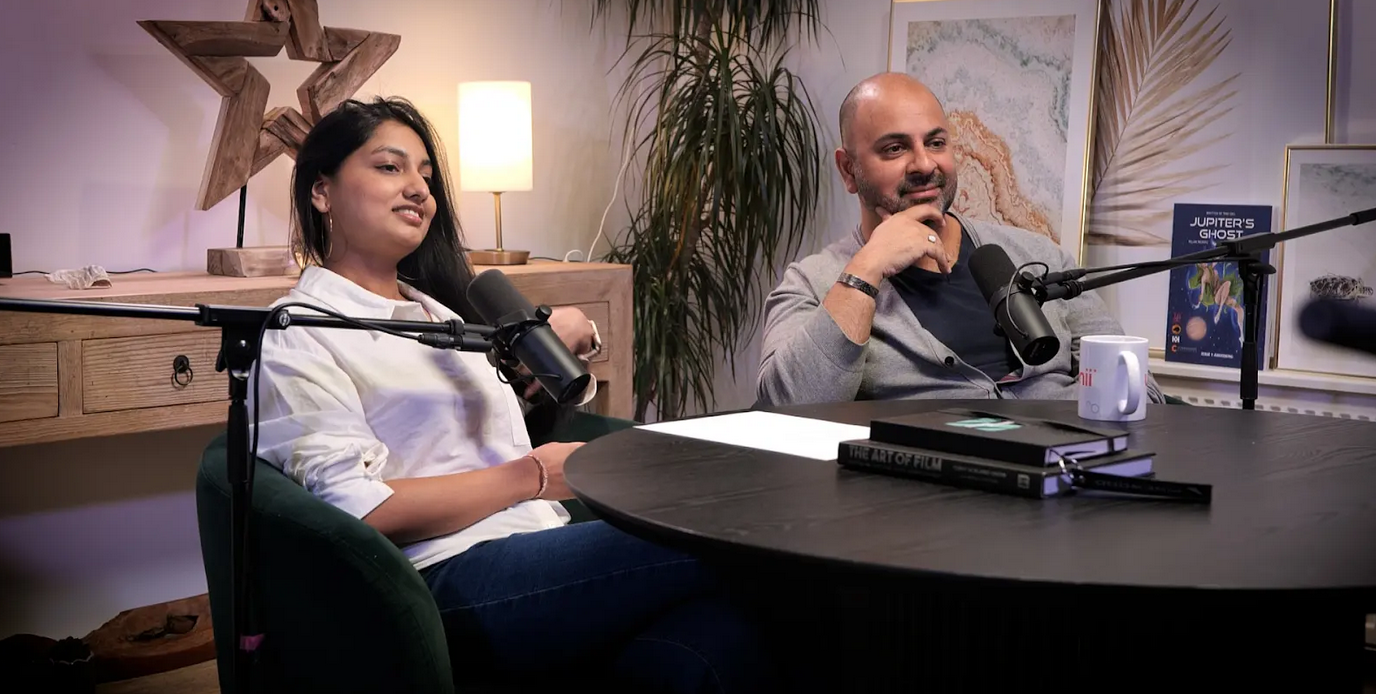
A professional studio, by contrast, eliminates this friction entirely. The presence of an on-site engineer or producer means that all technical aspects of the recording—from setting microphone levels and managing multi-camera switching to ensuring the recording is captured flawlessly—are handled by an expert.4 This creates a "ready-to-go" environment where the host can walk in and focus exclusively on the conversation.1 This conservation of creative energy is critical for maintaining focus and consistency, especially over long recording sessions or when producing multiple episodes in a single day.1 Furthermore, the act of recording in a space designed for professional broadcasting can create a powerful psychological shift. This "showtime" effect can heighten a host's focus, sharpen their delivery, and elevate their overall performance in a way that is difficult to replicate in the familiar, and often distracting, environment of a home office.41
The Guest's Experience: Fostering Comfort and Credibility
The impact of the recording environment is even more pronounced for guests. For many, appearing on a podcast can be an intimidating experience. The quality of the environment plays a pivotal role in either alleviating or exacerbating that anxiety. Inviting a guest to record in a makeshift home studio can subconsciously signal a lack of seriousness, potentially making them feel that their time and expertise are not fully valued.
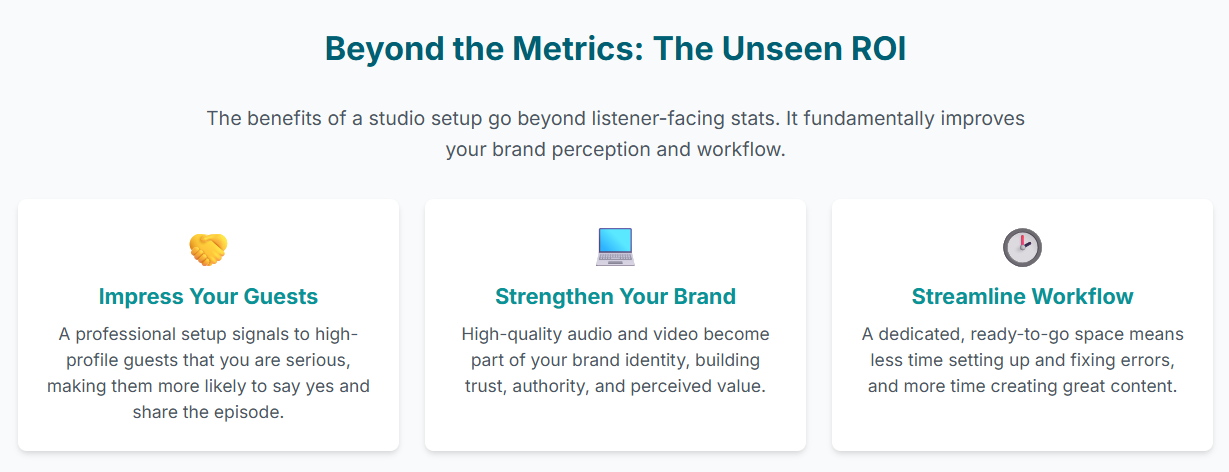
Conversely, inviting a guest to a professional studio is a powerful statement. It immediately communicates that the podcast is a serious enterprise and that their contribution is highly valued.4 This is particularly crucial when hosting high-profile guests, who have high expectations for professionalism and are unlikely to agree to appear on a show that appears amateurish.4 The studio environment itself is designed to be comfortable and free from the distractions of a home or office, allowing the guest to relax, open up, and engage in a more authentic and insightful conversation.1 Knowing that they are being recorded with high-quality equipment also provides peace of mind, removing any anxiety about technical issues and ensuring that they will look and sound their best. This allows them to focus entirely on the substance of the conversation, leading to a far better performance and, consequently, a more engaging episode for the audience.4
The value of the studio, therefore, extends beyond simply capturing the conversation perfectly; it lies in its ability to improve the conversation itself. By removing technical and environmental stressors for both host and guest, the studio creates an optimal psychological state for human interaction. A relaxed, focused host and a comfortable, impressed guest will invariably have a more natural, dynamic, and insightful conversation. This improved human performance is the raw material from which a superior final product is crafted.
This dynamic also has a significant, often overlooked, impact on a podcast's network and brand growth. A positive recording experience for a guest can be a powerful form of marketing. A high-profile guest who has a seamless and professional experience is far more likely to enthusiastically share the finished episode with their own, often substantial, audience. Moreover, their positive feedback within their professional network can open doors to other high-caliber guests who might otherwise be inaccessible to a DIY podcast. This creates a virtuous cycle: a professional environment attracts great guests, whose presence enhances the show's credibility, which in turn attracts an even wider audience and more great guests.
The Live Connection: Building Community Through Real-Time Interaction
While on-demand consumption remains the dominant mode of podcast listening, the strategic use of live streaming has emerged as a powerful tool for accelerating audience engagement and community building. A live broadcast fundamentally alters the dynamic of content consumption, transforming it from a solitary, passive activity into a shared, active, and participatory event. Professional studios are uniquely equipped to serve as the technical backbone for these high-stakes live productions, ensuring a flawless experience that fosters real-time connection.
The Shift from On-Demand to Live Event
The decision to broadcast a podcast live transforms an episode from a piece of evergreen content into a time-sensitive event. This creates a sense of immediacy, exclusivity, and anticipation that pre-recorded content cannot replicate.42 By scheduling a live stream, creators leverage a powerful psychological trigger: the fear of missing out (FOMO). Listeners know they must tune in at a specific time to be part of the live experience, which drives higher initial viewership and a more focused level of engagement than a standard episode release.43 This "appointment viewing" model shifts the listener's perception from "I'll listen whenever I have time" to "I need to be there for this."
Fostering a Participatory Community
The true power of live streaming lies in its capacity for real-time interaction. Modern streaming platforms like YouTube Live, Facebook Live, and Twitch are built around features such as live chat, audience Q&A sessions, and interactive polls.42 The integration of these tools fundamentally changes the relationship between the creator and the audience, converting a one-way broadcast into a two-way conversation.42
When listeners can ask questions and see them answered live on air, or participate in a poll that influences the direction of the conversation, they are no longer passive consumers of content; they become active participants in its creation. This sense of agency and involvement makes listeners feel heard, valued, and more deeply connected to the show and its host.42 This shared, real-time experience is a powerful catalyst for community formation. Viewers in a live chat are not just interacting with the host; they are interacting with each other, bonding over a shared interest. This transforms a scattered audience of isolated individuals into a cohesive community gathered around a collective event.42 For the host, this provides an invaluable instant feedback loop. By monitoring live comments and questions, they can gauge audience interest in real-time and dynamically tailor the content to be more responsive and engaging.42
The Studio's Role in a Flawless Live Production
While the potential rewards of live streaming are significant, so are the risks. A live broadcast is unforgiving; there are no second takes. Technical glitches—such as poor audio, dropped video feeds, or software crashes—can instantly ruin the viewer experience and severely damage the creator's credibility. This is where a professional studio becomes indispensable.
Studios provide the robust technical infrastructure, broadcast-quality equipment, and stable, high-speed internet connections necessary for a reliable stream.46 Crucially, they also provide on-site technical support. Having an experienced engineer managing the production ensures that any issues can be resolved immediately, allowing the host to remain focused on the content and audience interaction.47 Furthermore, studios are equipped to elevate the production value of a live stream far beyond a simple webcam feed. All the advantages of professional lighting and multi-camera switching can be applied in real-time, creating a polished, television-quality broadcast that stands out in a crowded live-streaming landscape.46 Many studios also have integrated software and hardware, such as Restream, that can simulcast the live feed to multiple platforms—like YouTube, Facebook, and Twitch—simultaneously, maximizing the potential audience without adding any technical complexity for the host.43
This professional framework enhances, rather than diminishes, the authenticity of the live experience. The appeal of live content comes from the unscripted, spontaneous nature of the human interaction, not from poor technical quality. A professional studio makes the technology invisible. By removing the distraction of technical failures and amateur production values, it allows the authentic, real-time dialogue between the host and the community to become the sole focus, thereby amplifying the very connection that makes live streaming so powerful.
The Content Multiplier Effect: Maximizing Reach Beyond the Episode
In the modern digital ecosystem, the most successful content strategies are built on the principle of repurposing. A single, high-quality podcast episode should not be viewed as a final product, but rather as a "pillar" asset—a rich source of raw material that can be systematically deconstructed and reassembled into a multitude of "micro" content pieces for distribution across various platforms. A professional studio is not just a recording venue; it is a content generation engine, uniquely designed to facilitate this multiplier effect and maximize the reach and impact of every recording session.
From Single Episode to Content Campaign
The strategic imperative is to shift from an episode-centric mindset to a campaign-centric one.48 A single one-hour podcast recording in a professional studio can and should provide enough high-quality material to fuel an entire week's worth of social media promotion and content marketing. The foundation for this strategy is the quality of the source files. Professional studios provide not just a final mixed audio file, but also the raw, isolated (or "multitrack") audio and video files for each host and guest.40 These clean, high-resolution files are the essential building blocks for creating a wide array of derivative assets.
Creating Shareable Social Media Assets
A single, professionally recorded session is a goldmine of shareable content. The high-quality audio and multi-angle video can be repurposed into several key formats designed for engagement on different social platforms:
Short-Form Video Clips: The multi-camera 4K video footage is ideal for creating compelling, vertical video clips (typically 30-90 seconds in length) for platforms like TikTok, Instagram Reels, and YouTube Shorts.50 The most engaging, insightful, or controversial moments from the podcast can be isolated to create powerful, attention-grabbing teasers. To be effective, these clips must be designed to hook the viewer within the first three seconds of viewing.51
Audiograms: For platforms where video is dominant but the content is audio-focused, audiograms are a highly effective tool. These are short video files that combine a compelling audio snippet with a static background image (such as the podcast's cover art or a guest's headshot), an animated waveform that moves in sync with the audio, and on-screen captions.52 They provide a necessary visual hook for an audio medium and are exceptionally shareable.55
Quote Graphics: High-resolution video allows for the capture of professional-quality still images from the recording. These can be easily combined with memorable quotes from the episode in a graphic design program to create visually appealing, easily digestible content for platforms like Instagram, LinkedIn, and Twitter.48
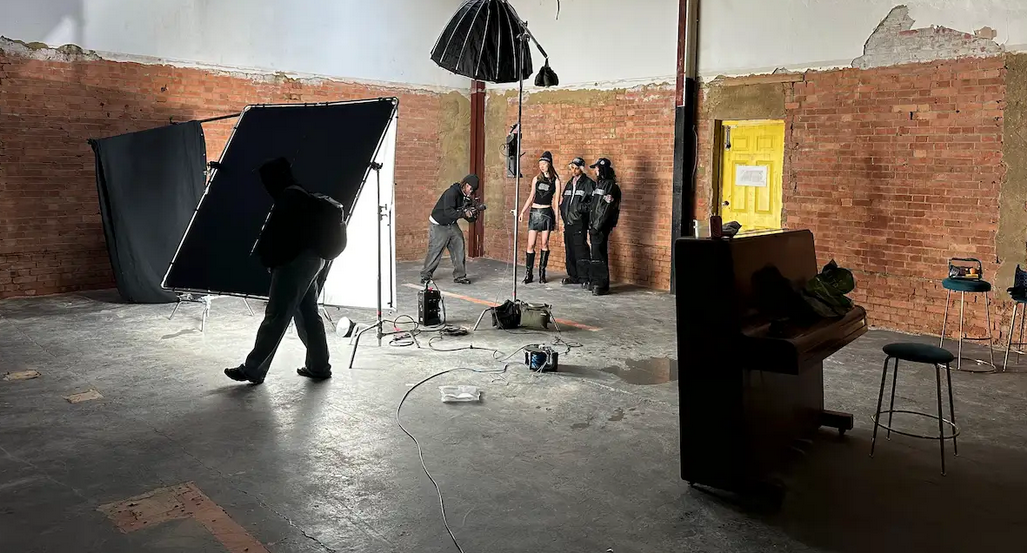
Behind-the-Scenes (BTS) Content: The professional studio environment itself is a source of engaging content. Sharing photos or short video clips of the recording setup, the hosts and guests interacting before or after the show, or the engineer at the mixing board provides a "peek behind the curtain." This type of content humanizes the brand, adds a personal touch, and helps to build a stronger, more intimate connection with the audience.49
The Strategic Advantage of High-Quality Source Material
The success of a content repurposing strategy is entirely dependent on the quality of the initial recording. Attempting to create video clips or audiograms from a low-quality, single-camera DIY recording will only amplify the original flaws—poor lighting, bad audio, and a static frame. This results in a portfolio of amateurish assets that can damage brand perception across all platforms.
By starting with pristine, professionally lit, multi-angle 4K video and clean, isolated audio tracks from a studio, creators ensure that every derivative asset maintains a high standard of quality. This creates a consistent and professional brand image across every touchpoint, from the full-length episode on YouTube to a 30-second clip on TikTok.3 Recognizing the importance of this workflow, many professional studios now offer content repurposing as part of their service packages. They can deliver not only the raw files but also a package of pre-edited social media clips, audiograms, and other assets, further streamlining the content creation process and allowing the host to focus on strategy and community engagement.40
This approach fundamentally changes the return on investment (ROI) calculation for a studio session. The cost is no longer associated with producing a single one-hour audio file. Instead, it is an investment in a comprehensive content package that includes the full episode, numerous video clips, audiograms, and other promotional materials. When the cost of the session is amortized across this entire suite of assets, it often represents a far more efficient and impactful use of resources than a DIY approach.
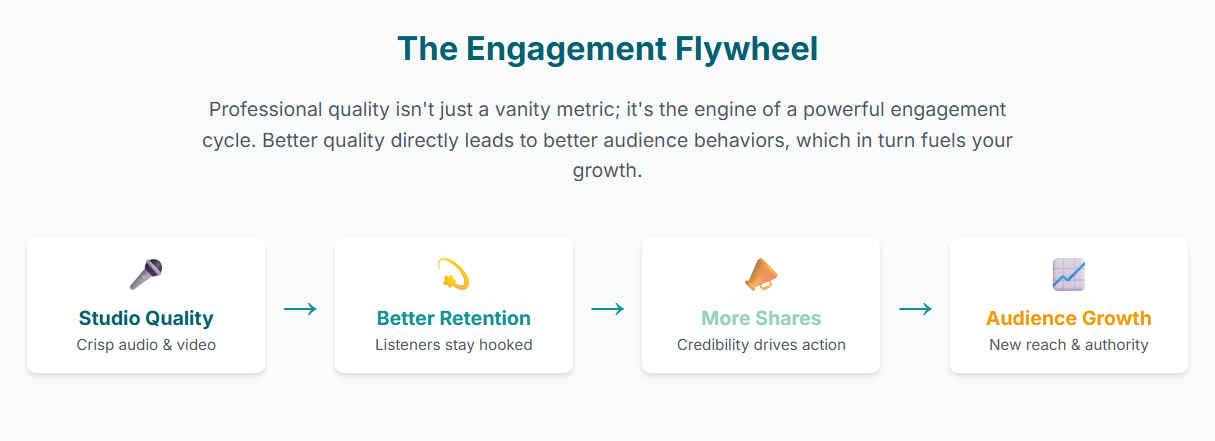
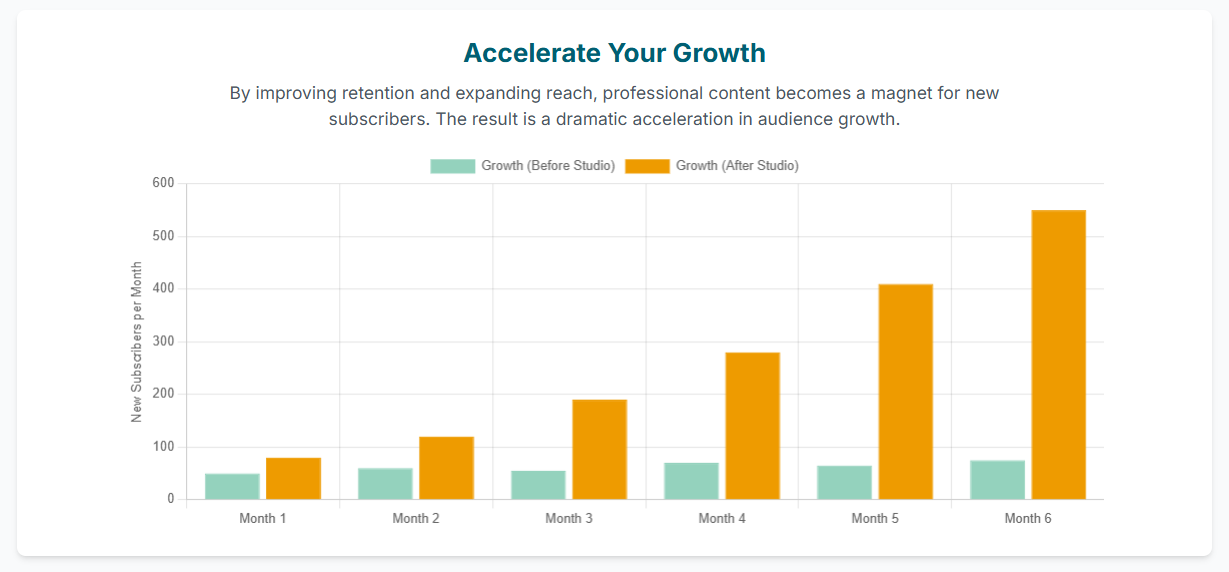
This content multiplication strategy creates a powerful "flywheel" for audience growth. The micro-content distributed on social platforms acts as a highly effective discovery mechanism, capturing the attention of new audiences and funneling them back to the main, long-form podcast. As the core podcast audience grows, their engagement—comments, questions, and discussions—provides valuable social proof and generates new ideas for the next wave of micro-content. This creates a self-reinforcing growth loop, with the professionally produced pillar content serving as the high-quality fuel that powers the entire engine.
The Strategic Payoff: Translating Quality into Brand Equity and Monetization
The culmination of every technical and psychological advantage offered by a professional podcast studio is a significant and measurable impact on a podcast's strategic objectives: the building of brand equity and the unlocking of sustainable monetization. In the contemporary media environment, superior production quality is not a luxury; it is a direct investment in the brand's value proposition, creating the foundation of trust and authority upon which all commercial success is built.
Building an Authoritative Brand in a Saturated Market
The podcasting landscape is exceptionally crowded. With millions of active shows competing for listener attention, simply having valuable content is no longer sufficient. Professional production quality has become a primary differentiator that allows a podcast to cut through the noise.20 It serves as an immediate, powerful signal to potential listeners, guests, and sponsors that the podcast is a serious, authoritative entity, not a casual hobby.2
This enhanced brand perception is a direct result of the factors previously analyzed. The pristine audio and cinematic video create a strong, positive first impression.20 The ability to attract and professionally host high-profile guests lends the show credibility by association.3 The consistent, high-quality output across all platforms reinforces an image of reliability and excellence. This cumulative effect elevates the podcast's brand, transitioning its perception from that of an amateur creator to that of a professional media brand.25
Unlocking Diverse Monetization Streams
This enhanced brand equity is the key that unlocks a wide range of monetization opportunities. A podcast perceived as professional and authoritative is a far more attractive platform for commercial partnerships and direct audience support.
Sponsorships and Advertising: This is the most common form of podcast monetization, and it is highly sensitive to production quality. Advertisers are increasingly discerning, seeking to align their brands with content that reflects their own standards of quality. A professionally produced podcast is a premium environment for advertisements, which can command significantly higher CPM (Cost Per Mille) rates than a DIY show. Brands are more willing to invest, and invest more heavily, in a podcast that guarantees their message will be delivered in a polished, credible context.2
Premium Content and Memberships: For a listener to be willing to pay for content—whether through platforms like Patreon, Apple Podcasts Subscriptions, or Supercast—the perceived value must exceed the cost.63 A baseline of exceptional production quality is a prerequisite for this value proposition. Listeners are far more likely to pay for bonus episodes, ad-free feeds, or behind-the-scenes content when the free, publicly available content is already of a broadcast-level standard.28
Affiliate Marketing: The effectiveness of affiliate marketing is contingent on the audience's trust in the host's recommendations. The credibility and authority built through high-quality production directly translate into a higher level of trust, making listeners more likely to act on affiliate promotions and generate revenue for the podcast.28
Ancillary Products and Services: For many creators, a podcast serves as the top of a marketing funnel for higher-ticket offerings such as online courses, coaching services, consulting, or books. The podcast acts as a powerful tool for establishing expertise and building a relationship with a potential customer base. A professional production solidifies the creator's position as an authority in their field, making the transition from free listener to paying customer a much more natural and effective one.64
The Long-Term Value Proposition
When viewed through this strategic lens, the financial calculation of a professional studio versus a DIY setup is inverted. While a home setup may have lower initial cash outlays, a professional studio can be significantly more cost-effective in the long term.3 This is because the "cost" of a DIY setup includes not only the escalating expense of purchasing, maintaining, and upgrading equipment, but also the immense, non-monetary cost of the creator's time spent on technical tasks instead of revenue-generating activities.7 Most importantly, the professional studio's ability to accelerate brand growth and unlock more lucrative monetization streams creates a higher potential for long-term revenue that can far outweigh the recurring rental costs.
Ultimately, professional production quality acts as a "trust accelerator." In the digital economy, trust is the most valuable currency. Every element of the professional studio experience—from the clean audio that eliminates cognitive friction to the cinematic lighting that signals seriousness, to the seamless experience that impresses a high-profile guest—is a signal that builds trust with the audience. This accumulated trust is the foundational asset upon which all successful monetization strategies are built. The choice between a DIY and a professional studio, therefore, is not a simple technical or financial decision. It is a fundamental strategic choice about brand positioning. It is a declaration of whether the creator intends to operate as a casual hobbyist or as a premium, authoritative voice in their niche. The production environment is one of the most powerful and immediate statements a creator can make about their brand's identity, ambition, and commitment to their audience.
Conclusion
The evidence presents a clear and compelling case: the use of a professional podcast studio is a strategic imperative for any creator or brand serious about maximizing content engagement and achieving long-term success. The connection between a controlled production environment and audience growth is not correlational; it is causal, rooted in the fundamental principles of human psychology, communication, and brand perception.
The analysis began by establishing that pristine audio quality is the bedrock of effective communication. By engineering a space that eliminates external noise and controls internal acoustics, a professional studio eradicates the cognitive friction that plagues amateur recordings. This simple act of making the content easy to process has a profound psychological impact, measurably increasing the perceived credibility, intelligence, and trustworthiness of the speaker. This foundation of trust is amplified by professional video production, where expert lighting and dynamic multi-camera setups create a visually compelling experience that holds attention, communicates a brand's commitment to quality, and fosters a deeper, more personal connection with the audience.
Beyond the technical output, the studio environment itself is a catalyst for improved human performance. By offloading all technical responsibilities to on-site experts, it liberates hosts to focus entirely on their content and enables guests to relax into more authentic and insightful conversations. This optimized human element, captured with broadcast-level fidelity, becomes the raw material for a superior final product.
Furthermore, this report has repositioned the professional studio from a mere recording venue to a comprehensive content generation engine. The high-quality, multi-track assets produced in a single session are the fuel for a modern, multi-platform marketing strategy, enabling the creation of a vast portfolio of shareable micro-content that drives discovery and builds community. This dynamic is supercharged by the studio's capacity to execute flawless live streams, transforming a passive audience into an active, participatory community through real-time interaction.
Ultimately, all of these benefits converge on the most critical business objectives: the cultivation of brand equity and the realization of monetization. In a saturated market, professional production quality is the key differentiator that builds an authoritative brand, attracts high-caliber guests, and secures the trust of sponsors and audiences alike. It is this accumulated trust that makes all forms of monetization—from advertising and premium subscriptions to ancillary products and services—not only possible, but sustainable. Therefore, the decision to utilize a professional studio should not be viewed as an operational expense, but as a cornerstone investment in the brand's value and its future growth.
Works cited
Podcast Studios: Everything You Need To know [Guide], accessed October 23, 2025, https://streamworks.ae/article/podcast-studios-guide
Home Podcast Studio vs. Professional Podcast Studio: Which One's ..., accessed October 23, 2025, https://bandbarracks.com/blog/podcast-studio-houston-near-me/
The Benefits of Using a Professional Podcast Studio vs. DIY Setup ..., accessed October 23, 2025, https://umbrellacreative.com.au/the-benefits-of-using-a-professional-podcast-studio-vs-diy-setup/
Home Studio vs Professional Podcast Studio: Which Delivers Better Quality?, accessed October 23, 2025, https://klpodcast.studio/home-studio-vs-professional-podcast-studio/
Podcast Studio Setup: The Complete Guide To Setting Up Your Home Studio - Rob Cressy, accessed October 23, 2025, https://robcressy.com/podcast-studio-setup/
theaestudio.co, accessed October 23, 2025, https://theaestudio.co/home-studio-vs-professional-podcast-studio/#:~:text=High%2DQuality%20Equipment%3A%20Professional%20studios,quality%20that%20captivates%20your%20audience.
A Professional Studio Will Make Your Podcast Better — Murray Hill ..., accessed October 23, 2025, https://www.murrayhillstudios.com/blog/a-professional-studio-will-make-your-podcast-better
Building Your Own Podcast Studio: Essential Equipment and Tips to Get Started, accessed October 23, 2025, https://pouch6studios.com/build-your-own-podcast-studio/
Home Studio vs. Professional Podcast Studio: Pros and Cons - Authentic Exposure Studio, accessed October 23, 2025, https://theaestudio.co/home-studio-vs-professional-podcast-studio/
Podcast Studio Acoustic Design: The Perfect Environment - Sound Zero, accessed October 23, 2025, https://sound-zero.com/podcast-studio-acoustic-design/
What Makes a Podcast Studio Unique? - The Broadcast Bridge, accessed October 23, 2025, https://www.thebroadcastbridge.com/content/entry/12965/what-makes-a-podcast-studio-unique
10 Tips for a Great Sounding Podcast - iZotope, accessed October 23, 2025, https://www.izotope.com/en/learn/10-tips-for-a-great-sounding-podcast
overtoneacoustics.com, accessed October 23, 2025, https://overtoneacoustics.com/pages/education/podcast-studio#:~:text=The%20key%20to%20great%20studio,or%20baffles%20to%20the%20ceiling.
Podcast Studio - Overtone Acoustics, accessed October 23, 2025, https://overtoneacoustics.com/pages/education/podcast-studio
Home Studio Acoustic Treatment Kit (Free Shipping), accessed October 23, 2025, https://www.musiccityacoustics.com/shop/p/home-studio-kit
Psychoacoustics - Wikipedia, accessed October 23, 2025, https://en.wikipedia.org/wiki/Psychoacoustics
The Psychology of Audio: Why Listeners Connect with Quality ..., accessed October 23, 2025, https://podcastprovisions.com/blogs/news/the-psychology-of-audio-why-listeners-connect-with-quality-sound
Why we believe something: The quality of audio matters - USC Today, accessed October 23, 2025, https://today.usc.edu/why-we-believe-something-audio-sound-quality/
Why Sound Quality Really Matters In Podcasting?, accessed October 23, 2025, https://podcastersunited.org/feed-your-brand/why-sound-quality-really-matters-in-podcasting/
Why High-Quality Podcast Production Matters | Monk of Kalyuga, accessed October 23, 2025, https://monkofkalyuga.com/blogs/why-high-quality-production-makes-a-difference-on-your-podcast
6 reasons quality matters when it comes to podcast production - Adventurous Audio, accessed October 23, 2025, https://www.adventurousaudio.co.uk/a-blog-about-podcasting/6-reasons-podcast-quality-matters
Arousing the Sound: A Field Study on the Emotional Impact on Children of Arousing Sound Design and 3D Audio Spatialization in an Audio Story, accessed October 23, 2025, https://pmc.ncbi.nlm.nih.gov/articles/PMC7219267/
How to Achieve Studio-Quality Podcast Audio Without Breaking the Bank - PodMatch, accessed October 23, 2025, https://podmatch.com/blog/how-to-achieve-studio-quality-podcast-audio-without-breaking-the-bank
Why You Should Rent a Podcast Studio Instead of Recording at Home - HANSA Workspace, accessed October 23, 2025, https://www.hansaworkspace.com/podcast-studio-buffalo/
Podcast Recording Studio vs. Home Setup: Which is Best for You ..., accessed October 23, 2025, https://www.paragoncreativestudios.co.uk/podcast-recording-studio-vs-home-setup-which-is-best-for-you/
Professional Podcast Studio Set Up Vs DIY Podcast Studio Set Up - Sound Zero, accessed October 23, 2025, https://sound-zero.com/professional-podcast-studio-set-up-vs-diy-podcast-studio-set-up/
klpodcast.studio, accessed October 23, 2025, https://klpodcast.studio/home-studio-vs-professional-podcast-studio/#:~:text=Choose%20a%20Home%20Studio%20if,who%20expect%20a%20professional%20environment.
Can a Podcast Make Money? | Podcast Studio London Insights, accessed October 23, 2025, https://londonmedialounge.co.uk/can-a-podcast-make-money/
How to Build a Multi-Camera Video Podcast Setup with Switcher Studio, accessed October 23, 2025, https://www.switcherstudio.com/blog/how-to-build-a-multicamera-livestreaming-setup-for-your-podcast
How Video Streaming Quality Impacts User Engagement - FastPix, accessed October 23, 2025, https://www.fastpix.io/blog/how-video-streaming-quality-affects-user-engagement
Boosting Video Engagement with High Production Values - Venture Videos, accessed October 23, 2025, https://www.venturevideos.com/insight/the-impact-of-high-production-values-on-video-engagement
Podcast Background Lighting Ideas: Add Ambiance & Depth to Your ..., accessed October 23, 2025, https://gvmled.com/podcast-studio-lighting-guide/
Podcast Lighting Setup Tips for a Professional Look - United Wolves Productions, accessed October 23, 2025, https://unitedwolvesproductions.com/podcast-lighting-setup-tips-for-a-professional-look/
The Importance of Proper Lighting in a Podcast Studio | - Media Pouch Studios, accessed October 23, 2025, https://pouch6studios.com/the-importance-of-proper-lighting-in-a-podcast-studio/
Selecting Lights for Your Video Podcast | B&H eXplora, accessed October 23, 2025, https://www.bhphotovideo.com/explora/lighting/tips-and-solutions/selecting-lights-for-your-video-podcast
www.bhphotovideo.com, accessed October 23, 2025, https://www.bhphotovideo.com/explora/video/tips-and-solutions/building-a-multi-camera-video-podcast-setup#:~:text=Having%20multiple%20angles%20to%20cut,really%20connect%20with%20your%20talent.
Building a Multi-Camera Video Podcast Setup | B&H eXplora, accessed October 23, 2025, https://www.bhphotovideo.com/explora/video/tips-and-solutions/building-a-multi-camera-video-podcast-setup
Thoughts on single camera vs multi cam in podcasting for YouTube - Reddit, accessed October 23, 2025, https://www.reddit.com/r/podcasting/comments/1f1hoxe/thoughts_on_single_camera_vs_multi_cam_in/
Your channel as a whole is more important to YouTube than just a single good video : r/NewTubers - Reddit, accessed October 23, 2025, https://www.reddit.com/r/NewTubers/comments/1jjx7dn/your_channel_as_a_whole_is_more_important_to/
Austin Podcast Studio | Record ATX – Austin's Most Trusted Podcast ..., accessed October 23, 2025, https://www.recordatx.com/
How to Do a Live Podcast Recording: On Air Now!, accessed October 23, 2025, https://www.thepodcasthost.com/planning/how-to-do-live-podcast-broadcasting/
Live Podcasting in 2025: A Guide for Creators, accessed October 23, 2025, https://www.cohostpodcasting.com/resources/live-podcasting
6 Ways Live-Streaming is the Best Way to Podcast | Blog, accessed October 23, 2025, https://podcastingsecrets.com/blog/6-ways-live-streaming-is-the-best-way-to-podcast
6 Real-Time Listener Engagement Ideas | Make Audio Interactive - Livery Video, accessed October 23, 2025, https://www.liveryvideo.com/blog/podcasts-going-live-radio-going-visual/
Live Podcast Streaming: The Future of Interactive Broadcasting, accessed October 23, 2025, https://streamworks.ae/article/live-podcast-streaming
Hello Studios - Dallas Podcast Studio, accessed October 23, 2025, https://www.iamhellostudios.com/
Third Wheel Podcast Studio, accessed October 23, 2025, https://thirdwheelpodcaststudio.com/
How To Turn Your Podcast Into Engaging Social Media Content - Fame.so, accessed October 23, 2025, https://www.fame.so/post/how-to-turn-podcast-into-content
Podcast Marketing Strategy: Win Mindshare and Customers - Goldcast, accessed October 23, 2025, https://www.goldcast.io/blog-post/podcast-marketing-strategy
8 Podcast Social Media Marketing Tips to Triumph Online - The Influence Agency, accessed October 23, 2025, https://theinfluenceagency.com/blog/podcast-social-media-marketing-tips
Podcast hosts, what's your biggest struggle with marketing your show? - Reddit, accessed October 23, 2025, https://www.reddit.com/r/podcasting/comments/1j2t7nz/podcast_hosts_whats_your_biggest_struggle_with/
The Ultimate Guide to Your Podcast's Audiograms Strategy, accessed October 23, 2025, https://blog.deciphr.ai/the-ultimate-guide-to-your-podcasts-audiograms-strategy/
Podcast Audiograms: What, Why, and How to Create One, accessed October 23, 2025, https://amplify.matchmaker.fm/podcast-audiograms/
Creating Eye-Catching Audiograms for Your Podcast: A Step-by-Step Guide - Castmagic, accessed October 23, 2025, https://www.castmagic.io/post/creating-eye-catching-audiograms-for-your-podcast-a-step-by-step-guide
Using Audiograms to Promote Your Podcast | Hurrdat Media, accessed October 23, 2025, https://hurrdatmedia.com/podcasting/how-to-use-audiograms-for-podcast-promotion/
amplify.matchmaker.fm, accessed October 23, 2025, https://amplify.matchmaker.fm/podcast-segment-ideas/#:~:text=Behind%2DThe%2DScenes,stronger%20connection%20with%20your%20audience.
Elevate Your Branded Podcast: 7 Content Ideas for Better Engagement, accessed October 23, 2025, https://www.quillpodcasting.com/blog-posts/elevate-branded-podcasts
Our Podcast Studio Services - PodLab Studios, accessed October 23, 2025, https://podlabstudios.com/our-services/
PRICING | ChicagoPodcastStudio, accessed October 23, 2025, https://www.chicagopodcast.studio/pricing
The FASTer Way to Stand Out In A Saturated Market with Amanda Tress - Jasmine Star, accessed October 23, 2025, https://jasminestar.com/podcast/episode85/
How to Stand Out in a Saturated Market: Proven Differentiation Strategies - Apple Podcasts, accessed October 23, 2025, https://podcasts.apple.com/sv/podcast/how-to-stand-out-in-a-saturated-market-proven/id1500066488?i=1000682837742
How to Make Your Podcast Stand Out in 2024: 15 Proven Ways, accessed October 23, 2025, https://www.clipr.ai/blog/how-to-make-your-podcast-stand-out
Starting and Monetizing Your Podcast in 2025 - NearStream, accessed October 23, 2025, https://www.nearstream.us/blog/how-to-start-and-monetize-podcast
How Do Podcasts Make Money? 9 Proven Monetization Strategies - Hello Studios, accessed October 23, 2025, https://www.iamhellostudios.com/how-do-podcasts-make-money-a-guide-to-podcast-monetization/