Executive Summary
The proliferation of official television companion podcasts represents a pivotal strategic shift in the entertainment industry. No longer a niche marketing afterthought, the companion podcast has matured into an indispensable tool for audience retention, intellectual property (IP) fortification, and cost-effective fan engagement within the hyper-competitive streaming landscape. This report provides a comprehensive analysis of this trend, deconstructing the strategic imperatives driving its adoption, detailing the operational models behind its execution, and evaluating its market impact.
Image Credit: Finchley Studio
The convergence of a massive global podcast audience—exceeding 584 million listeners worldwide 1—and the intense battle for subscriber loyalty in the streaming era has created a fertile ground for this new content ecosystem. The core value proposition of the companion podcast is not direct monetization but the cultivation of what industry leaders term "fanbase ROI".2 This is a measure of deepened audience connection and brand affinity, a metric powerfully substantiated by an HBO Max study which found that 85% of listeners felt "more connected" to a show after consuming its official podcast.3 This enhanced loyalty is crucial for mitigating subscriber churn during the increasingly long hiatuses between television seasons.
Analysis reveals that these podcasts function as the modern evolution of "DVD extras," providing coveted behind-the-scenes access and creator commentary in a format that is significantly more cost-effective and scalable than video-based supplementary content.2 Dominant formats include behind-the-scenes interviews with cast and crew, episode-by-episode recap and analysis, and thematic deep dives that expand the show's narrative universe. The production of these assets follows two primary pathways: robust in-house teams, such as those at HBO, or strategic partnerships with specialized external production companies like Pineapple Street Studios and Somethin' Else, a decision that balances creative control against technical expertise and speed to market.
Ultimately, this report concludes that media stakeholders must view companion podcasts not as ancillary marketing material but as an integrated and essential component of a modern, multi-platform content strategy. They are a powerful mechanism for transforming passive viewers into deeply invested brand advocates, a vital asset in securing the long-term cultural and commercial relevance of any major television property.
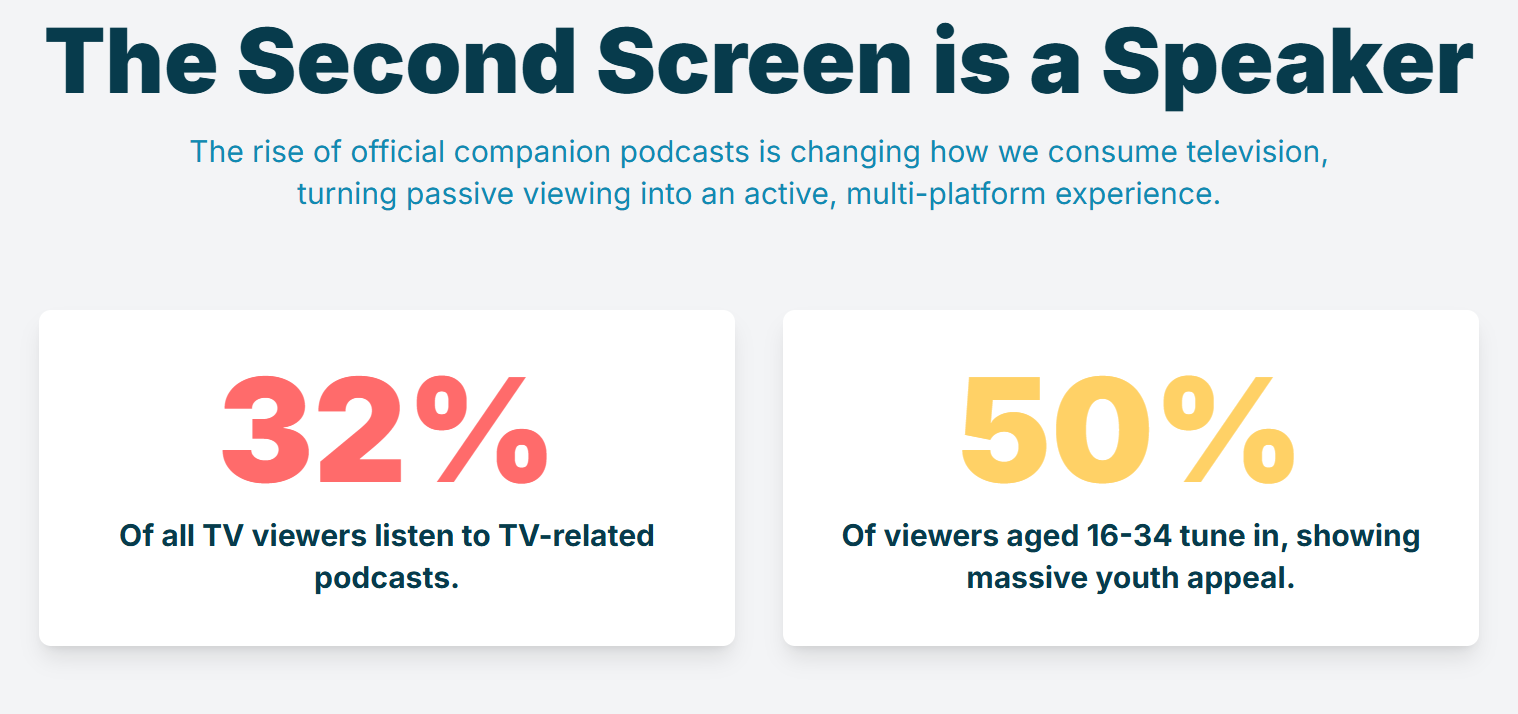
Image Credit: Finchley Studio
The New Content Imperative: The Symbiotic Ecosystem of Television and Podcasting
The rapid integration of official companion podcasts into the release strategies of major television shows is not an isolated phenomenon but the result of a perfect storm of market forces. The maturation of the podcasting medium, coupled with the structural challenges of the modern streaming environment, has created a powerful new content imperative. This symbiotic relationship allows television properties to leverage the unique strengths of audio to address the pressing needs of audience retention and engagement in an increasingly fragmented attention economy.
The Market Context: A Perfect Storm for Audio Companionship
The foundation of this trend is the staggering growth and mainstream acceptance of podcasting as a primary entertainment medium. Globally, there are now over 584.1 million podcast listeners, with a significant concentration among the highly sought-after Millennial and Gen Z demographics, who account for 61.6% of the audience.1 This established and engaged user base provides a ready-made market for television-related content. Research confirms a strong consumer appetite for this specific sub-genre; an April 2023 survey by Ofcom found that an impressive 51% of podcast listeners have tuned into a podcast linked to a television program, representing a 4% increase from the previous year.3 This demonstrates not just a passive acceptance but an active and growing demand for audio content that complements the viewing experience.
Simultaneously, the television industry is grappling with the core challenges of the streaming era. The sheer volume of content available across myriad platforms has created an environment of intense competition for viewer attention and, more critically, for sustained subscription revenue. In this "attention economy," the primary business objective for streaming services has shifted from pure acquisition to the retention of existing subscribers. Curbing "subscriber churn"—the rate at which customers cancel their subscriptions—is paramount. Companion podcasts have emerged as a potent tool in this fight. By providing a steady stream of engaging content, they serve to maintain audience interest and brand loyalty during the often lengthy gaps between seasons, keeping a show top-of-mind and giving subscribers a reason to stay invested.2
Furthermore, podcasts offer a solution to the modern media challenge of "eyeball fatigue".7 In a world saturated with visual media, audio provides a supplementary form of engagement that can be consumed while multitasking—during a commute, while exercising, or doing household chores. This allows fans to spend more total time immersed in a show's universe without requiring additional dedicated screen time, thereby increasing their overall engagement with the brand in a convenient and accessible manner.7
The confluence of these factors—a massive and receptive podcast audience, the strategic need to combat subscriber churn, and the flexible nature of audio consumption—has made the companion podcast an almost essential element of a modern television show's lifecycle.
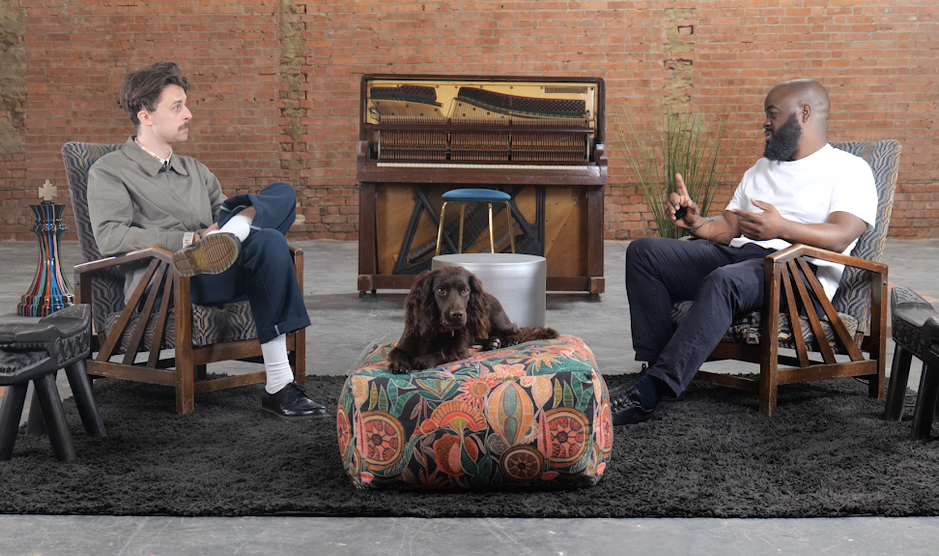
Image Credit: Finchley Studio
The rise of companion podcasts is not merely an offensive marketing move to attract new viewers; it is a crucial defensive strategy in the ongoing "streaming wars." The business model of subscription video on demand (SVOD) is predicated on sustained engagement. When a flagship series concludes its 8- to 10-episode run, a long and perilous gap emerges, often lasting more than a year. During this period, a competing service can easily lure away a subscriber with its own tentpole release. The companion podcast acts as a strategic bridge across this gap. It is a low-cost, high-engagement tool that maintains a continuous dialogue with the most dedicated fans, keeping the intellectual property alive in the cultural conversation and reinforcing the value of the subscription.2 It is a hedge against the natural entropy of audience attention in a saturated market.
In a parallel development, the decline of synchronous, "appointment-to-view" television has dismantled the traditional "water cooler" moment, fragmenting the shared cultural conversation that once surrounded hit shows. Companion podcasts are now successfully recreating this communal experience for the on-demand era. Fans inherently crave a space for deeper discussion, theory-swapping, and community interaction after an episode ends.3 Official podcasts provide a centralized, curated hub for this discourse. By offering authoritative analysis, behind-the-scenes context, and a platform for shared enthusiasm, they function as an asynchronous water cooler. They allow a geographically dispersed and time-shifted audience to feel part of a unified, ongoing conversation, thereby consolidating the show's cultural footprint and transforming individual viewing into a collective experience.3
The Strategic Value Proposition: Quantifying "Fanbase ROI"
The strategic decision by networks and streamers to invest in official companion podcasts is underpinned by a compelling value proposition that extends far beyond traditional marketing metrics. The primary driver is not direct advertising revenue but a more nuanced and powerful concept: "fanbase ROI".2 This return on investment is measured in deepened audience engagement, enhanced loyalty, and the long-term fortification of a show's intellectual property. By serving the most passionate segment of their audience, studios are making a cost-effective investment that yields significant returns in brand affinity, market leverage, and narrative expansion.
Deepening Audience Engagement & Loyalty: The Core Metric
The central pillar of the companion podcast strategy is its proven ability to forge a stronger emotional bond between a viewer and a show. The term "fanbase ROI," coined by At Will Media founder Will Malnati, captures this phenomenon: the investment in a podcast generates a measurable return in the form of a more connected and loyal fanbase.2 This is not merely anecdotal. A landmark survey by HBO Max provided quantitative validation, revealing that a staggering 85% of listeners felt "more connected" to a television show after listening to its official companion podcast.2
This powerful connection is cultivated by directly addressing the core desires of dedicated fans. Viewers who seek out a companion podcast are not passive consumers; they are actively seeking a deeper experience. They want their questions answered, they crave insider details about the creative process, and they desire a richer understanding of why certain narrative and production decisions were made.9 The official podcast is uniquely positioned to deliver this value, providing a direct conduit to the creators and stars. This access transforms the viewing experience from a one-way broadcast into a two-way conversation, making fans feel seen, valued, and like true insiders.
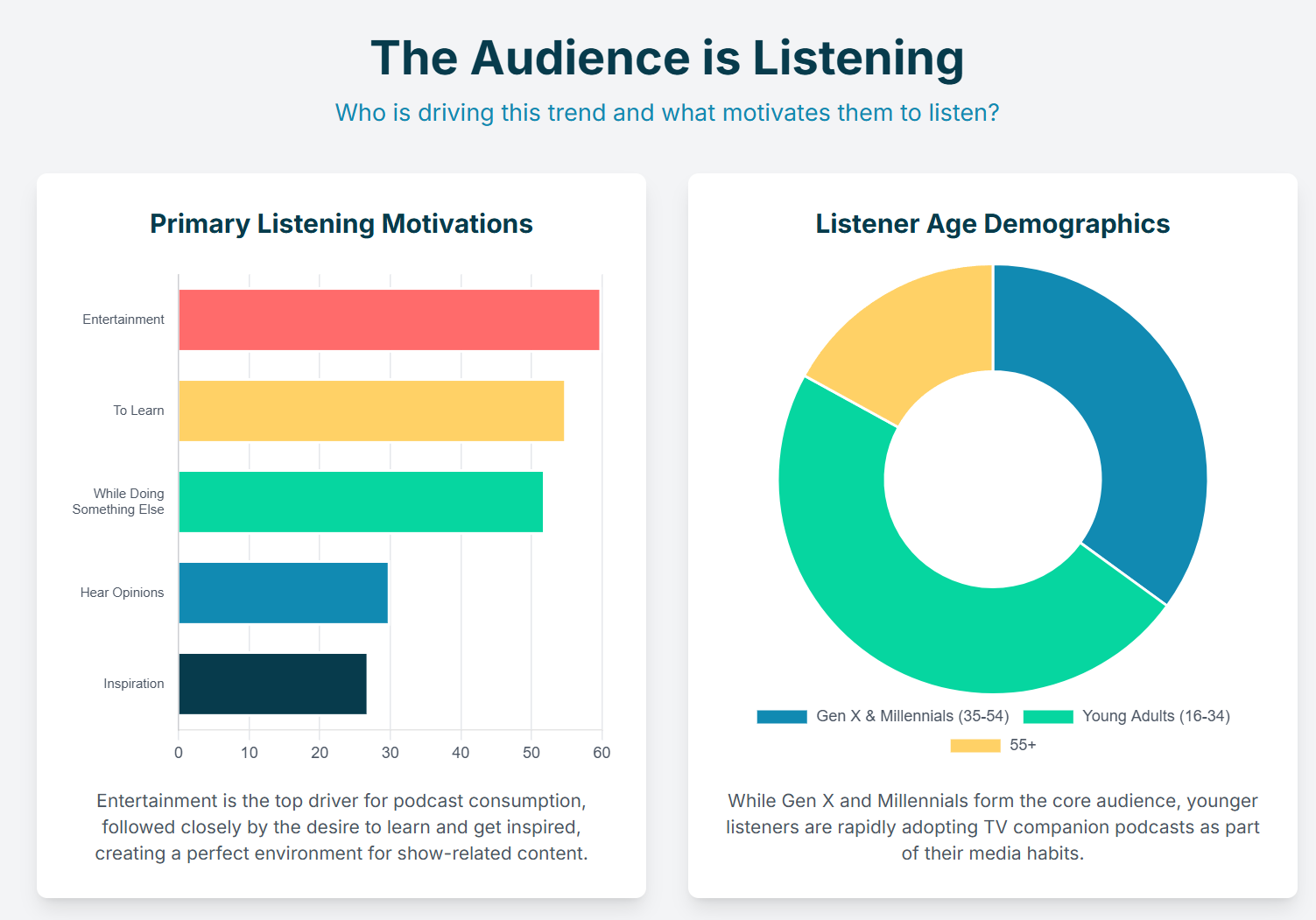
Image Credit: Finchley Studio
A Cost-Effective Marketing & Retention Engine: The Evolution of DVD Extras
In the age of physical media, a key value-add for consumers was the wealth of supplementary content included on DVDs and Blu-rays: director's commentaries, behind-the-scenes featurettes, and deleted scenes. The widespread shift to streaming effectively eliminated this content category, leaving a void for fans hungry for more. Companion podcasts have stepped in to fill this gap, becoming what many in the industry refer to as "DVD extras 2.0".2
Crucially, they do so in a format that is far more economically viable. As noted by Michael Gluckstadt, HBO's director of podcasts, audio productions are "much cheaper and easier to produce" than their video counterparts. It is cost-prohibitive to create a full documentary for every episode of a series, but a podcast can provide that same level of in-depth analysis without "blowing up the budget".2 This cost-effectiveness allows for strategic flexibility. For instance, HBO was able to produce
The Wire at 20, a retrospective podcast for the classic series, with zero advertisements. The goal was not direct monetization but a pure play on "fanbase ROI"—re-engaging a loyal audience and enhancing the prestige of the HBO Max library brand through an act of goodwill.2
Expanding the Narrative Universe: The Power of Transmedia Storytelling
Companion podcasts are a powerful and efficient vehicle for transmedia storytelling, the practice of unfolding a narrative across multiple media platforms, with each platform making a unique contribution to the whole.8 The audio medium provides a low-cost, flexible canvas for creators to expand a show's universe in ways that would be impractical or prohibitively expensive on screen.
Podcasts can be used to explore the backstories of secondary characters, delve deeper into the lore and history of a fictional world, and add layers of context that enrich the main television narrative.8 Early and influential examples like
Wormwood: The Companion Podcast and the Chernobyl Podcast demonstrated this potential. Rather than simply recapping the on-screen events, they peeled back new layers of the story, presenting additional information, exploring unused theories, and offering a meta-fictive analysis of the creative process itself.8 This extends the story-world and provides immense value to dedicated fans. In some cases, this expansion takes the form of entirely new, canonical narratives. The
Stranger Things spin-off podcast, Rebel Robin: Surviving Hawkins, is a prime example of a fictional story set within the show's universe, offering fans a new piece of the official lore exclusively through the audio medium.3
Ancillary Revenue and Market Leverage
While "fanbase ROI" remains the primary objective, companion podcasts also open up valuable secondary benefits. Direct revenue generation through sponsorships and advertising is a significant opportunity, especially given that younger audiences—namely Gen Z and Millennials, who form the core of the podcast listenership—are uniquely receptive to podcast advertisements, which they often perceive as more authentic and less intrusive than other forms of marketing.9
Perhaps more importantly from a long-term strategic perspective, a successful companion podcast enhances a show's overall market leverage. A thriving podcast with high listenership provides concrete, quantifiable proof of a dedicated and engaged fanbase. This data makes the entire intellectual property more valuable. It can lead to more favorable licensing and syndication deals, as potential partners can see evidence of a built-in audience. Furthermore, it strengthens the case for future investment in the IP, such as renewals, reboots, or televised spin-offs, by demonstrating sustained audience interest.16
The strategic deployment of companion podcasts allows studios to use them as a low-risk R&D lab for their broader intellectual property. The cost of producing a narrative podcast series is a tiny fraction of the cost of producing even a single episode of a high-end television drama.2 This economic disparity creates a unique opportunity for IP incubation. A studio can commission a podcast that explores the backstory of a popular but underutilized supporting character or tests a new narrative direction for the universe.8 If the podcast generates significant listenership and positive fan engagement, it serves as a data-backed proof of concept. This de-risks the far greater investment of developing a full-fledged television spin-off, transforming a creative gamble into a calculated business decision.
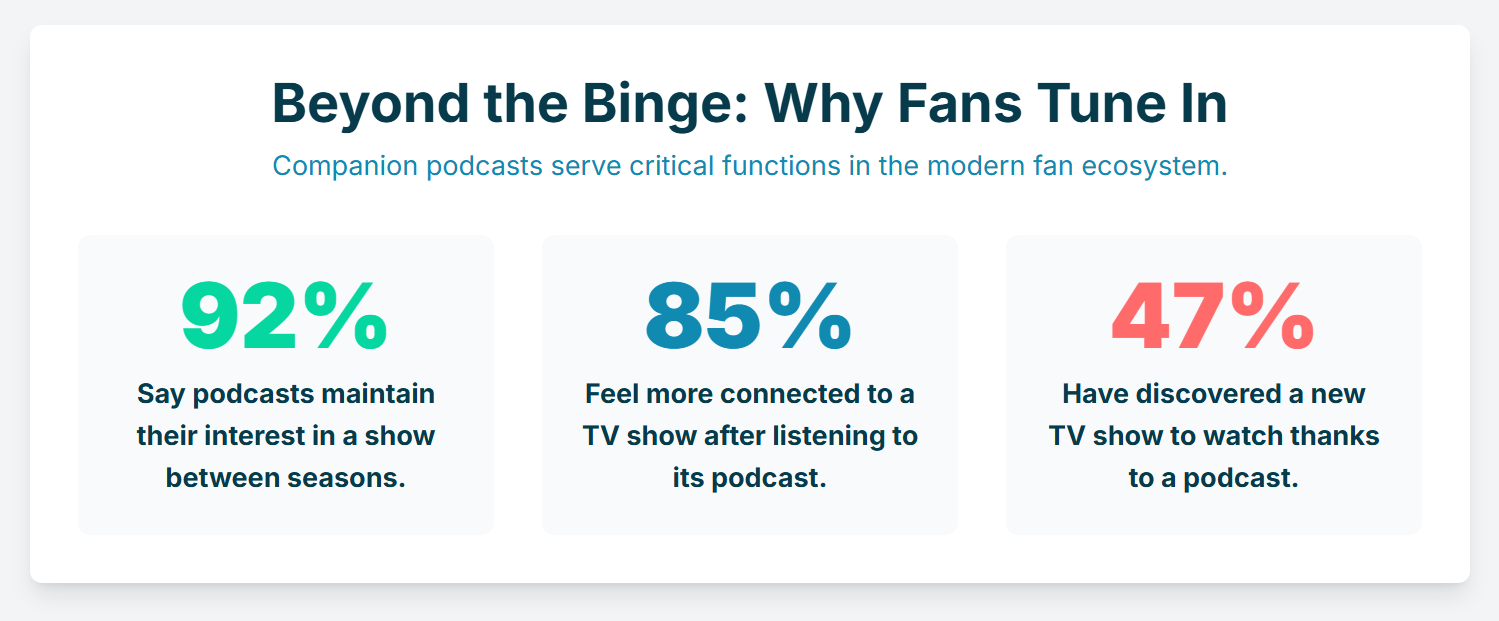
Image Credit: Finchley Studio
This strategy also signals a fundamental paradigm shift in how studios approach their audience—a move from prioritizing audience reach to maximizing audience depth. Traditional television marketing has always been a numbers game focused on maximizing the total number of viewers. The companion podcast, however, is tailored for a much smaller, self-selecting segment of "superfans," estimated to be around 1% to 5% of a show's total audience.4 While this group is small, its value is disproportionately large. These are the viewers who drive social media discourse, create fan art and fiction, and are the least likely to churn their subscriptions. By "super-serving" this core demographic with high-value, exclusive content, studios are not just marketing to them; they are cultivating them into deeply invested stakeholders and powerful brand ambassadors. The strategy recognizes that the passionate advocacy of a small, dedicated base can have a greater impact on a show's long-term cultural relevance and commercial success than the passive viewership of a much larger, less engaged audience.4
Anatomy of a Successful Companion Podcast
The success of an official companion podcast is not accidental; it is the result of a carefully calibrated strategy that combines compelling content, a credible host, and the unparalleled advantage of official access. While formats vary to suit the specific needs of a show, a clear blueprint has emerged for creating an audio experience that effectively deepens fan engagement and enhances the value of the core television property.
Image Credit: Finchley Studio
The Content Blueprint: Core Formats and Innovations
The most effective companion podcasts are built upon a foundation of formats designed to give fans a richer, more comprehensive experience of their favorite show. Three primary models have become industry standards:
Behind-the-Scenes / 'Making Of': This is the most prevalent and often most valued format. It functions as a direct window into the creative process, featuring in-depth interviews with the cast, crew, writers, directors, and other key personnel. This format's primary currency is the "exclusive access" that only an official production can provide, offering insights into everything from performance choices and script development to costume design and cinematography.3 Exemplary podcasts in this category include
The Crown: The Official Podcast, which regularly features creator Peter Morgan, and Downton Abbey: The Official Podcast.3Recap and Analysis: This format involves a detailed, episode-by-episode breakdown of the television show. It serves a crucial function for viewers, helping them to process complex plotlines, catch subtle details or "easter eggs" they may have missed, and explore the deeper thematic elements of the narrative.3 This model is particularly effective for dense, multi-layered dramas like HBO's
Succession and for reality competition shows like Love Island, whose daily podcast Love Island: The Morning After fuels ongoing conversation.3Thematic Deep Dives & World-Building: A more sophisticated approach that transcends simple episode recaps to explore the show's broader context and universe. This format elevates the podcast from a mere companion to a piece of supplementary content that stands on its own merits. The Succession podcast, for instance, innovated by interviewing real-world business moguls like Mark Cuban to contextualize the show's themes of power and wealth. Similarly, the podcast for Apple TV+'s For All Mankind enriched its alternate-history narrative by featuring interviews with actual astronauts, lending a layer of authenticity and educational value to the listening experience.2
Beyond these core formats, leading podcasts are increasingly incorporating innovative tactics to foster a more interactive, two-way relationship with their audience. A standout example is the Interview with a Vampire podcast, which created a dedicated call-in line for fans to leave voicemails with their questions. By incorporating these audio messages directly into the episodes, the podcast not only answered fan queries but also made the audience a tangible part of the show, building a much deeper and more personal connection.9
The Host Factor: Curating Credibility and Chemistry
The choice of host is arguably the single most critical decision in the development of a companion podcast, a factor that can "make or break" its success.9 The host is the listener's guide and the primary conduit for the show's exclusive content. Three successful archetypes have emerged, each offering a distinct set of advantages:
The Cast/Creator Host: This model offers unparalleled authenticity and a built-in emotional connection for the audience. When show creators like Craig Mazin (Chernobyl Podcast) or cast members like Jenna Fischer and Angela Kinsey (Office Ladies) host, they bring a wealth of personal anecdotes and firsthand knowledge that cannot be replicated.1 This approach effectively extends the beloved IP to the hosts themselves, making them trusted narrators of the show's story-behind-the-story.
The Expert Superfan Host: This strategy involves selecting a host who is not directly involved in the show's production but is a recognized authority or a passionate, knowledgeable fan. This choice lends credibility and ensures the podcast speaks the language of the fandom. Examples include comedian and self-professed vampire enthusiast Naomi Ekperigin for the Interview with the Vampire Podcast and celebrated geek-culture icon and J.R.R. Tolkien aficionado Felicia Day for The Official The Lord of the Rings: The Rings of Power Podcast.9 These hosts can ask the questions the fans themselves are asking, bridging the gap between the production and its audience.
The Professional Journalist/Host: This approach utilizes a skilled and experienced broadcaster to bring a high level of polish, structure, and interviewing prowess to the production. A professional host like Edith Bowman, who helms The Crown: The Official Podcast, can expertly guide conversations with high-profile guests and ensure a consistently high-quality listening experience.19
The Power of "Official" Access: The Unassailable Differentiator
In a podcasting landscape teeming with fan-created shows discussing every conceivable television series, the "official" designation is the ultimate competitive advantage.23 This status is the key that unlocks the single most valuable commodity for a dedicated fanbase: exclusive access.
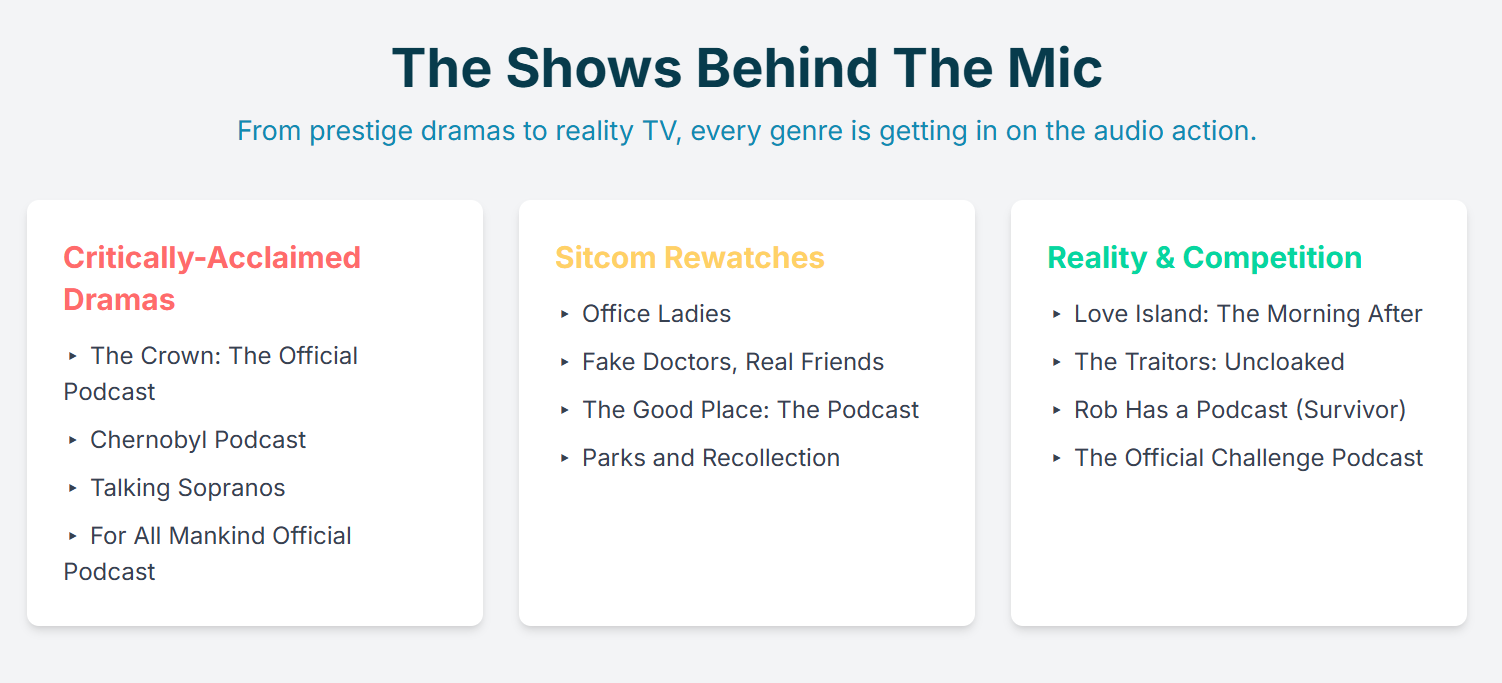
Image Credit: Finchley Studio
An official companion podcast can offer interviews with the show's creator, conversations with the lead actors, and insights from the writers' room—content that is simply unattainable for fan podcasters.9 This exclusive access allows the official podcast to position itself as the "definitive source" of information and commentary on the show.9 It is the promise of hearing directly from the people who make the show that draws listeners in and provides the unique value that justifies the "official" title.
The selection of a podcast host is not merely a logistical step; it is a strategic branding decision that fundamentally shapes the podcast's identity and its relationship with the audience. Listeners form powerful, trust-based parasocial relationships with podcast hosts, often feeling as though the host is a personal friend.30 Studios leverage this dynamic with calculated precision. By casting a beloved actor from the show, they transfer the pre-existing fan affection for the character onto the podcast itself. By selecting a well-respected "superfan" from the community, they are effectively co-opting and validating a segment of the fandom, signaling that the production values their perspective. This decision goes far beyond determining who asks the questions; it determines who the audience is invited to trust as their intimate guide into the show's deeper world. The host, in essence, becomes a powerful and highly credible influencer for the intellectual property they represent.
In an era of sprawling, complex franchises and highly active online fan communities dedicated to theory-crafting, the official podcast also serves a crucial, if subtle, role in canon management. Fan podcasts and forums can generate a whirlwind of speculation, interpretation, and theories that may diverge significantly from the creators' intent.25 The official podcast, by providing a direct platform for showrunners and writers—as seen with shows like
And Just Like That... The Writers Room 9—acts as a tool for gently guiding the official narrative. It allows creators to clarify ambiguities, explain the reasoning behind controversial plot points, and subtly reinforce the "correct" interpretation of events. This is not about shutting down fan creativity, but about exercising a form of soft power that helps maintain the narrative integrity and coherence of the intellectual property without directly antagonizing the very communities that support it.
Image Credit: Finchley Studio
Blueprint for Success: In-Depth Case Studies
An examination of several high-profile companion podcasts reveals distinct strategies tailored to different genres, audience expectations, and IP lifecycles. From revitalizing legacy sitcoms to amplifying the buzz around prestige dramas and reality TV phenomena, these case studies provide a blueprint for how to effectively leverage the audio medium.
A comparative analysis highlights the key variables that contribute to a successful companion podcast strategy.
Case Study 1: The Prestige Drama Companion (The Last of Us, House of the Dragon)
For prestige dramas with dense, lore-heavy worlds, the companion podcast serves as an essential guide and a forum for deep narrative exploration. HBO's podcasts for The Last of Us and House of the Dragon exemplify this approach. The Official The Last of Us Podcast is hosted by Troy Baker, who voiced the protagonist Joel in the original video games, providing a unique bridge between the source material and the adaptation. The podcast features scene-by-scene deep dives with show creators Craig Mazin and Neil Druckmann, offering authoritative commentary on creative choices and adaptation challenges.33 Similarly,
The Official Game of Thrones Podcast: House of the Dragon brought in author George R.R. Martin himself, giving fans unparalleled insight into the world of Westeros.35
A key strategic element for both podcasts is their release schedule: new episodes are made available immediately following the television broadcast.34 This timing is critical, as it allows the official podcast to capture and shape the immediate post-viewing conversation, positioning itself as the primary destination for fans eager to process what they have just seen. The success of this model is evident in their performance metrics. Both podcasts consistently hit #1 on the Apple TV & Film charts and generated significant press coverage, demonstrating their effectiveness in elevating the show's cultural status and solidifying its reputation as "prestige television".33
Case Study 2: The Rewatch Phenomenon (Office Ladies)
The Office Ladies podcast demonstrates the immense power of audio to revitalize a legacy IP long after its original television run has concluded. Hosted by The Office co-stars Jenna Fischer (Pam) and Angela Kinsey (Angela), the podcast undertakes a comprehensive, episode-by-episode rewatch of the beloved sitcom. The format's success hinges on the hosts' genuine friendship and their ability to provide exclusive, heartfelt behind-the-scenes stories that only two people who were there could share.18
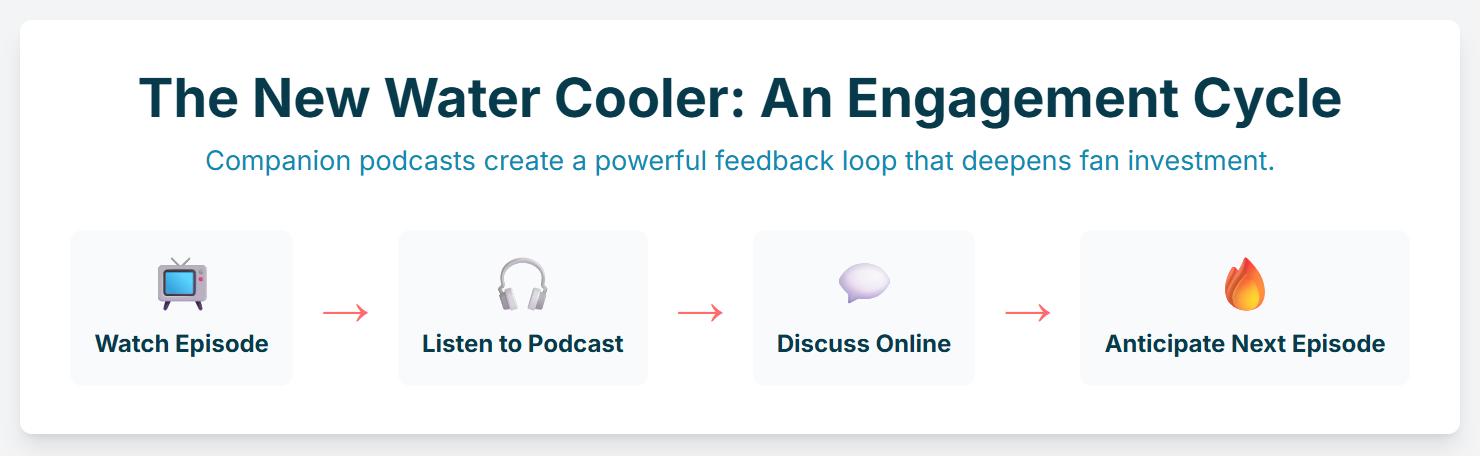
Image Credit: Finchley Studio
Averaging an impressive 4.4 million monthly listens, Office Ladies has become a cultural phenomenon in its own right.16 Its impact is twofold. First, it serves the massive existing fanbase, offering a new way to experience a show they already love. Second, it acts as a discovery engine, introducing
The Office to new generations of viewers who find the show on streaming platforms, often prompted by the podcast's popularity.1 The podcast has proven to be a powerful multi-platform venture, extending beyond audio to generate a best-selling book,
The Office BFFs. This demonstrates a clear and replicable pathway from audio-based fan engagement to the creation of new, monetizable revenue streams, breathing new commercial life into a classic property.16
Case Study 3: The Reality TV Powerhouse (Love Island: The Morning After, The Traitors: Uncloaked)
Reality competition shows, which thrive on immediate, high-volume social discourse, have found a particularly potent partner in the companion podcast. The daily format of Love Island: The Morning After is perfectly suited to the show's nightly broadcast schedule. Hosted by an ex-Islander and a celebrity superfan, the podcast provides daily commentary and analysis, keeping the conversation alive and extending the Love Island franchise's reach far beyond its linear broadcast window.3 The podcast's unique selling proposition is its exclusive interviews with the contestants who have just been eliminated from the show, offering fresh, immediate reactions.
The BBC's The Traitors: Uncloaked represents the next stage in the evolution of this model. Conceived as a "visual podcast," it was broadcast on television (BBC Two) and made available on BBC Sounds, blurring the lines between a traditional aftershow and an audio-first format. Hosted by comedian and superfan Ed Gamble, the show offered exclusive exit interviews with banished and murdered contestants, revealing their reactions to discovering the identities of the Traitors. The results were staggering: the televised finale of Uncloaked drew 3.15 million linear viewers, a figure seven times the slot's average viewership.10 This case study highlights a powerful synergy between audio-centric content and traditional broadcasting, proving that a well-executed companion piece can become a mainstream hit in its own right.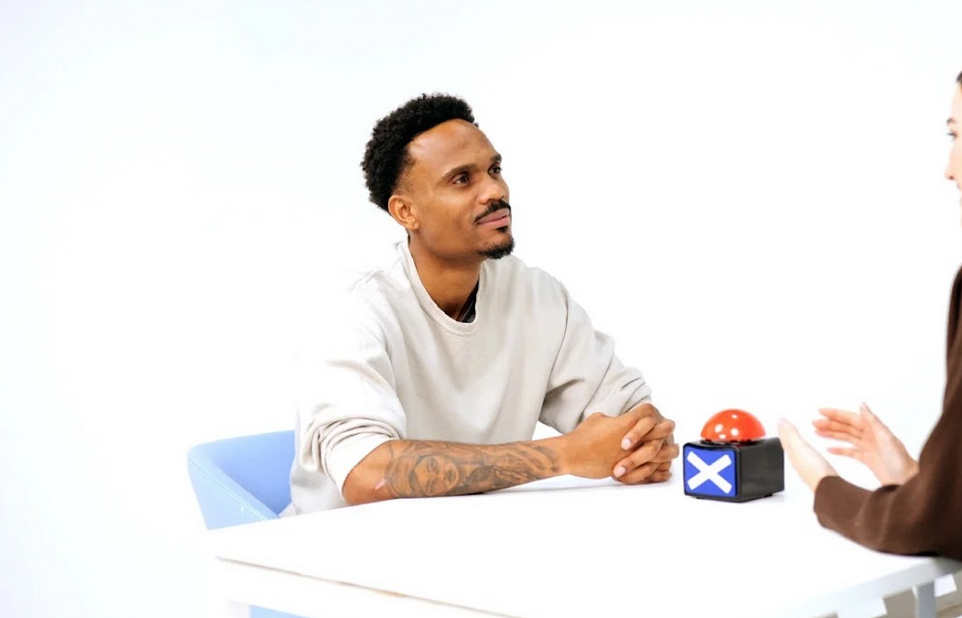
Image Credit: Finchley Studio
Production Pathways: The In-House vs. Outsourced Decision
Once the strategic decision to launch a companion podcast is made, a critical operational question arises: should the production be handled in-house or outsourced to a specialized third-party company? This is not merely a logistical choice but a strategic one, with significant implications for creative control, product quality, speed to market, and overall cost.40 The path chosen often reflects the media company's internal capabilities, strategic priorities, and long-term vision for its audio content division.
The Strategic Choice: Control vs. Expertise
The decision to produce in-house or outsource represents a fundamental trade-off between maintaining absolute control and accessing specialized expertise.
The In-House Model: This approach offers maximum creative control and ensures seamless integration with the television show's overarching brand identity and marketing campaigns. A dedicated internal team can maintain a consistent voice and react quickly to internal strategic shifts. However, this path requires a significant upfront and ongoing investment in specialized talent—including experienced audio producers, sound engineers, and editors—as well as professional-grade equipment and software. It can also be a substantial time drain on internal teams whose primary responsibilities lie elsewhere.41 HBO stands as a prime example of a major studio that has successfully built a robust internal podcast team, allowing it to produce a wide range of high-quality companion content for its flagship series.4
The Outsourced Model: Partnering with an external podcast production company provides immediate access to a team of seasoned experts, state-of-the-art technology, and established, efficient workflows. This typically results in a higher-quality final product and a significantly faster speed to market, as the external partner can bypass the steep learning curve associated with building an audio production pipeline from scratch.41 This model allows the show's core creative team to focus on providing the content and insights, while the production company handles the technical "heavy lifting" of recording, editing, mixing, and distribution. This is a common and highly effective strategy, evidenced by major studios frequently collaborating with renowned production houses. Notable partnerships include HBO working with Pineapple Street Studios for
The Official Game of Thrones Podcast: House of the Dragon and Netflix partnering with Somethin' Else (a Sony Music Entertainment company) for The Crown: The Official Podcast.9
The following framework provides a direct comparison to aid in this strategic decision-making process.
The binary choice between a purely in-house or a fully outsourced model is becoming increasingly nuanced. A more sophisticated, hybrid model is emerging as the industry standard for major productions. In this structure, an in-house creative lead or executive producer from the television studio acts as the primary liaison and brand steward, collaborating closely with an external production company. This approach synthesizes the best of both worlds. The studio retains strategic and creative control, ensuring the podcast aligns perfectly with the show's brand and provides the "official access" that is its core asset. Simultaneously, it leverages the specialized technical skills, audio storytelling expertise, and production efficiency of the external partner. The successful partnerships between HBO and Pineapple Street Studios, or Netflix and Somethin' Else, are not simple hand-offs but deep collaborations. This hybrid model allows studios to produce best-in-class audio content without having to build and maintain a large, specialized audio department, representing an optimal balance of control, quality, and resource allocation.
Future Trajectories and Strategic Recommendations
As the companion podcast solidifies its position as a staple of the modern media landscape, its form and function will continue to evolve. The current success of recap and behind-the-scenes formats has laid the groundwork for more ambitious and integrated audio experiences. For media executives, navigating this future requires a clear-eyed strategy that recognizes the podcast not just as a promotional tool, but as a versatile and powerful asset capable of creating new narrative avenues, fostering deeper community bonds, and even driving audience discovery.
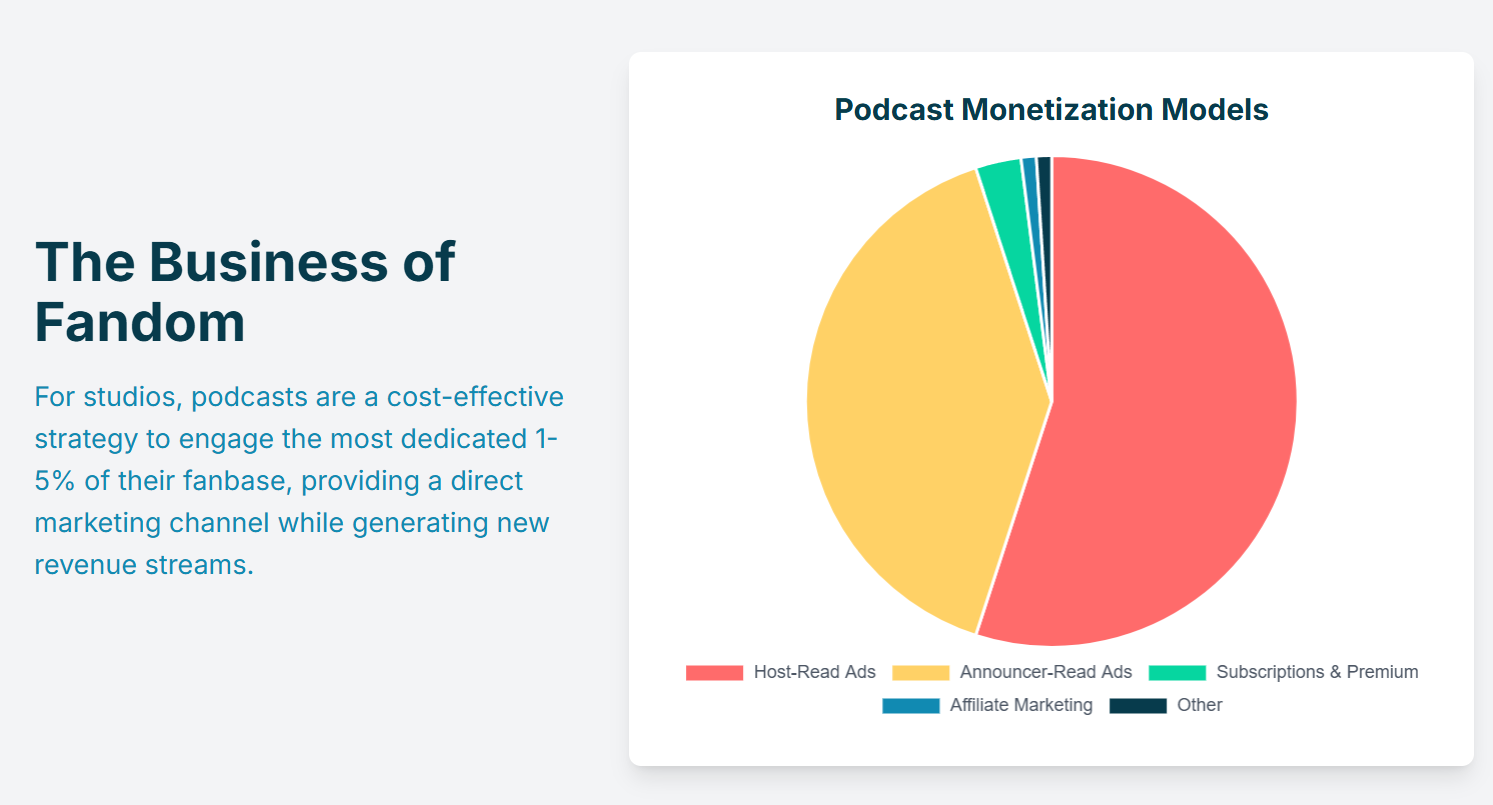
Image Credit: Finchley Studio
The Evolution of Formats: Beyond the Recap
The future of the companion podcast lies in pushing beyond established formats toward greater innovation and integration. Several key trends are poised to shape the next generation of television-adjacent audio content:
The Rise of the "Visual Podcast": The phenomenal success of the BBC's The Traitors: Uncloaked, which functioned as both a podcast and a highly-rated television broadcast, signals a significant future trajectory.10 This hybrid format blurs the lines between audio-first content and traditional television, creating a multi-platform experience that can capture both dedicated podcast listeners and a broader linear television audience. This model is particularly well-suited for reality and competition shows where visual reactions and body language are key components of the post-show analysis.
Expansion of Fictional Narrative Content: While behind-the-scenes content currently dominates, there is vast, largely untapped potential in using the podcast medium to create new, in-canon fictional stories. These could take the form of prequels exploring a character's origin, sequels that continue the story after the television finale, or side-stories that flesh out the wider narrative universe.3 Such podcasts transform the companion piece from commentary into a new, monetizable piece of intellectual property, offering a cost-effective way to expand a franchise.
Deepening Interactivity: The future of fan engagement will move beyond passive listening. While tactics like the fan voicemail line used by the Interview with a Vampire podcast are a step in the right direction, future iterations will likely see deeper integration with social media platforms and fan communities.8 This could include live-streamed recording sessions, audience-submitted questions shaping interview segments, or even interactive narrative elements where listener feedback influences minor story points in a fictional podcast.
Recommendations for Media Executives: A Strategic Checklist
To effectively capitalize on the power of companion podcasts, media executives should adopt a strategic, proactive approach. The following checklist provides a framework for integrating audio into a broader content strategy:
Conduct an IP Audit for Audio Potential: Not every television show is a suitable candidate for a companion podcast. Executives should prioritize properties that already possess a passionate, engaged fanbase and feature complex lore, intricate plots, or a strong "rewatch" factor that invites deeper analysis.9 Genres such as fantasy, science fiction, historical fiction, intricate thrillers, and reality competition series are particularly fertile ground for this format.9
Define the "Why" Before the "How": Before any production begins, the primary strategic objective must be clearly articulated. Is the goal to reduce subscriber churn between seasons? To help viewers navigate a particularly complex plot? To re-engage fans with a legacy show from the library? This core objective should dictate every subsequent decision, from the podcast's format and tone to the choice of host and the production model.
Treat the Host as a Strategic Casting Decision: The host is not an incidental role; they are the face and voice of the audio brand. The decision to use a cast member, a show creator, an expert superfan, or a professional broadcaster is a critical casting choice that will fundamentally define the podcast's identity and its relationship with the audience. The choice should be made with the same strategic consideration as casting a role in the television show itself.
Leverage "Official" Status as the Core Asset: The podcast's content and marketing strategy must be built around its single greatest advantage: the ability to provide exclusive access and authoritative information that no fan-created content can replicate. This is the primary driver of value for the listener and should be the central promise of the podcast.
Measure Success Beyond Downloads: While listenership numbers are an important metric, the true measure of a companion podcast's success is its "fanbase ROI." Executives should implement mechanisms to track this, including monitoring social media sentiment and community engagement, and conducting audience surveys (similar to the one conducted by HBO Max) to quantify the podcast's impact on brand affinity and viewer loyalty. Furthermore, the success of ventures like the Office Ladies book demonstrates the importance of tracking this value as it translates into new, tangible revenue streams.16
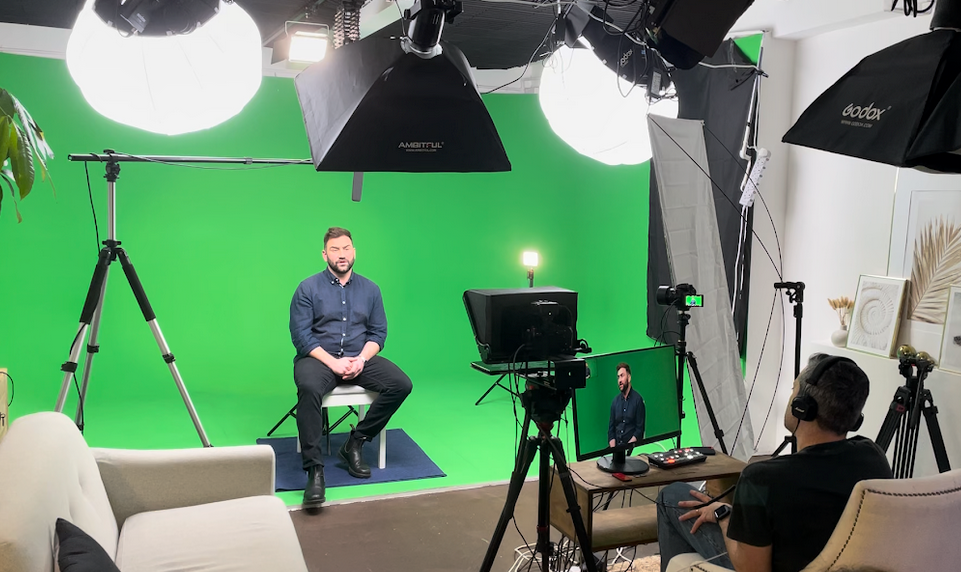
Image Credit: Finchley Studio
A clear trend is emerging in which high-profile showrunners are taking the reins of their own companion podcasts. Creators like Craig Mazin (Chernobyl, The Last of Us) are pioneering a model where they have a direct, unfiltered channel to their audience. This allows them to control the narrative around their work, build a personal brand that is distinct from any single network or studio, and cultivate a loyal following that is more likely to follow them to future projects. For these creators, the podcast becomes an integral part of their creative process and a powerful tool for building their own brand equity within the industry.
Finally, while the primary function of a companion podcast has been to serve existing superfans, its role as a tool for audience discovery is becoming increasingly significant. This represents a reversal of the typical content funnel. The explicit strategy for the For All Mankind podcast was to create a "large funnel" to attract new audiences who were interested in astronaut stories, thereby introducing them to the television show.4 Similarly, a listener might discover the
Office Ladies podcast through general interest comedy charts and subsequently be converted into a first-time viewer of The Office on a streaming service.37 This positions the podcast not merely as a companion piece for the converted, but as a standalone "gateway drug"—a discovery tool that funnels entirely new viewers to the core television property, dramatically expanding its strategic value.
That's an excellent observation, as this has become a dominant trend in the entertainment industry. In 2025, famous TV shows are creating official companion visual podcasts as a powerful strategy to deepen fan engagement, extend the conversation around an episode, and provide exclusive behind-the-scenes content.
They are created by leveraging the power of a professional studio to produce a high-quality show that matches the brand of the main television series. Here’s a breakdown of how it's typically done.
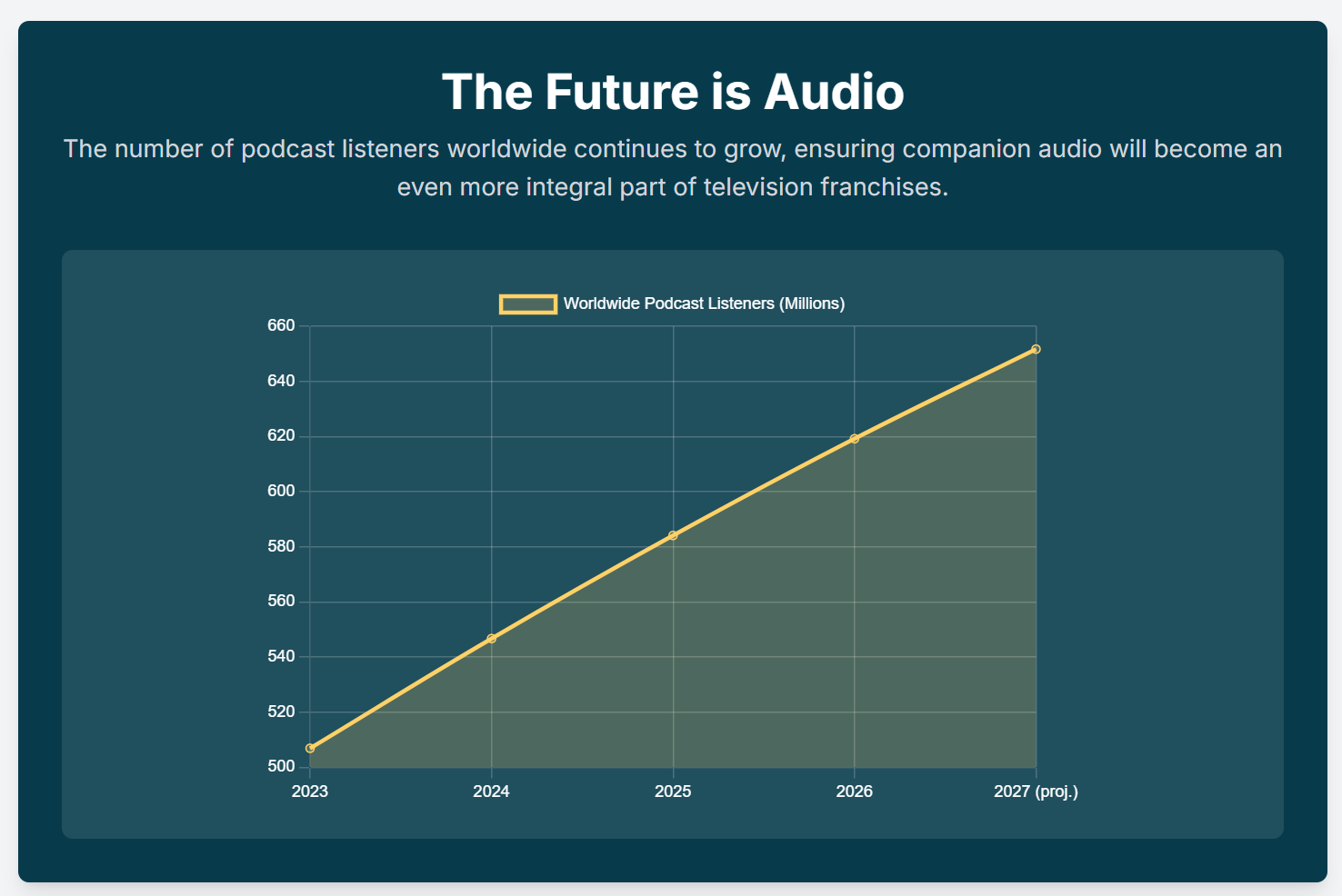
Image Credit: Finchley Studio
## 1. The Format: The "Aftershow" Recap
The most popular format is the "aftershow" or "recap" podcast. Immediately after a new episode of the TV show airs, the network releases a companion podcast episode that dissects it.
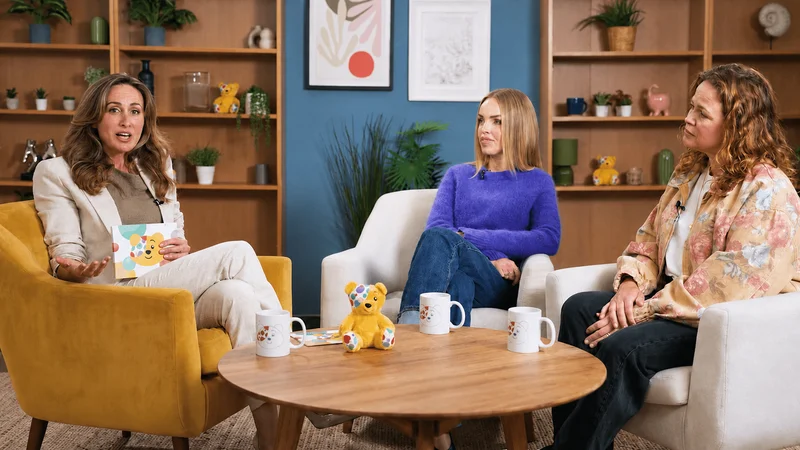
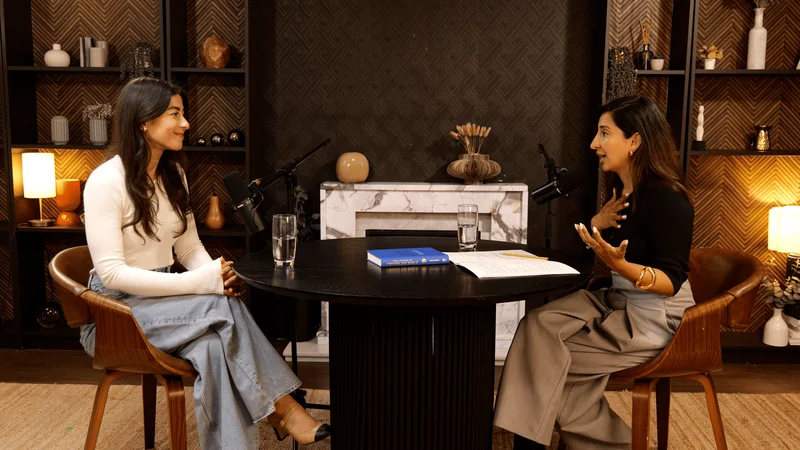
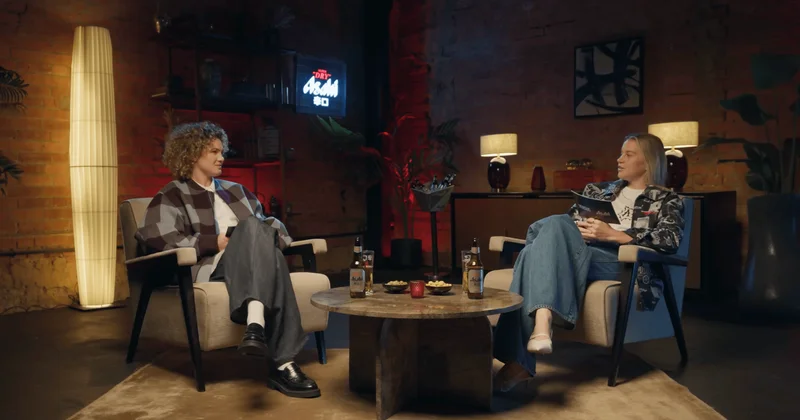
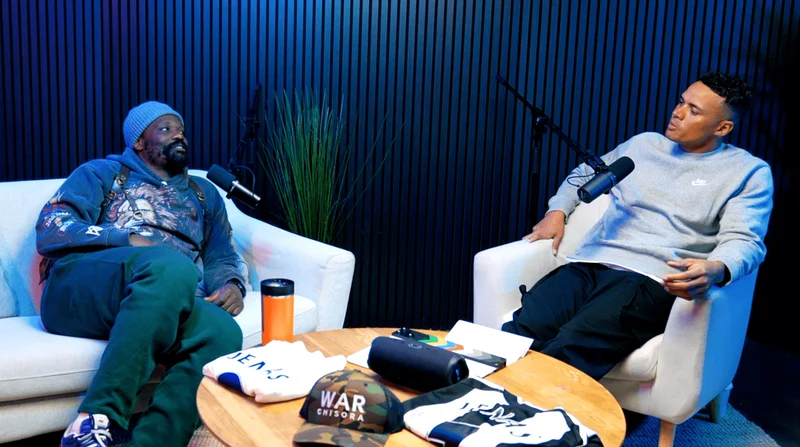
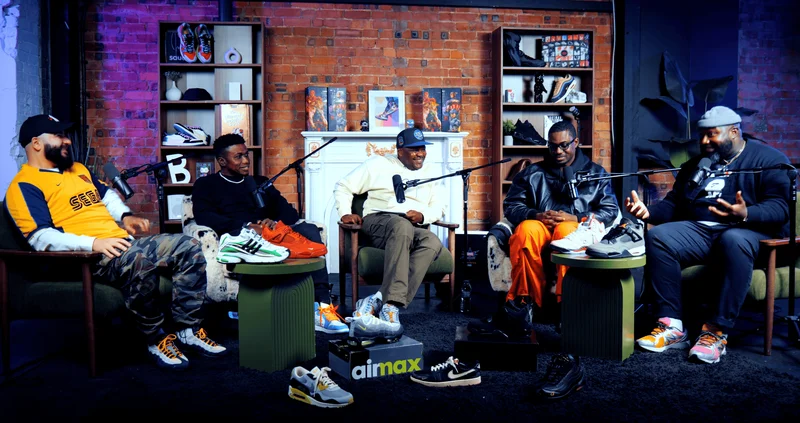
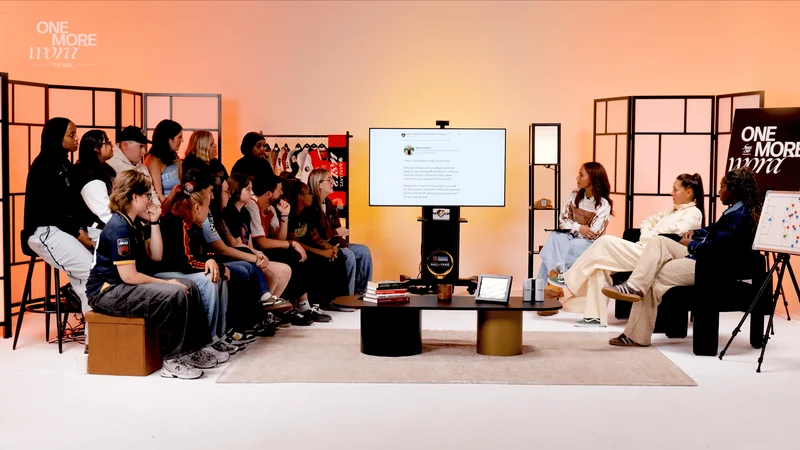
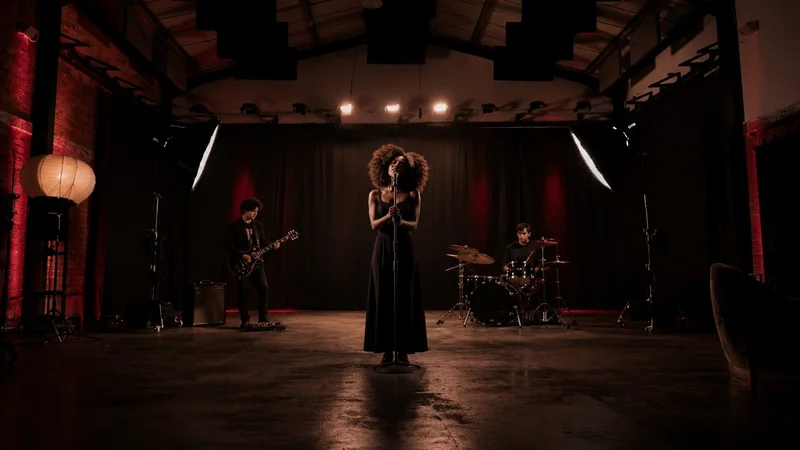
How it's made: The show's cast, creators, or celebrity fans gather in a professionally designed studio to discuss the episode's key moments, character motivations, and plot twists. The production is filmed with a multi-camera 4K setup to capture the lively and authentic reactions. The set is often branded to match the aesthetic of the TV show, and a relaxed environment like our Lounge Studio or the sophisticated Blackwood Studio is perfect for this format.
## 2. The Content: Exclusive "Behind-the-Scenes" Access
The core appeal of these podcasts is the exclusive content that fans can't get anywhere else. This goes beyond a simple recap.
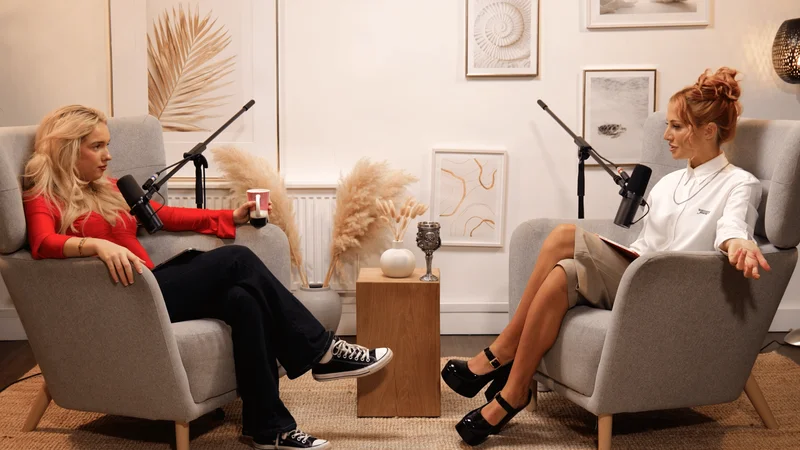
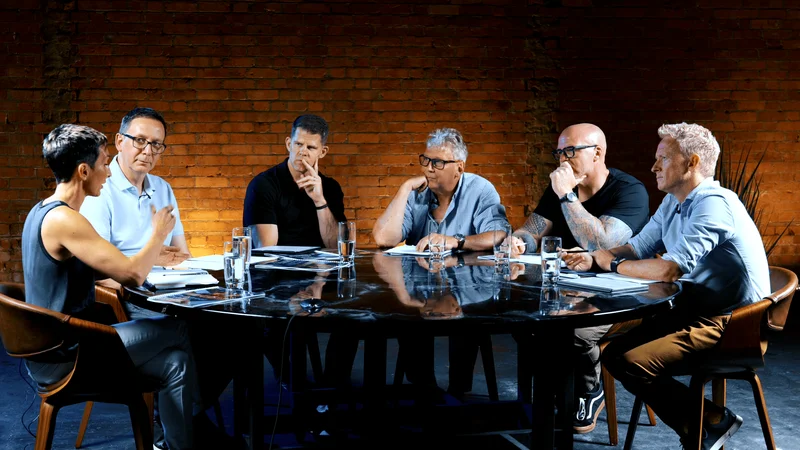
How it's made: The podcast will often feature in-depth interviews with the people who made the show, such as directors, writers, and composers. These are typically filmed in a more intimate setting, like our Dialogue Room. The production is elevated by intercutting the interview with exclusive clips from the TV show, concept art, and on-set footage. This complex post-production work is handled by a professional Video Editing Service to ensure a seamless final product.
## 3. The Production: Matching the TV Show's Quality
A companion podcast must reflect the high production values of the multi-million-pound television show it represents. A low-quality, DIY look is not an option.
How it's made: Networks and production companies partner with high-end facilities like Finchley Studio for several key reasons:
Brand Consistency: The studio provides a polished, broadcast-quality look that upholds the main show's brand.
Talent Management: It offers a private, professional, and efficient environment for high-profile actors and creators.
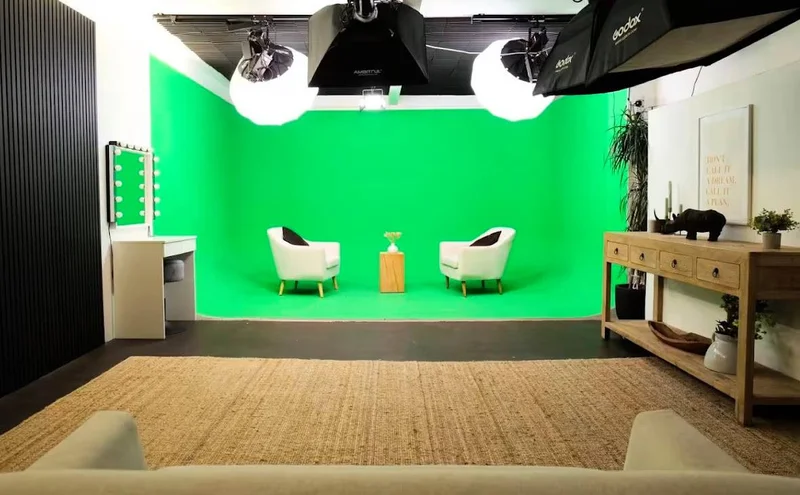
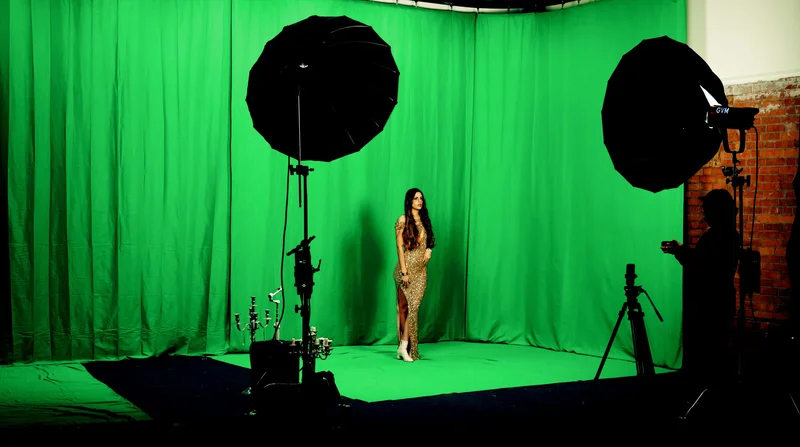
Technical Guarantee: It ensures flawless 4K video and pristine audio, meeting the exacting standards of the network. For highly creative concepts, a Green Screen Cove can be used to create a completely custom, in-universe virtual set.
By creating these companion podcasts, TV shows are able to build a deeper, more meaningful relationship with their audience, transforming passive viewers into a highly engaged and loyal fan community.
Create Your Companion Podcast at Finchley Studio
Ready to create content that complements a major production? At Finchley Studio, we provide the professional environment and technical excellence required for high-stakes media projects. Our commitment to broadcast quality is why organisations like the BBC and Lloyds Bank trust us with their productions. See what our clients are saying in our Google reviews and on Trustpilot.
We offer a diverse range of meticulously designed studios perfect for any format:
Lounge Studio & Gathering Studio: Ideal for relaxed "aftershow" recap discussions.
Dialogue Room & CEO Set: Perfect for in-depth, one-on-one interviews with creators.
Green Screen Cove & Giant Green Screen: The ultimate tool for creating a custom, in-universe virtual set.
Other professional sets: Blackwood Studio, The Brick Studio, Blackout Set, White Infinity Cove.
Our professional Video Editing Service can handle complex edits, intercutting show clips and behind-the-scenes footage to create a dynamic final product. The team at Finchley Studio is your expert partner in production.
Ready to create broadcast-quality content?
Find Us Easily: Our studio is conveniently located just a two-minute walk from Finchley Central on the Northern Line and is adjacent to the Travelodge London Finchley. We also offer one free parking space per booking.
what3words: orders.yards.jokes
Stay Connected: Follow our journey and see behind-the-scenes content on our social media channels:
Have questions? Check our FAQ or get in touch directly.
WhatsApp: +447587827200
Phone: +447587827200
Email: [email protected]
Works cited
The Rise of Podcasts: Why Millions Now Spend 8hrs+ a Week Listening Instead of Watching - Trill Mag, accessed September 25, 2025, https://www.trillmag.com/entertainment/podcasts-may-be-our-new-form-of-entertainment/
TV shows and companion podcasts become a package deal, accessed September 25, 2025, https://www.futureparty.com/p/tv-shows-companion-podcasts-deal
Companion podcasts: A Love Island case study - Platform Media, accessed September 25, 2025, https://platformmedia.uk/companion-podcasts-a-love-island-case-study/
Streamers are creating companion podcasts for superfans of their shows - Marketing Brew, accessed September 25, 2025, https://www.marketingbrew.com/stories/2022/05/24/streamers-are-creating-companion-podcasts-for-superfans-of-their-shows
platformmedia.uk, accessed September 25, 2025, https://platformmedia.uk/companion-podcasts-a-love-island-case-study/#:~:text=The%20TV%20%26%20Film%20category%20is,a%204%25%20increase%20from%202022.
PODCASTS ARE KEY TOOL FOR TV DISCOVERY, RESEARCH SHOWS - ScreenVoice.cz, accessed September 25, 2025, https://www.screenvoice.cz/en/short-read/podcasts-are-key-tool-for-tv-discovery-research-shows/
Every TV show Needs a Companion Podcast…. Here's Why. - Ruby, accessed September 25, 2025, https://ruby.iheart.com/post/every-tv-show-needs-a-companion-podcast-heres-why
The Power of Podcasts as Content Companions - Brand Storytelling, accessed September 25, 2025, https://www.brandstorytelling.tv/single-post/the-power-of-podcasts-as-content-companions
Companion Podcasts Take Fandom to New Heights - Audacy Inc., accessed September 25, 2025, https://audacyinc.com/insights/companion-podcasts-take-fandom-to-new-heights/
The TV companion podcast is coming into its own - Topics, accessed September 25, 2025, https://podcastrex.com/topics/the-tv-companion-podcast-is-coming-into-its-own
Transmedia Storytelling | Free Podcasts - Podomatic, accessed September 25, 2025, https://www.podomatic.com/podcasts/transmedia
Evolving Game Universes with Transmedia Storytelling - with Christie Golden - YouTube, accessed September 25, 2025, https://www.youtube.com/watch?v=EO6mTUgyGno
10: Transmedia Storytelling in Podcasts - Susquehanna University WordPress, accessed September 25, 2025, https://wordpress.susqu.edu/engl390/2018/04/02/10-transmedia-storytelling-in-podcasts/
How Podcasts and TV Series are Hooking Up and Making Media Babies - JAR Audio, accessed September 25, 2025, https://jarpodcasts.com/companion-podcasts-and-tv-series/
Transmedia Storytelling - Apple Podcasts, accessed September 25, 2025, https://podcasts.apple.com/us/podcast/transmedia-storytelling/id580762241
Capitalizing on Die-hard Fans – The rise of TV show podcasts - The Recap Group, accessed September 25, 2025, https://therecap.group/news/capitalizing-on-die-hard-fans-the-rise-of-tv-show-podcasts/
Top Companion Podcasts To Accompany Your Binge-Watching, accessed September 25, 2025, https://weeditpodcasts.com/top-companion-podcasts-to-accompany-your-binge-watching/
Office Ladies - Apple Podcasts, accessed September 25, 2025, https://podcasts.apple.com/us/podcast/office-ladies/id1480311435
The Crown: The Official Podcast - Podnews, accessed September 25, 2025, https://podnews.net/podcast/i4lut
The Crown: The Official Podcast, accessed September 25, 2025, https://podcasts.apple.com/us/podcast/the-crown-the-official-podcast/id1485757121
The Crown: The Official Podcast - GoLoud, accessed September 25, 2025, https://www.goloudnow.com/podcasts/the-crown-the-official-podcast-507
The Crown: The Official Podcast, accessed September 25, 2025, https://thecrowntheofficialpodcast.simplecast.com/
I love TV podcasts! - Reddit, accessed September 25, 2025, https://www.reddit.com/r/podcasts/comments/1k95ctl/i_love_tv_podcasts/
Fan Podcasts: Rewatch, Recap, Review - 1st Edition - Anne Korfmacher - - Routledge, accessed September 25, 2025, https://www.routledge.com/Fan-Podcasts-Rewatch-Recap-Review/Korfmacher/p/book/9781032721941
Why do "fans" pretend they know and understand a media more than the people who created it? - Reddit, accessed September 25, 2025, https://www.reddit.com/r/saltierthankrayt/comments/1eip5yq/why_do_fans_pretend_they_know_and_understand_a/
Building A Show | Fan Podcasting: The Complete Guide by Bill ... - Bill Meeks, accessed September 25, 2025, https://billmeeks.com/fan-podcasting-the-complete-guide-by-bill-meeks-learn-how-to-use-your-passion-to-create-a-killer-podcast-community/building-a-show-fan-podcasting-the-complete-guide-by-bill-meeks/
The Citational Practices of Science Fiction Fan Podcasts - IdeaExchange@UAkron, accessed September 25, 2025, https://ideaexchange.uakron.edu/cgi/viewcontent.cgi?article=1216&context=docam
The growing influence of fans in the production of TV shows | The Business Standard, accessed September 25, 2025, https://www.tbsnews.net/splash/growing-influence-fans-production-tv-shows-1093446
Writers vs Fans, recap. Writers really need to listen to fan feedback now. : r/DynastyCW - Reddit, accessed September 25, 2025, https://www.reddit.com/r/DynastyCW/comments/htwe10/writers_vs_fans_recap_writers_really_need_to/
Podcast Listening Insights for 2025: What Podcasters Need to Know - The Simplecast Blog, accessed September 25, 2025, https://blog.simplecast.com/podcast-listening-insights-for-2025-what-podcasters-need-to-know
Why Podcast Advertising Is Effective—and How to Start - SiriusXM Media, accessed September 25, 2025, https://www.siriusxmmedia.com/insights/why-podcast-advertising-is-effective-and-how-to-start
Podcasts and their hosts create an environment ripe for influence and discovery - Deloitte, accessed September 25, 2025, https://www.deloitte.com/us/en/insights/industry/technology/podcast-advertising-effectiveness-and-influence.html
THE LAST OF US Finale Draws Series High Of 8.2 Million Viewers, Growing Consistently Throughout Season Against Enhanced Sunday Night Competition | Pressroom, accessed September 25, 2025, https://press.wbd.com/na/media-release/hbo-0/last-us/last-us-finale-draws-series-high-82-million-viewers-growing-consistently-throughout
HBO's The Last of Us Podcast - The Shorty Awards, accessed September 25, 2025, https://shortyawards.com/16th/hbos-the-last-of-us-podcast
The Official Game of Thrones Podcast: House of the Dragon - The Shorty Awards, accessed September 25, 2025, https://shortyawards.com/15th/the-official-game-of-thrones-podcast-house-of-the-dragon
The Official Game of Thrones Podcast: House of the Dragon, accessed September 25, 2025, https://podcasts.apple.com/us/podcast/the-official-game-of-thrones-podcast-house-of-the-dragon/id1635830141
Breaking Down the Winning Formula of the 'Office Ladies' Podcast | Speechify, accessed September 25, 2025, https://speechify.com/blog/office-ladies-podcast/
How The Traitors: Uncloaked rewrote the companion podcast playbook - Platform Media, accessed September 25, 2025, https://platformmedia.uk/how-the-traitors-uncloaked-rewrote-the-companion-podcast-playbook/
Why Is 'The Office' Still So Popular? We Asked The 'Office Ladies' 9th - 10th Grade Video | Wayground (formerly Quizizz), accessed September 25, 2025, https://wayground.com/admin/video-quiz/67b17ebb737ff27faee95139/why-is-the-office-still-so-popular-we-asked-the-office-ladies
In-House vs. Outsourcing - Startup for Startup, accessed September 25, 2025, https://www.startupforstartup.com/ww/podcasts-transcripts/in-house-vs-outsourcing/
In-house vs. outsourced podcast production: what's best for your business? - Come Alive, accessed September 25, 2025, https://comealivecreative.com/in-house-vs-outsourced-podcast-production/
DIY Podcast VS Hiring a Podcast Production Company? - Story Ninety-Four, accessed September 25, 2025, https://www.storyninetyfour.com/blog/diy-podcast-vs-hiring-a-podcast-production-company
Why You Shouldn't Outsource Your Corporate Podcast Studio - Sound Zero, accessed September 25, 2025, https://sound-zero.com/why-you-shouldnt-outsource-your-corporate-podcast-studio/
Podcast Outsourcing: The Ultimate Guide - bCast, accessed September 25, 2025, https://www.bcast.fm/blog/podcast-outsourcing
Do You Need Production Company for Podcast: Cost, Pros & Cons | Cleanvoice AI, accessed September 25, 2025, https://cleanvoice.ai/blog/production-company-for-podcast/
Podcast Production Costs: Can I Afford to Outsource?, accessed September 25, 2025, https://www.thepodcasthost.com/editing-production/how-much-does-podcast-production-cost/
9 Ways to Outsource Podcast Production to Save Time | MatchMaker.fm, accessed September 25, 2025, https://amplify.matchmaker.fm/outsource-podcast/
outsource podcast production – Resources - B2B PodcastPros, accessed September 25, 2025, https://b2bpodcastpros.com/outsource-podcast-production-597999bc/
Outsourcing Podcast Production: Benefits for Professional Firms - Podkick, accessed September 25, 2025, https://www.podkick.com/blog/outsourcing-podcast-production-professional-firms
The Official Game of Thrones Podcast: House of the Dragon | iHeart, accessed September 25, 2025, https://www.iheart.com/podcast/1119-the-official-game-of-thro-99761837/
The Official Game of Thrones Podcast: House of the Dragon - YouTube, accessed September 25, 2025, https://www.youtube.com/playlist?list=PLdyYtz46NolaHdWwBFyOL9_GwwPTKp8Wh
The Official Game of Thrones Podcast: House of the Dragon transcripts on Tapesearch, accessed September 25, 2025, https://www.tapesearch.com/podcast/the-official-game-of-thrones-podcast-house-of-the-dragon/1635830141