In short: Mixing is the process of building the car from all its individual parts (engine, wheels, seats). Mastering is the final quality control, detailing, and test drive that makes the car (as a whole) showroom-ready.
🎶 What is Mixing?
Mixing is the stage after recording where an audio engineer takes all the individual recorded tracks (like vocals, drums, guitars, and synths) and blends them together into one cohesive, balanced stereo track (the "mix").
This is a creative and technical process focused on the internal balance of a song. The goal is to make sure every instrument and vocal has its own space and can be heard clearly, creating an emotional and dynamic listening experience
Key Processes in Mixing:
-
Balancing Levels: Adjusting the volume faders for each track so that no single element is too loud or too quiet. The lead vocal, for example, needs to sit perfectly above the instruments.
-
Panning: Placing sounds in the stereo field (from left to right). This creates a sense of width and space, and it helps separate instruments that might otherwise clash (e.g., panning two guitars to opposite sides).
-
Equalization (EQ): Sculpting the frequencies of each track. This is like "tonal carving." An engineer might cut low-end "mud" from a vocal, boost the "snap" of a snare drum, or carve out a space for the bass guitar to sit with the kick drum.
Compression: Controlling the dynamic range (the difference between the loudest and quietest parts) of a track. This can make a vocal sound more consistent, add "punch" to a drum, or help "glue" instruments together
-
Effects (FX): Adding creative effects to build atmosphere and depth. This includes things like reverb (to create a sense of space, like a room or hall) and delay (to create echoes)
The End Product of Mixing: A single stereo audio file (e.g., a .WAV file) called "the mix" or "mixdown."
🎚️ What is Mastering?
Mastering is the final step in the audio production chain. It's the last chance to enhance the sound before it's released to the world. A mastering engineer takes the final stereo mix and applies subtle processing to make it sound polished, professional, and consistent.
This is a less creative and more technical, corrective process. It's not about changing the song itself, but about ensuring the final mix sounds its best on all playback systems—from high-end studio monitors and car stereos to earbuds and laptop speakers.
Key Processes in Mastering:
-
Corrective EQ: Making subtle, broad-stroke tonal adjustments to the entire song. For example, if the whole mix sounds a bit "dull," the mastering engineer might add a slight high-frequency "sheen."
Multiband Compression: A type of compression that can treat different frequency ranges (e.g., bass, mids, treble) separately. This can help control the low end of a track without affecting the vocals or cymbals.
-
Stereo Enhancement: Subtly adjusting the width of the stereo image to make the song feel wider or more focused.
-
Limiting & Loudness: Using a special tool called a "limiter" to increase the track's overall perceived volume to be competitive with other commercial songs, without introducing distortion. This is a crucial part of making a track sound "loud" and "modern."
Sequencing & Formatting: If mastering an album, this is when the engineer arranges the songs in order, sets the gaps between tracks, and embeds metadata (like artist and track titles). They then export the final master files in the correct formats for distribution (e.g., for streaming, CD, or vinyl).
The End Product of Mastering: The final, commercially-ready audio files (the "masters") that get sent to Spotify, Apple Music, and other distributors.
Why You Absolutely Need Both
You can't have a professional-sounding song without both stages. They solve different problems.
-
Why You Need Mixing: Without mixing, your song would be a chaotic mess of unbalanced tracks. The vocals might be buried, the drums too loud, and the bass and kick drum would fight for space, creating a "muddy" sound. Mixing creates the clarity and emotional impact of the song.
Why You Need Mastering: Without mastering, your (hopefully great) mix might sound quiet, dull, or thin compared to other professional songs. It might sound great in your studio but fall apart in a car, with the bass disappearing or the high-end becoming harsh. Mastering provides the final polish, competitive loudness, and quality control.
Skipping mastering on a good mix is like building a beautiful custom car and then trying to sell it while it's still covered in dust and primer. Skipping mixing is like trying to build a car by just throwing all the parts into a box and hoping for the best.
You've just finished recording a great episode. The conversation was brilliant, the content was insightful, and you're excited to get it out to your audience. You export the file, upload it, and hit publish.
Then you listen back.
Compared to your favourite shows, your episode sounds... different. It's quiet. The music is a bit too loud. One host sounds "boomy," and the other sounds "thin." This is the problem that separates amateurs from pros, and it’s solved by two crucial, and often confused, processes: Mixing and Mastering.
To a podcast producer, these technical terms can be intimidating. But understanding what they are, and why you need both, is essential for creating a professional, listenable show.
What is Mixing? (The "Cooking")
Think of mixing as the process of cooking a meal. Your raw audio files—your vocal, your guest's vocal, your intro music, your ad-reads—are the individual ingredients. Some are good, some are a bit messy, and they're all separate.
Mixing is the process of combining all these tracks into one cohesive "song." A mixing engineer (or you, in your editing software) will:
Edit & Clean: This is the first step for podcasts. It means cutting out all the "ums," "ahs," long pauses, coughs, or that time someone's phone went off.
-
Set Levels (Volume): This is the most basic and important job. It's making sure no one is too loud or too quiet. The guest you recorded over Zoom needs to be just as loud and clear as you are.
Noise Reduction: Removing the constant hiss from an old microphone, the hum of an air conditioner, or the "roomy" echo from recording in a bad space.
EQ (Equalization): This is the "flavour." The engineer will "carve out" bad frequencies (like a boomy, muddy sound from speaking too close to the mic) and boost good frequencies (like the "presence" and "air" that add clarity to a voice).
-
Compression: This is a podcaster's secret weapon. It reduces the dynamic range—making the quiet parts louder and the loud parts quieter. This ensures your listener doesn't have to keep reaching for the volume knob, especially if they're listening in a noisy car or on the tube.
The end result of the mixing stage is a single, "mixed down" audio file (like a .WAV file) where everything sounds balanced, clean, and in its right place. But it's not finished yet.
What is Mastering? (The "Plating")
If mixing is cooking the meal, mastering is the final presentation and quality control. It’s the last step before your podcast is served to the public.
Mastering deals only with that final, mixed-down file. The mastering engineer (or mastering software) isn't fixing individual mic problems; they are polishing the entire episode as one.
Overall Loudness: This is the #1 job of mastering for podcasts. The engineer will make your final file "commercially loud" to meet industry standards (like -16 LUFS for stereo). This ensures that when a listener's playlist jumps from a Gimlet Media podcast to yours, the volume is identical.
-
Final Polish (EQ & Compression): A mastering engineer might add a "final coat of polish"—a tiny bit of EQ to add some sparkle to the whole track, or a gentle "glue" compressor to make the music and voices feel even more connected.
-
Formatting & Metadata: This is the final step. They will export the file to the correct format (e.g., MP3, 128kbps, 44.1kHz), and add the "metadata" (ID3 tags) like your show title, episode title, and cover art.
Why You Must Have Both
Mastering without Mixing: This is pointless. If your guest is inaudible in the mix, mastering will just make the inaudible guest "louder" but still inaudible. You're just polishing a flawed file.
Mixing without Mastering: This is the most common mistake. You'll have a clean episode, but it will be far too quiet compared to other shows. Your listeners will have to crank the volume, and your show will sound amateurish by comparison.
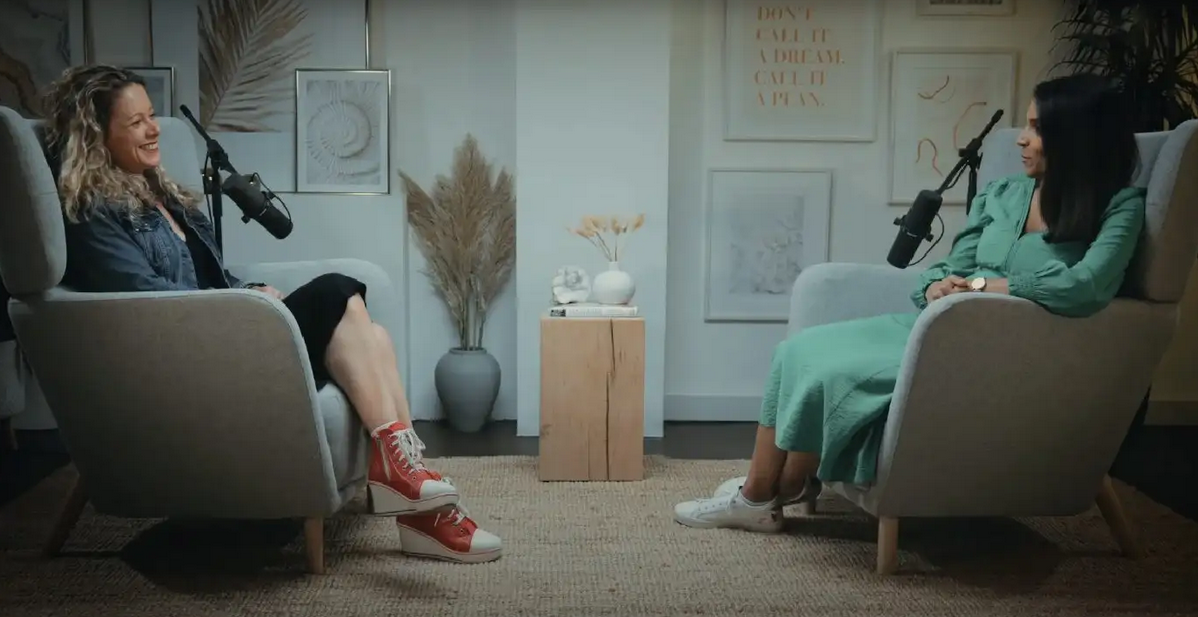
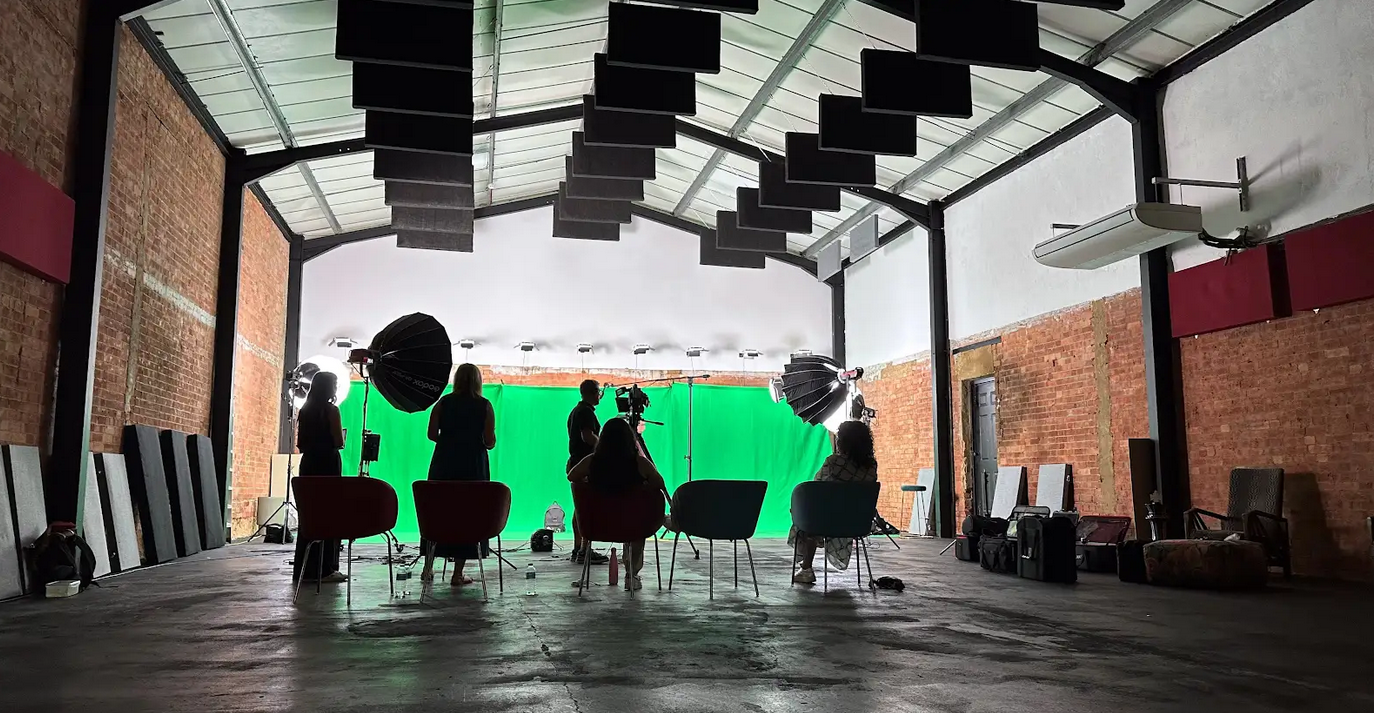
Starting with a high-quality recording makes both mixing and mastering infinitely easier. Recording in an acoustically-treated space like Finchley Studio means your raw files are clean, with no echo or background noise. This allows your post-production team to focus on making you sound great, not on trying to "fix" bad audio. Studios like Finchley Studio offer an all-in-one solution. You record in a pristine environment, and then you can use a professional Video Editing Service to handle all of this for you.
When you invest in a professional recording at Finchley Studio, you're not just getting a nice set; you're getting a clean, mix-ready file. This is the foundation of a professional sound, and it’s why so many creators at Finchley Studio trust the process from recording to final cut.
Investing in your sound is investing in your growth. We provide the professional spaces to make that possible. We encourage you to see our different sets, each designed for a specific creative vision. You can explore our intimate Dialogue Room for focused conversations, the relaxed LOUNGE STUDIO for group chats, or the premium CEO SET for executive content. For more dynamic productions, we have a fully-equipped Green Screen Cove, the sleek Blackwood Studio, and the textured THE BRICK STUDIO. We also feature a flawless White Infinity Cove, a fully controlled BLACKOUT SET, the spacious GATHERING STUDIO for roundtables, and one of London's largest GIANT GREEN SCREEN warehouses.
And your production doesn’t have to end when you leave the studio. Let our experts handle the post-production with our professional Video Editing Service, ensuring your content is polished and ready for your audience. We're trusted by industry leaders and creators alike, with regular clients including the BBC and Lloyds bank, so you know you're in good company. But don't just take our word for it; see what other creators have to say about their experience on Google review and Trust Pilot.
Finding us is simple. We are conveniently located just two minutes from Finchley Central, adjacent to the Travelodge London Finchley, and offer one free parking space per booking. You can find us easily on Google map, Apple maps, [suspicious link removed], or using What 3 words.
Stay connected and see what's happening at the studio by following us on Instagram, YouTube, TikTok, LinkedIn, and X (Twitter).
Have questions? Check our FAQ or get in touch with us directly via WhatsApp, phone at +447587827200, or Email.
Ready to create? Book now and let's make something amazing together.
📚 Further Learning Resources
Here are some excellent, in-depth articles you can read to learn more:
iZotope: What's the Difference Between Mixing and Mastering?
Sweetwater: What is the Difference Between Mixing and Mastering?
Avid: Mixing and Mastering: The Final Stages of Music Production