1. Executive Summary: The Evolution of the London Soundscape
The ecosystem of content creation in London has undergone a seismic shift over the last half-decade. We have moved definitively past the era where "podcasting" was synonymous with audio-only RSS feeds recorded in makeshift home setups. As we navigate 2026, the market is defined by a "Video-First" imperative, where the visual fidelity of a production is as critical as its sonic integrity. For the London-based creator, brand, or agency, this transition presents a complex matrix of logistical, technical, and financial challenges that render the traditional "bedroom studio" obsolete.
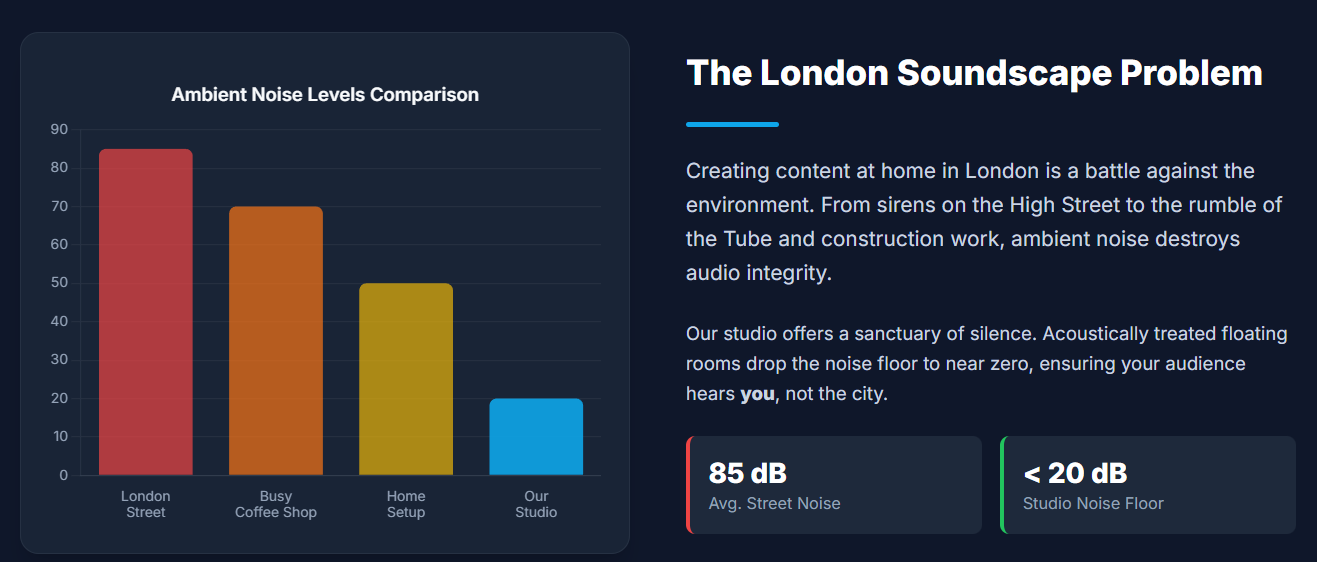
London, as a global media capital, offers a density of production facilities unrivaled in Europe. From the gritty, industrial-chic basements of Shoreditch to the polished, broadcast-ready suites of Soho and the spacious, accessible hubs of North London, the city provides a diverse infrastructure. However, navigating this landscape requires a nuanced understanding of more than just microphone brands. It demands an appreciation of London’s unique acoustic challenges—rooted in its Victorian architecture and high ambient noise levels—as well as the logistical friction of operating in a metropolis defined by congestion charges and complex transport networks.
This report serves as a comprehensive operational dossier. It is designed for the serious content marketer, the brand manager, and the professional creator who views a podcast not as a hobby, but as a strategic asset. We will dissect the physics of soundproofing in London flats, the economic arguments for professional studio hire versus DIY capital expenditure, the specific technical standards required to meet "Netflix-Approved" deliverables, and the advanced Search Engine Optimisation (SEO) strategies necessary to dominate the local digital shelf.
2. The Socio-Economic Context: Why London Creators are Abandoning the Home Studio
The narrative of the solitary podcaster recording from a closet is romantic but increasingly impractical in the London context. While the democratization of technology has lowered the barrier to entry for equipment purchase, the environmental cost of high-quality production in the capital has skyrocketed.
2.1 The Acoustic Hostility of the London Housing Stock
The primary driver pushing creators toward professional facilities is the inherent acoustic hostility of London's residential architecture. A significant portion of the city's housing stock consists of Victorian and Edwardian terraced houses or converted flats. While aesthetically charming, these structures are acoustically porous.
Structure-Borne Noise and Flanking Transmission In a typical London conversion, sound does not merely travel through the air; it travels through the rigid structure of the building. The wooden joists common in older properties act as acoustic bridges, transmitting vibrations with punishing efficiency. A neighbour walking across a hardwood floor three stories up can translate into a low-frequency "thud" or "boom" on a sensitive condenser microphone.1 This phenomenon, known as flanking transmission, is notoriously difficult to mitigate without substantial structural intervention—specifically, the "decoupling" of floors and ceilings, a renovation impossibility for the vast majority of renters.2
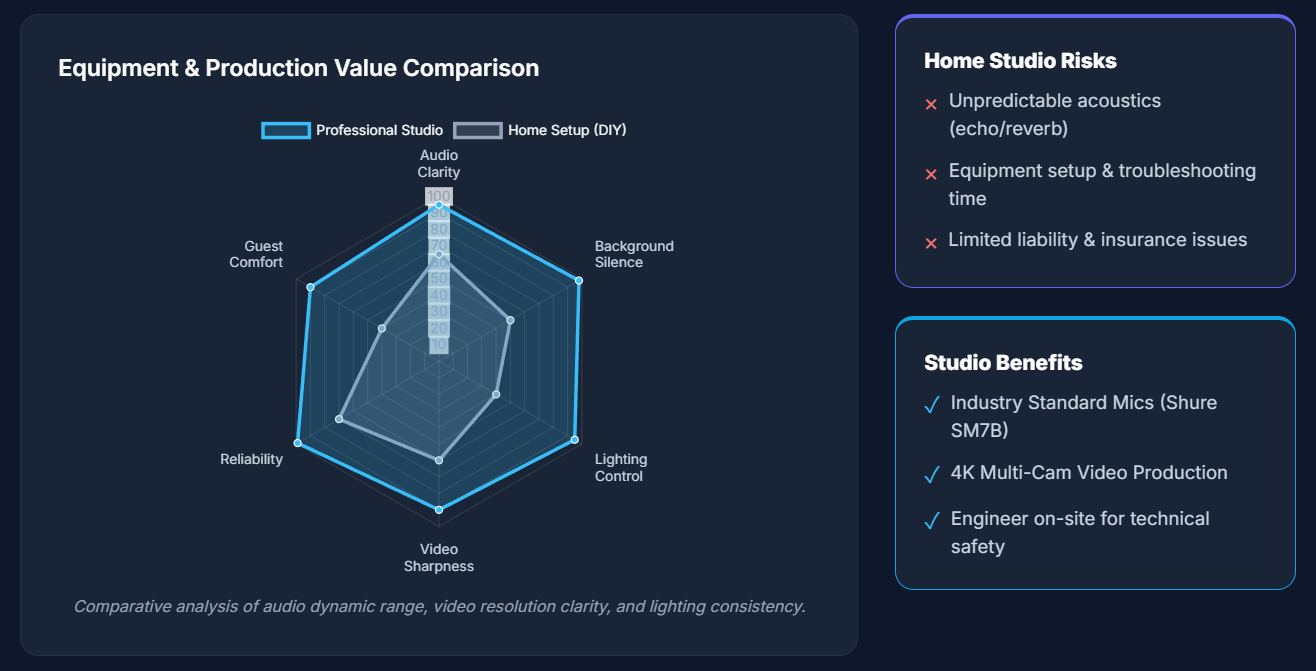
The Standing Wave Phenomenon in Boxy Rooms Furthermore, the average London bedroom or home office suffers from poor geometry. Small, square rooms are breeding grounds for "standing waves"—frequencies that bounce between parallel walls and amplify, creating a muddy, resonant hum often found in the lower-mid frequencies (around 150-300Hz).3 Creators often attempt to address this with aesthetic solutions, such as gluing thin acoustic foam to walls. However, physics dictates that while this may absorb high-frequency flutter echoes, it does nothing to arrest the low-frequency energy that muddies the human voice.4 Professional studios mitigate this through the use of bass traps and non-parallel wall construction, creating a "neutral" room tone that is impossible to replicate in a 3x3 meter box room.
2.2 The Ambient Noise Floor: A City That Never Stops
Beyond the internal acoustics, the external environment of London poses a relentless challenge. The average background noise level in the city hovers around 66dB, driven by traffic, aviation paths, and constant construction.6 For a creator using a professional-grade microphone, this ambient noise floor acts as a persistent contaminant.
The Gentrification Paradox Interestingly, data suggests that noise pollution is often highest in gentrifying areas—precisely the locations where many creatives live. Areas like Lewisham, Hackney, and Tower Hamlets are characterized by perpetual construction, meaning that a "quiet" recording window is dictated not by the creator's schedule, but by the operating hours of pile drivers and excavators.6 The professional studio, therefore, sells more than just equipment; it sells silence—a commodity that is increasingly rare and valuable in the capital.
2.3 The Visual Imperative: Space as a Ranking Factor
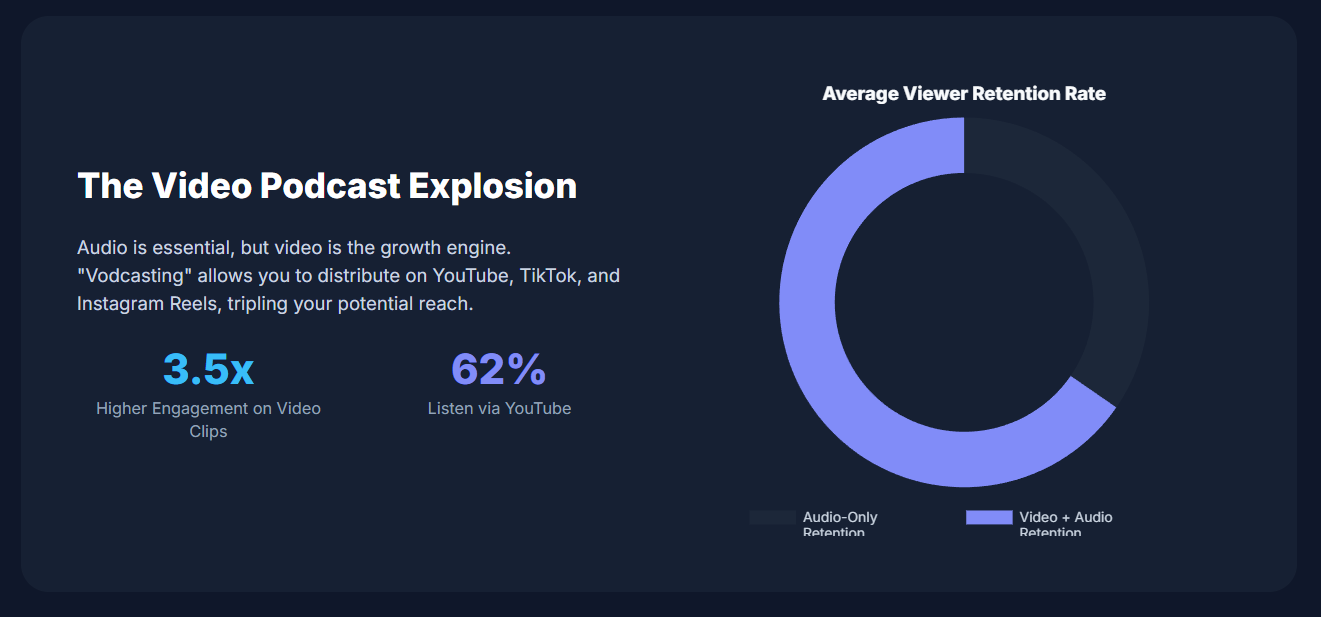
The pivot to video podcasting (Vodcasting) has introduced a new constraint: square footage. The algorithmic preference of platforms like YouTube, TikTok, and Instagram for high-retention video content means that audio excellence is no longer sufficient.7
The Depth of Field Requirement To achieve the "cinematic" look associated with high-end productions—characterized by a sharp subject and a softly blurred background (bokeh)—cameras must be positioned at a distance from the subject, and the subject must be distanced from the background. Achieving this depth of field requires a room depth of at least 4-5 meters, a luxury unavailable in most London apartments.4
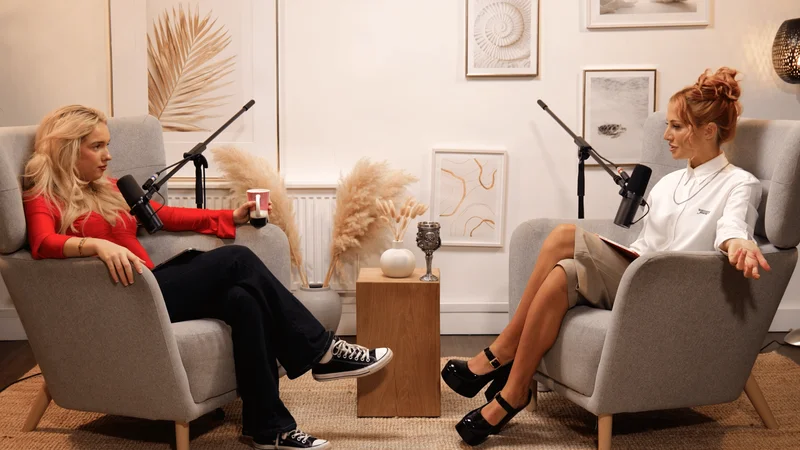
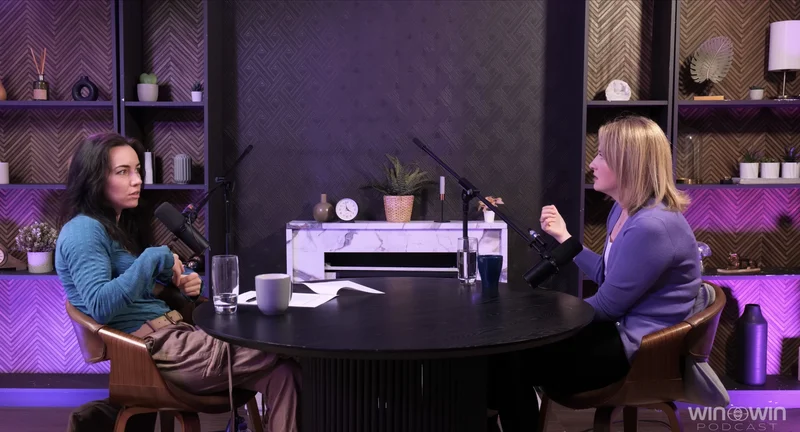
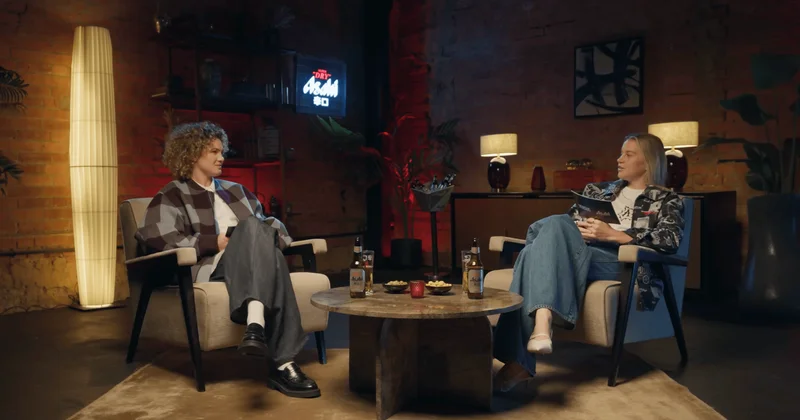
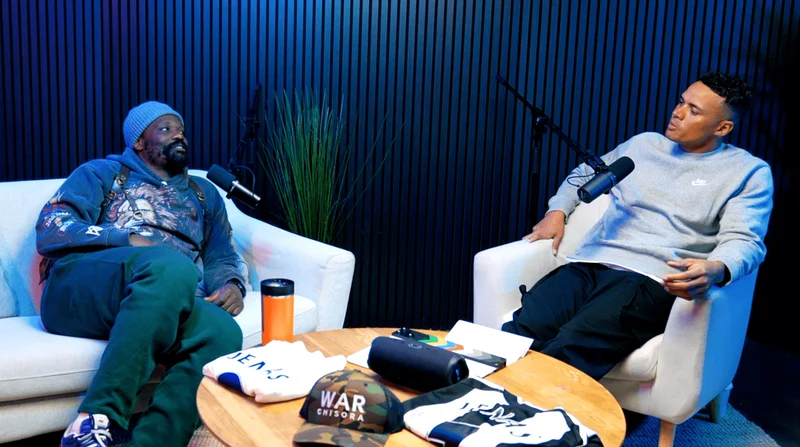
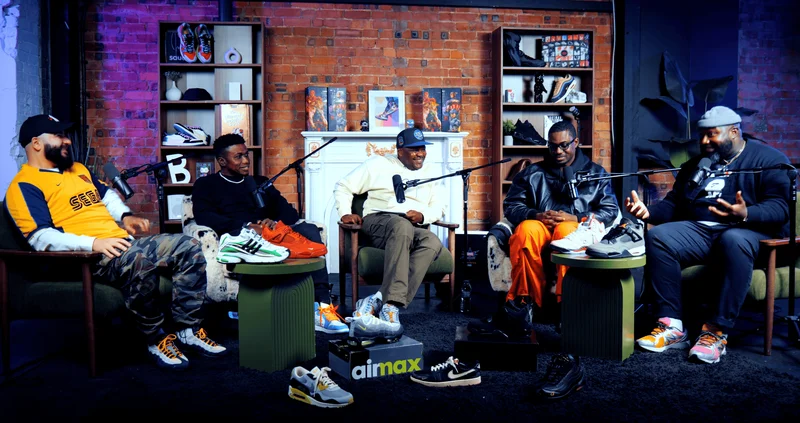
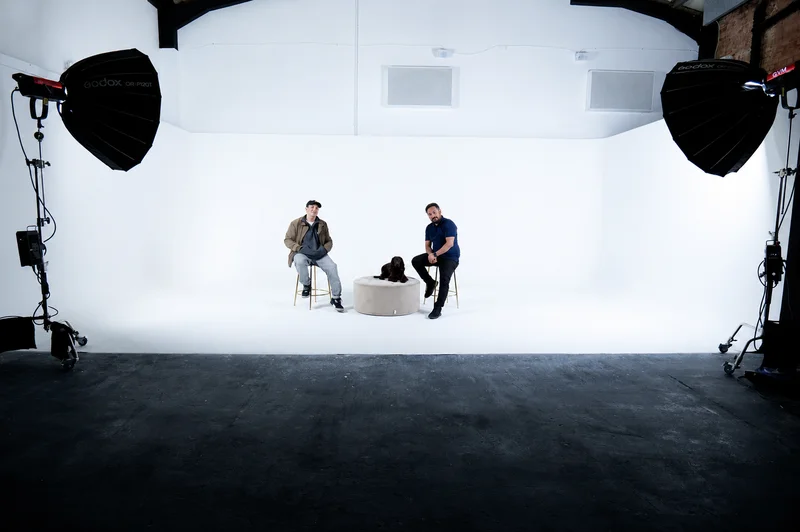
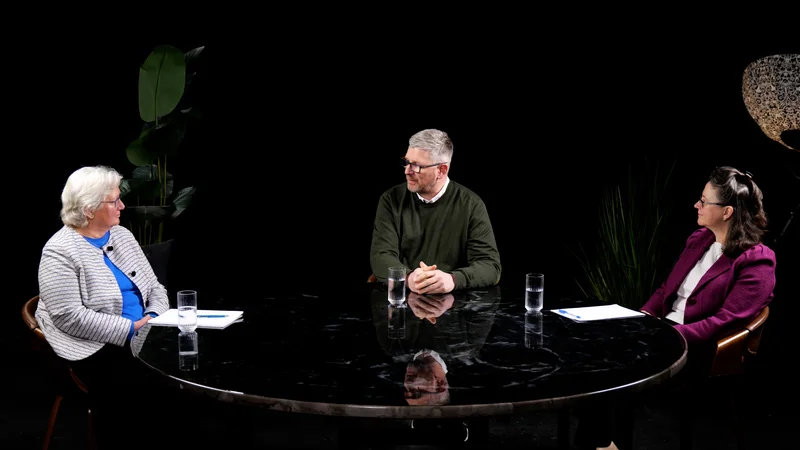
Aesthetics and Authority Furthermore, the background itself signals authority. A video shot against a plain white wall or a cluttered bedroom shelf subconsciously signals "amateur" to the viewer. Conversely, the textured, curated sets of professional studios—whether the exposed brick industrialism of Shoreditch or the library-esque sophistication of North London studios—confer instant credibility.8 In 2026, the set is part of the brand.
3. Geographical Analysis: The Hubs of London Podcasting
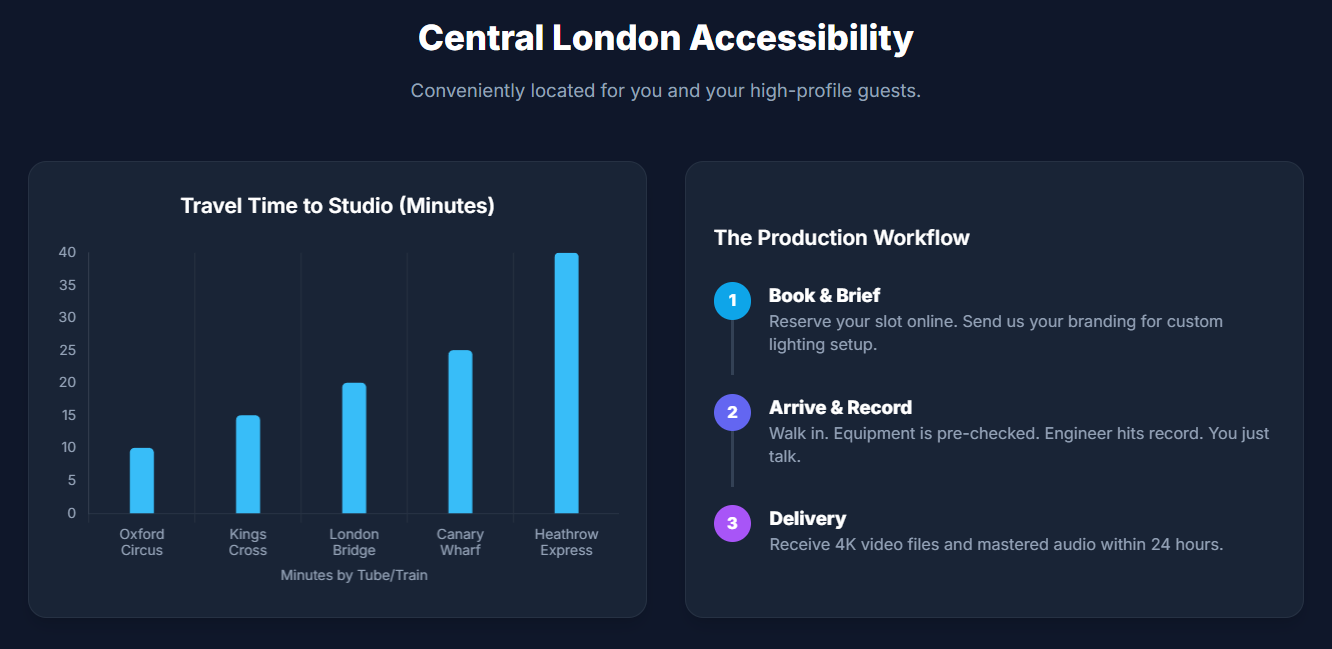
London’s podcasting landscape is not monolithic. It is segmented into distinct geographical hubs, each offering a different value proposition, aesthetic "vibe," and logistical profile. Selecting the right studio requires balancing these factors against the needs of the production and its guests.
3.1 The Creative Core: Shoreditch, Hoxton, and The City
The eastern fringe of the City of London remains the densest cluster of high-end production facilities. This area caters to the tech sector, creative agencies, and the "hype" economy.
Key Studios and Aesthetics:
Premiere Podcast Studios (Shoreditch): Located on Scrutton Street, this facility exemplifies the high-end service model. It offers "VIP" concierge services, shower facilities, and fully soundproofed rooms, targeting corporate clients and high-profile influencers who expect a hotel-like experience.9
Spiritland (King's Cross/Borough): A venue that merges audiophile culture with production. Known for its high-fidelity ethos, it appeals to music-centric podcasts and creators who value a "radio" aesthetic combined with hospitality elements like an attached bar.11
Podshop (Liverpool Street): Positioned as a "no-nonsense" hub near major transport links, catering to the rapid turnover of business podcasts.13
The Logistical Trade-off:
While these studios offer immense "cool factor" and accessibility via public transport (Liverpool Street, Old Street), they present significant logistical friction for productions involving heavy equipment or guests who drive. Parking in Shoreditch is virtually non-existent or exorbitantly expensive, and the Congestion Charge plus Ultra Low Emission Zone (ULEZ) fees add a hidden tax to every session.
3.2 The Strategic Alternatives: North London (Finchley & Tileyard)
Moving north, the market shifts towards larger physical spaces and specific industry hubs.
Key Studios and Aesthetics:
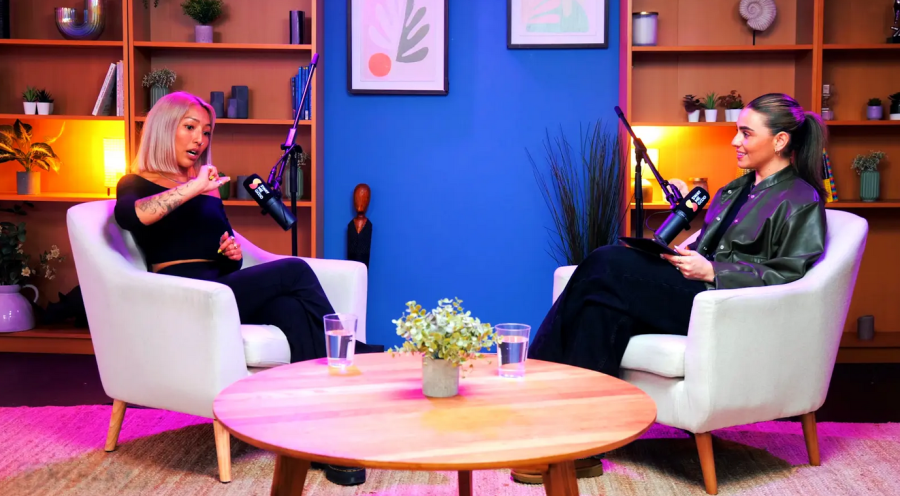
Finchley Studio (North London): This studio has carved out a unique market position by leveraging its location outside the congestion zone. It explicitly markets "free on-site parking" as a killer feature—a massive draw for guests travelling from outside London or creators hauling props.8 Its set designs are versatile, offering "The Lounge" and "The CEO" sets that mimic high-end domestic interiors, providing a different visual flavor to the industrial East.8
TYX Studios (Tileyard - King's Cross North): Situated within the Tileyard complex, a dedicated hub for the music industry. This location offers a "campus" feel, surrounding podcasters with music producers and record labels. It is technically dense, offering high-end features like live streaming and 4K capability standard.11
The Value Proposition: The "North London Advantage" is often economic. Lower real estate overheads compared to Soho or Shoreditch allow these studios to offer higher technical specifications (e.g., multi-cam 4K included in the base rate) for a lower hourly cost.8
3.3 The Residential Pockets: South and West
Studios in these areas often serve local catchments and specific logistical needs.
Key Studios and Aesthetics:
Podcast House (Kennington): A staple in South London, offering robust editing packages and a location convenient for politicians and policy-makers near Westminster.15
London Media Lounge (Uxbridge): Located at the far end of the Metropolitan line, this studio serves the West London/commuter belt market. It provides high-end facilities (themed sets, 4K cameras) to creators who want to avoid the trek into Central London entirely.11
Ravenor Farm Studios (Greenford): Another West London option that emphasizes "free private parking" and soundproofing, catering to the logistics-heavy production.16
3.4 Accessibility as a Differentiator
A critical, often overlooked factor in studio selection is physical accessibility. Many "cool" East London studios are converted warehouses with stair-only access.
Inclusivity: Studios like Premiere Podcast Studios and Tower Bridge Studios differentiate themselves by being fully wheelchair accessible.9 For productions committed to diversity and inclusion, checking for step-free access and accessible amenities is mandatory.
4. Technical Infrastructure: The 2026 Industry Standard
To justify the cost of hire, a London studio must offer a technical infrastructure that vastly exceeds consumer-grade equipment. The standard for "professional" has evolved to include specific broadcast-grade audio chains and cinema-line video systems.
4.1 The Audio Chain: Precision and Safety
The audio signal chain is the backbone of any podcast. In 2026, two key trends define the professional studio standard: the dominance of dynamic microphones and the adoption of 32-bit float recording.
The Ubiquity of the Shure SM7B Across the board, from Outset to Voices Radio, the Shure SM7B remains the gold standard microphone.10 Its dominance is technical, not just fashionable. It is a low-sensitivity dynamic microphone with excellent off-axis rejection. In a studio setting where four people might be speaking around a table, this rejection is crucial to prevent "bleed" (one person's voice appearing on another person's track), which ruins the ability to edit cleanly.20
The Revolution of 32-Bit Float Recording A critical differentiator for studios like Outset and those using Zoom F8n Pro recorders is 32-bit float audio.18
The Science: Traditional 24-bit recording has a fixed dynamic range. If a guest screams or laughs loudly, the audio "clips" (distorts) and is ruined. If they whisper, boosting the volume later introduces "hiss" (noise floor).
The Mechanism: 32-bit float uses a floating decimal point (scientific notation) to record an essentially infinite dynamic range (over 1500 dB).
The Benefit: This makes it mathematically impossible to clip the audio file during recording. An engineer does not need to aggressively "ride the faders." A distorted scream can simply be turned down in post-production to reveal a perfectly clean waveform.22 This "gain recovery" is a safety net that professional studios leverage to guarantee usable audio regardless of how undisciplined the guests are.
4.2 The Video Ecosystem: The "Netflix Approved" Benchmark
With the dominance of video, the camera systems used by studios have bifurcated into "Prosumer" and "Cinema Grade."
The Cinema Line Hierarchy
High-End (Netflix Approved): Studios like Outset and Spiritland employ cameras like the Sony FR7 (a full-frame PTZ cinema camera) or the Sony FX6.12 These cameras are "Netflix Approved," meaning they meet strict criteria regarding dynamic range, color capture, and codec bitrate. Footage from these cameras can be sold to streaming platforms or TV networks without technical rejection.
Professional Standard: The Sony FX30 and Sony A7IV are the workhorses of the London scene, found in studios like Premiere and Finchley.8 These offer 4K resolution and 10-bit color, allowing for robust color grading, but at a more accessible price point.
Entry Level: Studios like Podcast Room or smaller setups often use Blackmagic 4K or Panasonic GH5 cameras.11 While capable, they may lack the advanced autofocus features of the Sony ecosystem, which is critical for keeping dynamic guests in focus.
Live Switching vs. Post-Production The integration of the Blackmagic ATEM Mini Extreme ISO has revolutionized workflow efficiency.18 This hardware allows a producer to "vision mix" the show live—cutting between camera angles in real-time.
The Strategic Advantage: This massive reduction in post-production time means a client can walk out of the studio with a "finished" video file, significantly lowering the Total Cost of Production (TCP).7
4.3 Lighting: The Mood Sculptors
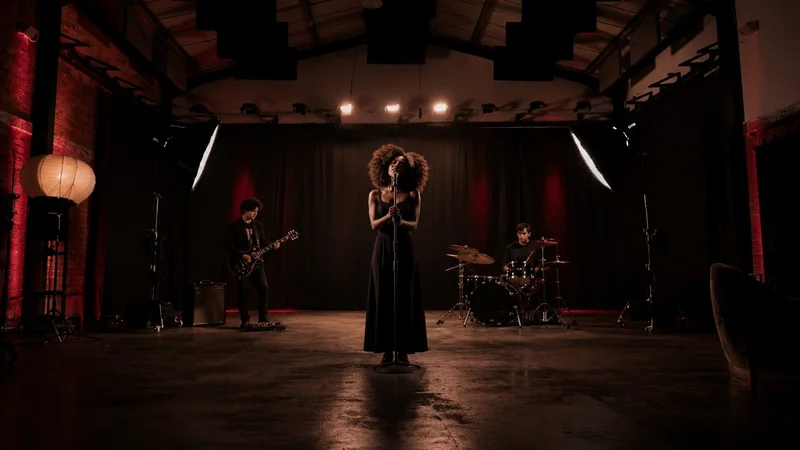
Professional lighting has moved beyond simple illumination to "mood sculpting." Studios utilize RGB LED panels (brands like Aputure and Neewer) to wash backgrounds in brand-specific colours.10
Vertical Optimization: Forward-thinking studios like Soundstage Studios are designing sets specifically for vertical video (9:16 aspect ratio). This involves framing shots so that when they are cropped for TikTok or Reels, the guest remains perfectly centered and the background elements remain visible, maximizing the "viral potential" of the content.26
5. The Business of Podcasting: A Cost-Benefit Analysis
For a London business or creator, the decision between building a home studio and hiring a professional facility is a financial calculation. While the "DIY" route seems cheaper on the surface, the "Total Cost of Production" often favours the studio model when time and quality are factored in.
5.1 The Economic Comparison
Analysis:
For a weekly show, the break-even point for DIY equipment is roughly 6-8 months. However, this does not factor in the "opportunity cost" of the creator's time spent troubleshooting technical issues or the "reputational cost" of lower quality output. For businesses, the studio model turns a fixed capital cost into a variable operational expense, which is often more tax-efficient and scalable.
5.2 Hidden Costs and Terms in Studio Hire
Navigating studio pricing requires vigilance. The headline hourly rate is rarely the final figure.
VAT: Many studios list B2B prices excluding VAT. A £100/hr studio is actually £120/hr.27
Data Wrangling Fees: Some studios charge £20-£45 purely to transfer files to a cloud drive or hard drive.9 Bringing your own high-speed SD cards (V90 class) is often a way to circumvent this, but verify compatibility first.
Overtime Penalties: Studios operate on tight schedules. Overtime is often billed by the minute at a punitive rate (e.g., £1.99 per minute at London Podcast Studios).27 Buffering bookings by 30 minutes is a strategic necessity.
"Wet" vs. "Dry" Hire: Ensure the rate includes an engineer ("Wet Hire"). "Dry Hire" (room only) is cheaper but risky if you cannot operate a Rodecaster Pro or troubleshoot an HDMI sync issue.28
6. Strategic SEO: Dominating the Digital Shelf in London
As a Content Marketer, it is critical to understand that a podcast studio business in London lives or dies by its local search visibility. The query "Podcast Studio London" is highly competitive, and ranking for it requires a multi-layered SEO strategy.

See the 'BBC Children in Need' podcast setup used by Dr Julie from BBC at Finchley Studio (Lounge setup). Book this setup for your podcast
6.1 Local SEO: The Battle for the "Map Pack"
For physical studios, the Google Map Pack is the primary source of leads.
Category Precision: The Google Business Profile (GBP) must be categorized primarily as a "Recording Studio," but secondary categories are vital: "Video Production Service," "Media House," and "Business to Business Service" broaden the net.29
NAP Consistency: The Name, Address, and Phone Number (NAP) must be identical across all citations (Yell, Yelp, LinkedIn, Website). Inconsistencies (e.g., "St." vs "Street") dilute trust signals.30
"Near Me" Optimization: Voice search queries (e.g., "Siri, find a podcast studio near me") are growing. To capture this, studio websites must include hyper-local content. An FAQ section answering "Where is the best podcast studio near King's Cross?" or "Is there parking at your North London studio?" directly feeds these voice algorithms.29
6.2 Semantic Keyword Strategy (LSI)
Google's algorithms (BERT, RankBrain) prioritize context over keyword stuffing. To rank for "Podcast Studio," content must address the entire semantic cloud of related concepts.
Primary Keywords: "Podcast studio London," "Podcast recording studio hire."
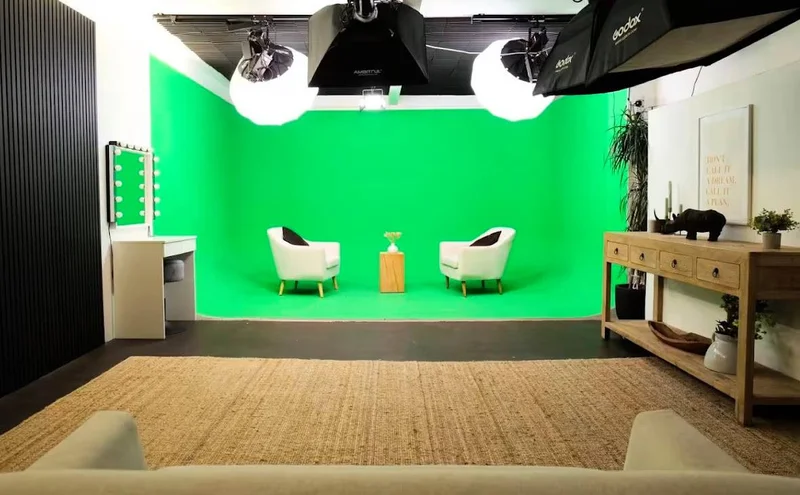
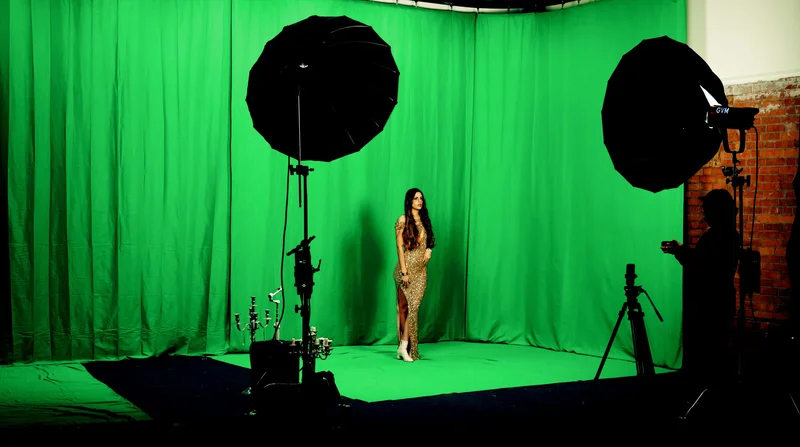
Secondary (LSI) Keywords: "Vodcast studio," "4K podcast filming," "Soundproof studio hire," "Green screen studio London," "Podcast editing services London".30
Intent Targeting:
Informational Intent: Users asking "How much does it cost to record a podcast in London?" should be met with detailed blog posts breaking down the costs (like Section 5 of this report).
Transactional Intent: Users searching "Book podcast studio Shoreditch" need landing pages with high-contrast "Book Now" buttons above the fold, minimizing friction.32
6.3 The "Video SEO" Flywheel
YouTube is the world's second-largest search engine. Studios that offer video services create a virtuous SEO cycle.
Transcripts and Captions: Uploading full transcripts to YouTube not only aids accessibility but allows Google to index the spoken content of the episode, making the podcast discoverable via text search.33
Short-Form Clips: Services that slice episodes into 60-second vertical clips for TikTok and YouTube Shorts create multiple "doorways" leading back to the main brand. Studios like TYX and London Podcast Studios offering this as an add-on service are effectively selling "SEO assets".14
7. Transport Logistics: Moving Gear in the Metropolis
For "Dry Hire" clients or production teams bringing specialized kit, London's transport infrastructure is a significant variable that is often underestimated.

7.1 The Tube: A Hostile Environment for Production Gear
Transport for London (TfL) has strict conditions regarding luggage.
The Escalator Rule: Any item exceeding 1.8 meters in length or 25kg in weight is technically prohibited on escalators without "special movement dispensation".34 This effectively bans the transport of large C-stands, boom poles, or heavy Peli cases during peak hours.
Permits vs. Transport: While a permit is required to film on the Tube, transporting gear is allowed, but staff have the discretion to refuse entry if the gear is deemed an obstruction. Relying on the Central Line to transport a full lighting rig is a high-risk strategy.
7.2 The Parking Premium
This logistical friction highlights the immense value of studios with parking.
The "Load-In" Factor: A studio like Ravenor Farm or Finchley that offers drive-up loading allows a production team to use a van, bypassing the risks of the Underground.8 For productions with multiple guests or props, the cost savings on Ubers/Taxis often offset the travel time to Zone 3 or 4.
8. Future Trends: The Studio of 2026 and Beyond
The podcasting industry is not static. Looking ahead, we see the integration of Artificial Intelligence and immersive formats reshaping the physical studio.
8.1 AI-Assisted Workflows
By late 2026, we anticipate AI to be deeply embedded in the studio hardware stack.
Real-Time AI Switching: Tools that automatically switch camera angles based on voice activation (identifying who is speaking) will become standard, reducing the need for live directors in lower-budget tiers.35
Generative Acoustics: Software solutions (like advanced versions of Adobe Podcast or Descript) will become so proficient at removing room reverb that the absolute necessity for heavy soundproofing in "budget" tiers may diminish, shifting the studio's value proposition further toward video and lighting.36
8.2 Spatial and Immersive Audio
As "open-ear" wearable technology and AR glasses gain traction, audio formats will shift from stereo to spatial (binaural/Dolby Atmos). Studios will begin to offer specific microphone arrays (like the Sennheiser AMBEO or similar) to capture 3D audio, placing the listener "in the room" with the guests.38
8.3 The "Micro-Community" Membership Model
The erratic nature of ad revenue is pushing creators toward direct listener support (Patreon, Substack). Studios are adapting by offering "membership" tiers—monthly subscriptions for set studio hours—allowing creators to treat the studio as a consistent "third space" rather than a one-off luxury expense. This stabilizes revenue for the studio and lowers costs for the creator.40
9. Conclusion
The "Podcast Studio in London" is no longer just a room with a microphone; it is a sophisticated multimedia content factory. For the London-based creator or business, the choice of facility is a strategic decision that balances the "Iron Triangle" of Logistics, Quality, and Cost.
For the Brand: The central hubs of Shoreditch and Soho (Premiere, Spiritland) offer the prestige, aesthetic, and hospitality required to court C-suite guests and celebrities, justifying the higher premium and logistical friction.
For the Content Machine: The strategic hubs of North and West London (Finchley, Ravenor Farm) offer the logistical ease (parking), space, and "bang for your buck" (4K included) required for high-volume, consistent production.
For the Beginner: The automated, self-service sector (Pirate, Podcast House) provides a vital, low-risk entry point, provided the user is willing to invest time in technical self-education.
Ultimately, the London market has democratized "broadcast quality." The barrier to entry is no longer access to the tools, but the strategic application of those tools. In a city as noisy, crowded, and competitive as London, the sanctuary of a professional studio is the only reliable way to ensure a story is heard—and seen—with the clarity it deserves.
10. Frequently Asked Questions (FAQ)
What is the average cost of hiring a podcast studio in London?
Costs vary significantly by tier and location.
Budget / Self-Service: £30 - £60 per hour. (e.g., Pirate Studios)
Professional (with Engineer): £80 - £150 per hour. (e.g., Finchley, Outset)
Premium / Broadcast: £150 - £250+ per hour. (e.g., Spiritland, TYX)
Note: Always check if VAT (20%) is included in the advertised price.
Can I record video at these studios?
Yes, the vast majority of professional London studios now offer video packages ("Vodcast" setups). Standard setups include 3 cameras (usually Sony 4K models) and professional lighting. Expect to pay a premium of £30-£50 per hour on top of the audio rate for video services.
Do I need to bring my own SD cards?
It depends on the studio's policy.
Inclusive: Some studios transfer files to you via WeTransfer/Dropbox as part of the fee.
Exclusive: Others require you to bring your own media to avoid "data wrangling" fees. If bringing your own, ensure they are high-speed (UHS-II V90) to handle 4K video bitrates.
Are London podcast studios truly soundproof?
Professional studios use "box-in-box" construction and heavy acoustic treatment to isolate noise. However, some lower-cost options may only be "acoustically treated" (reducing echo) rather than fully soundproof (blocking outside noise). If you are recording quiet audio drama or meditation content, specifically ask about the room's Noise Criteria (NC) rating or if it is fully isolated.
How do I transport heavy equipment on the Tube?
Avoid it if possible. TfL restricts items over 1.8m or 25kg on escalators. If you must transport gear, use studios with parking (like Finchley Studio, Ravenor Farm) or budget for a taxi/Uber/Addison Lee.
What is 32-bit float recording?
32-bit float is a modern recording format used by recorders like the Zoom F8n. It captures a massive dynamic range, making it virtually impossible to distort (clip) the audio digitally. It is ideal for podcasts with unpredictable volume levels (laughter, shouting) as it allows the engineer to "recover" distorted audio in post-production.
Is there parking available at Central London studios?
Generally, no. Central London (Shoreditch, Soho, City) has strict parking restrictions and congestion charges. Studios in Zones 2-4 are more likely to offer free or paid on-site parking.
What if I need to cancel my booking?
Cancellation policies are strict. Most require 48-72 hours notice for a refund or reschedule. Last-minute cancellations often incur the full fee to cover the engineer's booked time.