The enterprise marketing landscape has undergone a definitive, irreversible structural realignment regarding digital audio and high-fidelity video content. Historically relegated to the periphery of experimental budget allocations, the corporate podcast has matured into a core revenue-generating asset and a fundamental pillar of complex business-to-business (B2B) demand generation. By the conclusion of 2025, global podcast listenership reached an unprecedented 584.1 million individuals, representing a 6.8% year-over-year growth rate. Current projections forecast an expansion to 619 million listeners by the end of 2026, exceeding 651.7 million by 2027. This robust 15% growth trajectory over the preceding five years underscores a sustained, fundamental behavioral shift in professional content consumption (KazCM).

See the 'No ordinary tech podcast ' from Lloyds Banking Group by Rohit D (AI Leader for Lloyds Banking Group) and DR. shini somara (Pro-Chancellor of Brunel University) . at Finchley Studio (Lounge setup). Book this setup for your podcast.
Simultaneously, the capital infrastructure supporting this medium has expanded dramatically. The aggregate market value of the global podcast industry is projected to achieve $17.59 billion by 2030, driven by a compound annual growth rate (CAGR) of 27%. Crucially for enterprise strategists, podcast advertising expenditure reached $4.46 billion in 2025, with B2B-specific investments accounting for an overwhelming $4 billion of that total. This disproportionate allocation signals that business leaders, Chief Marketing Officers (CMOs), and demand generation professionals have universally recognized the unique utility of the medium for reaching high-net-worth decision-makers and organizational buyers. With 91% of modern marketers actively maintaining or expanding their audio content investments in 2026, and 90% reporting absolute satisfaction with the resulting business outcomes, the medium has transcended speculative marketing to become a foundational component of modern revenue operations (KazCM).
However, the proliferation of enterprise audio strategies has exposed a critical vulnerability in legacy marketing operations: the persistent, structural misalignment between content creation and revenue attribution. A significant portion of B2B strategies continue to fail because they apply business-to-consumer (B2C) measurement paradigms—such as mass download counts, subscriber aggregates, and chart positions—to highly targeted enterprise sales environments (Fame). This analytical dissonance creates "content graveyards," wherein substantial capital is deployed to generate long-form conversations that feature zero engineered pathways for pipeline conversion. To secure executive buy-in and optimize resource allocation in 2026, organizations must pivot from volume-based vanity metrics toward rigorous, pipeline-centric attribution frameworks that measure sales velocity, relationship equity, and customer acquisition efficiency. The market reality is stark: organizations clinging to 2019 rules in a 2026 marketplace are leaving millions in unrealized revenue on the table while their competitors systematically turn podcasts into pipeline machines (Fame).
The Psychological Architecture of B2B Audio Engagement
The fundamental error in legacy podcast analytics is the conflation of audience volume with commercial intent. In consumer media, monetization scales linearly with impressions; in B2B markets characterized by complex, multi-stakeholder purchasing journeys, a single targeted engagement with a Chief Information Security Officer (CISO) possesses exponentially greater value than thousands of downloads by non-decision-makers. The most sophisticated marketing departments engineer their audio strategies not for mass appeal, but for surgical penetration into target account lists (TALs). By targeting the precise 5% of the market that controls budget authority, organizations routinely observe listener-to-lead conversion rates multiply significantly, shifting from an anemic 0.3% to as high as 4.8% (Fame).
The core psychological mechanism driving this efficiency is the structural reorientation of the outbound sales motion. Traditional outbound marketing relies on interruption—cold emails, unsolicited LinkedIn messaging, and disruptive advertising—channels that suffer from rapidly degrading response rates. Podcasting replaces the friction of "Can I pitch you?" with the ego-affirming proposition of "Can I feature you?". This subtle adjustment alters the power dynamic, providing sales teams with structured, uninterrupted access to senior executives for 30 to 60 minutes. This phenomenon creates a dynamic where the host is perceived not merely as a vendor, but as an industry curator and thought leader. Consequently, 76% of businesses initiate audio strategies explicitly for thought leadership rather than direct, short-term monetization.
The intimate, conversational nature of the audio format fosters a deeper, parasocial connection, making affluent audiences significantly more receptive to brand messaging than they would be in a cluttered, visually driven advertising environment. This is compounded by the portability of the medium. For busy senior executives and time-poor business leaders, the ability to consume content in "liminal moments"—commuting, traveling, or between corporate engagements—has proven extraordinarily powerful. It is one of the few mediums remaining where a brand can command sustained attention, leading to 89% higher brand awareness, a 57% rise in brand consideration, and a 14% increase in explicit purchase intent among listeners.
To capture this psychological advantage, brands deploy various specialized formats. Discipline-focused podcasts cover professional verticals like ABM or sustainability; sector-led podcasts analyze major shifts in specific industries like retail or energy; skills-based podcasts assist in leadership and communication development; while broad business podcasts tackle macroeconomic trends (ITN Business). Regardless of the specific format, the underlying architecture relies on replacing transient digital noise with authoritative, long-form storytelling that earns genuine, sustained attention (ITN Business).

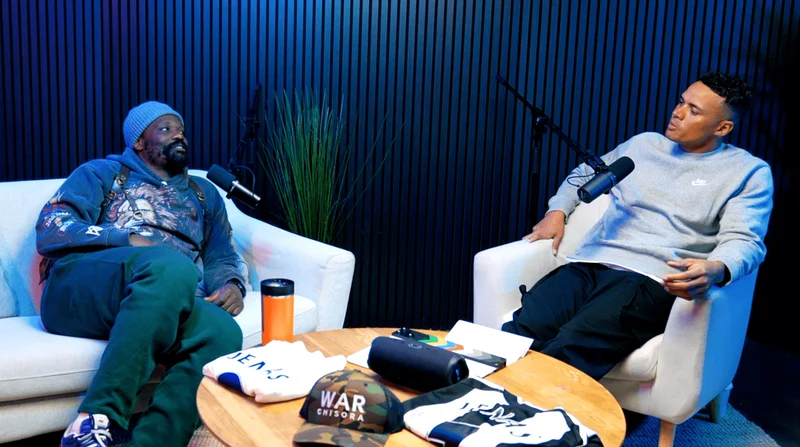
Finchley Studio (Dialogue set): book this setup for your podcast
Comprehensive Dissection of B2B Podcast ROI Metrics
To comprehensively evaluate the return on investment (ROI) of an audio strategy, organizations must establish a framework composed of hard business metrics, abandoning the superficial tracking of impressions. The impact of a well-architected show resonates across the entire customer lifecycle, influencing acquisition efficiency, deal magnitude, and sales velocity. The modern B2B strategy demands a deeper understanding of how each effort influences the bottom line, focusing on the core Key Performance Indicators (KPIs) that directly correlate with business growth.
Guest-to-Client Conversion and Relationship Economics
The most immediate and lucrative ROI vector for an enterprise show is the direct conversion of high-profile guests into paying clients or strategic partners. This represents the "reverse funnel" or Account-Based Marketing (ABM) application of the medium. By systematically inviting target executives from designated accounts, brands create a natural, non-adversarial discovery environment. The average guest-to-client conversion rate across the B2B sector stands at an impressive 10%. However, when organizations deploy highly strategic guest selection algorithms—focusing exclusively on active pipeline targets rather than industry celebrities—this conversion rate can accelerate to 48% (KazCM).
This phenomenon forms the basis of the "Two-Class ROI Framework". Class 1 represents short-term relationship-driven ROI, which calculates the immediate revenue generated from the guests themselves. Shows that prioritize this guest relationship over aggregate audience size consistently generate 25% to 50% higher financial returns in their first year of operation. Class 2 represents long-term audience-driven ROI, capturing the aggregated revenue originating from the broader listener base who consume the content, develop trust in the brand, and eventually enter the inbound sales pipeline as highly qualified prospects (Fame).
The 7 Critical KPIs of B2B Audio Marketing
To accurately quantify the impact of both Class 1 and Class 2 ROI, organizations must track seven fundamental marketing KPIs (Fame):
Marketing Qualified Leads (MQLs): Identifying listeners who transition into engaged prospects by requesting transcripts, downloading gated show notes, or subscribing to proprietary newsletters.
Sales Qualified Leads (SQLs): Pinpointing ready-to-buy prospects who actively request demonstrations or consultations after consuming bottom-of-funnel audio content.
Customer Acquisition Cost (CAC): Measuring growth efficiency. Organizations deploying integrated audio assets report an 18% to 25% reduction in their overall CAC. A single piece of deeply resonant content acts as a scalable, asynchronous sales representative, pre-qualifying leads and lowering the human labor hours required per conversion.
Customer Lifetime Value (LTV): Quantifying long-term relationships. Listeners who convert into customers demonstrate stronger brand favorability, extending their average lifespan and optimizing the LTV formula.
Lead-to-Customer Conversion Rate: Turning interest into revenue. Podcast-generated traffic is observed to convert at a rate 25 times higher than standard blog content (Podcast Studio Glasgow).
Pipeline Velocity: Measuring the speed of the revenue engine. Deals influenced by a podcast exhibit sales cycles that are 24% to 31% faster than those devoid of audio touchpoints. The parasocial relationship built through the podcast reduces psychological resistance during procurement.
Marketing Attribution and Revenue Impact: Connecting marketing directly to the bottom line. Strategic integration reveals that up to 47% of enterprise deals have podcast touchpoints that traditional, single-touch attribution models entirely miss (KazCM).
The aggregate result of optimizing these seven KPIs is a fundamental transformation of the mathematical foundation of a company's revenue operations. For instance, data indicates that the inclusion of podcast interactions within the buyer's journey correlates with a 34% increase in average deal sizes. Top-performing B2B shows successfully drive between 8% and 12% of a company's total sales pipeline, with some cybersecurity firms attributing over £1.8 million in new pipeline directly to relationships formed through their audio initiatives within just nine months (KazCM).

Finchley Studio (Lounge set): book this setup for your podcast
Pipeline Architecture and Demand Generation Integration
A high-performing podcast cannot operate in a silo; it must be the central node in a broader, multi-channel demand generation ecosystem. Data indicates that multi-channel campaigns achieve a 287% higher purchase rate than single-channel efforts (The Geisheker Group). For B2B buyers navigating complex, multi-stakeholder purchasing journeys, a sustained, multi-channel presence is the absolute foundation of a consistent pipeline (The Geisheker Group).
Strategic Funnel Mapping
The content architecture of the podcast must be meticulously engineered to address the specific questions, concerns, and risk factors that corporate buyers evaluate at each stage of their journey (The Geisheker Group). This requires moving away from the common 50/50 balance of value versus conversion; optimal frameworks utilize a 90/10 ratio of deep, intrinsic value to precision-engineered conversion messaging.
1. Top of Funnel (TOFU): Podcasts natively excel as TOFU educational platforms. Broad, information-led keywords discussed during the show attract high-quality leads seeking initial tech solutions or market education (The Geisheker Group). The goal here is broad brand awareness and the establishment of categorical authority.
2. Middle of Funnel (MOFU): The podcast serves as a powerful nurture mechanism. By developing episodes that act as comparison guides, exploring specific use cases, or hosting solution-focused discussions, the audio asset maintains prospect engagement (The Geisheker Group). Capturing early-stage interest is only valuable if an infrastructure exists to nurture those prospects over time. Integrating marketing automation platforms like HubSpot, Marketo, or Pardot allows teams to deliver personalized follow-up based on a prospect's listening behavior (The Geisheker Group).
3. Bottom of Funnel (BOFU): While less common, highly specific episodes can serve BOFU needs. Detailed audio case studies, interviews with successful clients, and deep-dives into ROI calculations help push hesitant buyers toward final product demos and purchasing decisions (The Geisheker Group).
Aligning Sales and Marketing
One of the most profound failures in legacy demand generation is the structural disconnect between marketing and sales departments, where marketing generates leads that sales considers unqualified, and sales ignores the content marketing creates (The Geisheker Group). A pipeline-first podcast strategy forces alignment. By arming Sales Development Representatives (SDRs) with "podcast battle cards" and specific episode clips featuring a prospect's direct competitors or industry peers, marketing provides sales with highly relevant, personalized outreach material. Research demonstrates that companies maintaining strong sales and marketing alignment generate 208% more revenue from their marketing efforts than those suffering from departmental friction (The Geisheker Group).
To measure this alignment, organizations must establish robust multi-touch attribution mechanisms. This includes utilizing first-party attribution such as demo requests with podcast-specific UTM codes, direct inquiries mentioning the show, and CRM integrations configured with custom fields to track if a prospect was a guest or a listener. This level of attribution discipline proves to the Chief Financial Officer (CFO) that the medium is a profit engine rather than a cost center.
The Empirical Dominance of Video Podcasting in B2B
A critical inflection point in the evolution of corporate media strategy is the aggressive transition from audio-only formats to high-fidelity video podcasting. As the industry progresses through 2026, relying solely on audio represents a profound strategic limitation (Podcast Studio Glasgow). Data analysis demonstrates unequivocally that video assets generate vastly superior commercial outcomes, serving as the primary lever for amplifying conversion rates, audience retention, and perceived credibility.
Cognitive Engagement and Retention Disparities
The behavioral psychology of content consumption differs radically between audio and visual mediums. Audio listeners are frequently engaged in divided-attention activities—such as commuting, exercising, or multitasking—which limits active cognitive processing. Conversely, video necessitates active, focused attention, as the viewer must remain visually anchored to a screen (Podcast Studio Glasgow). This requirement for dedicated attention yields profound engagement metrics. Video content generates 80% more engagement than standard text, and viewers of video podcasts stay on the corresponding corporate website three times longer than audio-only listeners (Podcast Studio Glasgow).
The average watch time for a 30-minute B2B video episode frequently reaches 18 to 22 minutes, representing a highly sustained 60% to 70% completion rate (Podcast Studio Glasgow). More critically, cognitive recall is significantly enhanced by visual stimuli. Three days after consumption, video viewers retain an estimated 65% of the information presented, compared to a mere 10% retention rate among audio-only listeners (Podcast Studio Glasgow). Facial expressions, hand gestures, and dynamic on-screen graphics act as psychological anchors, embedding the brand's narrative deeply into the prospect's memory architecture.
Visibility, Trust, and Conversion Multipliers
In complex B2B sales ecosystems, trust is the ultimate currency. Neuroscientific studies, including research conducted by MIT, suggest that human beings form baseline assessments of trustworthiness in under 100 milliseconds based on facial visibility and non-verbal signals (Podcast Studio Glasgow). When executives and subject matter experts are placed on camera in a professional setting, the brand undergoes immediate, visceral humanization. This transparency is not merely an aesthetic enhancement; it is a rapid conversion catalyst.
Empirical data reveals that for B2B services, consultancies, and enterprise providers, high-resolution video increases perceived corporate credibility by 67% (Podcast Studio Glasgow). Consequently, video podcasts systematically outperform their audio counterparts across nearly all mid-funnel and bottom-funnel metrics. Video-based interviews and episodes convert at rates 2.5 times higher than written case studies (Podcast Studio Glasgow). Furthermore, because video viewers are already situated at their digital devices—eliminating the technical friction experienced by a commuter listening to an audio track—the click-through rates (CTR) on show notes and embedded calls-to-action jump to between 35% and 45%, compared to just 8% to 12% for audio (Podcast Studio Glasgow).
The Content Multiplier Ecosystem
The concept of the "content hungry beast" is a pervasive challenge for corporate marketing departments required to sustain omnichannel presence (Podcast Studio Glasgow). A multi-camera video podcast solves this resource drain through the strategic fragmentation of long-form intellectual property. A single 60-minute recording session acts as a foundational "Anchor" asset (Podcast Studio Glasgow).
From this anchor, a sophisticated post-production workflow generates an extensive cascade of micro-content:
Search-Optimized Anchors: The full-length, 4K video published on YouTube, structured with chapter markers for deep-dive retention. YouTube has surpassed Spotify and Apple as the preferred consumption platform for 31% of weekly listeners, making this visual anchor non-negotiable (Pacific Content).
The Social Hooks: 10 to 15 vertical, highly stylized "shorts" designed specifically to interrupt the scroll on LinkedIn and Instagram Reels. These micro-assets function as the primary algorithmic discovery mechanism, capturing top-of-funnel attention (Fame).
The SEO Asset: A long-form, structurally optimized blog post featuring embedded video clips, fulfilling the technical SEO requirements of internal linking and keyword density (Podcast Studio Glasgow).
This repurposing habit creates a 10x amplification of the original content, driving massive organic distribution and ensuring the brand maintains ubiquitous visibility across target accounts without requiring continuous, exhausting net-new creation (Fame).
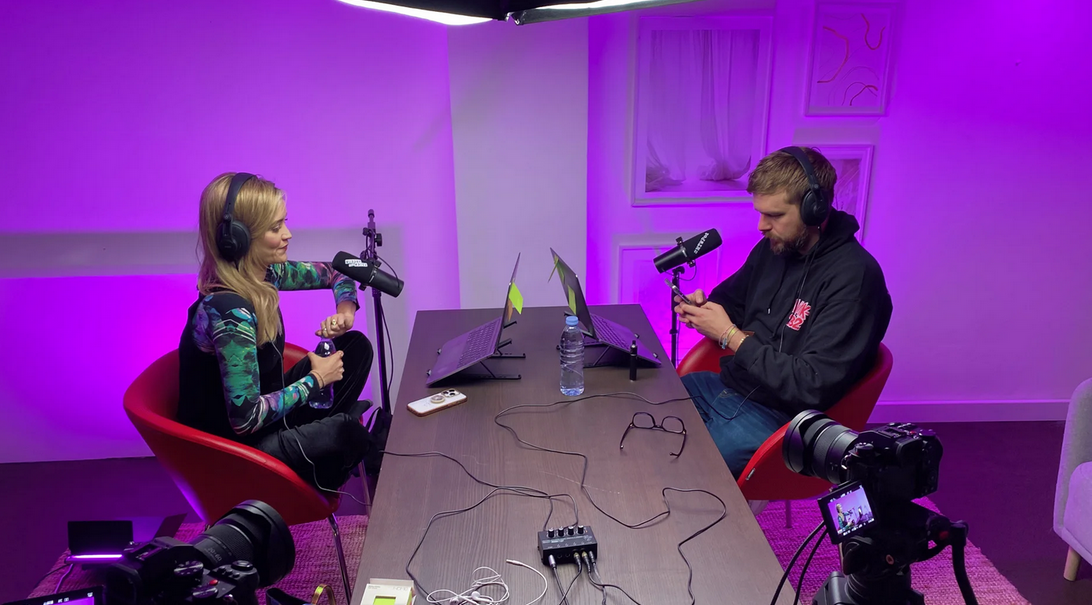
See the 'Murder They Wrote' podcast setup used by Laura Whitmore and Iain Stirling from BBC at Finchley Studio (Gathering setup). Watch Murder They Wrote at BBc sound , Spotify , Apple podcasts , Youtube , Instagram , Amazon music
Production Infrastructure: The Case for the Professional Studio
Achieving the sophisticated ROI metrics detailed above is fundamentally contingent upon exceptional production quality. The B2B audience demographic—predominantly composed of affluent, older decision-makers aged 35 to 54—is habituated to broadcast-quality media and demonstrates minimal tolerance for amateur, low-fidelity aesthetics (Finchley). The underlying story determines connection, but production quality determines whether a video is initially engaged with or immediately ignored (Amazing Jewish Books). Consequently, organizations face a critical infrastructural decision: attempt to construct and maintain a Do-It-Yourself (DIY) internal setup, or leverage a specialized external professional environment.
The Financial Burden of "Operational Drag"
While DIY setups may appear fiscally prudent for early-stage validation, they introduce severe inefficiencies into corporate workflows. The primary hidden cost of internal production is "operational drag"—the disproportionate consumption of executive and technical time. Standard audio and video editing requires a temporal ratio of between 1.5:1 and 2:1, meaning every hour of raw conversation necessitates up to two hours of post-production labor (Finchley). When accounting for noise reduction, color grading, multi-camera synchronization, and distribution formatting, a single episode can consume 3 to 5 hours of highly valuable internal resources (Finchley).
This operational burden is a primary catalyst for "podfade," a statistical phenomenon where 90% of corporate and independent shows cease production before publishing their 21st episode due to resource exhaustion and workflow instability (Finchley). For B2B leaders, outsourcing to a specialized Podcast studio equates to the strategic procurement of time recovery, allowing executives to focus exclusively on narrative strategy and guest relationship management rather than technical troubleshooting (Finchley).
Acoustic Science and Environmental Superiority
The true bottleneck preventing internal corporate setups from achieving broadcast parity is not equipment procurement, but acoustic physics. High-end transducer technology (microphones) performs sub-optimally in standard corporate environments characterized by reflective surfaces (glass conference walls, hard desks) and HVAC interference (Finchley). These environments introduce unwanted frequency anomalies—such as vocal boominess, phase cancellation, or muffled, nasally reverberations—that degrade the listener experience and subconsciously signal a lack of professionalism (Finchley).
A purpose-built professional space provides acoustic and environmental superiority that is financially prohibitive to replicate within a standard office (Finchley). Premium facilities utilize scientific acoustic treatment, incorporating strategic mass-loaded sound isolation, precisely engineered bass traps to control low-frequency resonance, and diffusers to eliminate flutter echoes (Finchley). The resulting signal-to-noise ratio is immaculate, ensuring that the brand's sonic identity projects absolute authority. For sponsors and enterprise partners, this stability is a non-negotiable prerequisite, as erratic audio quality represents a severe risk to brand safety (Finchley).
The Ecosystem Effect: Leveraging the London Market
The geographic location and prestige of the recording facility actively influence the caliber of guests an organization can secure. This phenomenon is particularly pronounced in major global economic hubs. The United Kingdom, and specifically its capital, represents a mature, complex multi-tiered media ecosystem where visual authority and multi-platform discoverability drive the market (ITN Business). For corporations targeting elite European and global demographics, utilizing a recognized Podcast studio london provides an immediate, tangible asset in guest acquisition (Finchley).
When enterprise marketing teams execute an ABM strategy, the invitation to record at a premium London podcast studio dramatically reduces friction. High-net-worth individuals, C-suite executives, and industry thought leaders are highly protective of their personal brands. An invitation to a makeshift office setup is frequently declined. Conversely, an invitation to a reputable London podcast studio—especially facilities historically utilized by major broadcasters, financial institutions like Lloyds Bank, or recognized industry leaders—signals legitimacy, prestige, and institutional backing (Finchley). The psychological validation provided by the physical environment ensures the guest feels valued, invariably leading to a more dynamic, authoritative conversational performance (Finchley).
Furthermore, the integration of advanced visual infrastructure is critical. A high-end Video studio equipped with multi-camera 4K and 6K sensor arrays, professional three-point lighting grids, and dedicated technical engineers allows the host to remain entirely focused on the intellectual exchange (Podcast Studio Glasgow). For brands demanding absolute perfection in their visual presentation, securing a premier Video studio london guarantees that the resulting visual assets will stand alongside top-tier corporate communications (Big Yellow Feet). Similarly, localized searches for a london Video studio often lead enterprise teams to highly specialized facilities that offer not just raw capture, but strategic consultation, live-streaming capabilities, and immediate post-production clipping services (Finchley).
The tiered infrastructure of the market allows for scalable corporate investment. While entry-level dry hire exists, serious B2B brands typically engage mid-range assisted facilities or premium full-service turnkey operations. A premium Recording studio removes all technical anxiety (Finchley). By utilizing a dedicated Recording studio london, brands guarantee that their intellectual property is captured with flawless fidelity. The investment in a high-status London Recording studio transforms the act of content creation from a mundane administrative task into a highly anticipated executive event, maximizing the likelihood that high-profile guests will subsequently share the polished assets with their own extensive, senior-level networks, thereby driving organic reach and pipeline (Finchley).
Search Ecosystem Integration: SEO, AEO, and Content Distribution
A robust B2B audio strategy does not exist in a vacuum; it must be deeply integrated into the brand's broader digital architecture to maximize ROI. In 2026, content discoverability is governed by highly sophisticated search algorithms and emerging artificial intelligence paradigms. A strategic podcast acts as the foundational raw material for a comprehensive Search Engine Optimization (SEO) and Answer Engine Optimization (AEO) matrix.

Finchley Studio (Dialogue set): book this setup for your podcast
Answer Engine Optimization (AEO) and AI Visibility
Traditional search mechanics are rapidly evolving. Nearly 30% of marketers report a decrease in traditional search traffic as corporate buyers increasingly turn to generative AI tools—such as ChatGPT, Anthropic's Claude, and Perplexity—to synthesize complex industry queries. In response, over 92% of marketers are actively planning or utilizing SEO optimization that spans both traditional engines and AI-powered interfaces (HubSpot).
Podcasts offer an unparalleled advantage in this AEO landscape due to the sheer volume of unique, highly structured semantic data they generate. By publishing full, accurate transcriptions alongside detailed, timestamped show notes, an organization creates thousands of crawlable, context-rich words per episode. These transcripts provide AI engines with the precise, conversational data structures they favor. Success in the modern pipeline is increasingly measured by "AI Citations and Mentions"—the frequency with which a brand's experts are cited as authoritative sources by language models generating competitive analysis or industry overviews for potential buyers.
Localized SEO and Keyword Integration
For professional services, consultancies, and specialized B2B agencies, local SEO integration remains a critical demand generation vector (Kiwi Creative). Strategic implementation of location-based keywords within long-form content drastically improves visibility among high-intent, geographically proximal buyers (Kiwi Creative). By resonating with local market needs, content draws relevant audiences actively seeking immediate tech or service solutions, yielding leads with a higher potential for conversion (Kiwi Creative).
The physical production of the podcast provides a natural, authentic mechanism for this localized integration. Publishing "behind-the-scenes" vlog content, technical deep-dives on production, or detailed blog posts about executive recording sessions allows marketing teams to weave high-value localized phrases directly into the site's architecture (Finchley). Documenting a session at a Podcast studio or detailing the visual setup utilized at a premium Video studio signals geographic and technical relevance to search crawlers (Finchley). This local SEO synergy, combined with collaborative social tagging with the studio facility itself, captures hyper-targeted B2B traffic (Finchley). When decision-makers query localized expertise, the combination of high-authority localized keywords and massive dwell times generated by embedded video assets creates an algorithmic compounding effect, elevating the brand's domain authority (Finchley). Keyword research in B2B requires a different mindset; chasing high-volume generic terms fails. Focus must remain on long-tail, hyper-relevant phrasing that aligns with search intent (Siteimprove).
Content Distribution and Promotion
The "build it and they will listen" myth has created a graveyard of corporate media (Fame). Advanced promotion tactics are required to turn an episode into a converting asset. B2B distribution intelligence involves getting episodes in front of the Ideal Customer Profile (ICP), not random listeners (Fame). This involves paid amplification within target accounts, leveraging guest networks strategically, and ensuring the technical foundations—such as fast-loading pages, optimized meta descriptions, and clean site structures—are flawless to support the inbound traffic generated by the podcast (Kiwi Creative).

Finchley Studio (Lounge set): book this setup for your podcast
Forecasting the 2026-2027 Strategic Roadmap
As the digital ecosystem hurtles toward the close of the decade, several definitive trends are shaping the future allocation of marketing capital. Organizations planning their fiscal strategies for 2026 and 2027 must anticipate these shifts to maintain competitive parity. First, the standard format for corporate shows is irreversibly moving toward a "video-by-default" paradigm (Content Allies). Enterprise initiatives launching without a high-fidelity visual component will suffer severe algorithmic penalties on platforms like Spotify and YouTube, which heavily preference multi-modal engagement (FT Longitude). Consequently, corporate marketing budgets will require reallocation from traditional written content generation toward specialized on-camera performance training, sophisticated visual editing software, and premium studio partnerships (Content Allies). This pivot to dynamic formats over static web pages is supported by data proving video delivers the highest ROI for B2B marketers (deepsocial).
Second, the strategic focus is narrowing. The era of broad, generalized business programming is yielding to highly specific, community-led, and niche-targeted formats (Velo). The strongest growth opportunities lie in serving narrowly defined industry verticals, regional communities, or highly specific professional functions (Velo). By competing on absolute relevance rather than sheer reach, these localized or discipline-focused shows effectively monopolize the attention of micro-communities of buyers, transforming passive audiences into active, owned, first-party networks (Content Allies).
Finally, the integration of generative AI into the production workflow will drastically reduce the marginal cost of post-production. Automation tools will seamlessly handle repetitive tasks—such as preliminary audio mastering, transcript generation, and algorithmic clipping for social media—allowing human operators to focus entirely on narrative structure, strategic distribution, and high-level guest relationship management (Podcast.co). The smartest budgets in 2026 will strike a balance between performance and perception, utilizing these efficiencies to invest in high-attention channels that build enduring trust (Multiview).
Conclusion
The empirical evidence dictating the value of a comprehensive B2B audio and video strategy is irrefutable. When executed with precision, a corporate podcast transcends its origins as an experimental media format to become a structurally essential component of the enterprise revenue engine. By discarding vanity metrics in favor of rigorous, pipeline-centric attribution, organizations can definitively prove the ROI of their investments through accelerated sales cycles, drastically reduced customer acquisition costs, expanded deal sizes, and unprecedented access to executive-level target accounts.
However, realizing these exceptional financial returns requires an unwavering commitment to uncompromised quality, multi-channel distribution, and seamless SEO integration. The transition toward high-definition visual assets is no longer optional; it is the fundamental driver of cognitive retention, brand trust, and algorithmic discovery in the modern B2B buyer's journey. Organizations that attempt to navigate this complex landscape using suboptimal, internal DIY setups will inevitably succumb to operational drag and acoustic inferiority, signaling a lack of institutional credibility to the exact high-net-worth prospects they seek to influence.
Conversely, brands that intelligently leverage specialized external infrastructure—such as premium London-based studio facilities—gain an immediate, disproportionate advantage. They eliminate technical friction, elevate their perceived market authority, and create a scalable content factory capable of dominating both traditional search indices and emerging AI-driven answer engines. By mapping the podcast directly to the sales funnel, from top-of-funnel awareness down to bottom-of-funnel conversion, marketing departments align fully with sales imperatives. As the 2026 marketplace continues to reward absolute relevance and highly engaging, multi-modal content, a strategically aligned, professionally produced video podcast stands as the single most potent asset in the modern B2B marketing arsenal.