The contemporary audio production landscape has undergone a profound and irreversible transformation, driven by the democratization of content creation and the widespread adoption of decentralized digital workflows. In the post-2020 era, the reliance on remote recording platforms has surged, offering unprecedented logistical convenience for global collaboration. However, this shift has precipitated a systemic crisis in audio fidelity. When content producers, journalists, and corporate communicators record remotely-often utilizing consumer-grade transmission protocols, inadequate hardware, and unvetted, highly reflective domestic environments-the resulting audio files are frequently afflicted with a myriad of severe sonic degradations. The naive industry assumption that engineers can simply "fix it in post" has placed an unsustainable burden on post-production workflows.
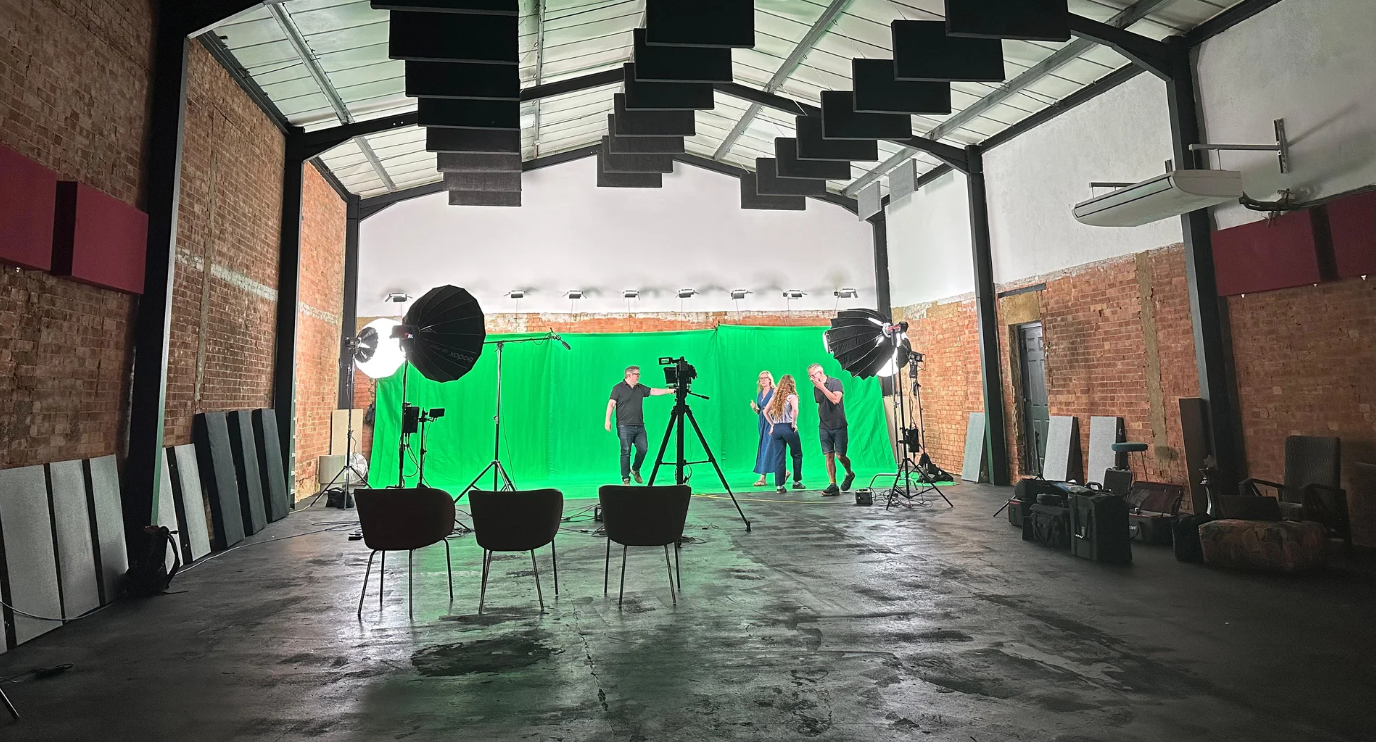
Finchley Studio (Giant Green Screen): book this setup for your podcast
The collision between the immutable physics of acoustic sound capture and the advanced algorithmic capabilities of modern software forms the analytical core of this report. While digital signal processing (DSP) and artificial intelligence have achieved extraordinary milestones in audio restoration, there remains a rigid, mathematically defined boundary delineating what is technically recoverable. Once an analog signal is irreparably corrupted before or during the analog-to-digital conversion process, software interventions often introduce secondary artifacts that further alienate the listener. This exhaustive analysis provides a highly technical examination of remote audio anomalies, evaluates the efficacy and limitations of current post-production restoration tools, quantifies the severe economic inefficiencies of attempting to repair compromised audio, and underscores the enduring, physical superiority of purpose-built environments, such as a professional recording studio or a dedicated podcast studio.
The Taxonomy of Remote Audio Failures
To accurately diagnose and attempt to repair degraded audio, an engineer must first understand the specific mechanical, acoustic, and digital failures that occur during the remote recording process. Unlike a controlled recording studio setting, remote environments introduce a chaotic convergence of uncontrollable variables that corrupt the signal chain at its inception.
Acoustic Degradation and Environmental Interference
The most fundamental and pervasive flaw in remote recordings is the absence of strategic acoustic treatment. In a standard domestic space, office setting, or hotel room, sound waves emitted by the human vocal tract project outward and bounce violently off parallel walls, hard floors, glass windows, and ceilings. This creates a complex web of early and late acoustic reflections. This phenomenon manifests in the digital recording as room echo or reverberation, which effectively smears the transient response of the human voice. This acoustic blurring drastically reduces the intelligibility of consonants, resulting in a hollow, distant, or "cavernous" sound signature that fatigues the listener's brain as it struggles to decode the speech patterns (East Coast Studio). Compounding the critical issue of reverberation is the constant, inescapable presence of environmental noise. Unlike an isolated podcast studio, which is physically decoupled from its surroundings, typical remote environments are heavily polluted by both broadband continuous noise and transient disruptions. Broadband noise includes the relentless hum of air conditioning HVAC systems, computer cooling fans, and distant traffic. Transient disruptions encompass sudden, sharp sounds such as sirens, dogs barking, or heavy keyboard typing. Because the frequencies of these noise floors frequently overlap with the fundamental frequency ranges of human speech-roughly 85 Hz to 255 Hz for fundamental tones, and 2 kHz to 4 kHz for critical consonant intelligibility-attempting to mathematically separate the desired signal from the interfering noise in post-production becomes an immensely complex and often destructive challenge.
Proximity Effect and Microphone Technique Deficiencies
Muffled audio is an incredibly prevalent issue in remote recordings, yet it frequently results from improper human interaction with the hardware rather than an inherent electronic failure. Muffled sound, which listeners frequently describe as sounding as though the speaker is "underwater" or speaking through a thick blanket, occurs when the subject is positioned too far from the microphone capsule. When the sound source is distant, the ratio of the direct vocal signal to the reflected room sound shifts unfavorably, allowing the room's acoustics to dominate the recording. Furthermore, failing to maintain an optimal distance-typically six to ten inches from the capsule-prevents the microphone from capturing the crucial high-frequency articulations that define clear speech.
Conversely, improper physical proximity to the microphone introduces highly destructive low-frequency artifacts. Plosives-powerful bursts of directional air generated by the human mouth when forming hard consonant sounds like "P," "B," and "T"-physically overload the microphone's sensitive internal diaphragm. This causes massive, instantaneous low-frequency spikes that easily trigger digital clipping. Speaking directly across the top of a microphone without a physical pop filter, or demonstrating poor postural alignment, severely exacerbates this muffling and distortion effect. Because remote guests rarely receive professional coaching on microphone addressing techniques, these physical errors are permanently encoded into the digital file.

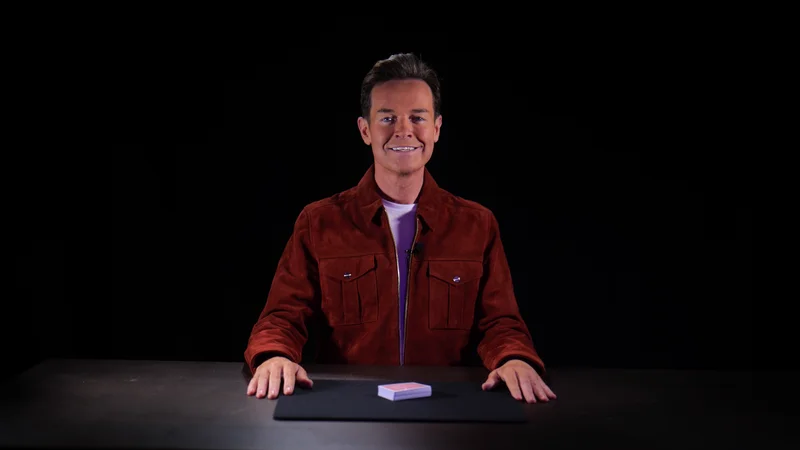
See the 'BBC Children in Need' podcast setup used by Dr Julie from BBC at Finchley Studio (Lounge setup). Book this setup for your podcast
Digital Distortion and Signal Clipping
When an analog audio signal exceeds the maximum voltage capacity of the analog-to-digital converter, or when a digital signal surpasses the absolute ceiling of 0 dBFS (Decibels relative to Full Scale), an unrecoverable phenomenon known as clipping occurs. During clipping, the smooth, natural sine waves of the audio signal are abruptly "chopped off" or squared at their peaks. This geometric alteration of the waveform introduces severe, non-harmonic distortion, injecting harsh, grating, and distinctly unmusical high frequencies into the recording (East Coast Studio). In remote, unmonitored setups, sudden outbursts of enthusiastic laughter, raised voices during a passionate debate, or a guest inadvertently leaning too close to the microphone frequently cause instantaneous clipping. This is primarily because remote guests completely lack the technical acumen required to properly gain-stage their preamplifiers or dynamically monitor their input levels during a conversation. Once the peak of that waveform is destroyed in the analog-to-digital conversion, the original dynamic information is lost forever.
Network-Induced Artifacts and Packet Loss
Perhaps the most insidious and technologically complex category of remote audio failure is network-induced degradation. Commercial Voice over Internet Protocol (VoIP) platforms such as Zoom, Skype, and Google Meet are fundamentally optimized for ultra-low-latency real-time communication, rather than high-fidelity, archival audio capture. To achieve this, these platforms employ highly aggressive lossy compression algorithms and dynamic bandwidth allocation, constantly analyzing the user's internet connection and degrading the audio and video quality on the fly to prevent the call from dropping. When network conditions deteriorate due to Wi-Fi instability or bandwidth throttling, these platforms simply drop audio packets, resulting in severe jitter, micro-stutters, and complete connection blackouts (East Coast Studio).
Furthermore, these teleconferencing platforms apply heavy localized digital signal processing, such as auto-ducking (where one speaker's volume is automatically and aggressively reduced the moment another begins to speak) and extreme echo cancellation (East Coast Studio). Echo cancellation algorithms are designed to prevent the audio output from a speaker's desktop monitors from re-entering their open microphone. However, when multiple subjects speak simultaneously-a highly natural human communication phenomenon known as crosstalk-the algorithm becomes overwhelmed. It incorrectly identifies one legitimate human voice as an echoing artifact and violently suppresses it. This results in severe phase cancellation, a garbled, robotic underwater effect, and the complete destruction of the initial syllables of sentences, making organic conversation impossible to edit (Reddit).
The Post-Production Arsenal: Capabilities and Workflows
The post-production phase is fundamentally tasked with attempting to reverse the entropy introduced during the chaotic remote recording process. In recent years, the tools available to professional audio editors and sound designers have evolved dramatically, transitioning from simple equalization and compression modules to advanced, AI-driven spectral repair suites capable of performing operations that were considered science fiction a decade ago.
Digital Audio Workstations (DAWs) and Fundamental Processing
The foundational, non-negotiable environment for all audio restoration and mixing is the Digital Audio Workstation (DAW). Industry standards in 2025 include Avid Pro Tools, Apple Logic Pro, and Adobe Audition, which are heavily favored by professional sound artists for their comprehensive, sample-accurate editing capabilities and complex signal routing architectures. Within the DAW ecosystem, engineers deploy precise equalization (EQ) to surgically attenuate problematic resonance frequencies caused by bad room acoustics and to enhance the clarity of the vocal presence.
Dynamic range compression is universally utilized to tame the erratic, undisciplined volume fluctuations typical of untrained speakers. Compressors function by automatically reducing the amplitude of the loudest sections of a waveform while allowing the engineer to elevate the quieter, whispered passages using makeup gain. This process is critical for achieving a consistent, comfortable broadcast standard (typically leveled to around -16 LUFS for stereo audio and video podcasts). Transient shapers and noise gates are also employed as foundational tools; gates attempt to mute the audio track entirely when the primary speaker pauses, theoretically hiding the background room noise during silences. However, if a gate is configured with an aggressive threshold, it will disastrously clip the breath sounds and trailing consonants of the speaker's voice (Band Barracks).
Multi-track editing remains a vital methodology for resolving uneven levels and mitigating crosstalk. By recording each remote guest on isolated, discrete audio tracks-a workflow heavily dependent on local-recording platforms like Riverside.fm or Zencastr, which bypass VoIP compression by recording the high-resolution file directly to the user's local hard drive before uploading it-the post-production engineer retains total independent control over each speaker. This allows the engineer to manually mute a guest's track when they cough or type, preventing that noise from bleeding into the primary speaker's dialogue. However, standard DAW mixing tools are primarily designed for balancing clean, studio-recorded audio; they are structurally insufficient for rescuing severely degraded, artifact-laden signals.
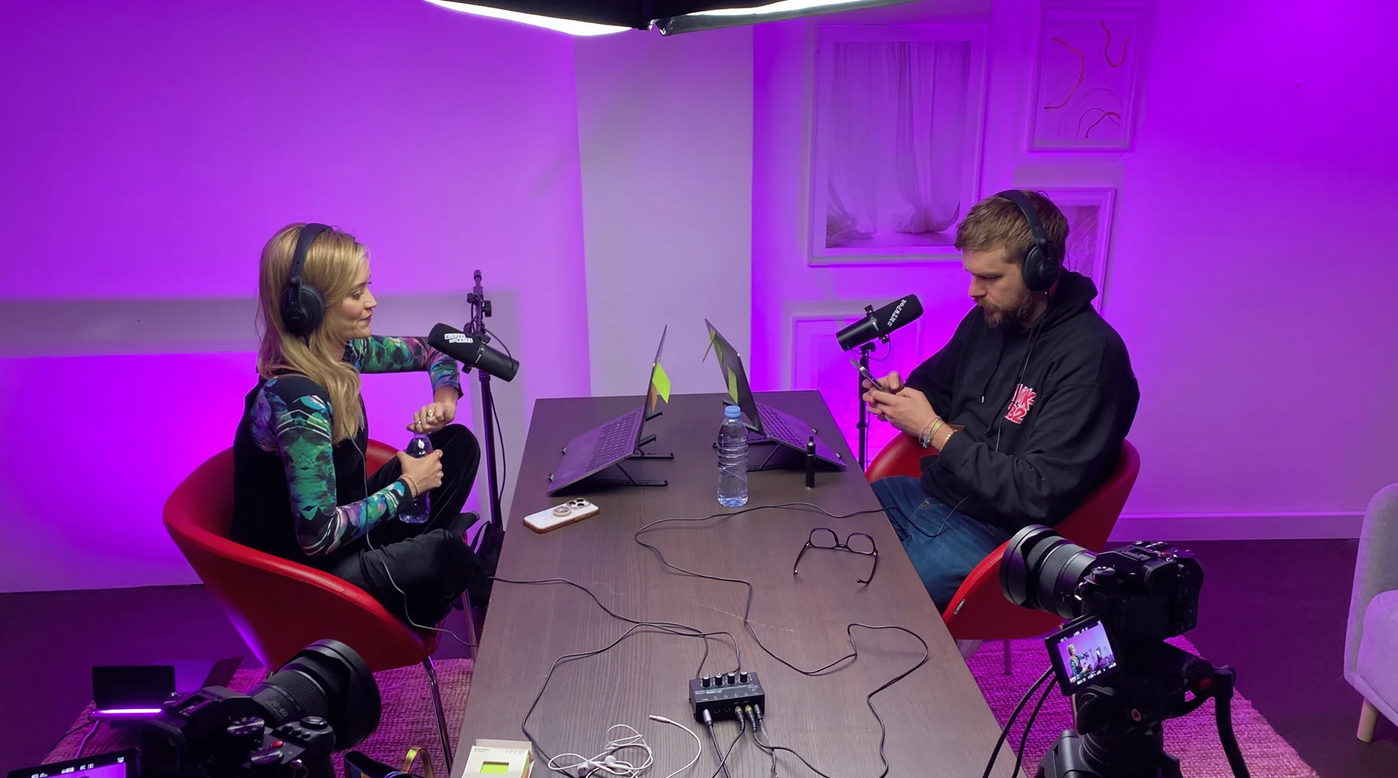
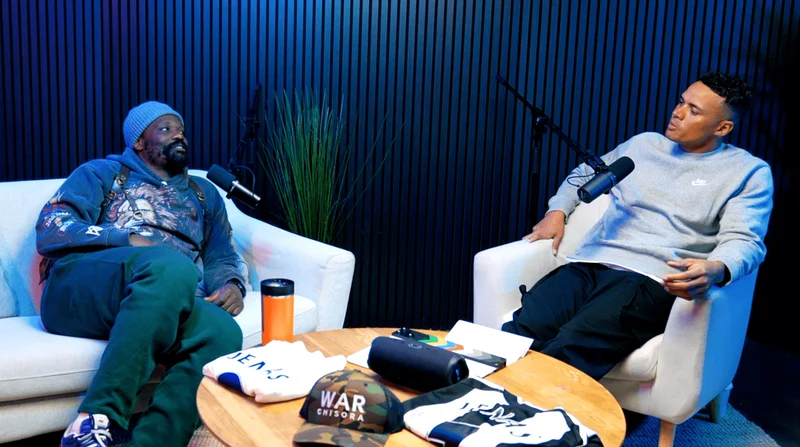
See the 'Murder They Wrote' podcast setup used by Laura Whitmore and Iain Stirling from BBC at Finchley Studio (Gathering setup). Watch Murder They Wrote at BBc sound , Spotify , Apple podcasts , Youtube , Instagram , Amazon music
Spectral Editing and Algorithmic Restoration
When traditional EQ and compression fail, engineers must pivot to targeted audio repair utilizing specialized software, with iZotope RX reigning as the undisputed industry standard for dialogue cleanup and restoration (LucidLink). Unlike traditional waveform editors that merely display amplitude over time, iZotope RX utilizes advanced spectral editing. It displays the audio file as a highly detailed, multi-colored spectrogram where time is mapped sequentially on the X-axis, frequency pitch on the Y-axis, and acoustic amplitude is represented by brilliant color intensity. This visual paradigm shift allows engineers to literally "see" specific noises-such as a sharp vertical line representing a mouth click, or a low horizontal band representing an air conditioner hum. The mechanics of algorithmic restoration rely heavily on noise profiling. An engineer highlights a small section of the spectrogram containing only the isolated background noise to capture a "noise print." The software then utilizes complex Fast Fourier Transform (FFT) mathematics to subtract those specific frequency amplitudes from the entire duration of the audio file (iZotope). Specialized modules within the RX suite, such as De-click, De-crackle, and De-rustle, utilize predictive pattern recognition to identify and surgically excise transient spikes (like microphone bumps or lavalier clothing rustle) without damaging the underlying integrity of the vocal waveform.
For catastrophic, localized interruptions-such as a siren wailing during a key sentence-engineers deploy Spectral Repair modules. Utilizing a digital lasso, wand, or paintbrush tool, the engineer selects the specific, corrupted frequency band and instructs the software to mathematically interpolate the surrounding, healthy audio data, essentially cloning and stretching the clean frequencies over the damaged section to reconstruct the missing segment. This granular, non-contiguous processing is astonishingly effective, but it demands meticulous, highly skilled, and profoundly time-consuming manual intervention. To avoid synchronization issues in video post-production, professionals frequently operate these tools in standalone applications or via AudioSuite processing rather than real-time inserts, which introduce unacceptable systemic latency.
Artificial Intelligence and Neural Networks
The recent integration of Artificial Intelligence (AI) and deep neural learning has drastically altered restoration workflows, promising one-click solutions to historically insurmountable audio problems. Solutions such as Adobe's AI-Powered Enhanced Speech (often referred to as Adobe Podcast AI), DaVinci Resolve's Neural Engine AI, and Descript's Studio Sound utilize deep learning algorithms that have been exhaustively trained on massive datasets containing millions of paired samples of both pristine, studio-quality speech and artificially degraded, noisy voice samples (Key Code Media).
The underlying mechanism of these AI tools is fundamentally different from traditional subtractive equalization. When a noisy remote recording is fed into the network, the AI does not merely filter the audio; it maps the input signal against its vast neural understanding of human phonetic structures. The AI then generatively synthesizes an entirely new voice signal that mimics the phonetic intent, cadence, and timbre of the original audio, while completely discarding non-vocal data like room reverberation, broadband noise, and HVAC hum (The Podcast Consultant). In scenarios involving standard background hum or moderate, predictable room echo, these tools can execute real-time audio cleanup, empowering video editors and podcasters to produce highly polished content with unprecedented speed (Key Code Media).
The Rigid Boundaries of Restoration: What Cannot Be Fixed
Despite the aggressive marketing narratives surrounding AI and advanced DSP, the post-production suite is not a panacea. The rigid laws of acoustic physics dictate that once specific acoustic data is lost, masked, or irreparably conflated with interference, true restoration is literally impossible; the software can only attempt to camouflage the damage or synthesize a digital replacement. Understanding these absolute limitations is crucial for audio professionals and producers.
The Phenomenon of "Space Monkeys" and Over-Processing
A primary limitation of algorithmic noise reduction is the inevitable generation of severe digital artifacts. When an engineer, desperate to remove heavy room noise, applies excessive noise reduction to a file, the software's algorithms inevitably become confused and remove vital fragments of the human voice alongside the noise. This over-denoising creates bizarre, metallic, swirling, and whooshing artifacts that the audio engineering community colloquially and somewhat affectionately refers to as "space monkeys" (iZotope).
These highly distracting artifacts typically cluster around complex vocal phenomena such as sibilance (the high-frequency "S" and "Sh" sounds), fricatives, plosives, and hard "R" enunciations. The resulting sound is highly unnatural, closely resembling the ringing, phase-smeared degradation of a poor, low-bitrate MP3 encoding or a failing robotic transmission. The presence of these artifacts immediately alerts the human listener to the artificiality of the audio, causing severe subconscious distraction and listener fatigue. To mitigate this, engineers are trained to employ the "back-off" method: they increase the noise reduction intensity until they hear significant artifacting, and then pull the reduction slider back until the "space monkeys" disappear. Consequently, the engineer must accept that some level of background noise must remain in the final mix to preserve the natural, organic timbre of the human voice.
AI Hallucinations and the Crosstalk Catastrophe
While AI enhancement tools excel at isolating a single, distinct voice from steady-state ambient noise, they fail catastrophically when confronted with complex, overlapping dialogue, particularly voice bleed and crosstalk (The Podcast Consultant). Voice bleed occurs when a remote guest stubbornly refuses to wear closed-back headphones, causing the incoming audio from their laptop speakers to bleed directly into their active microphone. Crosstalk happens when multiple excited participants speak simultaneously over each other (Reddit).
Because these specific neural networks are trained with the singular goal of isolating human speech, they completely lack the contextual awareness to differentiate between the primary speaker's voice and the secondary, bleeding voice (The Podcast Consultant). When tools like Adobe Enhance Speech encounter this overlap, the algorithm becomes hopelessly confused. It attempts to enhance both voices simultaneously while also trying to suppress one as background noise. This results in what audio engineers vividly describe as "alien languages," extreme robotic mutations, or terrifying garbled artifacts (The Podcast Consultant). The AI's attempt to synthesize two distinct vocal patterns into a single output stream completely destroys the intelligibility of both. Consequently, in lively recordings where participants consistently interrupt each other over open speakers, AI restoration software is not just ineffective; it is actively destructive and rendered entirely useless.
Irreversible Loss: Clipping and Phase Cancellation
Digital clipping represents a permanent, mathematically absolute loss of acoustic data. When a waveform is squared off at 0 dBFS, the digital information detailing the precise curve and peak of that wave is permanently erased from the hard drive. While highly specialized de-clipping software can analyze the surrounding waveform and attempt to interpolate the curve to redraw the missing peak, it is merely generating an educated mathematical guess. In cases of severe, sustained clipping-such as a guest shouting directly into a cheap microphone-the intense harmonic distortion becomes permanently baked into the fundamental structure of the audio file. No algorithm, AI or otherwise, can successfully restore the original, uncorrupted timbre of the voice (East Coast Studio).
Similarly, phase cancellation caused by improper, aggressive echo suppression on platforms like Zoom physically subtracts frequencies from the recording before the file is even written. If the high frequencies required to make a consonant sound intelligible are canceled out at the exact moment of recording, they do not exist in the captured WAV file. Post-production equalizers cannot amplify frequencies that are mathematically absent; attempting to boost that spectral region will only amplify the digital noise floor, resulting in an unbearable, hissing static.
The Psychological Cost of Artificial Audio
An often-overlooked limitation of aggressive post-production is the profound psychological impact on the end listener. The human auditory system is exceptionally sensitive to the micro-dynamics, subtle breaths, pacing, and organic spatial reflections of natural speech. When an AI tool synthetically generates a clean voice from a noisy source, it frequently strips away this vital natural tone, resulting in a sterile, overly processed, and robotic sound that completely lacks emotional resonance or human warmth (The Podcast Consultant).
Furthermore, novice editors frequently commit the critical error of dropping perfectly denoised, completely isolated vocals onto a silent digital track without adding localized room tone or subtle reverb to anchor the voice in a physical space. This creates an unnatural, suffocating void, making the conversation feel disconnected from physical reality. This auditory "uncanny valley" subtly degrades listener trust, which is the most critical metric for the success of any podcasting, journalistic, or broadcasting endeavor (Big Tent Media).
The Economics of Audio Repair: Time, Cost, and Return on Investment
The persistent reliance on remote recording in professional corporate, journalistic, and entertainment environments is almost entirely justified by perceived logistical conveniences and theoretical upfront cost savings. However, a rigorous, data-driven analysis of the post-production workflow reveals that the severe downstream costs of fixing bad audio vastly outweigh the initial financial savings of avoiding a professional video studio or recording studio.
Time Expenditure and Editing Multipliers
In a professional commercial context, specialized human labor time is the heaviest and most expensive cost variable. Audio editors calculate workflow efficiency and project billing using a specific ratio of editing time to finished audio length. For pristine, broadcast-quality audio recorded in a controlled acoustic environment by a professional, the ratio typically ranges from 1.5:1 to 3:1 (Reddit). This means that a standard one-hour podcast takes approximately one and a half to three hours to confidently edit, applying light compression, structural edits, and final mastering (Reddit).
However, when an engineer is tasked with rescuing heavily degraded remote audio, this ratio escalates dramatically and unsustainably. Navigating through multiple misaligned tracks to manually silence crosstalk, mitigating severe VoIP echo phrase-by-phrase, and applying surgical, multi-pass spectral repair to broadband noise requires intense, fatiguing manual labor. Industry data from professional dialogue editors and audiobook producers indicates that moderately compromised audio requires 4 hours of editing per finished hour (4:1), while severely degraded remote dialogue can easily push the editing ratio to 6:1, 8:1, or even higher (Reddit).
The following table illustrates the comparative post-production time investments based on recording environments and initial audio quality, demonstrating the massive hidden labor costs of remote recording.
The Hidden Costs: Listener Retention and Brand Equity
The economic impact of bad audio extends far beyond the hourly rate of a frustrated post-production engineer. The absolute quality of the audio directly and measurably influences audience retention, completion rates, and overarching brand credibility. Data consistently shows that while modern audiences will readily tolerate low-resolution or grainy video, they will rapidly and permanently abandon content afflicted with poor audio. Muffled, distorted, or echo-heavy audio actively breaks the listener's concentration, disrupting the flow of information and causing physical listener fatigue (Big Tent Media).

Finchley Studio (White Infinity Cove): book this setup for your podcast
For corporate communications, B2B marketing agencies, and high-tier content creators, a podcast is a direct, intimate representation of brand professionalism. If the audio is unpolished and amateurish, the audience subconsciously associates that lack of quality and attention to detail with the brand's core products and services. Even if the intellectual content of the interview is brilliant, poor sound breaks trust and quietly tanks the show's reputation (Big Tent Media). Furthermore, shorter listen times and high bounce rates negatively impact discoverability algorithms on major platforms like Apple Podcasts and Spotify, causing long-term, irreversible damage to the show's organic growth potential (Big Tent Media). In a brutally competitive ecosystem where over 750,000 podcasts are fighting for finite listener mindshare, pristine audio fidelity is a strict baseline requirement for entry, not an optional luxury (Clean Cut Audio).
The Physical Imperative: Professional Studios vs. Remote Environments
Given the mathematically insurmountable limitations of digital restoration and the severe, compounding economic penalties of extended post-production labor, the most effective and financially sound solution to bad remote audio is preventing its occurrence entirely. Returning to the traditional, unyielding laws of acoustic physics by utilizing a professional podcast studio or a dedicated recording studio completely circumvents the remote audio crisis, providing guaranteed excellence from the moment the record button is pressed.

Finchley Studio (Dialogue set): book this setup for your podcast
The Architecture of Absolute Isolation
A professional recording space is not merely a quiet room draped in blankets; it is an incredibly complex, highly engineered acoustic machine designed specifically to manipulate and control sound wave propagation. Facilities constructed for broadcast, film, and high-end music production utilize dense, heavy materials such as mass-loaded vinyl, specialized double-wall construction with decoupled framing, and isolated floating floors to achieve total acoustic isolation from external structural vibrations and airborne noise pollution (Matinee).
Within the room itself, the environment is meticulously acoustically treated to prevent the internal refraction, flutter echo, and standing wave reverberation that entirely ruin remote recordings. Non-parallel surface designs break up standing waves, while precisely calibrated broadband acoustic absorbers and deep corner bass traps soak up low-frequency energy buildup. This architectural perfection ensures that the only sound entering the microphone capsule is the direct, uncolored, and pristine signal from the speaker's vocal tract, resulting in crisp, articulate audio that requires virtually zero corrective equalization or noise reduction in post-production (Paragon Creative Studios).
High-Fidelity Signal Chains and Broadcast Hardware
The hardware ecosystem permanently installed within a premier London recording studio or video studio provides a level of electronic fidelity that is simply impossible to replicate in a home office or hotel room. Rather than relying on fragile USB microphones equipped with rudimentary, noisy internal A/D converters, professional spaces route robust analog signals through high-voltage, large-diaphragm condenser microphones (such as vintage Neumann U87s, U47s, or Telefunken ELA M 260s) or broadcast-standard dynamic microphones (such as the ubiquitous Shure SM7B or Electro-Voice RE20) (London Bridge Studio).
These premium microphones are connected via heavily shielded copper cabling to world-class preamplifiers (such as Focusrite Rednet, BAE 1073 units, or Coil Audio CA-70S) and routed through massive, large-format mixing consoles (such as the legendary Neve A599, SSL AWS900, or Studer ONAIR systems) (London Bridge Studio). This elite analog signal chain provides massive electronic headroom, drastically reducing the risk of digital clipping, while capturing an ultra-wide frequency response and dynamic range that preserves the full emotional nuance, breath, and humanity of the conversation.
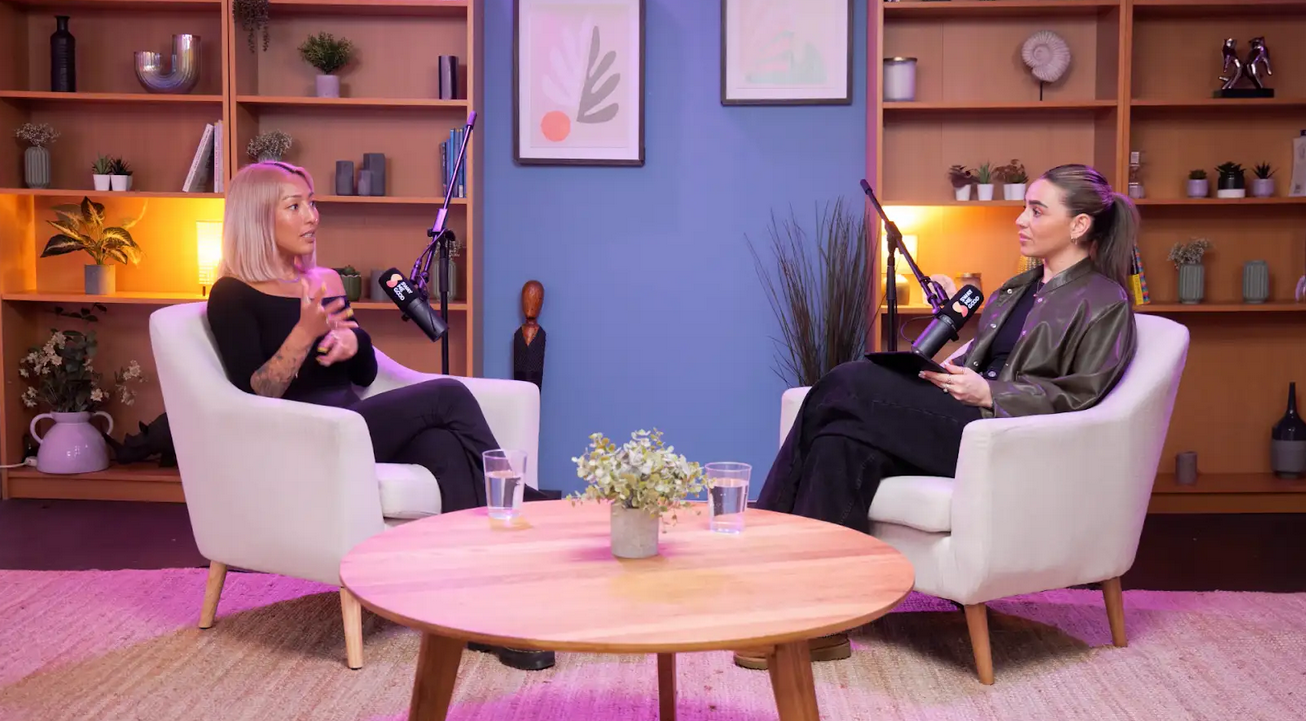
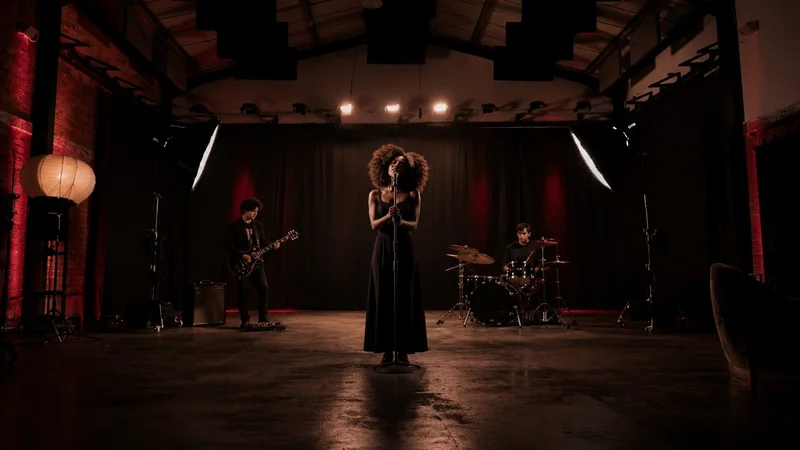
Finchley Studio (Lounge set): book this setup for your podcast
The Convergence of Audio and the Modern Video Studio
The modern recording studio london landscape is no longer strictly audio-centric. The industry trend heavily and undeniably favors video-first podcasting (often termed "vodcasting"), driven by the algorithmic dominance of YouTube and the necessity of generating short-form visual clips for social media distribution (The Expert Bookers). Consequently, a premier video studio london facility must provide not only acoustic excellence but also flawless, cinematic visual capture.
Leading studios have fully integrated broadcast-quality video ecosystems directly into their soundproofed acoustic spaces. This infrastructure includes highly controlled, continuous LED lighting arrays (such as Aputure 600c Pro panels or Arri units) and multiple 4K UHD PTZ (Pan-Tilt-Zoom) cameras, such as the Panasonic UE150 or Sony A7 IV systems (Saspod). This convergence allows creators to capture pristine, multi-track audio while simultaneously recording beautifully lit, high-definition, multi-angle video that is fully optimized and timecode-synced for immediate, frictionless post-production alignment (Saspod).
The Irreplaceable Role of the On-Site Audio Engineer
Perhaps the most crucial, yet frequently undervalued, asset of a professional facility is the physical presence of a highly experienced, dedicated audio engineer (NOVACANE Studios). Unlike stressed remote guests who must simultaneously manage their conversational content, monitor their Wi-Fi connection, and act as their own amateur IT support, participants in a studio are entirely free to focus on their creative performance (Paragon Creative Studios).
The audio engineer dynamically monitors input levels in real-time, physically enters the room to adjust microphone placement to avoid destructive proximity effect issues, and manages analog outboard compression to catch erratic volume peaks before they ever reach the digital converters. This proactive, human intervention is the ultimate safeguard against audio failure, effectively reducing the post-production editing ratio back to the highly profitable 1.5:1 standard and ensuring an immaculate final product.
The London Ecosystem: A Comparative Analysis of Premier Facilities
For international content creators, film production houses, and corporate entities seeking to bypass the catastrophic pitfalls of remote recording, the physical infrastructure available in major media hubs is unparalleled. London, in particular, stands as a global powerhouse for film, television, and audio production, boasting a rich cinematic history and an incredibly robust support network of equipment providers and post-production facilities (Soundstage Studios). An examination of the podcast studio london and london video studio market reveals a mature, highly segmented ecosystem designed to accommodate a vast spectrum of production requirements, from indie creators to massive commercial broadcasts (Finchley Studios).
A granular look at specific studios highlights the exacting technological standards and diverse service models defining the UK industry.
Premium Audio-Visual Broadcast Facilities
At the absolute zenith of the market are facilities designed to seamlessly merge broadcast television standards with podcasting flexibility.
Spiritland Studios: Located strategically in Central London near the major transport hubs of King's Cross and St Pancras, Spiritland Studios represents the apex of premium audio-visual integration. The facility is custom-built to deliver flawless broadcast-quality audio paired with spectacular 4K multi-camera visualization (Saspod). Its audio signal chain is remarkably robust and redundant, featuring a Studer ONAIR 1500 console, Focusrite Rednet preamps, and discrete presenter talkback systems. The video pipeline is equally formidable, utilizing three 4K UHD Panasonic UE150 PTZ cameras feeding into four Hyperdeck 12G UHD back-up video recorders and a 2ME UHD video switcher, allowing for live, high-stakes line-cutting and direct streaming from the studio floor (Spiritland Productions).
Ravenor Farm Studios: Situated in West London (Acton), Ravenor Farm Studios caters heavily to the Film & TV production sector while offering state-of-the-art podcast studios. Drawing on over a decade of award-winning broadcast experience, their facilities provide soundproofed, high-quality spaces equipped with industry-standard mixers and broadcast-grade microphones, ensuring crystal-clear voice-over and interview capture (Ravenor Farm Studios).
Versatile Content Creation and Music Hubs
Many premier London facilities operate as expansive, multi-disciplinary hubs, serving charting musicians, photographers, and podcasters simultaneously.
TYX Studios: Situated within the prestigious Tileyard London complex, TYX Studios provides impeccably acoustically treated spaces favored by BBC producers and musicians who have generated over 100 million streams (TYX Studios). Beyond their elite music production and podcasting capabilities, their infrastructure supports full visual content creation, featuring a massive 4x5m infinity cove photography studio with full blackout capability. They emphasize a highly supportive "full podcast package" that includes experienced on-site producers, remote recording integration (for bringing in international guests safely), and comprehensive post-production assistance, highlighting the absolute necessity of professional support in modern media workflows (TYX Studios).
London Bridge Studio & Famous London Recording: While traditionally music-focused, studios like London Bridge Studio and Famous London Recording offer an arsenal of legendary vintage equipment that guarantees unparalleled vocal warmth. These studios boast massive analog consoles (Neve A599), world-class preamps (BAE 1073s, CAPI VP28s), and microphone lockers containing incredibly rare ribbon and tube microphones (Coles 4038, Soundelux Elux 251, Neumann U47s) (London Bridge Studio). Recording spoken word through this level of analog hardware imparts a sonic richness that no digital plugin can ever successfully emulate.
Accessible, High-Quality Vodcasting Studios
For creators focused strictly on the podcasting medium, several specialized studios offer exceptional quality without the complexity of a massive music facility.
Premiere Podcast Studios: Located in the creative hub of Shoreditch, East London, Premiere Podcast Studios balances high-end capability with transparent, highly competitive pricing. They offer meticulously acoustically treated rooms specifically designed to drastically reduce sound refraction. Their hardware setup strikes a perfect balance, featuring an array of reliable Rode and Shure broadcast microphones alongside three Sony A7 IV cameras and professional lighting setups, perfectly bridging the gap between prosumer accessibility and broadcast reliability (Saspod).
Acast Studios: Demonstrating the deep integration of platform and production, the Acast Photographic Studio offers a unique proposition for podcasters hosted on their network. They feature cutting-edge Canon EOS R5 Mark II cameras, Aputure LS 600c Pro II lighting, and highly innovative, automated CameraOne vision-mixing technology designed to instantly create perfectly edited video podcasts without requiring a dedicated on-site video producer (Acast Studios).
Co-Working Integrated Studios (Paddington Works & The Halley): Reflecting the modern realities of flexible working, spaces like Paddington Works and The Halley (in East London) have integrated state-of-the-art, soundproofed podcast studios directly into their co-working environments. These spaces offer acoustically designed studio environments outfitted with top-notch recording equipment, catering to podcasters who require superior audio quality combined with the networking benefits of a vibrant, collaborative workspace (Tally Workspace).
The following comprehensive table categorizes the diverse capabilities of the London recording ecosystem, illustrating the vast superiority of these physical spaces over remote recording.
These world-class facilities universally demonstrate a singular truth: investing upfront in the physical environment, the analog signal chain, and professional human engineering entirely eliminates the severe latency, acoustic degradation, network dropouts, and massive post-production labor costs that define the modern remote recording struggle.
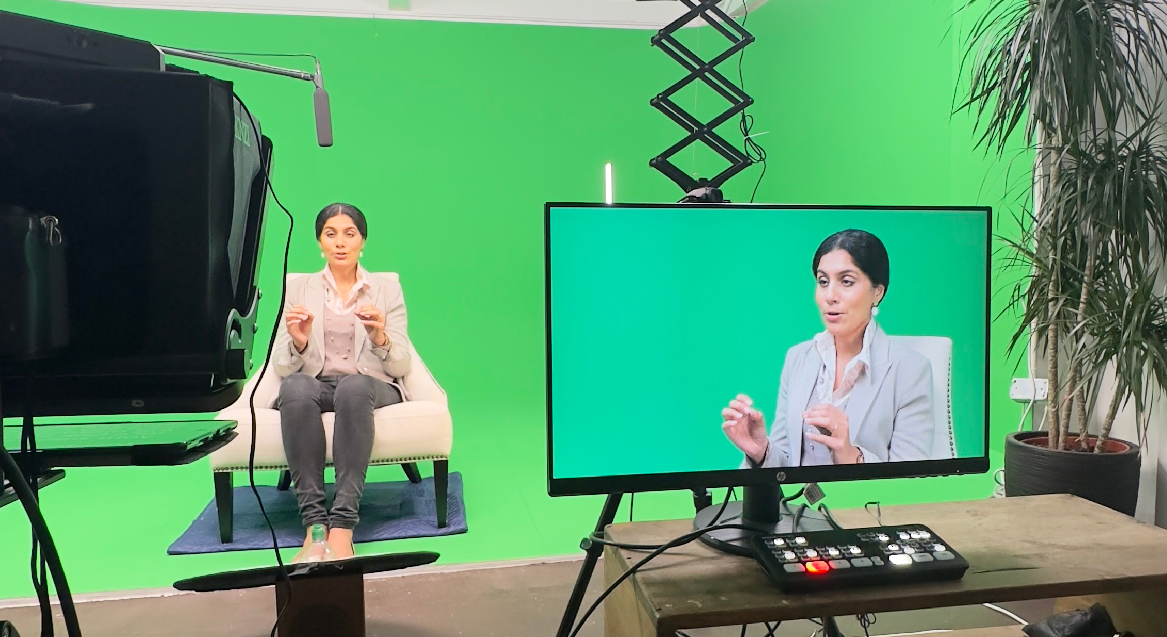
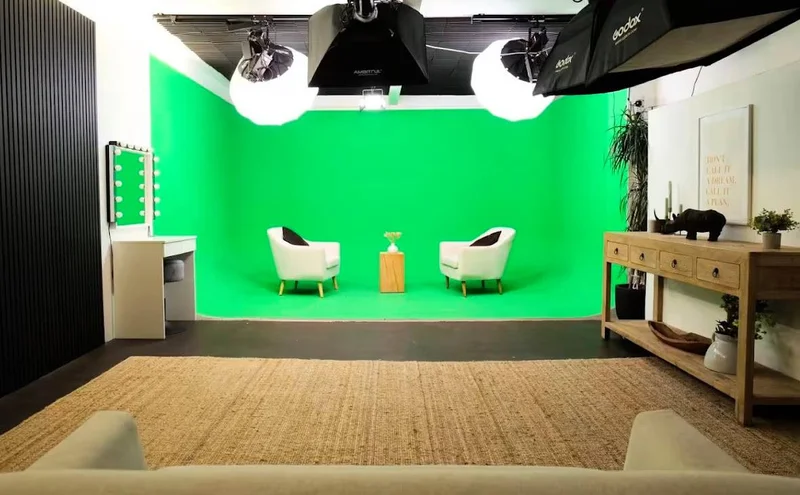
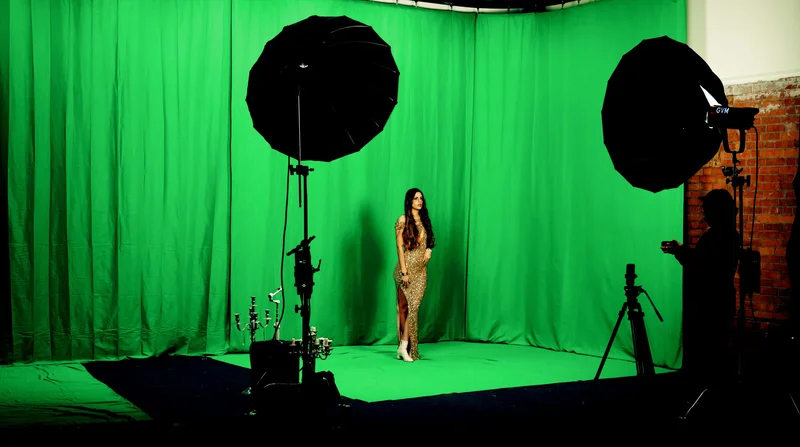
Finchley Studio (Green Screen Cove): book this setup for your podcast
The Horizon: 2026 Audio Trends and Next-Generation AI
While the current, empirically supported consensus dictates that professional physical studio environments provide the only guaranteed path to pristine audio, the software engineering sector continues to advance aggressively toward mitigating remote data loss. As the media industry moves deeper into 2026, the focus of post-production software is rapidly shifting away from mere noise reduction and toward highly complex generative synthesis, specifically engineered to address the catastrophic dropouts caused by volatile network instability.
Generative AI and Packet Loss Concealment (PLC)
The most pressing, historically unsolvable challenge in VoIP and WebRTC remote recording is packet loss, which creates hard, jarring digital silences in the audio stream. To combat this, acoustic researchers and software developers are currently deploying highly advanced Packet Loss Concealment (PLC) techniques utilizing Deep Neural Networks (DNNs) and Generative Adversarial Networks (GANs).
This cutting-edge technology, formally known within the engineering community as audio inpainting, treats missing audio data similarly to how advanced image generation models fill in missing visual pixels. By rigorously analyzing the highly complex time-frequency data immediately preceding and succeeding a network dropout, generative neural models (such as the novel Complex-Bin2bin architectures) can mathematically predict and generatively synthesize the missing phonetic content. Recent state-of-the-art models, tested against the top-ranked algorithms from the Microsoft PLC competitions, have demonstrated the remarkable ability to reconstruct lost packets in real-time with ultra-low latency, or operate in high-resolution, computation-heavy offline modes.
In highly challenging, previously unsalvageable remote scenarios experiencing up to a devastating 50% packet loss rate, these generative approaches have shown the capacity to miraculously restore basic intelligibility, successfully helping automatic speech recognition (ASR) systems reduce their Word Error Rate (WER) by nearly 50%. While these tools represent a monumental leap in salvaging ruined remote recordings, they are still fundamentally synthetic; they cannot yet replace the organic, tonal perfection of a human voice captured by a Neumann microphone in a perfectly treated room.
The AI-Driven Workflow of 2026
By 2026, industry analysts predict that the podcasting and broadcast sector will be entirely defined by video-first, multi-platform distribution (with YouTube leading the podcasting revolution) and deeply integrated AI production workflows (The Expert Bookers). Software suites like Goldcast, ElevenLabs, and Auphonic are rapidly evolving to act as automated, algorithmic sound engineers, handling complex leveling, noise reduction, and structural edits autonomously (Goldcast). Furthermore, AI voice cloning and highly realistic text-to-speech models are advancing at a staggering pace, allowing creators to seamlessly patch garbled words in a remote recording simply by typing the correct word into the DAW and having the AI perfectly synthesize it in the original speaker's exact voice and emotional cadence (Goldcast).
However, the rapid proliferation of generative AI audio introduces entirely new psychological and editorial complexities regarding authenticity and the aforementioned "uncanny valley." As global audiences become increasingly inundated with flawlessly synthesized, pitch-perfect, but emotionally sterile AI-generated audio, the authentic, micro-dynamic human imperfections-the subtle breaths, the organic pacing, the spatial reality captured strictly within a high-end physical studio-may ironically become the ultimate premium differentiator for luxury brands and top-tier creators (Towards AI).
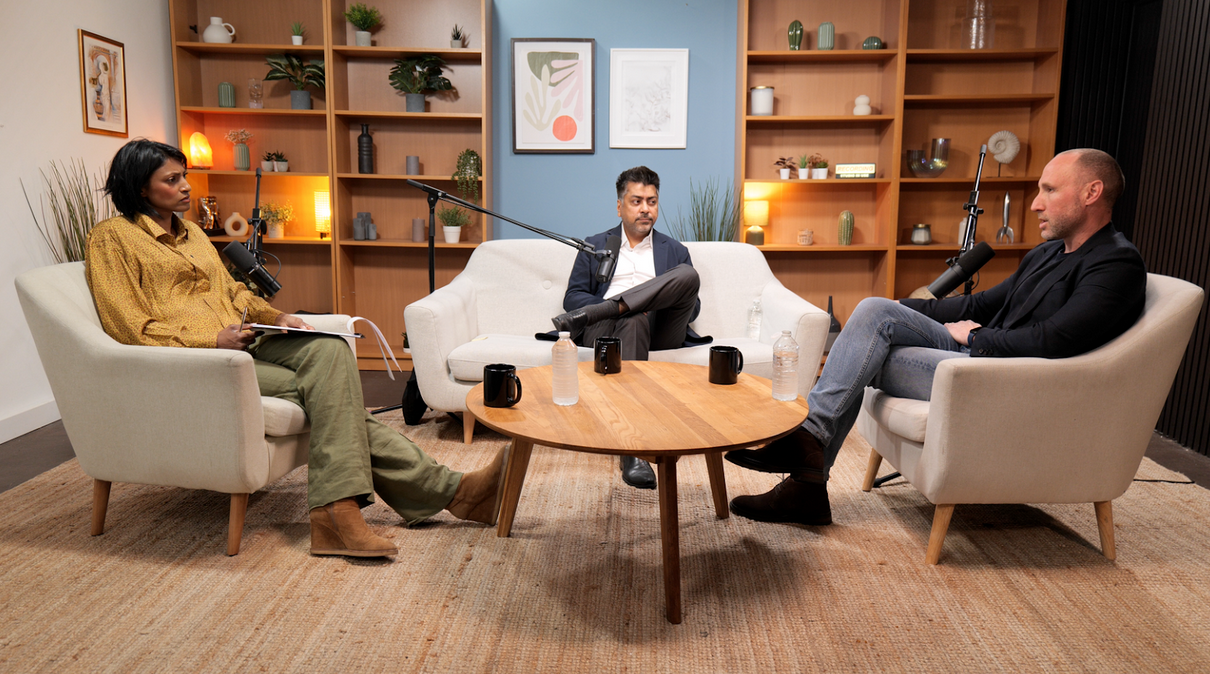
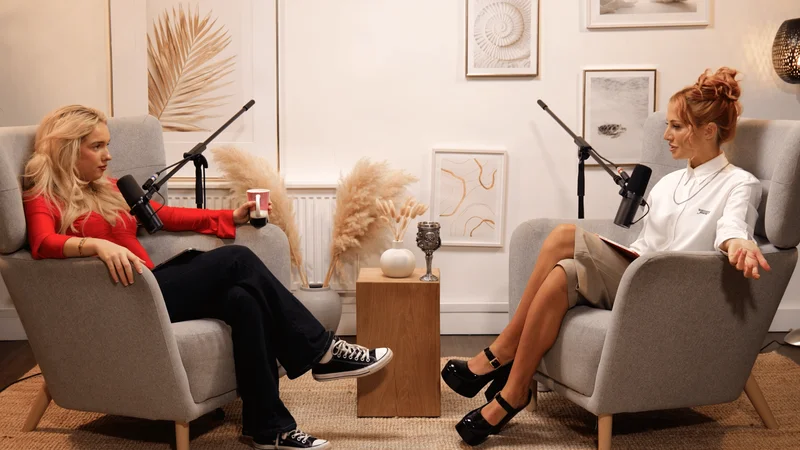
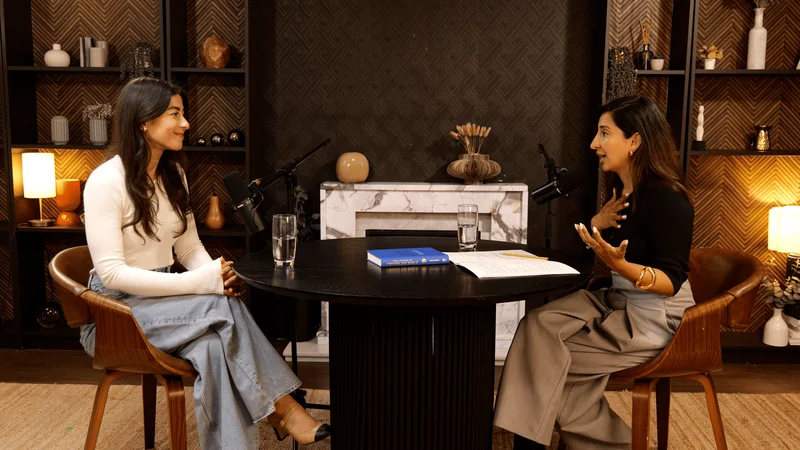
See the 'No ordinary tech podcast ' from Lloyds Banking Group by Rohit D (AI Leader for Lloyds Banking Group) and DR. shini somara (Pro-Chancellor of Brunel University) . at Finchley Studio (Lounge setup). Book this setup for your podcast.
Conclusion
The relentless pursuit of pristine audio in a decentralized, remote-working world represents an ongoing, high-stakes conflict between logistical convenience and the unyielding laws of acoustic physics. Software advancements, particularly those driven by neural networks, spectral editing, and generative audio inpainting, have undeniably revolutionized the post-production engineer's ability to salvage severely degraded recordings. Broadband noise can be mathematically decoupled from dialogue, erratic volume inconsistencies can be dynamically controlled, and the catastrophic silence of dropped network packets can now be generatively synthesized.
Yet, despite these technological marvels, the boundaries of digital restoration remain absolute. Software cannot invent organic acoustic data that was permanently destroyed by digital clipping, nor can it elegantly untangle the complex phase cancellation inherent in crosstalk and open-speaker audio bleed. The economic toll of relying on post-production software to fix preventable recording errors is steep, multiplying editing timelines exponentially from a standard 1.5:1 ratio to a crippling 8:1 burden, while simultaneously jeopardizing audience retention and brand equity through subpar, fatiguing auditory experiences.
Ultimately, while post-production tools offer powerful, sometimes miraculous remediation for remote failures, they are inherently corrective measures, not substitutes for proper acoustic capture. The meticulously controlled environments, the robust, high-voltage analog signal chains, and the dedicated, highly skilled engineering support found exclusively within professional physical studio facilities remain the paramount, uncompromising solution. For content creators, journalists, and brands demanding flawless fidelity, operational reliability, and unassailable credibility in an increasingly saturated and highly synthetic digital marketplace, the physical recording studio remains an irreplaceable fortress of acoustic truth.