Acoustic treatment is the single most critical factor in achieving accurate, professional-sounding audio in a recording studio. While high-quality microphones, preamps, and monitors are important, their true performance is masked in an untreated room.
The primary role of acoustic treatment is to control how sound behaves inside a room, ensuring that what you hear—and what the microphone captures—is a true representation of the sound source, not a distorted version colored by the room itself.

🎵 The Core Goals of Acoustic Treatment
The main goal is to create a listening environment that is as neutral and accurate as possible. This is achieved by addressing three main acoustic problems
-
Taming Reflections (Reverberation & Echo)
-
The Problem: In a typical room, sound waves from monitors or an instrument bounce off hard, flat surfaces like drywall, glass, and hardwood floors. These reflections arrive at your ears and microphone at slightly different times than the direct sound, causing a "smearing" effect (reverberation) and distinct, slappy "flutter echoes."
-
The Solution: Absorption panels (made of foam or rigid fiberglass) are placed at key reflection points (on side walls, the ceiling, and the wall behind the monitors) to absorb this sound energy, stopping it from bouncing back. This results in a clearer, more direct, and more intelligible sound.
-
-
Controlling Low-Frequency Buildup (Room Modes)
-
The Problem: Low-frequency (bass) sound waves are long and powerful. In small rooms, they get "stuck" between parallel walls and corners, creating "standing waves" or "room modes." This causes certain bass notes to ring out loudly and others to disappear completely, making it impossible to mix bass accurately.
-
The Solution: Bass traps are thick, high-density absorbers placed in the corners of the room (where bass energy builds up most) to absorb and control this low-frequency energy. This "tightens up" the bass, making it even and clear.
-
-
Preventing Comb Filtering & Flutter
The Problem: When sound bounces back and forth between two parallel walls, it creates a rapid, metallic-sounding echo. "Comb filtering" is a related issue where a reflected sound wave combines with the direct sound, causing certain frequencies to be canceled out, creating a hollow, "phasey" sound.
The Solution: Diffusion panels scatter sound energy in many different directions. Instead of just absorbing the sound (which can make a room sound unnaturally "dead"), diffusers break up reflections and spread them out, preserving a natural sense of space while eliminating harmful echoes

🎙️ Acoustic Treatment vs. Soundproofing: A Crucial Distinction
This is the most common point of confusion for new studio builders.
-
Acoustic Treatment (what's described above) aims to make the inside of the room sound better. It controls reflections within the space.
-
Soundproofing (or isolation) aims to block sound from entering or leaving the room. This involves heavy, dense construction materials, "floating" floors, and creating airtight seals.
You need acoustic treatment to make accurate recordings and mixes. You need soundproofing so your neighbors don't hear your drummer (and so you don't record the garbage truck outside).
Recording Studio Design: The Critical Role of Acoustic Treatment
If you've ever wondered why your $500 microphone sounds "boxy" and amateur in your home office, while a podcast recorded in a professional studio sounds rich, clear, and "in-your-ear," the answer isn't the microphone. It's the room.
The single most important, and most misunderstood, element of studio design is acoustic treatment. It's the invisible factor that separates a professional broadcast from a hobbyist's recording.
The Big Misconception: Soundproofing vs. Acoustic Treatment
First, let's clear up the biggest myth. Acoustic treatment is not soundproofing.
-
Soundproofing is designed to stop sound from leaving or entering a room. It's about mass and isolation—think thick, dense walls and airtight seals. It's what stops the sound of a police siren from getting into your recording.
Acoustic Treatment is designed to control sound inside the room. It's what stops your voice from echoing, reverberating, and turning into a muddy mess after you've spoken.
A perfectly soundproof room with bare concrete walls would be one of the worst-sounding places on earth.
The Enemy: Sound Reflections
When you speak in an untreated room, your voice travels in all directions. A tiny fraction goes directly into the microphone. The rest of it hits the hard, flat surfaces—your desk, your walls, your ceiling, your floor—and reflects.
These reflections, or "reverb," then hit the microphone a few milliseconds after your direct voice. The microphone, which isn't smart, records both. This creates a host of problems:
Reverb (Echo): This is the obvious "bathroom" or "church hall" sound. It instantly makes the speaker sound distant, unprofessional, and like they're on a bad Zoom call.
-
Comb Filtering: When the reflected sound waves combine with the direct sound waves, they cancel out certain frequencies, creating a "hollow," "thin," or "boxy" sound.
-
Frequency Buildup: Bass frequencies love to pile up in the corners of a room, creating a "boomy" or "muddy" sound that robs the voice of its clarity.
How Treatment Solves the Problem
Acoustic treatment uses two primary tools to tame these reflections.
Absorption: This is the most important one. It involves placing soft, porous materials (like acoustic foam panels, fibreglass, or heavy fabric) on the walls and ceiling. These materials "trap" the sound energy and convert it to a tiny amount of heat, stopping it from reflecting
-
Diffusion: This involves using uneven, hard surfaces (like a bookshelf full of books or a specially designed wooden diffuser) to scatter the reflections. This breaks up the sound so it comes back to the ear (and mic) as gentle, disorganized energy, making the room sound natural and "live" rather than "dead" and small.
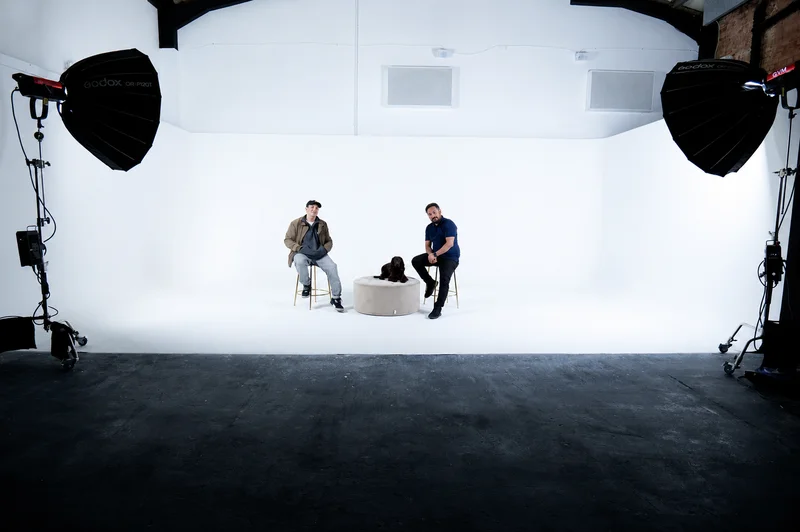
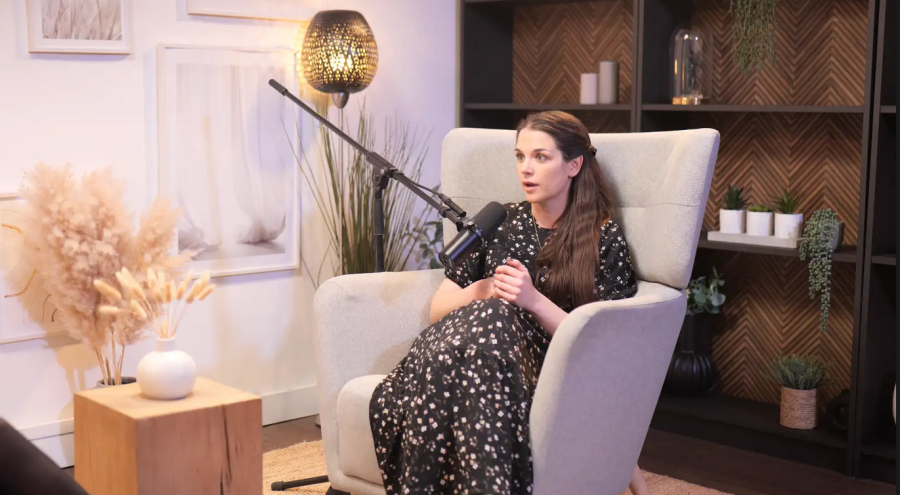
A well-treated room, like those at Finchley Studio, is a perfect balance of absorption and diffusion. The result is a "dry," "clean," and "present" vocal recording. The microphone only picks up your voice, not the room.
Why This Is the Foundation of Professional Sound
You cannot fix bad acoustics in post-production. Once that "room sound" is baked into your audio file, you can't "un-echo" it. You can spend hours with software trying to "de-reverb" a track, but it will always sound artificial and damaged.
By contrast, a clean, dry recording is a blank canvas. You can easily edit it, add compression, and use EQ to make the voice sound perfect.
This is why you book a professional studio. You are not just renting high-end microphones and cameras; you are renting a perfectly controlled acoustic environment. The expert design of a studio like Finchley Studio saves you hours of post-production headaches. The team at Finchley Studio has already done the hard work of acoustic engineering so you can walk in, hit record, and be 100% confident that your audio foundation is flawless. When you book time at Finchley Studio, you are paying for peace of mind and guaranteed quality.
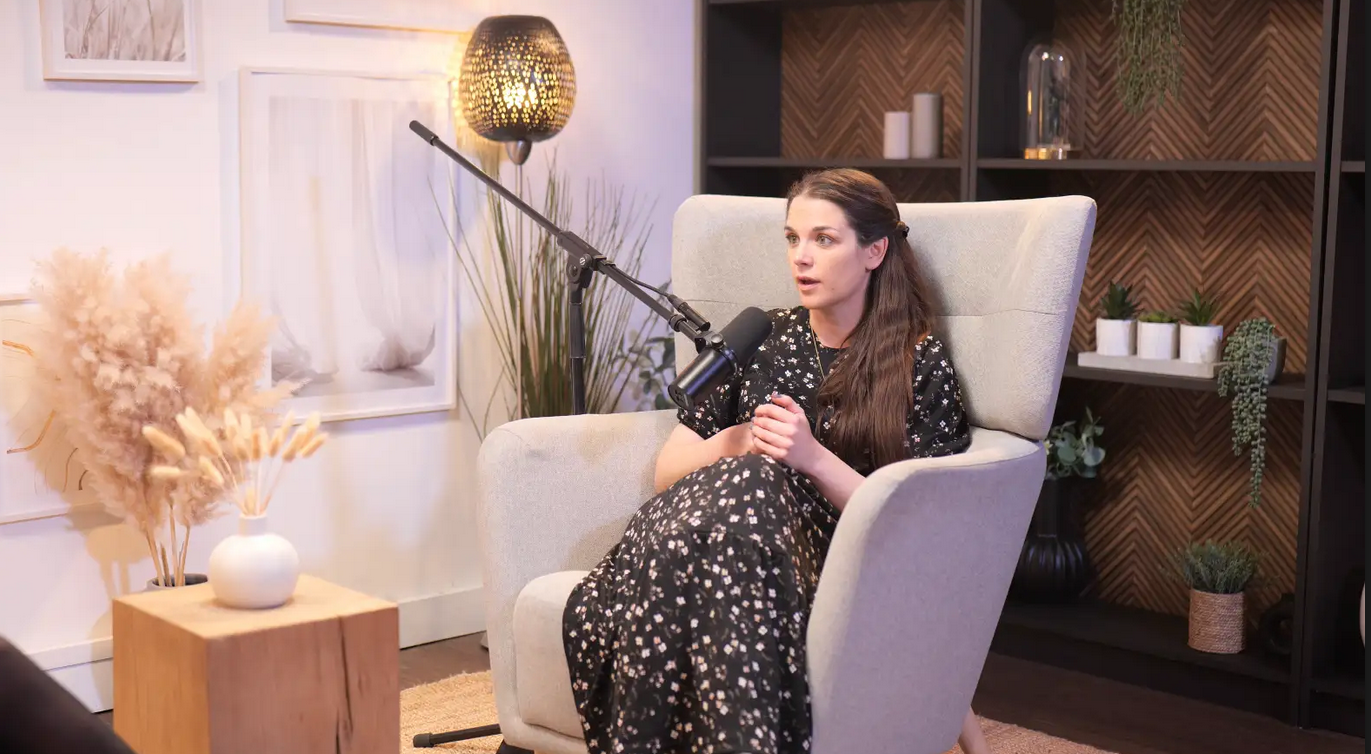
Acoustic treatment is the foundation, and we've built our studios on it. We invite you to experience the difference and see our different sets, each designed for a specific creative vision. Explore our intimate Dialogue Room for focused conversations, the relaxed LOUNGE STUDIO for group chats, or the premium CEO SET for executive content. For more dynamic productions, we have a fully-equipped Green Screen Cove, the sleek Blackwood Studio, and the textured THE BRICK STUDIO. We also feature a flawless White Infinity Cove, a fully controlled BLACKOUT SET, the spacious GATHERING STUDIO for roundtables, and one of London's largest GIANT GREEN SCREEN warehouses.
To complete your production, you can order our professional Video Editing Service, taking your raw footage and turning it into polished, audience-ready content. We are trusted by industry leaders and creators, with regular clients including the BBC and Lloyds bank, so you know you're in good company. But don't just take our word for it; see what other creators have to say about their experience on Google review and Trust Pilot.
Finding us is simple. We are conveniently located just two minutes from Finchley Central, adjacent to the Travelodge London Finchley, and offer one free parking space per booking. You can find us easily on Google map, Apple maps, [suspicious link removed], or using What 3 words.
Stay connected and see what's happening at the studio by following us on Instagram, YouTube, TikTok, LinkedIn, and X (Twitter).
Have questions? Check our FAQ or get in touch with us directly via WhatsApp, phone at +447587827200, or Email.
Ready to record in a room that sounds as good as your content? Book now and let's create something amazing.
📚 Resources for Further Reading
Here are some excellent resources to learn more about the principles and practical application of studio acoustics:
Acoustiblok: A Complete Guide to Acoustic Treatment
Primacoustic: What Is Acoustic Treatment & Why Is It Important?
AudioSilk: The Complete Beginner's Guide to Home Studio Acoustic Treatment
GIK Acoustics: Acoustic Treatment vs. Soundproofing
This video provides a great visual and audible demonstration of acoustic treatment for beginners and shows the "before and after" difference it makes.