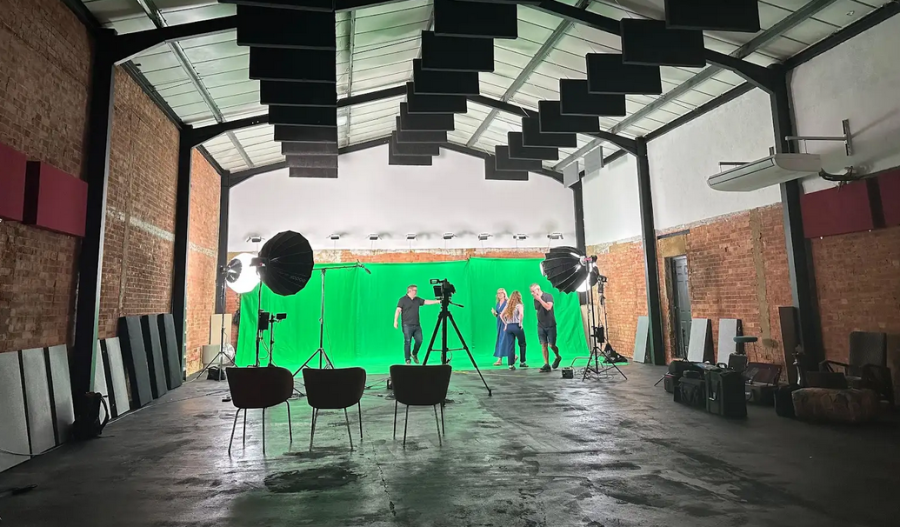
London's Podcast Studio Landscape: An Independent Creator's Guide to Value and Quality
Navigating the London Podcasting Scene: A Market Framework for the Independent Creator
The landscape for podcast production in London has evolved into a complex and stratified market (Bloomberg). For the independent creator, navigating this terrain requires more than a simple comparison of hourly rates. The market is no longer a linear scale where price directly corresponds to quality; instead, it has segmented into distinct service models, each presenting a unique set of opportunities and critical trade-offs (Finchley studio). Understanding these tiers—from the high-risk, ultra-budget options to the broadcast-level premium services—is the foundational step for any creator seeking to invest their resources wisely. This framework provides a strategic map to the London studio scene, defining the value proposition of each market segment and empowering creators to align their choice of studio with their specific budget, technical proficiency, and creative ambitions.
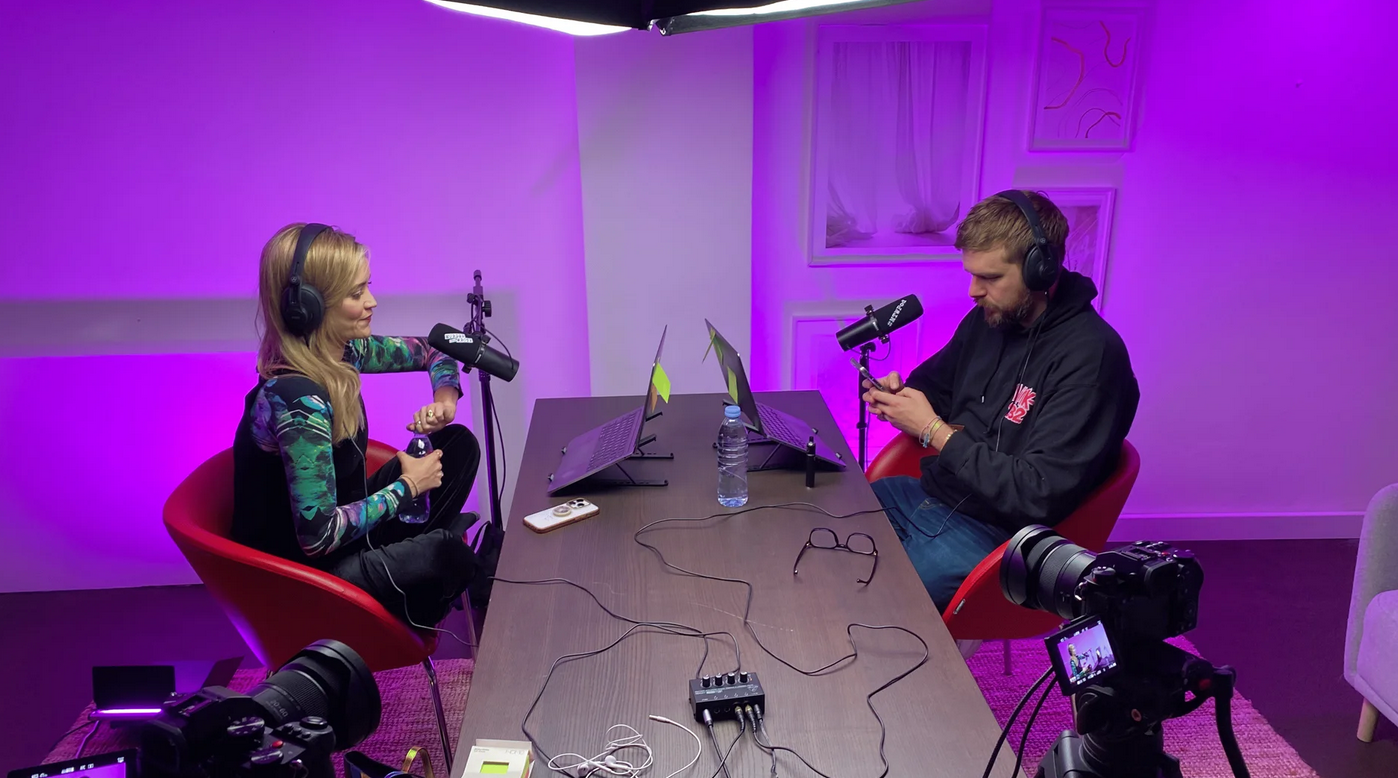
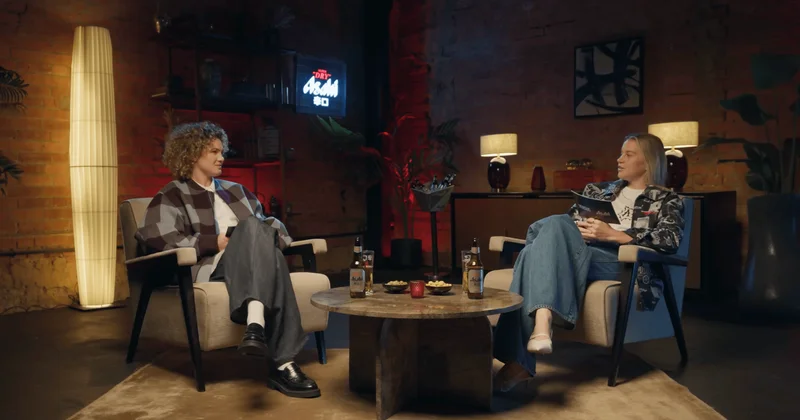
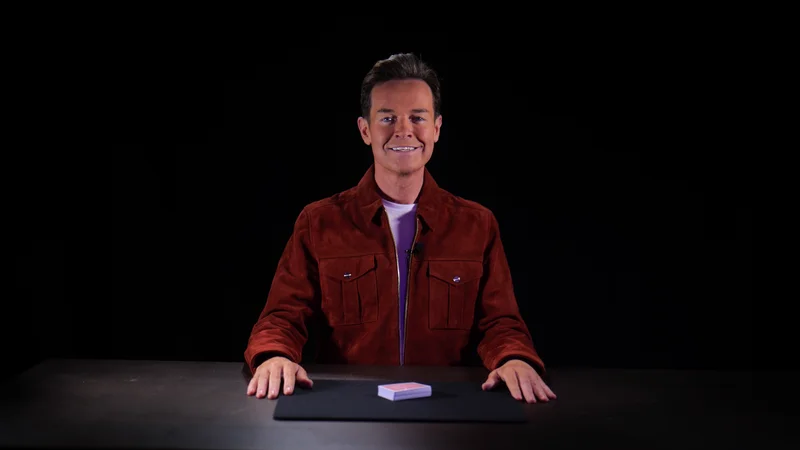
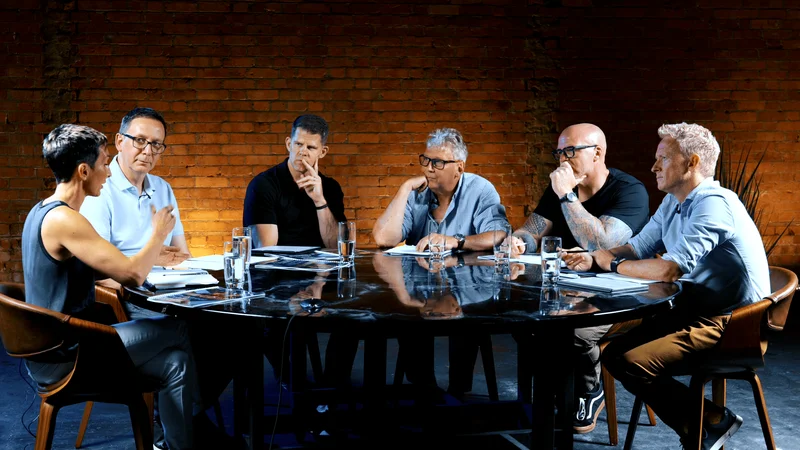
See the 'Murder They Wrote' podcast setup used by Laura Whitmore and Iain Stirling from BBC at Finchley Studio (Gathering setup). Watch Murder They Wrote at BBc sound , Spotify , Apple podcasts , Youtube , Instagram , Amazon music
Book this setup for your podcast
The Ultra-Budget Tier: The 24/7 Self-Service Gamble
Dominating the entry-level tier is a model defined by automation, accessibility, and extreme affordability. This segment is almost single-handedly shaped by Pirate, a global network operating numerous unstaffed, 24/7 locations across London and beyond (Finchley studio). The core value proposition is compellingly simple: a functional recording space, accessible at any hour of the day, for a price as low as £10.50 per hour (Finchley studio). This model provides unparalleled flexibility for creators with unconventional schedules, offering a straightforward online booking process that grants key-code access without any human interaction (Pirate) The provided equipment is consistent and suitable for beginners, typically featuring a RØDECaster Pro integrated production unit and four Rode Procaster microphones, allowing a small group to record with plug-and-play simplicity (Pirate).
However, this automated, low-cost model is a high-risk, high-reward proposition. The very mechanism that ensures affordability—the complete absence of on-site staff—is also the source of its most significant and well-documented drawbacks (Pirate). A comprehensive analysis of user reviews reveals a deeply polarized experience. While many praise the convenience and price, a substantial and growing number of reports highlight recurring issues with the cleanliness of the spaces and the maintenance of the equipment (Finchley studio). Complaints of broken CDJs, faulty audio channels, sticky surfaces, and leftover trash are common, painting a picture of a service struggling to maintain quality control amidst high user turnover (Reddit).
This operational model effectively creates a "competence tax" for its users. The low price is achieved by offloading the responsibilities of setup, quality control, and troubleshooting entirely onto the creator. An experienced producer who can swiftly diagnose a faulty cable, reconfigure a mixer, or work around a broken piece of equipment is rewarded for their technical competence with a low-cost session. Conversely, a novice creator, unfamiliar with the gear, faces a significant risk. A technical issue they cannot solve on their own can derail an entire session, rendering the "cheap" booking infinitely expensive if it yields no usable content. For this reason, the ultra-budget tier is best suited for the experienced, self-sufficient creator recording lower-stakes content, or for those on the tightest of budgets who are willing to book a short, low-cost "test" session to mitigate the inherent risks before a critical recording (Finchley studio).
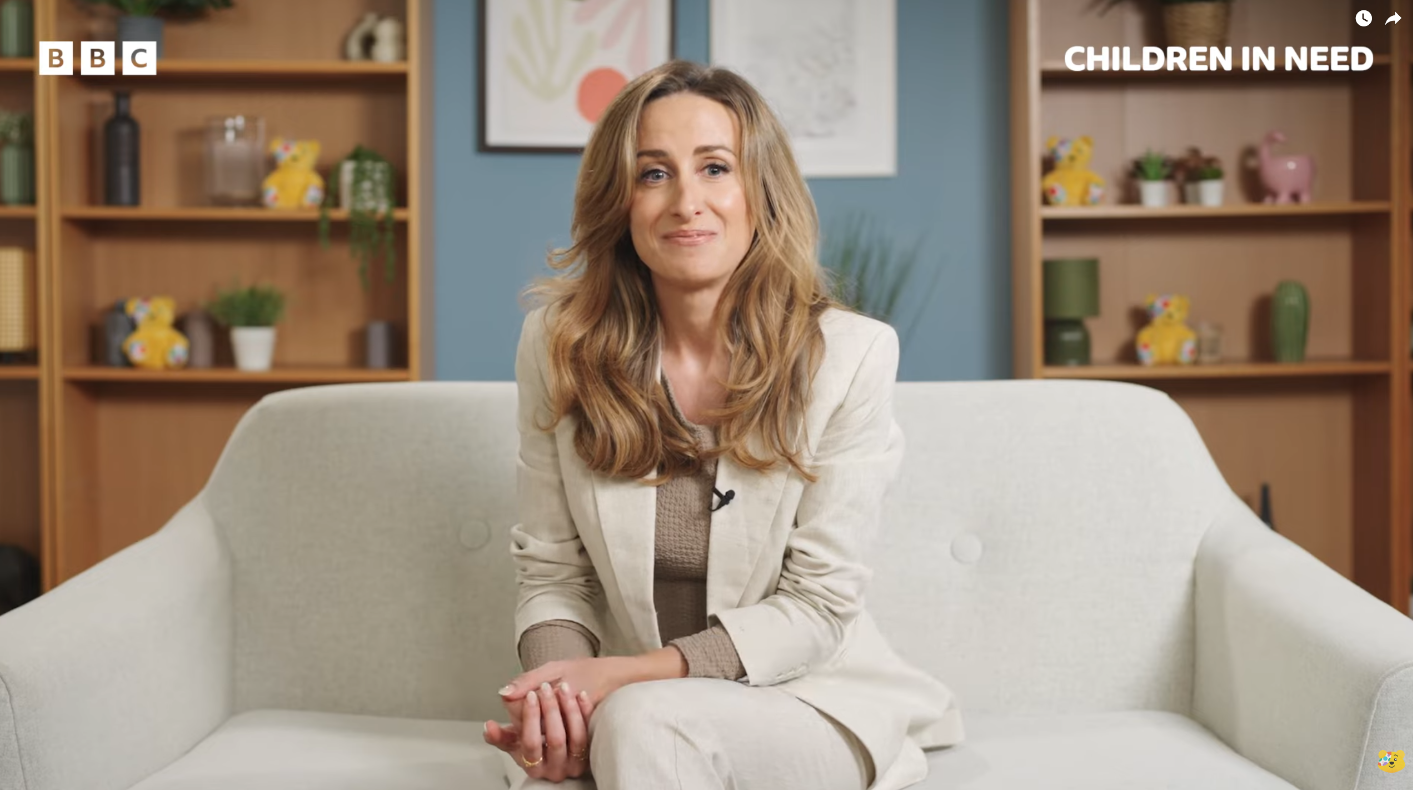
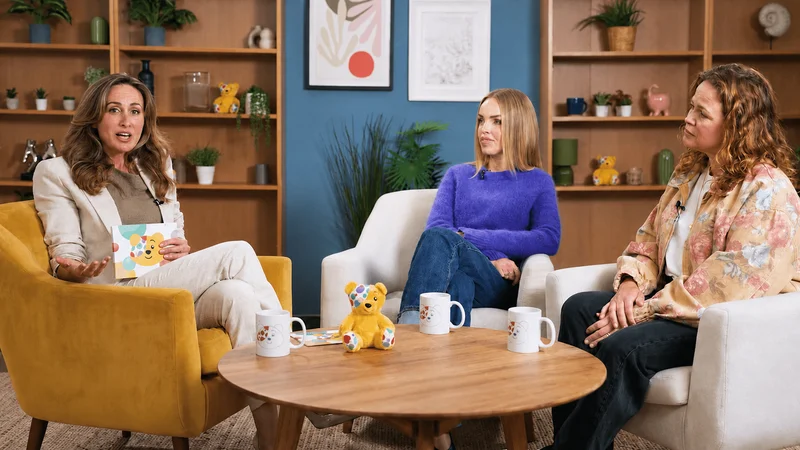
See the 'BBC Children in Need' podcast setup used by Dr Julie from BBC at Finchley Studio (Lounge setup). Book this setup for your podcast
The High-Value Mid-Tier: The Independent Creator's Sweet Spot
Positioned between the gamble of the ultra-budget tier and the prohibitive expense of the premium market lies the most dynamic and competitive segment: the high-value mid-tier. This is the market's direct response to the needs of ambitious independent creators who have outgrown the risks of self-service studios but lack the budget for broadcast-level facilities. Studios in this category blend professional-grade equipment with accessible pricing and offer varying degrees of on-site support, creating a value proposition centered on "accessible professionalism."
This tier is populated by a diverse group of studios, each with a distinct identity. Key players include Finchley Production Studio, a versatile North London hub known for its variety of themed sets; Nostars Studios, a market disruptor offering an unparalleled bundle of high-spec equipment for a budget price; and the centrally located tech hubs of Outset Studio and Podshop Studios, which cater to a more technically minded creator with modular, video-focused offerings (Finchley studio).
A defining characteristic of this competitive tier is the rise of a "visual-first" value proposition. These studios are no longer selling just high-quality audio; they are competing aggressively on the quality and flexibility of their video production capabilities. This reflects a fundamental market shift (Fortune business insights), where the definition of a "podcast" for most independent creators has expanded to include high-quality video for distribution on platforms like YouTube, Instagram, Facebook, Twitter (X), Snapchat, Pinterest, Linkedin, Threads and TikTok. Nostars, for instance, bundles a 6K Blackmagic camera with its standard podcast room hire (Nostarts) Finchley Studio's core packages include three Panasonic 4K camera setup and a wide array of visually distinct, pre-dressed sets.(Finchley studio) Podshop explicitly markets itself as a "video first environment," equipping its studios with professional Sony FX series cameras, while Outset boasts cinema-grade Sony FX-30 and FR7 cameras. Consequently, for creators operating in this space, affordability is now measured as much by the cost-per-pixel as it is by the cost-per-decibel. The value of a studio is increasingly determined by its ability to provide a complete, visually compelling package straight out of the box.
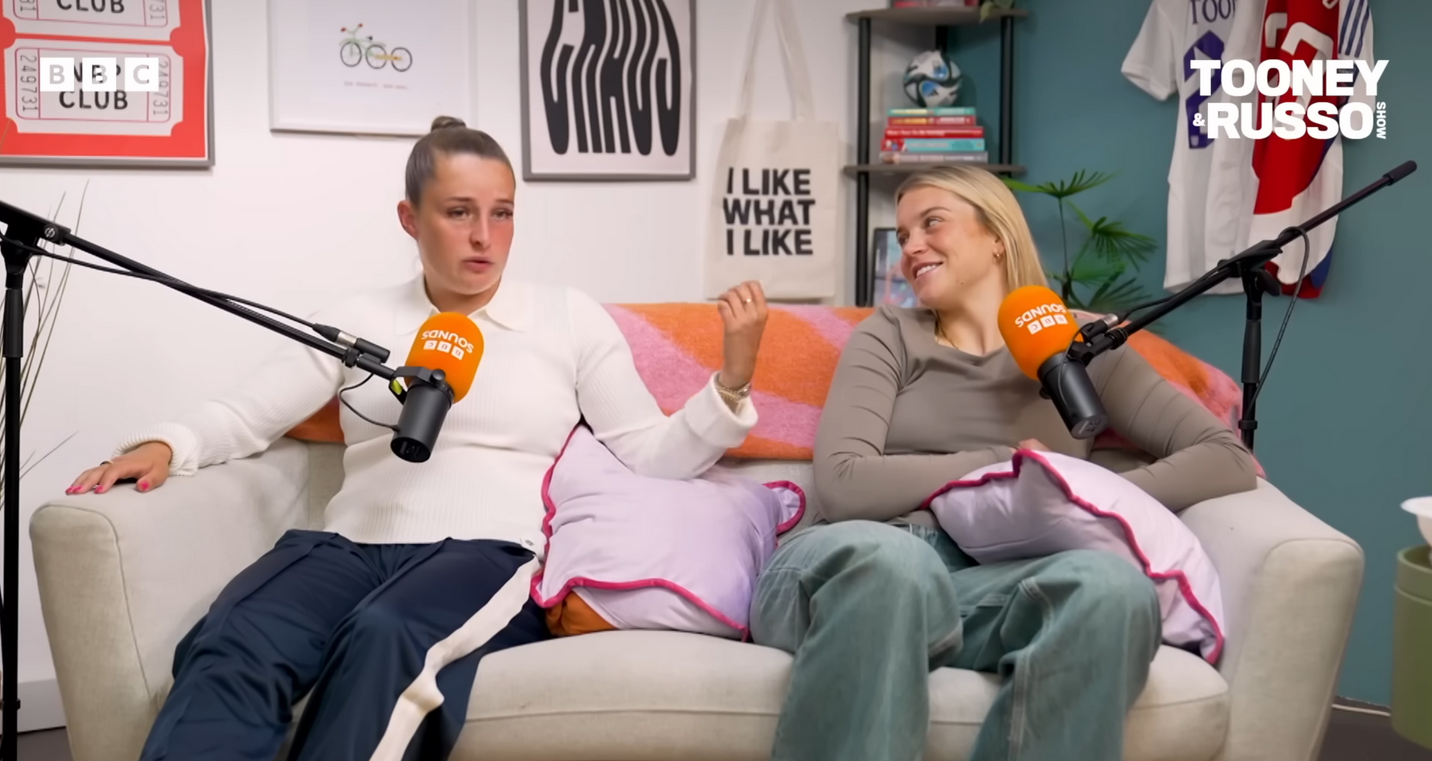
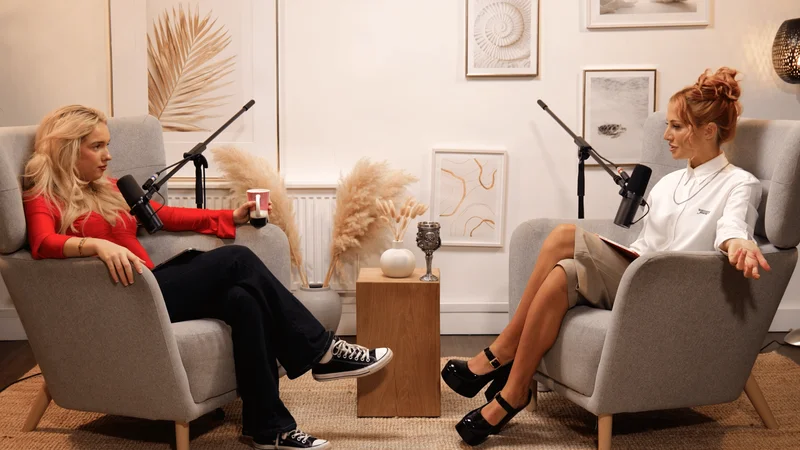
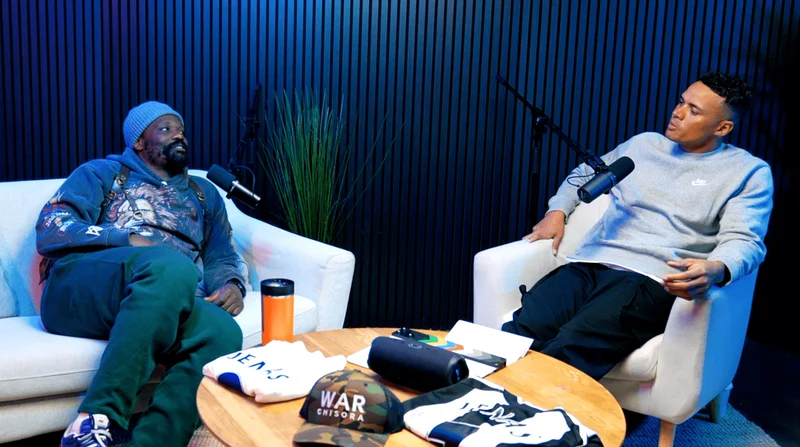
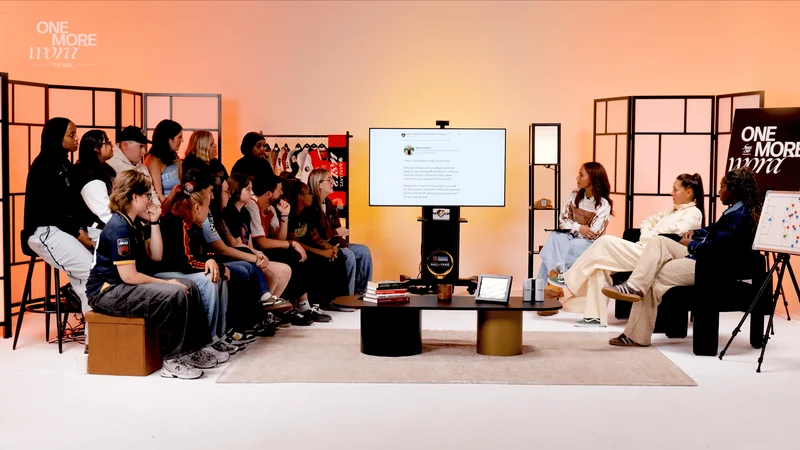
See the 'The Tooney & Russo Show' from BBC and Lionesses Ella Toone and Alessia Russoat from England national football team at Finchley Studio (Lounge setup). Book this setup for your podcast. Watch 'The Tooney & Russo Show' at BBc sound , Spotify , Youtube, Amazon music.
Book this setup for your podcast
The Premium Tier: The Broadcast Benchmark
At the apex of the London market are the premium, full-service studios. This tier includes facilities like Premiere Podcast Studios, the creatively-driven TYX Studios at Tileyard, and the celebrity-endorsed Podcast House. For the typical independent creator, these studios may fall outside a feasible budget, with rates often starting at £150 per hour. However, their role in the market is crucial: they establish the benchmark for technical perfection and service excellence, providing essential context for evaluating the value offered by the more affordable mid-tier.
The premium price point buys certainty. These studios offer guaranteed, "room-within-a-room" soundproofing, eliminating any risk of external noise contamination—a critical factor for broadcast-quality recordings. Sessions are typically all-inclusive and come standard with a dedicated, experienced engineer who manages the entire technical workflow, allowing the creator and their guests to focus solely on the content (Finchley studio). The service is often concierge-level, designed to cater to high-profile guests, corporate clients, and creators for whom a flawless, frictionless experience is the primary concern (Finchley studio). The client lists for these studios, which include names like Jamie Laing and Romesh Ranganathan at Podcast House, serve as a testament to their reliability and professional standing (Podcast House). By understanding what this premium investment delivers—absolute reliability, peace of mind, and technical perfection—independent creators can more accurately assess the trade-offs and remarkable value presented by the studios competing in the high-value mid-tier.
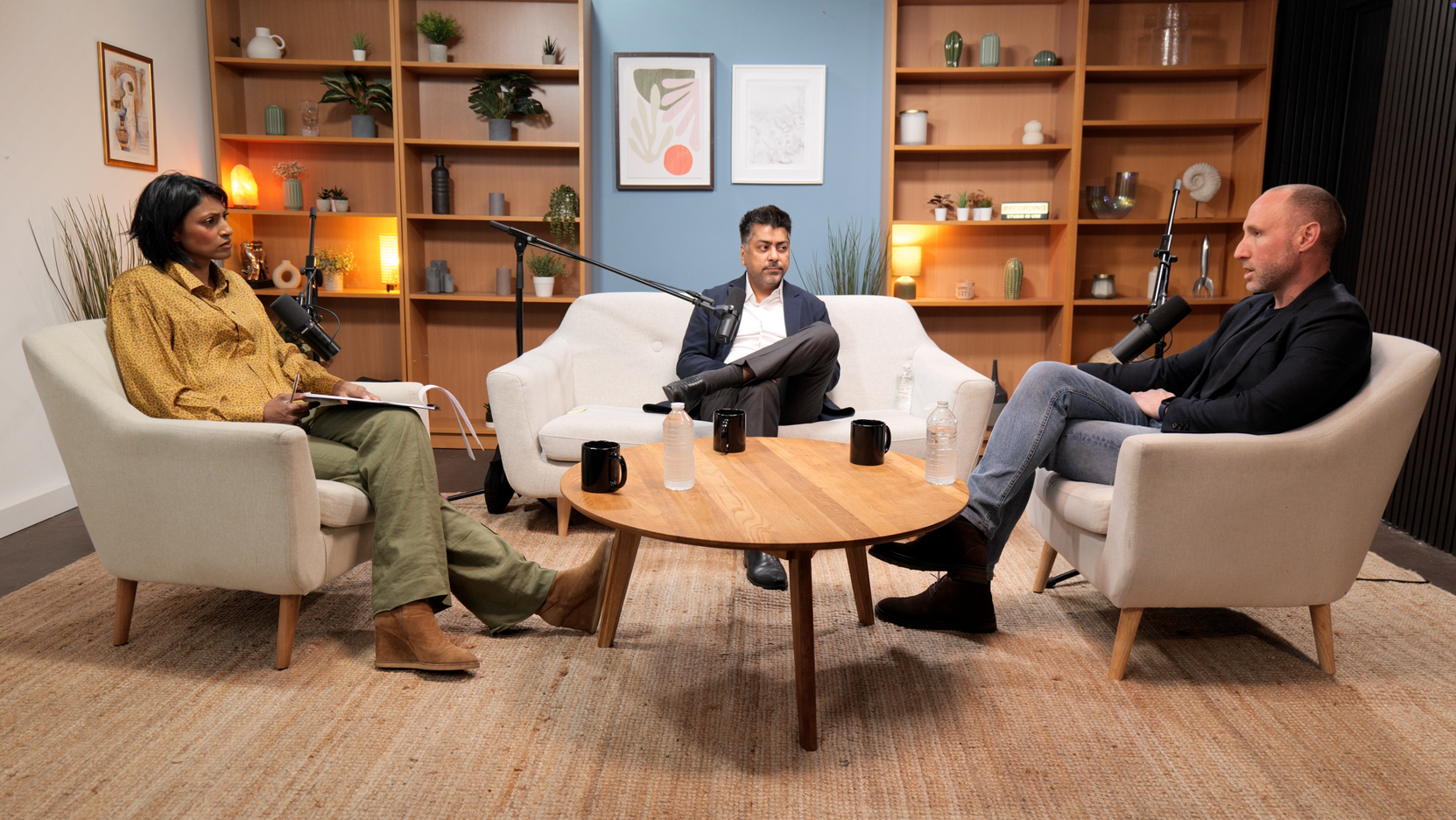
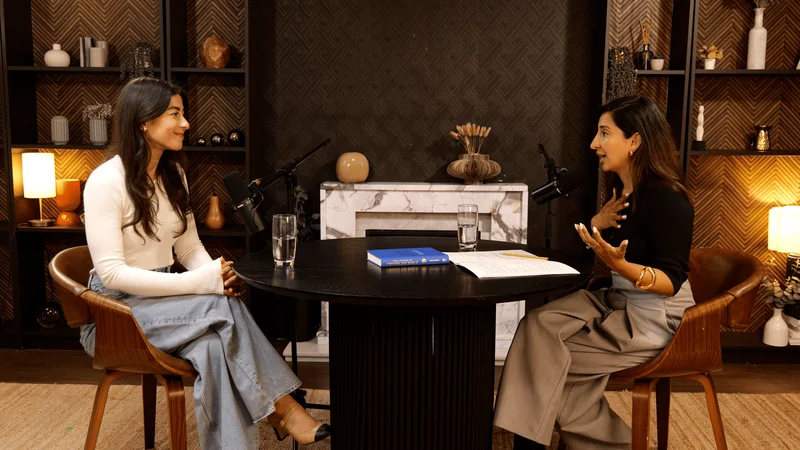
See the 'No ordinary tech podcast ' from Lloyds Banking Group by Rohit D (AI Leader for Lloyds Banking Group) and DR. shini somara (Pro-Chancellor of Brunel University) . at Finchley Studio (Lounge setup). Book this setup for your podcast.
Contender Analysis: In-Depth Studio Profiles
A granular analysis of the leading mid-tier contenders reveals a diverse range of philosophies, technical offerings, and service models. Each studio presents a unique solution to the independent creator's challenge of balancing cost with quality. From the all-in-one production hub in North London to the disruptive value champion and the centrally located tech specialists, a deep dive into their respective strengths and weaknesses is essential for making an informed decision.
Finchley Production Studio: The North London Chameleon
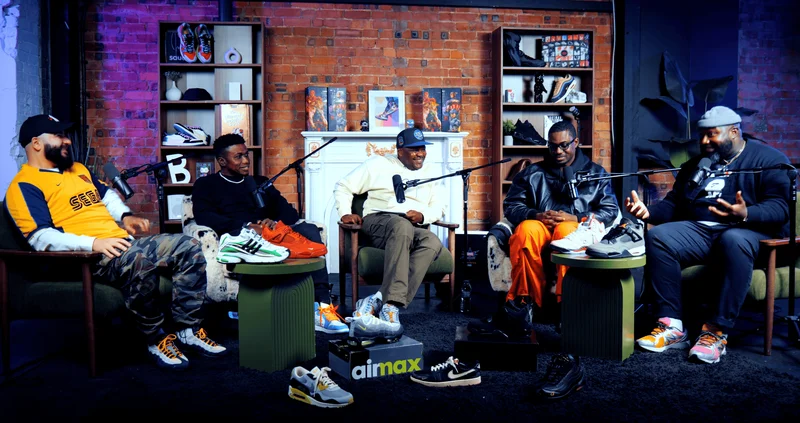
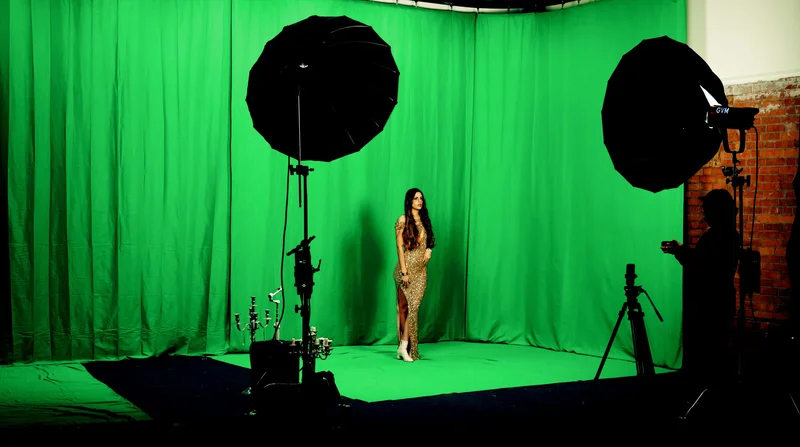
Positioned as a premier production hub in North London, Finchley Production Studio has carved out a distinct identity based on two core principles: unparalleled versatility and transparent, all-inclusive value (tagvenue) Its most significant differentiator is the sheer variety of its themed, soundproof sets, which allow creators to produce a wide range of content with distinct aesthetics, all under one roof (tagvenue) This "chameleon" quality is a powerful asset for creators with a multi-format content strategy. The studio's offerings include the intimate Dialogue Room, designed for 2-4 person conversation-driven projects; the relaxed Lounge Studio for more casual discussions; the larger Gathering Studio and The Brick Studio for panels of up to six people; a polished CEO Set for corporate content; and professional, pre-lit Green Screen Studio, White Infinity Cove, Blackout.
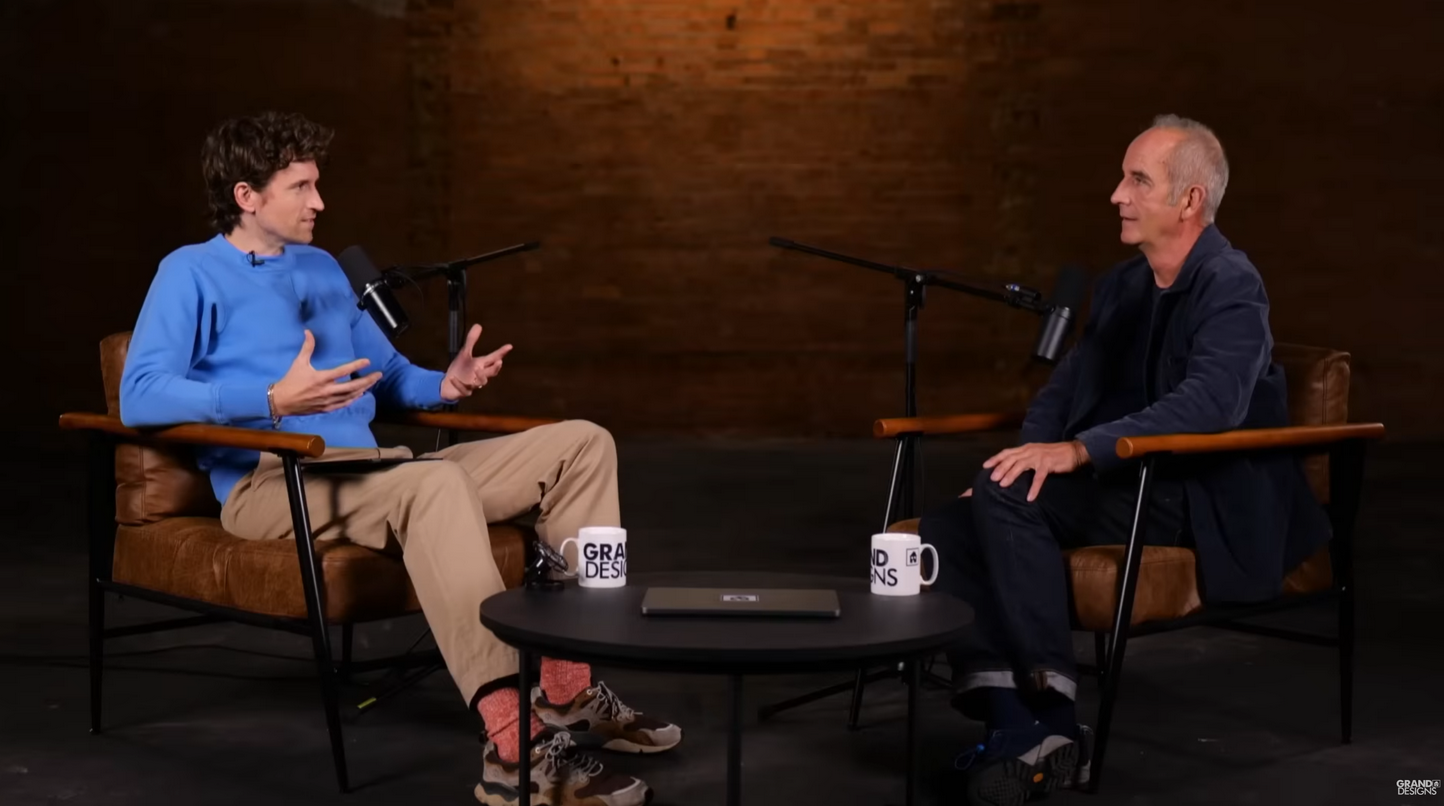
See the 'Grand designs' from Channel 4 by Kevin McCloud at Finchley Studio (Brick studio). Book this setup for your podcast.
This versatility is matched by a clear and compelling pricing structure. The studio's tiered packages remove the guesswork often associated with à la carte models. The packages for the Dialogue Room, for example, are illustrative:
Silver (£99 per hour): Basic studio hire.
Gold (£109 per hour): Adds a senior engineer, three 4K cameras, Shure microphones, and full recording services.
Platinum (£129 per hour): Includes all Gold features plus a teleprompter.
It is important to note a pricing discrepancy found across different online listings. A listing on Yell shows a rate of £99 per hour for the Dialogue Room, significantly lower than the £189 per hour starting price on the booking platform Tagvenue. This is not an error, but rather an illustration of a common marketing strategy in the studio hire industry that distinguishes between "dry hire" (renting the empty space) and "wet hire" (a package including equipment and support). The lower price likely represents a basic dry hire option, while the higher price reflects the studio's packaged, full-service offerings. This highlights a crucial point for creators: headline prices on aggregator sites can be misleading. Finchley's transparent, tiered packages are therefore a significant advantage, providing clarity and preventing the hidden costs that can arise from modular pricing models.
Beyond its sets and pricing, Finchley offers a major logistical advantage that is rare and highly valuable in London: free on-site parking. This removes a common point of friction and expense for creators and their guests. The studio is also highly accessible via public transport, located just a short walk from Finchley Central station on the Northern Line. This combination of features is underpinned by overwhelmingly positive user sentiment. Reviews consistently praise the professional, helpful, and attentive staff, the high quality of the facilities and equipment, and the seamless, well-organized recording experience.
Nostars Studios: The Uncontested Champion of Value
Operating out of Wood Green in North London, Nostars Studios has established itself as a true market disruptor. Founded on the mission to bridge "the gap between high end music studios and affordability," Nostars delivers a value proposition that is, by a significant margin, the most aggressive and compelling in the London market for independent video podcasters.
The studio's offering is centered on an almost unbelievably inclusive bundle. For a starting rate of just £30 per hour, the standard Podcast Room provides a setup that would command triple the price elsewhere. This includes up to six industry-standard Shure SM7B microphones, a 55-inch monitor for branding, and, most remarkably, free filming with a 6K Blackmagic Pocket Cinema Camera and complimentary audio mixing for all sessions. This package provides a staggering level of technical value, democratizing access to professional-grade audio and video quality. For creators looking to elevate their production value even further, the Podcast Pro Room is available for £60 per hour. This upgraded space adds a stylized wave LED background, a three-camera filming setup, a dedicated makeup area, and professional lighting, cementing the studio's commitment to enabling high-quality visual content on a budget.
The strategy employed by Nostars reflects a broader trend in media production: the "good enough" revolution. Legacy studios often justify premium pricing with claims of achieving a nuanced, superior level of quality that is imperceptible to all but the most trained ear. Nostars challenges this premise directly. By providing equipment like the Shure SM7B and a 6K camera—gear that is objectively excellent and far exceeds the baseline requirements for professional-sounding and -looking online content—at a rock-bottom price, Nostars operates on the principle that for the vast majority of independent creators and their audiences, the marginal gains offered by a £150-per-hour studio are negligible. This positions Nostars not merely as a "budget" option, but as a strategically astute choice for creators focused on maximizing audience-facing value without overspending on imperceptible technical details. While its North London location is less central than some competitors, its reputation is strong, with its roots as a music studio reportedly attracting artists like Stormzy.
Pirate Studios: The Double-Edged Sword of Accessibility
As the dominant force in the ultra-budget tier, Pirate Studios offers a service model that is a double-edged sword: its greatest strengths are inextricably linked to its greatest weaknesses. The core appeal lies in its vast network of locations, 24/7 unstaffed access, and the lowest entry-level pricing on the market. The user journey is entirely automated—a creator books online, receives a code, and lets themselves into a room equipped with functional, beginner-friendly gear like the RØDECaster Pro and Rode Procaster microphones. This model provides unmatched flexibility and affordability, making it a viable option for practice sessions, low-stakes recordings, or creators who must record at hours when no other studio is open.
However, the extensive body of user feedback reveals a significant and persistent downside to this hands-off approach. The experience at Pirate Studios is highly inconsistent. For every user who praises the convenience, there appears to be another who has encountered significant problems. Recurring complaints frequently cite poorly maintained or broken equipment, particularly in the DJ studios, with reports of faulty faders, non-functional channels, and CPU errors on decks. The cleanliness of the unstaffed rooms is another major point of contention, with numerous descriptions of sticky, smelly spaces and leftover trash from previous users who treated the rooms like "a mini club".
This pattern suggests that as the platform's popularity has grown, its ability to maintain a consistent standard of quality has degraded. The self-service model, while cost-effective, relies on users being respectful of the space, a reliance that has proven to be a critical point of failure. Therefore, booking a session at Pirate Studios is an inherent gamble. It is an excellent resource for a self-sufficient creator who is comfortable troubleshooting their own technical issues, but it represents a significant risk for a creator planning a critical interview with an important guest, where a pristine environment and guaranteed functional equipment are non-negotiable.
Podshop & Outset Studios: The Central London Tech Hubs
In the heart of London's creative and business districts like Shoreditch and London Bridge, a different type of studio has emerged. Podshop Studios and Outset Studio both cater to a tech-savvy creator, offering flexible, à la carte pricing models and a strong focus on high-end video production.
Podshop positions itself as a "specialist B2B podcast production and promotion company" that also serves the independent creator market (tagvenue). Their identity as a "video-first" agency is evident in their use of high-end Sony FX series cameras and their six bespoke, broadcast-quality studios. Their pricing is highly modular, allowing creators to choose between self-service and fully engineered sessions, as well as audio-only or audio-and-video packages. While a self-service audio session can be relatively affordable (from £60 per hour), a fully engineered video session in their main studio is significantly more expensive than competitors like Finchley, at approximately £188.40 per hour. This premium is justified by their central location and a stellar reputation, with user reviews consistently praising the team's professionalism, the high quality of the final product, and the seamless, supportive experience.
Outset Studio also offers a compelling package on the surface, with multiple central locations and access to cinema-grade equipment like the Sony FX-30 and the Netflix-approved Sony FR7 camera. Their pricing starts at an accessible £84 per hour for audio and £108 per hour for video, though costs can quickly increase with necessary add-ons like a dedicated engineer. While many user reviews are positive, citing helpful staff and a great setup, a number of critical reports raise serious concerns about audio quality.
The underlying cause of these audio issues is revealed in a critical admission on the studio's own website: the rooms are "acoustically treated only and not soundproof". This distinction is a potential landmine for any creator. "Acoustic treatment" refers to materials placed inside a room to absorb sound reflections and reduce echo, thereby improving clarity. "Soundproofing," on the other hand, is a structural measure designed to prevent sound from entering or leaving a room. For a novice creator, these terms might seem interchangeable, but the difference is profound. A non-soundproofed studio, even one with excellent acoustic treatment, is vulnerable to contamination from external noise—sirens, construction, or even loud conversations from an adjacent room. This single technical detail, corroborated by user complaints of "incredibly echo-ey" audio, makes Outset a fundamentally higher-risk option than competitors like Finchley, who explicitly market their spaces as "soundproof" The potential for an entire recording to be compromised by uncontrollable external noise dramatically impacts Outset's overall value proposition, despite its impressive camera gear.
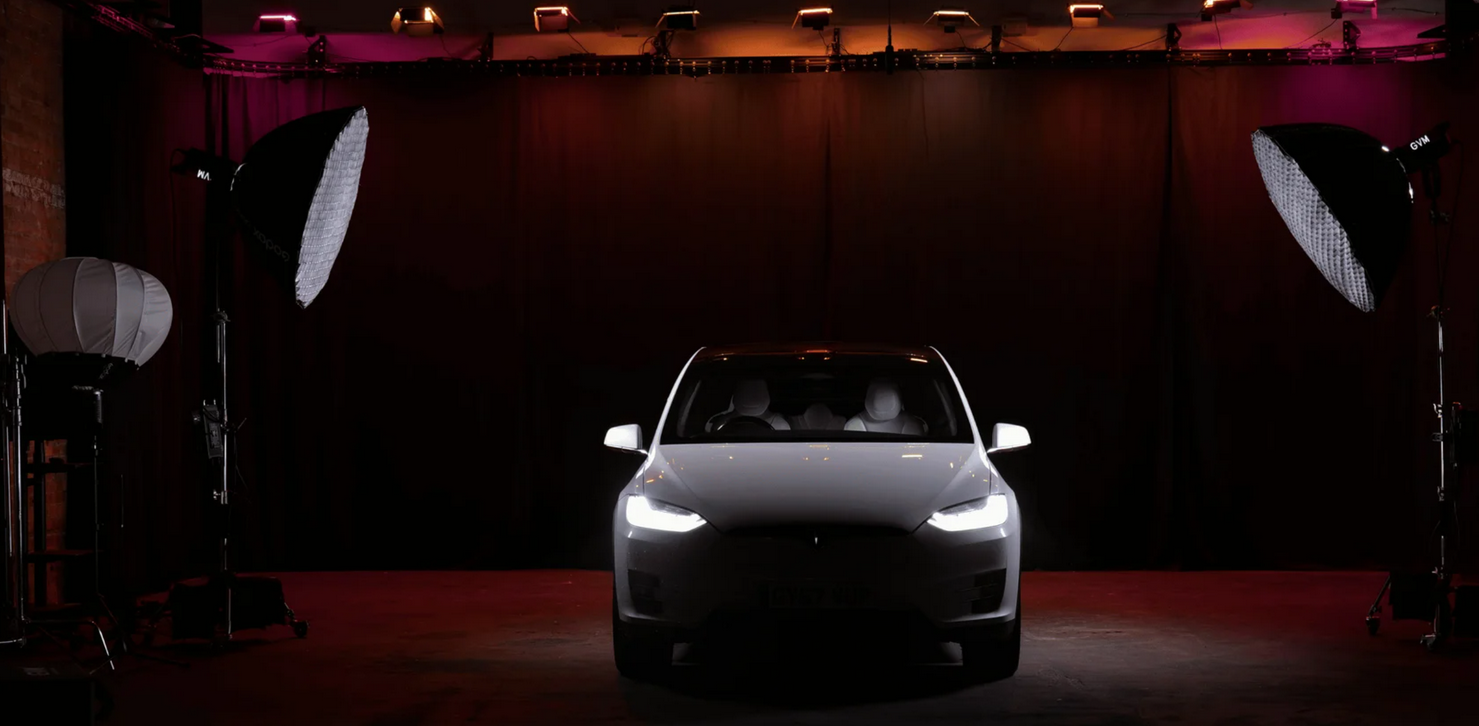
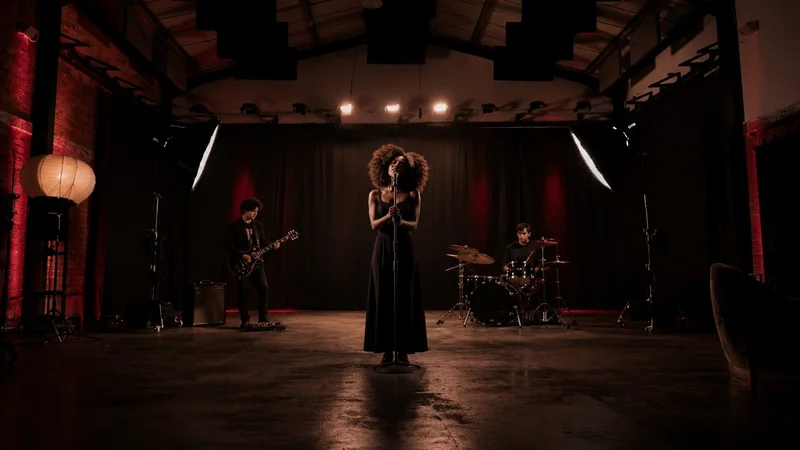
Finchley Studio (Giant Blackout Set): book this setup for your podcast
The Head-to-Head: Finchley Studio vs. The Field
To distill the extensive data into a clear, comparative framework, a direct head-to-head analysis is necessary. By placing the top mid-tier contenders side-by-side, the distinct trade-offs in value, technology, and reliability become immediately apparent, allowing a creator to weigh the options based on their specific priorities.
The Ultimate Value Matrix
This matrix provides a granular, data-rich comparison of the leading studios, standardizing key features to create an accurate, apples-to-apples evaluation. The "Effective Rate" is an estimate for a typical one-hour audio-visual session with an engineer included, providing a more realistic cost comparison than baseline "starting from" prices.
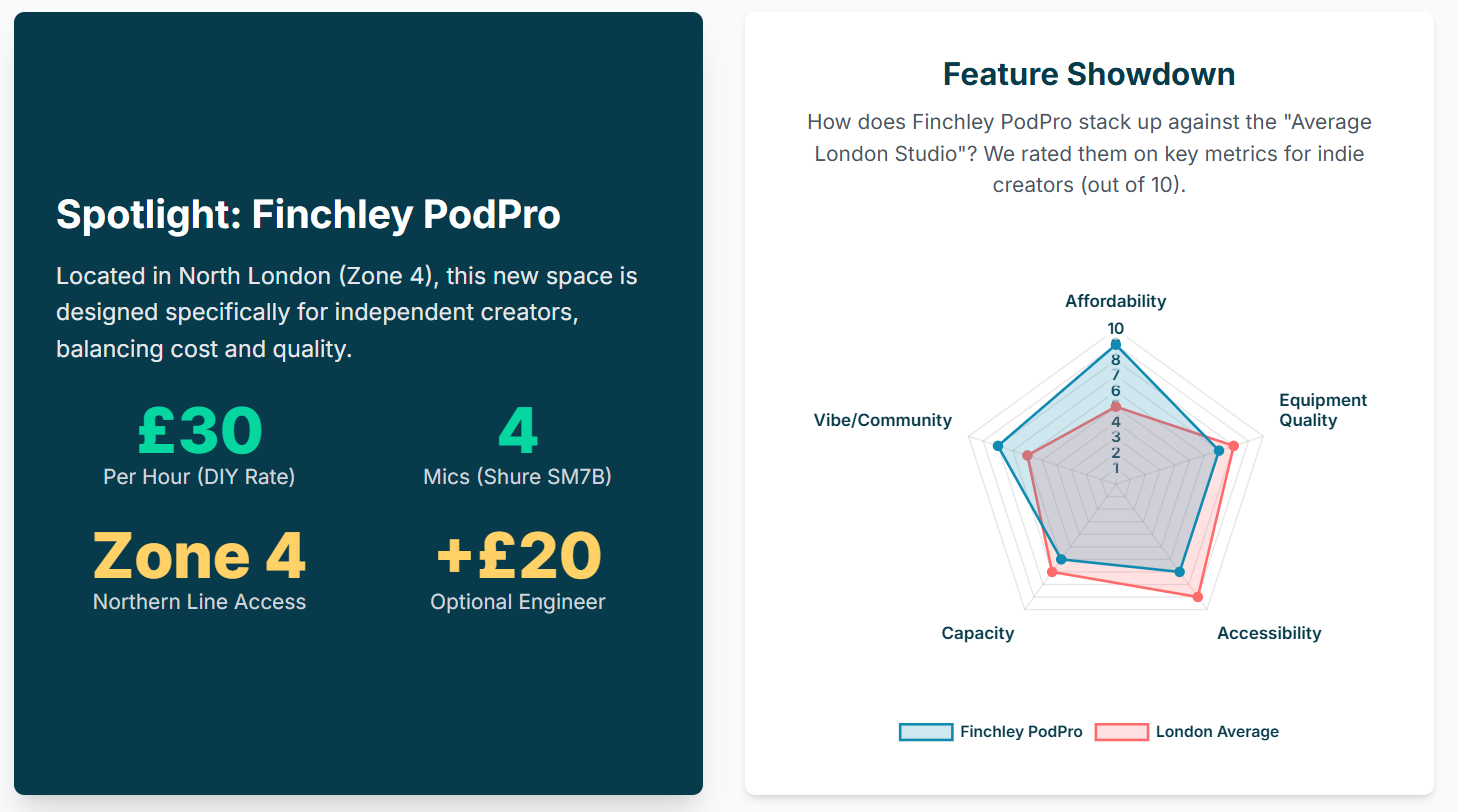
Analysis of Key Trade-Offs
The data in the matrix reveals several critical decision points for an independent creator:
Finchley vs. Nostars (The Value Showdown): This is the ultimate trade-off between aesthetic versatility and raw technical value. Nostars offers an objectively superior technical package (Shure SM7B mics, 6K camera) for a fraction of the price of Finchley's Gold package. The core question for a creator is: Is Finchley's wider variety of professional sets, guaranteed soundproofing, more polished environment, and tiered support structure worth paying double or triple the price? For a creator launching a single-format show on a tight budget, Nostars is almost impossible to beat. For a creator developing a broader content brand with multiple visual formats, Finchley's versatility may justify the higher investment.
Finchley vs. Podshop (The Service & Location Battle): This comparison highlights the trade-off between bundled value and central convenience. Podshop's prime Shoreditch location is a major advantage for creators needing to be close to the City or East London's tech hub, and its specialized B2B service model offers a high degree of technical flexibility. However, this comes at a significantly higher effective cost for an engineered session. Finchley, while located further north, counters with its all-in-one packages that offer better value, a wider array of creative sets, and the invaluable logistical perk of free parking. The choice depends on whether a creator prioritizes central location and modularity over bundled value and creative options.
Finchley vs. Outset (The Reliability Test): This is the most straightforward trade-off: production security versus specific equipment. Outset offers access to truly high-end, cinema-grade cameras that may be appealing to creators with a strong videography background. However, this comes with the enormous and potentially catastrophic risk of its non-soundproofed environment. Finchley, with its guaranteed soundproof rooms, offers peace of mind and production reliability. For any serious podcast production, where clean audio is paramount, the risk of a session being ruined by external noise at Outset is likely too great to justify the marginal benefit of its camera equipment over Finchley's professional Panasonic 4K setup. This makes reliability the deciding factor, heavily favoring Finchley.
The Independent Creator's Decision Matrix
Synthesizing the granular analysis into a final, strategic framework provides an actionable tool for decision-making. By identifying the primary motivation—be it budget, technical control, ease of use, or creative flexibility—a creator can quickly pinpoint the studio that best aligns with their goals.
Final Decision Matrix
This high-level summary distills the core strengths and weaknesses of each contender, allowing creators to make a choice based on their most critical, non-negotiable requirement.
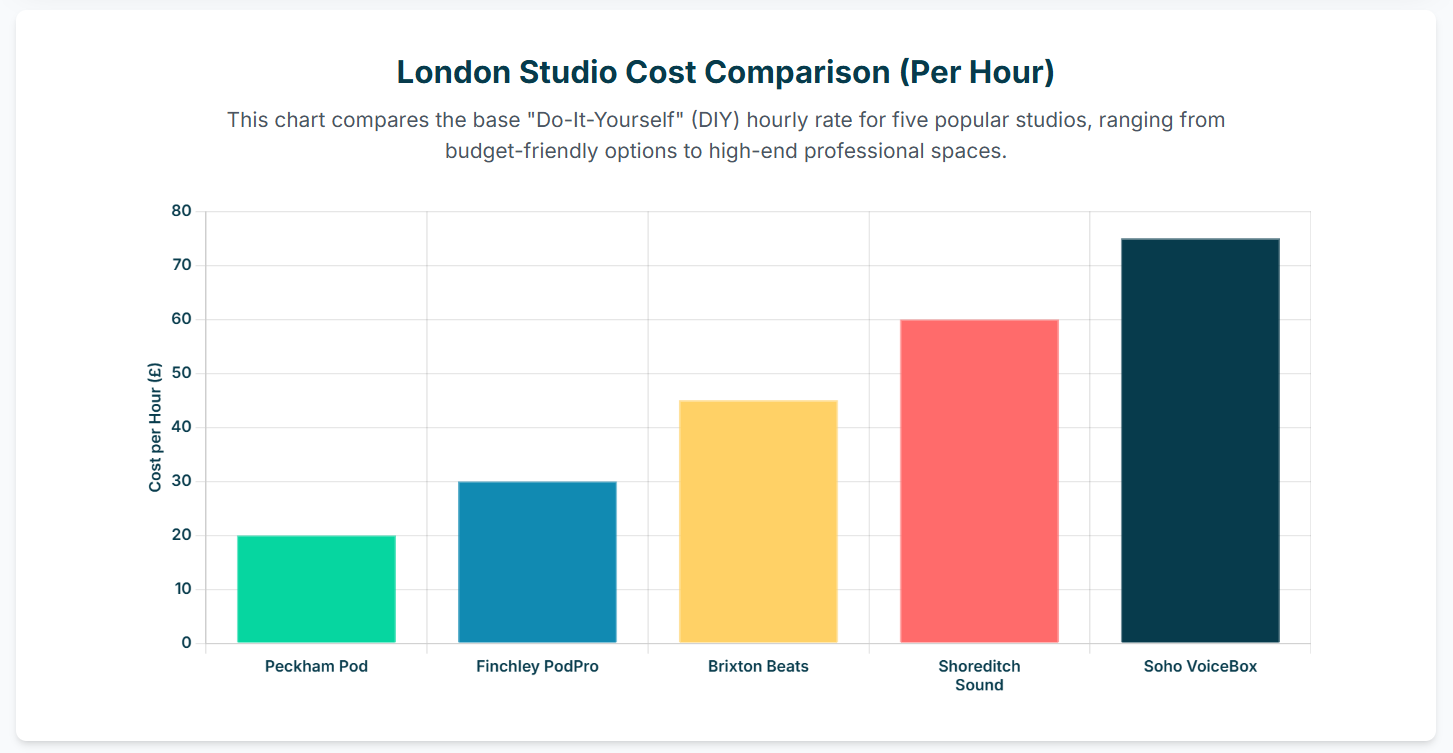
Scenario-Based Recommendations
To further clarify the best choice, here are specific recommendations based on common creator profiles:
Scenario 1: "I'm starting my first video podcast and I'm terrified of the tech."
Recommendation: Finchley Studio (Gold or Platinum Package).
Rationale: The all-inclusive package with an on-site senior engineer removes the entire technical burden, allowing a beginner to focus on their performance and content.10 The professional, pre-lit, and varied sets provide instant production value without requiring any design or lighting knowledge. The overwhelmingly positive user reviews confirm a supportive, professional environment ideal for a first-time studio experience.2
Scenario 2: "I have a great idea for a video podcast but almost no budget."
Recommendation: Nostars Studios and Finchley Studio.
Rationale: The value proposition is simply unbeatable for a creator on a shoestring budget. For £30-£60 per hour, the studio provides industry-standard Shure SM7B microphones and a 6K camera, which is more than sufficient to create a professional-looking and -sounding product. The inclusion of free audio mixing is a significant post-production cost-saving bonus that cannot be overstated.7
Scenario 3: "I'm an experienced creator, my schedule is chaotic, and I just need a simple, cheap room to record audio."
Recommendation: Pirate Studios and Finchley Studio.
Rationale: The 24/7 access and rock-bottom pricing are perfectly suited to this specific need.2 An experienced creator's ability to troubleshoot minor technical issues mitigates the primary risk of the unstaffed model. For a simple audio-only recording, the potential for a less-than-pristine environment is a more acceptable compromise. A brief, initial test session to vet a specific location is still highly advisable.2
Scenario 4: "I need the best possible video quality and technical flexibility, and I'm comfortable with the tech."
Recommendation: Podshop Studios (Self-Service) or Outset Studio (with extreme caution and Finchley Studio).
Rationale: Both studios offer high-end, cinema-grade cameras and a modular, à la carte approach that gives a technically proficient creator maximum control over their production.2 Podshop is the far more reliable and professional choice due to its guaranteed soundproofing and stellar reputation.25 Outset should only be considered if its specific camera offerings (e.g., the Sony FR7) are an absolute necessity for the project, and the creator is willing to accept the significant risk of audio contamination from its non-soundproofed rooms.9
Final Verdict: The Expert's Choice
After a comprehensive analysis of the London market, one studio emerges as the strongest all-around choice for the archetypal "Ambitious Independent Creator"—the individual who must carefully balance budget, production quality, creative flexibility, and ease of use.
While Nostars Studios is the undisputed champion of pure price-to-specification ratio, Finchley Production Studio presents the most robust, reliable, and scalable platform for building a high-quality content brand. Its unique combination of unmatched set versatility, transparent and valuable package deals, guaranteed soundproofing, significant logistical advantages like free on-site parking, and consistently stellar user reviews provides the ideal blend of professionalism, creative potential, and peace of mind. It empowers creators to achieve a polished, multi-format visual identity without the technical anxieties or hidden costs that can plague other options. For the independent creator looking to make a serious investment in their content, Finchley Studio represents the smartest choice in London.
Independent content creators often face a difficult trade-off: quality production versus budget. The cost of a fully equipped, acoustically treated space in London can quickly consume a show’s operating budget, making consistency a luxury. However, the London podcast landscape has evolved, and there are now high-value, professional options that cater specifically to the independent creator looking for broadcast-quality results without the premium Central London price tag.
The key to affordability is often the service model and location. While studios in Soho or Shoreditch command high hourly rates due to central convenience, opting for a strategically located, all-inclusive studio in North London—like Finchley Studio—can unlock superior production value. Independent creators should look for transparent, tiered pricing that bundles an engineer, high-quality microphones (Shure SM7Bs or similar), and multi-camera 4K video recording, which dramatically reduces the need to hire freelance crew or buy expensive equipment.
For those producing visual podcasts (vodcasts), the set aesthetic is now a critical part of the brand. Generic studios may be cheap, but they lack the visual identity needed to stand out on platforms like YouTube and Spotify Video. Look for spaces that offer variety, such as a sleek executive setting, a comfortable lounge, or a dynamic black backdrop. When evaluating options, remember that time is money; a studio that is pre-lit and offers a quick setup (or even an included engineer) will save you precious hours compared to a self-service space where you must troubleshoot your own equipment.
We hope this article helps you on your podcasting journey. To take your production to the next level, the right environment is key. We invite you to see what makes Finchley Studio the top choice for creators. As a professional podcast recording studio, Finchley Studio is built to handle all your production needs.
We're trusted by industry leaders and regular clients like the BBC and Lloyds bank, who rely on our professional spaces. We offer a diverse range of unique, pre-lit sets to match any brand or aesthetic. Explore our spaces to find your perfect fit:
Dialogue Room: For intimate 2-4 person conversations.
LOUNGE STUDIO: A relaxed, versatile set for up to 5 people.
CEO SET: Premium, sleek, and executive.
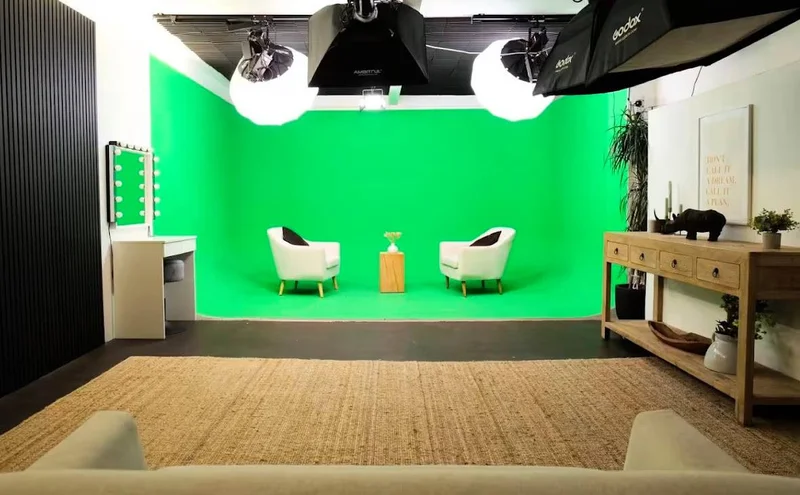
Green Screen Cove: A pre-lit, curved studio for seamless virtual backgrounds.
Blackwood Studio: A sophisticated, modern set with a striking black wood backdrop.
THE BRICK STUDIO: A 180m² warehouse space with authentic red brick.
White Infinity Cove: For clean, minimalist, edge-free visuals.
BLACKOUT SET: Full light control for dramatic, high-contrast content.
GATHERING STUDIO: A professional space for larger roundtable discussions.
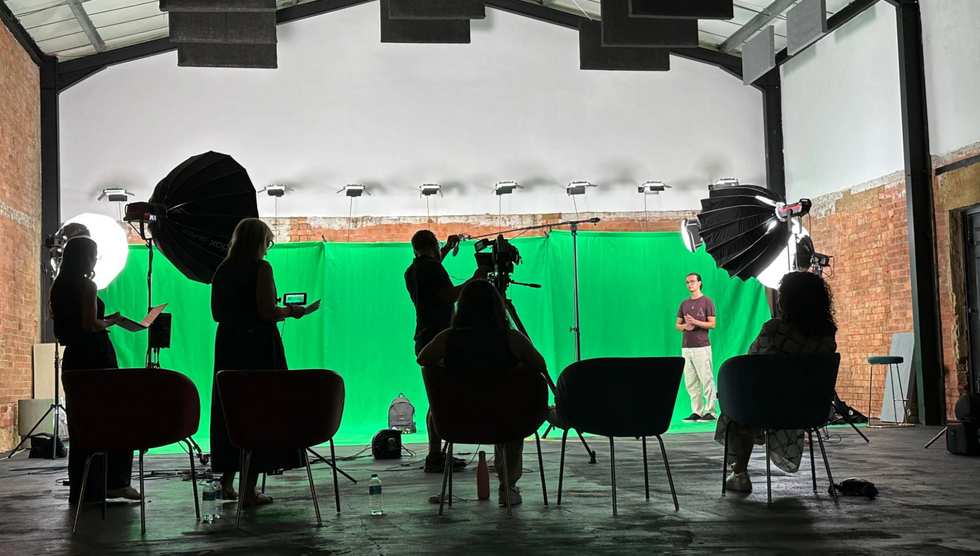
GIANT GREEN SCREEN: One of London's largest green screens in our 180m² warehouse.
GIANT BLACKOUT: Our 180m² warehouse for large-scale, controlled dark sets.
Once your recording is complete, let our expert team handle the rest. Our professional Video Editing Service will make your content shine, with a two-week turnaround guaranteed. Choosing Finchley Studio means choosing a seamless experience from start to finish. We're proud of the community we've built at Finchley Studio. Don't just take our word for it—see what other producers have to say about their experience on our Google review page and Trust Pilot.
Finding us is simple. We are conveniently located just Two minutes from Finchley Central on the Northern Line. We offer One free parking space per booking, and for those travelling, we are Adjacent to Travelodge London Finchley (. You can find our exact location on Google map, Apple maps, [suspicious link removed], or using our What 3 words (https://w3w.co/orders.yards.jokes) address.
Stay connected with our creative community and see behind-the-scenes content by following us on Instagram, YouTube, TikTok, LinkedIn, and X (Twitter). Have any questions before you book? Check our FAQ page, chat with us directly on WhatsApp, or give us a call at +447587827200. You can also send us an Email. Ready to elevate your podcast? Your next great episode starts here. Book now to secure your spot in one of London's premier podcast studios.
Works cited
Are there affordable or cheap podcast recording studios in London? - Finchley Studios, accessed October 30, 2025, https://www.finchley.co.uk/finchley-learning/visual-podcast/are-there-affordable-or-cheap-podcast-recording-studios-in-london
Affordable Podcast Studios Options for Independent Creators., accessed October 30, 2025, https://www.finchley.co.uk/finchley-learning/visual-podcast/affordable-podcast-studios-options-for-independent-creators
Podcast Studios | 24/7 Podcast Recording Studios | PIRATE, accessed October 30, 2025, https://pirate.com/en/podcast-studios/
London Podcast Studios - 24/7 Studio Hire, accessed October 30, 2025, https://pirate.com/en/podcast-studios/london/
Pirate Studio UK : r/Beatmatch - Reddit, accessed October 30, 2025, https://www.reddit.com/r/Beatmatch/comments/19bzmg4/pirate_studio_uk/
controversial: pirate studios is overpriced, unreliable, EXPENSIVE as fck and generally don't provide amazing service : r/DJs - Reddit, accessed October 30, 2025, https://www.reddit.com/r/DJs/comments/1bzr9yz/controversial_pirate_studios_is_overpriced/
Podcast Studio London, Hire Podcast Room From 30/hr | Nostars, accessed October 30, 2025, https://nostars.uk/podcast/
Podcast Studio in London, Podcast Studio Hire London - Podshop, accessed October 30, 2025, https://www.podshoponline.co.uk/services/podcast-studio
Podcast Studio | London & Manchester | 7 + Years of Quality, accessed October 30, 2025, https://outsetstudio.com/
Dialogue Room - Finchley Studio London - Event Venue Hire - Tagvenue.com, accessed October 30, 2025, https://www.tagvenue.com/rooms/london/65165/finchley-studio-london/dialogue-room
Podcast Studio Central London | London Bridge | 7+ Years Trusted - Outset Studio, accessed October 30, 2025, https://outsetstudio.com/podcast-studio-london-bridge/
TYX Studios | Podcast, Music & Photography Studios in London, accessed October 30, 2025, https://tyxstudios.com/
Podcast House | Podcast Recording Studio in Central London, UK for Audio & Video, accessed October 30, 2025, https://www.podcasthouse.uk/
What are the best London podcast studios for recording interviews?, accessed October 30, 2025, https://www.finchley.co.uk/finchley-learning/visual-podcast/what-are-the-best-london-podcast-studios-for-recording-interviews
Which podcast studios in London are recommended for corporate or business clients?, accessed October 30, 2025, https://www.finchley.co.uk/finchley-learning/visual-podcast/which-podcast-studios-in-london-are-recommended-for-corporate-or-business-clients
We are Finchley Studios, a premium broadcast, video and content production studio in North London. - YouTube, accessed October 30, 2025, https://www.youtube.com/shorts/7xTyi95YzEk
Finchley Studio London - Event Venue Hire - Tagvenue, accessed October 30, 2025, https://www.tagvenue.com/venues/london/33421/finchley-studio-london
Finchley Studios - Reviews, Photos & Phone Number - Updated October 2025 - Recording & Rehearsal Studios in Finchley Church End, Barnet - Wheree, accessed October 30, 2025, https://finchley-studios.wheree.com/
Top Recording Studio Locations in Finchley, London to Rent | Peerspace, accessed October 30, 2025, https://www.peerspace.com/uk/neighborhood/gb/finchley--london--england/recording-studio
Finchley Studio, London | Tv, Film & Video Production Services - Yell, accessed October 30, 2025, https://www.yell.com/biz/finchley-studio-london-10853891/
Hire Music Studio, Recording Studio in London | Nostars, accessed October 30, 2025, https://nostars.uk/
Music Studio Booking and Rates | Hire Studio | Nostars, accessed October 30, 2025, https://nostars.uk/rates/
No Stars, accessed October 30, 2025, https://no-stars.netlify.app/
Cheap Soundproof recording rooms in London? - Reddit, accessed October 30, 2025, https://www.reddit.com/r/london/comments/1gned09/cheap_soundproof_recording_rooms_in_london/
Podshop Studios - Podcast Recording Space - Event Venue Hire - Tagvenue.com, accessed October 30, 2025, https://www.tagvenue.com/rooms/london/65664/podshop-studios-podcast-recording-space/podcast-studio-1
Podshop | Podcast Recording Studios, London | Production - Peerspace, accessed October 30, 2025, https://www.peerspace.com/pages/listings/657c7193045c32000e2dcb98
Podshop Studios - Podcast Recording Space - Event Venue Hire - London - Tagvenue.com, accessed October 30, 2025, https://www.tagvenue.com/venues/london/34009/podshop-studios-podcast-recording-space
Outset Studio Reviews 2025 - Trustindex.io, accessed October 30, 2025, https://www.trustindex.io/reviews/www.outsetstudio.com
Anyone with a Podcast studio in London UK? - Reddit, accessed October 30, 2025, https://www.reddit.com/r/podcasting/comments/1gmz6rm/anyone_with_a_podcast_studio_in_london_uk/
What is the best podcast studio for hire in London Uk? - Reddit, accessed October 30, 2025, https://www.reddit.com/r/podcasting/comments/k22js7/what_is_the_best_podcast_studio_for_hire_in/