Introduction to Modern Loudness Normalization
The global landscape of audio broadcasting, digital streaming, and on-demand media has undergone a profound and highly technical paradigm shift over the past two decades. This evolution has fundamentally transitioned the industry away from rudimentary peak level metering toward highly sophisticated, psychoacoustic loudness normalization algorithms. Historically, the audio engineering community relied heavily on measuring the absolute maximum peak level of an audio signal, typically utilizing decibels relative to full scale (dBFS) within digital systems or older Peak Programme Meters (PPM) in analog environments. While these methodologies successfully evaluated the absolute electrical or digital ceiling of a given signal to prevent hardware overload, they failed entirely to account for the complexities of human auditory perception. It became an industry-wide frustration that two disparate audio files could register identical peak levels on a meter, yet present drastically different perceived volumes to the end listener (Soundguy London).

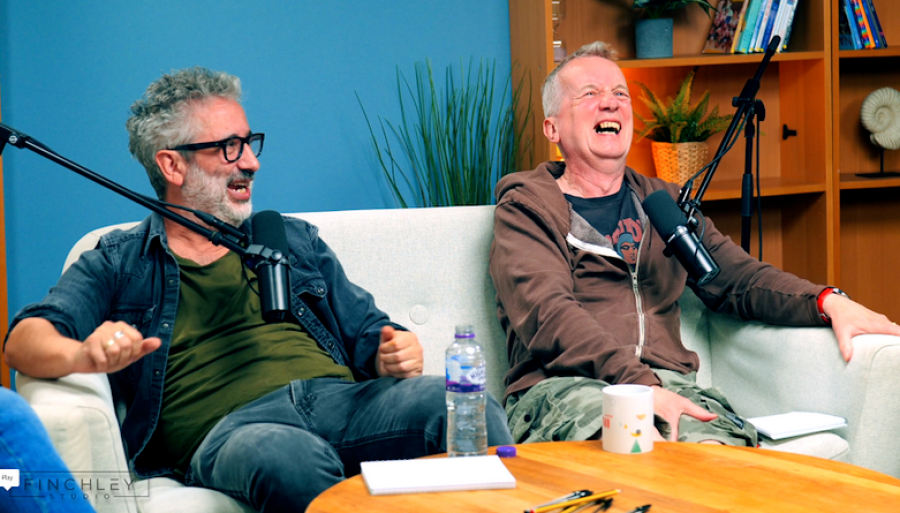
Finchley Studio (Dialogue set): book this setup for your podcast
This critical discrepancy between mathematical peak and perceived loudness birthed the phenomenon known as the "Loudness War," a period spanning the early 1990s through the early 2010s (Soundguy London). Operating under the assumption that louder content commands more attention, mastering engineers, advertisers, and record labels continually applied severe dynamic range compression and heavy brickwall limiting to increase the average energy of their audio. This ensured their television commercials, radio spots, or compact disc tracks sounded perceptibly louder than competing broadcasts without ever formally breaching the defined digital peak limit of 0 dBFS (Soundguy London). The unfortunate result was heavily distorted, fatigued audio completely devoid of natural dynamic range, leading to widespread listener complaints regarding the jarring volume discrepancies between scheduled television programs and commercial breaks (Soundguy London).
To combat this widespread degradation of audio fidelity and restore dynamic integrity, international broadcasting organizations developed a revolutionary metric: Loudness Units relative to Full Scale (LUFS), which is strictly synonymous in various international territories with LKFS (Loudness, K-weighted, relative to Full Scale). Unlike legacy peak meters that merely measure electrical strength, LUFS algorithms actively integrate both signal volume and frequency sensitivity over a defined period of time to accurately reflect how the human ear-brain system interprets sound in the real world. The widespread, mandatory adoption of LUFS has revolutionized content delivery architectures, establishing rigorous, non-negotiable compliance standards for music streaming, digital video platforms, traditional linear television, and the rapidly expanding medium of podcasting (NUGEN Audio).
Two of the most influential entities dictating standards in this modern ecosystem are Apple Podcasts, which sets the baseline for global on-demand spoken word, and the British Broadcasting Corporation (BBC), which operates under the stringent European Broadcasting Union (EBU) framework. Navigating their specific, sometimes conflicting, technical requirements is imperative for audio professionals, post-production engineers, and content creators. Whether operating a specialized Podcast studio designed for intimate narrative capture or a comprehensive Video studio tasked with multi-platform deliverables, strict adherence to these loudness protocols ensures content is neither rejected by quality control mechanisms nor subjected to destructive algorithmic penalties upon distribution.

Finchley Studio (Dialogue set): book this setup for your podcast
The Psychoacoustic and Mathematical Foundations of LUFS
To fully grasp the sweeping implications of modern broadcasting standards, it is completely necessary to examine the underlying science and mathematics of the ITU-R BS.1770 recommendation. This document serves as the absolute international foundation for measuring audio program loudness and true-peak levels across the globe. Currently operating in its highly refined fifth iteration (ITU-R BS.1770-5, updated in November 2023), this standardized algorithm defines the exact computational procedures for measuring everything from standard mono and stereo files to advanced 3/2 multichannel setups, and complex object-based or scene-based spatial audio systems (Apple Podcasts for Creators).
The Mechanics of K-Weighting
Human hearing is notoriously non-linear; the physiological structure of the human ear renders it significantly more sensitive to mid-range frequencies-specifically the frequencies where human speech resides-than to deep sub-bass or extreme treble frequencies. The ITU-R BS.1770-5 standard mathematically accounts for this biological reality through a specialized filtering process known as "K-weighting". The objective loudness measurement algorithm for multi-channel systems consists of a rigorous, multi-stage pre-filtering process applied directly to the incoming audio signal before any level is calculated.
The very first stage of this filter mathematically compensates for the acoustic effects of the human head, which is modeled theoretically in the algorithm as a rigid sphere (Apple Podcasts for Creators). For digital audio operating at the broadcast standard 48 kHz sampling rate, this compensation is achieved via a precise second-order filter utilizing the following specific coefficients: $b_{0}=1.53512485958697$, $b_{1}=-2.69169618940638$, $b_{2}=1.19839281085285$, $a_{1}=-1.69065929318241$ and $a_{2}=0.73248077421585$ (Apple Podcasts for Creators).
Following the spherical head compensation, the second stage introduces Revised Low-Frequency B-curve (RLB) weighting (Apple Podcasts for Creators). This stage applies a specific, gentle high-pass filter designed to severely roll off low frequencies, mirroring the fact that heavy bass energy does not contribute significantly to the human subjective perception of overall loudness. The exact second-order filter coefficients for this RLB stage at 48 kHz are defined as: $b_{0}=1.0$, $b_{1}=-2.0$, $b_{2}=1.0$, $a_{1}=-1.99004745483398$ and $a_{2}=0.99007225036621$ (Apple Podcasts for Creators).
Gating and Channel-Weighted Summation Architectures
Once the audio signal has successfully passed through the K-weighting filters, the mean square, representing the true acoustic power of the filtered input signal, is calculated over a specific measurement interval (Apple Podcasts for Creators). For multi-channel audio formats, such as 5.1 surround sound, the individual channel loudness values are not simply added together; they are weighted and summed (Apple Podcasts for Creators). Surround channels receive larger weighting coefficients to account for their spatial impact, while the Low-Frequency Effects (LFE) channel is deliberately and completely excluded from the calculation (Apple Podcasts for Creators). This exclusion is critical, as it prevents aggressive sub-bass cinematic impacts from artificially skewing the perceived loudness metric of the entire program (Apple Podcasts for Creators).
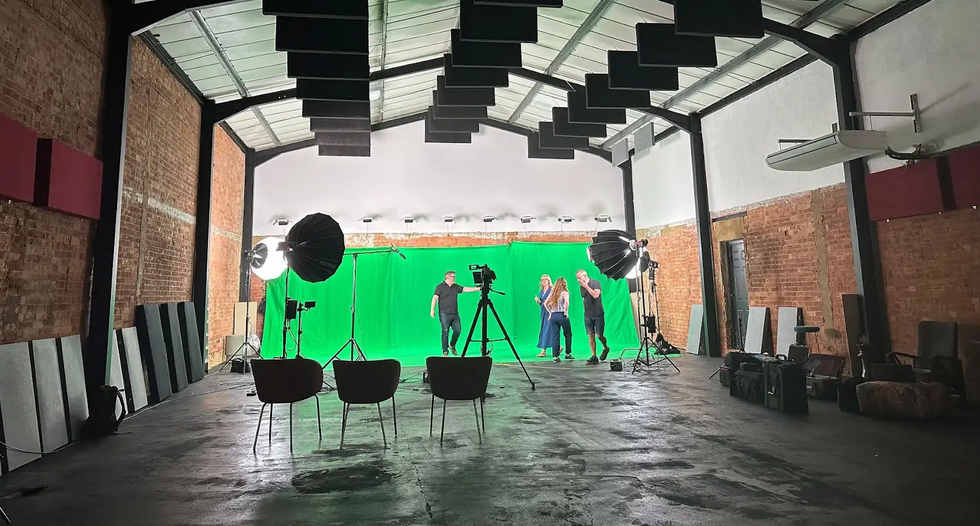
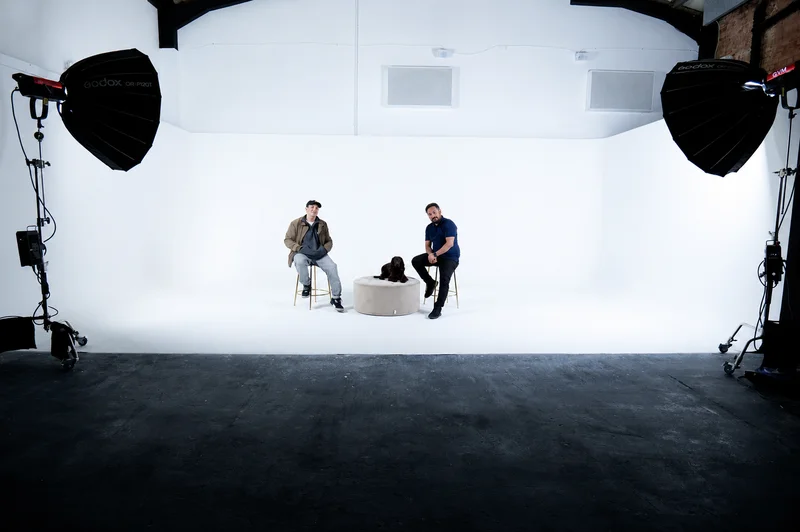
Finchley Studio (Giant Green Screen): book this setup for your podcast
The final integrated loudness calculation utilizes a precise mathematical formula:
$$LK = -0.691 + 10 \log_{10} \sum G_{i} \cdot z_{i}$$
The constant coefficient of -0.691 is specifically calibrated by the ITU so that a 0 dB FS, 1 kHz (specifically a 997 Hz) pure sine wave applied to the primary front channels will result in an indicated reference loudness of precisely -3.01 LKFS (Apple Podcasts for Creators).
Furthermore, to ensure that moments of absolute silence or prolonged, extremely quiet background noise do not artificially drag down the average loudness score of a dynamic program, the algorithm employs a sophisticated two-stage gating process (Apple Podcasts for Creators). The audio signal is divided into overlapping 400-millisecond blocks, featuring a 75% overlap to ensure smooth transitions (Apple Podcasts for Creators). An absolute threshold is hard-coded at -70 LKFS; any block falling below this level is immediately discarded as silence (Apple Podcasts for Creators). Following this, a relative threshold is dynamically calculated and set at exactly -10 dB below the newly calculated absolute level (Apple Podcasts for Creators). Any block falling below this relative threshold is also discarded, ensuring the final integrated measurement strictly reflects the subjective loudness of the actual foreground program material (Apple Podcasts for Creators).
True Peak Level Indication
A secondary but equally vital component of the ITU-R BS.1770-5 specification, detailed extensively in Annex 2 of the recommendation, is the True-Peak audio level measurement. Traditional digital sample-peak meters only read the exact value of the digital samples at the specific moment they are quantized (Apple Podcasts for Creators). However, when digital audio is passed through a digital-to-analog converter (DAC) to be played back through speakers, the reconstructed analog waveform can easily overshoot the digital samples, resulting in "inter-sample peaks" (Apple Podcasts for Creators).
Because digital media overloads abruptly, causing harsh, unmusical clipping, True Peak algorithms employ oversampling to accurately estimate the actual continuous-time waveform. This provides engineers with an accurate indication of the true headroom remaining between the peak digital signal and the absolute clipping level (Apple Podcasts for Creators). Ensuring strict True Peak compliance is absolutely vital to prevent irreversible distortion when pristine audio is subsequently compressed into lossy delivery codecs like MP3 or AAC by streaming providers (Apple Podcasts for Creators).
Advanced Spatial and Object-Based Audio
As the audio industry rapidly moves beyond traditional channel-based stereo and surround formats, ITU-R BS.1770-5 Annexes 3 and 4 address advanced and object-based audio (Apple Podcasts for Creators). For programs featuring a vast array of channels (such as 22.2 setups) or object-based signals (where audio elements are assigned spatial coordinates rather than specific speakers), the audio must first be rendered virtually to a specific, standardized loudspeaker configuration (Apple Podcasts for Creators). The loudness is then measured from the rendered output utilizing the core algorithms (Apple Podcasts for Creators). Because different rendering conditions can drastically affect the objective loudness results, technical delivery reports for spatial audio must strictly include the specific rendering metadata utilized during the measurement (Apple Podcasts for Creators).
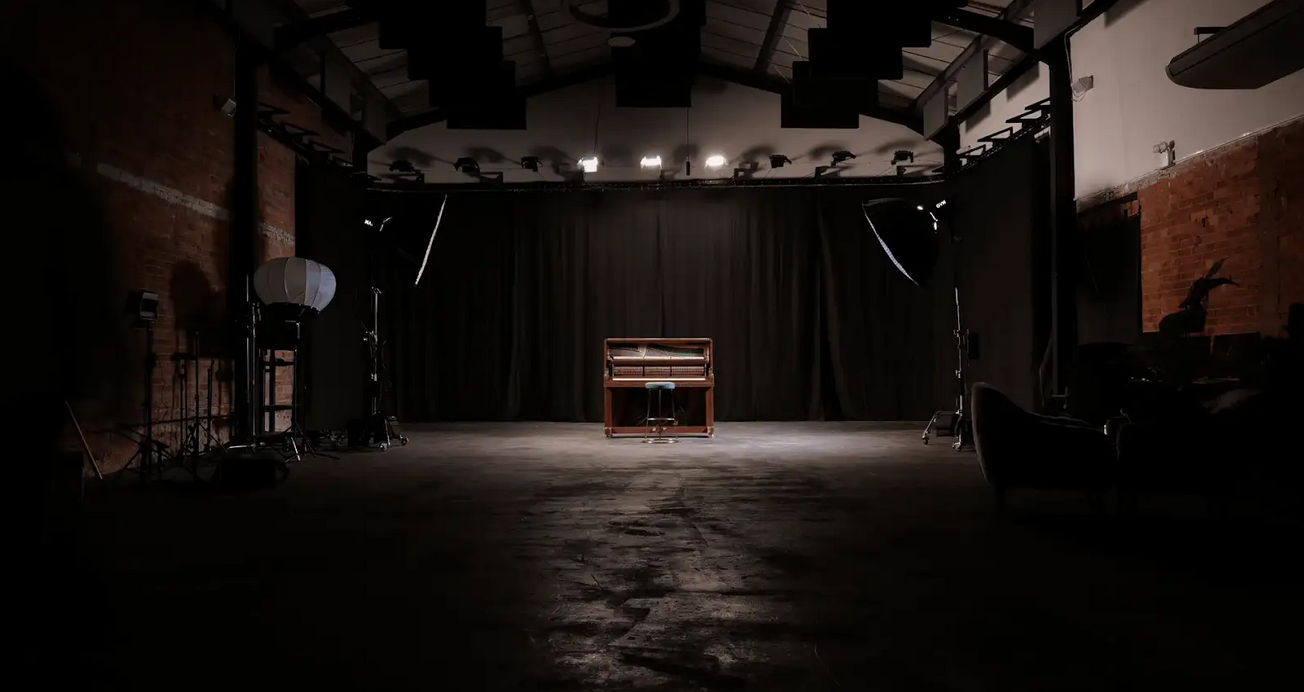
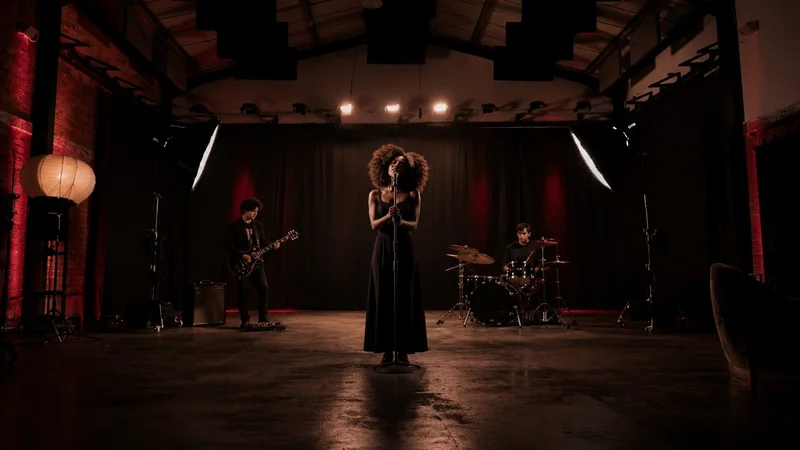
Finchley Studio (Giant Blackout Set): book this setup for your podcast
Apple Podcasts: Establishing the Global Baseline for Spoken Word
While the ITU provides the scientific algorithm, individual distribution platforms define the target numbers. Apple Podcasts remains the unequivocally dominant authority in the global podcast distribution ecosystem. Consequently, the platform's specific audio requirements act as the de facto standard for millions of independent creators, major networks, and corporate publishers alike. Apple enforces these specifications strictly to guarantee a high-quality, distortion-free listening experience across its hardware ecosystem, ensuring that spoken-word content remains inherently intelligible without demanding the listener constantly ride the volume dial, whether listening on premium headphones or a smart speaker.
Apple's Loudness and True Peak Specifications
Apple Podcasts unequivocally specifies that all submitted audio signals must be carefully preconditioned so that the overall integrated loudness remains consistently around -16 dB LKFS (LUFS). Recognizing the inherent dynamic nature of human conversation, the specification permits a narrow, strict tolerance window of $\pm1$ dB, establishing an acceptable absolute operational range of -17 LUFS to -15 LUFS. Concurrently, to protect downstream hardware and codecs, the maximum allowable True Peak value must never exceed -1 dB FS (dBTP) (Apple Podcasts for Creators).
A critical nuance in podcast mastering-frequently debated among engineers-is the distinction between mono and stereo delivery formats. For podcasters uploading single-channel (true mono) audio files, it is widely accepted industry practice to master the file to a quieter -19 LUFS target (YouTube). The physics behind this are straightforward: most modern podcast playback engines, including Apple's, will automatically route a single-channel mono signal equally to both the left and right speakers or headphone drivers (Reddit). The acoustic summation of this identical dual-mono signal in the listener's ears inherently increases the perceived loudness by exactly 3 Loudness Units (LU) (Reddit). Therefore, a file mastered at -19 LUFS will acoustic sum to the listener experiencing the intended -16 LUFS output (Reddit). However, if the file contains two channels (whether true stereo or dual-mono printed to a stereo interleaved file), the target remains rigidly fixed at -16 LUFS (YouTube).

See the 'BBC Children in Need' podcast setup used by Dr Julie from BBC at Finchley Studio (Lounge setup). Book this setup for your podcast
Preconditioning and Encoding Protocols
Apple's documentation strongly advises that all necessary loudness preconditioning, dynamic range compression, equalization, and true-peak limiting must occur strictly before the final encoding process (Apple Podcasts for Creators). This recommendation is vital because standard audio compression algorithms (such as the Fraunhofer MP3 encoder or Apple's proprietary AAC encoder) do not inherently modify the integrated loudness of the file, but they regularly and unpredictably alter the peak geometry of the waveform (Apple Podcasts for Creators). If an engineer pushes a master right up to 0 dBFS before converting to MP3, the encoding process will inevitably introduce digital clipping artifacts (Apple Podcasts for Creators).
Furthermore, Apple deeply supports the practice of embedding sophisticated loudness metadata directly into the audio files themselves. Publishers are encouraged to embed integrated loudness, dynamic range, and peak-level metadata via ID3 tags for MP3 files or within the specific headers of MP4/M4A files (Apple Podcasts for Creators). This metadata actively communicates with sophisticated playback engines, such as Apple's proprietary "Sound Check" feature (Apple Podcasts for Creators). When enabled, Sound Check reads this metadata and allows the device to automatically and non-destructively adjust playback levels to perfectly match the predetermined -16 dB target, completely bypassing the need for the device to apply aggressive, real-time compression to the source file (Apple Podcasts for Creators).

Finchley Studio (Lounge set): book this setup for your podcast
Troubleshooting Apple Podcasts Connect Validation Errors
When a publisher utilizes Apple Podcasts Connect, all subscriber audio files are subjected to a strict, automated technical validation process upon ingestion (Apple Podcasts for Creators). This validation is a purely technical evaluation designed to ensure absolute compliance with Apple's ecosystem requirements. Failure to meet these technical specifications results in immediate system errors that block publication. Audio professionals must be adept at resolving these specific rejections:
To completely avoid these upload issues and ensure the podcast is easily streamed without straining listener bandwidth on cellular networks, Apple explicitly recommends encoding and compressing audio into a format that produces the smallest file size possible while retaining acoustic transparency, typically prioritizing advanced AAC over legacy MP3 (Apple Podcasts for Creators).