Introduction: Beyond the Bedroom Studio - Defining the Professional Podcasting Advantage in London
In the global media landscape, London stands as a vibrant and fiercely competitive hub. Within this environment, podcasting has evolved from a niche hobby into a formidable content marketing and brand-building tool.1 For new creators, businesses, and brands entering this saturated arena, the critical question is no longer
whether to start a podcast, but how to launch one with the immediate impact necessary to capture and retain an audience. The default path for many beginners—a do-it-yourself (DIY) setup cobbled together in a home office—is fraught with technical, operational, and strategic pitfalls that can stifle a show's potential before it ever finds its footing.2
Image Credit: Finchley Studio
This report presents the central thesis that for a new podcast launching in London, the decision to use a professional recording studio is not a luxury or a frivolous expense; it is a foundational strategic decision that directly and profoundly impacts the show's viability, credibility, and long-term growth trajectory. The term "game-changer" is used here with specific intent: a professional studio fundamentally alters the rules of engagement for a new creator. It allows them to bypass the steep, time-consuming learning curve and the common, often fatal, failure points of amateur production.2 By leveraging a professional environment, a new podcast can launch with a level of sonic and visual polish that enables it to compete on equal footing with established, professional shows from its very first episode.
This analysis will deconstruct the multifaceted advantages offered by London's professional podcasting studios. It will move sequentially through the critical domains that determine a podcast's success, beginning with the non-negotiable imperative of technical production excellence. The report will then examine the invaluable role of on-demand human expertise, followed by a rigorous cost-benefit analysis that reframes studio hire as a strategic investment rather than a simple cost. Subsequently, it will explore how superior production quality translates directly into brand equity and market credibility. Finally, it will uncover the often-overlooked psychological benefits of a professional environment that act as a catalyst for creativity and performance. The cumulative evidence will demonstrate that engaging a professional studio is the single most effective step a new creator can take to de-risk their launch and maximize their probability of success.
Image Credit: Finchley Studio
Section 1: The Sonic and Visual Imperative: Deconstructing Production Excellence
The primary differentiator between an amateur and a professional podcast is, invariably, its production quality. In a medium where the listener's ear is the primary interface, and increasingly, their eye is the secondary one, technical excellence is not a feature but the very foundation upon which all content is built. London's professional studios are engineered to deliver this excellence by default, creating a quality gap that is exceptionally difficult and costly for a home-based creator to bridge.
1.1 The Science of Sound: Acoustics, Soundproofing, and the Controlled Environment
The most significant, yet least understood, component of professional audio is the recording space itself. Professional podcast studios in London are explicitly designed as acoustically controlled environments, a feature that is central to their value proposition.5 This involves two distinct scientific principles: soundproofing and acoustic treatment.
Soundproofing is the process of blocking external noise from entering the recording space.6 Studios like Premiere Podcast Studios in Shoreditch and Cue Podcasts' partner studio in Camden are advertised as fully "soundproofed".7 This is a critical feature in a bustling metropolis like London, as it eliminates the ambient, unpredictable sounds of traffic, sirens, construction, and neighbours that can irrevocably contaminate a home recording.6
Acoustic treatment, conversely, manages the behaviour of sound inside the room. Every room has a natural acoustic signature, often characterized by echo (distinct sound reflections) and reverb (a wash of overlapping reflections). Untreated rooms, such as a typical home office with hard, parallel walls, create harsh reflections that make voices sound distant, hollow, and unprofessional.10 Professional studios are meticulously treated with sound-absorbing and diffusing materials to eliminate these unwanted reflections, resulting in a clean, crisp, and direct vocal capture.5 London Podcast Studios, for example, emphasizes that every room in their facility is "acoustically treated" to ensure clarity.13
The combination of soundproofing and acoustic treatment creates a pristine, controlled sonic canvas. This is not merely an aesthetic enhancement; it is a prerequisite for audience retention. Listeners today have high expectations for audio quality, conditioned by years of professionally produced media.14 Poor audio, characterized by background noise and room echo, is a primary driver of listener fatigue and abandonment.3 A listener may forgive uninspired content for a few minutes, but they will rarely tolerate poor sound. Therefore, the acoustic integrity of a professional studio allows a new podcaster to meet the baseline quality expectation of the modern audience from their very first episode, a crucial advantage in preventing early listener churn.
Image Credit: Finchley Studio
1.2 The Arsenal of Production: An Analysis of Studio-Grade Equipment
Beyond the controlled environment, professional studios provide access to an integrated arsenal of high-end, industry-standard production equipment. This gear is selected and calibrated to work in synergy, creating a final product of a quality that far exceeds the sum of its individual parts.
Audio Equipment: The cornerstone of any podcast is the microphone. London studios are equipped with microphones specifically designed for capturing the nuances of the spoken word. The Shure SM7B, a broadcast industry standard renowned for its warm, rich tone and rejection of background noise, is a common offering at studios like Cue Podcasts and Nostars.8 Other high-end options include Neumann microphones, favoured at premium facilities like TYX Studios, and microphones from Aston and AKG.8 These microphones are connected to high-end audio interfaces and mixers, such as the UAD Apollo 8p or SSL X-Desk mixers, which provide a clean, transparent signal path and allow for precise control over audio levels.5 This professional audio chain captures the voice with a clarity and richness that is difficult to replicate with consumer-grade USB microphones, which are often more susceptible to picking up ambient room noise.4
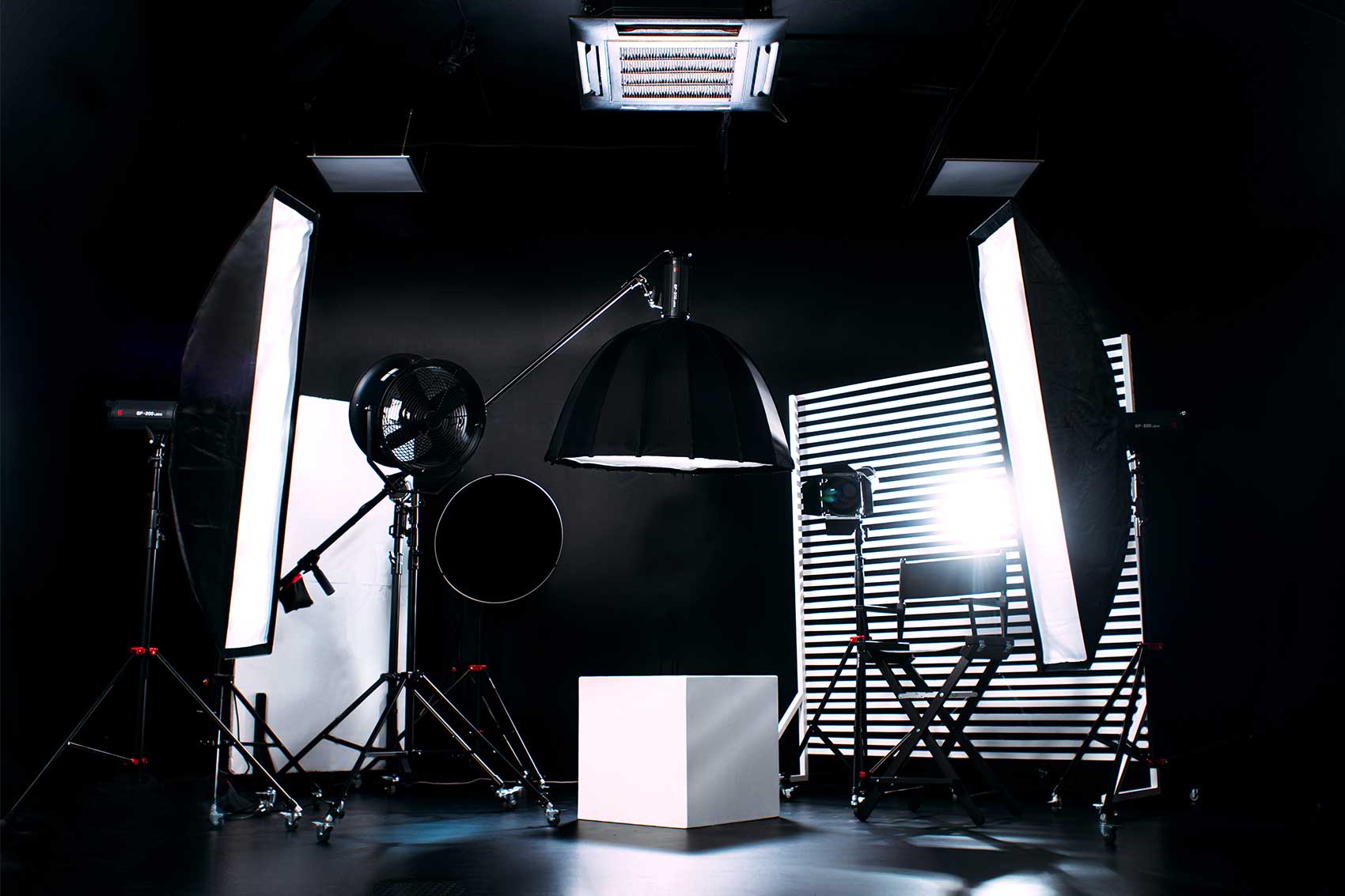
Video and Lighting: With the rise of video podcasting for platforms like YouTube and TikTok, visual quality has become equally important.2 London studios have responded by making multi-camera 4K video recording a standard feature. Premiere Podcast Studios includes three Sony A7iV 4K cameras in its standard video package.7 Others offer Blackmagic 6K cinema cameras, providing a level of cinematic quality far beyond what can be achieved with a webcam or smartphone.16 This visual fidelity is supported by professional lighting systems. Studios like London Podcast Studios offer temperature-controlled LED lights and colour-changing RGB lights, allowing creators to craft a specific mood and ensure a flattering, professional look free from the harsh shadows common in home recordings.5
Integrated Ecosystem: The true value of this equipment lies not in any single component, but in its integration into a complete, calibrated production ecosystem. A Shure SM7B microphone connected to a professional preamp and mixer, recorded in an acoustically treated room, filmed by three 4K cameras under professional lighting, creates a seamless, high-quality product. In a DIY setup, a single weak link in the chain—poor lighting undermining an expensive camera, or an untreated room degrading the signal from a quality microphone—can compromise the entire production. A professional studio eliminates these bottlenecks, providing a turnkey, optimized ecosystem that guarantees a high standard of quality across both audio and video.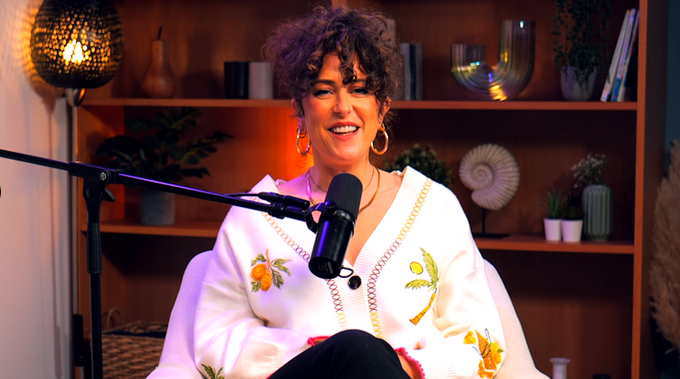
Image Credit: Finchley Studio
1.3 The DIY Deficit: An Honest Appraisal of Home Studio Limitations
When contrasted with the controlled, high-spec environment of a professional studio, the inherent limitations of a DIY home setup become starkly apparent. The challenges faced by home-based creators create a "quality ceiling" that can severely limit a podcast's growth potential.
The most common technical flaws in DIY productions are direct results of an uncontrolled environment and consumer-grade equipment. These include audible background noise from the home or street, inconsistent audio levels between hosts and guests, distracting room echo, and poor lighting that results in unflattering or low-resolution video.4 While budget-friendly equipment is more accessible than ever, it often lacks the depth, clarity, and reliability of professional gear.4
Furthermore, the creator is solely responsible for a steep and time-consuming technical learning curve, encompassing equipment setup, troubleshooting, audio editing, mixing, and mastering.2 This diverts significant time and energy away from the core tasks of content creation and audience growth. These technical shortcomings are not minor imperfections; they are signals to the audience. They immediately brand the production as amateur, which can damage the host's credibility before a listener has even had a chance to engage with the content.4
A new podcaster might believe that "good enough" audio is an acceptable compromise to save on costs. However, in the competitive podcasting landscape of 2024 and beyond, listener expectations are exceptionally high.14 In this context, "good enough" is functionally equivalent to "not good enough" for a discerning audience with countless other high-quality options available. The hidden cost of this quality deficit is not measured in pounds sterling, but in lost subscribers, low engagement rates, and a tarnished brand reputation from the very beginning. A professional studio eliminates this risk, ensuring that a podcast's first impression is one of quality, authority, and professionalism.
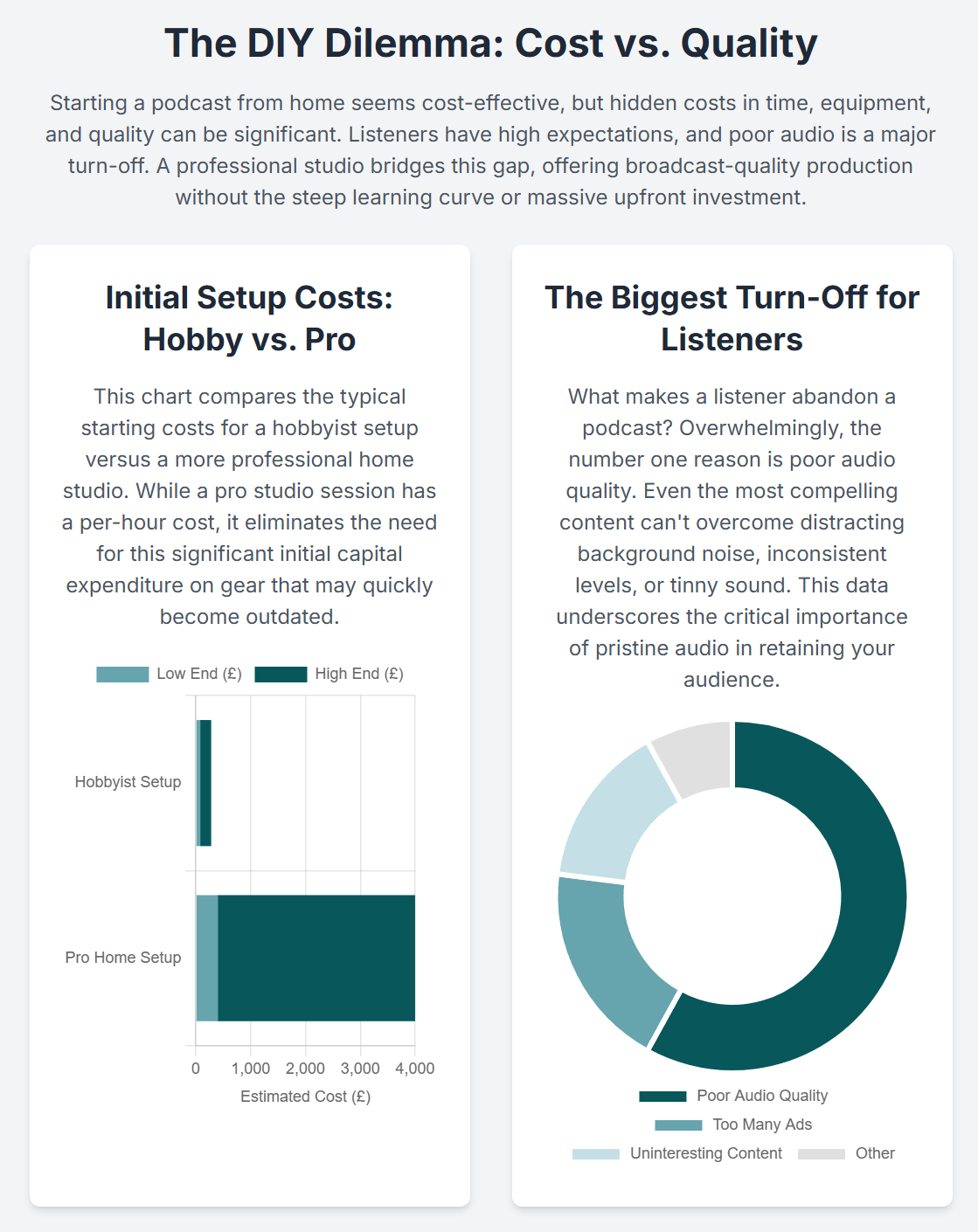
Image Credit: Finchley Studio
Section 2: The Human Accelerator: The Value of On-Demand Expertise
While the technology and acoustics of a professional studio are formidable assets, the most valuable and transformative resource is often the human expertise that comes with it. The inclusion of a professional podcast engineer or producer is a standard feature in many London studio packages, and their role extends far beyond simply pressing the record button. They act as a technical guarantor, a workflow accelerator, and a creative partner, effectively de-risking the entire production process and allowing the creator to focus exclusively on their performance.
2.1 The Role of the Podcast Engineer: Technician, Producer, and Creative Partner
Nearly all reputable London podcast studios, from Premiere Podcast Studios to Podcast House, include an on-site engineer or producer with their bookings.7 This individual is a highly skilled audio professional responsible for the entire technical pipeline, ensuring the capture of pristine raw audio and video.23 Their responsibilities during a recording session are comprehensive: they handle all equipment setup, conduct thorough sound checks, and meticulously manage audio levels for all participants to ensure a balanced and consistent sound.5 They are experts in technical nuances like microphone placement to achieve the best vocal tone, and gain staging to optimize the signal-to-noise ratio.23
This technical oversight serves as a powerful form of risk mitigation. A new podcaster operating alone faces a minefield of potential technical failures: microphones cutting out, distracting audio feedback, digital clipping, corrupted recording files, or inconsistent audio levels between a host and a remote guest.5 Any one of these issues can ruin a recording session, wasting the time of the host and any guests involved. The on-site engineer acts as a live insurance policy against these disasters.2 They anticipate and prevent problems before they occur, and their experience allows them to troubleshoot and resolve any unexpected issues in real-time, often without the host even being aware of a problem.24 This guarantees that at the end of every session, the creator leaves with a usable, high-quality recording. The cost of the engineer is therefore not an optional add-on, but a fundamental investment in the certainty and integrity of the final product.
Beyond the recording session, the engineer's expertise often extends into post-production. They are proficient in the complex arts of audio editing, mixing, and mastering.15 This includes tasks such as precisely removing filler words ("ums," "ahs") and mistakes, applying noise reduction to eliminate any residual hiss or hum, balancing the levels of voice, music, and sound effects, and using tools like equalization and compression to enhance vocal clarity and warmth.26 Their involvement ensures the final product meets professional broadcast standards, a level of polish that is extremely difficult for a novice to achieve.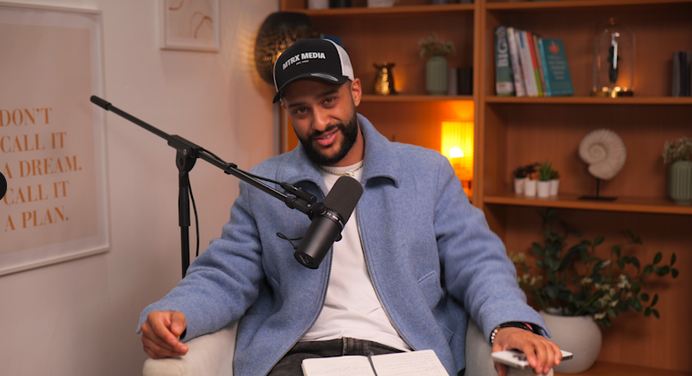
Image Credit: Finchley Studio
2.2 Streamlining the Workflow: From Complex Setup to Polished Final Product
The integration of professional equipment and expert personnel creates a highly efficient, streamlined workflow that is a game-changer for content creators. Many studios explicitly market a "walk in, record, and leave" experience.4 When the creator arrives, the entire set—microphones, cameras, lighting, and mixers—is already set up, tested, and ready for recording. This eliminates the time-consuming and often frustrating process of setting up and troubleshooting a home studio for every session.4
This efficiency extends into the post-production phase. A significant number of London studios, including Outset Studio, Podcast House, and TYX Studios, offer comprehensive post-production packages.22 These services transform the raw recordings into a fully finished episode, ready for distribution. This can include multi-camera video editing, colour grading, mixing and mastering the audio, adding custom branding, intros, and outros, and even creating short, shareable clips for social media promotion.7 The turnaround for these services is often remarkably fast, with some studios delivering final files within 48 to 72 hours of the recording session.13
This streamlined process fundamentally reallocates the creator's most valuable and finite resource: time. A podcaster's core, value-adding activities are conceptualizing compelling content, researching topics, sourcing and preparing for high-value guests, and promoting the finished episodes to grow their audience. In a DIY model, a huge portion of their time is consumed by non-creative, technical tasks—equipment setup, audio troubleshooting, and the laborious process of editing, which can take several hours for every hour of recorded content.4 By outsourcing the entire technical workflow to a professional studio and its staff, the creator reclaims these hours. This reclaimed time can be reinvested directly into the activities that drive podcast growth. The studio is not just selling time in a soundproofed room; it is selling a more efficient and productive business model for the content creator.
2.3 Mitigating Disaster: Neutralizing Common Podcasting Crises
For a new podcast, consistency is the currency of audience loyalty.2 Listeners build a habit around a show that releases high-quality episodes on a predictable schedule. The technical and logistical burdens of DIY production are a primary cause of inconsistency, a phenomenon so common it has its own term: "podfading," where a show starts strong but then releases episodes erratically before ceasing production altogether.3
Professional studios provide the infrastructure to establish and maintain this crucial consistency. The reliable, repeatable production system allows a creator to book regular sessions and "batch record" multiple episodes in a single block of time.20 This creates a buffer of content, ensuring a steady stream of releases even during busy periods.
Furthermore, professional studios and their associated production agencies are equipped to handle other common crises that can derail a new show. This includes navigating the complex and often confusing landscape of podcast distribution. Errors in an RSS feed—the technical backbone of a podcast—can make a show inaccessible on major platforms like Apple Podcasts and Spotify.33 Full-service agencies have deep expertise in managing these feeds and ensuring compliance with the specific technical requirements of each platform, such as correct artwork dimensions and metadata formatting, thus preventing submission rejections.30 They have redundant systems and the experience to manage platform migrations and other technical hurdles that could otherwise render a podcast invisible to its audience.2 By serving as a buffer against these existential technical threats, the studio acts as a launchpad for consistency, transforming a sporadic hobby into a reliable, professional media product.
Section 3: The Strategic Investment: A Cost-Benefit Analysis for the Aspiring Podcaster
For any new venture, financial considerations are paramount. A common misconception among aspiring podcasters is that a DIY setup is inherently the more financially prudent choice. However, a detailed cost-benefit analysis reveals that engaging a professional London studio is often a more capital-efficient, lower-risk, and strategically sound investment, particularly when considering the true, all-in costs of achieving a competitive level of quality.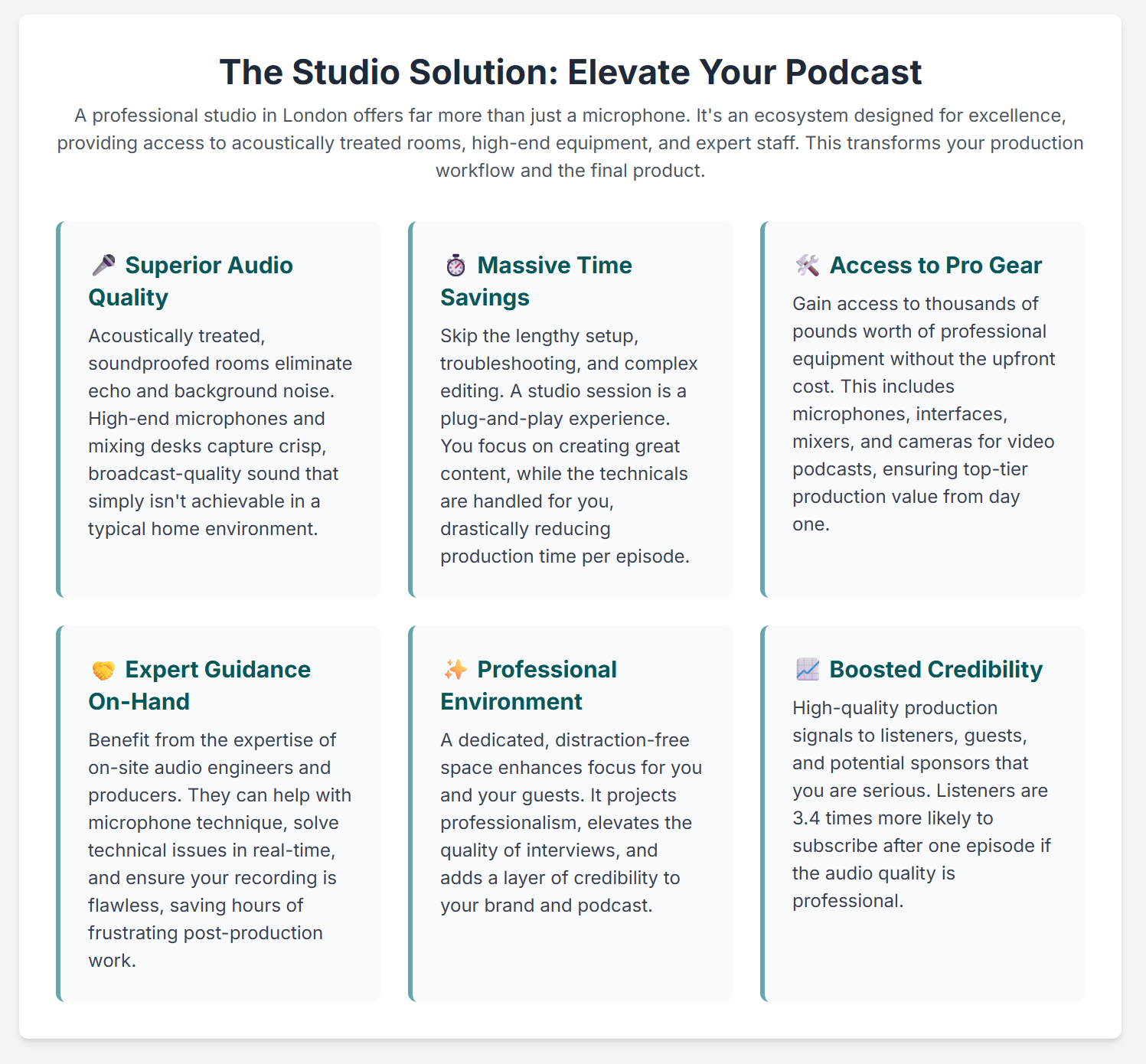
Image Credit: Finchley Studio
3.1 The London Studio Market: A Comparative Overview of Pricing and Packages
The London podcasting studio market is mature and highly competitive, offering a wide spectrum of services at various price points, which benefits the consumer.34 This competition ensures that even mid-range packages provide significant value.
Hourly rates can vary significantly based on location, equipment, and the level of service included. Basic audio-only "dry hire" (room and basic equipment) can be found for as little as £25-£70 per hour.13 However, the most common and valuable offerings are all-inclusive packages that bundle the studio, professional equipment, and an on-site engineer. These typically range from approximately £89 to £170+ per hour for a full audio and video setup with multiple 4K cameras.7 For instance, London Podcast Studios offers a three-camera 4K video and audio package for £109 per hour, while Premiere Podcast Studios' similar package, which includes a professional engineer and three Sony A7iV cameras as standard, is priced at £120 per hour.7 Premium studios located in creative hubs, such as TYX Studios at Tileyard, may command higher rates, reflecting their high-end facilities and networking potential.17
Many studios also offer full-service production packages that cover the entire process from recording through to final delivery. These are more comprehensive and can be priced on a per-episode basis, potentially starting from £1,000 or more, but they provide a complete turnkey solution for brands and creators who want a hands-off technical experience.29 The strategic placement of these studios in accessible, creative districts like Shoreditch, Soho, London Bridge, and Camden further enhances their appeal for hosts and guests alike.8
To clarify the available options, the following table provides a comparative analysis of representative studio packages in the London market.
Table 1: Comparative Analysis of London Podcasting Studio Packages
3.2 The True Cost of a DIY Studio: Unpacking Upfront, Hidden, and Time-Based Expenses
A surface-level comparison of studio rental fees against the one-time cost of home equipment is misleading. The true cost of establishing a competitive DIY studio involves significant upfront capital expenditure, ongoing hidden costs, and the invaluable, non-monetary cost of the creator's time.
The initial capital outlay for equipment that aims to approach professional quality is substantial. While a basic setup can be achieved for a few hundred pounds, a more robust home studio designed for high-quality audio and video can easily cost between £2,000 and £4,000.39 This budget would typically include items such as multiple high-quality microphones ($50-$500 each), a multi-channel audio interface ($150-$600), one or more 4K-capable cameras ($100-$2,000), a professional lighting kit ($100-$1,000), and essential acoustic treatment materials ($50-$2,000+).41 Building a truly professional-grade, soundproofed home studio can escalate costs into the tens of thousands of pounds, a figure that is prohibitive for nearly all new creators.42
Beyond this initial investment, there are numerous "hidden" and recurring costs. These include subscriptions for professional editing software, podcast hosting platform fees, royalty-free music licenses, and transcription services.41 Furthermore, equipment requires maintenance and will eventually become obsolete, necessitating future upgrades.
This financial model highlights a critical strategic principle: the capital efficiency of renting versus owning. For a new, unproven venture like a podcast, investing thousands of pounds in specialized, rapidly depreciating assets (production equipment) is a high-risk allocation of capital. Renting studio time operates on a more flexible operational expenditure (OpEx) model, as opposed to a fixed capital expenditure (CapEx) model. This is a far more prudent financial strategy for a startup project. It allows the creator to produce a professional-quality product and test the viability of their concept in the market for a fraction of the upfront cost, preserving essential capital for other critical activities like marketing, promotion, and guest acquisition.2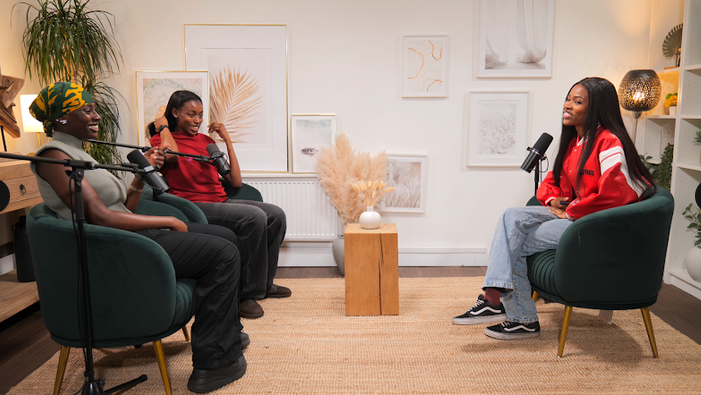
Image Credit: Finchley Studio
3.3 Calculating the Return: Time Saved, Quality Gained, and Opportunities Unlocked
The return on investment (ROI) from using a professional studio cannot be measured solely by comparing rental fees to equipment costs. A more accurate calculation must incorporate the value of time saved, the tangible benefits of superior quality, and the new opportunities that this quality unlocks. The ROI can be conceptualized as:
ROI=Cost of Studio Hire(Value of Time Saved+Value of Quality Improvement+Value of New Opportunities)
As established, professional studios dramatically reduce production time, freeing the creator to focus on content and growth.4 The value of this reclaimed time is immense. The quality improvement is also a direct driver of returns, as it leads to higher listener retention and engagement.14
Most significantly, the "New Opportunities" component represents a powerful catalyst for monetization. The ultimate goal for many serious podcasters is to generate revenue, whether through direct sponsorships, advertising, or by using the podcast as a marketing tool to drive business. High-profile guests and reputable brands are inherently risk-averse and highly protective of their own brand image. They will overwhelmingly choose to associate with podcasts that demonstrate high production values, as this signals professionalism, a serious commitment to quality, and a respect for their audience.4 An amateur-sounding podcast, regardless of its content, presents a brand risk that most sponsors and high-calibre guests are unwilling to take.
Therefore, the initial investment in a professional studio is a direct enabler of future revenue streams and high-value collaborations. It is not a cost center that detracts from profitability; it is a necessary prerequisite to unlock the podcast's full commercial potential. By launching with a professional product, a creator immediately positions their show as a viable partner for monetization, fundamentally changing its long-term financial outlook.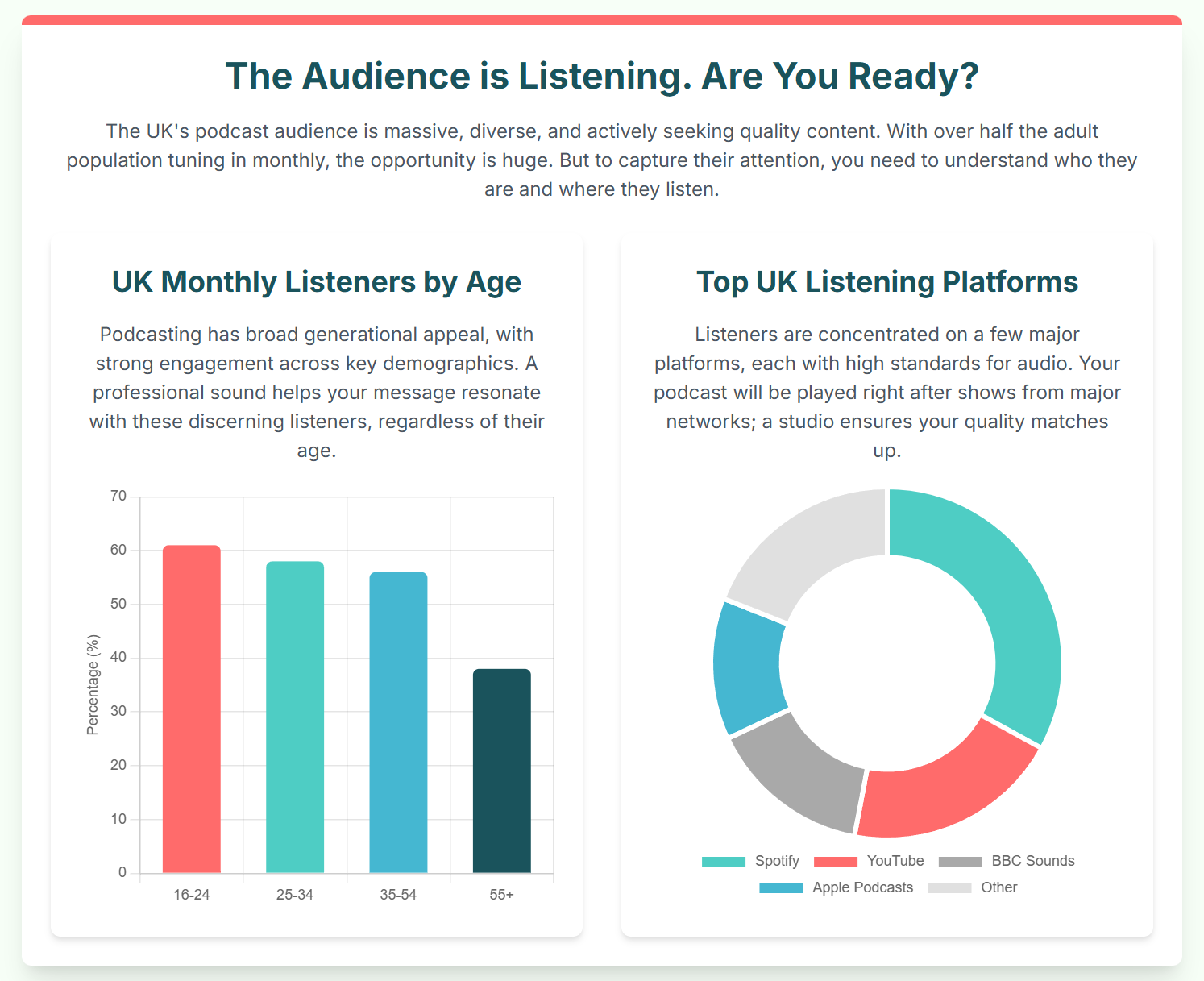
Image Credit: Finchley Studio
Section 4: Building Brand Equity: How Production Quality Translates to Market Credibility
In the digital marketplace, a brand is not just a logo or a name; it is the sum of all perceptions and experiences an audience has with a product or creator. For a podcast, the sonic and visual quality of its production is one of the most immediate and powerful drivers of these perceptions. Using a professional studio is a strategic decision that moves beyond technical enhancement to become a deliberate act of brand building, directly influencing audience trust, attracting high-value collaborators, and forging a consistent and authoritative brand identity.
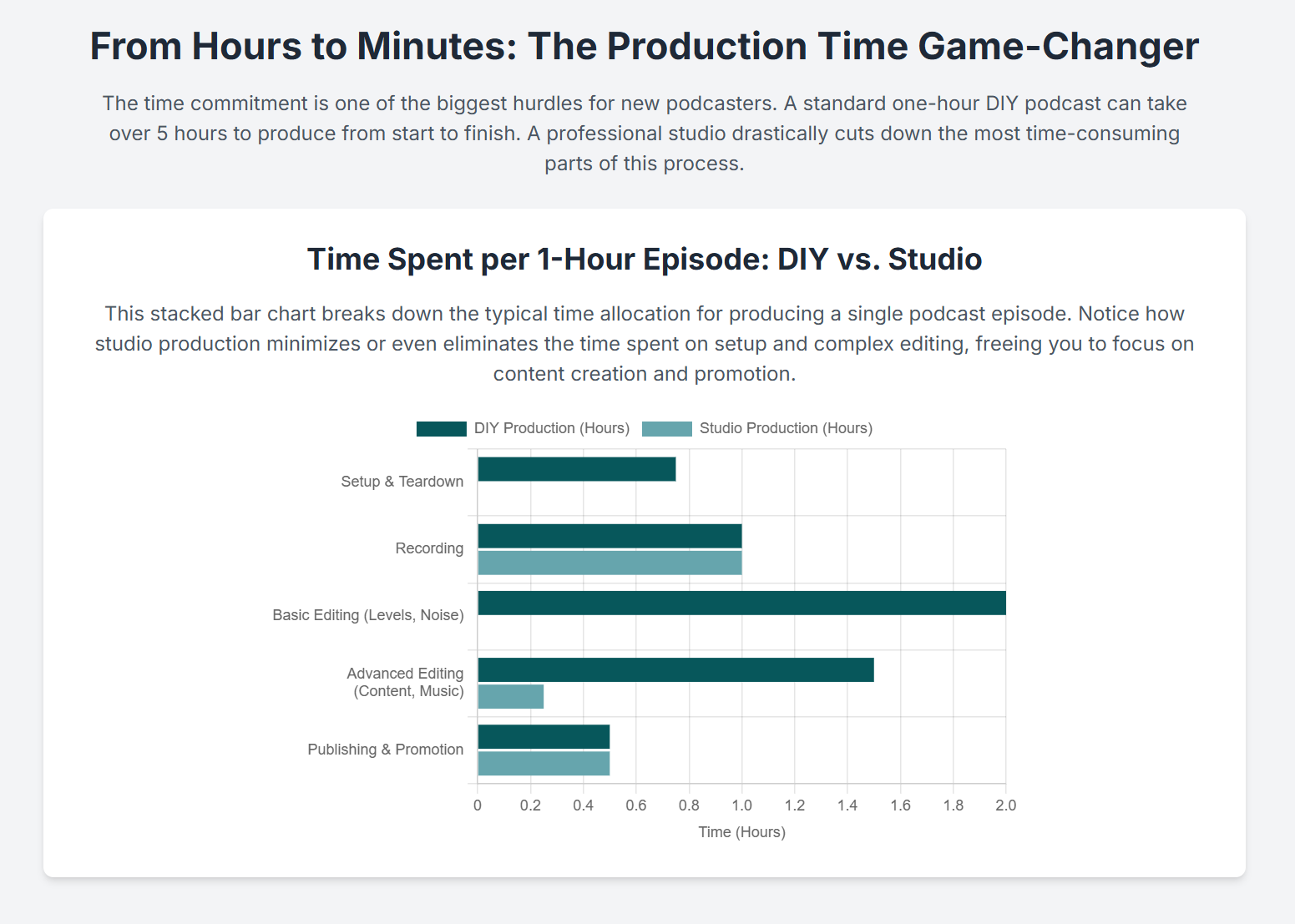
Image Credit: Finchley Studio
4.1 The Psychology of Perception: Why Listeners Equate Quality with Authority
When a potential new listener presses play on a podcast for the first time, they engage in a rapid, subconscious process of evaluation. Before they can critically assess the host's arguments or the value of the content, they make an instant judgment based on the production quality.1 This psychological phenomenon is a form of cognitive heuristic, or mental shortcut. In the absence of other information, the listener uses audio quality as a proxy for the host's credibility, professionalism, and authority.43
Crisp, clear, well-balanced audio free from background noise and echo signals professionalism and a serious commitment to the craft. It subconsciously communicates to the listener: "This creator values my time and has invested in delivering a high-quality experience".6 This perception builds an immediate foundation of trust, making the listener more receptive to the content that follows. Conversely, poor audio—tinny, muffled, or filled with distracting ambient noise—signals an amateur, hobbyist production. This can trigger an equally rapid negative judgment: "If the creator doesn't care about their sound quality, why should I trust their expertise or invest my time in their content?".4
This initial judgment, often made within the first 30 seconds of an episode, is critical. It can determine whether a potential subscriber is gained or lost. By ensuring a broadcast-quality standard from the outset, a professional studio allows a new creator to win this crucial psychological battle. It ensures the first impression is one of authority and trustworthiness, granting the content the opportunity to be judged on its own merits.
4.2 The Professionalism Premium: Attracting High-Calibre Guests and Sponsors
The brand equity built through high production quality extends beyond the listener to another critical group: potential collaborators. A podcast's growth and influence are often accelerated by featuring high-calibre guests and securing sponsorships. A professional production is a key enabler for both.
High-profile guests—be they industry experts, authors, or public figures—are protective of their time and their personal brand. When invited to appear on a podcast, they are more likely to accept if the show demonstrates a professional standard.4 Recording in a professional studio signals that the host is serious, that the guest's time will be used efficiently, and that the final product will represent them in a positive light. The professional atmosphere of a studio can also encourage a better performance from the guest, making them feel more valued and comfortable than they might in a casual home setting.6
Similarly, brands and sponsors conduct due diligence before investing advertising dollars. They seek to partner with podcasts whose production quality aligns with their own brand standards.4 A polished, professional-sounding podcast is perceived as a safer and more effective vehicle for their message. An amateur production, by contrast, can create a negative brand association, making it a far less attractive proposition for sponsorship.
Furthermore, many London studios are strategically located within larger creative communities. TYX Studios, for example, is situated in Tileyard London, which is described as Europe's largest creative industry hub, home to over 250 artists, producers, and music businesses.17 Recording in such a location does more than just provide a technically proficient space; it physically places the creator within a vibrant ecosystem of potential collaborators and industry contacts.44 This proximity can lead to organic networking opportunities, guest sourcing, and partnerships that would be virtually impossible to cultivate from the isolation of a home studio. The studio thus becomes a physical gateway to the professional creative industry itself.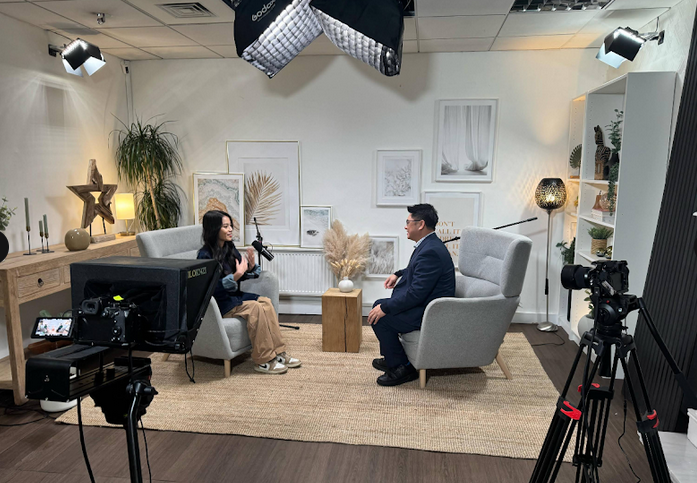
4.3 Forging a Brand Identity Through Consistent, High-Quality Production
A strong brand is built on consistency. For a podcast, this means a consistent release schedule, a consistent tone of voice, and, crucially, a consistent level of production quality.2 This consistency fosters a sense of reliability and trust with the audience, encouraging them to subscribe and build a long-term listening habit.23
A professional studio and its associated post-production services are instrumental in maintaining this standard. They ensure that every episode has a uniform, high-quality "sound signature," free from the fluctuations in audio quality that can plague DIY productions recorded in different conditions.23 This extends to the visual brand as well; a professional studio provides a consistent, well-lit set that reinforces the podcast's visual identity across all video platforms.1
This approach treats podcast production not as a technical afterthought, but as a core pillar of a comprehensive brand strategy. For a business or individual, a podcast is a direct public-facing extension of their brand. To invest heavily in a professional website, high-quality marketing materials, and a sharp social media presence, only to undermine it all with an amateur-sounding podcast, is a strategic contradiction. Using a professional studio ensures that the podcast aligns with and amplifies the brand's overall commitment to quality and professionalism. It transforms the podcast from a potential brand liability into a powerful and consistent marketing asset that deepens audience connection and reinforces brand values.1
Section 5: The Creative Catalyst: The Psychological Impact of a Professional Environment
Beyond the tangible benefits of superior technology and expert support, professional studios offer a suite of psychological advantages that can significantly enhance the creative process and the quality of the final content. These less tangible, human-centric factors—focus, atmosphere, and confidence—are powerful catalysts that are difficult to quantify but have a profound impact on the performance of both hosts and guests.
5.1 The Focus Factor: Eliminating Distractions to Unleash Creative Performance
The human brain is highly sensitive to its environment. A professional recording studio is, by design, a dedicated, single-purpose space engineered for focus.6 It is a sanctuary from the countless distractions of a typical home or office environment—the interruptions from family members or pets, the noise of deliveries, the lure of household chores, or the ping of work emails.9
This physical and mental separation is a powerful performance enhancer. The simple act of traveling to a studio for a recording session creates a psychological ritual. It signals to the brain that it is time to transition from the mundane tasks of daily life into a state of creative performance.6 This clear demarcation helps the host to enter the session with greater mental clarity and energy, allowing them to focus 100% of their cognitive resources on delivering their content, engaging with their guests, and performing at their best.5
This focused state helps to combat a common ailment of home-based creative work known as "Project Fulfilment Fatigue Syndrome".48 This occurs when over-familiarity with a project in a non-dedicated space leads to boredom, lethargy, and a loss of motivation. The professional studio environment, with its sense of purpose and novelty, provides a powerful antidote, invigorating the creative process and leading to a more dynamic and engaging performance that is directly audible to the listener.
5.2 "Creating the Vibe": The Engineer's Role in Fostering a Supportive Atmosphere
Recording a podcast, particularly for a new host, can be an intimidating and vulnerable experience. The pressure to perform, articulate ideas clearly, and interact naturally with guests can induce anxiety.49 A key, often unstated, role of the on-site professional engineer is to manage this human element by "creating the right vibe".50
This is a form of skilled emotional labour, where the engineer acts as more than just a technician; they become a psychological support system.50 Experienced engineers are adept at reading the emotional atmosphere of the room. They know when to offer a word of encouragement, when to suggest a short break, and how to interact with hosts and guests in a way that is calm, confident, and reassuring.49 They create an environment of "serious play"—a space that is professional and focused, yet relaxed and supportive enough for creativity and authentic conversation to flourish.50
This supportive atmosphere is particularly crucial when hosting guests. A skilled engineer can help put an anxious guest at ease, ensuring they feel comfortable and valued. This leads to more open, natural, and engaging conversations. This "emotional FX," as it has been called, is an invaluable and intangible service provided by professional studios.50 It is impossible to replicate when recording alone in a home studio and it directly elevates the quality of the human interaction at the heart of the podcast, resulting in a more compelling final product for the audience.
5.3 The Power of Place: How a Dedicated Space Enhances Collaboration and Confidence
The physical environment of a professional studio itself acts as a powerful psychological signal to everyone involved. For a new podcaster, who may be struggling with imposter syndrome, the act of recording in a professional space is a profound act of legitimation. It is a tangible affirmation of their identity as a serious creator. Walking into a space with high-end equipment and a professional engineer validates the importance of the project, boosting the host's confidence. This newfound confidence is often audible in their delivery—they may speak with more authority, clarity, and passion.6
This legitimacy signal is also transmitted to guests. Being invited to a professional studio, rather than a spare bedroom, elevates the perceived status of the interview.6 It communicates that the host is a professional who respects the guest's time and contribution. This encourages the guest to be more prepared, engaged, and to deliver their best performance. The space itself becomes a collaborator in the creative process, inspiring a higher level of performance from all participants.
Furthermore, recording in person within a studio fosters a deeper level of human connection than remote recording. It allows hosts and guests to pick up on the subtle, non-verbal cues—body language, facial expressions—that are essential for natural, free-flowing conversation.5 The shared experience of being in a dedicated creative space can build rapport and lead to the kind of spontaneous, energetic exchanges that make for captivating listening. The environment doesn't just capture the conversation; it enhances it.
Conclusion: The Verdict - A Foundational, Not Frivolous, Expense for Podcast Success
The evidence presented throughout this analysis leads to an unequivocal conclusion: for an individual or brand launching a new podcast in the competitive London market, the use of a professional studio is a foundational investment in the venture's success. The decision transcends mere technical preference, representing a strategic choice that yields compounding returns across every critical aspect of a podcast's lifecycle.
The initial argument rests on the non-negotiable imperative of quality. A professional studio provides a categorical leap in sonic and visual fidelity through its acoustically controlled environments and integrated, broadcast-grade equipment. This is not a marginal improvement; it is the baseline requirement to meet the expectations of a modern audience and to build the initial trust upon which all future engagement depends. The studio allows a new creator to enter the market not as an amateur, but as a peer to established shows.
Operationally, the studio model is vastly more efficient. By outsourcing the entire technical workflow to on-demand experts, creators de-risk their production process and reclaim their most valuable asset: time. This time is reallocated from frustrating technical troubleshooting to the core, value-driving activities of content creation, guest acquisition, and audience growth. This streamlined workflow, supported by the expertise of an on-site engineer, enables the consistency in quality and scheduling that is the bedrock of a loyal listenership.
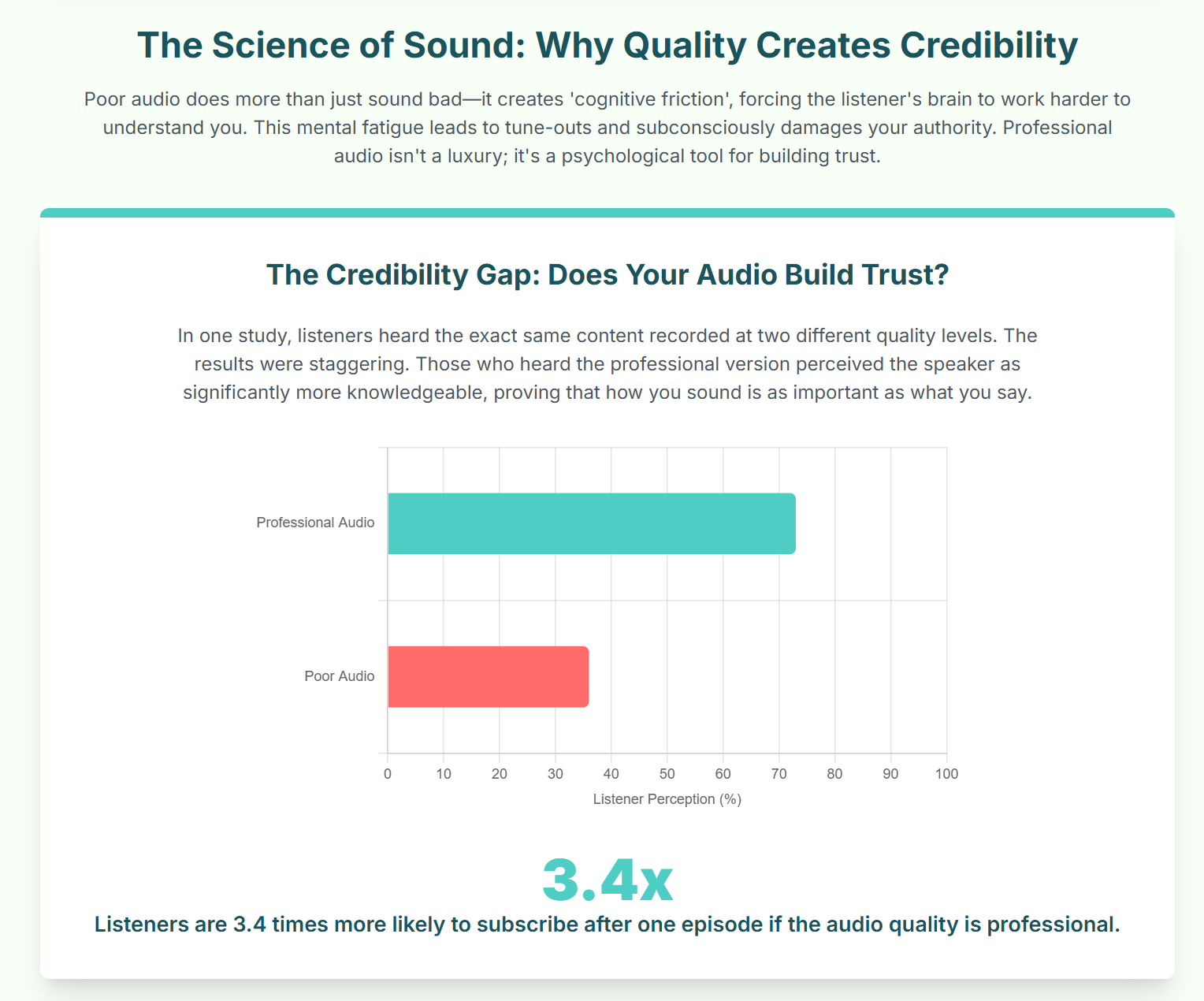
Image Credit: Finchley Studio
Financially, what may appear as a recurring cost is, in fact, a more capital-efficient and strategically prudent approach. It replaces the high-risk, high-cost capital expenditure of building a competitive home studio with a flexible, scalable operational expense. This model preserves capital while providing access to technology and expertise that would otherwise be prohibitive. Crucially, this investment in quality is a direct catalyst for monetization, positioning the podcast as a credible and attractive partner for high-calibre guests and sponsors from day one.
Finally, the psychological benefits of a professional environment—the enhanced focus, the confidence-boosting legitimacy, and the supportive, creative atmosphere—directly translate into a better performance and a more engaging final product. The studio is not just a room; it is a creative catalyst.
Therefore, the final recommendation is definitive. For any creator in London who is serious about launching a podcast that can cut through the noise, build a dedicated audience, and achieve its strategic or commercial goals, engaging a professional studio should be viewed as the first and most critical move. It is not a frivolous line item in a budget, but the foundational investment upon which the entire success of the podcast is built. It is, in the truest sense of the term, a game-changer.
You have a great idea for a podcast. The conventional wisdom for years has been to "just start"—grab a USB microphone, find a quiet room, and figure it out as you go. But in the crowded, high-quality media landscape of London in 2025, that advice can set you up for a long, frustrating journey.
For new creators, starting your podcast in a professional studio isn't just a small step up; it’s a genuine game-changer. It allows you to bypass the most common early-stage hurdles and establish your show as a serious contender from the very first episode. Here’s how it changes the game.
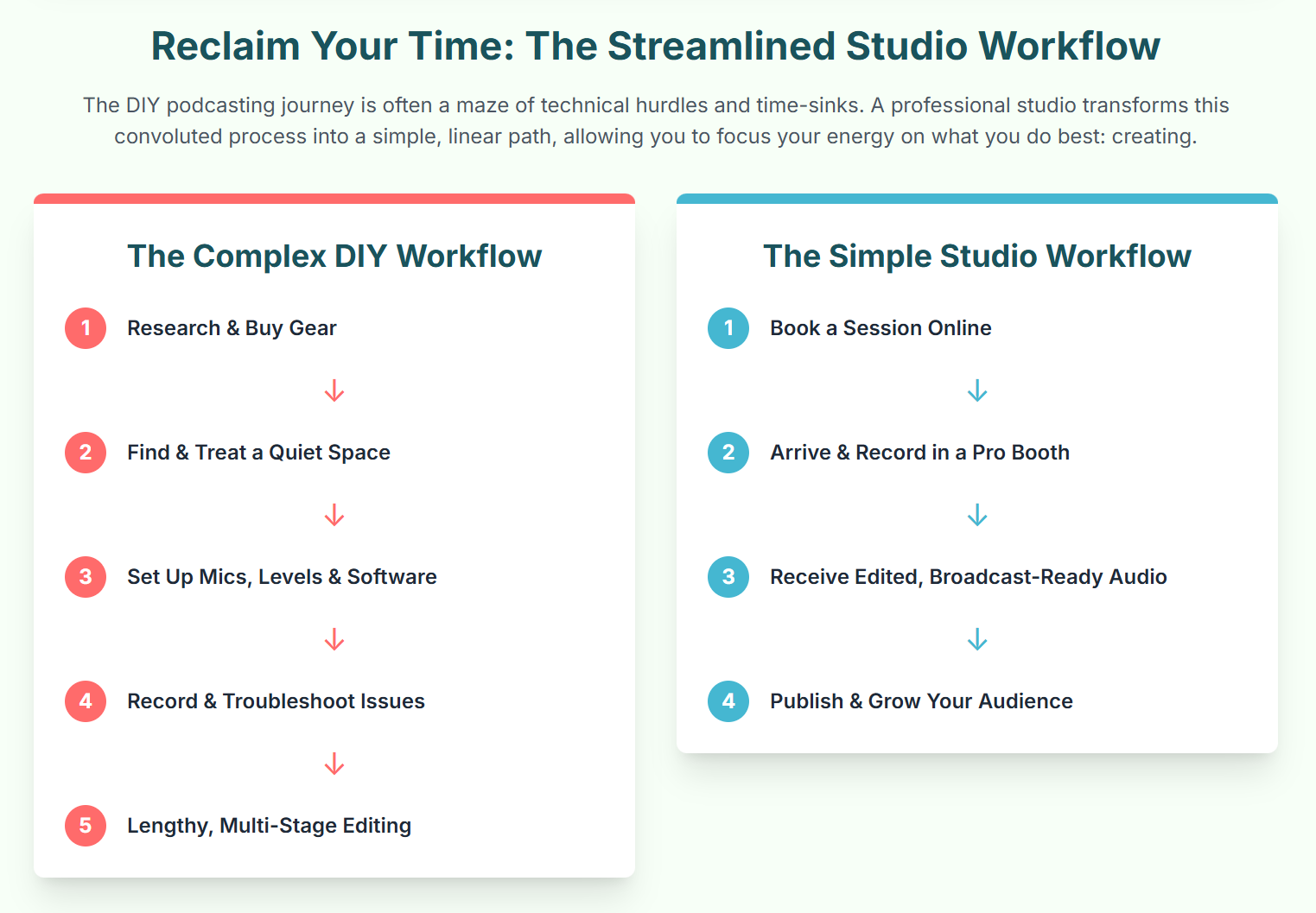
Image Credit: Finchley Studio
## 1. You Achieve 'Episode 100' Quality on Episode One
The Beginner's Hurdle: Most new podcasts go through a public "learning phase." The first 10, 20, or even 50 episodes often suffer from inconsistent audio, poor lighting, and technical glitches. This rough start can make it incredibly difficult to attract and retain an audience.
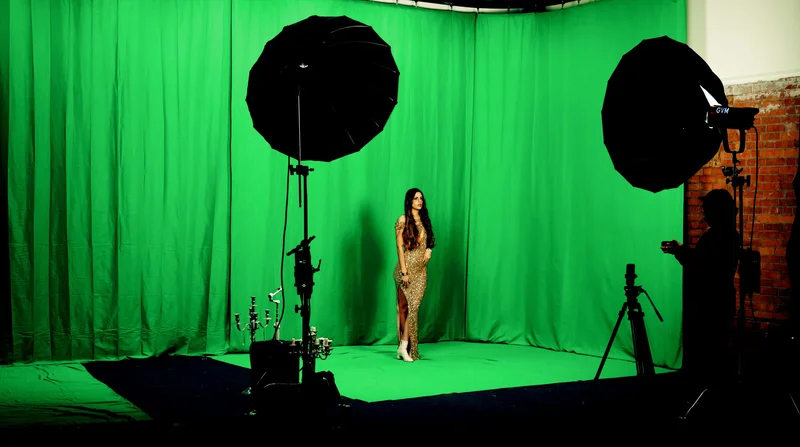
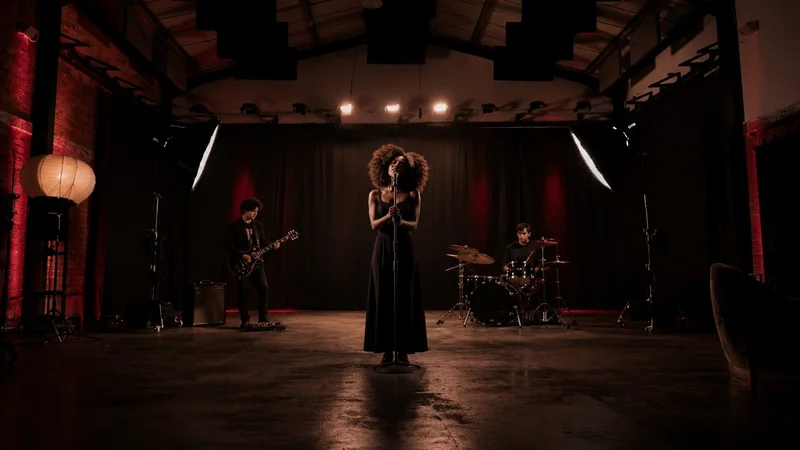
The Game-Changer: When you launch your show from a professional studio, you leapfrog this entire phase. Your very first episode will have the pristine audio, cinematic 4K video, and flawless production of a show that's been on the air for years. At Finchley Studio, our purpose-built sets and broadcast-standard equipment are designed to deliver this level of quality instantly, giving you immediate credibility.
## 2. You Focus on Content, Not Complicated Tech
The Beginner's Hurdle: The single biggest reason new podcasts fail ("podfading") is the overwhelming technical learning curve. Aspiring hosts quickly find themselves bogged down trying to be amateur audio engineers, cinematographers, and editors, which drains their creative energy for the content itself.
The Game-Changer: A professional studio with an on-site technician removes this barrier completely. Your only job is to be the host. You can walk in, focus entirely on delivering your message and connecting with your guest, and walk out with a perfect recording. This makes the process enjoyable and sustainable, allowing you to dedicate your energy to what truly matters: creating a great show.
## 3. You Access a Professional Setup without the Cost
The Beginner's Hurdle: Replicating a professional studio environment is prohibitively expensive. The cost of multiple 4K cameras, broadcast microphones, soundproofing, acoustic treatment, and lighting can easily run into tens of thousands of pounds.
The Game-Changer: By renting a studio, you get access to a six-figure production setup for a simple hourly rate. This levels the playing field, allowing a brand-new, independent creator to produce content that has the same high production value as a major media company, right from the very beginning.
## 4. You Create a Premium Experience for Your Guests
The Beginner's Hurdle: Attracting high-quality guests is tough for a new podcast. An invitation to record in a spare room over a makeshift setup can be a hard sell for a busy professional.
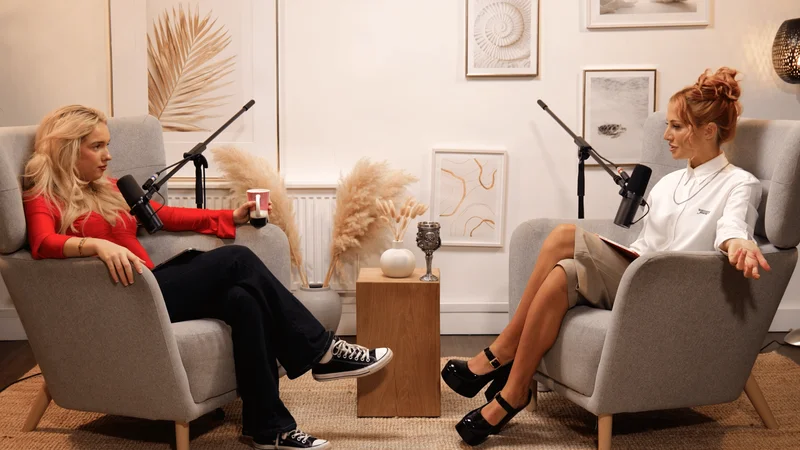
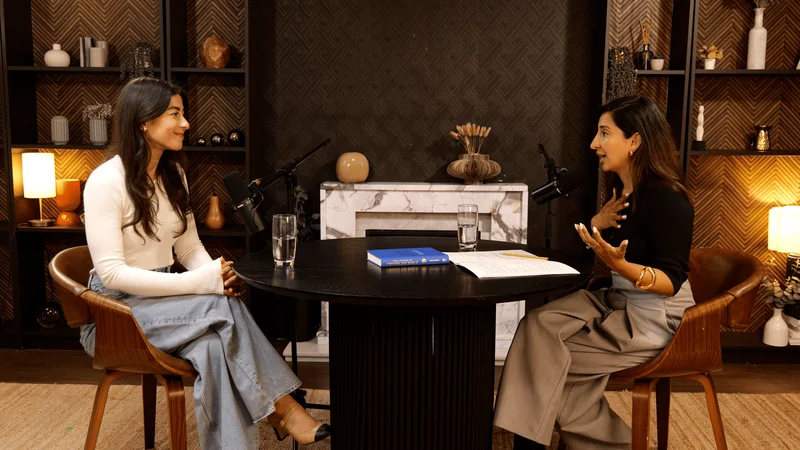
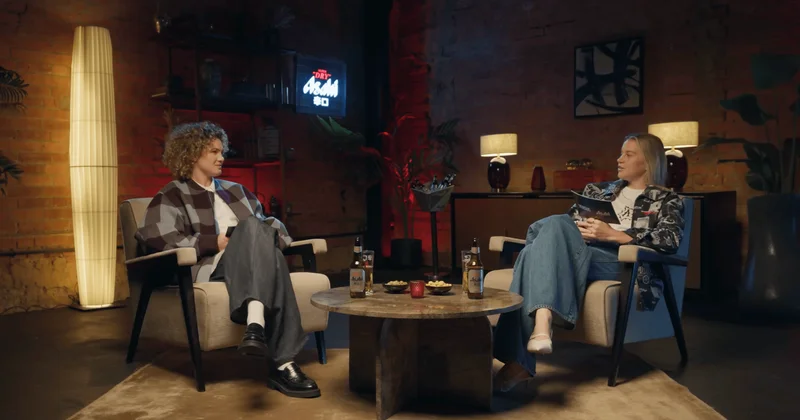
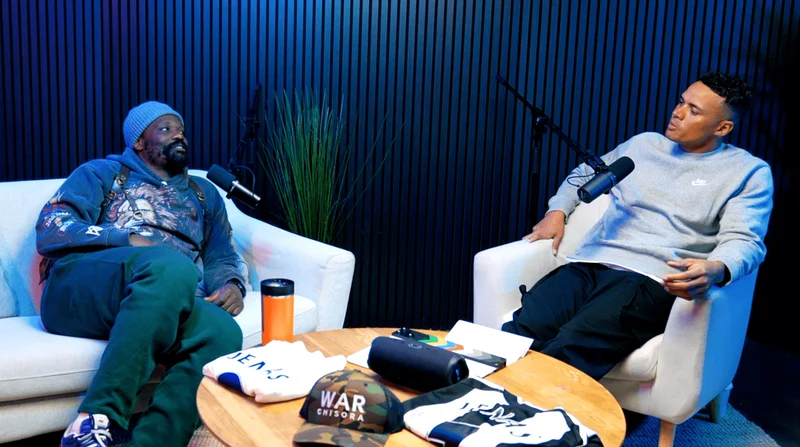
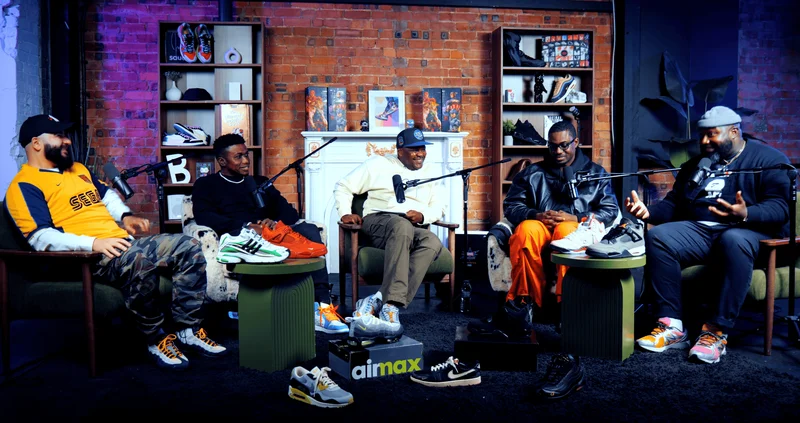
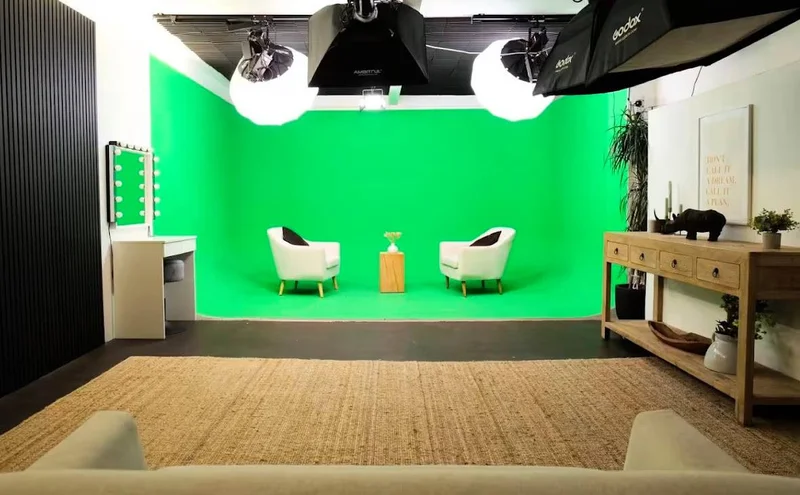
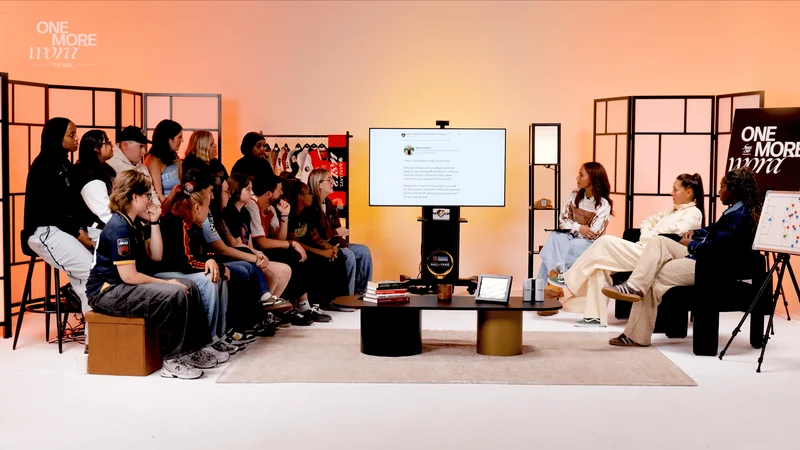
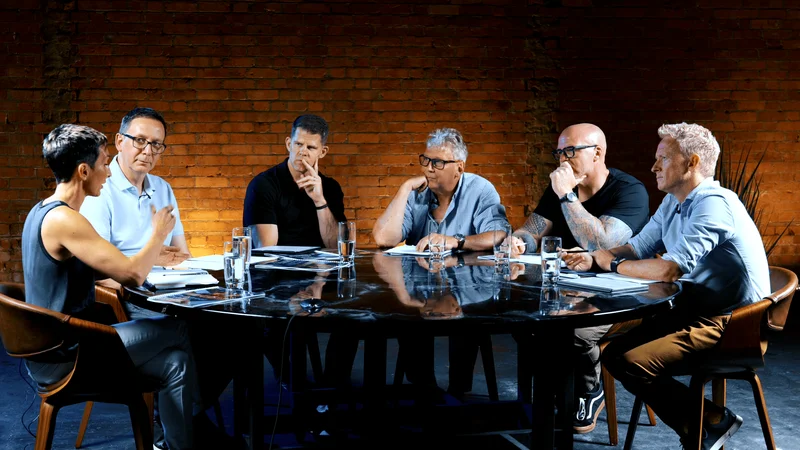
The Game-Changer: Inviting a guest to a professional studio with a comfortable waiting area and a choice of high-end sets, like our CEO Set or Lounge Studio, signals that you are serious, professional, and respect their time. This makes it infinitely easier to attract the kind of high-calibre guests who can help grow your audience and credibility.
Starting your podcast in a professional studio is the ultimate shortcut to quality and sustainability. It’s an investment that transforms your launch from a hobbyist experiment into a professional media production.
Start Your Podcast the Right Way at Finchley Studio
Now that you see how a professional start can change the game, it's time to make your move. At Finchley Studio, we provide the environment, equipment, and expert support to make your first episode as good as your hundredth. Our commitment to quality is why organisations like the BBC and Lloyds Bank trust us with their productions. See what our clients are saying in our Google reviews and on Trustpilot.
We offer a diverse range of meticulously designed sets to match any podcast's brand and style:
Our professional Video Editing Service can complete your workflow, delivering polished episodes ready for launch. The team at Finchley Studio is here to ensure your vision is realised perfectly.
Ready to launch your podcast with a competitive edge?
Find Us Easily: Our studio is conveniently located just a two-minute walk from Finchley Central on the Northern Line and adjacent to the Travelodge London Finchley. We offer one free parking space per booking.
what3words: orders.yards.jokes
Stay Connected: Follow our journey and see behind-the-scenes content on our social media channels:
Have questions? Check our FAQ or get in touch directly.
WhatsApp: +447587827200
Phone: +447587827200
Email: [email protected]
Works cited
Elevating Your Brand Through Podcast Production and Identity - CS Design Studios, accessed September 18, 2025, https://www.csdesignstudios.com/elevating-your-brand-through-podcast-production-and-identity/
5 reasons why using a professional studio for your podcast makes sense, accessed September 18, 2025, https://www.familyfriendlyworking.co.uk/2024/06/16/5-reasons-why-using-a-professional-studio-for-your-podcast-makes-sense/
6 Common Podcast Production Mistakes and How to Fix Them, accessed September 18, 2025, https://www.quillpodcasting.com/blog-posts/podcast-production-mistakes
The Benefits of Using a Professional Podcast Studio vs. DIY Setup ..., accessed September 18, 2025, https://umbrellacreative.com.au/the-benefits-of-using-a-professional-podcast-studio-vs-diy-setup/
Why you should use a podcast recording studio • Liverpool Podcast ..., accessed September 18, 2025, https://liverpoolpodcaststudios.com/why-you-should-use-a-podcast-recording-studio/
Why Recording Your Podcast in a Professional Studio is a Game-Changer, accessed September 18, 2025, https://everymoviehasalesson.com/blog/2024/9/why-recording-your-podcast-in-a-professional-studio-is-a-game-changer
Podcast Studio For Hire in Central London | Shoreditch, accessed September 18, 2025, https://premierepodcaststudios.com/
London - Studio Hire - Cue Podcasts, accessed September 18, 2025, https://www.cuepodcasts.com/studio-hire/london
Podcast Recording Studio vs. Home Setup: Which is Best for You?, accessed September 18, 2025, https://www.paragoncreativestudios.co.uk/podcast-recording-studio-vs-home-setup-which-is-best-for-you/
Audio-only studio setups… tell me everything! : r/podcasting - Reddit, accessed September 18, 2025, https://www.reddit.com/r/podcasting/comments/1hy9unb/audioonly_studio_setups_tell_me_everything/
Recording at Home VS Professional Studio: things you need to know, accessed September 18, 2025, https://mixrecordingstudio.com/blog/recording-at-home-vs-professional-studio-things-you-need-to-know/
Top 5 Reasons to Record Your Podcast in a Professional Studio - Modern Stoa, accessed September 18, 2025, https://modernstoa.co/top-5-reasons-to-record-your-podcast-in-a-professional-studio/
London Podcast Studio | Podcast Recording From £69/hr!, accessed September 18, 2025, https://www.londonpodcaststudios.co.uk/
How to Achieve Studio-Quality Podcast Audio Without Breaking the Bank - PodMatch, accessed September 18, 2025, https://podmatch.com/blog/how-to-achieve-studio-quality-podcast-audio-without-breaking-the-bank
Podcast Engineering: A Career Path in the Booming Audio Industry, accessed September 18, 2025, https://future-school.in/blogs/podcast-engineering-a-booming-industry-for-sound-engineers/
Podcast Studio London, Hire Podcast Room From 30/hr - Nostars Studios, accessed September 18, 2025, https://nostars.uk/podcast/
TYX Studios | Podcast, Music & Photography Studios in London, accessed September 18, 2025, https://tyxstudios.com/
Podcasting Studio in London - Dean St. Studios, accessed September 18, 2025, https://www.deanst.com/podcasting-studio-in-london/
Podcast Studio Hire | London | Equipment & Engineer included, accessed September 18, 2025, https://podcaststudiohire.co.uk/
Common Podcasting Challenges + Solutions to Tackle Them | by ..., accessed September 18, 2025, https://medium.com/@goldengoosecreative/common-podcasting-challenges-solutions-to-tackle-them-a135826095dc
The 10 Biggest Podcasting Mistakes You Need to Avoid - Castos, accessed September 18, 2025, https://castos.com/podcasting-mistakes/
Podcast House | Podcast Recording Studio in Central London, UK for Audio & Video, accessed September 18, 2025, https://www.podcasthouse.uk/
What is Audio Engineering? - Quill Podcast Agency, accessed September 18, 2025, https://www.quillpodcasting.com/blog-posts/audio-engineering
Podcast Audio Engineer Jobs: Career Info & Role Description | Lower Street, accessed September 18, 2025, https://lowerstreet.co/careers/podcast-audio-engineer
$50k-$145k Podcast Audio Engineer Jobs (NOW HIRING) Sep 2025, accessed September 18, 2025, https://www.ziprecruiter.com/Jobs/Podcast-Audio-Engineer
Podcast Audio Engineer – Deliver High-Quality Sound, Every Episode - Stealth Agents, accessed September 18, 2025, https://stealthagents.com/podcast-audio-engineer/
Audio Engineering for Podcasting: Tips and Techniques for Producing Engaging Podcasts, accessed September 18, 2025, https://www.mi.edu/in-the-know/audio-engineering-podcasting-tips-techniques-producing-engaging-podcasts/
Outset Studio: Podcast Studio From £84/hr | London & Manchester, accessed September 18, 2025, https://outsetstudio.com/
Podcast Production Services in London | For Brands & Creators - TYX Studios, accessed September 18, 2025, https://tyxstudios.com/podcast-production
London Podcast Production Company & Agency | Full-Service ..., accessed September 18, 2025, https://www.londonpodcaststudios.co.uk/full-service-podcast-production-agency-london
Podcast Production London – Professional Studio & Editing, accessed September 18, 2025, https://www.blueprintstudioslondon.com/podcast-production-london
Overcoming Common Podcasting Challenges and Roadblocks - Podium, accessed September 18, 2025, https://hello.podium.page/blog/overcoming-common-podcasting-challenges-and-roadblocks
Podcast Distribution Problems: Quick Fixes for Common Issues - Ausha, accessed September 18, 2025, https://www.ausha.co/blog/podcast-distribution-problems/
The 16 Best Podcast Studios for Hire in London | Tagvenue UK, accessed September 18, 2025, https://www.tagvenue.com/hire/podcast-studios/london
Podcast Room: Podcast Studios in London for Audio & Video, accessed September 18, 2025, https://podcast-room.com/
36 Best Podcast Studios for Hire in London, England - Peerspace, accessed September 18, 2025, https://www.peerspace.com/uk/spaces/gb/london--england/podcast-studio
Podcast Studio London Cost 2025 - Finchley Studios, accessed September 18, 2025, https://www.finchley.co.uk/finchley-learning/podcast-studio-london-cost-2025
premierepodcaststudios.com, accessed September 18, 2025, https://premierepodcaststudios.com/#:~:text=Podcast%20Recording%20Studio%20in%20Shoreditch%2C%20Central%20London&text=Premiere%20podcast%20studios%20are%20a,for%20your%20podcast%20and%20guests.
Your most popular questions... answered. - Podcast House | Podcast Recording Studio in Central London, UK for Audio & Video, accessed September 18, 2025, https://www.podcasthouse.uk/blog/your-most-popular-questions-answered
How Much Does It Cost To Start A Podcast In 2024?, accessed September 18, 2025, https://taepodcast.co.uk/starting-a-podcast/
How Much Does It Cost to Start a Podcast in 2025 - Saspod, accessed September 18, 2025, https://saspod.com/blog/post/how-much-does-it-cost-to-start-a-podcast-in-2025
How much to make a respectable professional grade recording studio? - Reddit, accessed September 18, 2025, https://www.reddit.com/r/musicproduction/comments/11y4jwi/how_much_to_make_a_respectable_professional_grade/
11 Key Benefits of Professional Recording Studios for Podcasting - Studio 321, accessed September 18, 2025, https://s321.ae/benefits-using-professional-podcast-studio/
The Smart Podcast Studio: 6 Compelling Reasons to Choose One, accessed September 18, 2025, https://pouch6studios.com/smart-podcast-studio/
What is The Value of a Podcast Agency for Brands? - JAR Audio, accessed September 18, 2025, https://jarpodcasts.com/podcast-agency-for-brands-benefits/
Why Choose a Professional Recording Studio Over a Home Setup | Carry A Tune, accessed September 18, 2025, https://www.carryatune.in/blog/professional-recording-studio-vs-home-setup
Podcast Studio Setup: Home vs Rented? [5 factors to help you decide], accessed September 18, 2025, https://blog.deciphr.ai/podcast-studio-setup/
The Psychology Of Recording, accessed September 18, 2025, https://www.soundonsound.com/techniques/psychology-recording
Psychology in Recording - Abbey Road Institute Amsterdam, accessed September 18, 2025, https://abbeyroadinstitute.nl/blog/the-psychology-of-recording/
'FX, Drugs and Rock 'n' Roll': Engineering the emotional space of the recording studio - CORE, accessed September 18, 2025, https://core.ac.uk/download/pdf/288369425.pdf
Exploring the Benefits of a Quality Recording Studio - Starsound Studios, accessed September 18, 2025, https://starsoundstudios.com/blog/benefits-quality-recording-studio