Cloudlifters and Preamps: The Hidden Tech Behind Crystal Clear Vocals
In the modern landscape of digital content creation, the human voice has emerged as the primary vehicle for storytelling, corporate communication, and brand identity. From globally syndicated broadcasts to hyper-niche independent productions, the demand for crystal clear vocal capture has never been more pronounced. This relentless pursuit of audio fidelity has exposed a significant technological chasm between consumer-grade audio equipment and the uncompromising standards of a professional Recording studio. At the heart of this divide lies the complex electrical relationship between the microphone transducer and the preamplifier-a relationship that dictates the ultimate clarity, presence, and signal-to-noise ratio of any given recording.
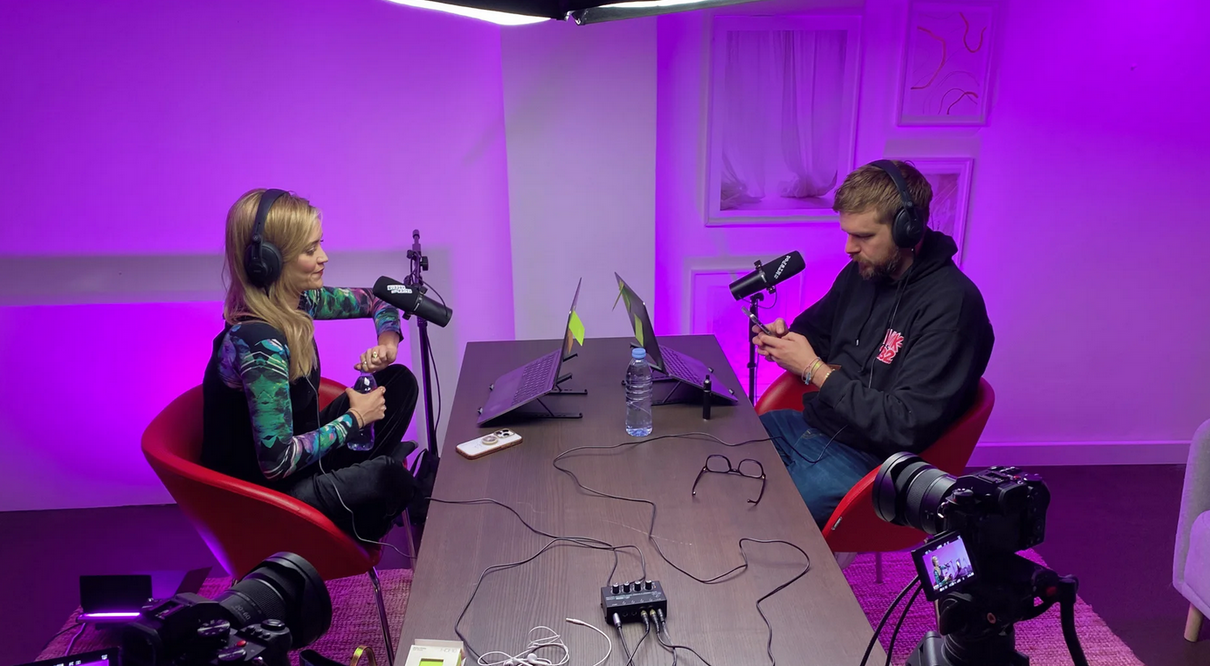
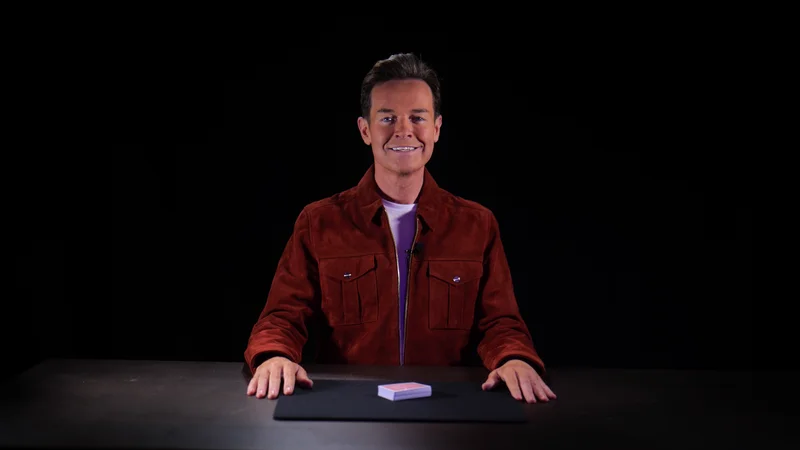
See the 'Murder They Wrote' podcast setup used by Laura Whitmore and Iain Stirling from BBC at Finchley Studio (Gathering setup). Watch Murder They Wrote at BBc sound , Spotify , Apple podcasts , Youtube , Instagram , Amazon music
To achieve the intimate, warm, and highly focused vocal sound that defines modern broadcasting, engineers and content creators overwhelmingly favor dynamic moving-coil and ribbon microphones. These specific transducer types are celebrated for their unparalleled ability to reject off-axis room noise and impart a flattering proximity effect. However, their physical architecture inherently results in a severely low electrical output. Capturing the microscopic voltage changes generated by these microphones without simultaneously introducing a disruptive layer of electronic hiss requires a highly sophisticated approach to signal amplification, impedance bridging, and overall gain staging.
For the home studio operator, bridging this gap often necessitates the use of inline active gain devices, universally colloquially referred to as "Cloudlifters." Conversely, the commercial sector solves this challenge through massive infrastructure investments, relying on the peerless acoustic environments and elite signal chains offered by any premier London Recording studio. In major creative hubs, the demand for pristine sound has catalyzed the rapid expansion of the dedicated Podcast studio and specialized corporate facilities. These acoustically treated environments guarantee flawless vocal capture without the compromises inherent to prosumer setups. This comprehensive report provides an exhaustive analysis of microphone preamplification technology, the electrical engineering principles of impedance, the specific operational mechanics of inline gain devices, and the broader commercial ecosystem-ranging from high-end video production facilities to local search engine optimization (SEO) strategies-that underpins the modern professional voice recording industry.

Finchley Studio (White Infinity Cove): book this setup for your podcast
The Physics of Transducers and the Low-Output Dilemma
To fully comprehend the necessity of specialized preamplification, it is essential to first examine the physics governing microphone operation. Microphones are transducers; their sole function is to convert acoustic energy (sound waves) into alternating electrical currents. In a dynamic microphone, this conversion is achieved through electromagnetic induction.
Sound waves strike a diaphragm, which is attached to a delicate coil of wire suspended within a magnetic field. As the diaphragm vibrates, the coil moves through the magnetic flux, generating a proportional electrical voltage. While this moving-coil design is incredibly robust, capable of handling extreme sound pressure levels (SPL) without distortion, and excellent at rejecting ambient room noise, the mass of the voice coil renders the microphone highly insensitive to quiet sound sources. Ribbon microphones operate on a similar electromagnetic principle but utilize a corrugated strip of ultra-thin aluminum suspended between magnets. While prized for their incredibly natural transient response and smooth high-frequency roll-off, ribbon motors generate even less voltage than standard dynamic coils.
The industry-standard metric for microphone sensitivity is expressed in decibels relative to one volt per pascal (dBV/Pa). A highly sensitive condenser microphone, which utilizes an externally powered, ultra-lightweight capacitor backplate, might feature a sensitivity of -30 dBV/Pa. In stark contrast, legendary dynamic broadcast microphones operate at significantly lower sensitivities. The widely utilized Shure SM7B, for instance, possesses a sensitivity rating of -59 dBV/Pa (equivalent to 1.12 mV at 1 kHz with an open circuit voltage). To understand the practical implications of this specification, one must consider a standard recording scenario. When a speaker addresses an SM7B at a typical distance of three inches, generating an acoustic input of 84 dB SPL, the microphone produces an electrical output level of merely -69 dBV (Shure). This minuscule voltage is entirely insufficient for digital recording or broadcasting. The primary function of a microphone preamplifier is to take this mic-level signal and amplify it to a standardized operating voltage known as line level (approximately O dBV). To elevate the -69 dBV signal of the SM7B to line level, the preamplifier must provide approximately +60 dB of clean, uncolored gain. This extreme demand for amplification forms the crux of the low-output dilemma, exposing the severe limitations of consumer audio interfaces.

Finchley Studio (Dialogue set): book this setup for your podcast
The Mechanics of Preamplification and the Thermal Noise Floor
The requirement for 60 dB or more of amplification presents a profound engineering challenge due to the fundamental laws of thermodynamics. All electronic components, including the resistors, capacitors, and transistors housed within a preamplifier circuit, generate inherent thermal noise. This phenomenon occurs because the subatomic particles within the conductive materials vibrate randomly, generating tiny, inescapable electrical fluctuations (Reddit). Consequently, a completely noise-free preamplifier is a scientific impossibility.
In audio engineering, the theoretical minimum noise floor for a resistive component of approximately 150 ohms-measured across the standard human hearing bandwidth of 20Hz to 20kHz-resides in the realm of -132 dBu. While elite, meticulously engineered preamplifiers can approach this theoretical minimum through the use of high-grade, discrete components and custom-wound input transformers, consumer-grade audio interfaces fall significantly short of this benchmark (Reddit).
The contemporary market is flooded with entry-level and mid-tier USB audio interfaces designed to democratize music production. However, the preamplifiers within these units are generally optimized for high-output condenser microphones, which typically only require 20 to 30 dB of gain. When an entry-level interface, such as a Focusrite Scarlett 2i2, is tasked with driving an SM7B, it must be pushed to its absolute maximum gain capacity of 56 dB (YouTube). Operating a budget preamplifier at the upper limits of its gain range forces the internal amplification circuits to work non-linearly, aggressively amplifying the thermal noise of the unit's own components alongside the microphone's signal. The result is a highly audible, destructive white noise or hiss that severely degrades the recording's signal-to-noise ratio (SNR). This degraded SNR masks the subtle dynamic nuances of the vocal performance, reduces overall intelligibility, and renders the audio unsuitable for professional distribution. Even higher-tier prosumer interfaces, such as the Antelope Discrete 4 SC or the Universal Audio Apollo Twin MKII, which offer maximum gain ranges of 65 dB, can exhibit noticeable coloration or noise when consistently operated near their absolute thresholds (YouTube).
The Cloudlifter Solution: JFET Technology and Transparent Gain
To circumvent the noise floor limitations of budget and prosumer audio interfaces without requiring creators to invest thousands of dollars in premium outboard preamplifiers, the audio industry witnessed the development of the inline active preamplifier, widely referred to as a "mic activator". The foundational device in this category is the Cloudlifter CL-1, conceptualized and brought to market by Rodger Cloud in 2007. Cloud originally encountered the gain deficit problem while manufacturing high-quality passive ribbon microphones; he realized that his customers' preamplifiers lacked the necessary clean gain to fully actualize the microphones' sonic capabilities (Sweetwater).

Finchley Studio (Lounge set): book this setup for your podcast
The Cloudlifter operates as an ultra-clean, fixed-gain, phantom-powered preamplifier placed directly inline between the microphone and the primary audio interface (LEWITT). The device intercepts the 48-volt (48V) phantom power supplied by the interface or mixing console (LEWITT). In a standard setup, phantom power travels down the XLR cable to charge the capsule of a condenser microphone. However, dynamic and ribbon microphones do not require external power and, in the case of vintage ribbons, can be catastrophically damaged by improper voltage application. The Cloudlifter solves this by safely consuming the 48V phantom power to operate its internal circuitry, transforming the voltage into an immaculate, transparent boost to the audio signal while simultaneously preventing the power from passing through to the delicate microphone (LEWITT). Depending on the specific model, Cloudlifters provide between 15 and 30 dB of fixed gain, with the flagship CL-1 delivering a standard +25 dB boost.
The technological brilliance of the Cloudlifter lies in its internal architecture. The device features a patented, Class-A discrete signal path that is entirely free of standard capacitors, resistors, and other distortion-inducing components that traditionally color audio signals. Instead, the circuit directly couples the microphone and the preamp using highly specialized, noise-canceling Junction Field Effect Transistor (JFET) chips. These specific JFET components were originally engineered for top-secret military, aerospace, and advanced scientific applications, where absolute signal clarity and the absence of electronic interference are matters of critical security and functional safety (Cloud Microphones).
By providing the first 25 dB of pristine gain immediately after the microphone, the Cloudlifter radically alters the gain staging mathematics of the entire signal chain. If an SM7B requires a total of 60 dB of gain to achieve line level, the Cloudlifter handles the initial 25 dB. Consequently, the audio interface is only required to supply the remaining 35 dB (Reddit). Operating a budget interface like the Scarlett 2i2 at 35 dB of gain-roughly 60% of its maximum capacity-keeps the device's internal amplifiers operating well within their optimal, linear "sweet spot." At this level, the interface's internal thermal noise remains safely suppressed below the audible threshold, resulting in a recording that boasts a dramatically improved signal-to-noise ratio, free of intrusive electronic hiss (YouTube).
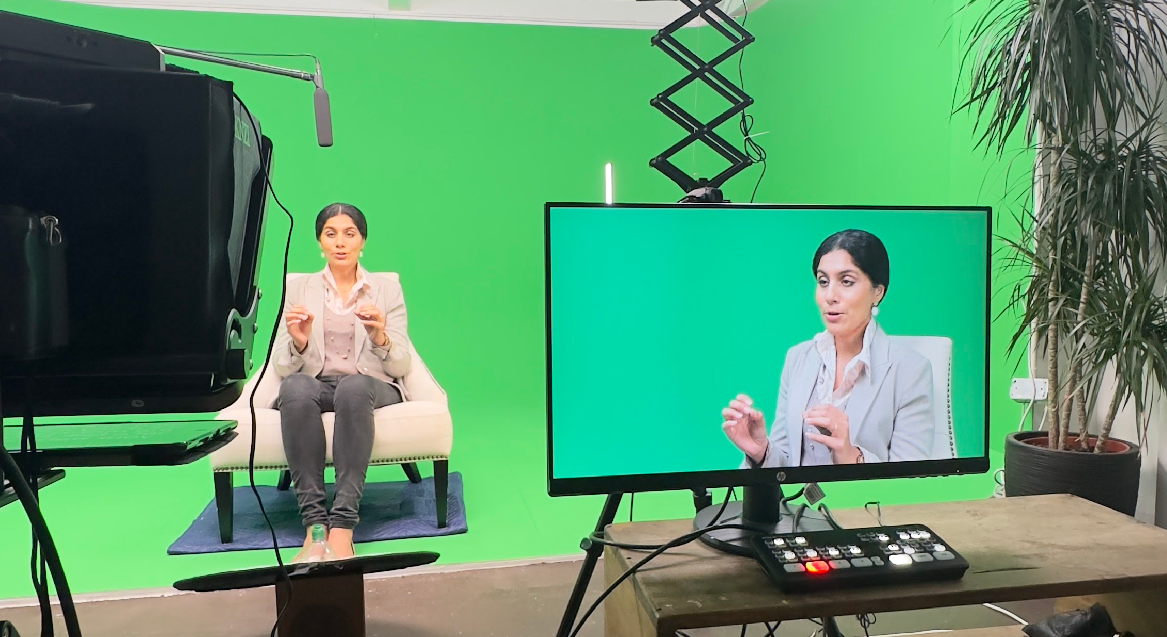
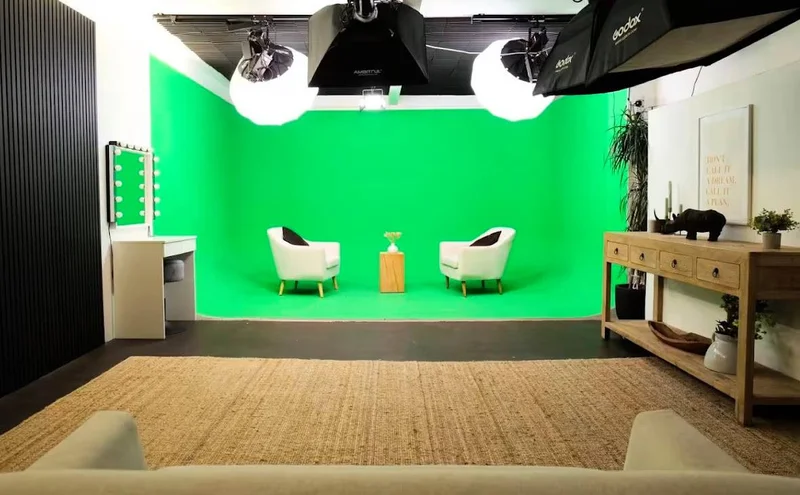
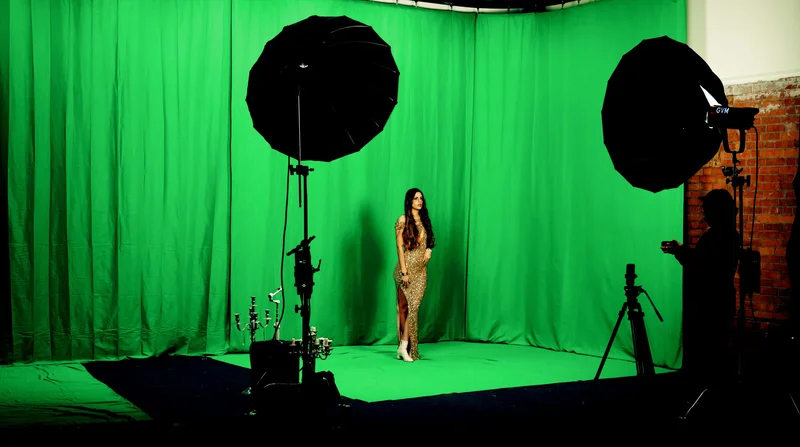
Finchley Studio (Green Screen Cove): book this setup for your podcast
Deconstructing the Signal-to-Noise Ratio (SNR) Debate
The ubiquity of inline preamplifiers has sparked a nuanced, and occasionally contentious, debate within professional audio engineering circles regarding the true nature of their noise-reduction capabilities. It is a common misconception among novice content creators that a Cloudlifter acts as a noise filter or an acoustic isolator that magically removes background room noise. This is fundamentally incorrect (Reddit).
From a strict physics standpoint, a Cloudlifter performs linear amplification; it amplifies whatever signal is fed into it. If the acoustic environment is noisy-characterized by computer fan whir, HVAC rumble, or poor room acoustics-the Cloudlifter will amplify that acoustic noise floor by exactly 25 dB, alongside the desired vocal performance (Reddit). The inherent self-noise of the microphone capsule itself is also amplified linearly (Reddit). Therefore, the signal-to-noise ratio of the acoustic source remains entirely unchanged (Reddit).
The undeniable reduction in noise observed by users is exclusively related to the electrical noise of the subsequent preamplification stage. As previously established, an entry-level audio interface generates excessive hiss when its gain knob is rotated to its maximum limit. The Cloudlifter improves the overall system SNR by relieving the interface of this heavy lifting. Audio professionals accurately point out that if a studio is already utilizing a high-end, dedicated microphone preamplifier capable of 75 dB of ultra-clean gain, introducing a Cloudlifter into the signal chain provides no mathematical or auditory benefit. In such premium configurations, the outboard preamp's noise floor is already approaching the theoretical limit of physics, rendering the inline activator redundant (Reddit).
Thus, the Cloudlifter is best understood not as an absolute necessity for all audio recording, but as a critical bridging technology that elevates consumer and mid-tier equipment to professional usability standards. It allows independent creators to achieve broadcast-quality sound without the prohibitive expense of elite outboard gear (Reddit). The success of this bridging technology is evident in the proliferation of competing devices, such as the Triton Audio FetHead, the Radial McBoost, and the Royer dBooster, all of which operate on similar principles of utilizing phantom power to drive discrete, clean-gain circuitry (Sweetwater).
Electrical Impedance: The Hidden Sculptor of Tone
Beyond the straightforward mathematics of volume amplification, the interaction between a microphone and a preamplifier is governed by the complex electrical principle of impedance. Impedance, measured in ohms (Ω), represents the effective resistance of an electrical circuit or component to an alternating current, arising from the combined effects of ohmic resistance and reactance (The Broadcast Bridge). In the context of audio recording, the relationship between the output impedance of the microphone and the input impedance of the preamplifier fundamentally dictates the efficiency of signal transfer, the accuracy of transient reproduction, and the ultimate tonal character of the recorded voice (YouTube).
Impedance Matching vs. Impedance Bridging
In the early decades of audio engineering and telecommunications, systems were strictly designed around the concept of "impedance matching" (YouTube). Grounded in the maximum power transfer theorem, this practice required the input impedance of the receiving device (the preamplifier) to be set exactly equal to the output impedance of the source device (the microphone) (YouTube). This matching was necessary to efficiently drive signals through long cable runs and passive components without catastrophic signal degradation, typically operating around a 600-ohm standard (Sound on Sound).
However, modern audio electronics operate on an entirely different paradigm known as "voltage transfer" or "impedance bridging" (YouTube). In a bridging configuration, the goal is not to maximize power transfer, but to maximize voltage transfer while minimizing current draw (Reddit). To achieve this, the input impedance of the preamplifier is designed to be substantially higher than the output impedance of the microphone-usually by a factor of five to ten times, or even greater (YouTube).
Today, the vast majority of dynamic and condenser microphones feature an output impedance ranging between 150 and 200 ohms (Sound on Sound). Adhering to the bridging principle, industry-standard microphone preamplifiers are typically designed with an input impedance between 1,500 (1.5k) and 2,000 (2k) ohms (Sound on Sound). This high ratio ensures that the microphone's electrical output is not "loaded down" or excessively dampened by the preamplifier. High input impedance allows the microphone's physical components-such as the moving coil or the delicate ribbon-to move freely without electrical resistance, facilitating optimal, uninhibited signal transfer (YouTube). The resulting audio is characterized by its natural, accurate, and wide-range frequency response, making high-impedance bridging the ideal setting for transparent, professional voiceover and high-fidelity vocal production (YouTube).
Variable Impedance as a Tonal Sculpting Tool
While maximum transparency is often the default goal, experienced audio engineers understand that impedance mismatching can be deliberately utilized as a powerful tool for tonal sculpting. Many high-end preamplifiers offer variable impedance switching, allowing the engineer to alter the electrical load presented to the microphone (The Broadcast Bridge).
When the input impedance of a preamplifier is lowered so that it approaches the output impedance of the microphone (moving closer to historical "matching"), a loading effect occurs that distinctly alters the electrical damping of the microphone's internal capsule or transformer (The Broadcast Bridge). This loading triggers several acoustic phenomena. First, the overall output signal voltage decreases, resulting in a quieter signal (JZ Recording Equipment). Second, and more importantly, the loading effect alters the resonant characteristics of the microphone. It typically adds a pronounced emphasis to the low-end and lower-midrange frequencies, picking up lower-spectrum resonances and yielding a sound that is often described subjectively as "thicker," "darker," or possessing a "vintage warmth" (JZ Recording Equipment). Concurrently, the upper-frequency transient detail is often diminished, effectively smoothing out harsh sibilance or high-end brittleness, though potentially sacrificing modern "air" and clarity (JZ Recording Equipment).
Elite preamplifiers explicitly feature impedance controls to exploit this phenomenon. The Focusrite ISA One, for instance, provides four distinct switchable input impedances: Low (600 ohms), ISA 110 (1400 ohms), Medium (2400 ohms), and High (6800 ohms) (Reddit). An engineer recording a baritone rock vocalist using a 150-ohm Shure SM7B might select the High (6800 ohms) setting to extract maximum high-frequency clarity, transient detail, and raw output level (Reddit). Conversely, when recording a shrill acoustic instrument, or when attempting to recreate the darker, compressed tone of a 1970s radio broadcast, the engineer might engage the Low (600 ohms) setting to deliberately load the microphone, round off the high frequencies, and saturate the lower midrange (Reddit).
Innovators in analog design, such as the late Rupert Neve, frequently employed a 5,000 (5k) ohm input impedance in many of his custom preamplifier designs to drastically reduce source loading and ensure absolute clarity (Sound on Sound). Furthermore, dedicated ribbon-microphone preamplifiers may present input impedances of 18,000 (18k) ohms or higher, an extreme bridging ratio designed to allow the delicate ribbon motor to move with absolute, unimpeded freedom (Sound on Sound).
The Shure SM7B: Anatomy of an Industry Standard
No technical analysis of preamplification, gain staging, and impedance is complete without a deep, targeted examination of the Shure SM7B. Originally introduced to the broadcast market decades ago, this dynamic moving-coil microphone has evolved into the undisputed visual and acoustic icon of modern podcasting, streaming, and vocal production.
The SM7B's enduring dominance stems from its specific acoustic properties. It features a highly controlled cardioid polar pattern, exceptional off-axis rejection, and a sophisticated internal air-suspension shock and vibration isolator (Shure). This combination allows the microphone to perform exceptionally well in untreated or poorly optimized acoustic environments, rejecting computer fan noise, keyboard clicks, and room reverberation far better than sensitive condenser microphones. Furthermore, the microphone provides a smooth, flat, wide-range frequency response spanning from 50 Hz to 20,000 Hz (Shure). Its rear chassis features hardware switches that allow users to mechanically alter this response; a bass roll-off filter can be engaged to mitigate low-frequency hum from HVAC systems or traffic, while a presence boost can be activated to accentuate mid-range vocal intelligibility (Shure).
However, the rugged physical design of the SM7B-necessitating thick diaphragm material, a heavy voice coil, and hum-bucking shielding to protect against electromagnetic interference (equivalent SPL/mOe of 11 dB at 60 Hz)-results in a staggering lack of sensitivity. As noted, its output of -59 dBV/Pa requires immense, ultra-clean gain to reach line level. This extreme gain requirement is precisely what drove the massive commercial success of the Cloudlifter and similar inline devices. The pairing of the SM7B with a Cloudlifter CL-1 became a ubiquitous, almost mandatory bundle for independent creators seeking professional results from consumer interfaces (CrumplePop).
Recognizing this industry-wide reliance on external gain staging, Shure eventually responded by releasing the SM7dB. This modern iteration integrates a built-in active preamplifier directly into the microphone's chassis (Shure). Utilizing +48V phantom power supplied via the XLR cable, the internal preamp provides switchable boosts of either +18 dB or +28 dB of low-noise, flat, transparent gain (Shure). Notably, Shure licensed the patented JFET technology directly from Cloud Microphones to power the SM7dB's internal active stage. This integration completely circumvents the need for an external Cloudlifter, streamlining the signal chain while preserving the legendary acoustic signature and frequency response of the original dynamic capsule (Shure).
The Elite Studio Ecosystem: A Recording Studio London Perspective
While independent content creators mitigate equipment limitations with inline preamplifiers and active microphones, the commercial audio sector solves the gain staging equation through massive infrastructure investments. A professional Recording studio operates on a paradigm of uncompromising signal integrity. In these facilities, audio is routed through signal chains valued in the hundreds of thousands of dollars, housed within acoustically treated, structurally isolated environments (Tandfonline). This paradigm entirely negates the need for inline band-aids like the Cloudlifter, as the primary amplification stages possess limitless headroom and vanishingly low noise floors.
The equipment lists of elite London facilities underscore the profound divide between consumer audio capture and professional production. At Air Studios, one of the world's premier recording spaces, vocal tracking is conducted through an AIR Custom Neve A7971 console (AIR Studios). This historic 72-channel desk features 56 channels of Neve 31106 preamplifiers and 16 channels of Focusrite ISA110 modules (AIR Studios). These proprietary preamplifiers utilize custom-wound input transformers, such as the legendary Lundahl LL1538 found in the ISA architecture, which provide massive, artifact-free voltage step-up before the signal ever reaches the active amplifier circuit (Focusrite).
Similarly, The Church Studio, another iconic London Recording studio, boasts a vintage Neve 8068 console equipped with Flying Faders II (The Church Studio). Their outboard racks feature highly specialized preamplifiers, including four channels of API 512Cs, Telefunken v76s, and GML 8304s, ensuring that any microphone-from an insensitive SM7B to a delicate vintage Coles 4038 ribbon mic-is driven with pristine clarity (The Church Studio). The integrity of this analog signal is then meticulously preserved during digitization via elite converters like the Burl B80 Mothership (featuring 32 A/D and 40 D/A channels) or the Antelope Audio Orion 32HD, capturing a dynamic range that far exceeds the mathematical capabilities of consumer USB interfaces (The Church Studio).
The Rise of the Purpose-Built Podcast Studio London
As spoken-word content has monetized into a multi-billion-dollar global industry, the baseline standards of audio production have shifted dramatically. Audiences, now accustomed to highly polished audio documentaries, serialized investigative journalism, and network-backed celebrity interviews, possess an increasingly low tolerance for subpar audio fidelity (Finchley Studios). Poor sound quality-characterized by electronic hiss, distracting room echo, background traffic, and inconsistent volume levels-is no longer viewed as an acceptable hallmark of amateur independence (Finchley Studios). Instead, it is interpreted as a lack of professionalism and is cited as a primary driver of listener abandonment (Finchley Studios). A creator's audio fidelity is their first impression, and in a saturated market, audiences rarely afford a second chance (Finchley Studios).
Consequently, there has been an explosive growth in the demand for the dedicated Podcast studio. A premier Podcast studio london provides creators, journalists, and businesses with immediate access to broadcast-tier signal chains and acoustic isolation without requiring the prerequisite technical expertise or the massive capital outlay to purchase equipment. Facilities such as Spiritland Productions offer premium setups that rival traditional music studios. Their podcasting suites feature Studer ONAIR 1500 digital consoles, networked Focusrite Rednet preamps, and Beyerdynamic M88 dynamic microphones (Spiritland Productions). Furthermore, to ensure data security for high-profile clients, they utilize redundant multitrack recording systems via Reaper, backed up simultaneously by separate stereo digital recorders (Spiritland Productions). For remote interviews, they maintain integrated outside source connectivity via Riverside, ISDN, and iPDTL, ensuring that international guests are captured with maximum possible fidelity (Spiritland Productions).
Other specialized venues, such as Dean St. Studios, integrate high-end preamps and top-tier microphones (including Neumann, Shure, and AKG models) with meticulously treated acoustic environments (Dean St. Studios). Recognizing the future of immersive audio, Dean St. extends their capabilities into spatial formats, offering mixing and mastering in a dedicated 9.1.4 PMC Dolby Atmos suite (Dean St. Studios). This allows producers of audio fiction or high-end documentaries to add cinematic spatial depth to their podcasts, mastering directly for platforms like Apple Podcasts and Audible (Dean St. Studios).
Voxpod, another London podcast studio, equips its space to comfortably fit up to six people, utilizing an array of Shure SM7B, Neumann TLM 103, and Earthworks Ethos microphones (Saspod). These signals are routed through D.A.V Electronics mic preamps and a PreSonus StudioLive SE24 digital desk, guided by an on-site sound engineer included in the rental cost (Saspod). By utilizing elite outboard preamplification and engineered room acoustics, these studios extract the maximum detail, presence, and transient response from their microphones, entirely bypassing the noise floor limitations experienced by home users.
The Audiovisual Convergence in the Video Studio London Market
In the modern digital economy, audio cannot be isolated from visual media. The proliferation of video podcasts (vodcasts), corporate communications, e-learning modules, and digital marketing campaigns requires facilities capable of simultaneously managing cinematic lighting, multiple camera angles, and zero-compromise acoustic capture. A dedicated Video studio must therefore seamlessly integrate the rigorous acoustic standards of a recording studio with the spatial and lighting requirements of a film set.
The acoustic demands placed on a london Video studio are particularly stringent. Unlike independent podcasters who can speak mere inches away from an SM7B to maximize the signal-to-noise ratio, corporate video productions and cinematic shoots often require boom-mounted shotgun microphones or discreet wireless lavaliers. The goal is to capture pristine dialogue while keeping the audio equipment entirely out of the camera frame. These distant miking techniques drastically reduce the acoustic energy reaching the capsule, thereby exponentially increasing the necessity for ultra-clean preamplification and absolute acoustic isolation from the outside world.
Elite video production facilities market their soundproofing as a primary competitive advantage to discerning producers. For instance, Mount Pleasant Studio in Central London heavily promotes its fully soundproofed environment, tailored specifically for audio-critical shoots where traffic noise, airplane overheads, or building vibrations would otherwise ruin a take and inflate post-production costs (Mount Pleasant Studio). They pair this acoustic isolation with U-shaped infinity coves, Arri Skypanels, and pre-lit Nanlux 650C panel arrays on a ceiling rig to provide flawless visual capture (Mount Pleasant Studio).

See the 'No ordinary tech podcast ' from Lloyds Banking Group by Rohit D (AI Leader for Lloyds Banking Group) and DR. shini somara (Pro-Chancellor of Brunel University) . at Finchley Studio (Lounge setup). Book this setup for your podcast.
Similarly, production agencies like Kinsman & Co and Crew Studio emphasize their ability to deliver "cinema quality recording" tailored specifically to corporate narratives (Kinsman & Co). They combine 4K visual capture with precise audio editing, sound design, and color grading to produce content for global brands like Unilever and Sony Music (Kinsman & Co). Facilities like TYX Studios bridge the gap entirely, offering dedicated podcasting spaces alongside Red Studios, Dolby Atmos mix rooms, and photography sets, all equipped with professional lighting and 4K cameras to service the rapidly expanding video-podcast format (TYX Studios).
The integration of high-end video introduces complex logistical requirements that further separate professional studios from amateur setups. Superfast fiber connectivity is mandated for smooth live streaming and remote client monitoring (Mount Pleasant Studio). Spiritland Productions, for example, utilizes three 4K UHD Panasonic UE150 PTZ cameras, switching via a 1 x 2ME UHD video switcher, while simultaneously routing the high-fidelity audio through their Focusrite Rednet system, with everything backed up on four Hyperdeck 12G UHD video recorders (Spiritland Productions). This convergence of technologies ensures that the visual identity of a brand is matched by an equally flawless, broadcast-standard auditory signature.
The Economics of Audio Quality: Monetization and Listener Retention
The extensive engineering efforts required to capture pristine audio-from the chemical composition of a military-grade JFET chip in a Cloudlifter to the installation of a floated acoustic floor in a Video studio london-are ultimately driven by commercial economics. In the modern creator economy, audio quality is directly correlated with monetization potential, audience retention, and overall brand authority.
For podcasters, the transition from an amateur bedroom setup to a professional London podcast studio is frequently catalyzed by the pursuit of lucrative revenue streams. High-fidelity audio significantly lowers the cognitive friction for the listener (TYX Studios). When audiences do not have to strain to hear dialogue over background hiss or room echo, they listen longer. This increased listener retention translates directly into higher conversion rates for affiliate marketing, where hosts promote tech products or services via unique tracking URLs (London Media Lounge).
Furthermore, flawless audio is an absolute prerequisite for securing high-level corporate sponsorships. Brands demand that their ad reads-whether dynamically inserted into the audio file or read natively by the host-are delivered with undeniable broadcast clarity (TYX Studios). Industry research indicates that over 90% of listeners are open to hearing ads on their favorite shows, particularly when delivered by a trusted host (SiriusXM Media). The SiriusXM Media portfolio demonstrates that targeted, high-quality audio ads yield massive lifts in brand favorability and purchase intent (SiriusXM Media). For example, when Pepsi targeted listeners across ten cities with location-specific ads, the use of professional voice actors recorded in pristine studio environments ensured the creative delivery matched the brand's global standards, resulting in performance metrics that far exceeded initial benchmarks (SiriusXM Media). Similarly, LUXE Bidet utilized host-read ads on Conan O'Brien's podcast, leveraging high-quality audio to deliver ad-libbed, humorous copy that resonated deeply with the audience (SiriusXM Media).
Creators also leverage high-end production to sell proprietary products, consulting services, and premium subscription content (London Media Lounge). When a creator's voice is captured through a high-end microphone and an elite preamplifier, the resulting sonic authority subconsciously communicates expertise, reliability, and professionalism to the listener (London Media Lounge). This auditory polish validates the purchase of a premium e-course, branded merchandise, or an exclusive Patreon subscription, effectively building a sustainable business around the podcast (London Media Lounge).
For corporate entities, the stakes of audio quality are equally high. A corporate video produced for stakeholder engagement, internal employee communications, or international B2B marketing must reflect the company's market position and competency (Crew Studio). A visually stunning 4K video is instantly degraded if the accompanying audio is marred by preamp hiss, poor acoustic reflections, or inadequate gain staging (Finchley Studios). Therefore, video production agencies like Buck London and Theory Films prioritize creative storytelling backed by flawless audio capture, ensuring the brand's core values are communicated with clarity and emotional impact (Buck London Productions). The competitive advantage of a physical studio space like Finchley Studio lies not just in the acoustic treatment, but in providing a pre-packaged visual and auditory identity, allowing a new creator or business to immediately establish a brand that competes with major networks (Finchley Studios).

Finchley Studio (Dialogue set): book this setup for your podcast
Digital Discoverability: SEO Strategies for Premium Audio Facilities
The technical superiority of a London Recording studio or a high-end video facility represents only half of the modern business equation. In a highly competitive and saturated market, these capital-intensive facilities rely heavily on Search Engine Optimization (SEO) to maintain booking velocity, attract corporate clients, and ensure a return on their substantial infrastructure investments. The methodology of connecting a frustrated home-recording artist or an expanding corporate client with a premium studio space is deeply rooted in local SEO strategies, intent mapping, and sophisticated digital keyword integration (Search Engine Land).
A robust local SEO strategy for an audio or video facility relies heavily on capturing geo-modified search intent. Potential clients routinely utilize exact-match and phrase-match queries such as "London podcast studio", "Video studio", "london Video studio", or "Recording studio london" to find facilities within logistical proximity (Search Engine Land). To capture this highly qualified, high-converting traffic, facilities must systematically integrate these target keywords into their digital architecture (Search Engine Land). However, modern search algorithms penalize simple keyword stuffing; instead, they prioritize natural language, authoritative content, and structured semantic relevance (Search Engine Land).
Executing the Local SEO Strategy
The architecture of a successful studio website aligns technical SEO parameters with high-value content marketing. A foundational step involves conducting a comprehensive site audit to benchmark current performance, addressing technical issues such as page load speeds, mobile responsiveness, and broken internal links utilizing tools like Google Analytics, Search Console, Ahrefs, or SEMrush (Michigan Technological University).
Once the technical foundation is secure, the strategy shifts to keyword intent mapping. Studios must map target keywords to different intents along the customer journey (Search Engine Land). For example, a creator searching for "why does my Shure SM7B have static" represents informational intent. A studio can capture this top-of-funnel traffic by publishing authoritative, technical articles explaining preamplifier noise floors, impedance bridging, and the benefits of inline devices like the Cloudlifter (Michigan Technological University). By integrating latent semantic indexing (LSI) keywords-such as "audio interface preamp noise floor comparison," "microphone impedance," or "SM7B gain staging"-the studio establishes digital domain authority (YouTube).
To capture transactional intent-users actively seeking to book a room-studios must rigorously optimize their localized landing pages (Search Engine Land). Best practices dictate the creation of unique content blocks for specific services (Search Engine Land). A dedicated landing page targeting "Video studio london" must feature the page's title tag and H1 headers optimized for that exact phrase (Search Engine Land). Furthermore, the body content must naturally weave in related service-in-location (SIL) queries, detailing the facility's specific equipment (e.g., Arri Skypanels, Neve preamps) without duplication (Search Engine Land).
Local SEO for physical studios also heavily depends on off-page signals and structured data. Optimizing a Google Business Profile, managing consistent Name, Address, and Phone Number (NAP) citations across the primary business directories, and securing unique first-party and third-party reviews are critical for ranking in the highly coveted localized "map pack" search results (Search Engine Land).
Furthermore, when studios or independent musicians catalog audio assets-such as a portfolio of previous work or proprietary royalty-free track libraries-keywording strategies must shift toward emotional and instrumentation descriptors (123RF). Assigning specific tags like "upbeat", "melancholy", "acoustic", or specific tempo markers ensures that producers searching for highly specific sonic profiles can easily discover the studio's digital output, further driving traffic and establishing industry credibility (123RF).
Synthesizing the Future of High-Fidelity Capture
The pursuit of crystal clear vocal reproduction is an intricate, multi-disciplinary convergence of electrical engineering, acoustic physics, business economics, and digital marketing strategy. The immense, sustained popularity of low-output dynamic microphones, driven by their superior off-axis rejection and broadcast tone, has forced a critical reevaluation of preamplification technology across all tiers of the media industry.
For the independent creator, the development of the Cloudlifter and its patented JFET circuitry provided a vital, democratizing bridge. By transforming standard phantom power into transparent, Class-A discrete gain, these inline devices allow budget audio interfaces to operate efficiently, preventing the exposure of their inherent thermal noise floors and delivering broadcast-acceptable signal-to-noise ratios. Furthermore, an understanding of electrical impedance bridging-ensuring the preamplifier's input impedance is vastly higher than the microphone's output impedance-empowers engineers to preserve accurate transient detail, while the availability of variable impedance switching allows for deliberate, creative tonal sculpting.

Finchley Studio (Lounge set): book this setup for your podcast
However, the zenith of audio fidelity remains the exclusive domain of the professional recording, podcasting, and video broadcast facility. By utilizing massive analog consoles, bespoke step-up transformers, and structurally isolated acoustic architecture, a premier London Recording studio eliminates the variable of consumer equipment limitations entirely. As global audience expectations continue to rise, the commercial viability of a podcast, a corporate video, or a musical release is increasingly tethered to its sonic perfection. This unyielding economic reality drives the thriving ecosystem of specialized media facilities. Through meticulous local SEO strategies, targeted content marketing, and an unwavering commitment to analog signal integrity, these studios provide the invisible, yet deeply felt, technological foundation upon which modern digital storytelling is built. Ultimately, whether achieved through a clever inline active circuit on a desktop or a multi-million-dollar acoustic facility, the hidden technology behind the microphone remains the silent, powerful arbiter of a creator's connection with their audience.