Executive Summary: The State of Audio in the Capital
The digital media landscape of the United Kingdom is currently witnessing a paradigm shift, with London positioning itself not merely as a broadcast hub, but as a global epicenter for on-demand audio content. As we approach the mid-2020s, the podcasting sector has transcended its origins as a niche hobbyist pursuit to become a robust industrial vertical. The data is unequivocal regarding this trajectory: the UK podcasting market is projected to expand at a Compound Annual Growth Rate (CAGR) of 26.3% between 2025 and 2030, targeting a revenue milestone of roughly £5.8 billion ($7.4 billion) by the end of the decade. (grandviewresearch)
For the aspiring creator, brand, or business leader in London, this growth signals a critical window of opportunity. However, the barrier to entry has simultaneously risen. The expectation for "broadcast quality" is now the baseline, and the convergence of audio with video—driven by YouTube's dominance as the primary consumption platform for 33% of listeners —has added a layer of technical complexity. (teleprompter)
This report serves as a definitive strategic blueprint for Finchley Production Studio and its prospective clients. It provides an exhaustive analysis of the London podcasting ecosystem, moving beyond generic advice to address the specific acoustic, logistical, and regulatory realities of the capital. From navigating the noise pollution of the Northern Line to understanding the intricacies of PPL/PRS music licensing, this document creates a pathway from concept to chart-topping execution.
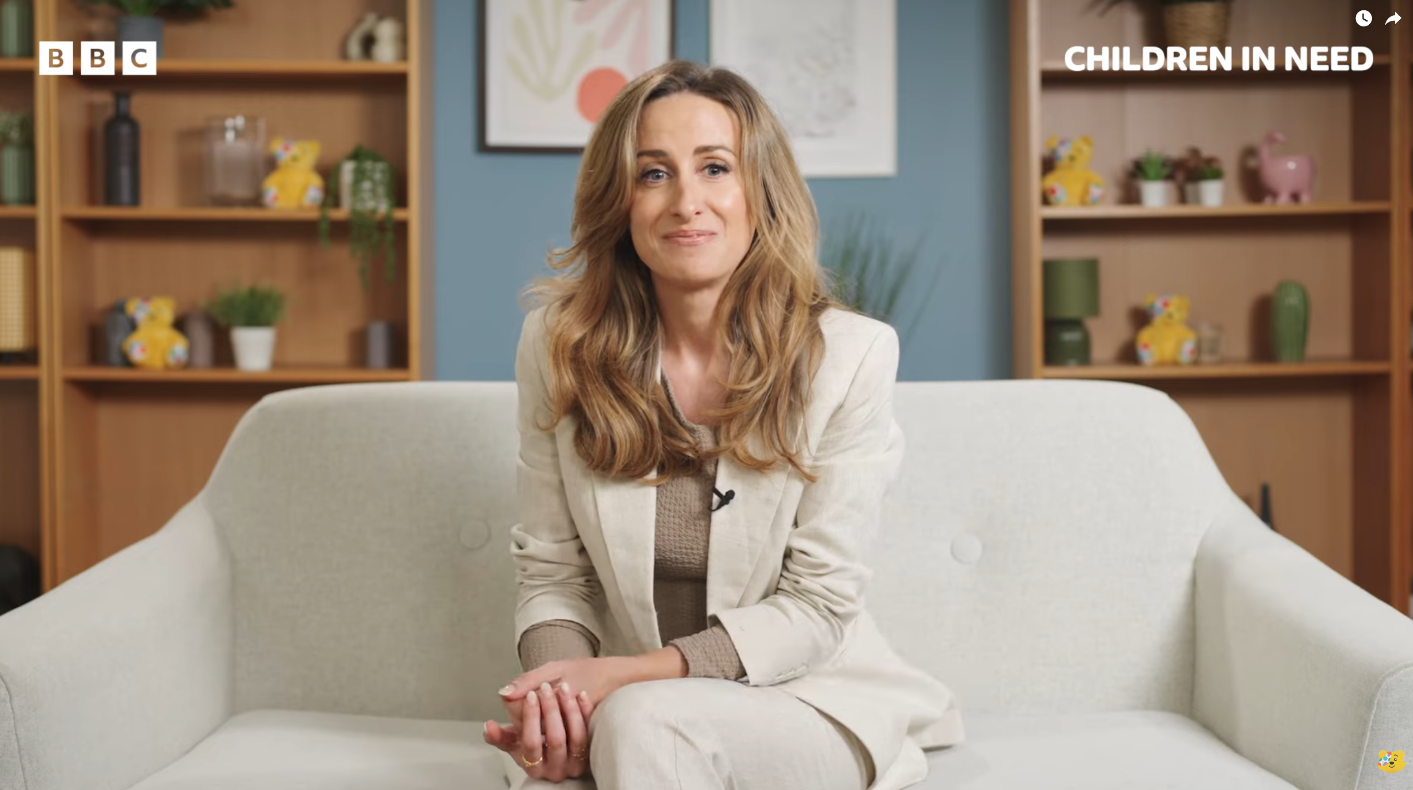
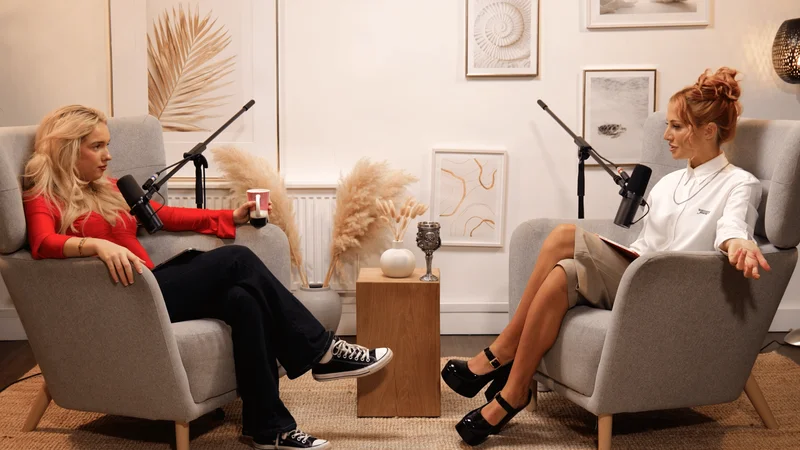
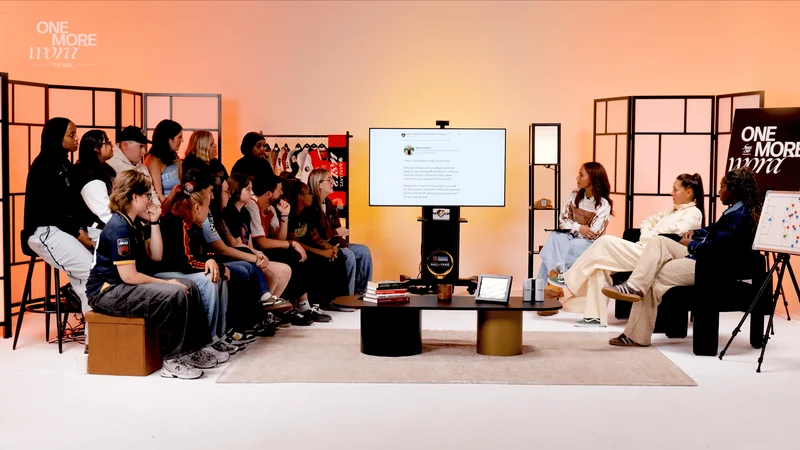
See the 'BBC Children in Need' podcast setup used by Dr Julie from BBC at Finchley Studio (Lounge setup). Book this setup for your podcast
Section 1: Search Intent Analysis and Audience Psychology
To create a resource that truly resonates, one must first dissect the intent behind the search query "How to start a podcast in London." This phrase is loaded with implicit requirements that generic guides fail to address. The user is not simply asking for technical instructions; they are signaling a set of geographical and environmental constraints.
1.1 The "London" Modifier: Decoding Local Intent
When a user appends "in London" to their query, they are distinguishing their needs from the global creator economy. This modifier reveals specific anxieties and logistical requirements:
Acoustic Anxiety: London is acoustically hostile. Users searching this term are often implicitly asking, "How do I deal with the noise?" They are likely residents of flats with shared walls or proximity to busy transport links, aware that a standard home setup may not suffice. (theguardian)
Logistical Efficiency: The search for "Podcast Studio London" or "near me" is often a search for transport convenience. In a city where a "local" journey can take an hour, proximity to the Tube network is a decisive factor. The intent here is to find a facility that minimizes friction for both the host and the guest. (finchley)
The Desire for Prestige: London is a global media capital. A user searching for London-specific advice often harbours ambitions of professionalism. They are looking for a studio or setup that reflects the perceived quality of a "London broadcast," distinguishing themselves from remote recordings.
1.2 User Persona Segmentation
The search volume for podcasting in London is driven by four distinct personas, each with unique pain points and "jobs to be done."
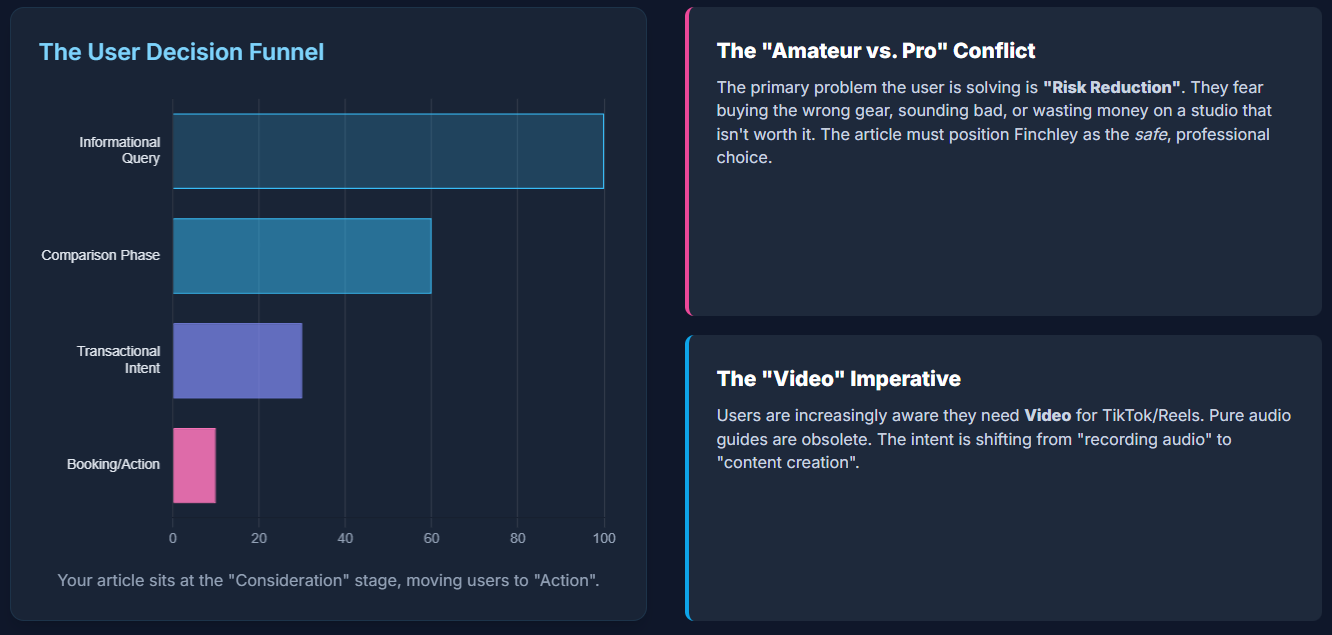
1.3 The Informational-Transactional Funnel
The search intent analysis reveals a mix of informational and transactional desires. While queries like "how to start" are top-of-funnel informational searches, they rapidly progress to transactional queries like "studio hire" once the user realizes the complexity of home production in London. The strategy for Finchley Production Studio is to bridge this gap: providing the information that validates the complexity, thereby logically leading the user to the transactional solution of hiring a professional space.
Section 2: Competitor Gap Analysis
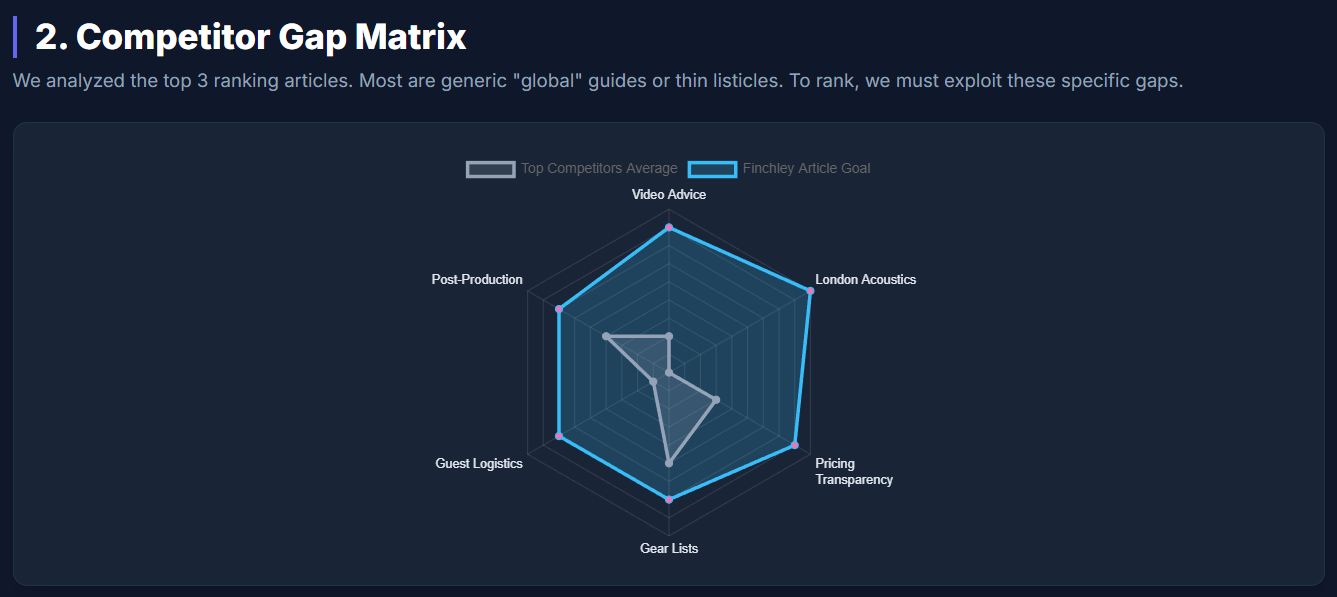
A forensic audit of the current top-ranking content for "How to Start a Podcast in London" reveals significant deficiencies. While competitors cover the basics, they often fail to address the specific nuances of the London market or the rapid technical shift toward video.
2.1 Competitor 1: Select Recording Studios
Content Overview: Focuses on general advice ("focus on a niche," "plan content"). Mentions studio rates (£100-£300).
The Gap: The advice is generic and could apply to any city. It lacks specific data on London's noise floor, transport logistics, or the specific gear required for video podcasting. The legal section is cursory, mentioning licenses without detailing the specific bodies (PPL/PRS) or the distinction for podcasts vs. radio.
2.2 Competitor 2: Prospects.ac.uk
Content Overview: A career-focused guide. heavily text-based, focusing on the "process" (topic, format, brand).
The Gap: This is a legacy media guide. It treats video as an afterthought. It completely ignores the physical reality of recording—acoustics, soundproofing, and equipment. It is "location agnostic" to a fault, offering no London-specific value.
2.3 Competitor 3: Podcast House
Content Overview: A studio service page disguised as a blog. Answers FAQs about costs and home setups.
The Gap: While it addresses the "Studio vs. Home" debate, it does so with a heavy sales bias. It lacks objective data on market growth or technical deep dives into why their equipment is superior. It misses the opportunity to educate on the physics of sound in London, which would build greater authority.
2.4 The Strategic Opportunity for Finchley
The analysis identifies a clear "Blue Ocean" strategy for content. Existing guides are either too generic (Prospects) or too sales-heavy (Podcast House). There is no "Definitive Technical Guide" that combines:
Hyper-Local Context: Integrating noise data and transport specifics (Northern Line access).
Video-First Methodology: Treating YouTube/Vodcast as the default standard , not an add-on.
Regulatory Detail: Providing actionable advice on UK-specific laws (Fair Dealing, GDPR). (auberginelegal)
Section 3: The London Context – Environmental & Local Nuances
To record audio in London is to battle the city itself. The acoustic environment of the capital is distinct, aggressive, and unforgiving. A guide that fails to address this sets the beginner up for failure.
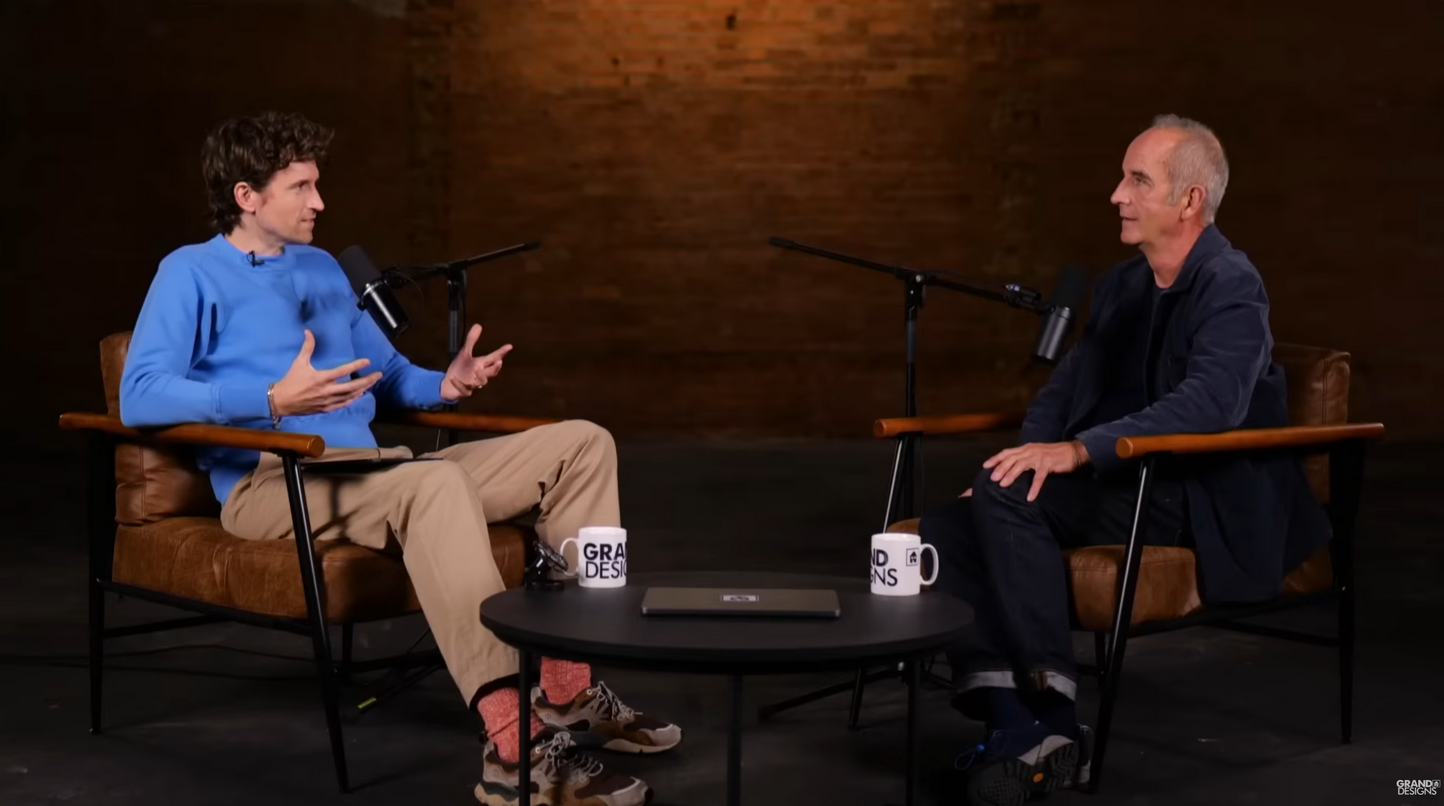
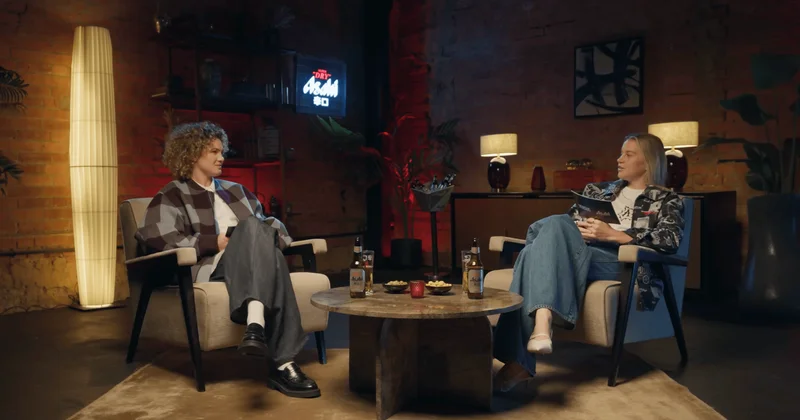
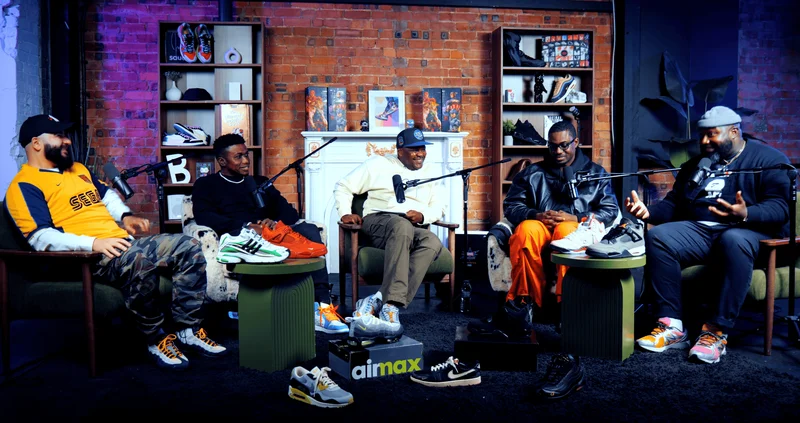
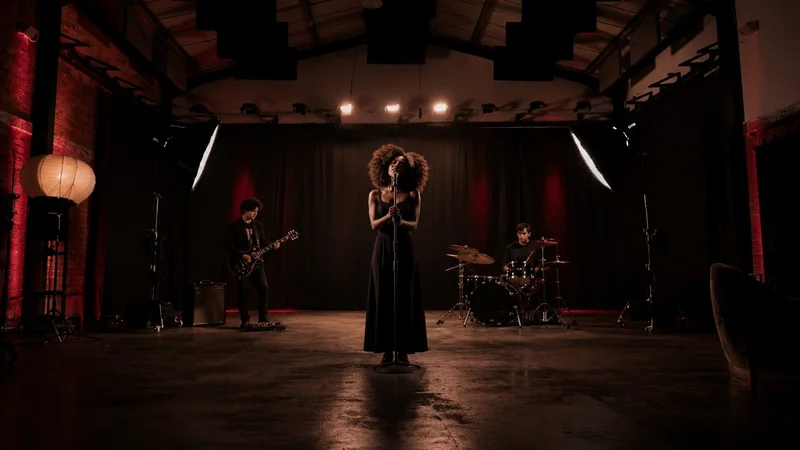
See the 'Grand designs' from Channel 4 by Kevin McCloud at Finchley Studio (Brick studio). Book this setup for your podcast.
3.1 The Acoustic Reality: Noise Pollution
London is a city that never stops vibrating. The "Noise Floor"—the measure of ambient sound in a silent room—is significantly higher here than in other UK regions.
Decibel Levels: Research indicates that London residents are regularly exposed to ambient noise levels exceeding 86dB. For context, a quiet library is 40dB. A difference of 46dB is massive in audio terms, as the decibel scale is logarithmic. (theguardian)
Transport Interference: The London Underground is a major culprit. The Northern and Victoria lines create ground-borne vibrations that can travel up through building foundations. In-carriage noise can reach 100 dBA, but even adjacent properties feel the low-frequency rumble (20-100Hz). (standard)
Implication for Home Studios: This low-frequency noise is notoriously difficult to block with standard foam panels. True isolation requires "decoupling"—building a room within a room with floating floors—an impossibility for most renters or leaseholders. This reality is a primary driver for the necessity of professional studios like Finchley, which are purpose-built to exclude this specific frequency spectrum.
3.2 Logistics: The "Northern Line" Factor
In a city as sprawling as London, accessibility defines feasibility.
Guest Friction: High-profile guests (CEOs, authors, influencers) are time-poor. They will decline invitations to studios that are difficult to reach. A studio located "Zones away" or far from a Tube station introduces friction.
The Finchley Advantage: Located just two minutes from Finchley Central on the Northern Line, Finchley Studio occupies a strategic "sweet spot." It is accessible from Central London (approx. 20-25 mins) yet located in an area that allows for free parking—a unicorn feature in London. This specific logistical detail is a high-value semantic keyword cluster ("podcast studio with parking London") that competitors often overlook.
3.3 The Creative Geography
London's boroughs have distinct creative identities that influence where creators choose to record.
Shoreditch/Hackney: The hub of "cool." Studios here (e.g., Pirate, Outset) often feature industrial aesthetics—exposed brick, neon signage. They target a younger, music-oriented or startup demographic.
Soho/Fitzrovia: The traditional media heartland. High prestige, but extremely high cost per hour (£150+) and often lacking in space.
North London (Finchley): Represents a blend of professional broadcast standards with residential accessibility. It appeals to the "serious creator" who prioritizes output quality and ease of access over the "scene" of East London.
Section 4: Semantic Keywords & LSI Strategy
To dominate the Search Engine Results Pages (SERPs), the content must weave in specific semantic terms and Latent Semantic Indexing (LSI) keywords. These signal to Google that the content is comprehensive and authoritative.
4.1 Gear-Specific Semantics
Beginners search for "microphone"; experts (and search algorithms) look for specific models and technical terms.
Microphones: "Shure SM7B" (The industry standard for broadcast) , "Electro-Voice RE20," "Dynamic vs. Condenser," "Cardioid Polar Pattern."
Interface/Processing: "Rodecaster Pro II", "Cloudlifter" (essential for low-output dynamics like the SM7B), "32-bit float recording" (associated with the Zoom F8n Pro).
Video: "Sony FX30" (Cinema Line) , "Sony ZV-E1" (Vlogging/AI) , "Clean HDMI output," "10-bit color," "LUTs (Look Up Tables)." (pcmag)
4.2 Location-Based Semantics
Hyper-Local: "Podcast studio North London," "Recording studio Finchley," "Near Northern Line," "Barnet podcast hire."
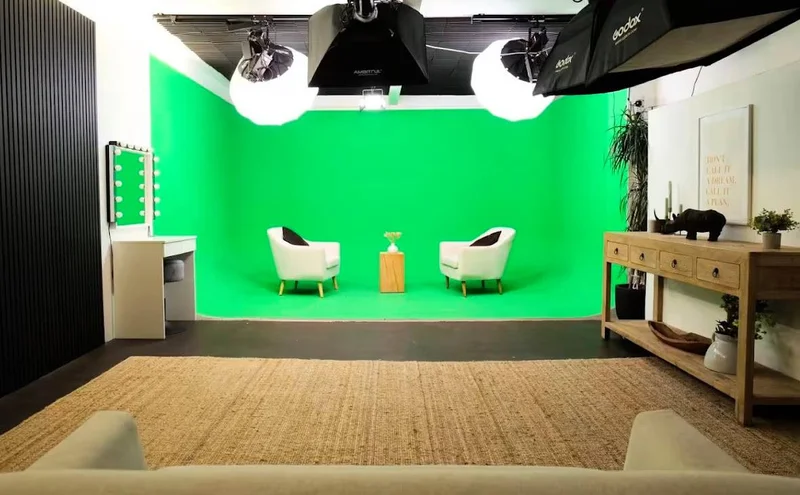
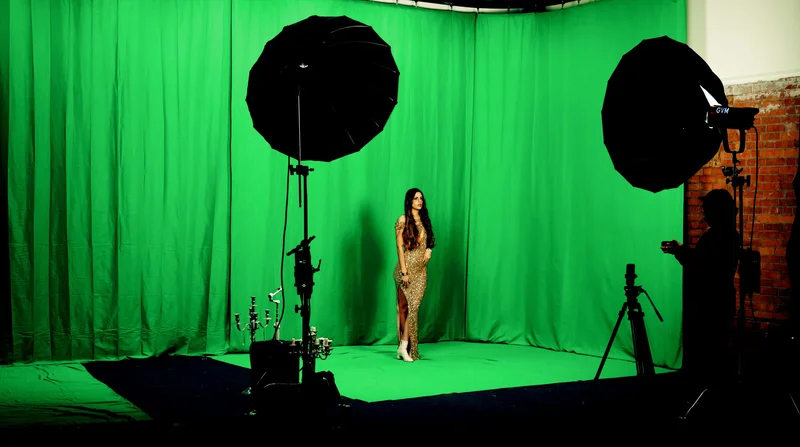
Facility Features: "Soundproof booth," "Acoustically treated," "Air conditioned studio" , "Green screen podcast," "Vodcast studio London."
4.3 Intent-Based Phrases
"Podcast studio hourly rates London" (Transactional).
"How to record a video podcast remote guests" (Informational/Technical).
"Podcast editing services UK prices" (Commercial).
"PRS license for podcasts UK" (Legal/Informational).
Section 5: Data & Statistics – The UK Podcast Market
To validate the investment in podcasting, we must look at the hard data. The UK market is not just growing; it is evolving in specific ways that dictate production strategy.
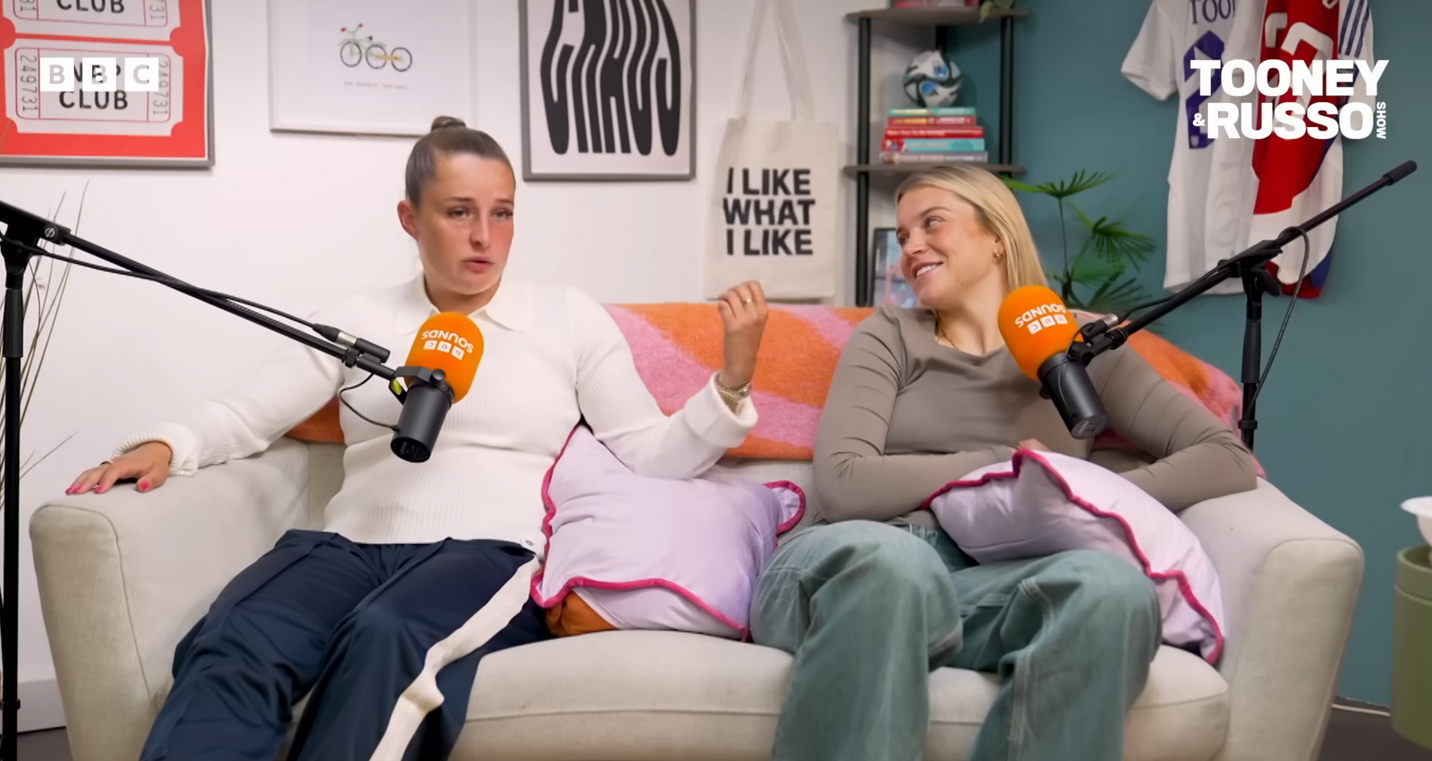
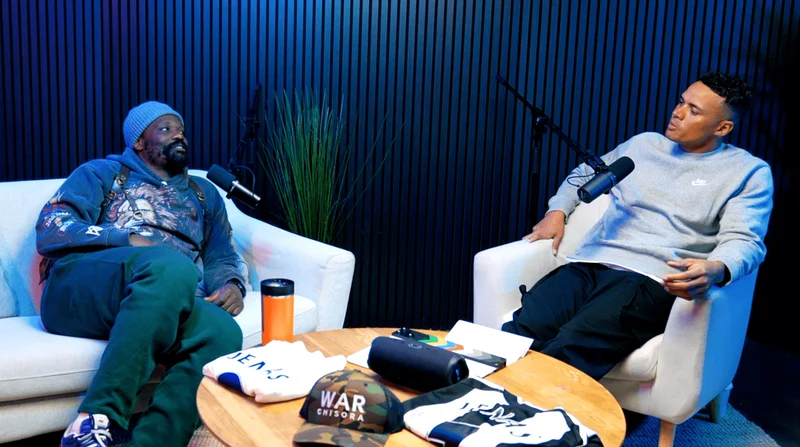
See the 'The Tooney & Russo Show' from BBC and Lionesses Ella Toone and Alessia Russoat from England national football team at Finchley Studio (Lounge setup). Book this setup for your podcast. Watch 'The Tooney & Russo Show' at BBc sound , Spotify , Youtube, Amazon music.
Book this setup for your podcast
5.1 Market Velocity and Value
The economic indicators for UK podcasting are overwhelmingly positive.
Revenue Growth: The market is projected to grow from roughly $1.78 billion in 2024 to $7.4 billion by 2030. This represents a massive CAGR of 26.3%. (grandviewresearch) This growth is driven by increased ad spend and the diversification of monetization models (subscriptions, branded content).
Implication: For businesses, a podcast is no longer a "nice-to-have" marketing experiment; it is a burgeoning asset class with significant equity potential.
5.2 Consumption Habits: The Video Shift
The most critical statistic for 2025 is the dominance of YouTube.
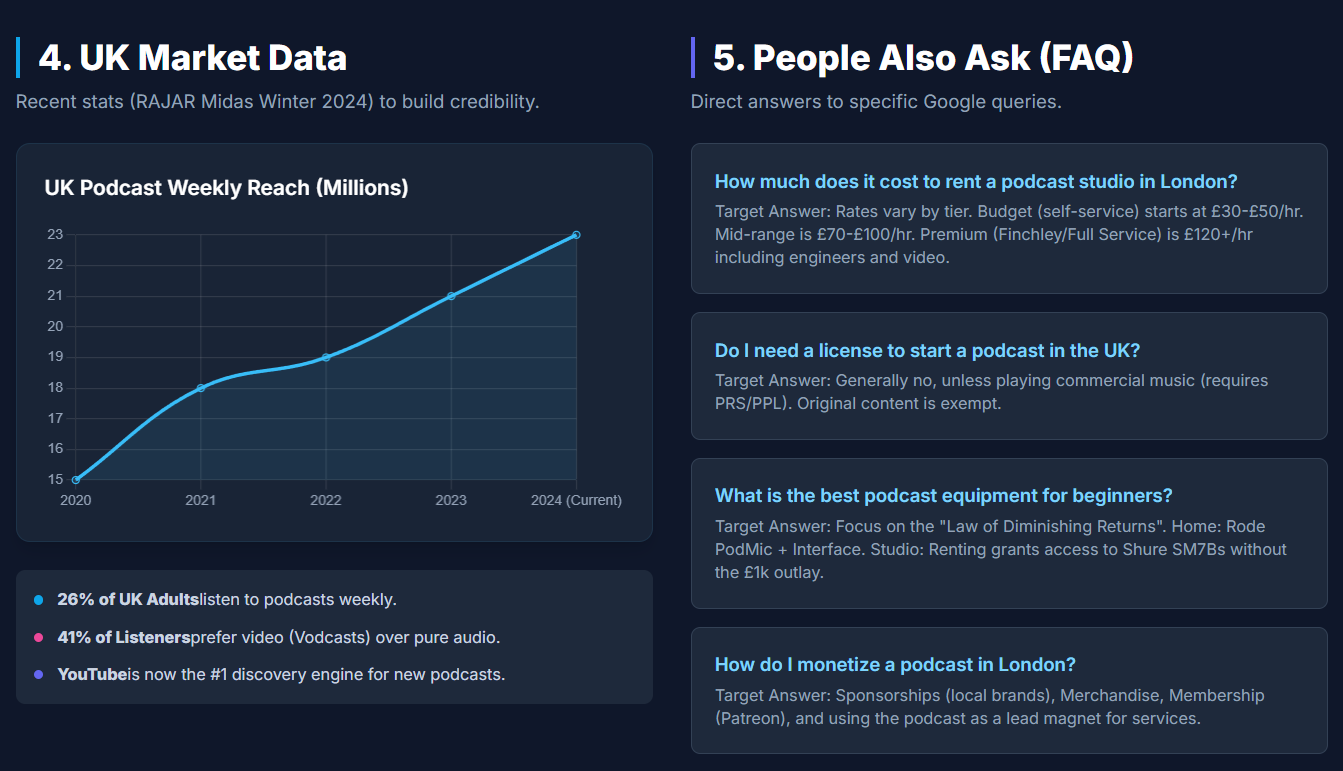
Platform Hierarchy: YouTube is now the most-used platform for podcast consumption, capturing 33% of the audience. (teleprompter) It has surpassed Spotify (25-27%) and Apple Podcasts (14-15%).
Visual Engagement: In the US (a leading indicator for the UK), 51% of the population has watched a podcast video.(teleprompter)
Strategic Shift: This data point single-handedly mandates a "Video-First" strategy. Starting an audio-only podcast in 2025 means ignoring one-third of the potential audience—the largest third.
5.3 Demographics and Behavior
Reach: Over 22% of UK adults listen to podcasts weekly. (ofcom) The reach is nearly ubiquitous among the 16-34 demographic, where 98% engage with some form of audio content weekly. (ofcom)
Listening Context: Mobile listening accounts for 86% of consumption. Commuting (42%) and chores (49%) are the primary listening windows.
Takeaway: Audio must be engineered for "hostile" listening environments (trains, gyms). It requires professional compression and limiting to ensure it is audible over background noise—a technical feat best achieved in a studio environment. (finchley)
Table 1: UK Podcast Market Key Metrics (2025 Forecast)
Section 6: Technical Infrastructure – The Gear Deep Dive
This section provides the technical meat of the report. It contrasts the "Home Setup" with the "Studio Standard" to illustrate the value gap and guide the user's investment.
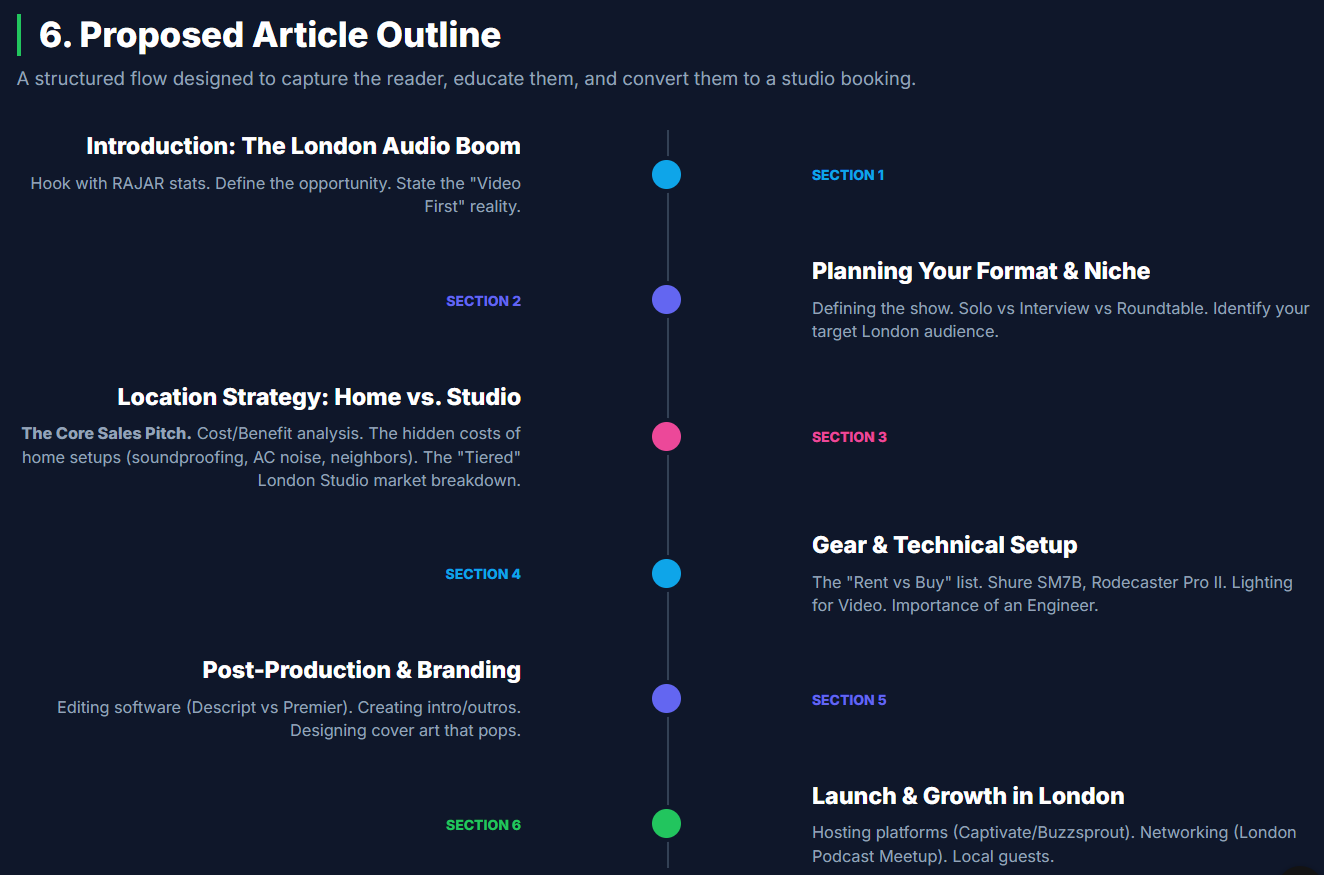
6.1 Audio Acquisition: The Dynamic Imperative
In London's noisy environment, the choice of microphone is not a preference; it is a necessity dictated by physics.
The Studio Standard: Shure SM7B
Why it wins: This dynamic microphone is the industry standard found in top studios like Outset and Spiritland. Its low sensitivity and cardioid pattern mean it "hears" only what is directly in front of it. It naturally rejects the distant rumble of the Northern Line or the siren on the street.
The Cost: It requires a powerful preamp. Connecting an SM7B directly to a cheap interface results in noise. It needs a "clean gain" boost (e.g., Cloudlifter), adding to the cost.
The Recorder: 32-Bit Float
The Tech: Professional studios utilize recorders like the Zoom F8n Pro. This device records in "32-bit float," a format with such massive dynamic range that audio clipping (distortion from loud sounds) is mathematically impossible.
The Benefit: If a guest laughs explosively or whispers, the audio is perfectly recoverable. For a beginner, this is a safety net that home gear (typically 16-bit or 24-bit) does not offer.
6.2 The Visual Standard: 4K Cinema
With YouTube as the primary platform, the visual fidelity must match the audio.
Camera Selection:
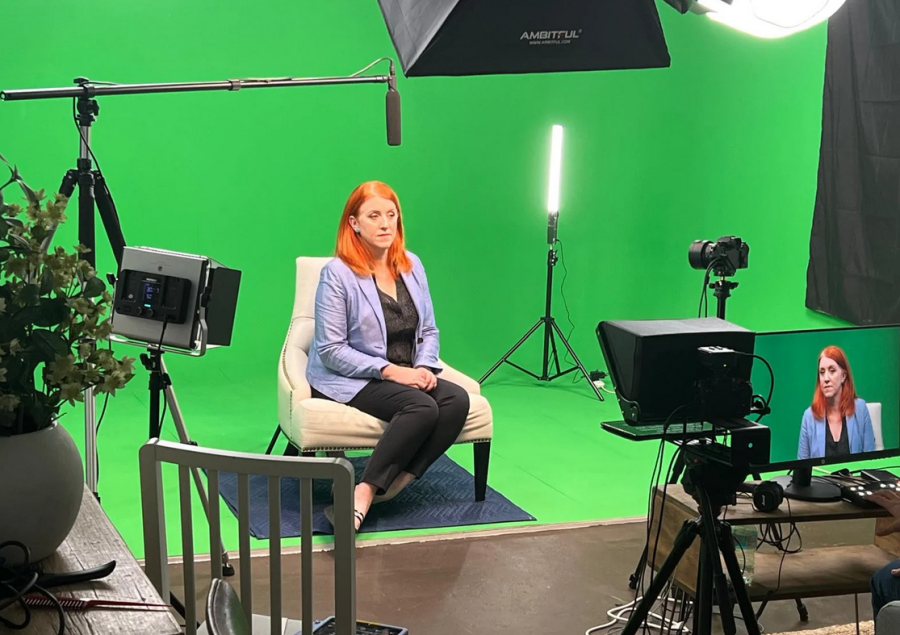
Sony FX30: A Super 35mm cinema camera found in high-end studios. It offers 10-bit 4:2:2 color, allowing for professional color grading that matches Netflix standards. It effectively manages overheating—a common issue with lesser cameras during long podcast sessions.
Sony ZV-E1: Ideal for solo creators. It features AI-based framing that can automatically crop and follow the speaker, simulating a camera operator. (pcmag)
Multicam Switching: Pro studios use the ATEM Mini Extreme ISO. This allows for live editing—cutting between wide shots and close-ups in real-time. This saves hours of post-production work, a massive value-add for the client.
6.3 Lighting Architecture
Lighting is what separates a "webcam call" from a "broadcast."
Three-Point Theory: The standard requires a Key Light (primary), Fill Light (shadow softening), and Back/Rim Light (separation). (streamyard)
The London Constraint: In a small London apartment, achieving the physical distance required for a backlight (to create depth/bokeh) is often impossible. Studios offer the physical depth to separate the subject from the wall, creating that cinematic, blurred background look.
RGB Integration: Modern podcasts utilize RGB (Red, Green, Blue) lighting to match brand colors. Studios often have perimeter uplighters (e.g., Nanlite or Aputure) pre-installed to instantly brand the space.
Section 7: The Studio Equation – Build vs. Hire
For the London podcaster, the decision to build a home studio or hire a professional facility is a calculation of Cost vs. Quality vs. Convenience.
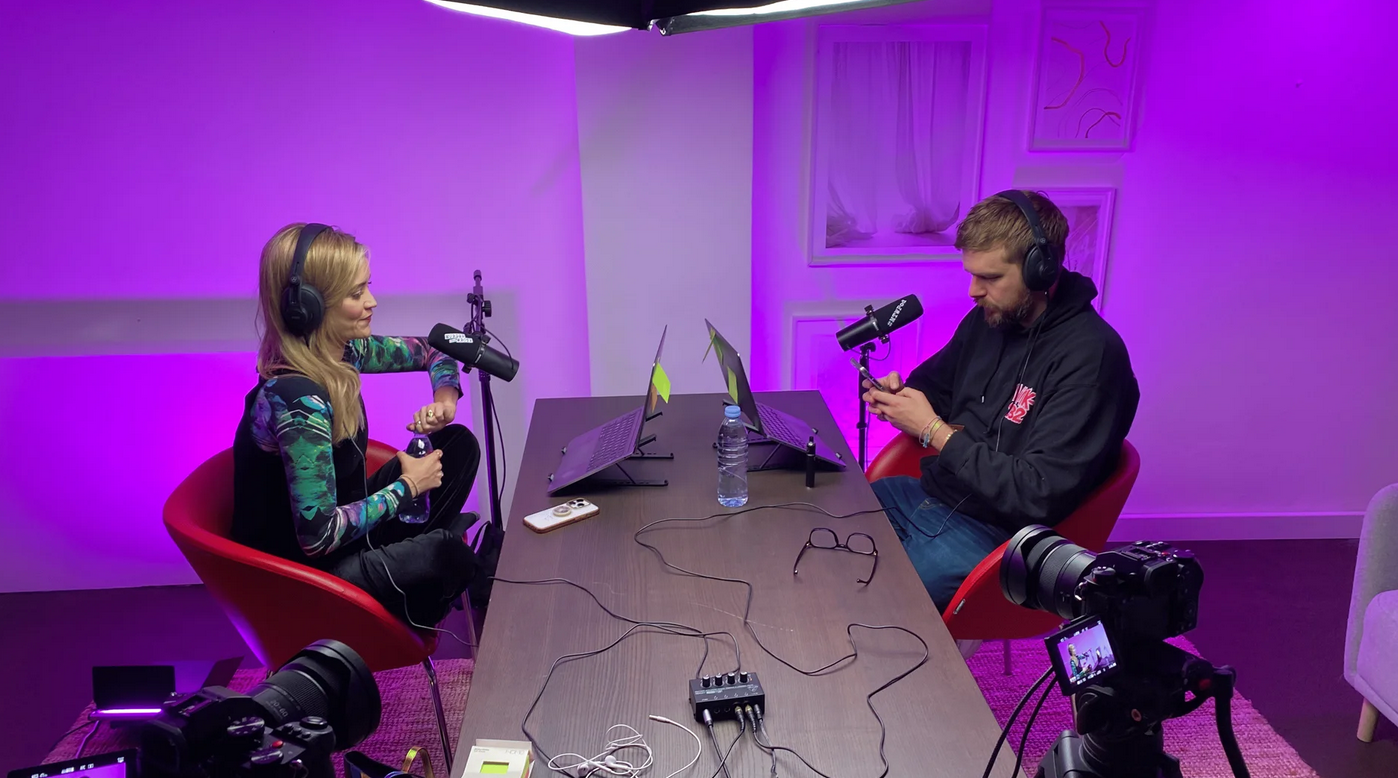
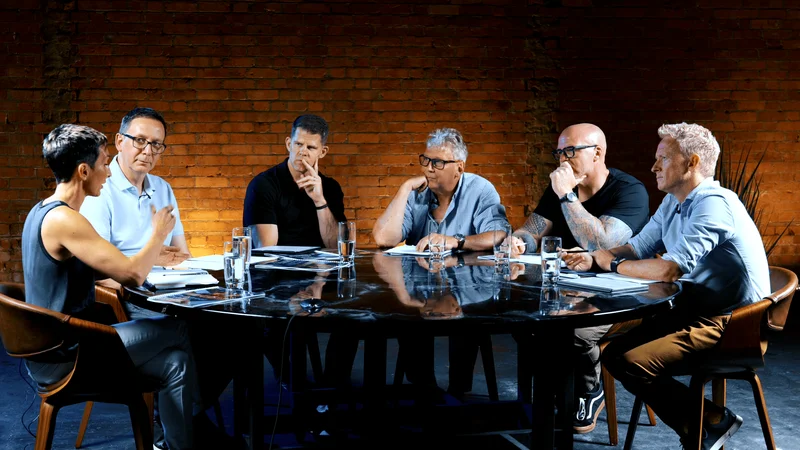
See the 'Murder They Wrote' podcast setup used by Laura Whitmore and Iain Stirling from BBC at Finchley Studio (Gathering setup). Watch Murder They Wrote at BBc sound , Spotify , Apple podcasts , Youtube , Instagram , Amazon music
Book this setup for your podcast
7.1 The Cost of Home Production (CapEx)
To replicate a studio like Finchley at home requires significant Capital Expenditure (CapEx).
Audio Chain: Shure SM7B (£350) + Cloudlifter (£150) + Rodecaster Pro (£600) + Cables/Stands (£100) = £1,200.
Video Chain: 2x Sony FX30 or ZV-E1 (£2,000 each) + Lenses (£1,000) + Lighting Kit (£500) + ATEM Mini (£400) = £5,900.
Acoustics: Treatment panels and soundproofing = £500+.
Total CapEx: ~£7,600+ just to start.
7.2 The Cost of Studio Hire (OpEx)
Hourly Rates: London studios range from £50 - £150 per hour depending on location and staffing.
Finchley Proposition: At a competitive rate (e.g., £60-£100/hr), a podcaster could record weekly for over a year before matching the home setup cost.
Value Adds:
Engineer Included: Eliminates technical anxiety.
Scalability: Ability to host 4+ guests without buying more mics.
Parking: A tangible financial saving in London.
Table 2: Comparative Analysis – Home Studio vs. Professional Studio
Section 8: Legal Framework and Compliance
The UK has a distinct legal framework for media production. Ignoring this can lead to copyright strikes, fines, or legal action.
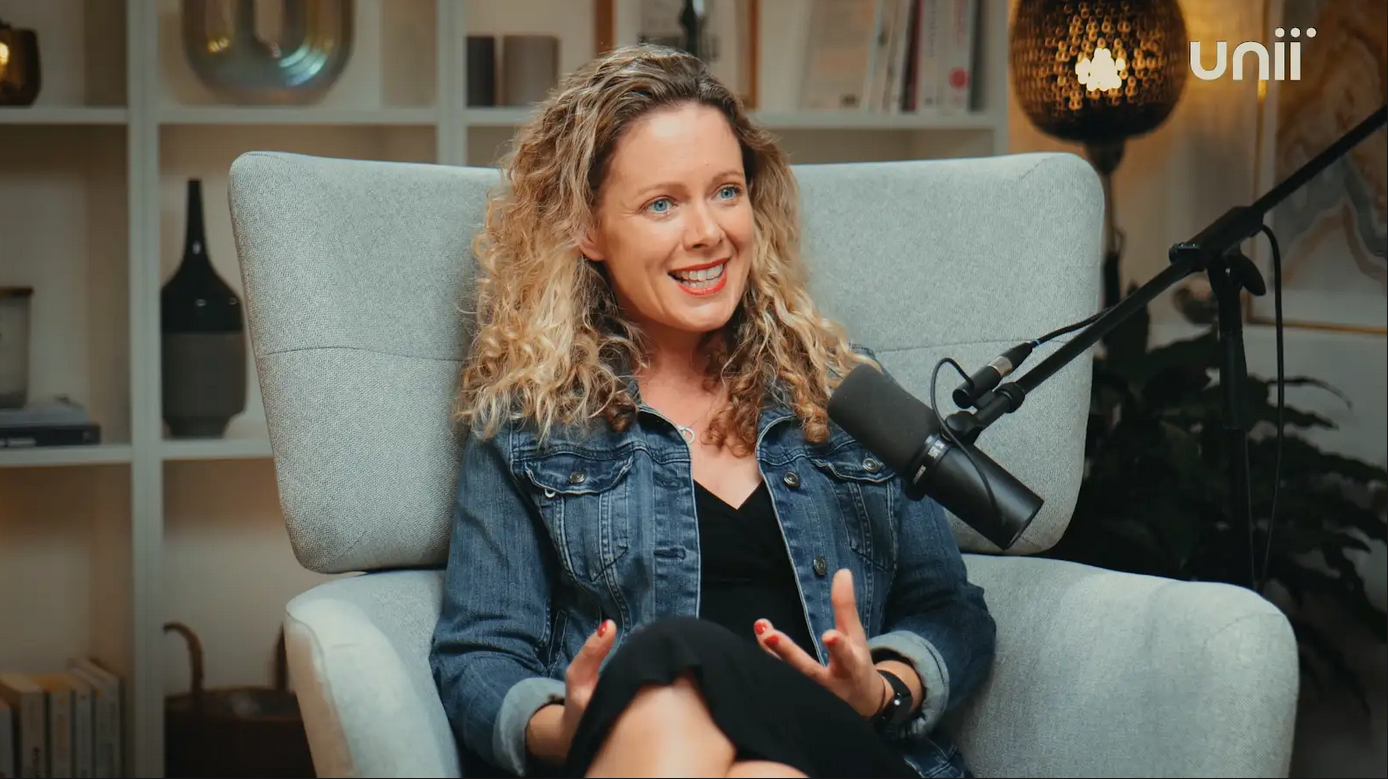
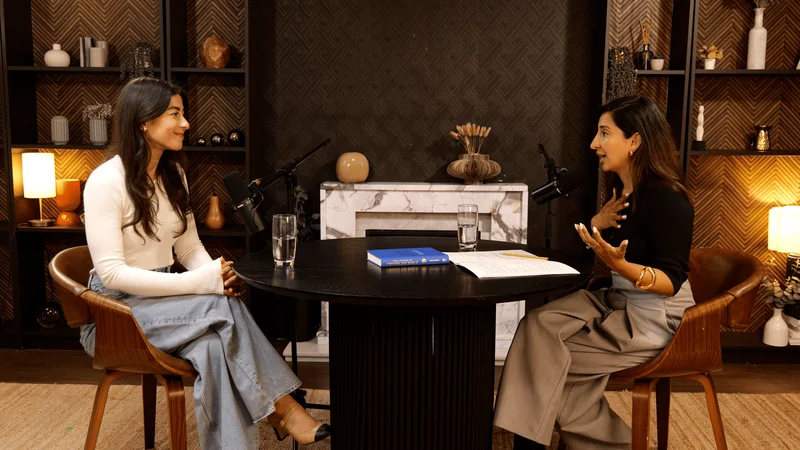
Finchley Studio (Dialogue set): book this setup for your podcast
8.1 Music Licensing: The PPL/PRS Maze
A common misconception is that a standard "podcast license" exists that covers commercial music. This is false.
The Bodies:
PRS for Music: Represents songwriters/composers.(pplprs)
PPL: Represents performers/labels.
The Podcast Problem: Most PPL/PRS licenses (like the LOML) cover linear webcasts (streaming radio). They do not typically cover on-demand podcasts where music is "synced" with speech and downloadable.
The Solution: For 99% of podcasters, the only viable legal route is Royalty-Free Music (e.g., Epidemic Sound, Artlist) or bespoke composition. Using commercial tracks (e.g., The Beatles) requires negotiating a direct sync license with the publisher and label, which is prohibitively expensive. (auberginelegal)
8.2 Defamation and "Fair Dealing"
Fair Use vs. Fair Dealing: US law uses "Fair Use." UK law uses "Fair Dealing." They are not the same. In the UK, you can use snippets of copyrighted material for "criticism or review," but strictly not for atmosphere or decoration. You must acknowledge the source. (finchley)
Libel: In the UK, the burden of proof in libel cases often rests on the defendant. Podcasters are publishers; they are liable for false statements that damage reputation.
8.3 GDPR and Data
If you collect email addresses for a newsletter, you are a Data Controller.
Compliance: You must register with the ICO (Information Commissioner's Office) if you process personal data commercially. You must have a privacy policy and secure consent (opt-in) for marketing. (auberginelegal)
Section 9: Step-by-Step Launch Roadmap
Based on the research, here is the optimized workflow for launching in London.
Phase 1: Pre-Production
Concept & Niche: Define the "Unique Value Proposition."
Format: Decide on Audio-only vs. Video (Video strongly recommended).
Location Strategy: Choose a recording hub based on guest logistics. (e.g., Finchley for North London/Drivers).
Phase 2: Production (The Recording)
Booking: Secure a studio slot. Book 30 mins extra for "settling in."
The Setup: Use the studio's Engineer to set levels. Ensure 4K cameras are white-balanced.
The Recording: Record in 32-bit float if possible. Use a "clapper" or sync clap to align audio and video.
Phase 3: Post-Production
Editing: Sync audio/video. Cut "filler words" (ums/ahs) but retain natural flow.
Processing: Apply EQ (to cut low-end mud), Compression (to even out levels), and a Limiter (to hit -14 LUFS loudness standard for Spotify). (finchley)
Packaging: Create a thumbnail (high contrast) and show notes with SEO keywords.
Phase 4: Distribution
Hosting: Upload to a host like Buzzsprout or Captivate (UK-based, excellent analytics). (podcastinsurance)
Directories: Submit RSS feed to Apple, Spotify, Amazon Music.
YouTube: Upload the video version directly to YouTube (do not use the RSS feed for video on YouTube; native upload is better for algo).
Section 10: People Also Ask (FAQ)
Q1: How much does it cost to start a podcast in London?
A: Costs vary wildly. A DIY approach using a phone is free but low quality. A basic home setup costs £500-£1,000. Hiring a professional studio like Finchley costs between £60 and £150 per hour. For full service (recording + editing), expect to pay £200 - £500 per episode.5
Q2: Do I need a license to podcast in the UK?
A: For speech, no. For music, yes. If you play commercial music, you need PPL/PRS licenses, which are complex for podcasts. It is strongly recommended to use Royalty-Free music to avoid legal issues and costs.
Q3: Can I record a video podcast in a studio?
A: Yes. Most modern London studios are "Visual First." They offer 4K cameras (Sony FX3, FX30), professional 3-point lighting, and custom sets. This is essential as YouTube is now the UK's #1 podcast platform.
Q4: What is the best microphone for recording in a London flat?
A: A Dynamic Microphone (e.g., Shure SM7B, Rode PodMic). Unlike condenser mics, dynamic mics are less sensitive to distant sounds, helping to reject the background noise of traffic and neighbors common in London properties.
Q5: How do I get my podcast on Spotify?
A: You need a Podcast Hosting Platform (e.g., Buzzsprout, Libsyn). You upload your audio there, and they provide an RSS Feed. You submit this feed URL to Spotify for Podcasters once. Future episodes update automatically.
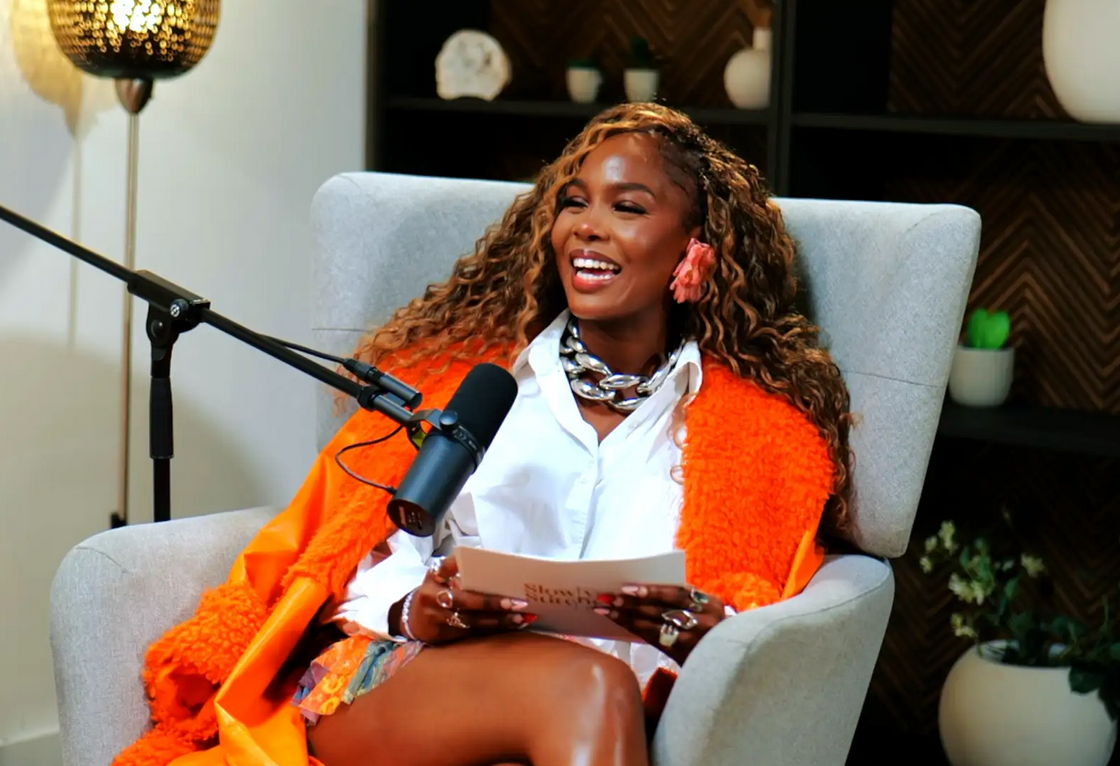
Finchley Studio (Dialogue set): book this setup for your podcast
Conclusion
The path to podcasting success in London is paved with specific challenges: acoustic interference, logistical friction, and rigorous technical standards. Yet, the rewards are equally specific. The UK market is entering a golden age of growth, with revenue and audience figures climbing steeply.
By understanding the local context—choosing the right location (like Finchley Studio with its Northern Line connectivity), investing in the right format (Video/YouTube), and navigating the legal landscape with care—creators can build a media asset of significant value. The era of the "bedroom broadcast" is yielding to the era of the "professional independent." In London, that means treating your podcast not just as a hobby, but as a production.