1. Introduction: The Video-First Paradigm Shift in London’s Media Landscape
The multimedia production landscape in London is currently navigating a profound metamorphosis. What was once a binary distinction between "recording studios" (audio-centric, music-focused) and "film studios" (visual-centric, large soundstages) has collapsed into a singular, hybridised demand for high-end multimedia facilities. In the current digital ecosystem, corporate communications, brand marketing, and creator-led economies have converged on a "video-first" strategy. Audio fidelity—while still the bedrock of professional content—is no longer the sole metric of success. The modern client requires a facility that functions as a holistic content engine, capable of delivering broadcast-grade 4K video, pristine audio, and seamless social cuts in a single session.
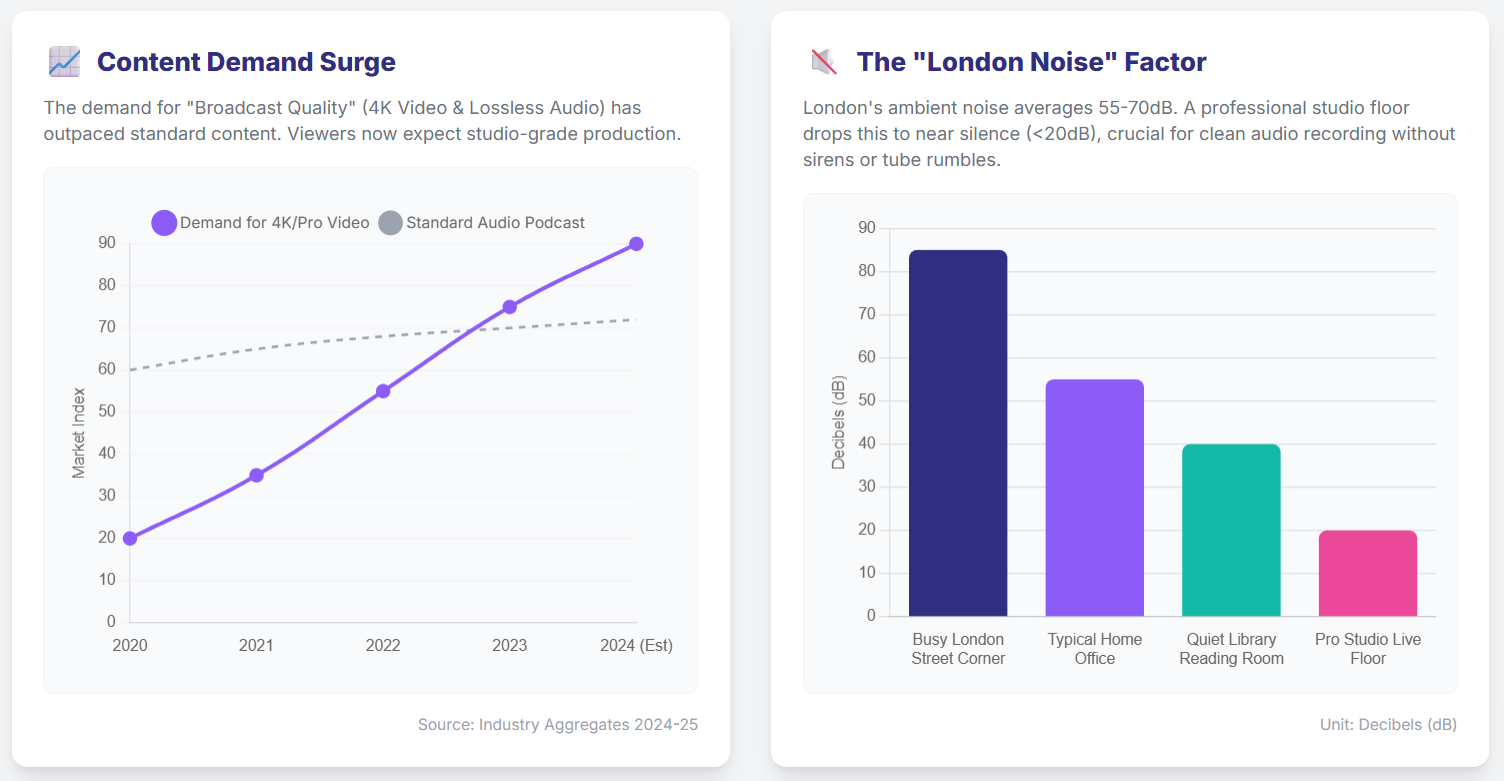
For the Content Marketer and SEO Specialist operating within this sphere, understanding the nuanced interplay between operational logistics and client experience is paramount. The London market is uniquely challenging; it is a dense urban environment characterized by extreme acoustic hostility (traffic, sirens, and the subterranean rumble of the Tube), complex transport logistics (Congestion Zones, ULEZ), and exorbitant real estate pressures. Consequently, the value proposition of a "Podcast studio" or "Video studio" in 2025 extends far beyond the equipment list. It encompasses the entire user journey: from the ease of booking and physical accessibility to the psychological comfort of the talent and the speed of the post-production workflow.1
This report offers an exhaustive analysis of the operational and experiential factors that define the top tier of the London studio market. It explores how premium facilities mitigate the city's inherent logistical frictions to deliver a "concierge" experience that safeguards the client's Return on Content Investment (ROCI). By dissecting the technical specifications, acoustic engineering, and service models of market leaders—from the elite hubs of King's Cross to the smart-professional studios of North London—this document serves as a definitive guide for stakeholders navigating the complexities of high-end multimedia production.
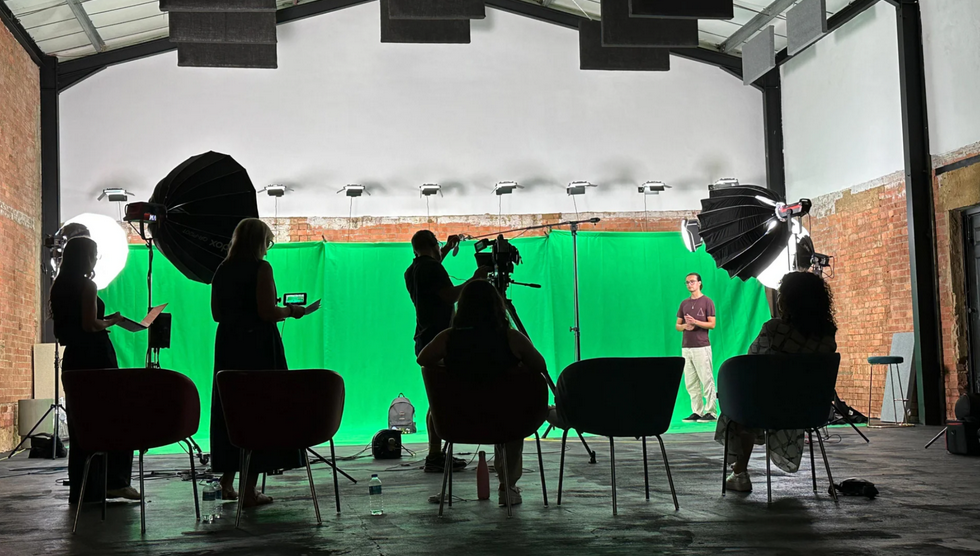
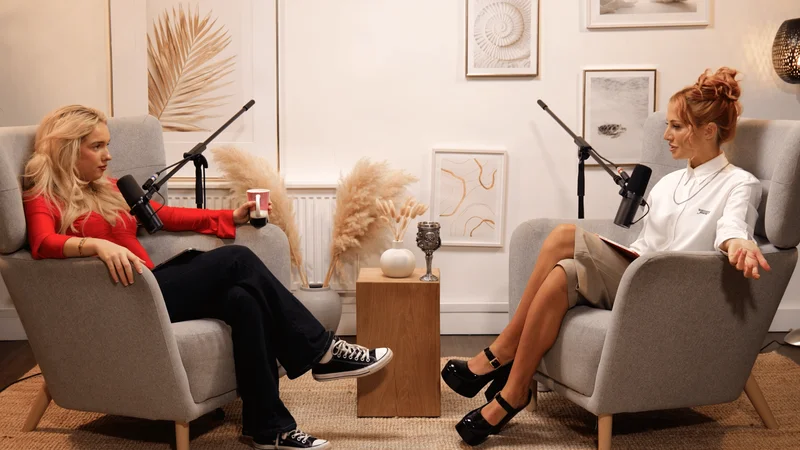
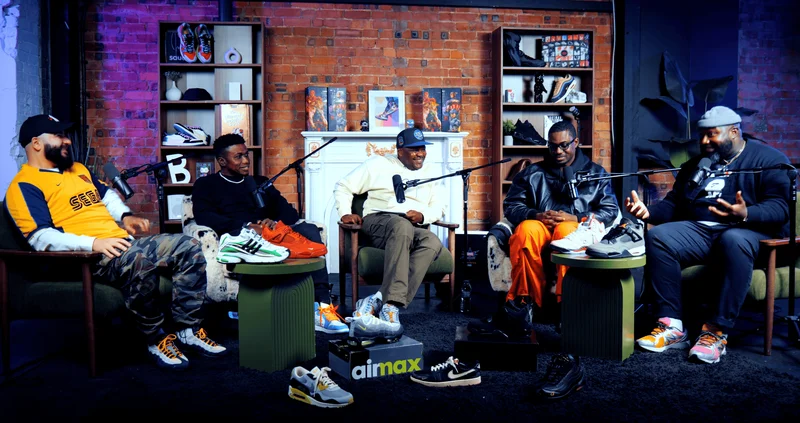
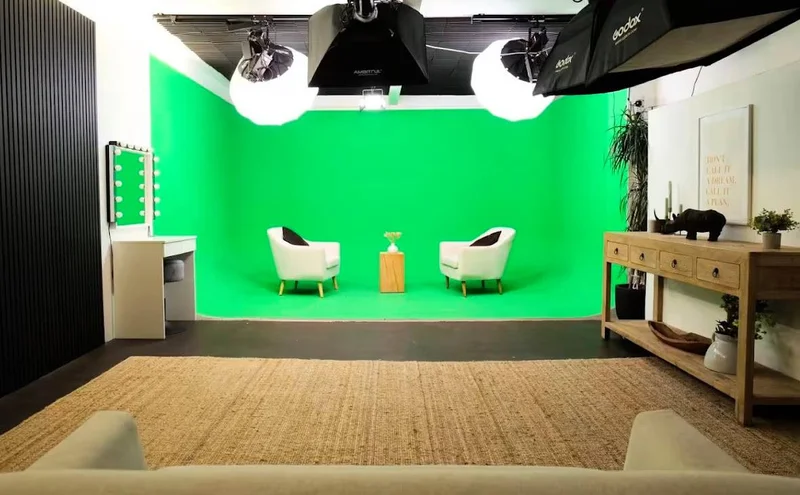
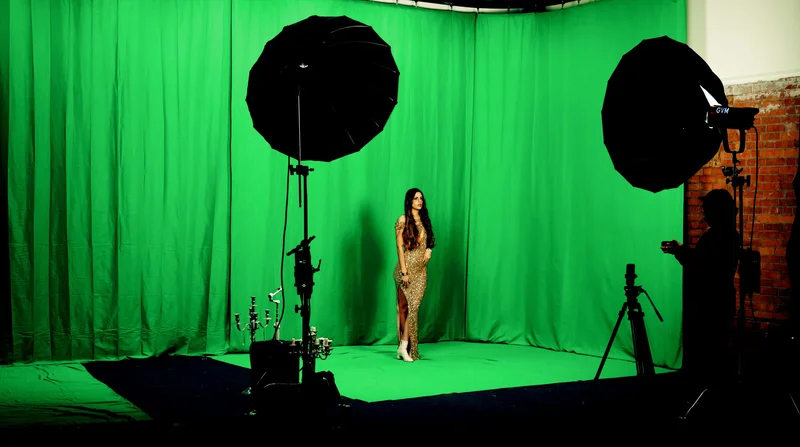
Finchley Studio (Giant Green Screen): book this setup for your podcast
1.1 The Evolution of Client Intent
User intent has shifted from transactional utility to "visual authority." In the past, a search for "recording studio London" implied a need for a vocal booth or a band tracking room. Today, queries for "podcast studio London" or "video studio hire" reflect a desire for brand positioning. Clients are not just buying time in a treated room; they are purchasing credibility. The visual backdrop of a podcast—the lighting, the furniture, the depth of field—signals authority to the audience before a single word is spoken.2 Therefore, the operational logistics of a studio must support this visual imperative, ensuring that the environment is not only acoustically isolated but aesthetically curated and technically robust enough to support multi-camera 4K workflows without friction.
2. Market Stratification and Strategic Positioning
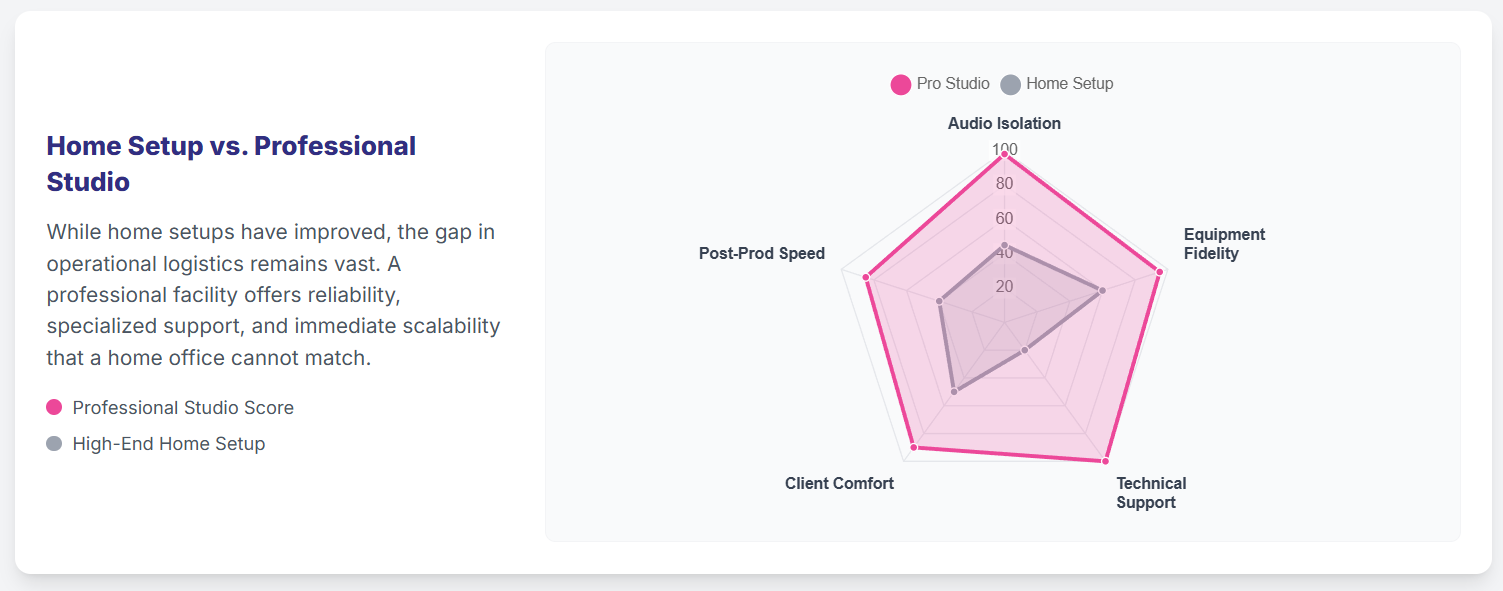
The London studio market is not a monolith; it is highly stratified. Understanding this segmentation is critical for clients to align their production goals with the appropriate service model. The market has bifurcated into distinct tiers based on service levels, technical inclusion, and location prestige.
2.1 The Premium All-Inclusive Model (The Elite Tier)
At the apex of the market lie the "Elite" or "Concierge" studios, such as Spiritland (King's Cross), TYX (Tileyard), and Premiere Podcast Studios (Shoreditch). These facilities are positioned as luxury hospitality environments as much as technical workspaces.
Service Philosophy: The defining characteristic of this tier is the non-negotiable inclusion of a dedicated, high-level engineer and a "white glove" service ethos. The primary value proposition is risk mitigation for high-stakes clients (e.g., A-list celebrities, global brands, broadcast networks). The cost of failure in these scenarios is reputational; thus, the premium rates (£150–£300+ per hour) function as an insurance policy against technical mishaps.1
Infrastructure: These studios often feature extensive non-technical amenities such as private green rooms, showers, dressing rooms, and dedicated production offices. This infrastructure is essential for talent who require privacy and preparation time away from the public eye.4
Location Strategy: Located in prime Zone 1 districts, these studios leverage their address as a brand signal. However, this prestige comes with significant logistical friction regarding parking and access, which is often mitigated through courier services and executive transport arrangements rather than on-site parking.1
2.2 The High-Value Professional Tier (The Smart Concierge)
Emerging as a formidable competitor to the Elite tier is the "High-Value Professional" segment, exemplified by facilities like Finchley Production Studio. This tier offers the technical rigour and engineering support of the premium studios but optimizes operational costs through strategic location choices.
Operational Efficiency: By situating facilities outside the Congestion Zone but near major transport arteries (e.g., Northern Line, A406), these studios reduce overheads while improving logistical accessibility for guests driving equipment or wardrobe. The "Smart Concierge" model retains the included engineer—a critical quality control factor—but strips away the exorbitant markup associated with a Soho postcode.1
Target Demographic: This tier appeals to "Visual Authority Seekers" and "Logistical Pragmatists"—businesses and creators who demand broadcast quality and efficiency but prioritize ROCI over the vanity of a central London address.2
2.3 The Mid-Market and Budget Tiers
The lower strata of the market, including self-service pods and railway arch conversions (e.g., Pirate Studios, Podshop), operate on a "pay-as-you-go" or "dry hire" basis.
Risk Profile: While cost-effective (£30–£80/hr), these studios transfer all technical risk to the client. The absence of an on-site engineer means the user is responsible for gain staging, focus pulling, and data management. For corporate clients, this introduces a high probability of "user error," potentially ruining a session.2
Physical Constraints: These studios often lack sound isolation from the external environment (train noise is common in arches) and offer minimal amenities (no waiting areas or climate control), making them unsuitable for high-profile guest management.1
2.4 Comparative Service & Economic Matrix
The following table synthesizes the operational and economic differences across the London market tiers, providing a clear framework for comparative analysis.
3. Operational Logistics: Navigating the London Infrastructure
The operational success of a studio in London is not determined solely by what happens inside the room; it is heavily influenced by the ability of clients and talent to reach the room. London’s transport infrastructure presents a unique set of variables—congestion charges, parking scarcity, and public transport density—that directly impact the "Real Cost of Production" (RCP).
3.1 Transport Logistics and the Congestion Factor
Accessibility is frequently cited as the most undervalued metric in studio selection until a crisis occurs. A studio located deep within the Congestion Charge zone entails hidden costs and stressors that can derail a production schedule.
3.1.1 The Central London Bottleneck (Soho/Shoreditch)
Studios in traditional media hubs like Soho (W1) and Shoreditch (E1) operate within the Congestion Charge zone (£15 daily) and the Ultra Low Emission Zone (ULEZ) (£12.50 daily for non-compliant vehicles).8
Financial Implication: For a guest driving a non-compliant vehicle, the cost of attending a session includes £27.50 in levies before parking fees are even considered.
Parking Scarcity: On-street parking in these zones is virtually non-existent or restricted to residents. Commercial car parks (NCP) can cost £8–£12 per hour and are often located a 10-15 minute walk from the studio.6
Operational Friction: This "last mile" friction—walking with equipment or wardrobe through crowded streets—increases physical fatigue and stress for the talent. For high-profile guests, this exposure is often unacceptable. Consequently, productions in these areas must budget for executive cars or couriers, further inflating the TCP.9
3.1.2 The Strategic Pivot to "Smart Accessibility" (North London/Zones 2-3)
Studios like Finchley Production Studio leverage their geography as a logistical asset. Located in Zone 4 but connected via the Northern Line (High Barnet branch), these facilities offer a "Drive-to-the-Door" model.6
The Northern Line Artery: The Northern Line is a primary artery connecting North London directly to King's Cross St Pancras (Eurostar/National Rail) in ~20 minutes and Bank (The City) in ~30 minutes. This allows for rapid transit of talent from international connections or financial districts without the unpredictability of surface traffic.6
The Parking Economics: The provision of free on-site parking (a rarity in London) fundamentally changes the logistics of a shoot. It enables immediate load-in/load-out for heavy equipment (musical instruments, product demo units) and provides a secure, stress-free arrival for guests driving their own vehicles. This "logistical seamlessness" translates directly to a more relaxed and focused performance on camera.6
3.2 Acoustic Engineering: Mitigating the Urban Soundscape
If accessibility is the primary logistical challenge, acoustic isolation is the primary technical challenge. London’s sonic signature is characterized not just by airborne noise (sirens, aircraft), but by structure-borne vibration—specifically the "Tube Rumble."
3.2.1 The "Tube Rumble" Phenomenon
Structure-borne noise transmission from the London Underground is a pervasive issue for studios across the capital. Unlike airborne noise, which can be mitigated with mass (heavy walls), vibrational energy from trains travels through the earth and into the building's foundations, manifesting as a low-frequency rumble (20-60Hz) in recordings.10
Historical Context: Even legendary venues like Kingsway Hall were notoriously plagued by the Piccadilly Line, forcing engineers to filter out low-end frequencies.11 In the modern era of high-fidelity podcasting and subwoofer-heavy playback systems, this noise floor is unacceptable.
The Victoria Line Issue: The Victoria Line is noted for being particularly loud due to track characteristics, causing issues for residential and commercial properties alike.13 Studios located directly above or near these lines without significant structural decoupling will suffer from intermittent audio spoilage.
3.2.2 Structural Decoupling and Isolation
To combat this, professional studios must employ "Room-within-a-Room" construction.
Floating Floors: The internal floor of the studio is physically separated from the building's structural slab using neoprene pucks or high-density rubber isolators. This breaks the transmission path for ground-borne vibrations.11
Mass-Spring Systems: Walls are constructed using independent timber or steel frames (studs) that do not touch the outer shell. High-density acoustic rockwool (e.g., RW3 or RW5) is used within the cavities to dampen resonance.4
Due Diligence for Clients: Clients should explicitly ask about a studio's Noise Floor rating (measured in dB-A or NC curves). A professional voice-over or podcast studio should target a noise floor of -60dB or lower. Budget studios in railway arches (a common London typology) often fail this metric, necessitating aggressive (and destructive) noise reduction in post-production.14
4. Visual Engineering and Technical Infrastructure
In the "Video-First" era, the technical specification of a studio is defined by its ability to deliver cinematic visuals alongside broadcast audio. The integration of camera technology, lighting design, and signal flow is what separates a "Zoom room" from a production facility.
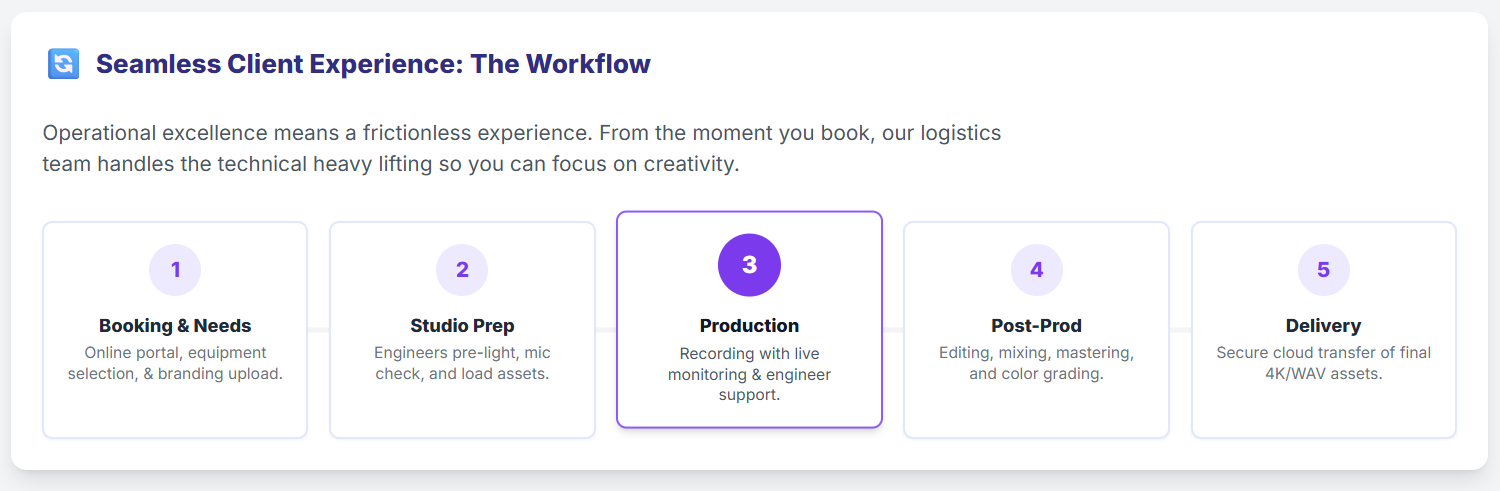
4.1 The Camera Ecosystem: Sensor Size and Autofocus
The choice of camera system dictates the visual aesthetic and operational workflow of the studio.
Sony Ecosystem (FX6, FX3, A7 Series): Sony has become the industry standard for podcasting due to its superior Phase Detection Autofocus (PDAF). In a podcast scenario, guests constantly shift posture, lean in to laugh, or lean back to think. Sony’s real-time eye-tracking ensures the subject remains perfectly sharp without a dedicated focus puller. This reliability reduces the need for large crews, lowering the hourly rate for clients.2
Blackmagic Ecosystem (Pocket 6K): While offering a highly "cinematic" image with robust RAW codecs, Blackmagic cameras generally lack reliable continuous autofocus. Using them in a podcast setup typically requires a deep depth of field (more lighting, less background blur) or a dedicated camera operator to pull focus manually. For unstaffed or single-engineer sessions, this introduces a significant risk of unusable, out-of-focus footage.2
The "Netflix Look": High-end studios utilize Full-Frame sensors (like the Sony FX6/A7IV) coupled with fast prime lenses (f/2.8 or wider). This combination creates a shallow depth of field (bokeh), separating the subject from the background and imparting a high-production-value aesthetic that implies "broadcast quality" rather than "webcam stream".15
4.2 Lighting Design: The Science of CRI and Softness
Lighting is often the differentiator between amateur and professional video.
3-Point Lighting: Professional studios employ a standard 3-point setup (Key, Fill, Rim) for each participant. This modeling creates dimensionality, ensuring guests don't look "flat."
Color Rendering Index (CRI): The quality of the light is measured by CRI and TLCI (Television Lighting Consistency Index). Studios using budget LED panels often suffer from poor color reproduction (green/magenta spikes), making skin tones look sickly. Professional facilities use fixtures from brands like Aputure (e.g., Nova P300c, LS 600d) or Arri (SkyPanel), which boast CRI ratings of 95+, ensuring accurate and flattering skin tones.17
Softness and Control: Large softboxes and honeycomb grids are essential to control light spill. This prevents the "Key" light for one guest from polluting the lighting setup of another, preserving the contrast ratios and mood of the set.18
4.3 Audio Signal Chain: Beyond the Microphone
While the Shure SM7B is the visual icon of the podcast industry, the signal chain behind the microphone is what determines audio quality.
Gain Management: The SM7B is a notoriously low-output dynamic microphone (-59dB sensitivity). Connecting it directly to a standard interface often results in a high noise floor (hiss) as the preamps are maxed out. Professional studios utilize inline activators like Cloudlifters or high-end preamps (e.g., Sound Devices, SSL, or the high-gain Revolution preamps in the Rodecaster Pro II) to provide +60dB of clean gain.2
Microphone Choice: While the SM7B is popular for its "proximity effect" (the deep, radio-voice bass boost), it requires good microphone technique. Premium studios often offer the Electro-Voice RE20 as an alternative. Its Variable-D technology minimizes the proximity effect, ensuring consistent tone even if a guest moves their head or has poor mic discipline—a common occurrence with corporate guests.2
5. The Client Experience: The "Soft" Infrastructure
For high-net-worth individuals, corporate executives, and A-list talent, the technical specifications are merely hygiene factors. The true differentiator is the "Client Experience" (CX)—the soft infrastructure of hospitality, privacy, and service that surrounds the production.
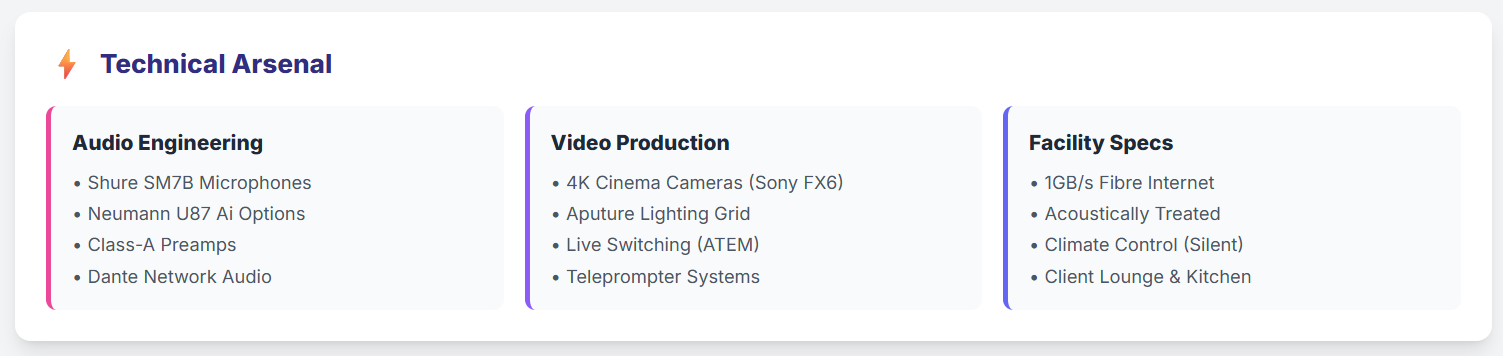
5.1 The Concierge Service Model
The "Concierge" model adapts principles from the luxury hospitality sector to the production environment.
Arrival Protocols: A premium studio experience begins with a dedicated reception. Studio managers handle coat checks, luggage storage, and refreshment orders immediately upon arrival. This "meet and greet" ritual is psychologically vital; it transitions the guest from the stress of travel into a state of comfort and focus, directly improving their performance on the mic.20
Privacy and Separation: High-end facilities like Premiere Podcast Studios and SE1 are designed with discreet workflows. They feature private changing rooms, showers, and "Green Rooms" that are acoustically and visually separated from the main lobby. This ensures that high-profile talent can prepare, decompress, or conduct private calls without interacting with other clients or the public.4
Accessibility as a Standard: In compliance with the Equality Act and general inclusivity standards, top-tier studios ensure full wheelchair accessibility. This includes step-free access (ramps/lifts), wide corridors (>926mm), and accessible restrooms. Studios located in converted lofts or railway arches without lifts fail this basic requirement, limiting the demographic of guests they can host.22
5.2 Aesthetic and Environmental Comfort
The physical environment—the temperature, the smell, the visual "vibe"—is a component of the production value.
HVAC Systems: Silent, ducted air conditioning is a critical, often expensive, infrastructure requirement. Studio lights and computing equipment generate significant heat (approx. 300-600W per hour in a small room). Without silent AC, the room becomes stifling, leading to "sweaty" visuals and fatigued guests. Budget studios often rely on noisy portable units that must be turned off during recording, leading to a rapid degradation of environmental comfort.24
Visual Customization: The studio set is a brand asset. Premium spaces offer customizable elements—RGB lighting that can be matched to brand hex codes, interchangeable backdrops (brick, colorama, wood panelling), and "lifestyle" furniture. This allows a single facility to host a sombre financial update in the morning and a vibrant pop-culture podcast in the afternoon without visual dissonance.2
6. Workflow Logistics: From Booking to Delivery
The efficiency of the production workflow determines the scalability of a content strategy. Professional studios streamline these processes to minimize client administrative burden.
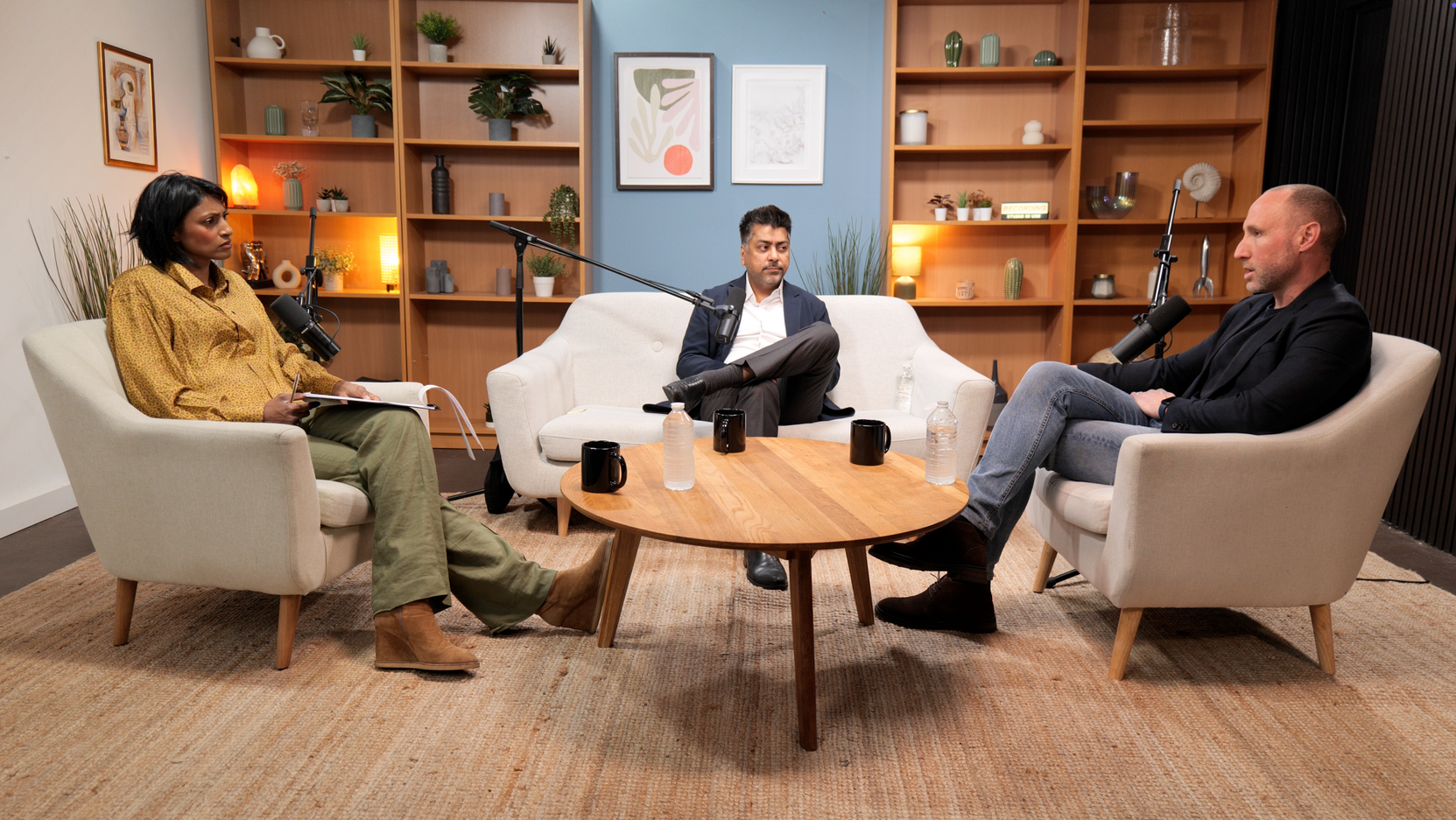
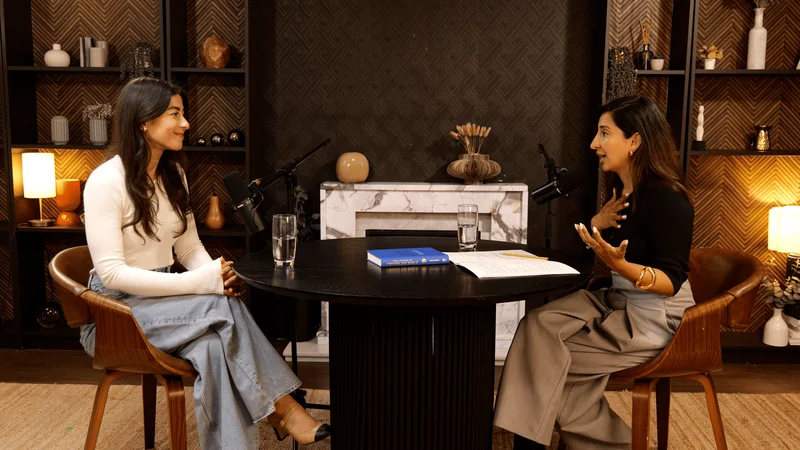
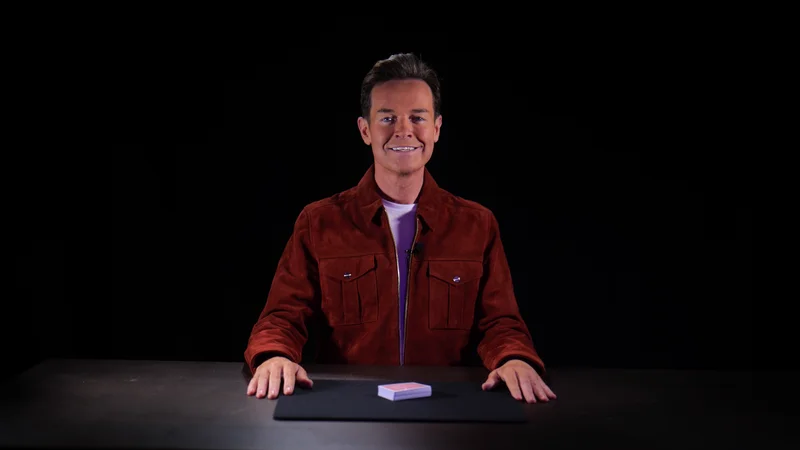
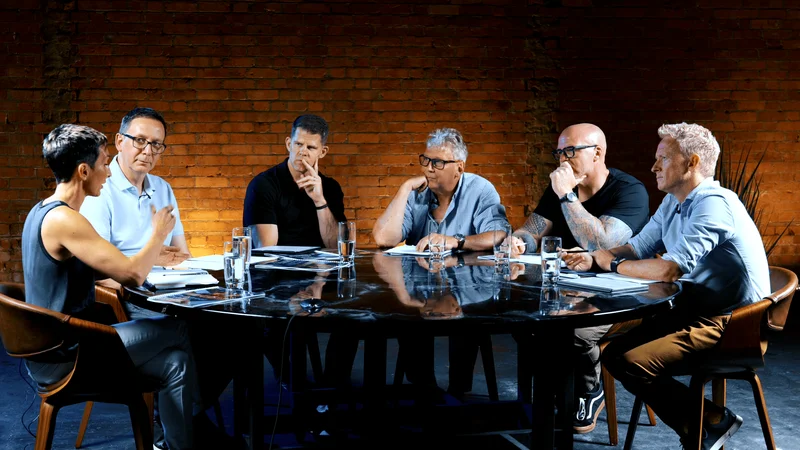
See the 'No ordinary tech podcast ' from Lloyds Banking Group by Rohit D (AI Leader for Lloyds Banking Group) and DR. shini somara (Pro-Chancellor of Brunel University) . at Finchley Studio (Lounge setup). Book this setup for your podcast.
6.1 Booking and Cancellation Governance
Studio time is a perishable inventory. The industry standard for cancellation policies reflects the high opportunity cost of reserved slots and engineering staff.
Cancellation Windows: Most professional studios in London enforce a strict 48-to-72-hour notice period for cancellations or rescheduling. Cancellations made within 48 hours typically result in the forfeiture of 100% of the booking fee.3
Rationale: This policy protects the ecosystem. A studio booking reserves not just a room, but specific skilled labour (engineers) and blocks potential revenue. Unlike a hotel room, a cancelled studio slot cannot easily be filled by a "walk-in" customer.3
Overtime: Sessions that run over are charged at premium rates (often £1.50–£2.00 per minute) or rounded up to the next full hour. This strictness is necessary to prevent cascading delays for subsequent clients.28
6.2 File Delivery and Data Management
In the age of 4K video, data logistics are a significant operational hurdle. A one-hour, 3-camera 4K shoot can generate 100GB to 200GB of data.
Transfer Protocols: Professional workflows prioritize on-site transfer. Clients are encouraged to bring high-speed SSDs (Samsung T7/SanDisk Extreme) to the session. Transferring 150GB to a drive takes ~15 minutes via USB-C/Thunderbolt. Attempting to upload this data to the cloud (WeTransfer/Dropbox) during the session is unfeasible due to bandwidth limits.29
Cloud Delivery: For off-site delivery, studios utilize enterprise-grade fiber connections. Standard turnaround for edited files is 2–4 business days. "Express" delivery (24-48 hours) is often available as a surcharged service for time-sensitive news content.29
Data Retention: Studios typically retain backup copies of raw footage for 30 days as a failsafe against client data loss. This "digital insurance" is a key differentiator from budget studios, which may wipe cards immediately after the session.6
7. Legal, Insurance, and Compliance Frameworks
For corporate procurement teams, the legitimacy of a studio is verified through its compliance and liability frameworks.

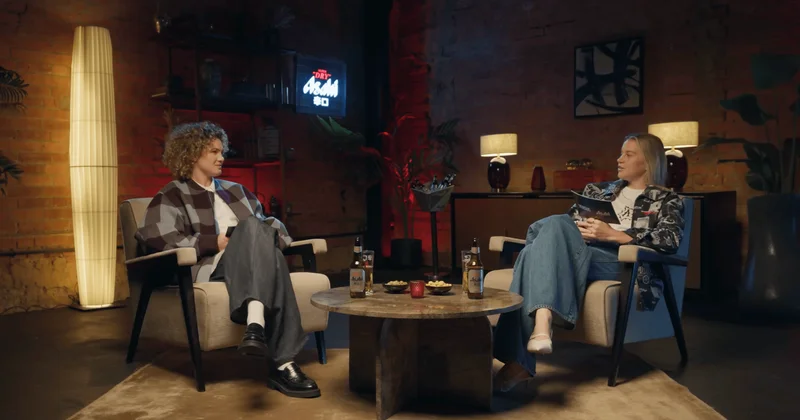
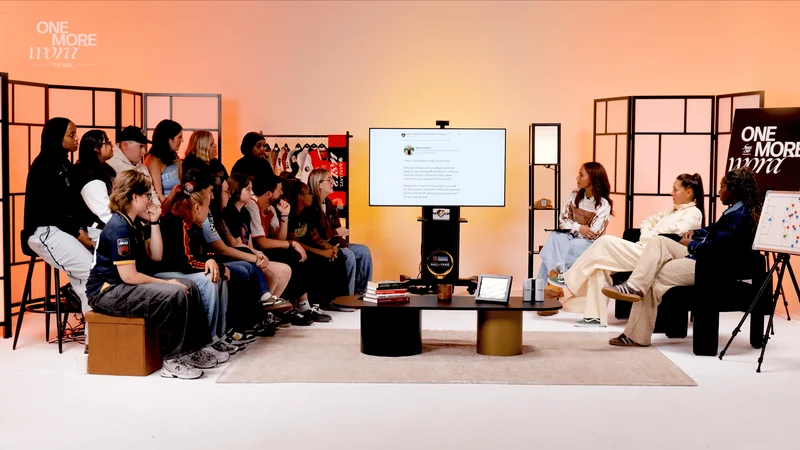
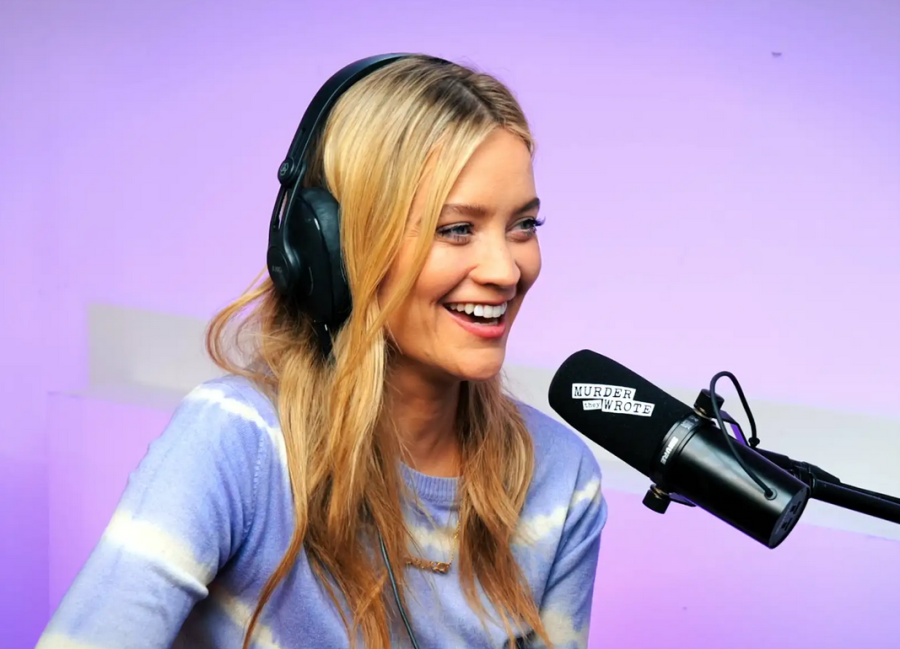
See the 'The Tooney & Russo Show' from BBC and Lionesses Ella Toone and Alessia Russoat from England national football team at Finchley Studio (Lounge setup). Book this setup for your podcast. Watch 'The Tooney & Russo Show' at BBc sound , Spotify , Youtube, Amazon music.
7.1 Planning Permission and Use Classes
Operating a commercial studio involves specific planning considerations.
Use Class E vs. Residential: A legitimate commercial studio typically operates under Use Class E (Commercial, Business and Service) or Sui Generis. Studios operating out of residential properties (Use Class C3) without planning permission face the risk of enforcement action from local councils, especially if they cause noise nuisance or noticeable increases in foot traffic.30
Business Rates: Studios are liable for business rates based on their Rateable Value (RV) assessed by the Valuation Office Agency (VOA). The industry is currently lobbying for recording studios to be included in the "Retail, Hospitality and Leisure" relief scheme to mitigate the 25% surge in rates experienced in recent revaluations.32
7.2 Liability Insurance
Corporate clients generally require proof of insurance before approving a vendor.
Public Liability (PL): Essential for covering accidents on site (e.g., a guest tripping over a cable). Professional studios carry PL cover of £2 million to £10 million.34
Professional Indemnity & Media Liability: This covers the studio against claims of negligence—for example, if a technical failure results in the loss of a recording that cannot be repeated (e.g., an interview with a high-profile guest). Home studios relying on standard residential insurance are often uninsured for business activities, as commercial use typically invalidates domestic policies.36
8. Future Trends: The 2026 Horizon
The studio market is not static. Operational logistics are evolving in response to AI and immersive technologies.

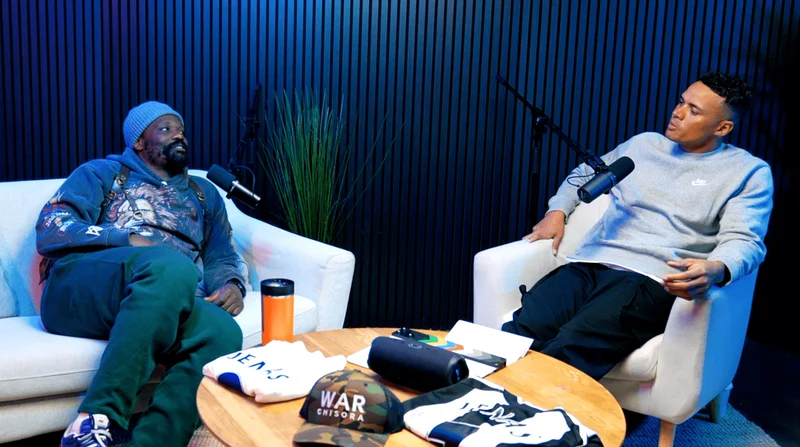
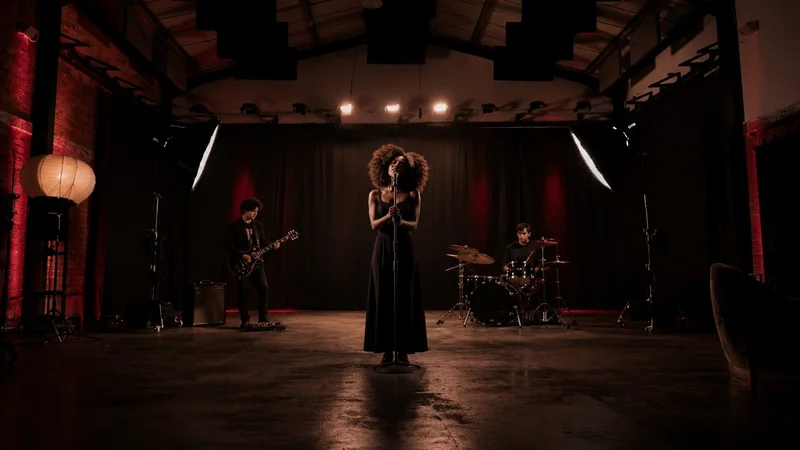
Finchley Studio (Dialogue set): book this setup for your podcast
8.1 AI-Integrated Production
By 2026, AI will be deeply embedded in the studio workflow, moving from post-production to real-time assistance.
Smart Logging: Real-time transcription and "smart logging" will allow clients to mark "good takes" or "edit points" on a tablet during the recording, which the AI then uses to generate a rough edit immediately after the session.38
Voice Repair: AI tools will offer real-time de-noising and spectral repair, allowing studios to salvage audio even in less-than-perfect acoustic environments, although the demand for pristine "source" audio will remain high for premium brands.40
8.2 Spatial Audio and Dolby Atmos
As platforms like Audible, Apple Music, and Amazon Music prioritize immersive audio, studios are retrofitting for Dolby Atmos.
Infrastructure Upgrade: This requires a move from stereo monitoring to 7.1.4 configurations (7 surround, 1 sub, 4 overheads). Studios like TYX and Spiritland are leading this charge, offering certified Atmos suites for high-end audio drama and music production.1
8.3 Hybrid and Live Streaming
The "Video Podcast" is evolving into the "Live Broadcast." Studios are integrating Ultra-Low Latency (ULL) streaming encoders to facilitate live, interactive town halls and Q&As. This requires studios to function as broadcast galleries, with vision mixers (ATEM Mini Extreme/Constellation) and dedicated internet lease lines becoming standard equipment.42
9. Strategic Recommendations: The "Total Cost of Production" Model
For clients, the decision matrix for selecting a studio should move beyond the hourly rate to a "Total Cost of Production" (TCP) model.
Calculate the Logistics Premium: A studio in Soho may have a rental rate of £150/hr, but the addition of Congestion Charges (£15), parking (£30), and executive travel time can add £100+ to the session cost. A studio in North London with free parking may offer a lower TCP even at a similar hourly rate.6
Assess the "User Error" Risk: For corporate teams, the cost of a failed recording (rescheduling C-suite executives, reputation damage) is astronomical. The "High-Value Professional" or "Elite" tiers, which include an engineer, offer the best risk-adjusted value. The "Budget" tier is a false economy for anyone other than technically proficient hobbyists.1
Audit the "Soft" Infrastructure: If the guest is a VIP, the lack of a private changing room or a decent coffee machine is a dealbreaker. The "Concierge" experience is a functional requirement for extracting the best performance from high-level talent.20
10. Frequently Asked Questions (People Also Ask)
Q: How much does it cost to hire a podcast studio in London?
A: Prices vary significantly by tier. Budget/Self-Service studios (e.g., Podshop) range from £50–£90 per hour (often excluding VAT and engineer). High-Value Professional studios (e.g., Finchley) offering full engineering support and video range from £100–£150 per hour. Premium/Elite facilities (e.g., Spiritland, TYX) with concierge services range from £150–£300+ per hour.3
Q: Do I need to bring my own SD cards to a podcast studio?
A: It is highly recommended. While most studios can transfer files to you via the cloud (WeTransfer/Google Drive), 4K video files are massive (100GB+). Bringing a high-speed USB-C SSD (e.g., Samsung T7) or V90 SD cards allows you to leave with your footage immediately, avoiding download wait times and potential transfer fees.29
Q: What is the difference between "Dry Hire" and "Wet Hire"?
A: Dry Hire refers to renting the room and equipment without an engineer; you operate everything yourself. Wet Hire (or "with engineer") includes a professional technician to set up mics, monitor levels, and switch cameras. For video podcasts, Wet Hire is strongly recommended to avoid technical errors.3
Q: Are London podcast studios soundproof against the Tube?
A: Not all of them. Studios in railway arches or basements near the Victoria/Northern lines often suffer from low-frequency rumble. Professional studios use "room-within-a-room" floating construction to isolate this noise. Always ask for the studio's Noise Floor rating (ideally -60dB or lower) before booking.11
Q: Can I park at a podcast studio in Central London?
A: Parking in Central London (Soho/Shoreditch) is extremely difficult and expensive (£8–£12/hr + Congestion Charge). Studios in Zones 2-4 (e.g., Finchley, North London) often provide free on-site parking, which is a significant logistical advantage for guests with equipment or vehicles.6
Q: What happens if I need to cancel my booking?
A: Industry standard policies are strict. Cancellations made less than 48 hours before the session are typically non-refundable. Cancellations made 48–72 hours in advance may receive a partial refund or rescheduling credit. This protects the studio's revenue and the engineer's time.3
11. Conclusion
The selection of a multimedia production facility in London is a high-stakes operational decision. It requires balancing the technical imperatives of 4K capture and acoustic isolation against the logistical realities of a congested metropolis. The market has evolved to offer distinct tiers of service, from the risk-laden economy of self-service pods to the seamless luxury of the concierge elite.
For the modern Content Marketer, the studio is not just a vendor; it is a strategic partner in the content supply chain. By prioritizing facilities that offer "Smart Accessibility," rigorous acoustic engineering, and a hospitality-led client experience, brands can safeguard their production quality and ensure that their message cuts through the noise of the digital landscape.
Ready to elevate your production value? Stop compromising on quality and logistics. Book your session today with a studio that understands the full spectrum of your operational needs.
Works cited
Cheap vs. Premium: Comparing the Top 8 London Podcast Studio ..., accessed January 15, 2026, https://www.finchley.co.uk/finchley-learning/visual-podcast/cheap-vs-premium-comparing-the-top-8-london-podcast-studio-options
The Best Podcast Recording Studios in Central and North London: A Strategic Market Analysis and Content Roadmap, accessed January 15, 2026, https://www.finchley.co.uk/finchley-learning/visual-podcast/the-best-podcast-recording-studios-in-central-and-north-london-a-strategic-market-analysis-and-content-roadmap
Podcast Studio London Rates and Policy - Finchley Studios, accessed January 15, 2026, https://www.finchley.co.uk/finchley-learning/podcast-studio-london-rates-and-policy
Podcast Studio in London | Professional Audio & Video Services, accessed January 15, 2026, https://premierepodcaststudios.com/podcast-studio-london/
10 Best Podcast Studios London to Hire in 2025 - Saspod, accessed January 15, 2026, https://saspod.com/blog/post/best-podcast-studios-london
Podcast Studio Hire in London: Everything You Need to Know Before Booking, accessed January 15, 2026, https://www.finchley.co.uk/finchley-learning/visual-podcast/podcast-studio-hire-in-london-everything-you-need-to-know-before-booking
accessed January 15, 2026, https://www.finchley.co.uk/finchley-learning/how-much-does-it-cost-to-rent-a-podcast-studio-london
London Congestion Charge: a simple guide | RAC Drive, accessed January 15, 2026, https://www.rac.co.uk/drive/advice/emissions/congestion-charge/
London Podcast Studios Explained: What to Expect From a Premium Space, accessed January 15, 2026, https://www.finchley.co.uk/finchley-learning/visual-podcast/london-podcast-studios-explained-what-to-expect-from-a-premium-space
Reducing noise & vibration - Transport for London - TfL, accessed January 15, 2026, https://tfl.gov.uk/corporate/about-tfl/reducing-noise-and-vibration
Studio near subway - how to deal - SOS FORUM, accessed January 15, 2026, https://www.soundonsound.com/forum/viewtopic.php?t=43063
Rumble. Acoustics of the concert hall? - Hi-Fi Corner - Naim Audio - Community, accessed January 15, 2026, https://community.naimaudio.com/t/rumble-acoustics-of-the-concert-hall/2274
London Underground: Noise levels on Tube are louder than a gig - Reddit, accessed January 15, 2026, https://www.reddit.com/r/london/comments/1g9j568/london_underground_noise_levels_on_tube_are/
Optimal noise floor for London studios discover now, accessed January 15, 2026, https://selectrecordingstudios.co.uk/hub/what-is-the-acceptable-noise-floor-for-a-recording-studio-in-london/
17 Essential Filmmaking Equipment Picks That Pros Actually Use (2026), accessed January 15, 2026, https://filmlocal.com/filmmaking/17-essential-filmmaking-equipment-picks-that-pros-actually-use/
ShareGrid Insights 2025, accessed January 15, 2026, https://insights.sharegrid.com/
Top 10 LED studio lights Manufacturers and Supplier Brands in 2026, accessed January 15, 2026, https://www.vellolight.com/top-10-led-studio-lights-2026/
Essential Camera and Lighting Setup for Professional Video Production | Soundstage Studios, accessed January 15, 2026, https://soundstagestudios.co.uk/essential-camera-and-lighting-setup-for-professional-video-production/
Best Podcast Equipment & Setup for 2026, accessed January 15, 2026, https://www.thepodcasthost.com/equipment/podcast-equipment-guide/
7 Simple Ways to Create a Luxury Customer Experience - Dan Gingiss, accessed January 15, 2026, https://dangingiss.com/luxury-customer-experience/
Creating a Unique Studio Experience: How to Stand Out in a Competitive Market -, accessed January 15, 2026, https://blog.engineears.com/creating-a-unique-studio-experience-how-to-stand-out-in-a-competitive-market/
Accessible Film Studios in London - Tower Bridge Studios, accessed January 15, 2026, https://www.towerbridgestudios.com/accessibility.html
Accessibility - The Recording Studio London, accessed January 15, 2026, https://therecordingstudio.london/help/accessibility/
Common Mistakes to Avoid While Recording in Studio - Finchley Studios, accessed January 15, 2026, https://www.finchley.co.uk/finchley-learning/common-mistakes-to-avoid-while-recording-in-studio
11 Key Benefits of Professional Recording Studios for Podcasting - Studio 321, accessed January 15, 2026, https://s321.ae/benefits-using-professional-podcast-studio/
Podcast Studio 1 - Podshop Studios - Worship Street - Event Venue Hire - Tagvenue.com, accessed January 15, 2026, https://www.tagvenue.com/rooms/london/65664/podshop-studios-worship-street/podcast-studio-1
accessed January 15, 2026, https://www.finchley.co.uk/finchley-learning/common-mistakes-to-avoid-when-booking-a-podcast-studio-london#:~:text=The%20industry%20standard%20in%20London,of%20the%20entire%20booking%20fee.
FAQs — London Podcast Studio | The Home of Podcasting!, accessed January 15, 2026, https://www.londonpodcaststudios.co.uk/podcast-studio-recording-faqs
What is the turnaround time for edited files, and how do I receive them in a podcast studio London?, accessed January 15, 2026, https://www.finchley.co.uk/finchley-learning/what-is-the-turnaround-time-for-edited-files-and-how-do-i-receive-them-in-a-podcast-studio-london
Planning permission - Working from home - Planning Portal, accessed January 15, 2026, https://www.planningportal.co.uk/permission/common-projects/working-from-home/planning-permission
Everything you need to know about running a business from home | Adrian Flux, accessed January 15, 2026, https://www.adrianflux.co.uk/blog/2024/09/running-business-from-home/
Call for Recording Studios to Be Recognised - The Music Producers Guild, accessed January 15, 2026, https://mpg.org.uk/news/call-for-recording-studios-to-be-recognised/
Business Rates Relief for Film Studios | News - 33 Bedford Row, accessed January 15, 2026, https://www.33bedfordrow.co.uk/insights/news/business-rates-relief-for-film-studios
Recording Studio Insurance - from £4.83 a month - Protectivity, accessed January 15, 2026, https://www.protectivity.com/product/recording-studio-insurance/
Recording Studio Insurance | Comprehensive Coverage for Music Studios - Insure24, accessed January 15, 2026, https://www.insure24.co.uk/recording-studio-insurance/
What can invalidate your home insurance? - Admiral, accessed January 15, 2026, https://www.admiral.com/resources/home-hub/claiming/things-which-can-invalidate-your-home-insurance
What can invalidate house insurance: mistakes that risk your claim - PCLA, accessed January 15, 2026, https://pcla.co.uk/insurance-claim/uk-home-insurance-exclusions/
The Future of Podcasting: 3 Trends That Will Define 2026 - The Expert Bookers, accessed January 15, 2026, https://www.expertbookers.com/blog/the-future-of-podcasting-3-trends-that-will-define-2026
Podcasting Trends & Predictions for 2026: What Creators Need to Know, accessed January 15, 2026, https://blog.podcast.co/inspire/podcasting-trends-predictions-2026
Podcasting Trends in 2026: What's Next? | - Wyatt Matters, accessed January 15, 2026, https://www.wyattmattersshow.com/podcasting-trends/
Acoustic Treatment Guide by Experts, for Beginners | TYX Recording ..., accessed January 15, 2026, https://tyxstudios.com/blog/acoustic-treatment-guide
The Future of Streaming: Emerging Trends and Technologies for 2026 - CDNetworks, accessed January 15, 2026, https://www.cdnetworks.com/blog/media-delivery/streaming-trends/
Video Streaming Trends Shaping 2026: What Creators Must Know - PodcastVideos.com, accessed January 15, 2026, https://www.podcastvideos.com/articles/streaming-trends-2026/
Premiere Podcast Studio in London | Audio & Video Recording, accessed January 15, 2026, https://premierepodcaststudios.com/