Introduction
In the intricate tapestry of London’s creative and corporate sectors, the podcast has evolved from a niche auditory experiment into a dominant force of communication. As we navigate the media landscape of 2026, the definition of a "podcast studio" has expanded far beyond the rudimentary concept of a soundproofed room with a microphone. Today, a high-end London podcast studio represents a convergence of broadcast-grade acoustics, cinematic video production, sophisticated post-production workflows, and military-grade data security. It is a facility where the intangible essence of a brand is captured, refined, and distributed to a global audience that demands nothing less than perfection.
The shift is palpable. Corporate communications teams, once satisfied with internal newsletters, now commission multi-camera "vodcasts" (video podcasts) to humanise their C-suite executives. Media agencies, recognising the unparalleled engagement metrics of long-form audio, are integrating podcasting into the core of their omnichannel strategies. Independent creators, competing in an increasingly saturated market, understand that production value is the new barrier to entry. Consequently, the demands placed upon recording facilities in London have escalated. Clients now require 4K visual fidelity, instant social media deliverables, and a seamless guest experience that rivals the hospitality of a five-star hotel.
This report serves as an exhaustive analysis of the high-end podcast recording ecosystem in London. It is designed for the discerning client—the marketing director, the agency producer, the ambitious creator—who seeks to understand the nuance behind the "On Air" sign. We will dissect the physics of battling London’s notorious noise floor in Victorian architecture, the economic realities of studio hire versus construction, the technical intricacies of multi-cam editing workflows, and the critical legalities of data management in a post-GDPR world. This is not merely a guide; it is a blueprint for excellence in audio-visual production, tailored specifically for the unique challenges and opportunities of the London market.
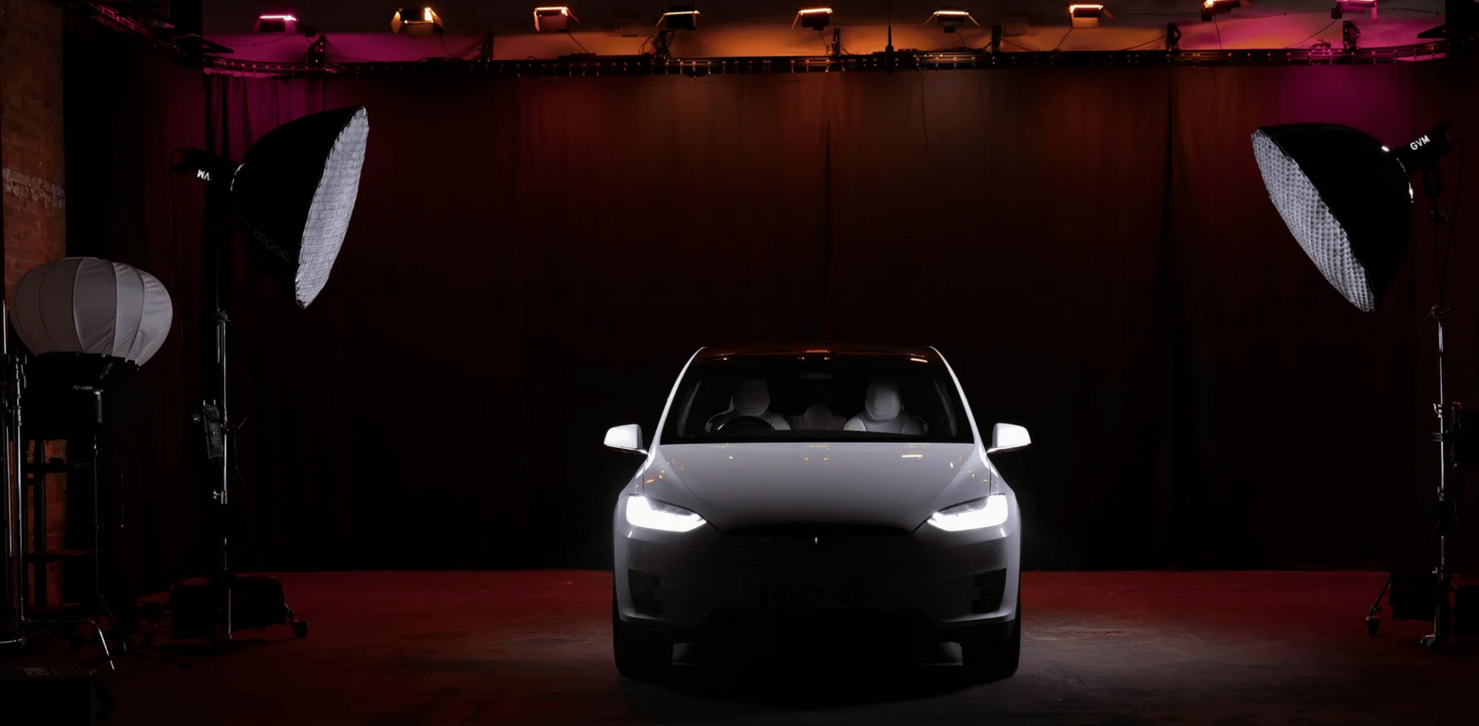
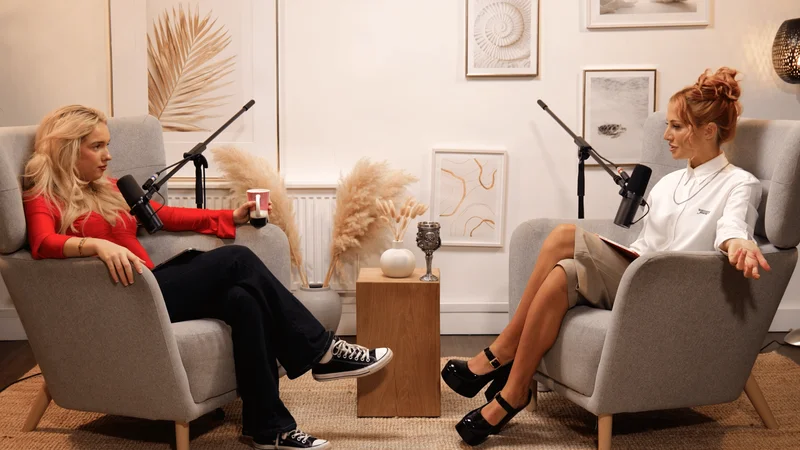
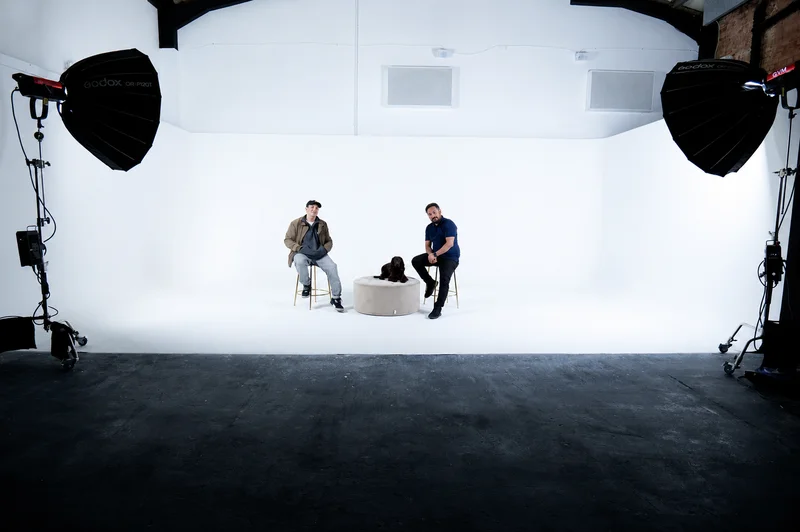
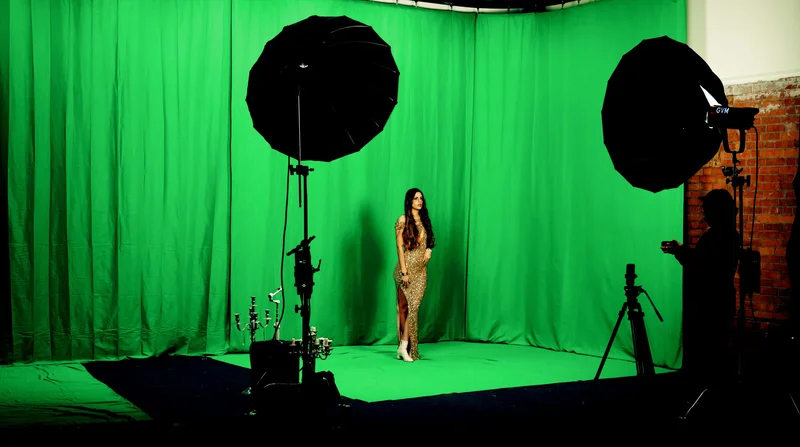
Finchley Studio (Giant Blackout Set): book this setup for your podcast
The London Context: Location, Logistics, and Soundscapes
The Geography of Sound: Navigating London's Noise Floor
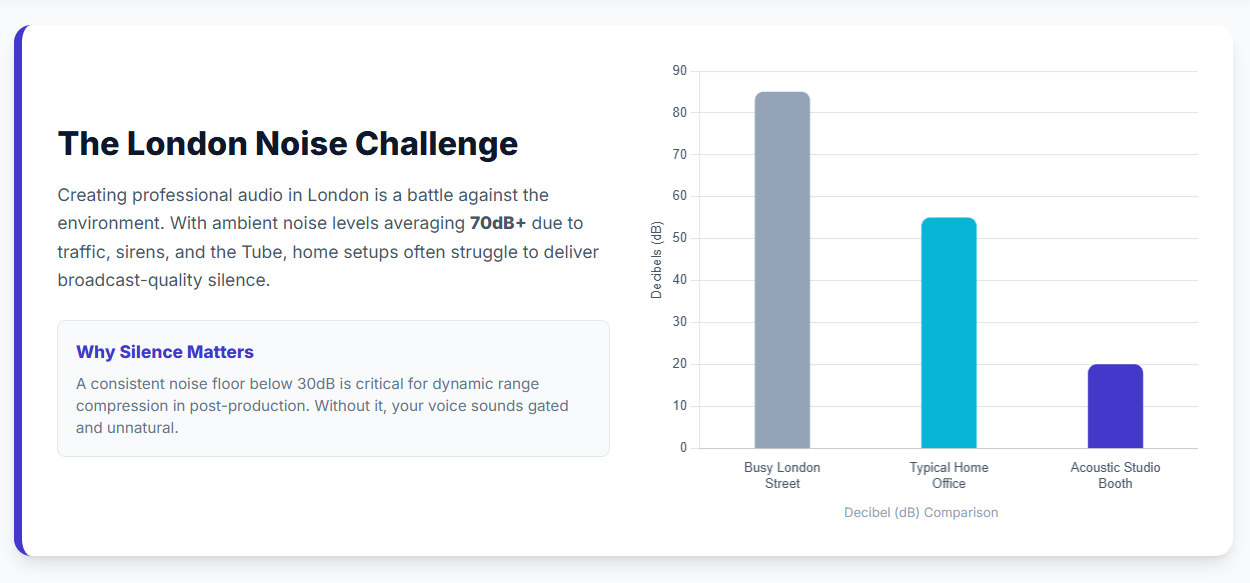
London is a city of unparalleled energy, a global hub of finance and culture. Yet, for the audio engineer, it is a hostile environment defined by a relentless, chaotic acoustic footprint. The "noise floor"—the measure of background noise in a room when no signal is being recorded—is the unseen adversary of every recording session. In a high-end production, managing this noise floor is the difference between a broadcast-quality recording that commands authority and an amateur effort that fatigues the listener.
The challenges are specific, localised, and deeply rooted in the city's infrastructure. Studios in Soho, the traditional and spiritual heart of the British film and media industry, must contend with a dense urban fabric. The narrow streets, unchanged for centuries, funnel the noise of constant delivery traffic, the cacophony of the night-time economy, and, perhaps most insidiously, the subterranean rumble of the London Underground. The Northern and Bakerloo lines, threading their way beneath the district, generate low-frequency structural vibrations (around 40-60Hz) that can travel up through building foundations and manifest as an audible hum on sensitive microphones.1
Conversely, the creative hubs of Shoreditch and Hoxton, often housed in converted industrial warehouses, face a different set of acoustic variables. While these spaces offer high ceilings and a desirable "loft" aesthetic, they frequently suffer from poor isolation between floors. The stripped-back architectural style, while visually appealing, often lacks the mass required to block the high-frequency noise of ongoing construction projects that define East London’s skyline.2 Research by the City of London Corporation highlights that noise complaints have risen significantly, driven by the intensification of business activity and the expansion of the night-time economy, making the quest for silence increasingly difficult.4
For a podcast studio to claim "professional" status in this environment, it must employ a "room-within-a-room" construction methodology. This architectural technique involves decoupling the recording space from the building's structural shell. By using floating floors resting on rubber pucks and suspending ceilings on resilient mounts, engineers can break the path of structure-borne vibration. This is a non-negotiable feature for capturing pristine audio in zones like London Bridge or King's Cross, where the convergence of heavy rail and urban density creates a constant vibrational assault.
Connectivity and Transport: The Client Journey
The "pain points" for London-based creators often begin long before they step into the vocal booth. In a city where travel time is a significant currency, logistics play a pivotal role in the guest experience. High-profile guests—CEOs, celebrities, politicians—are often pressed for time and intolerant of friction. Therefore, the strategic location of a studio is as much a technical specification as the microphones it employs.
Studios located near major transport hubs hold a distinct advantage. Facilities near King's Cross St Pancras, such as Spiritland or TYX Studios, offer seamless access for international guests arriving via Eurostar or domestic talent travelling from the north of England.5 Similarly, studios near London Bridge, like Outset Studio, serve the business community of the City and Southwark with efficiency.7
The recent expansion of the Elizabeth Line has fundamentally redrawn the map of accessible studio locations. Areas like Whitechapel, home to London Podcast Studios, have been transformed from peripheral locations to central nodes, viable for corporate clients travelling from Canary Wharf or the West End in under 15 minutes.7 However, proximity to transport links brings a double-edged sword. A studio claiming to be "minutes from the Tube" must demonstrate superior soundproofing capabilities to block the very noise that makes it accessible.8
Parking remains a critical, often overlooked, logistical factor. In Central London, the scarcity of parking can add significant stress to the recording process. Studios that offer valet parking or are situated just outside the Congestion Charge zone (like facilities in Finchley or West London) offer a distinct logistical benefit for clients transporting heavy equipment or high-profile talent who prefer the privacy of personal transport.9
The Creative Hubs: A Neighbourhood Analysis
The choice of studio location often reflects the brand identity of the podcast itself. The "vibe" of the neighbourhood bleeds into the perception of the production.
Soho: The Establishment
Soho remains the prestige address, synonymous with the BBC, legacy media, and the glamorous history of British film. Studios here, such as Soho Live Studios or Mosaic Soho, cater to clients seeking a "media insider" atmosphere. The area is dense with post-production houses, colour grading suites, and private members' clubs like Soho House, making it the ideal location for productions that require high-level networking immediately before or after the record. However, the premium real estate costs are reflected in the hire rates, and the older building stock can mean tighter spaces and accessibility challenges.1
Shoreditch: The Disruptors
Shoreditch represents the innovative, tech-forward edge of the market. Studios like Premiere Podcast Studios and Outset Studio offer industrial aesthetics—exposed brick, neon signage, and open-plan layouts—that appeal to startups, tech disruptors, and lifestyle brands. The vibe is collaborative and energetic, fitting for "vodcasts" that require a visually striking, modern backdrop that resonates on social media platforms like TikTok and Instagram. The area is surrounded by artisanal coffee shops and coworking spaces, fostering a sense of dynamism and youth.3
Tileyard (King's Cross): The Audio Campus
Tileyard at King's Cross operates as a dedicated community of music and audio professionals. Studios here, such as TYX Studios, benefit from a clustered ecosystem of producers, composers, and engineers. This location offers a "campus" feel, distinct from the chaotic energy of Soho or Shoreditch. Amenities like the Vinyl Cafe North foster serendipitous networking opportunities, making it an ideal environment for serious audio professionals who value technical excellence and community over postcode prestige.
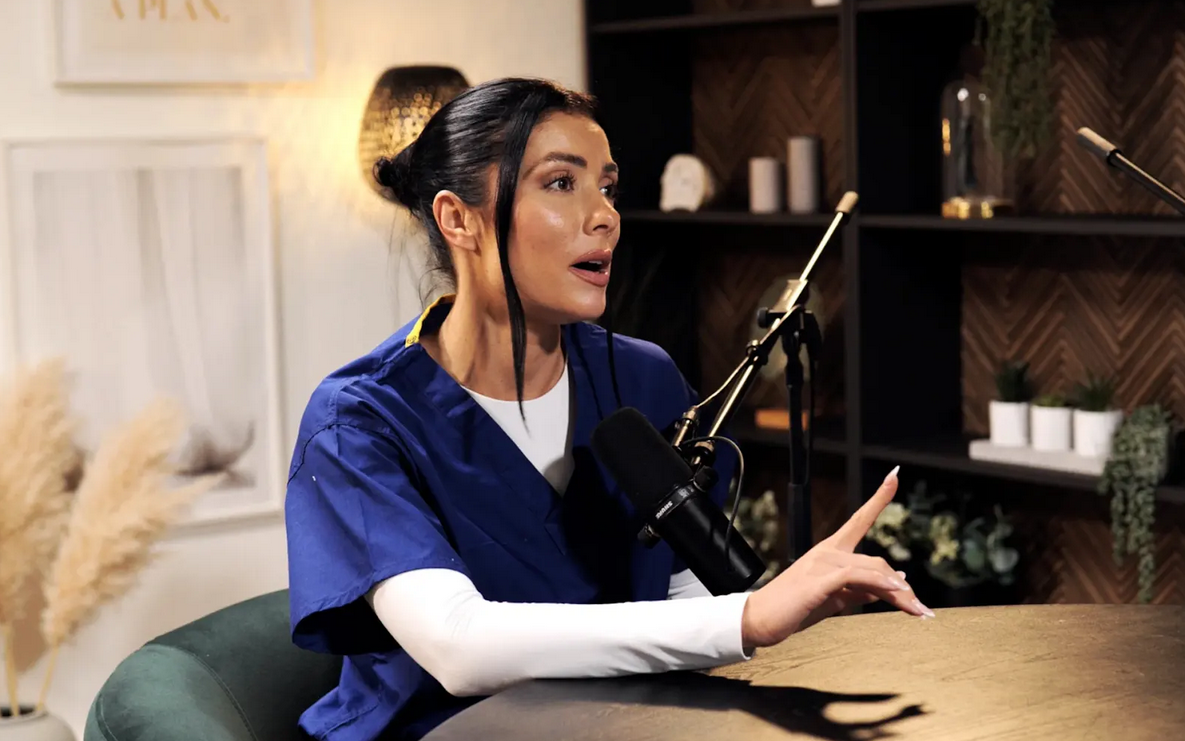
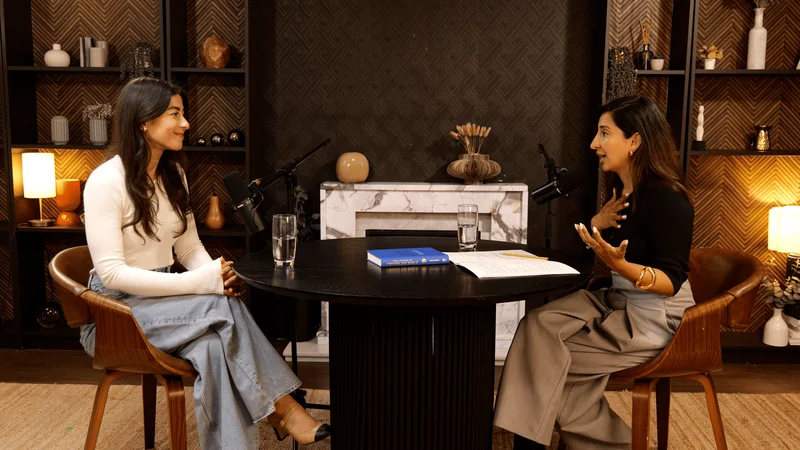
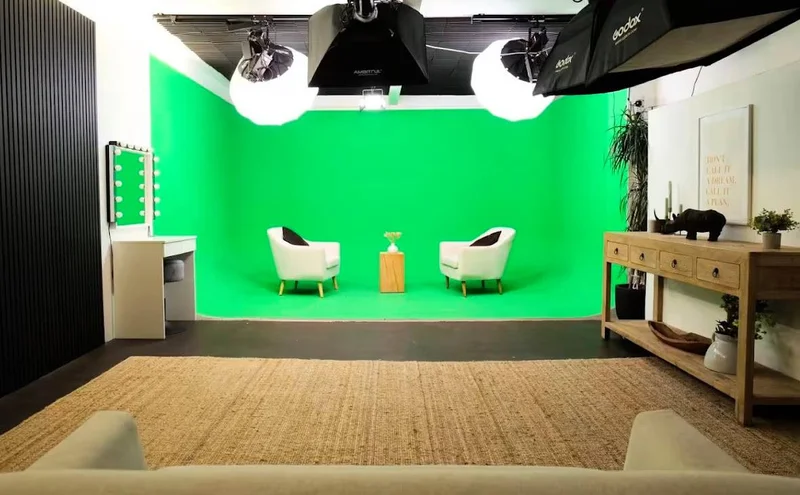
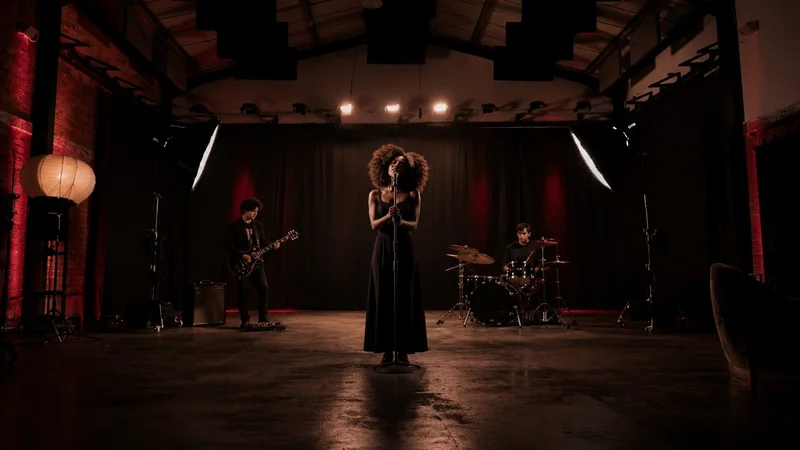
Finchley Studio (CEO Set): book this setup for your podcast
Acoustic Engineering: The Physics of Excellence
Soundproofing vs. Acoustic Treatment: The Critical Distinction
A common misconception among new podcasters and corporate clients alike is the conflation of "soundproofing" and "acoustic treatment." For a high-end London studio, the distinction is not merely semantic; it is the difference between a usable recording and a disaster.
Soundproofing (Isolation) is about mass and decoupling. Its primary function is to prevent the siren on Oxford Street, the footsteps from the office above, or the construction work next door from bleeding onto the recording track. It involves the construction of heavy, multi-layered walls, the installation of triple-glazed windows, and the use of acoustic fire doors with magnetic seals.6 Without robust soundproofing, no amount of post-production software can fully remove the intrusion of London’s soundscape without introducing digital artifacts that degrade the voice signal.
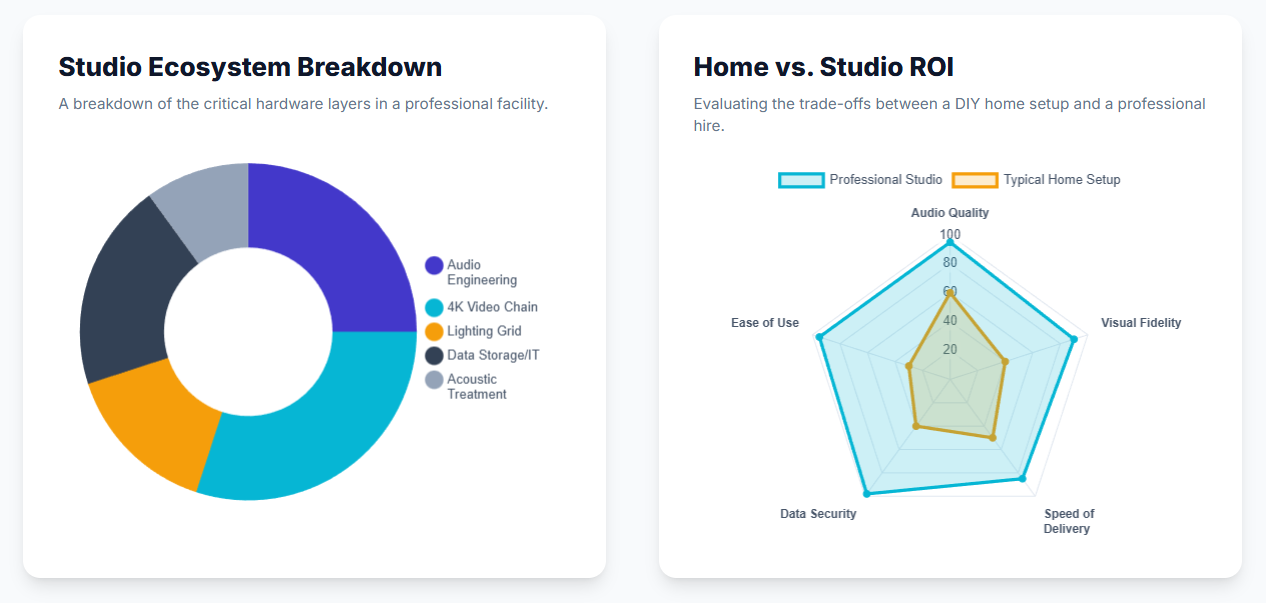
Acoustic Treatment (Control), on the other hand, dictates how the voice sounds inside the room. An untreated room with hard surfaces—glass windows, concrete floors, plasterboard walls—creates "flutter echo" and "standing waves." These acoustic anomalies cause the voice to sound "boxy," distant, and amateurish, as sound waves bounce rapidly between parallel surfaces. High-end studios employ a calculated combination of absorption (using open-cell foam panels or mineral wool baffles to tame high frequencies) and bass traps (dense materials placed in corners to control low-end energy).8
The "Gold Standard" for podcast acoustics in 2026 is a controlled, "dry" sound—a recording with very little natural reverb. This acoustic neutrality allows the post-production engineer to add compression and equalization (EQ) to enhance the voice's presence without amplifying unwanted room reflections. In London’s competitive market, studios that fail to deliver this controlled environment force editors to over-process the audio, leading to listener fatigue.16
The Impact of Glass and Modern Aesthetics
A trend in modern video podcast studios is the "fishbowl" aesthetic—glass walls that allow for natural light or visibility into the control room. While visually striking for video content, glass is an acoustic liability. It is a hard, reflective surface that can destroy the intelligibility of speech.
High-end London studios mitigate this through the use of angled glass. By angling the window panes downwards or sideways, sound waves are reflected away from the microphone rather than bouncing back into it. Furthermore, premium facilities utilise acoustic laminates—specialised glass layers with a sound-dampening interlayer—to maintain isolation without sacrificing the visual connection between the producer and the talent.17
The Technical Ecosystem: Hardware and Environment
The Microphone Standard: Dynamic vs. Condenser
In the context of a London studio, the choice of microphone is often dictated by the acoustic environment and the nature of the content.
Dynamic Microphones are the industry standard for podcasting, with the Shure SM7B (and its successor, the SM7dB) dominating the high-end market.12 The physics of the dynamic capsule make it less sensitive to distant sounds and high-frequency transients. Its cardioid polar pattern is excellent at "off-axis rejection," meaning it picks up the person directly in front of it while ignoring the guest sitting next to them. This is crucial for multi-guest setups where "bleed" (one person’s voice appearing on another’s mic track) can cause phase cancellation issues in post-production. The Electro-Voice RE20, another broadcast staple found in premier studios, uses "Variable-D" technology to minimise the proximity effect, allowing guests to move naturally without the tone of their voice changing drastically.
Condenser Microphones, such as the Neumann U87 or Rode NT1, offer superior detail, capturing the "air" and nuance of the human voice. However, their high sensitivity makes them a liability in anything less than a perfectly treated environment. In a podcast studio situated in a busy London office block, a condenser mic is likely to pick up the hum of air conditioning or the distant rumble of traffic. Therefore, high-end studios generally reserve condensers for voice-over booths or exceptionally well-isolated rooms.8
The Visual Revolution: Cameras and Lighting
The transition to "Vodcasting" has transformed the equipment list of the modern studio. Audio-only setups are now the entry-level tier; the professional standard is 4K video.

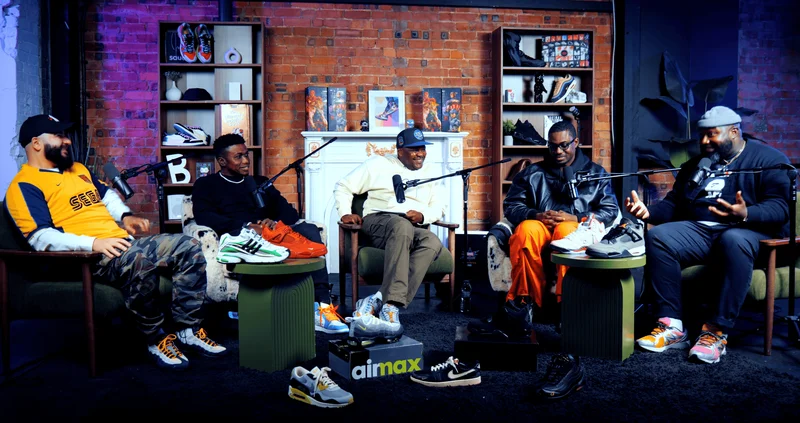
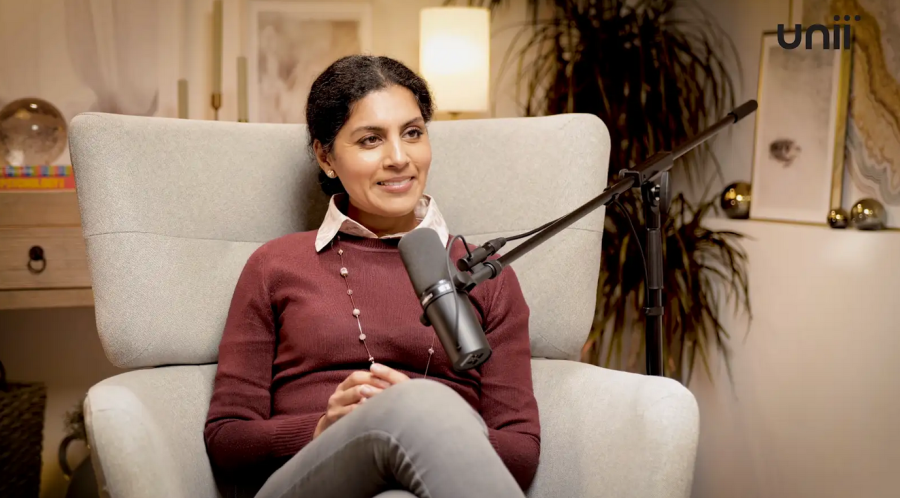
See the 'BBC Children in Need' podcast setup used by Dr Julie from BBC at Finchley Studio (Lounge setup). Book this setup for your podcast
Camera Sensors: The Sony A7 IV and Sony FX30 have become the workhorses of the London podcast scene.3 Their popularity stems from their autofocus reliability. In a dynamic podcast conversation, guests lean in to emphasise a point or lean back to laugh. Manual focus pulling is impossible without a dedicated camera operator for each angle. Sony's Real-time Eye AF tracks the subject's eye relentlessly, ensuring sharp footage without the need for a large crew. For higher-end productions that prioritise a cinematic aesthetic, studios may utilise Blackmagic Design cinema cameras (e.g., Pocket 6K) or Canon C70s (used by Acast Studios). These cameras record in 10-bit colour depth or RAW formats, offering immense flexibility for colour grading, though they often lack the autofocus capabilities of the Sony system, requiring guests to remain relatively stationary.2
Lighting: Professional lighting is what separates a "webcam" look from a "studio" look. High-end studios utilise three-point lighting setups.
Key Light: A large source (often using a softbox or octabox) placed at 45 degrees to the subject. The larger the source relative to the subject, the softer the light, wrapping around the face to flatter skin tones.
Fill Light: A less intense light on the opposite side to soften shadows.
Back/Hair Light: Placed behind the subject to create separation from the background. This is essential for preventing dark hair or clothing from blending into dark acoustic foam or backdrops.
In Shoreditch studios, RGB "accent" lighting (using tubes like the Nanlite PavoTube or Aputure lights) is increasingly popular. These lights can be tuned to the client's brand colours, creating a visually distinct and instantly recognisable look for social media clips.20
The Central Nervous System: Mixing Consoles and Interfaces
The heart of the studio is the interface that bridges the analogue world of sound waves and the digital world of data.
The RØDECaster Pro II has become ubiquitous in London’s mid-to-high tier studios. Its integrated design allows it to handle "mix-minus" for remote guests (via Bluetooth or USB) seamlessly, trigger sound effects via pads, and apply real-time processing (like the Aphex Aural Exciter) to polish the audio before it even hits the computer.19
For studios prioritising pristine audio capture, particularly for film-style productions, 32-bit float recorders like the Zoom F8n Pro are favoured. 32-bit float recording captures such a massive dynamic range that it is virtually impossible to distort the audio. If a guest suddenly laughs loudly or screams, the audio will not "clip" (distort), allowing the engineer to simply turn it down in post-production without any loss of quality. This provides a massive safety net for unscripted content.3
For live-switched video podcasts, the Blackmagic ATEM Mini Extreme ISO is the industry standard. It records separate ISO (isolated) feeds for each camera directly to an SSD while simultaneously creating a "live cut" of the show. This allows for a quick turnaround while retaining the ability to re-edit the footage later—a critical feature for high-volume production houses.3
The Post-Production Engine: The Art of Polish
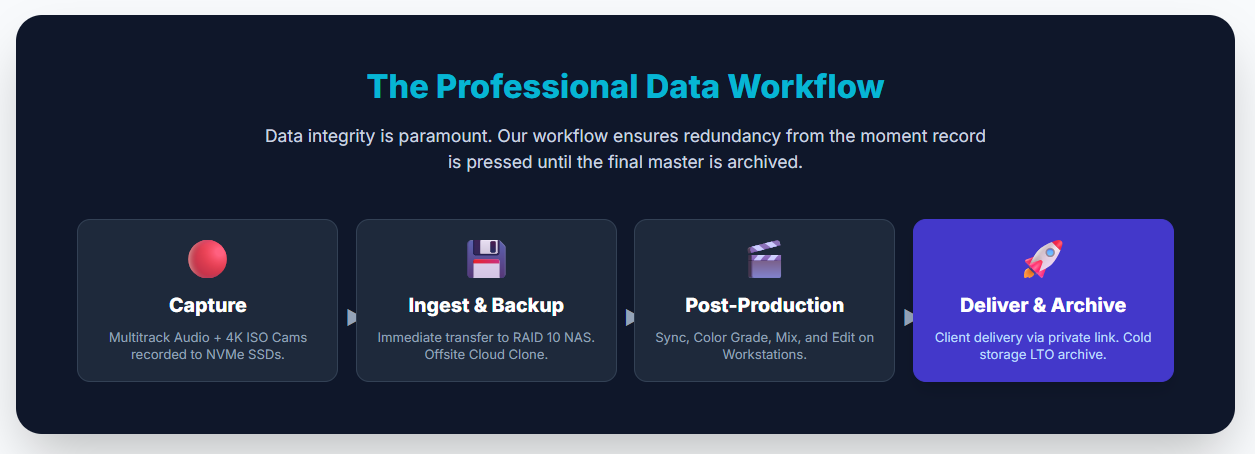
The recording session is merely the acquisition of raw material. For high-end London studios, the post-production workflow is where the product is truly made. This phase transforms raw files into a polished, broadcast-ready asset, involving a bifurcated workflow of audio engineering and video editing.
Audio Post-Production: Clarity and Standards
The objective of audio post-production is transparency, consistency, and compliance with broadcast standards.
Noise Reduction and Restoration: The first step in the chain is cleaning. Tools like iZotope RX are essential for removing mouth clicks, plosives (pops caused by "P" and "B" sounds), and any residual spectral noise from the London environment. This "surgical" editing ensures the listener focuses solely on the content, not the production.23
Mixing and Dynamics:
Equalization (EQ): Engineers apply high-pass filters to remove "muddy" low frequencies (typically below 80-100Hz) which carry rumble but no vocal information. They also enhance the "presence" frequencies (3-5kHz) to improve speech intelligibility.
Compression: This reduces the dynamic range of the audio, making quiet whispers louder and loud laughter quieter. This ensures the podcast can be heard clearly in noisy listening environments, such as on the Tube or a busy street.
Loudness Normalization: Platforms like Spotify, Apple Podcasts, and Amazon Music have strict loudness targets, typically around -14 LUFS (Loudness Units Full Scale). Studios must master files to these specifications. If a file is uploaded too loud or too quiet, the platform’s algorithms will aggressively compress or gain the audio, often introducing distortion.16
Editorial Editing: This involves removing filler words ("ums," "ahs," "you know") and tightening the conversation to improve pacing. A skilled editor knows when to leave a pause for dramatic effect and when to cut it to keep the energy high.
Video Post-Production: Multi-Cam Workflows
Video editing for podcasts introduces significant complexity, particularly with multi-camera setups.
Synchronization: The first hurdle is aligning the audio from the high-quality microphones with the video from 3+ cameras. While software like Adobe Premiere Pro and DaVinci Resolve offers automated sync features based on audio waveforms, high-end workflows often use Timecode generators (like Tentacle Sync) to ensure frame-accurate synchronization across all devices.24
The "Live" Edit vs. Post-Cut:
Live Switching: Using an ATEM switcher to cut between cameras in real-time saves massive amounts of post-production time. The result is a "live-to-tape" feel that is efficient but can miss spontaneous reactions.
Post-Cut: Editing the ISO feeds in post allows for greater precision. Editors can choose the perfect reaction shot, cover edits with B-roll, and create a more polished narrative. High-end studios often record both: a live cut for speed and ISOs for safety and social clips.24
Color Grading: This step ensures consistency between cameras. Even if two cameras are the same model, slight differences in lighting or lens characteristics can cause colour shifts. Grading normalises these differences and applies a "Look" (LUT) that aligns with the client's brand guidelines, elevating the footage from "video" to "cinema".23
Social Deliverables: A crucial part of the modern workflow is the creation of vertical (9:16) clips for TikTok, Instagram Reels, and YouTube Shorts. This involves identifying viral moments, reframing the 4K footage to centre the speaker, and adding dynamic captions—a service that many London studios now monetise as a high-value add-on.9
Software Ecosystem
Digital Audio Workstations (DAWs): Pro Tools remains the industry standard for high-end audio mixing, favoured for its routing capabilities and ubiquity in the film industry. Adobe Audition and Logic Pro are also widely used.
Non-Linear Editors (NLEs): Adobe Premiere Pro is dominant for its seamless integration with After Effects (for motion graphics) and Audition. DaVinci Resolve is gaining significant ground due to its superior colour grading tools and collaborative cloud workflows.23
AI Tools: As we approach 2026, AI tools like Adobe Podcast (Enhance Speech), Descript, and Podcastle are becoming integral for rapid transcriptions, automated filler word removal, and voice isolation.

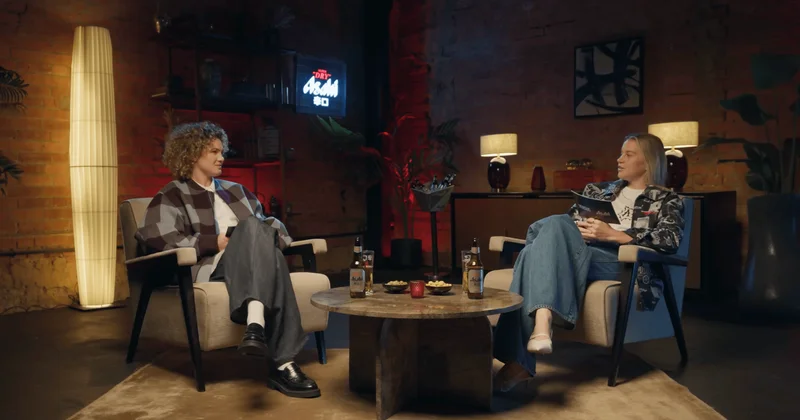
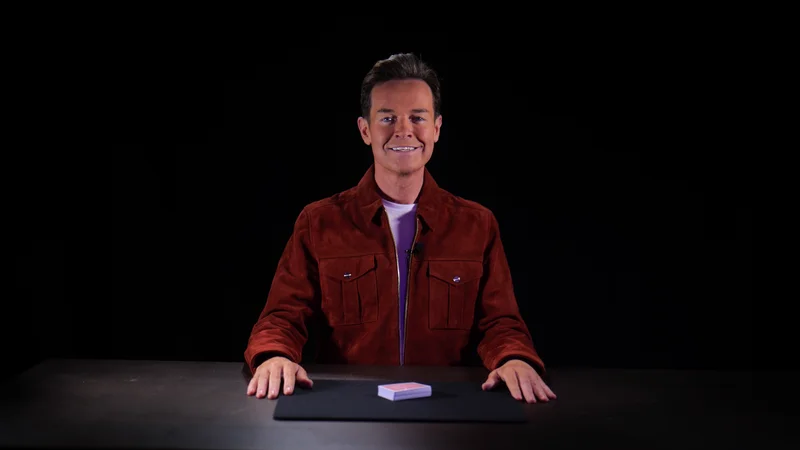
See the 'The Tooney & Russo Show' from BBC and Lionesses Ella Toone and Alessia Russoat from England national football team at Finchley Studio (Lounge setup). Book this setup for your podcast. Watch 'The Tooney & Russo Show' at BBc sound , Spotify , Youtube, Amazon music.
Data Management and Security: The Invisible Infrastructure
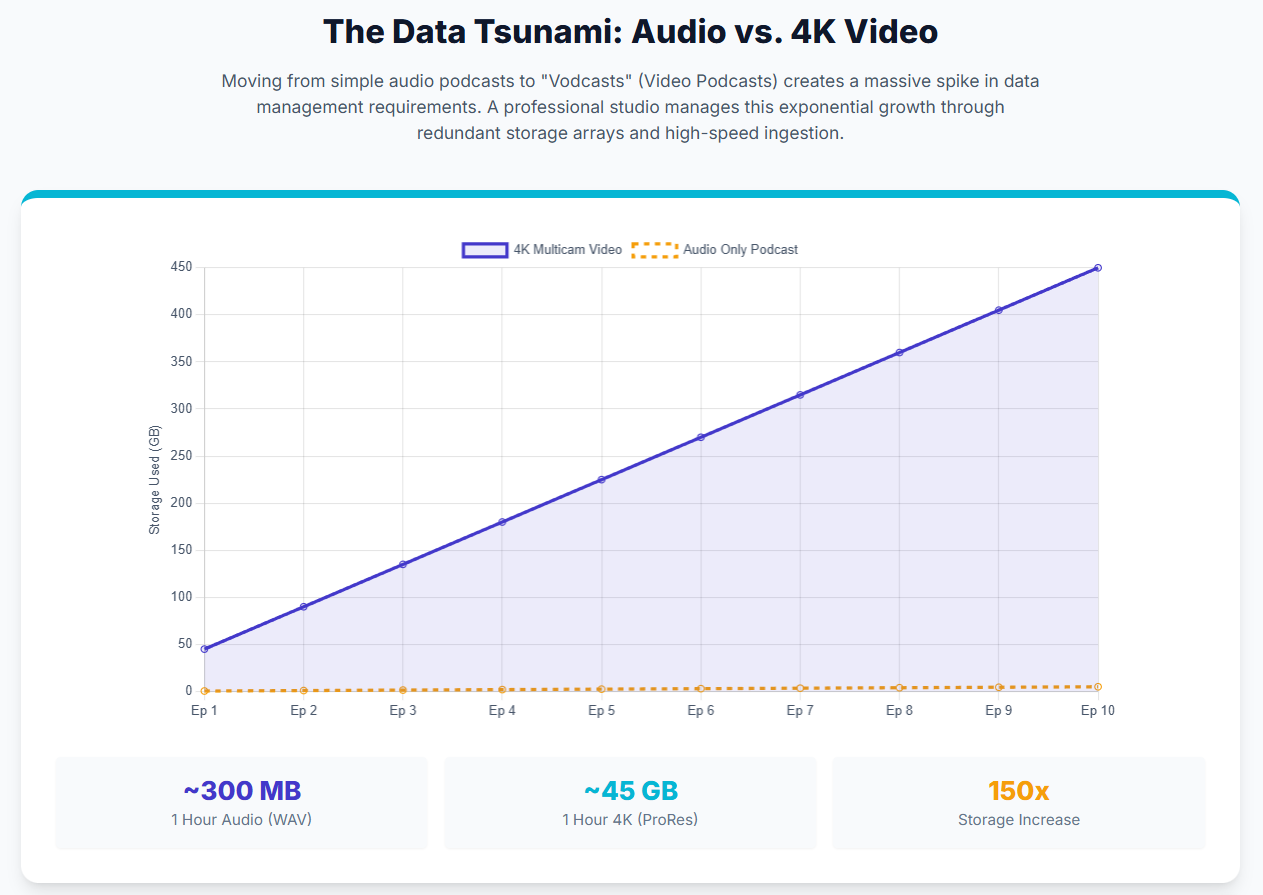
In the age of 4K video, a single hour of multi-cam footage can generate hundreds of gigabytes of data. For a London studio serving corporate clients—banks, law firms, healthcare providers—data management is not just an IT task; it is a critical business function involving security, redundancy, and speed.
The Volume Challenge: Handling 4K Data
A typical 3-camera 4K podcast shoot recording in ProRes 422 or DNxHR codecs can easily exceed 200GB to 500GB per hour.
Ingest Speed: Time is money in a studio booking. Clients cannot wait hours for files to copy. Studios utilise high-speed NVMe SSDs (like the Lexar Professional series) and CFexpress card readers to offload footage at speeds exceeding 1000MB/s. Connectivity standards like Thunderbolt 4 are essential for connecting these drives to studio workstations to prevent bottlenecks.26
Client Transfer: The days of handing over a USB stick are fading, yet cloud transfer of 500GB files is impractical for immediate takeaway due to bandwidth limitations. The standard practice for high-end studios is to require clients to bring high-speed USB-C SSDs (e.g., Samsung T7, SanDisk Extreme) formatted to exFAT for cross-platform compatibility.8
Storage Architecture: The 3-2-1 Rule
Professional studios adhere to the 3-2-1 Backup Rule to ensure data integrity: Three copies of the data, on two different media types, with one copy stored off-site.
On-Set Backup: Recording is done to dual SD cards in-camera (redundancy) or simultaneously to an external SSD via USB-C.
Studio Server: Immediate ingest to a local RAID array (Redundant Array of Independent Disks) or NAS (Network Attached Storage) like a Synology or QNAP system. RAID 5 or RAID 6 configurations are common, providing protection against single or double drive failures. This allows multiple editors to access footage over a 10GbE network simultaneously.29
Cloud Archive: Once the project is active, proxies (lower resolution files) are often synced to the cloud (Frame.io, Dropbox, or dedicated Media Asset Management systems like Iconik) for remote client review. Long-term archival typically uses "cold storage" solutions like Amazon S3 Glacier or Backblaze B2, which are cost-effective for data that is rarely accessed but must be retained.29
Security and Compliance: GDPR and NDAs
For corporate clients dealing with sensitive information—pre-IPO announcements, internal strategy, or legal matters—data security is paramount.
Non-Disclosure Agreements (NDAs): Before a recording begins, studio staff often sign NDAs. This legal framework protects the intellectual property and sensitive information discussed during the session.30
GDPR Compliance: Studios must handle personal data (voice and image are considered biometric data) in compliance with UK GDPR. This includes secure storage, controlled access via Role-Based Access Control (RBAC), and clear policies on data retention (e.g., deleting raw files after 30 days unless agreed otherwise). Clients have the "Right to be Forgotten," meaning studios must have mechanisms to permanently delete specific personal data upon request.31
Cybersecurity: High-end studios employ robust firewalls and refrain from using port-forwarding for remote access, utilising secure VPNs or cloud bridges instead. Video Management Systems (VMS) used for archiving must support end-to-end encryption (AES-256) to prevent unauthorised access.32
The Strategic Business Case: Professional Studio vs. DIY
A frequent debate for new entrants into the podcasting space is whether to invest in building a home studio or to hire a professional facility. For the London market, the economics and strategic advantages tilt heavily toward professional studios for serious productions.
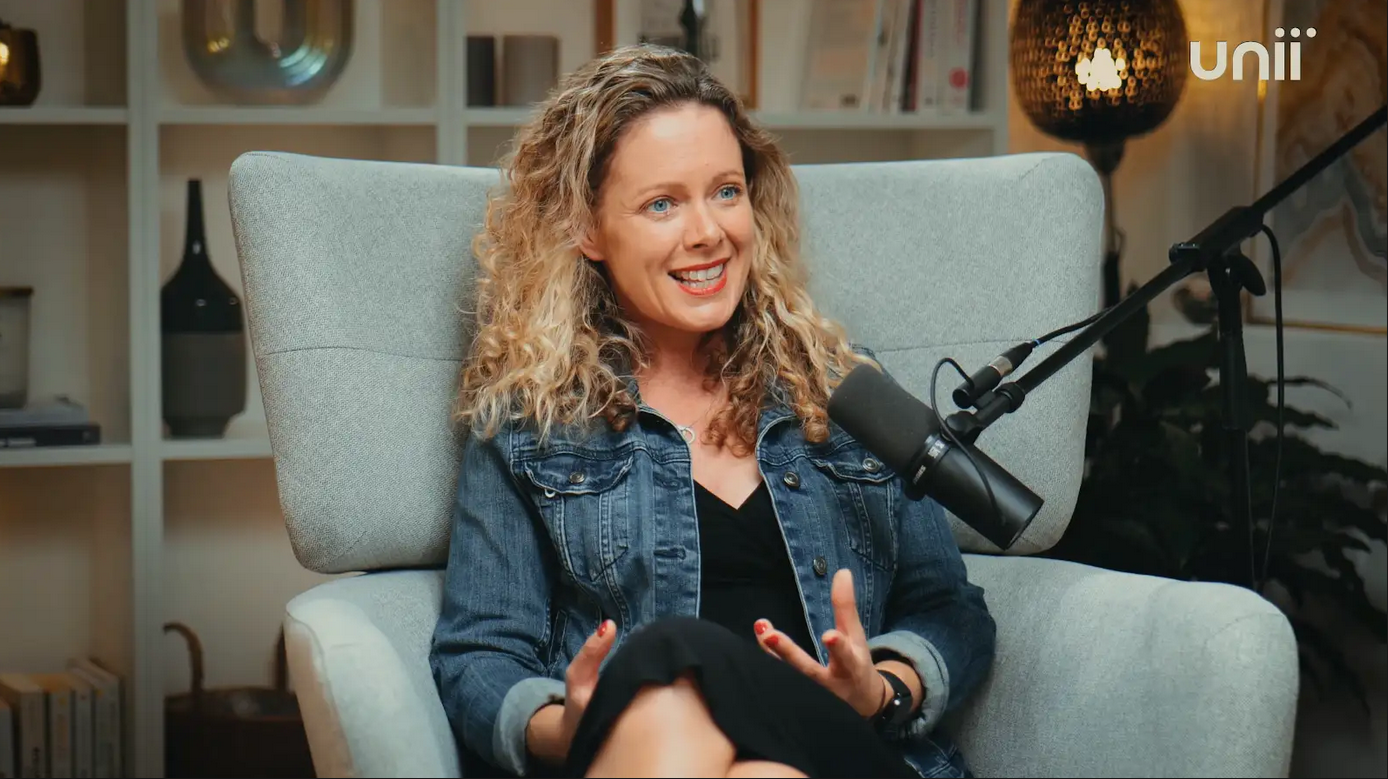
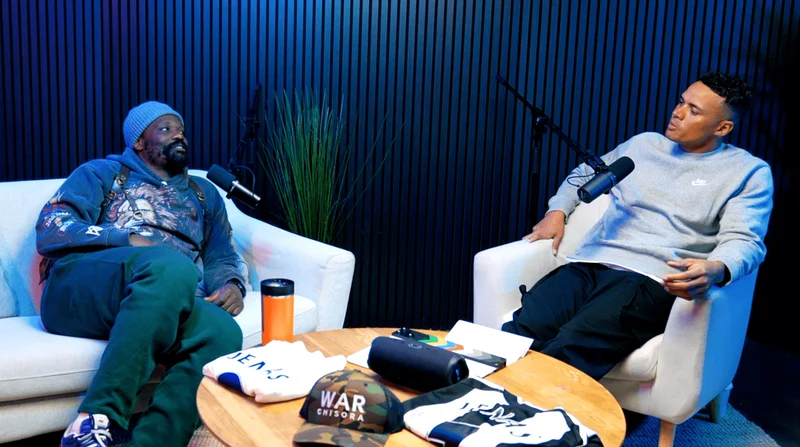
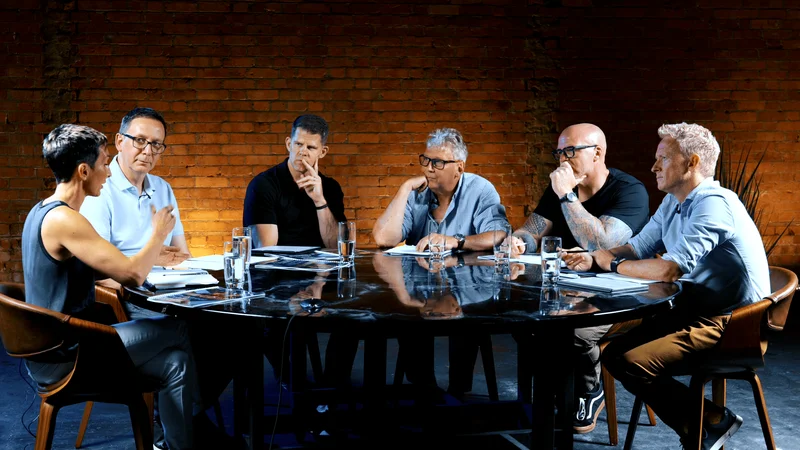
Finchley Studio (Dialogue set): book this setup for your podcast
The Hidden Costs of DIY in London
Building a "pro-level" studio in a London residential or office space incurs significant "hidden" costs that often exceed initial estimates:
Real Estate Cost: Dedicating a room in London—where rent per square foot is among the highest in the world—to a studio is a massive financial commitment. That space has an opportunity cost.
Acoustic Construction: Achieving a noise floor of -60dB requires professional construction (floating floors, acoustic glass, mass-loaded vinyl) that can cost upwards of £10,000 - £20,000. Simple DIY foam panels are insufficient for blocking the low-frequency rumble of London traffic or neighbours.16
Equipment Depreciation: A professional setup (3x Cameras, Lights, Switcher, Mics, Interface, Computer) represents a capital expenditure (CapEx) of £5,000 - £15,000. This gear depreciates rapidly and requires regular maintenance and upgrades to stay current.18
The "Host-Technician" Dilemma: In a DIY setup, the host is often also the engineer. If a camera overheats, a battery dies, or a mic cable fails, the host must break character to fix it. This destroys the flow of the conversation and can ruin an interview with a VIP guest.
The Value Proposition of the Studio
Concierge Service: High-end studios (Tier 3) provide a dedicated engineer. The client walks in, records, and walks out. The mental load of technical management is outsourced, allowing the host to focus entirely on the guest and the content.2
Brand Perception: Bringing a high-profile guest to a sound-treated basement in Shoreditch with professional lighting, hospitality, and a runner creates a vastly different impression than inviting them to a converted spare room. It signals legitimacy, success, and respect for the guest's time.16
Cost Efficiency: With studio rates starting around £80-£150 per hour for video packages, a weekly podcast costs significantly less annually than the rent, business rates, and equipment costs of maintaining a private facility, with zero maintenance liability.2
Client Hospitality and Lifestyle: Beyond the Booth
A high-end studio experience extends beyond the recording booth. It is about the ecosystem of comfort, productivity, and networking that surrounds the session
The "Concierge" Experience
Premium studios offer services akin to a boutique hotel. This includes:
Green Rooms: Private, comfortable spaces for guests to relax, prep, or take calls before the show. These areas often feature monitors to watch the live feed of the studio.
Catering: Partnerships with local artisanal cafes (e.g., Origin Coffee near the City) to provide high-quality refreshments. "Runner" services are available to handle ad-hoc requests, from printing scripts to sourcing chargers or specific dietary requirements.36
Meeting and Networking Spots
For pre-production meetings or post-recording debriefs, the studio's neighbourhood matters.
Near Shoreditch: The Hoxton hotel lobby offers a relaxed environment for casual meetings, while Soho Works provides a private creative environment for members.38
Near King's Cross (Tileyard): Vinyl Cafe North acts as a hub for the audio community, blending food, drink, and industry networking in a vibrant setting.14
Near Soho: Dean Street Townhouse or The Ned offer the classic "power lunch" setting, ideal for closing deals with high-level corporate sponsors or impressing talent.40
Future Horizons: Podcasting Technology in 2026
As we look toward 2026, the technological landscape of podcasting is evolving rapidly, driven by AI and immersive formats.
AI Integration
Artificial Intelligence will move from "post-production repair" to "real-time production assistant."
Real-Time Switching: AI-driven video switchers will automatically cut between cameras based on voice activity and facial recognition, reducing the need for live directors on smaller shoots and ensuring perfect framing.42
Generative Audio: Tools will allow for the synthesis of "pick-up" lines in the host's voice to correct mistakes without re-recording, subject to ethical considerations and transparency.27
Spatial and Immersive Audio
With the ubiquity of headphones supporting spatial audio (like Apple's AirPods Pro), high-end podcasts will increasingly move toward Binaural and Dolby Atmos mixes. This places the listener "inside" the room, creating a more immersive experience for narrative and drama podcasts. Studios will need to upgrade monitoring systems to support these object-based audio formats.43
Hybrid Production
The integration of remote guests will become indistinguishable from in-studio guests. Technologies like Riverside.fm and vMix Call will integrate deeper into studio hardware, allowing for 4K remote recording with negligible latency, supported by London's rollout of 5G and ubiquitous fibre infrastructure.10
Frequently Asked Questions (FAQ)
What is the difference between "Dry Hire" and "Full-Service" studio rental?
Dry Hire provides the room and the equipment, but you are responsible for operating it. This is ideal for experienced producers who know how to gain-stage a microphone and focus a camera. Full-Service (or Assisted Hire) includes a dedicated engineer who handles setup, monitoring, lighting, and troubleshooting, allowing you to focus entirely on hosting. For corporate clients, Full-Service is highly recommended.2
How much does a high-end video podcast studio cost in London?
Prices vary by location and tier.
Entry-Level (Audio Only): £40 - £70 per hour.
Mid-Range (Audio + Static Video): £90 - £120 per hour.
High-End (Multi-Cam, Engineer, Premium Location): £150 - £300+ per hour.2
Note: Post-production is typically charged separately, often starting at £300 per episode for full video editing and social clips.
Can I record remote guests in a studio?
Yes. Professional studios use "Mix-Minus" technology to ensure the remote guest hears you without hearing their own echo. They often use high-fidelity platforms like Riverside.fm or Zoom Rooms integrated directly into the studio console to capture high-quality local audio from the remote guest. The studio can often display the guest on a large screen to facilitate natural eye contact.5
Do I need to bring my own SD cards?
It is highly recommended. While many studios can transfer files via the cloud (WeTransfer/Dropbox), transferring 200GB of 4K footage can take hours. Bringing a high-speed USB-C SSD (Samsung T7 or similar) ensures you leave with your data immediately. Some studios charge a fee for file transfer if you don't provide storage.2
What happens if I go over my booked time?
Studios run on strict schedules to accommodate multiple clients. Overtime is usually charged by the minute (often at a premium rate, e.g., £1.50/minute). It is advisable to book at least 30 minutes of "buffer" time for setup and wrap-up to avoid stress and extra costs.9
How does the studio handle my data privacy?
Reputable studios will offer an NDA upon request. Data is typically stored on secure, local servers and deleted after a set period (e.g., 30 days). Ensure you clarify the data retention policy before booking, especially if you require the studio to keep a backup for a longer duration.30
Conclusion
The landscape of podcast recording in London has evolved into a sophisticated industry where broadcast standards meet digital agility. For the modern creator or corporate entity, the choice of studio is a strategic decision that impacts brand perception, content quality, and workflow efficiency.
A high-end studio offers more than just expensive microphones; it provides a sanctuary from London’s noise, a fortress for your data, and a canvas for your visual identity. By understanding the nuances of acoustics, the power of multi-cam post-production, and the value of a managed environment, clients can ensure their message cuts through the noise—literally and figuratively.
Whether you are recording a CEO interview in the polished boardrooms of the City, or a cultural deep-dive in the gritty creative lofts of Shoreditch, London’s studio ecosystem is equipped to deliver world-class content. The key to success lies in preparation: understanding your technical needs, respecting the logistics of the city, and investing in the professional expertise that elevates a recording from a simple audio file to a compelling multimedia asset.
Ready to elevate your production?
Secure your session at a premier London studio today. Prioritize sound, embrace video, and let the experts handle the technology while you tell your story.
Works cited
Podcasts - Soho Live Music Club, accessed January 8, 2026, https://www.soho.live/studios/podcasts
Podcast Studio London Rates and Policy - Finchley Studios, accessed January 8, 2026, https://www.finchley.co.uk/finchley-learning/podcast-studio-london-rates-and-policy
Podcast Studio in Shoreditch | East London, accessed January 8, 2026, https://outsetstudio.com/east-london-podcast-studio-shoreditch/
City of London Noise Strategy 2016 to 2026, accessed January 8, 2026, https://www.cityoflondon.gov.uk/assets/Services-Environment/city-of-london-noise-strategy-2016-2026.pdf
London Podcast Studio | Studio Hire in King's Cross, accessed January 8, 2026, https://spiritlandproductions.com/studio/
Why Soundproofing Is Important? - Mammoth Film Studios, accessed January 8, 2026, https://www.mammoth.london/post/why-soundproofing-is-important
The 10 Best London Podcast Studio Locations for New and Established Creators, accessed January 8, 2026, https://www.finchley.co.uk/finchley-learning/visual-podcast/the-10-best-london-podcast-studio-locations-for-new-and-established-creators
Common Mistakes to Avoid When Booking a Podcast Studio London - Finchley Studios, accessed January 8, 2026, https://www.finchley.co.uk/finchley-learning/common-mistakes-to-avoid-when-booking-a-podcast-studio-london
Bookings & Pricing — London Podcast Studio | The Home of Podcasting!, accessed January 8, 2026, https://www.londonpodcaststudios.co.uk/london-podcast-studio-hire-bookings
Podcast Production London – Professional Studio & Editing, accessed January 8, 2026, https://www.blueprintstudioslondon.com/podcast-production-london
36 Best Podcast Studios for Hire in London, England - Peerspace, accessed January 8, 2026, https://www.peerspace.com/uk/spaces/gb/london--england/podcast-studio
Podcast Studio in London | Professional Audio & Video Services, accessed January 8, 2026, https://premierepodcaststudios.com/podcast-studio-london/
Podcast Production Services in London | For Brands & Creators - TYX Studios, accessed January 8, 2026, https://tyxstudios.com/podcast-production
Vinyl Cafe North - Tileyard North, accessed January 8, 2026, https://tileyardnorth.co.uk/vinylcafenorth/
Acoustic Solutions for Open-Plan Offices: Boosting Productivity and Well-being - Sound Zero, accessed January 8, 2026, https://sound-zero.com/acoustic-solutions-offices/
Professional Studio vs. DIY Home Setup: A Cost-Benefit Analysis for UK Creators, accessed January 8, 2026, https://www.finchley.co.uk/finchley-learning/visual-podcast/professional-studio-vs-diy-home-setup-a-cost-benefit-analysis-for-uk-creators
Achieve superior sound home vs London studio in focus - Select Recording Studios, accessed January 8, 2026, https://selectrecordingstudios.co.uk/hub/is-it-better-to-record-music-at-home-or-in-a-london-studio/
DIY vs. Professional: Is a London Podcast Studio Worth the Investment for New Podcasters?, accessed January 8, 2026, https://www.finchley.co.uk/finchley-learning/visual-podcast/diy-vs-professional-is-a-london-podcast-studio-worth-the-investment-for-new-podcasters
Best Podcast Equipment & Setup for 2025, accessed January 8, 2026, https://www.thepodcasthost.com/equipment/podcast-equipment-guide/
Acast Studios London, accessed January 8, 2026, https://www.acast.com/en/acast-studios-london
Podcast Studio Hire From £60p/h in London - Mavro Worldwide, accessed January 8, 2026, https://www.mavroworldwide.com/podcaststudiohire-black
RØDECaster Pro | Podcast Production Studio | RØDE (US), accessed January 8, 2026, https://rode.com/en-us/products/rodecaster-pro
Key to Streamline Your Post Production Workflow - VEGAS Creative Software, accessed January 8, 2026, https://www.vegascreativesoftware.com/us/post-production/workflow-to-edit-videos-like-professional/
How to Edit Multi-Camera Podcast Footage: Step-by-Step Workflow for 2025, accessed January 8, 2026, https://www.podcastvideos.com/articles/edit-multi-camera-podcast-footage-2025/
Optimizing Live Video Production: Best Multi-Cam Workflow Guide - NearStream, accessed January 8, 2026, https://www.nearstream.us/blog/best-multi-camera-workflow-for-live-video-production
Video Production Workflow: How to Optimize Your Editing Process with Lexar, accessed January 8, 2026, https://www.lexar.com/global/blog/video-production-workflow/?id=300000107
Top 5 AI Audio Tools for Superior Sound Quality in 2026 - Vertu, accessed January 8, 2026, https://vertu.com/ai-tools/top-5-ai-audio-tools-for-superior-sound-quality-in-2026/
One AI for audio, video & voice | Async, accessed January 8, 2026, https://podcastle.ai/
A quick guide to video production workflows - Iconik, accessed January 8, 2026, https://www.iconik.io/blog/a-quick-guide-to-video-production-workflows
Non-disclosure agreements: protecting your business information - Harper James Solicitors, accessed January 8, 2026, https://harperjames.co.uk/article/non-disclosure-agreements-ndas-and-confidentiality-agreements-faqs/
Data Processing Agreement - Acast, accessed January 8, 2026, https://www.acast.com/en/privacy/data-processing-agreement
8 essential security features every cloud VMS needs in 2026 - Videoloft, accessed January 8, 2026, https://videoloft.com/7-essential-security-features-every-cloud-vms-needs-in-2025/
A Guide to Secure Audio-visual Solutions for Corporate Events: Top Providers for 2025, accessed January 8, 2026, https://www.cyberdb.co/a-guide-to-secure-audio-visual-solutions-for-corporate-events-top-providers-for-2025/
Renting & Leasing Podcast Studios in the UK: Daily, Weekly, and Monthly Options + How to Profit from Your Own Studio | Lyvi UK, accessed January 8, 2026, https://lyvi.co.uk/renting-leasing-podcast-studios-in-the-uk-daily-weekly-and-monthly-options-how-to-profit-from-your-own-studio/
Podcast Studio London Cost 2025 - Finchley Studios, accessed January 8, 2026, https://www.finchley.co.uk/finchley-learning/podcast-studio-london-cost-2025
B2B Podcast Production Services in London - Premiere Podcast Studios, accessed January 8, 2026, https://premierepodcaststudios.com/b2b-podcast-production/
The Counter Coffee Shop - London City - Club Quarters Hotels, accessed January 8, 2026, https://www.clubquartershotels.com/london/london-city/the-counter
Top 10 Meeting Rooms in Shoreditch - Book Now - Zipcube.com, accessed January 8, 2026, https://www.zipcube.com/uk/meeting-rooms/shoreditch
Best Meeting Spots in London — The Doers | Brand Marketing Agency, accessed January 8, 2026, https://www.thedoers.co.uk/blog/best-meeting-spots-in-london-7glca
Best cafes for a business meeting in central London - Tiger Recruitment, accessed January 8, 2026, https://tiger-recruitment.com/business-support/eight-cafes-for-business-meeting-west-end/
Where To Meet Up With A Prospective Client In London - Philip Chantry - ActionCOACH, accessed January 8, 2026, https://philipchantry.actioncoach.co.uk/2025/04/30/where-to-meet-prospective-clients-london/
10 Podcast Trends Reshaping Production, Promotion And Distribution, accessed January 8, 2026, https://www.forbes.com/councils/forbesagencycouncil/2026/01/08/10-podcast-trends-reshaping-production-promotion-and-distribution/
Top 10 Audio Trends Shaping 2026 - PodcastVideos.com, accessed January 8, 2026, https://www.podcastvideos.com/articles/audio-trends-2026/
5 Mistakes to Avoid When Recording a Remote Podcast (And How We Fixed Them), accessed January 8, 2026, https://www.iamhellostudios.com/5-mistakes-to-avoid-when-recording-a-remote-podcast-and-how-we-fixed-them/
FAQs — London Podcast Studio | The Home of Podcasting!, accessed January 8, 2026, https://www.londonpodcaststudios.co.uk/podcast-studio-recording-faqs