Executive Summary: The Structural Shift in London’s Creator Economy
The digital media landscape of 2026 bears little resemblance to the podcasting environment of the early 2020s. What was once a medium characterised by audio-only experimentation and makeshift home recording setups has matured into a sophisticated, multi-billion-pound industry driven by broadcast-grade video, cinematic production values, and rigorous editorial standards. In the high-density, acoustically hostile urban environment of London, the demand for professional podcast studio hire has surged, outstripping the capacity of traditional, music-centric recording facilities. This report provides an exhaustive market validation for the specialised video podcast studio, analysing the scalability of the "vodcast" model and contrasting the logistical friction of Central London with the strategic efficiencies of North London hubs like Finchley Production Studio.
The data unequivocally suggests that the "home studio" era is waning for professional creators. The acoustic volatility of London—a city defined by its sonic density, from the low-frequency rumble of the Underground to the omnipresent sirens of the inner city—renders domestic recording environments insufficient for high-stakes content creation.1 Furthermore, the algorithmic pivot of major platforms like Spotify and YouTube towards video-first discovery has necessitated a hardware infrastructure (lighting grids, cinema-line cameras, 4K data pipelines) that cannot be replicated in a residential setting without significant compromise.3 Consequently, the professional video studio and recording studio have transitioned from luxury amenities to essential utilities for the modern digital economy.
This comprehensive analysis validates the business case for high-end studio rental, demonstrating that scalability in podcasting is not achieved by minimizing production costs, but by optimizing workflow efficiency through "concierge" production models. By leveraging external expertise for technical engineering, file management, and Video Editing, creators can decouple their growth from their time constraints, focusing entirely on content strategy and audience acquisition.
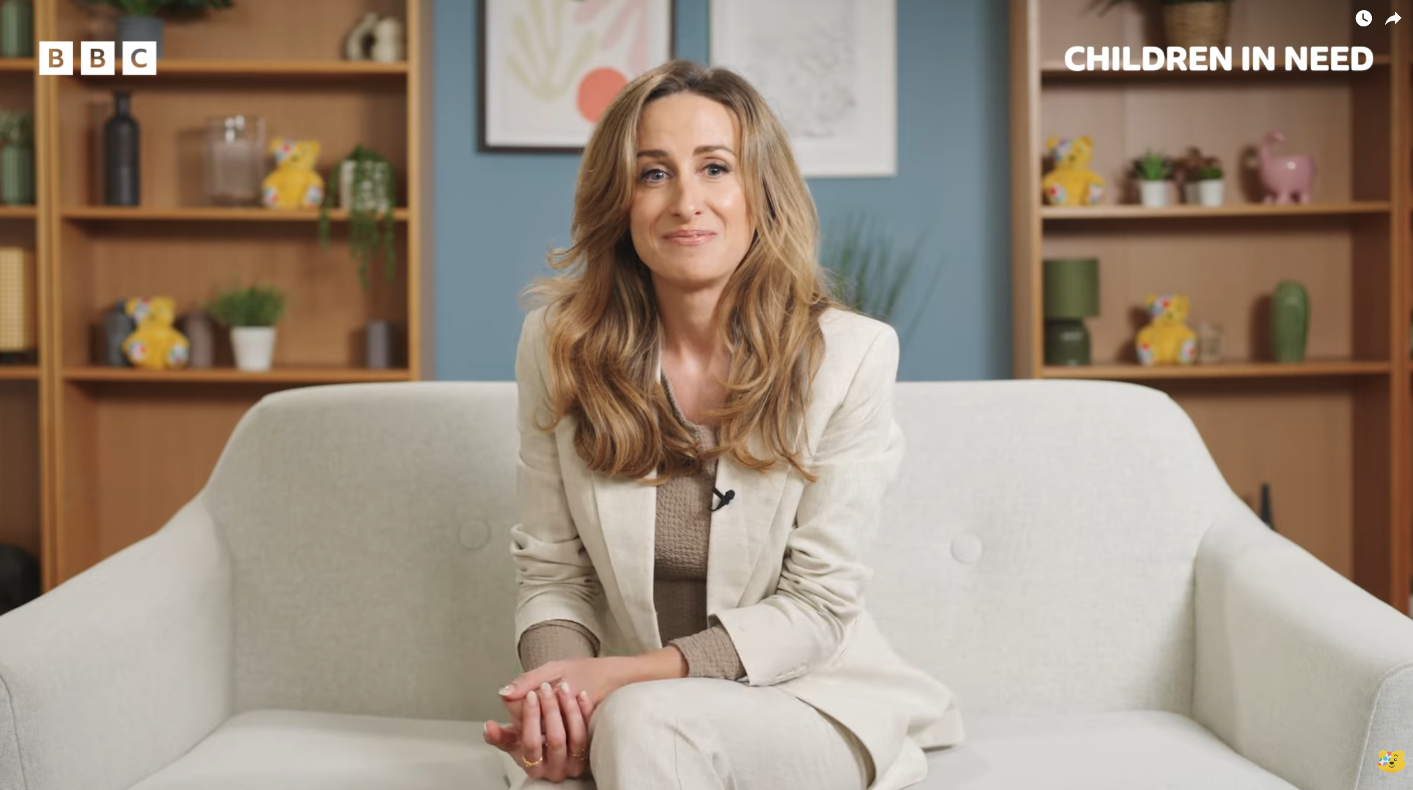
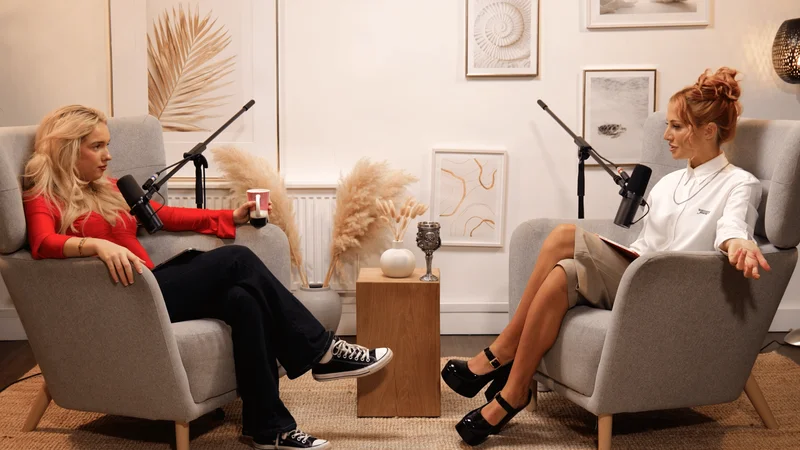
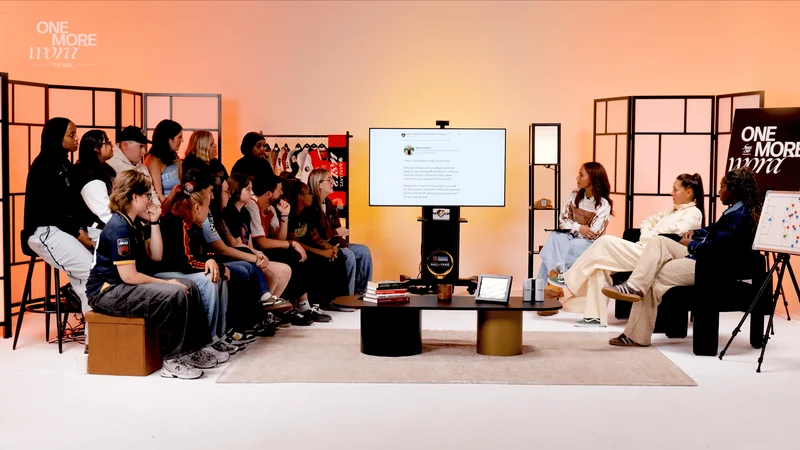
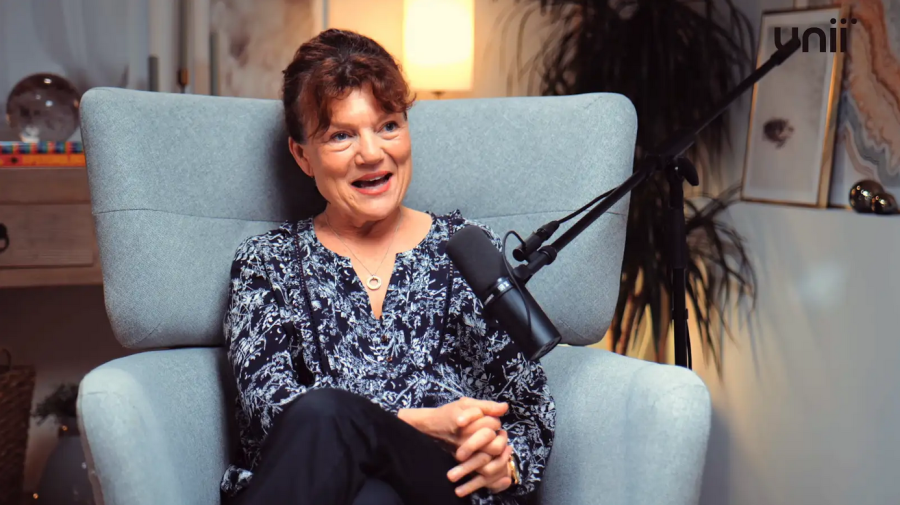
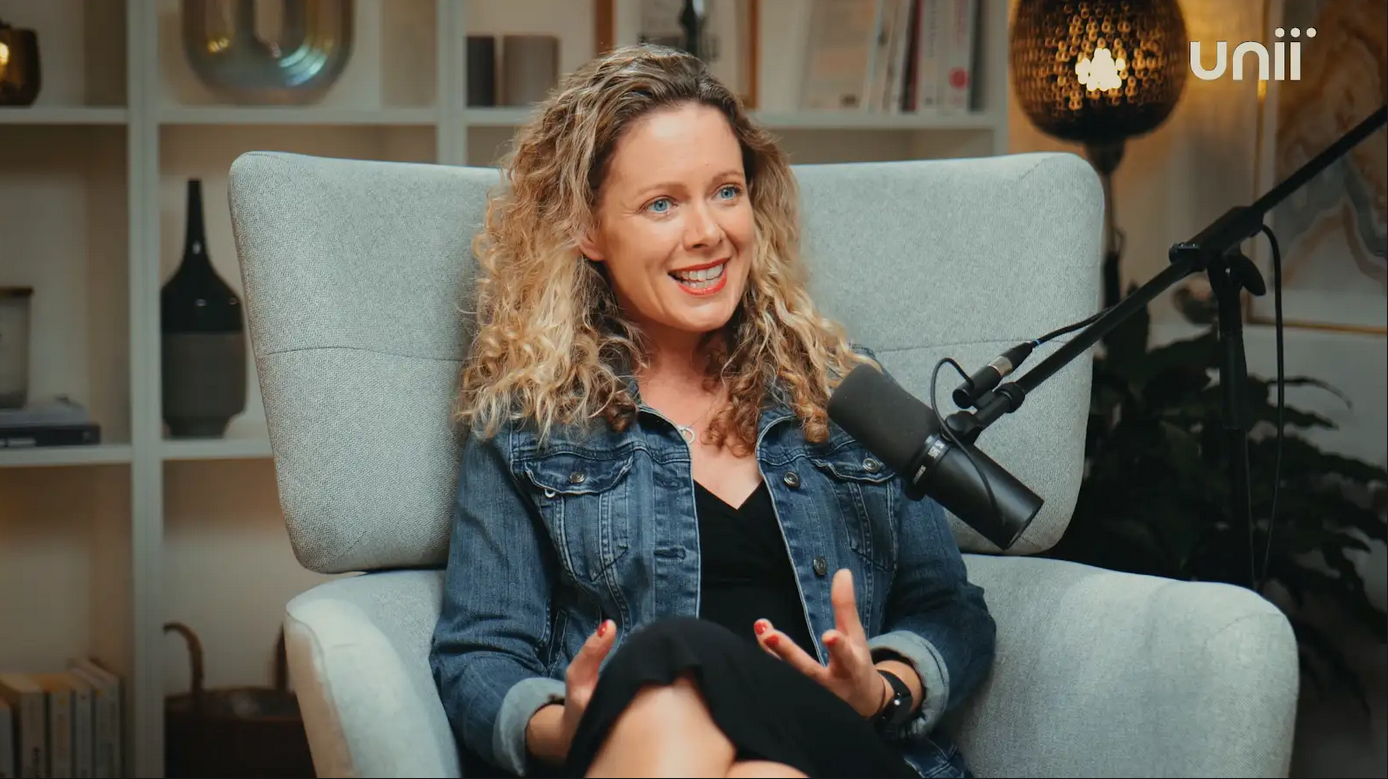
See the 'BBC Children in Need' podcast setup used by Dr Julie from BBC at Finchley Studio (Lounge setup). Book this setup for your podcast
Section 1: Market Validation – The "Video-First" Imperative
1.1 The Algorithmic Pivot: Why Audio is No Longer Enough
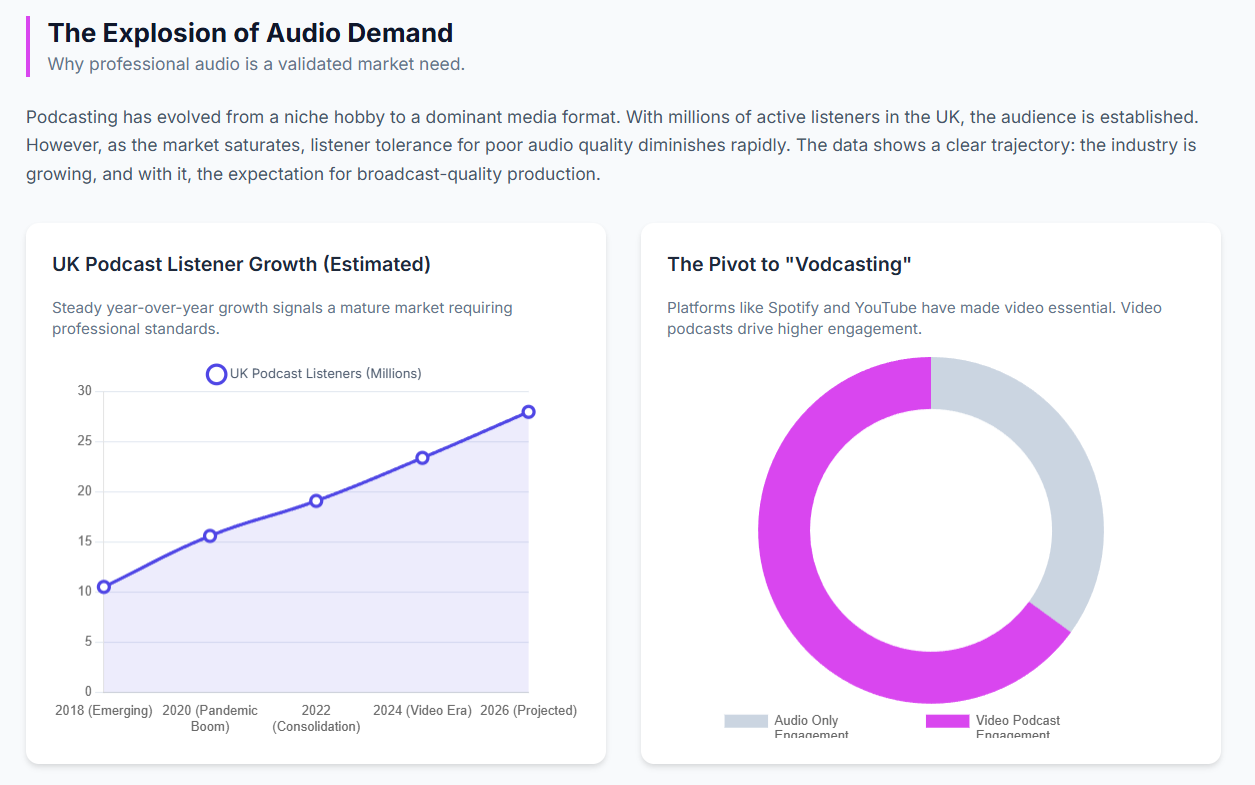
The nomenclature of the industry is evolving. While the term "podcast" persists, the consumption habits of the global and local London audience have fundamentally altered. Market data from 2025 indicates a watershed moment: YouTube has surpassed Apple Podcasts and Spotify as the primary discovery engine for new shows.3 This transition has profound implications for production requirements. A podcast is no longer a "theatre of the mind"; it is a multi-sensory visual performance.
The rise of the "Vodcast" (Video Podcast) is driven by algorithmic necessity. Social media platforms—TikTok, Instagram Reels, and YouTube Shorts—prioritise short-form vertical video. An audio file cannot go viral on TikTok; a high-definition video clip of a guest delivering a powerful insight, framed in a professional studio setting, can reach millions. Therefore, the scalability of a podcast is now directly correlated to the visual fidelity of its source material. Creators who record audio-only are effectively locking themselves out of the most potent viral marketing channels available.5
Research indicates that 46% of regular listeners now prefer video with their audio, and a staggering 84% of Gen Z monthly podcast listeners consume podcasts with a video component.5 This demographic shift validates the business model of the dedicated podcast studio equipped with cinema-line cameras. The market has bifurcated: low-tier audio-only podcasts that struggle for discoverability, and high-tier video podcasts that leverage visual assets for cross-platform dominance. For London-based creators, the ability to produce 4K video content is not a luxury; it is a baseline requirement for market entry in 2026.
1.2 The Failure of the Home Studio in London
For years, the narrative of the "democratisation of media" suggested that anyone could launch a world-class show from their bedroom. In London, this narrative collides with the harsh reality of urban acoustics, real estate constraints, and the rising bar of audience expectations.
1.2.1 The Acoustic Ceiling and London's Noise Floor
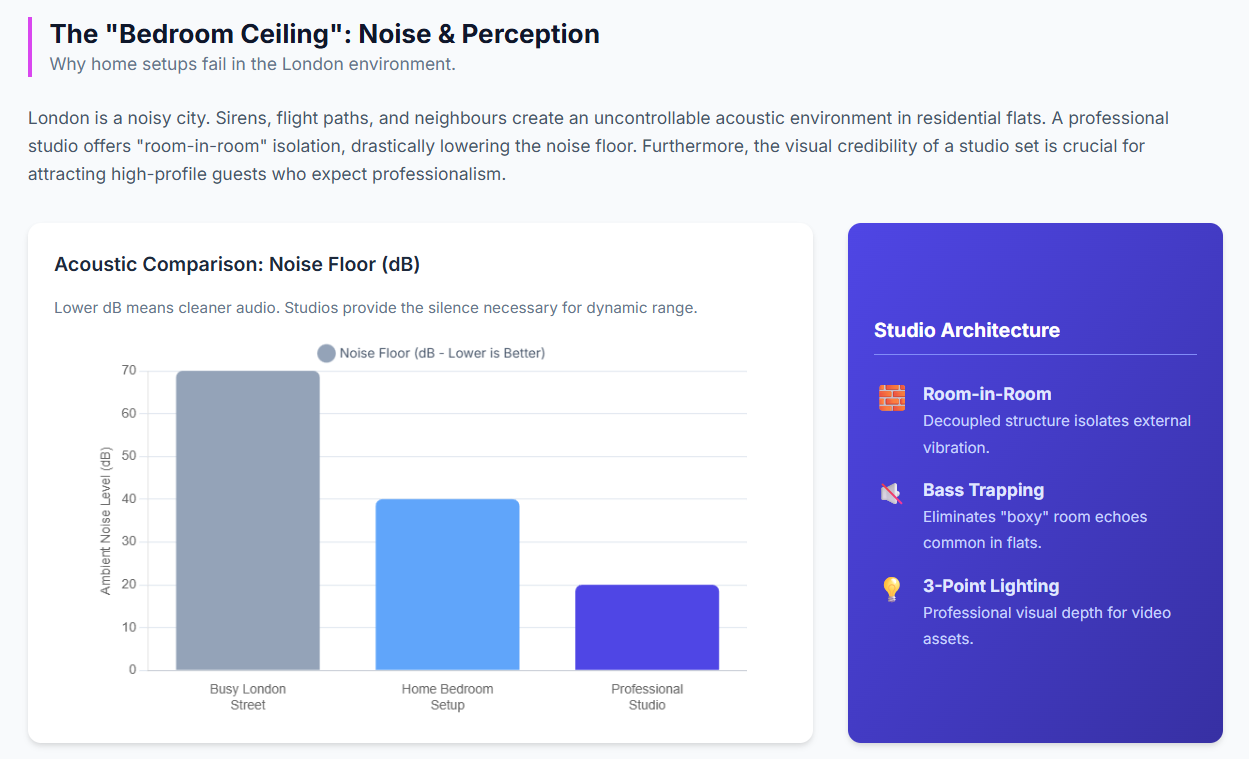
London is one of the noisiest cities in Europe. The ambient noise floor in a typical London flat rarely drops below 40dB, spiked by transient noises such as sirens, delivery scooters, and aircraft holding patterns for Heathrow and City Airport.1 For audio-only recordings, sophisticated noise reduction software can mitigate some of this, often at the cost of vocal fidelity (introducing "digital artifacts" or "robotic" spectral gating). However, for video podcasts, the visual environment is equally unforgiving.
A professional recording studio offers a "Noise Floor" of roughly 20-25dB. This near-silence is achieved not just through "soundproofing" (mass-loaded vinyl, double-stud walls, floating floors) but through "acoustic treatment" (absorption panels, bass traps, diffusers). In a home environment, the "boxiness" of a small room creates comb filtering—a phase cancellation effect that makes the voice sound hollow, distant, and amateurish.8 No amount of expensive microphone technology can fix bad room acoustics. The physics of sound dictate that low frequencies (like the male voice's fundamental resonance) require significant mass and depth to control—assets that a spare bedroom in a Victorian conversion simply does not possess.

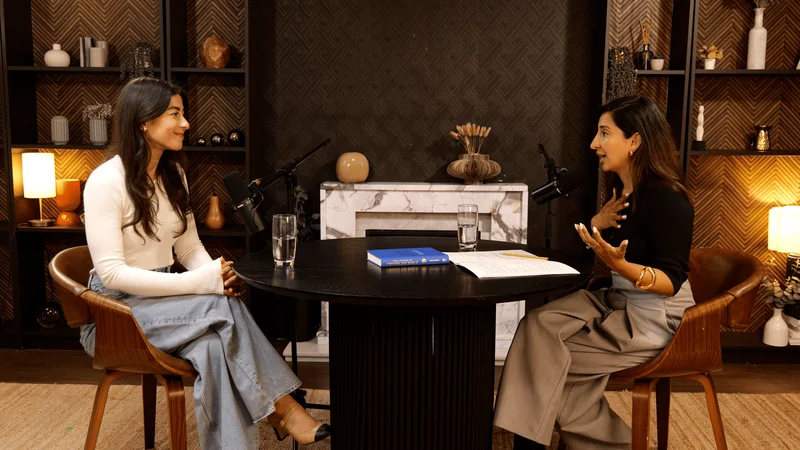
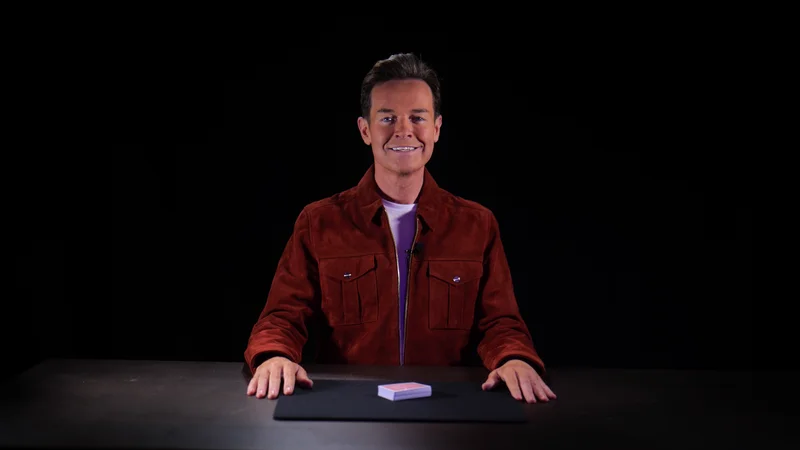
Finchley Studio (Dialogue set): book this setup for your podcast
1.2.2 The Real Estate Constraint and Visual Depth
The average London apartment lacks the physical depth required for cinematic lighting. To achieve the "bokeh" effect (blurred background) that distinguishes professional video interviews from Zoom calls, the subject must be separated from the background by several metres. In a cramped spare room, the subject is often pushed against a wall, resulting in a flat, uninspiring image that screams "amateur." Furthermore, the heat generated by professional LED lighting (even efficient units like the Aputure 300d or Nanlite Forza series) requires silent air conditioning—a rarity in London residential stock.
1.3 The B2B Demand Surge: Corporate Credibility
The market validation for professional studio hire London is heavily bolstered by the B2B sector. Corporations, legal firms, and tech startups in London are increasingly adopting podcasting as a primary internal and external communication tool—essentially replacing the whitepaper with the vodcast. These entities require "brand-safe" environments. They cannot host a CEO, a high-profile client, or a government minister in a basement or a coworking meeting room with glass walls and poor reverb control.
This corporate demographic demands a "turnkey" solution. They require a facility where they can arrive, record with zero technical friction, and leave. They are not interested in learning how to gain-stage a preamp or colour-grade S-Log3 footage. This validates the service model of studios like Finchley Production Studio, which offer full engineering support as standard, contrasting with the "dry hire" models that leave clients to struggle with technical setup.10 The "Concierge" model, where an engineer handles the capture and the studio handles the file management, is the only scalable solution for businesses where time is the most expensive asset.
Section 2: Location and Logistics – The London Friction Matrix
In the context of London's geography, the location of a studio is not merely a matter of convenience; it is a critical component of the production budget and the guest experience. The analysis reveals a stark contrast between the traditional media hubs of Central London and the emerging smart-hubs of North London.
2.1 The Central London Paradox: Prestige vs. Practicality
Traditionally, the media gravity of London was centred on Soho (W1) and Shoreditch (E1). However, for the modern podcast creator, these locations often represent a "logistical tax" that drains budget and energy. The market analysis reveals a growing dissatisfaction with Central London studios due to three primary friction points: Access, Cost, and Noise pollution.
2.1.1 The "Access Tax": Congestion, ULEZ, and Parking
For high-profile guests—whether they are CEOs, celebrities, or industry experts—transport logistics are a critical factor in their willingness to participate. Many guests prefer to travel by private car to maintain privacy and schedule control. Driving into Central London involves a labyrinth of costs and stresses that can derail a production before it begins.
Congestion Charge: Driving into the zone (07:00-18:00) incurs a £15.00 daily charge.
ULEZ (Ultra Low Emission Zone): Non-compliant vehicles face an additional £12.50 charge.
Parking: This is the most severe pain point. Central London parking is either non-existent or punitively expensive, often exceeding £10-£15 per hour in NCP lots.12
A simple four-hour recording session in Soho can incur over £70 in travel and parking costs alone, before a single microphone is switched on. This "hidden tax" eats into production budgets. More importantly, it creates "Cognitive Load" for the guest. A guest who arrives flustered after circling for 20 minutes to find a parking space, or who is worried about a parking meter running out, delivers a poorer performance than one who parks easily and walks straight in. The stress of the commute bleeds into the content.
2.1.2 The Subterranean Noise Issue and Structure-Borne Vibration
To escape the noise of the street, many Central London studios are located in basements. While this mitigates siren noise, it introduces the problem of structure-borne vibration. The London Underground network creates low-frequency rumbles that travel through building foundations. This rumble (often around 40-60Hz) is extremely difficult to isolate without expensive "room-within-a-room" floating floor construction.12 This results in recordings that have a persistent, subtle low-end noise, compromising the "broadcast quality" standard and requiring aggressive high-pass filtering in post-production, which can thin out the voice.
2.2 The North London Advantage: The Case for Finchley
The market data suggests a migration of production hubs to Zone 3 and 4 locations that offer "Hybrid Accessibility"—good Tube links combined with car-friendly infrastructure. Finchley Production Studio (N3) exemplifies this market correction, leveraging its location to solve the specific pain points of the London creator.10
2.2.1 Strategic Accessibility: The Best of Both Worlds
Located just two minutes from Finchley Central Underground Station (Northern Line), the studio remains highly accessible for guests travelling by public transport from the City (Bank branch) or the West End (Charing Cross branch).11 The Northern Line is a high-frequency artery, making the journey from King's Cross to Finchley Central roughly 20 minutes—often faster than a taxi across Central London traffic. This ensures that guests coming from corporate offices in the City can reach the studio swiftly and predictably.
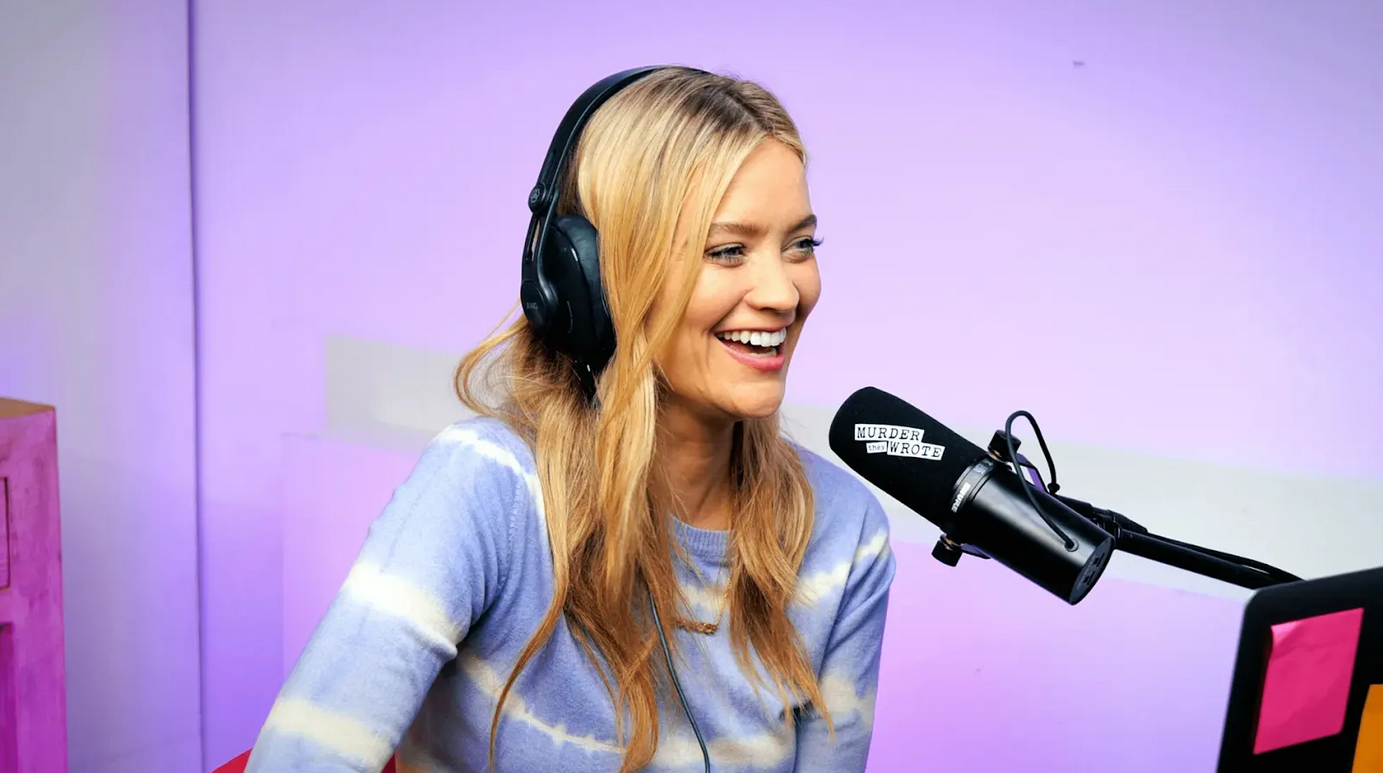
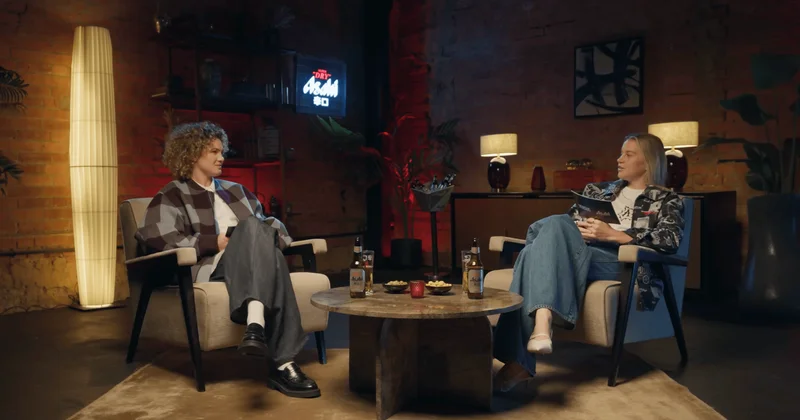
See the 'Murder They Wrote' podcast setup used by Laura Whitmore and Iain Stirling from BBC at Finchley Studio (Gathering setup). Watch Murder They Wrote at BBc sound , Spotify , Apple podcasts , Youtube , Instagram , Amazon music
2.2.2 The Parking Differentiator: A Logistic USP
Finchley Production Studio offers a decisive USP: Free Parking.11 The facility provides a dedicated parking space in the mews, with additional low-cost street parking available nearby.
Logistical Ease: Guests can drive to the door, unload equipment or wardrobe, and park without fear of ticketing.
Cost Savings: The removal of Congestion Charge and parking fees instantly saves the client £30-£50 per session compared to a Central London booking.12
Unit Base Capability: For larger video productions requiring equipment vans or multiple setups, the availability of loading space is a critical operational advantage that Soho studios, with their red routes and narrow streets, simply cannot match.
2.2.3 The "Air" of the Suburbs
The acoustic environment of North London is naturally quieter than the West End. By moving away from the dense concentration of emergency services, construction sites, and nightlife in W1, the ambient noise floor drops significantly. This allows for cleaner raw recordings that require less processing, preserving the natural timbre of the voice.
2.3 Comparative Analysis: Central vs. North London
The following table illustrates the operational and financial differences between booking a studio in Central London versus a strategic North London hub like Finchley.
Table 2.1: A logistical comparison highlighting the efficiency gains of the North London studio model.10
Section 3: Technical Deep Dive – The Signal Chain of Authority
To validate the "Market Scalability" of a podcast studio, one must audit the technical infrastructure. In a saturated market, "good enough" is no longer sufficient. Audiences have been trained by Netflix, high-end YouTubers, and broadcast television to expect cinematic production values. A professional studio is defined by its Signal Chain—the path the audio and video take from the source to the digital file. This section explores why specific equipment choices at studios like Finchley Production Studio set the standard for London podcast production.
3.1 Audio Engineering: The Voice of Authority
The primary product of a podcast is the human voice. The "Authority" of a speaker is subtly influenced by the quality of their audio capture. Thin, tinny, or echoey audio subconsciously signals "amateur" to the listener, leading to higher churn rates.8
3.1.1 The Microphone Standard: Shure SM7B
Finchley Production Studio and other premium facilities standardise on the Shure SM7B.15 This choice is not arbitrary; it is based on acoustic physics.
Cardioid Rejection: The SM7B is a dynamic microphone with a tight cardioid polar pattern. It is legendary for its ability to reject off-axis noise (like computer fans, air conditioning, or room echo) while focusing strictly on the speaker.
The Proximity Effect: It imparts a warm, rich "radio voice" presence boost in the lower-mid frequencies when the speaker is close. This "chest resonance" is the sound of modern podcasting authority.
The Preamp Requirement: The SM7B is notoriously "gain hungry" and has low sensitivity. It requires powerful preamps to function without introducing electronic hiss. Professional studios utilise high-end interfaces (like the RØDECaster Pro II or discrete preamps with Cloudlifters) to provide +60dB of clean gain. This is a technical hurdle that often defeats home creators using entry-level USB interfaces, resulting in noisy, hissy recordings.19
3.1.2 Acoustic Treatment vs. Soundproofing
A crucial distinction in technical validation is between keeping noise out (Soundproofing) and controlling noise within the room (Acoustic Treatment).
Soundproofing: Finchley's studio construction employs isolation techniques to decouple the recording space from the external structure, blocking street noise.
Acoustic Treatment: To prevent the "bathroom sound" of reverb, studios use absorption panels at first-reflection points. However, a scalable studio avoids "deadening" the room completely, which can make speech sound unnatural and fatiguing. The goal is a "controlled liveliness"—a balanced RT60 (reverberation time) that sounds professional and intimate. This balance is critical for long-form listening; listeners fatigue quickly when listening to audio with poor room acoustics.8
3.2 Visual Engineering: The Cinematic Standard
The transition to video studio capabilities is where the greatest capital investment lies. The market standard has moved beyond the "Webcam look" to the "Cinema look." This shift necessitates the use of large-sensor cameras and sophisticated lighting grids.
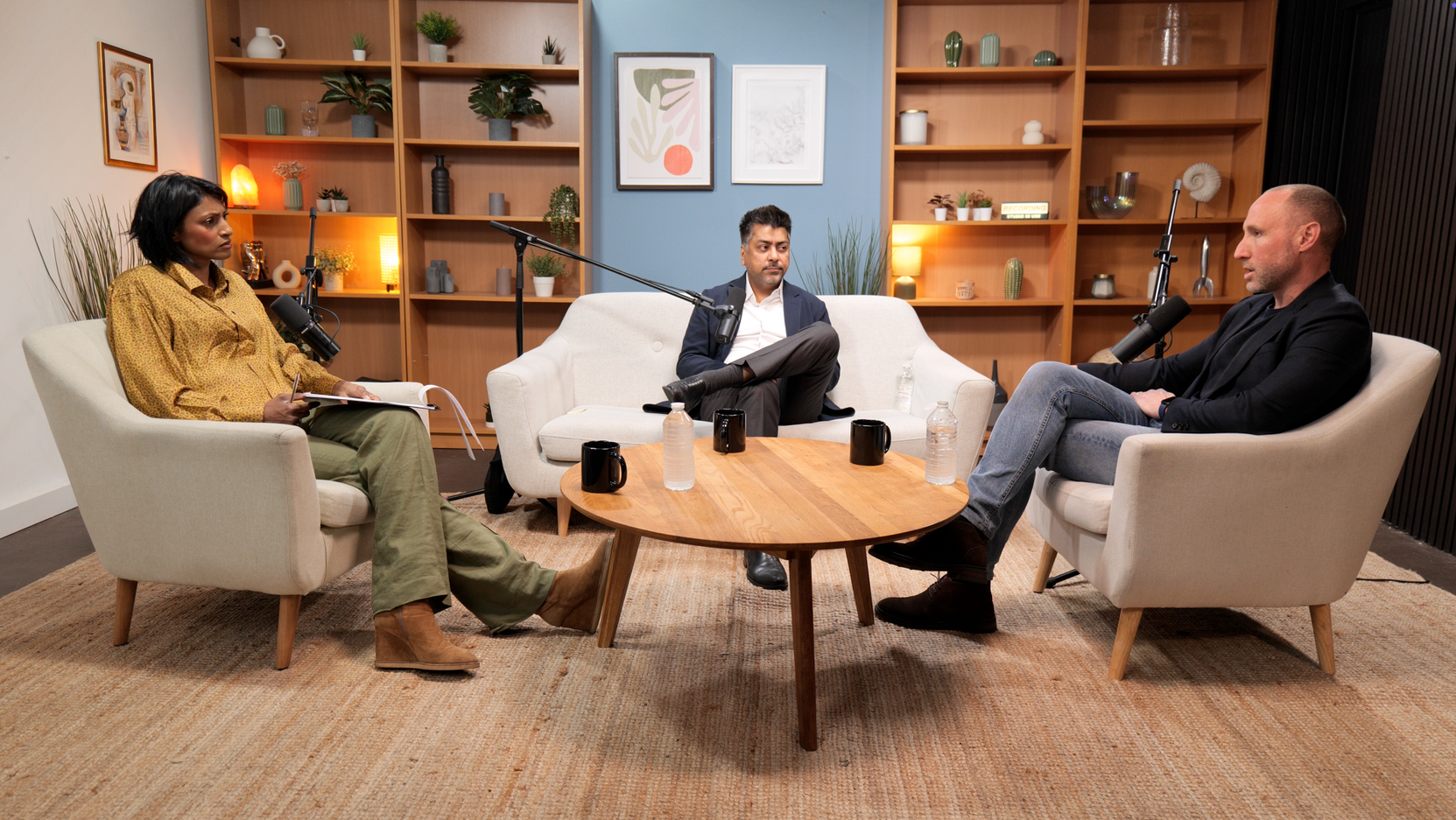
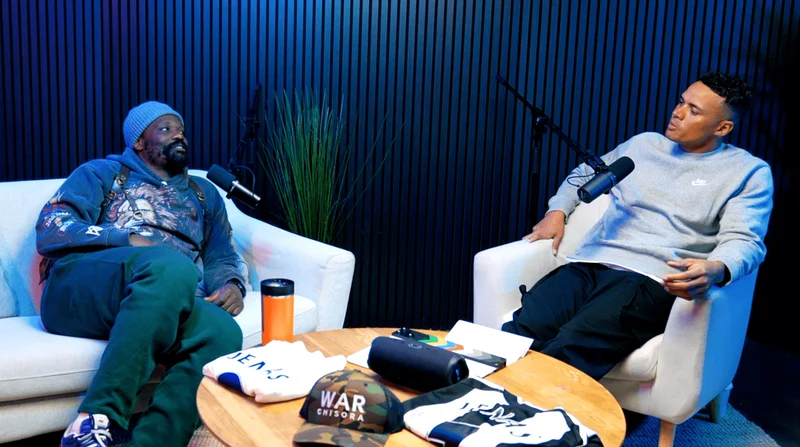
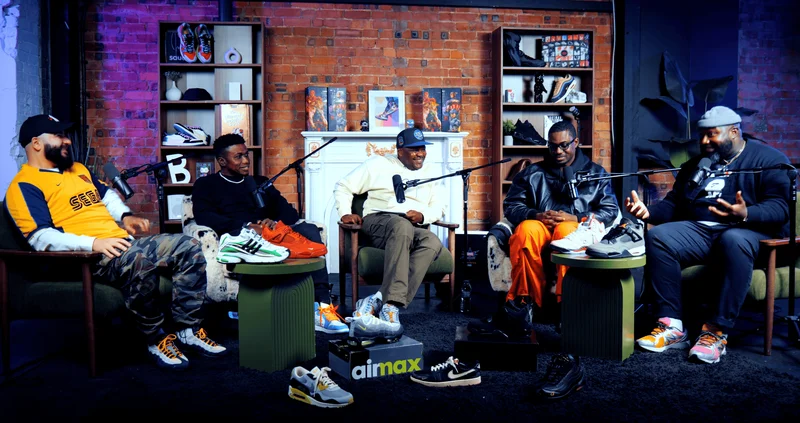
See the 'No ordinary tech podcast ' from Lloyds Banking Group by Rohit D (AI Leader for Lloyds Banking Group) and DR. shini somara (Pro-Chancellor of Brunel University) . at Finchley Studio (Lounge setup). Book this setup for your podcast.
3.2.1 The Camera: Sony FX6 & FX3 Cinema Line
Finchley Production Studio deploys the Sony FX6 and Sony FX3 Cinema Line cameras.11 These are not merely high-end still cameras; they are dedicated video tools approved for Netflix Originals.
Sensor Size (Full-Frame): These cameras feature Full-Frame sensors. A larger sensor gathers more light and allows for a shallower depth of field (blurred background). This optical characteristic isolates the speaker from the set, focusing the viewer's attention and creating a "premium" aesthetic that smartphones cannot replicate.
Dynamic Range (15+ Stops): The FX6 offers 15+ stops of dynamic range. This is critical for podcast lighting. It ensures that if a guest wears a black shirt and sits in a bright studio, the camera captures the texture of the shirt and the details of their face without "crushing" the blacks or "blowing out" the highlights. This latitude is essential for colour grading in post-production.
Reliability: Unlike mirrorless photo cameras (like the Canon R5 or older Sony Alpha series) which can overheat during long recordings (4k capture generates significant heat), the FX6 has active cooling systems designed for indefinite continuous recording—essential for 2-hour podcast sessions where stopping to cool down a camera ruins the flow of conversation.20
3.2.2 Lighting: The Three-Point Philosophy
Scalable video production relies on lighting that is flattering to all skin tones. Professional studios utilise a Three-Point Lighting setup, a technique derived from classic cinematography:
Key Light: The main source, usually a large softbox (like an Aputure Light Dome) to wrap soft light around the face, smoothing out skin imperfections.
Fill Light: Reduces contrast, lifting shadows on the darker side of the face to ensure the subject doesn't look moody or sinister (unless intended).
Rim/Hair Light: Placed behind and above the subject, this creates a halo of light on the hair and shoulders. This separates the subject from the background, adding dimensionality and preventing the "floating head" look common in amateur setups.
The use of bi-colour LED lights allows the engineer to match the colour temperature of the lights to the practical lights in the set (e.g., warm tungsten lamps or cool daylight), creating a cohesive visual palette.19
3.3 The "Concierge" Engineering Model: Mitigating Risk
A pivotal insight from the research is the value of the "Concierge" model over the "Dry Hire" model.10
Dry Hire (High Risk): The client rents the room and equipment but operates it themselves. This is high-risk. If a file corrupts, audio clips, or a camera loses focus, the session is ruined. The "cognitive load" of monitoring levels distracts the host from the interview, leading to worse content.
Concierge/Engineered (Scalability): Studios like Finchley provide an experienced engineer as part of the package. The engineer monitors audio levels in real-time, ensures focus is sharp, live-switches camera angles (using ATEM switchers), and manages file data.
Insight: The cost of an engineer (or their inclusion in the rate) is effectively an insurance policy. For a business, the cost of a ruined interview with a VIP guest is incalculable in terms of reputational damage. Therefore, the "Concierge" model is the only truly scalable option for professional content marketing.
Section 4: Scalability – The Production Workflow
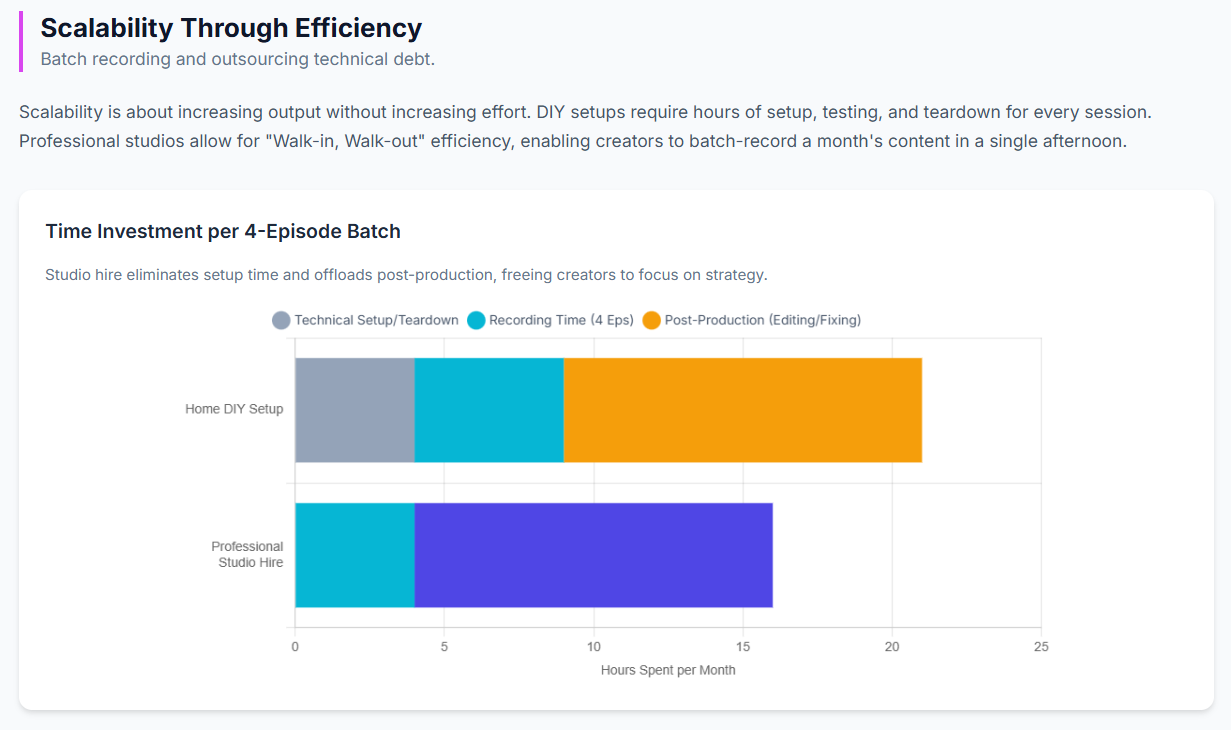
Scalability in the context of a podcast studio does not mean simply recording more episodes; it means creating a workflow that allows for volume without a linear increase in effort or cost. The "bottleneck" in podcasting is rarely the recording; it is the post-production.
4.1 The Live-to-Tape Revolution
Finchley Production Studio utilises Blackmagic ATEM ISO switchers to revolutionise the post-production workflow. This technology allows for a "Live-to-Tape" approach.
The Mechanism: As the podcast is being recorded, the on-site engineer cuts between cameras (Wide shot, Host Close-up, Guest Close-up) in real-time. The switcher records a separate ISO (isolated) file for every camera plus a DaVinci Resolve project file that saves these live cuts.21
The Efficiency: This gives the editor a massive head start. Instead of receiving three hours of raw footage that needs to be synced and cut from scratch, they receive a timeline that is already 90% edited. They only need to fine-tune the edits (fixing a late cut or swapping an angle) rather than constructing the edit from zero.
Impact: This workflow reduces the turnaround time for a video podcast from several days to just a few hours. For daily or weekly shows, this speed is the difference between sustainability and burnout.
4.2 The "Batch Recording" Strategy
To maximise scalability and ROI, experienced creators utilise the "Batch Recording" model. Instead of booking a studio for 1 hour every week (incurring travel time, setup friction, and parking logistics weekly), they book a "Day Rate" or a 4-hour block once a month.18
The Process: Record 4 episodes back-to-back in a single day.
Visual Variation: Bring 4 changes of clothes (wardrobe changes) to make the episodes look distinct when released over the course of the month.
Cost Efficiency: This drastically reduces the "Cost Per Episode" (CPE) and frees up the creator's calendar for the rest of the month to focus on business development or marketing. Studios like Finchley often offer significant discounts for half-day or full-day bookings, incentivising this scalable behaviour.11
4.3 The Hybrid Guest Model: Local Vibe, Global Reach
While in-person chemistry is unbeatable, true scalability requires flexibility. A professional studio must handle remote guests seamlessly. Finchley's setup includes Mix-Minus routing.
How it Works: This allows a guest to join via a high-quality platform like Riverside.fm or Zoom. The remote guest is displayed on a screen for the host to see, and their audio is fed into the mixer minus their own voice (preventing the dreaded echo loop).
The Benefit: This allows London creators to interview guests in New York, Tokyo, or Los Angeles without sacrificing audio quality. The "hybrid" episode—one host in the studio, one guest on screen—is a standard format for global podcasts, expanding the pool of potential guests beyond those physically present in London.13
Section 5: Post-Production & Content Repurposing – The Growth Engine
The recording is only the beginning. The scalability of a podcast is defined by the "Content Waterfall"—the ability to turn one hour of conversation into dozens of assets that populate social media feeds for weeks.
5.1 Professional Video Editing: Turning Raw Footage into Gold
Finchley Production Studio offers integrated Video Editing services, turning the studio from a rental space into a full-service production partner.11 The difference between raw footage and a finished product is vast.
Colour Grading: Raw footage from cinema cameras (often shot in "Log" profiles) looks flat and grey. Professional editing involves colour grading to restore contrast, saturation, and skin tones, giving the video a polished, "Netflix" aesthetic.
Sound Design: Beyond simple volume levelling, professional post-production includes EQ (equalisation) to remove muddy frequencies, compression to ensure consistent volume, and "de-essing" to tame harsh 'S' sounds.
Multi-Cam Editing: The editor uses the ISO files to cut to the active speaker, ensuring the viewer always sees the reaction shots and the nuances of the conversation.
5.2 The Content Waterfall: Repurposing for ROI
To justify the cost of London podcast production, the content must work harder. This is the "Content Waterfall" strategy:
Tier 1: The Hero Asset: The full-length video episode (YouTube) and audio episode (Spotify/Apple). This builds deep engagement and authority with the core audience.
Tier 2: Micro-Content (Shorts/Reels/TikTok): The studio (or their editing team) extracts 3-5 vertical clips from the episode. These are the growth engines. They are optimised with captions, hooks, and fast-paced editing to arrest the scroll.
Insight: Data shows that short-form video is the primary discovery mechanism for long-form content. A viral TikTok clip drives traffic to the full YouTube episode.5
Tier 3: Static & Text: Transcripts are generated (using AI tools or human transcribers) and turned into blog posts (SEO), tweets, and LinkedIn articles.24
Finchley's Role: By offering editing services that include "social cutdowns," the studio becomes a partner in growth. This increases Client Lifetime Value (CLV) as the client relies on the studio for their entire content supply chain, not just the room.
5.3 Outsourcing vs. In-House: The Economic Case
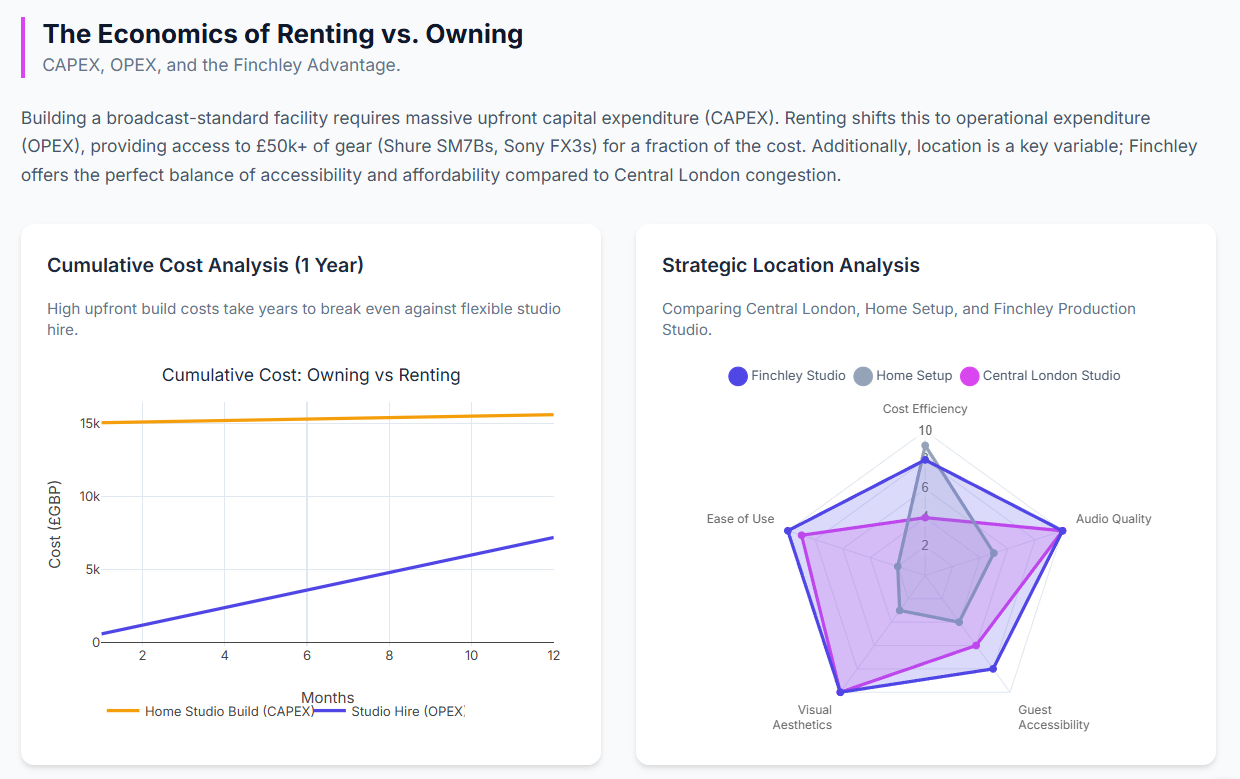
For London businesses, the decision to hire a studio versus building an in-house facility often comes down to Total Cost of Ownership (TCO).
In-House: Requires dedicated real estate (expensive in London), £20k+ in equipment (cameras, lights, mics, soundproofing), and a salaried technician to run it. If the gear breaks or the technician is sick, production halts.
Outsourcing (Studio Hire): Provides access to £50k+ of constantly upgraded equipment and a team of experts for a fraction of the cost. It offers elasticity—you can record 10 hours one month and zero the next without fixed overheads.26
Section 6: The Finchley Production Studio Ecosystem
6.1 Service Architecture and Studio Design
Finchley Production Studio has positioned itself as a "High-Value Professional" hub.10 It bridges the gap between the budget self-service rooms (like Pirate Studios) and the ultra-premium celebrity hubs (like Spiritland).
Finchley Studio (Dialogue set): book this setup for your podcast
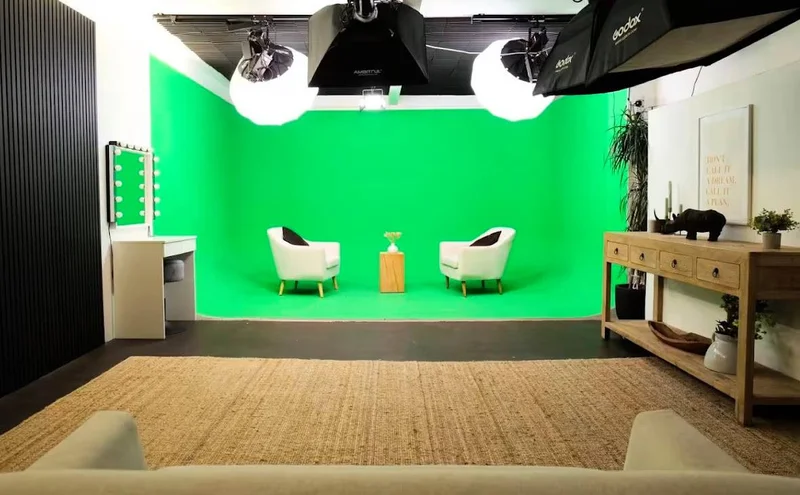
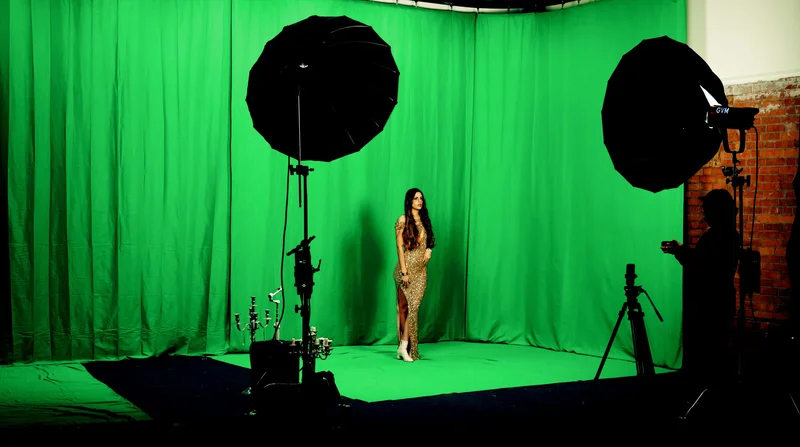
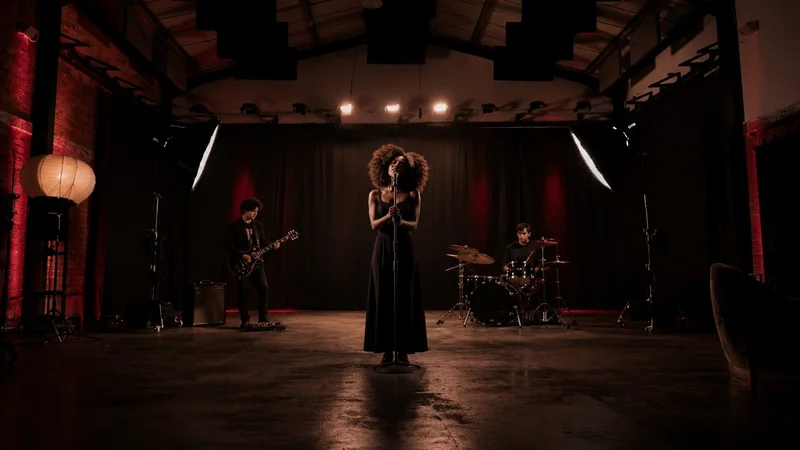
The Main Podcast Sets: Modular furniture allows for different "vibes"—from the "CEO Set" (leather armchairs, bookcases) for corporate authority, to the "Urban Lounge" (neon, soft textures) for creative lifestyle shows. This visual variety is crucial for creators who want a unique brand look rather than a generic studio background.12 The Finchley Warehouse: A secondary location housing "The Brick Studio" and a "Giant Green Screen".11 This enables scalability into larger productions—music videos, commercials, and corporate training modules—that require standing sets or full-body shots. This 1,950 sq ft space allows for productions that would be physically impossible in a Soho basement. Pricing Strategy: While precise pricing fluctuates, Finchley's model (approx. £99/hr for video) undercuts Central London premiums significantly while including the engineer.10 This pricing transparency is vital for agencies managing client budgets. Inclusions: Free parking, cloud file transfer (often a chargeable extra in Soho), and refreshments create a "frictionless" billing experience where the quoted price is the final price.116.1.1 Studio Offerings
6.1.2 The "Value" Proposition
6.2 Addressing London Pain Points Directly
Finchley directly targets the pain points identified in the user intent analysis:
Pain Point: "I can't hear my guest over the sirens." -> Solution: North London location + Acoustic Treatment.
Pain Point: "Parking cost me more than the studio hire." -> Solution: Free Parking (1 Space included).
Pain Point: "My video looks dark and amateur." -> Solution: Sony FX6s + Professional Lighting Grids.
Pain Point: "I don't know how to edit." -> Solution: In-house Video Editing Services (Cuts, Transitions, Colour Grade).
Frequently Asked Questions (FAQ)
Q: Why should I hire a professional podcast studio instead of recording at home?
A: While home setups are convenient, they struggle with "room acoustics" and external noise (sirens, traffic, neighbours). A professional studio offers a sound-treated environment with a low "noise floor," ensuring your voice sounds rich and authoritative. Additionally, professional studios provide cinema-grade cameras and lighting that are too large, hot, and expensive for most home offices.
Q: How much does it cost to hire a podcast studio in London?
A: Prices vary by location and tier.
Budget (Self-Service): £30-£60 per hour (often audio-only).
Mid-Range (Finchley/North London): £90-£130 per hour (includes video and engineer).
Premium (Central London): £150-£250+ per hour.
Tip: Always check if the "Engineer" and "File Transfer" are included or added on top. Finchley Production Studio includes these in their packages.
Q: What equipment do I need to bring?
A: At a full-service studio like Finchley, you typically bring nothing but your content and your guests. The studio provides microphones (Shure SM7B), cameras (Sony FX6), lighting, and furniture. You should bring a hard drive if you want to take files immediately, though many studios offer cloud transfer.
Q: Is video really necessary for a podcast?
A: In 2026, yes. YouTube is the largest podcast listening platform. Furthermore, short video clips (Shorts/Reels) are the most effective way to grow an audience on social media. Recording video gives you assets for marketing that audio alone cannot provide.
Q: Why choose North London (Finchley) over Soho or Shoreditch?
A: The primary benefits are Logistics and Value.
Parking: Finchley offers free parking; Soho parking can cost £50+.
Access: No Congestion Charge or ULEZ fees for the zone.
Space: Larger studios with higher ceilings for better lighting.
Quiet: Less ambient street noise and tube rumble than Central London basements.
Q: Can I edit the podcast myself?
A: Yes, you can take the raw files (Audio WAVs and Video MP4/MOVs) and edit them yourself. However, professional studios offer "Live Switching" (cutting cameras in real-time) or post-production packages that can save you 10+ hours of work per episode, allowing you to focus on creating content rather than technical editing.
Conclusion
The market data for 2026 is clear: the future of podcasting is visual, professional, and scalable. For London creators, the choice of studio is a strategic business decision. While Central London offers postcode prestige, it demands a heavy tax in terms of logistics, noise, and cost.
Finchley Production Studio represents the rational evolution of the market—a "High-Value Professional" hub that prioritises the quality of the output and the ease of the guest experience over the vanity of a W1 address. By solving the "London Friction" of parking and transport, and by providing a broadcast-grade technical backbone (Sony FX6, Shure SM7B), it offers a platform where creators can scale from a single audio show to a multi-platform media brand.
The scalability of your content depends on the quality of your source material and the efficiency of your workflow. By outsourcing the technical heavy lifting—from the acoustic capture to the final Video Editing—you free yourself to do what you do best: communicate.
Ready to Elevate Your Production?
Stop battling the noise, the poor lighting, and the parking wardens. Experience the difference of a studio designed for professional scalability.
Book your tour or session today at (https://www.finchley.co.uk/).
Location: 1 Dollis Mews, Finchley Central, N3 1HH (2 mins from Northern Line).
Email: [email protected]
Phone: 0758 782 7200
Drive in, park for free, and create your best work.
Works cited
Just four people prosecuted by TfL for noise nuisance in five years - Barnet Post, accessed January 8, 2026, https://barnetpost.co.uk/2025/10/15/just-four-people-prosecuted-by-tfl-for-noise-nuisance-in-five-years/
British people are terrified of noise on public transport – but we need it - The Independent, accessed January 8, 2026, https://www.independent.co.uk/life-style/tube-headphones-noise-tiktok-videos-silence-london-b2814250.html
Podcast Statistics and Trends for 2026 (& Why They Matter) - Riverside, accessed January 8, 2026, https://riverside.com/blog/podcast-statistics
Podcast Statistics 2025: Global Listener Growth and Trends - Teleprompter.com, accessed January 8, 2026, https://www.teleprompter.com/blog/podcast-statistics
State of Video Podcasts 2025: Key Trends, Insights & Strategies - Sweet Fish Media, accessed January 8, 2026, https://www.sweetfishmedia.com/blog/the-2025-state-of-video-podcasts
Short-Form vs. Long-Form Video: What's Best for Podcasters? - CoHost, accessed January 8, 2026, https://www.cohostpodcasting.com/resources/youtube-shorts-vs-long-form-video-podcasts
Why Choose a podcast Recording Studio in North London? (The Pros vs. Cons), accessed January 8, 2026, https://www.finchley.co.uk/finchley-learning/visual-podcast/why-choose-a-podcast-recording-studio-in-north-london-the-pros-vs-cons
The Importance of Audio Quality in Podcasting: Tips for New Podcasters - Co.Lab Studios, accessed January 8, 2026, https://www.letscolab.us/colab-blog/the-importance-of-audio-quality-in-podcasting-tips-for-new-podcasters
Why Audio Quality Can Make or Break Your Podcast, accessed January 8, 2026, https://blubrry.com/podcast-insider/2025/06/06/why-audio-quality-can-make-or-break-your-podcast/
Cheap vs. Premium: Comparing the Top 8 London Podcast Studio Options, accessed January 8, 2026, https://www.finchley.co.uk/finchley-learning/visual-podcast/cheap-vs-premium-comparing-the-top-8-london-podcast-studio-options
Finchley Production Studio, accessed January 8, 2026, https://www.finchley.co.uk/
The Best Podcast Recording Studios in Central and North London: A Strategic Market Analysis and Content Roadmap, accessed January 8, 2026, https://www.finchley.co.uk/finchley-learning/visual-podcast/the-best-podcast-recording-studios-in-central-and-north-london-a-strategic-market-analysis-and-content-roadmap
Podcast Studio London: Why Location Matters for Guests and Production Quality, accessed January 8, 2026, https://www.finchley.co.uk/finchley-learning/visual-podcast/podcast-studio-london-why-location-matters-for-guests-and-production-quality
accessed January 8, 2026, https://www.finchley.co.uk/finchley-learning/visual-podcast/why-choose-a-podcast-recording-studio-in-north-london-the-pros-vs-cons#:~:text=Parking%20(The%20Unspoken%20Hero)%3A,or%20your%20guests%20are%20driving.
The Complete Guide to Hiring a Podcast Studio in London - Finchley Studios, accessed January 8, 2026, https://www.finchley.co.uk/finchley-learning/visual-podcast/the-complete-guide-to-hiring-a-podcast-studio-in-london
Good Sound Quality is Critical for Audio Podcasts - Stories and Strategies, accessed January 8, 2026, https://storiesandstrategies.ca/good-sound-quality-is-critical-for-audio-podcasts/
The Importance of Sound Quality in Podcasting - Wavve.co, accessed January 8, 2026, https://wavve.co/the-importance-of-sound-quality-in-podcasting/
Podcast Recording Studio - Premiere Podcast Studios - Event Venue Hire - Tagvenue.com, accessed January 8, 2026, https://www.tagvenue.com/rooms/london/47205/premiere-podcast-studios/podcast-recording-studio
London Podcast Studios Explained: What to Expect From a Premium Space, accessed January 8, 2026, https://www.finchley.co.uk/finchley-learning/visual-podcast/london-podcast-studios-explained-what-to-expect-from-a-premium-space
Podcast Studio London: What to Look for When Booking - Finchley Studios, accessed January 8, 2026, https://www.finchley.co.uk/finchley-learning/podcast-studio-london-what-to-look-for-when-booking
Building a Multi-Camera Video Podcast Setup | B&H eXplora, accessed January 8, 2026, https://www.bhphotovideo.com/explora/video/tips-and-solutions/building-a-multi-camera-video-podcast-setup
Workflows for quick turnaround video podcast editing : r/editors - Reddit, accessed January 8, 2026, https://www.reddit.com/r/editors/comments/1p11j90/workflows_for_quick_turnaround_video_podcast/
accessed January 8, 2026, https://www.finchley.co.uk/finchley-learning/how-much-does-it-cost-to-rent-a-podcast-studio-london
Podcast Repurposing: How to Expand Each Episode's Reach - Foundation Marketing, accessed January 8, 2026, https://foundationinc.co/lab/podcast-repurposing
5 Smart Ways to Repurpose Podcast Content for SEO and Social, accessed January 8, 2026, https://blog.podcast.co/reach/repurpose-podcast-content
Podcast Outsourcing: The Ultimate Guide - bCast, accessed January 8, 2026, https://www.bcast.fm/blog/podcast-outsourcing
Top Benefits of Outsourcing Video Editing for Companies - Viral Ideas Marketing, accessed January 8, 2026, https://www.viralideamarketing.com/post/top-benefits-of-outsourcing-video-editing-for-companies
Six time-saving benefits of outsourcing video production - EKCS, accessed January 8, 2026, https://www.ekcs.co/six-time-saving-benefits-of-outsourcing-video-production/