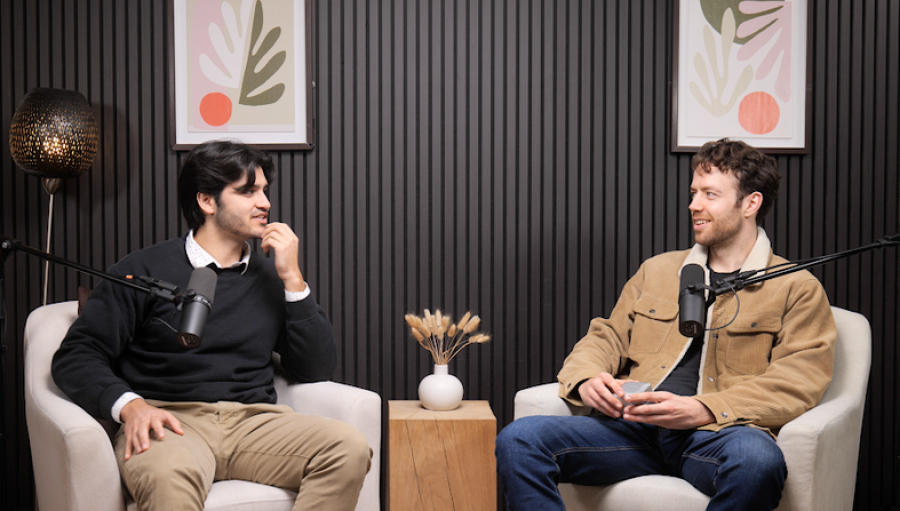
Introduction: The Sonic Architecture of Modern London
In the grand tapestry of global media capitals, London occupies a unique and somewhat paradoxical position. It is, without dispute, one of the world's premier hubs for creative output, a city where the history of broadcasting—from the earliest transmission experiments of the BBC to the viral explosion of modern podcasting—is etched into the very fabric of the streets. Yet, simultaneously, London is an acoustic battlefield. It is a metropolis defined by density, a cacophony of overlapping infrastructures where Victorian-era engineering meets 21st-century urban sprawl.

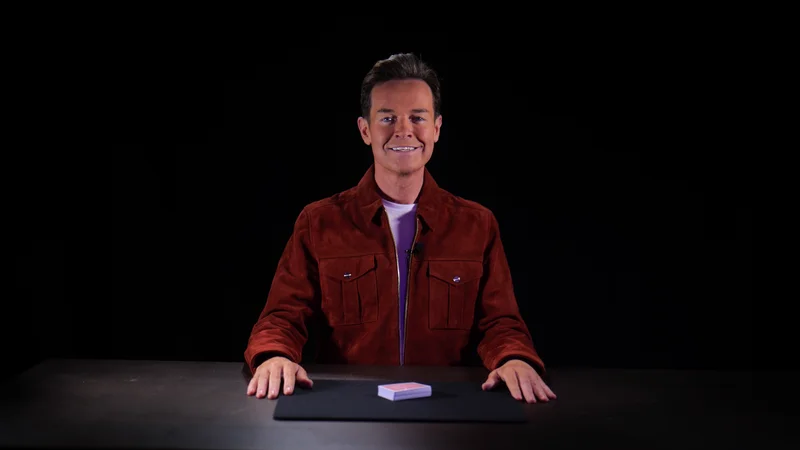
See the 'Grand designs' from Channel 4 by Kevin McCloud at Finchley Studio (Brick studio). Book this setup for your podcast.
For the audio professional operating a podcast studio or a recording studio within the M25, this reality presents an existential challenge: how to extract pristine, broadcast-quality silence from an environment that is fundamentally hostile to it. The rise of the "creator economy" has democratized the ability to publish, but it has not democratized the physics of sound. As the barrier to entry for content creation has lowered, the bar for audience retention has risen. Listeners in 2025, acculturated by Netflix, Audible, and high-end radio production, possess an intuitive, almost subconscious rejection of poor audio quality. They may not be able to articulate the technical deficiency—describing it perhaps as "muddy," "tiring," or "amateur"—but their reaction is binary: they stop listening.
In the hyper-competitive landscape of London podcast production, where thousands of new shows launch annually, audio fidelity is not merely a technical specification; it is a commercial imperative. This report serves as a comprehensive, deep-dive analysis into one of the most critical, yet frequently undervalued, components of the production signal chain: the monitoring system. Specifically, it examines the strategic rationale behind the ubiquity of the BeyerDynamic DT 770 Pro headphones in professional studio hire London facilities. While microphones like the Shure SM7B often garnish the visual glory in video thumbnails, it is the headphone—the interface between the guest's mind and the recorded signal—that often dictates the flow, energy, and technical viability of the session.
Through an examination of acoustic physics, psychoacoustics, mechanical engineering, and studio economics, we will demonstrate why "Monitoring Matters." We will explore how the specific environmental challenges of London—from the subterranean rumble of the Victoria Line to the relentless hum of urban traffic—necessitate a monitoring solution that offers uncompromising isolation. We will delve into the technical nuance of impedance and frequency response that makes the DT 770 Pro the ideal companion for the human voice. And we will analyze the broader economic landscape of studio hire in London, illustrating how the choice of equipment serves as a proxy for the operational integrity of the facility itself.

Finchley Studio (Gathering): book this setup for your podcast
1. The London Soundscape: An Acoustic Battlefield
To understand the necessity of professional-grade monitoring, one must first quantify the antagonist: London's ambient noise floor. Unlike recording in a rural retreat or a purpose-built broadcast compound in the home counties, producing audio in central or greater London involves combatting a multi-layered spectrum of interference that is both airborne and structure-borne. The city is not merely loud; it is vibrationally active.
1.1 The Ubiquity of Urban Noise Pollution
London's acoustic profile is dominated by what acoustic engineers term "anthropogenic noise"—sound generated by human activity. Data from the London Datastore reveals that vast swathes of the capital, particularly in creative hubs like Soho, Shoreditch, and Camden, suffer from chronic noise exposure. Areas close to major thoroughfares or the M25 motorway frequently record noise levels exceeding 70dB—roughly equivalent to a vacuum cleaner operating in the same room, according to Time Out.
For a podcast studio, this airborne noise presents an immediate threat to the signal-to-noise ratio. While the human ear has a mechanism to "tune out" constant background drone (a phenomenon known as sensory adaptation), a microphone does not. A large-diaphragm condenser microphone, or even a dynamic microphone with high gain requirements like the Shure SM7B, acts as a forensic instrument. It captures the distant wail of a siren, the rumble of a heavy goods vehicle (HGV), or the shout of a pedestrian with equal fidelity to the podcast host's voice.
In "dry hire" studios or home setups that lack professional soundproofing, this noise pollution manifests as a raised noise floor. To compensate, amateur engineers often use noise gates or aggressive digital noise reduction plugins in post-production. However, these tools leave spectral artifacts—robotic chirps or a "gated" sound where the ambience cuts out unnaturally during silence—which instantly signals to the listener that the production is low-budget, as noted by Finchley Studios.
1.2 The "Invisible Enemy": Ground-Borne Vibration and the Tube
Perhaps the most insidious challenge for London podcast production is not the sound that travels through the air, but the sound that travels through the earth. London sits atop a vast, resonating network of subterranean infrastructure. The London Underground, particularly the deep-level tube lines, generates significant ground-borne vibration. The Victoria Line is a notorious offender. Recent reports indicate that noise levels inside the tunnels have reached 112.3 decibels, a volume comparable to a rock concert, prompting Transport for London (TfL) to issue ear defenders to drivers.
While passengers experience this as airborne noise, for buildings situated above the tunnels, the energy is transmitted as vibration through the soil (often London Clay, which transmits low frequencies efficiently) and into the foundations of the structure. This vibration travels up through the building's frame and excites the surfaces of the room—the floor, the walls, and crucially, the microphone stands. In the studio, this manifests not as a distinct "train sound," but as a low-frequency rumble (typically between 30Hz and 80Hz), as detailed by Finchley Studios. This "mud" occupies the same frequency spectrum as the fundamental tones of the human voice, particularly male vocals. It creates a cyclical disturbance—passing every few minutes—that renders professional recording impossible without specialized isolation.
Residents and businesses near the Victoria line in Islington have described the sensation as equivalent to a "vacuum cleaner in the room," a constant, intrusive presence that disrupts not just recording, but concentration. For a recording studio, this requires a construction methodology that goes far beyond simple acoustic foam. It demands a "room-within-a-room" architecture, where the studio floor is mechanically decoupled from the building using floating floor systems, often resting on U-Boat floor floaters or high-density rubber pucks to break the transmission path of the vibration.
1.3 The Vertical Threat: Air Traffic and Density
The acoustic assault is not limited to the ground. London is serviced by multiple airports (Heathrow, City, Gatwick, Luton, Stansted), resulting in a complex web of flight paths that blanket the city. In West London, the relentless procession of aircraft into Heathrow creates a rhythmic interruption that can pause recording sessions every 90 seconds. In East London, the steep ascent and descent profiles of London City Airport traffic create sudden, high-intensity noise events, according to Finchley Studios.
Furthermore, the sheer density of London living means that "quiet" is a relative term dependent on the behavior of neighbours. A podcast recorded in a flat is vulnerable to the unpredictable schedules of those living above, below, and beside the creator. Footsteps, washing machines, and television noise transmit easily through the timber joist floors common in London's housing stock. Professional studios eliminate this variable entirely, offering a controlled environment where the only sound is the one intended for the microphone.

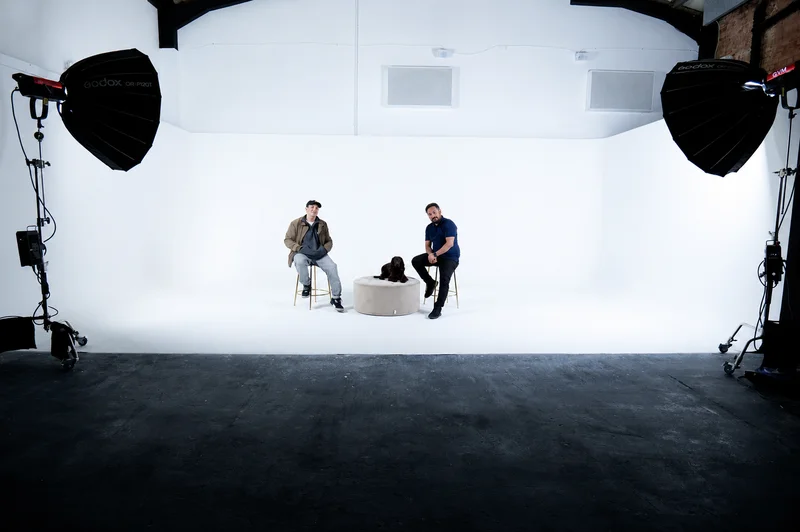
Finchley Studio (Dialogue set): book this setup for your podcast
2. The Philosophy of Monitoring: Why Guests Need Headphones
In the face of this environmental hostility, the studio becomes a sanctuary. But once the external noise is blocked, a new challenge arises: how to ensure the guest performs at their best. The decision to equip guests with high-quality headphones—specifically the BeyerDynamic DT 770 Pro—is rooted in both the psychology of performance and the physics of audio capture.
2.1 The Psychology of the "Performance Loop"
Podcasting is an intimate medium, often described as "listening in on a conversation." However, for the guest, the act of recording is anything but natural. They are placed in a sound-treated room (which can feel unnervingly "dead" compared to the real world), surrounded by lights and cameras, and asked to speak into a metal cylinder. This environment can induce a cognitive load that hampers natural speech patterns.
Monitoring—the act of hearing one's own voice through headphones in real-time—closes the "performance loop." It provides the guest with immediate biofeedback. When a speaker hears their own voice with clarity and presence, several psychological mechanisms are triggered:
- The Lombard Effect & Self-Regulation: In a noisy environment, humans instinctively speak louder (the Lombard Effect). In a quiet studio, the opposite can happen; guests may mumble or speak too softly, lacking the auditory feedback to gauge their projection. Headphones provide this feedback. If a guest hears that they are off-mic or too quiet, they instinctively adjust their position or volume without the engineer needing to interrupt the flow of conversation, as explained by Rachel Corbett.
- Confidence and Authority: High-fidelity monitoring, such as that provided by the DT 770 Pro, enhances the perceived quality of the user's voice. The "Bass Reflex" system of the DT 770 adds a subtle warmth and weight to the vocal range. When a guest hears themselves sounding "authoritative" and "professional," their confidence increases. They speak with more conviction, their cadence improves, and the "ums" and "ahs" of hesitation often decrease, according to Rachel Corbett.
- Focus and Immersion: Headphones act as blinkers for the ears. By isolating the guest from the extraneous sounds of the room (the hum of a camera fan, the shifting of a producer in their chair), headphones focus the guest's attention entirely on the conversation. This fosters a state of "flow," essential for the deep, engaging dialogue that characterizes successful podcasts, as noted by Soundcore.
2.2 The "Cocktail Party Effect" and Technical Control
The "Cocktail Party Effect" describes the brain's ability to focus on a single auditory source while filtering out others. In a podcast with multiple guests, this becomes difficult if the acoustics are poor or if the guests are seated far apart. Headphones artificially induce this effect by delivering the voices of other participants directly into the ear canal. This is crucial for:
- Remote Interviews: In an era where hybrid recording (some guests in-studio, some remote via Zoom/Riverside) is standard, headphones are non-negotiable. They prevent the remote guest's audio from being picked up by the studio microphones (which would cause a disastrous echo) and ensure the in-studio guest feels "connected" to the remote feed, as described by Wantek.
- Over-talk Prevention: Latency (the delay between speaking and hearing) is the enemy of conversation. In a video studio, visual cues help, but audio cues are faster. Crisp, low-latency monitoring allows guests to sense the natural pauses in conversation, reducing the awkward instances of guests talking over one another, as noted by Soundcore.
3. Deep Technical Analysis: The BeyerDynamic DT 770 Pro
Given the critical role of monitoring, the choice of headphone is not arbitrary. The BeyerDynamic DT 770 Pro has established itself as the ubiquitous standard in London podcast production and global recording facilities. This dominance is not a result of marketing, but of a specific convergence of technical specifications that solve the unique problems of the studio environment.

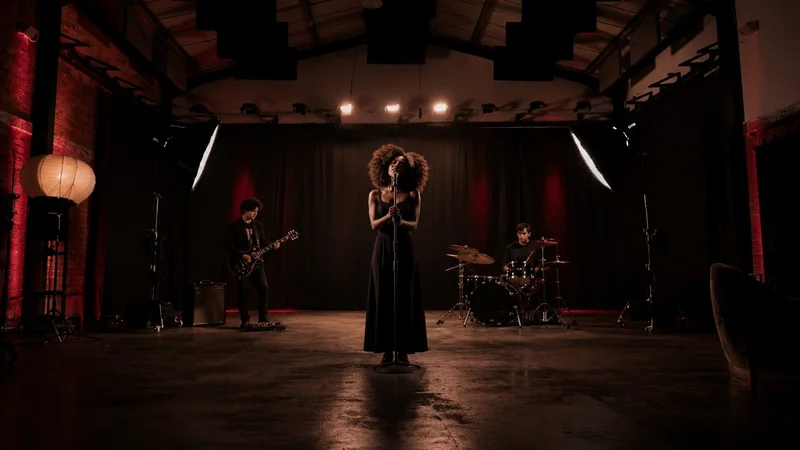
Finchley Studio (Lounge set): book this setup for your podcast
3.1 Architecture: The Necessity of Closed-Back Design
Headphones generally fall into two architectural categories: Open-Back and Closed-Back. The distinction is defined by the ear cup enclosure.
- Open-Back (e.g., DT 990 Pro): These feature a perforated ear cup that allows air and sound to pass freely in and out. This creates a "spacious," "airy," and natural soundstage, making them ideal for mixing and mastering engineers who need to make critical judgements about stereo width and frequency balance. However, for a podcast guest, they are a liability. The sound escaping from the back of the headphone (leakage) is easily picked up by sensitive microphones, creating "bleed."
- Closed-Back (e.g., DT 770 Pro): The ear cup is sealed. This traps the sound inside, directing it into the ear canal, and blocks external sound from entering, as explained on Reddit.
For a podcast studio, the Closed-Back design of the DT 770 Pro is the only viable option for guests. The primary reason is bleed rejection. High-end broadcast microphones like the Shure SM7B are cardioid dynamic microphones. While they are designed to reject off-axis sound, as noted by Shure, they are not immune to high-frequency spill occurring just inches from the capsule. If a guest wearing open-back headphones turns their head, the "spill" from the headphones can be captured by the mic. This creates a "ghost" signal—a faint, tinny version of the other speakers—that causes phasing issues and is impossible to remove in post-production without damaging the main audio, according to Soundcore.
The DT 770 Pro offers nominal sound isolation of approximately 18 dBA (depending on the specific model and fit), effectively hermetically sealing the audio to the guest's head. This allows for higher monitoring volumes—which guests often request—without risking the integrity of the recording, as discussed on Reddit.
3.2 Frequency Response and the "Bass Reflex" System
The DT 770 Pro boasts a frequency response of 5 Hz to 35,000 Hz. While this exceeds the range of human hearing (20 Hz - 20 kHz), the extension into the sub-bass and "air" frequencies ensures that the driver operates with linearity and low distortion within the audible range, according to BeyerDynamic.
A defining feature of the DT 770 is its Bass Reflex system. Small vents in the housing allow the diaphragm to "breathe," enhancing the reproduction of low frequencies. For podcasting, this is significant. The human voice has fundamental frequencies roughly between 85 Hz and 255 Hz. The DT 770 Pro reproduces this range with a characteristic "punch" and "warmth." This is not a "flat" or "neutral" response in the strictest analytical sense—it has a slight "V-shape" or "smile" curve (boosted bass and treble), as noted on Reddit.
While a mixing engineer might prefer the brutal honesty of a flat response, for a guest, the DT 770's signature is advantageous. It acts as a "confidence monitor." It makes the voice sound rich and detailed, masking some of the thinness that can occur with raw microphone signals. It provides a pleasing, broadcast-ready representation of the audio that encourages the guest to relax and perform, as explained by Rachel Corbett.
3.3 The Impedance Equation: 80 Ohm vs. 250 Ohm
One of the most common technical questions in studio hire London circles is the choice of impedance. BeyerDynamic manufactures the DT 770 Pro in 32, 80, and 250 Ohm variants. Understanding the physics of impedance is crucial for matching the headphones to the studio's signal chain.
- Impedance ($\Omega$): In simple terms, this represents the resistance the headphones present to the electrical signal from the amplifier. Higher impedance requires more voltage to drive but generally allows for lighter voice coils and more precise transient response, according to Hollyland.
- The 80 Ohm Variant: This is the "Goldilocks" choice for podcast guests. It offers a slightly more prominent bass response due to the heavier voice coil wire, which aligns well with the goal of making guests sound "powerful" to themselves, as noted on HifiGuides Forums. Crucially, 80 Ohms is low enough to be driven to loud volumes by standard audio interfaces and headphone distribution amps without introducing distortion, yet high enough to allow for damping (control) of the driver, according to Reddit.
- The 250 Ohm Variant: These require a dedicated, high-voltage headphone amplifier to reach usable volumes, according to Hollyland. While they offer a more "refined" and analytical treble response, making them ideal for the engineer in the control room spotting clicks and pops, they are often too quiet when plugged into standard podcasting gear like a RODECaster Pro without external amplification, as noted on Reddit.
- The 32 Ohm Variant: Designed for mobile devices (phones, laptops). These are rarely used in professional studios as the low impedance can lead to a "loose" bass response and higher distortion floors when driven by professional gear, according to Reddit.
For the London podcast production environment, the 80 Ohm DT 770 Pro is the industry standard for the live room (guests), while the 250 Ohm version or the open-back DT 990 Pro is often found in the control room (engineer), according to Sound On Sound.
3.4 Durability and the "Made in Germany" Ethos
In a commercial environment, equipment durability is a financial metric. A podcast studio in London might see 30 to 50 different guests per week. Headphones are dropped, cables are snagged on chair arms, and headbands are stretched over various hairstyles and head shapes. The BeyerDynamic DT 770 Pro is manufactured in Heilbronn, Germany, and has maintained its design largely unchanged for decades, as noted by Polar Audio. The construction is utilitarian and robust:
- Spring Steel Headband: Unlike plastic headbands that crack under stress, the spring steel band is virtually indestructible and maintains clamping force over years of use, as explained by Wantek.
- Replaceable Parts: This is the single biggest factor for their ubiquity. Almost every part of the DT 770 Pro is user-serviceable. If a cable breaks, it can be resoldered. If the ear pads wear out, they can be swapped. If the slider mechanism cracks, it can be replaced, according to the BeyerDynamic Blog. In an era of disposable electronics, this "Right to Repair" philosophy aligns with the sustainability goals of modern businesses and ensures that the studio's investment is protected for the long term, as noted on the BeyerDynamic Blog.
4. The Signal Chain: Integration and Hygiene
The headphones are only one link in the chain. Their performance is dependent on the ecosystem of equipment that drives them.

Finchley Studio (CEO Set): book this setup for your podcast
4.1 Pairing with the Shure SM7B
The Shure SM7B is the standard vocal microphone for podcasting, but it is notorious for its low output level (-59 dB sensitivity), as noted by Shure. It requires a preamp with at least +60 dB of gain to produce a healthy signal. In a professional signal chain, this often involves:
- The Microphone: Shure SM7B (Cardioid pattern for rejection), according to Shure.
- In-Line Preamp: Devices like the Cloudlifter CL-1 or SE Electronics Dynamite are essential. They use phantom power to add +25 dB of clean gain before the signal hits the audio interface, as explained by Shure. Without this, the interface preamp has to be cranked to maximum, introducing electronic "hiss" that the guest would hear in their detailed DT 770s, perceiving it as "bad equipment," as discussed on Reddit.
- Audio Interface: Professional units like the Focusrite Clarett or Audient ID series are preferred over budget options because their headphone outputs are cleaner and more powerful, capable of driving the 80 Ohm impedance of the DT 770s to satisfying levels without distortion, as noted on Reddit.
4.2 Hygiene Protocols: The Velour Advantage
Hygiene is a paramount concern for studio hire London, especially in a post-pandemic world. Guests are putting an object intimately against their face that was worn by a stranger hours earlier. The DT 770 Pro uses velour ear pads. Unlike the "pleather" (synthetic leather) found on cheaper headphones (like the Audio-Technica ATH-M20x), velour is breathable. It prevents the "hot ear" fatigue that occurs during long recording sessions, keeping the guest cool and comfortable, according to the BeyerDynamic Blog.
However, velour absorbs sweat and oils. Professional studios implement strict cleaning protocols. The silver-grey velour pads of the DT 770 are removable. They can be washed gently with warm water and mild detergent (like Marseille soap) to remove oils and restore the foam's bounce, as explained by the BeyerDynamic Help Center. This maintainability ensures that every guest receives a fresh, clean experience, reinforcing the studio's premium branding.
5. Studio Architecture & Economics: The Value of Professionalism
The choice of monitoring equipment is a microcosm of the wider economic and architectural decisions that define a professional studio.
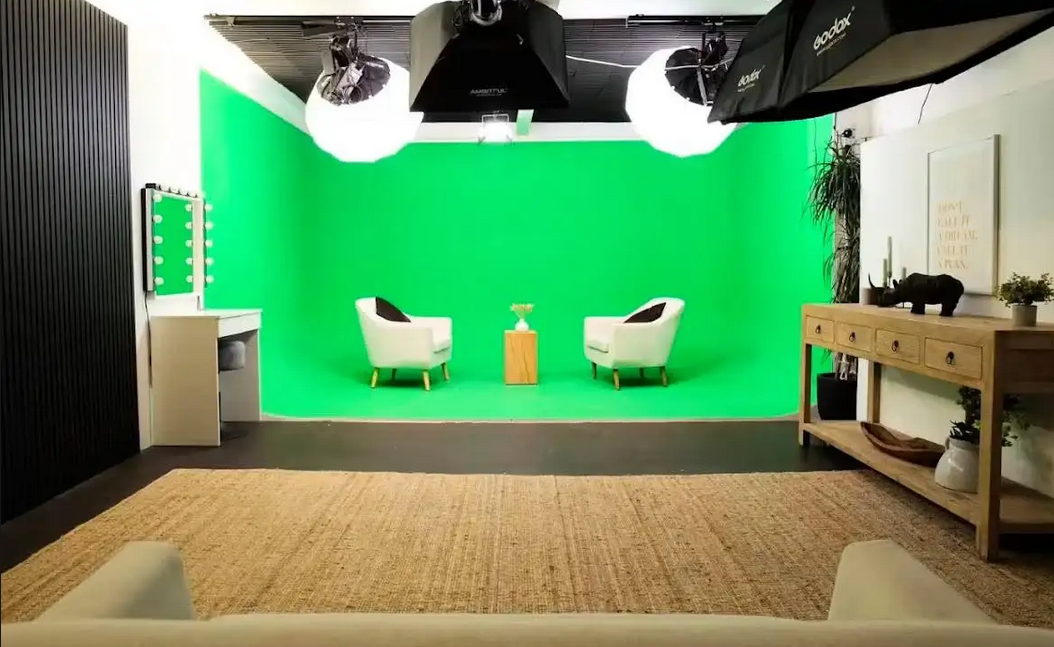
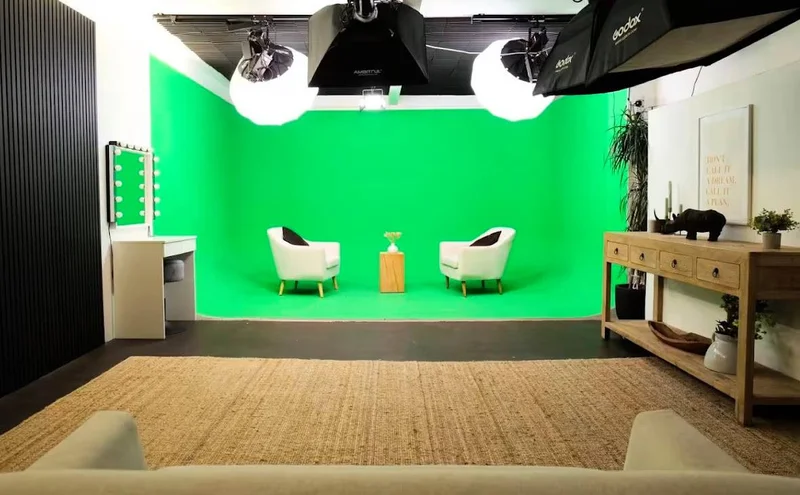
Finchley Studio (Green Screen Cove): book this setup for your podcast
5.1 The "False Economy" of Home Recording
Many new podcasters attempt to record at home to save costs. However, the London housing stock—characterized by single-pane sash windows and shared party walls—makes this a "false economy," as noted by Finchley Studios. The cost of soundproofing a London flat to a professional standard (floating floors, triple glazing, mass-loaded vinyl) can easily exceed £10,000 to £20,000. Comparatively, studio hire in London operates on an OpEx (Operational Expenditure) model rather than CapEx (Capital Expenditure). For a rate of £60-£120 per hour, creators access a facility worth hundreds of thousands of pounds, according to Finchley Studios.
5.2 The Tiered Market of London Studios
The London market is segmented into distinct tiers, and the monitoring equipment is often a reliable indicator of which tier a studio occupies, according to Finchley Studios.
- Tier 1: The "Dry Hire" / Automated Studio (e.g., Pirate Studios):
- Price: £15 - £30/hr, as noted by Finchley Studios.
- Model: Unstaffed, code-access entry.
- Equipment: Often basic or mid-range gear. Pirate Studios' "Lite" rooms offer DT 770s, but the lack of an engineer means the user must manage the gain staging themselves, according to Pirate Studios.
- Best For: Musicians rehearsing, hobbyist podcasters.
- Tier 2: The "Smart Professional" Studio (e.g., Finchley Studio, Outset):
- Price: £60 - £120/hr, as noted by Finchley Studios.
- Model: Staffed by an audio engineer.
- Equipment: BeyerDynamic DT 770 Pro (80 Ohm), Shure SM7B, 4K Video (Sony FX6/30).
- Value Proposition: The inclusion of an engineer is the key differentiator. The engineer actively monitors the session (likely using DT 990s or high-end monitors), adjusting levels in real-time to prevent clipping. This "concierge" service ensures that the brand's content is safe, according to Finchley Studios.
- Tier 3: The "Luxury / Lifestyle" Studio:
- Price: £150 - £500+/hr, according to Tagvenue UK.
- Model: Full production team, hospitality, central locations (Soho).
- Equipment: Often bespoke or flagship gear.
- Value Proposition: Prestige and convenience for A-list talent.
5.3 The Video "Vodcast" Revolution
By 2025, audio-only podcasts are the minority for high-growth channels. "Vodcasts" (Video Podcasts) dominate YouTube and social media. This shift has impacted equipment choices.
- Visual Aesthetics: The DT 770 Pro has a classic, industrial design that looks "correct" on camera. It signals "studio quality" to the viewer.
- Lighting and Heat: Video studios require lighting (Key, Fill, Backlight). Even LED lights generate heat in a soundproof (air-sealed) room. The breathability of the DT 770's velour pads becomes critical here, preventing the guest from sweating and looking shiny on camera, according to the BeyerDynamic Blog.
- Cable Management: The DT 770 Pro's coiled cable (on the 250 Ohm) or straight cable (on the 80 Ohm and limited editions) allows for tidy cable runs that don't clutter the wide-shot of the video set, according to The Wong Janice.
5.4 Strategic Location: The "North London" Advantage
Studio economics are also driven by logistics. Studios in Central London (Soho, Fitzrovia) command premium rates due to rent and business rates. However, they also impose logistical costs on the client: no parking, Congestion Charge, and ULEZ fees. Studios like Finchley Studio in North London capitalize on this. By being located outside the Congestion Zone and offering free parking, they lower the "Total Cost of Production" for the client, according to Finchley Studios. A client driving in with equipment or guests saves ~£15 (Congestion Charge) + ~£20 (Parking) per session. This saving often subsidizes the cost of the engineer, effectively giving the client a professional operator for free compared to a dry-hire central location.
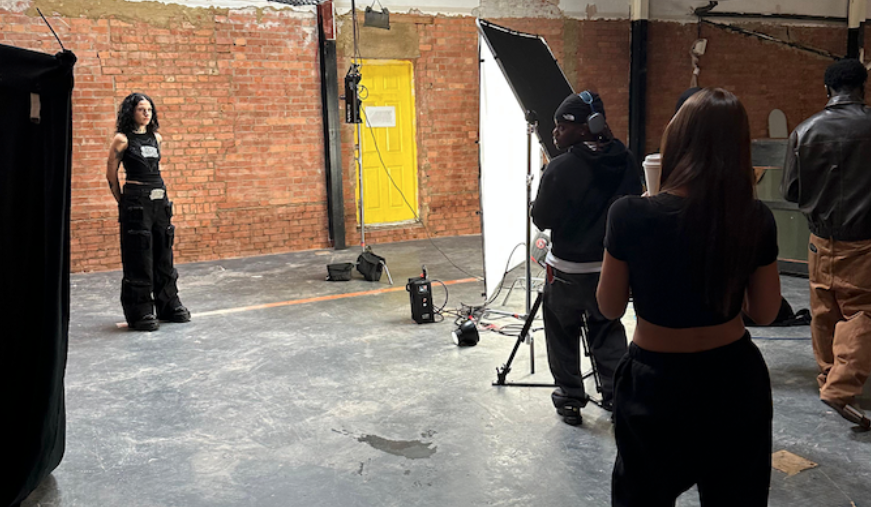
Finchley Studio (The Brick Studio): book this setup for your podcast
6. Competitive Landscape & Strategic Positioning
The landscape for studio hire London is crowded. Platforms like Tagvenue and Peerspace list dozens of spaces, from converted bedrooms to broadcast facilities, as noted by Tagvenue UK. In this market, transparency and equipment standards are the primary trust signals.
- Transparency: Studios that list their exact equipment manifest (e.g., "4x BeyerDynamic DT 770 Pro, 4x Shure SM7B") attract more knowledgeable clients than those who say "Professional Microphones." It demonstrates an understanding of the ecosystem, as noted on Podcast Studio Hire.
- The "Engineer Included" Model: This is the decisive factor for corporate clients. Brands do not want to learn signal flow; they want a result. The "Smart Professional" tier studios that bundle engineering with the room hire (like Finchley) remove the technical risk from the client, according to Finchley Studios.
7. Frequently Asked Questions (FAQ)
Why do we use wired headphones instead of Bluetooth?
Bluetooth headphones introduce latency (a delay between the sound occurring and it being heard). In a conversation, even a 50-millisecond delay can be disorienting, causing the guest to slur their speech or stutter (an effect known as Delayed Auditory Feedback), as explained by Wantek. Wired headphones like the DT 770 Pro offer zero-latency monitoring, which is essential for natural speech.
Can I bring my own headphones?
Guests are often welcome to bring their own headphones, provided they are wired and have a standard 3.5mm or 1/4" jack. However, we strongly advise against using earbuds or open-back headphones due to the risk of sound bleed entering the microphone, as noted by The Wong Janice. The studio-provided DT 770s are calibrated to our system for the best experience.
Why are the headphones so tight?
The DT 770 Pro has a clamping force of approximately 3.5 - 5.5 N, according to BeyerDynamic. This firmness is intentional. It ensures a tight acoustic seal around the ear, maximizing noise isolation and preventing sound from leaking out. The velour pads are designed to distribute this pressure evenly for comfort, according to the BeyerDynamic Blog.
Do I really need to wear headphones if I'm just a guest?
Yes. Wearing headphones helps you maintain a consistent distance from the microphone (mic technique) and prevents you from shouting or mumbling. It also allows you to hear remote guests clearly. Without headphones, the conversation can feel disjointed, and the final recording quality may suffer, as explained by Rachel Corbett.
What is the "London Noise Floor"?
The London Noise Floor is the baseline level of background noise in the city, typically composed of traffic, air conditioning, and distant transit. In a non-soundproofed room, this floor can be as high as 40-50dB. In our studio, we aim to lower this to below 25dB, creating a "black canvas" of silence for your voice, according to Finchley Studios.
Conclusion: The Final 1%
In the high-stakes world of London podcast production, success is the sum of a thousand small decisions. The choice of the BeyerDynamic DT 770 Pro is not merely a purchase of a peripheral; it is a strategic commitment to quality. It is a commitment to the guest, ensuring they feel comfortable, confident, and professional. It is a commitment to the listener, ensuring they receive a clean, undistorted signal free from the intrusive noise of the London Underground or the distractions of echo.
And it is a commitment to the craft. In a visual-first era, where content is consumed in seconds on scrolling screens, audio remains the emotional core of the medium. Bad video is forgivable; bad audio is a "scroll-away" event. By securing the acoustic environment with industry-leading isolation, leveraging the "Made in Germany" durability for sustainable operations, and understanding the psychoacoustic needs of the performer, high-end studios in London transform the hostile acoustic battlefield of the capital into a sanctuary of conversation. Monitoring matters because, ultimately, it is the bridge that allows the message to cross the void from the speaker's mind to the listener's ear, intact and impactful. When you book a session at a professional facility, you are not just renting a room and a microphone. You are renting the silence, the science, and the certainty that your voice will be heard exactly as you intend. That is why we use BeyerDynamic. That is why monitoring matters.
Strategic Data Summary:
|
Metric |
Home Setup (London Flat) |
Pro Studio (Tier 2/3) |
|
Noise Floor |
High (40-50dB - Traffic/Neighbours) Finchley Studios |
Low (<30dB - Isolated) Finchley Studios |
|
Vibration |
Vulnerable to Tube/Bus Rumble Finchley Studios |
Decoupled (Floating Floors) |
|
Monitoring |
Consumer/None (High Bleed Risk) |
BeyerDynamic DT 770 Pro (Isolated) Reddit |
|
Microphone |
USB/Low Gain |
Shure SM7B + Cloudlifter Shure |
|
Guest Focus |
Distracted by Environment |
Focused "Flow State" Soundcore |
|
Sustainability |
Disposable Gear |
Repairable Ecosystem BeyerDynamic Blog |
This report synthesizes data from acoustic engineering principles, London-specific environmental studies, and market analysis of the 2024-2025 UK podcasting landscape.